

Melbourne Design Week takes over the city

Share

With over 400 events, exhibitions and more to choose from, selecting the ones at Melbourne Design Week (MDW) you’d like to attend could be a tad overwhelming.
This is probably why the National Gallery of Victoria (NGV), organiser of the ever-growing festival, laid on a relatively quick tour of some highlights following MDW’s launch this week.
The launch was held at Abbotsford Convent, that decidedly atmospheric and evocative sprawling venue in Melbourne’s inner north, which is already home to a conclave of artists, craftspeople and artisans.
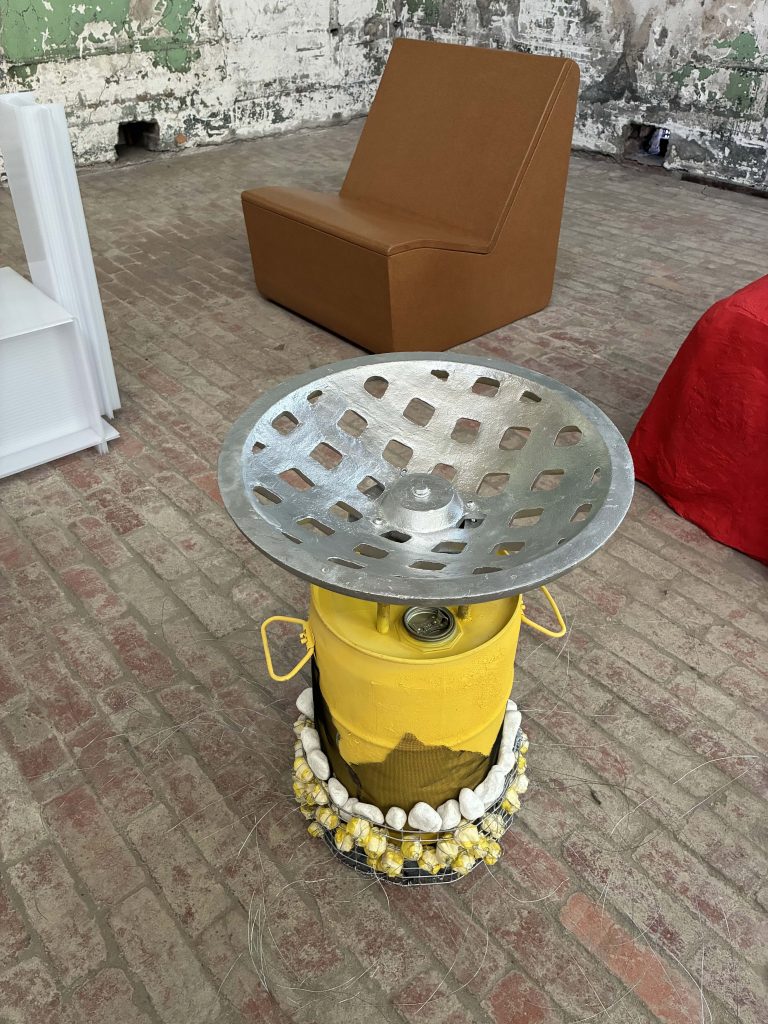
Two of the rooms in the Convent’s commercial laundry building (with all of its unsettling history of young ‘destitute’ women coerced into a life of washing, scrubbing, ironing and folding) have been given over to the 100 Chairs exhibition – a sequel to 2025’s 100 Lights exhibition, again curated by Friends and Associates (the ongoing process-based project of Dowel Jones‘ Dale Hardiman and Tom Skeehan).
The brief was strictly for chairs designed and made in Australia that are also sittable. There were 228 submissions received and most, if not all, of the 100 selected appear to have adhered to those parameters. There are certainly a handful that would only be sat on by the brave, but more interesting perhaps is the question of AI influence. Skeehan said that the designers who had used artificial intelligence gave themselves away by, in some cases, prompts that appeared to have been inadvertently retained in the submission forms.
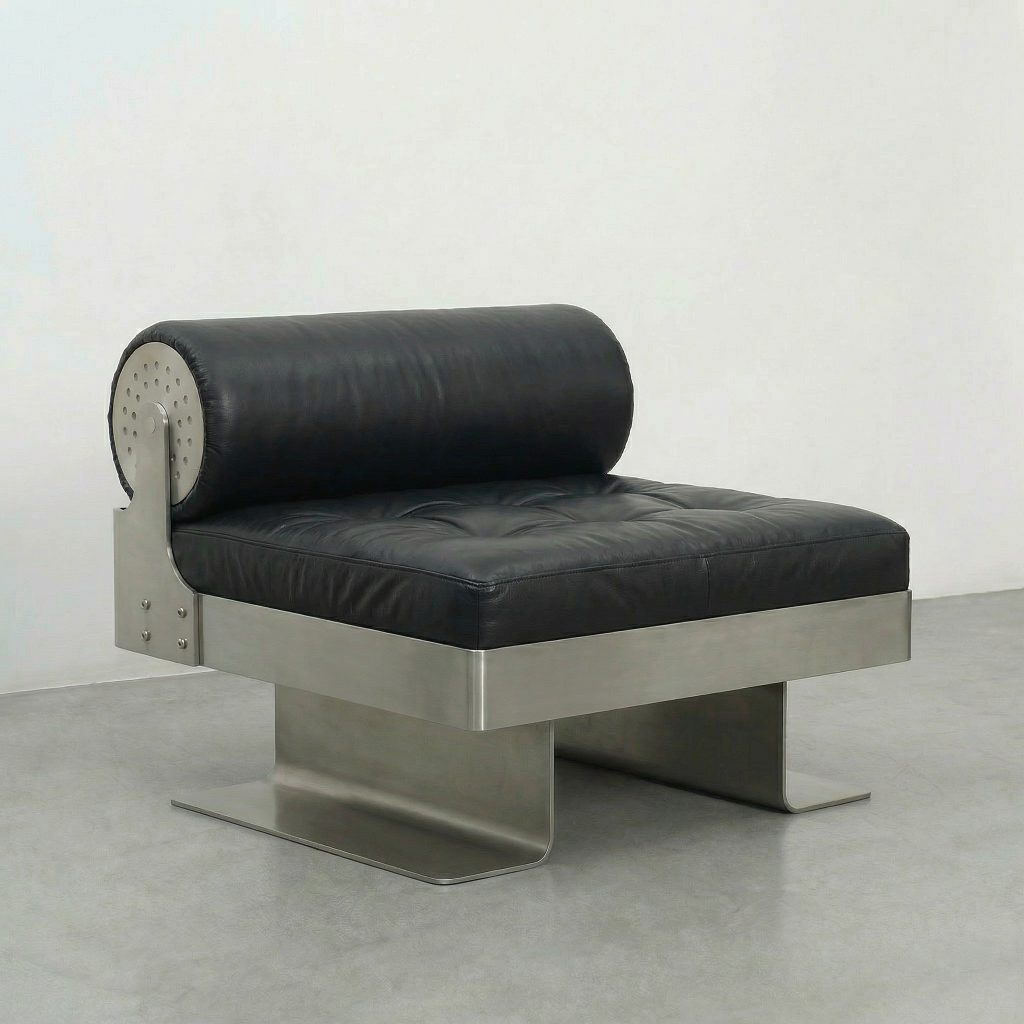
Skeehan and Hardiman said they were fascinated by Nicholas Johnston’s Occasional chair, which was designed by AI, then recreated exactly in its physical form by the maker. The duo added they were surprised by the number of entries that hinted at AI involvement and suggested they may resolve to ensure submissions for next year’s exhibition – whatever that may be – has transparency instructions built in. Perhaps it will mean two separate exhibitions? One entirely human designed and one not?
Another pointer to the way the world is today, but one opening up a range of more creative opportunities, is the chair with a three-dimensionally printed shell, which actually looks for all the world like a 70s fibreglass formed affair.
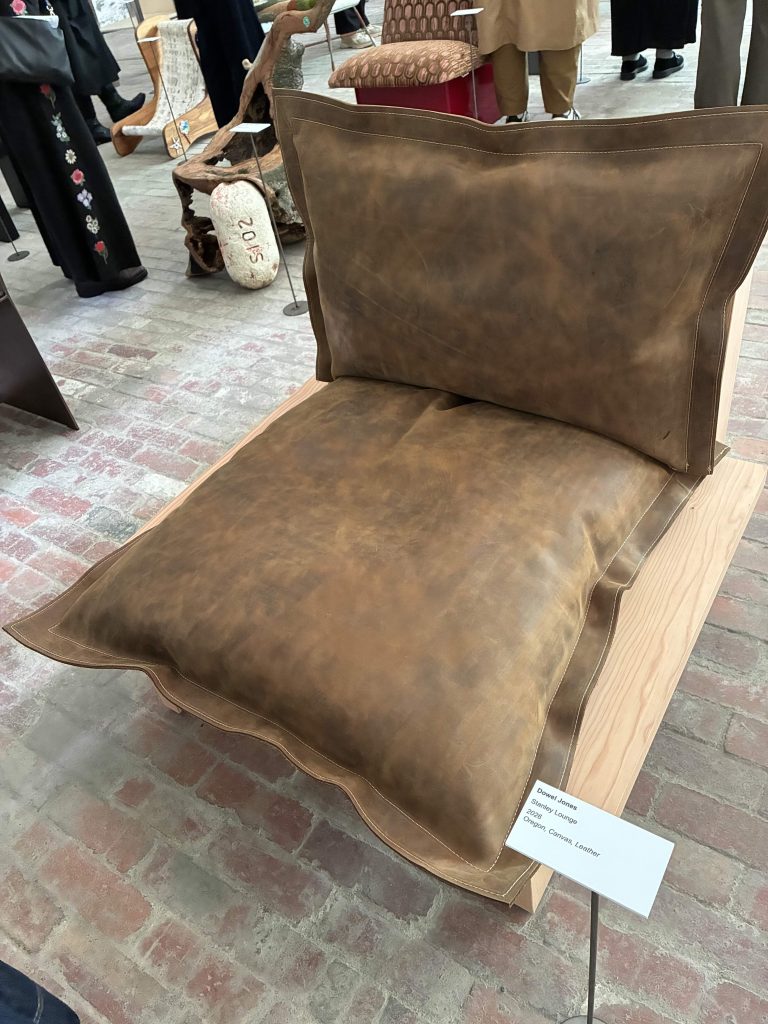
It’s probably fair to say that many of the chairs have an interesting story behind them, but when it comes to honouring past creatives, the Knot Pine chair has particular resonance. A handful of the chairs were made from the wood of a beautiful Monterey pine tree that for decades grew in front of Robin Boyd’s house in Walsh Street South Yarra. When the 22-metre tree died and had to be removed (fear not, a replacement sapling has now been planted) the timber was saved for reuse, with the Knot Pine chair being a special marker of the architect’s legacy by furniture maker Alexsandra Pontonio.
One element that hasn’t been directly addressed by the exhibition is the spectre of the past. Walking around a 100 seating options, but unable to actually try them out raises ghostly memories of all those young women who toiled in the space from the 1880s to its final closure in 1974. You can’t help but feel they weren’t allowed to sit either.
Marvellously messy from ‘Missy’
Throughout Melbourne Design Week there are exhibitions, open houses and events dedicated to sustainable practices and the reuse and repurposing of waste materials. Outside Cam’s restaurant in the courtyard of the Abbotsford Convent is a striking installation that really exemplifies that approach.
Using collected detritus from music festivals – cast off tents and camping chairs etc –along with reconstituted plastics and other waste materials Melissa ‘Missy’ Gilbert (AKA Offerings) has created the inhabitable soft infrastructure Chrysalis – Belonging along with four sigils, operating as ‘symbolic markers and material systems bridging hand-process, cultural language, and material innovation’ as part of the Reclaim and Transform Initiative. With embedded sound, and an invitation to enter the Chrysalis and escape the hurly burly, the work is eye-catchingly multicoloured, undeniably optimistic and all round joyful, much it seems like the artist herself.
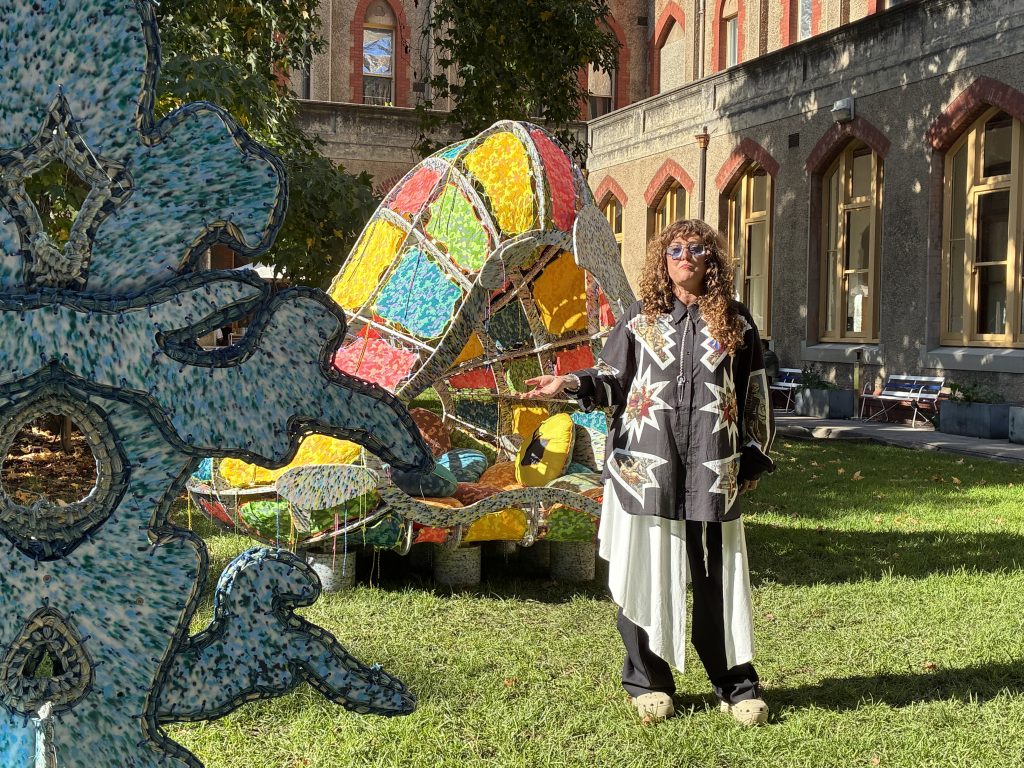
Gilbert is also presenting workshops and a store dedicated to her exploration of how values and material decisions can influence what we make, when we make it, how we make it and why.
Bishop’s oasis
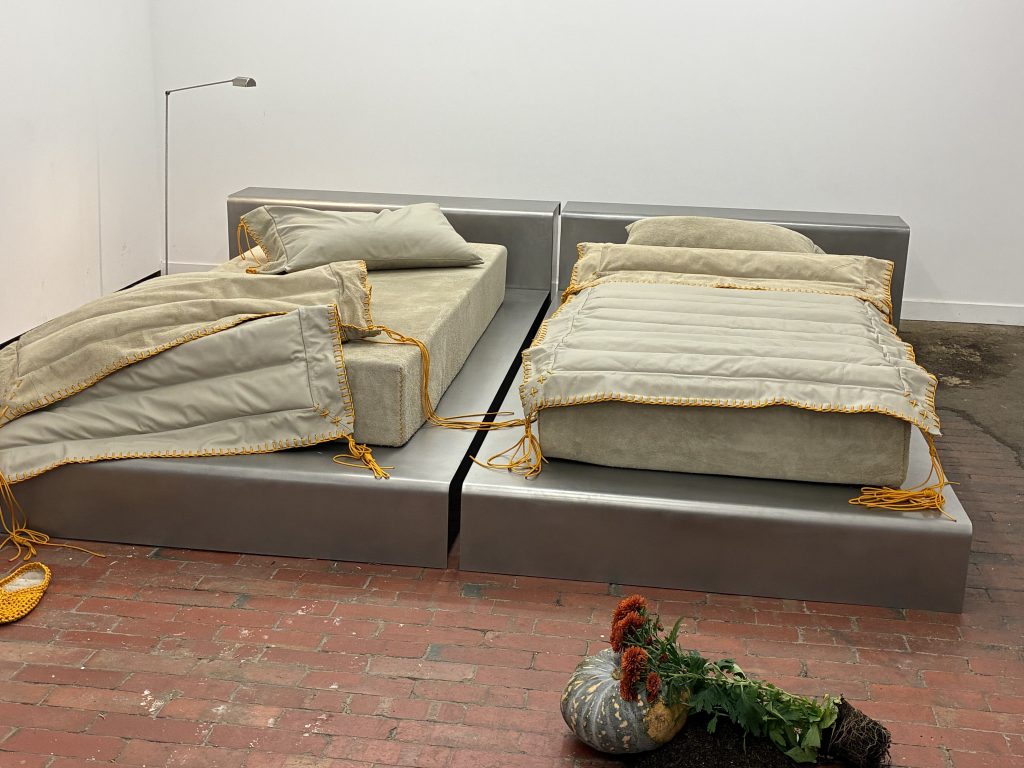
For Synthesis, Ruby Shields was allocated the Bishop’s Parlour and Foyer within the Convent and has invited no fewer than 47 designers and artists to fill them – contributing pieces of furniture, lighting and decorative objects that all enter a dialogue with the colours, materials and essence of the space. While the exuberant Shields may be a cheerful exponent of the ‘more is more’ approach, somehow, she has managed to avoid a sensation of overegging the omelette and instead created a space that feels harmonious, respectful, inventive and, yes, even comfy – courtesy of Culture Cush’s voluminous couch.
And on the side of the Parlour, you’ll find the work of one of ADR’s 30UNDER30 cohort for 2025/26, Marlo Lyda, whose Kin lamps speak to family heritage and memories of a beloved grandmother.
In an even more spiritually aligned spot, Tom Fereday’s work appears in Arum, an elegant and refined display in the Oratory next to the laundry. With fragrances and ambient sound (delivered via a speaker also designed by Fereday) his Tea lights and other recent works are imbued with a delicate simplicity that is just lovely to experience.
A hiding to somewhere
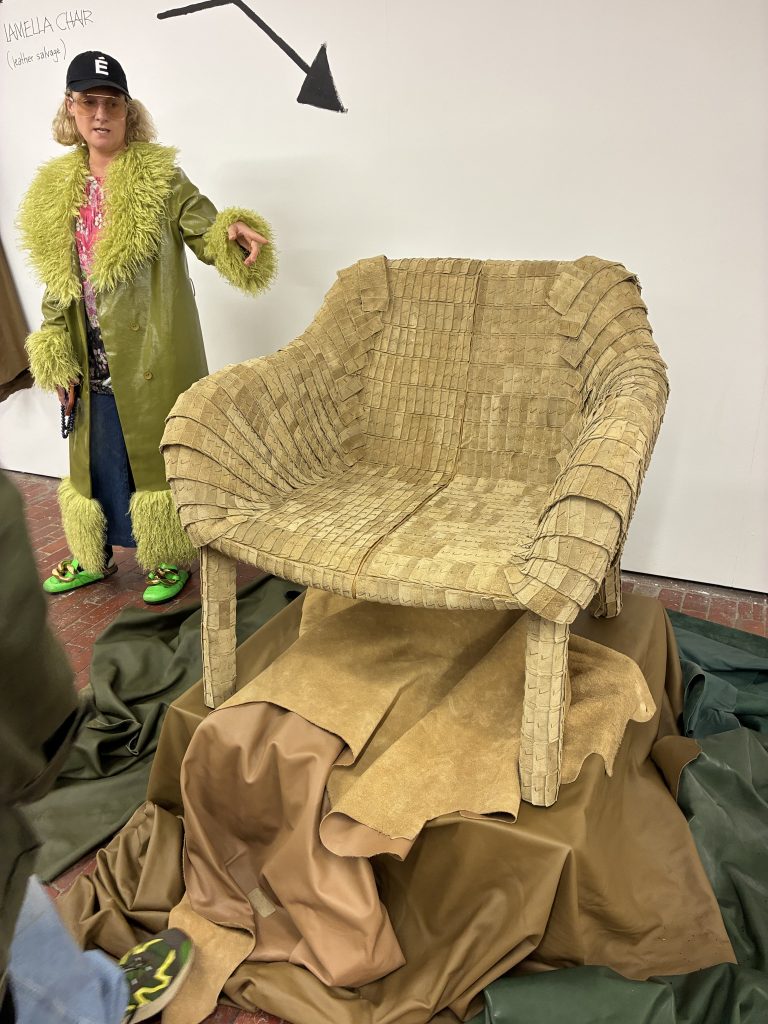
Continuing the focus on overlooked, unused and discarded materials LOST HiDE, curated by Emma Elizabeth and presented by Local Design, is a leather lovers’ paradise, tucked away in the Convent’s almost vault like rooms of The Store. In the chilly nooks and crannys you’ll find pieces by over a dozen practitioners – including IDEA 2025 triple winner Jared Webb of J.AR Office and 30UNDER30 practice partner Richards Stanisich, Design By Them, Adam Goodrum and Dean Norton – working with leather offcuts and oddments to create new and surprising artefacts and pieces of furniture.
Lights, cameras, action
The much-awarded Christopher Boots is celebrating 15 years since the establishment of his Fitzroy-based business and he’s presenting Astrolabe: Fifteen Years of Christopher Boots as part of Melbourne Design Week to mark the occasion.
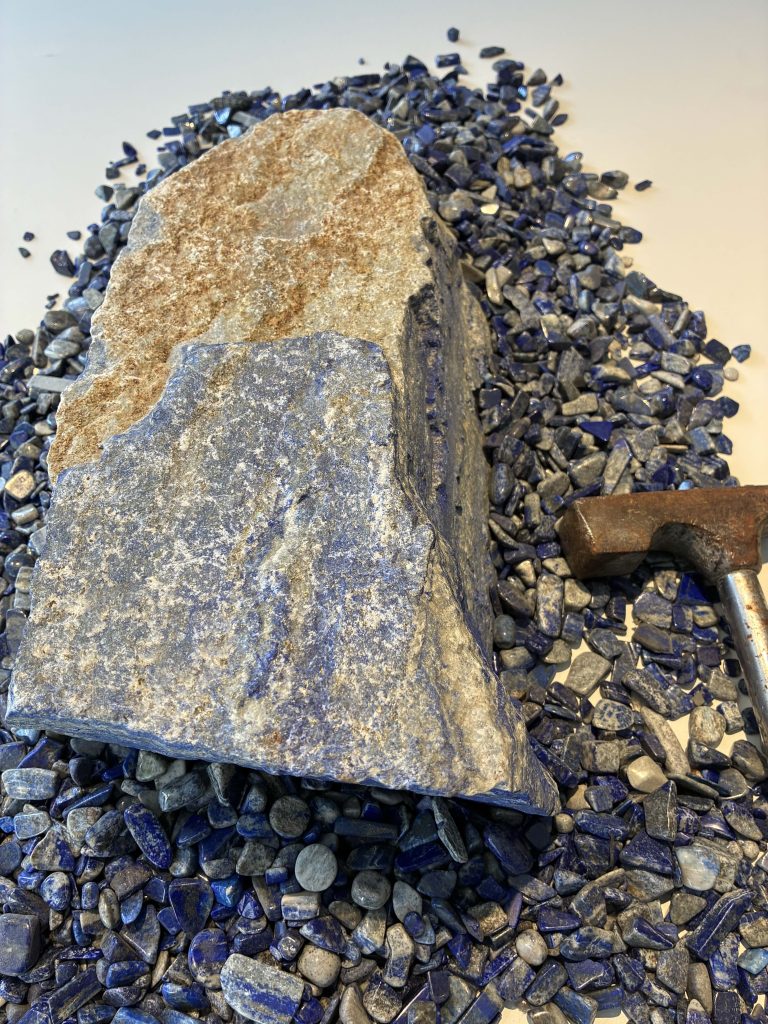
Having fallen into the lighting sphere following a fortuitous meeting with mentor Geoffrey Mance, despite originally intending to be a furniture maker, Boots has built a studio that reflects his love of material and experimentation. With displays of such resources as quartz and lapis lazuli, the studio also boasts large artistically posed images of one-off lighting pieces.
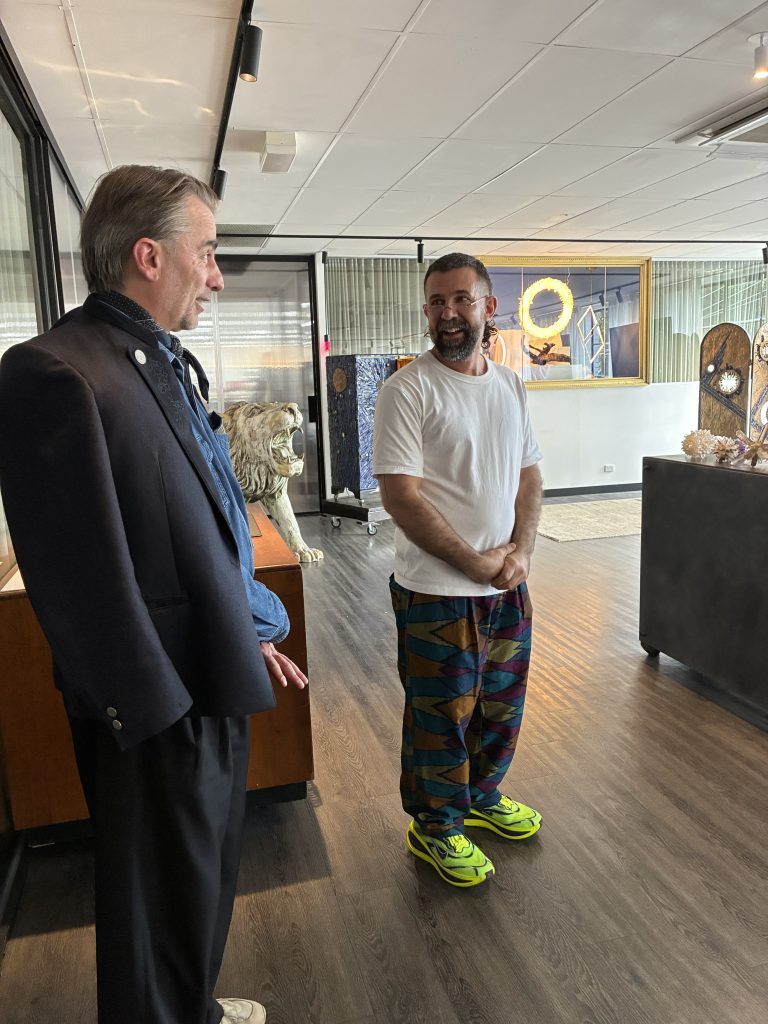
With a significant portion of the studio’s work now being commissioned and supplied to overseas specifiers, there are only a limited number of these arresting creations in situ, but the team has carefully put together an exhibition that really speaks to the practice’s ambition, experimentation and execution. As well as the founder’s adoration of quartz and its myriad properties and possibilities.
But who can explain the fish?
Announced as the winner of this year’s Melbourne Design Week Award, Jon Goulder’s contribution to MDW is Conversations, a collaboration with clothing brand Alpha 60 on the top floor of Chapter House.
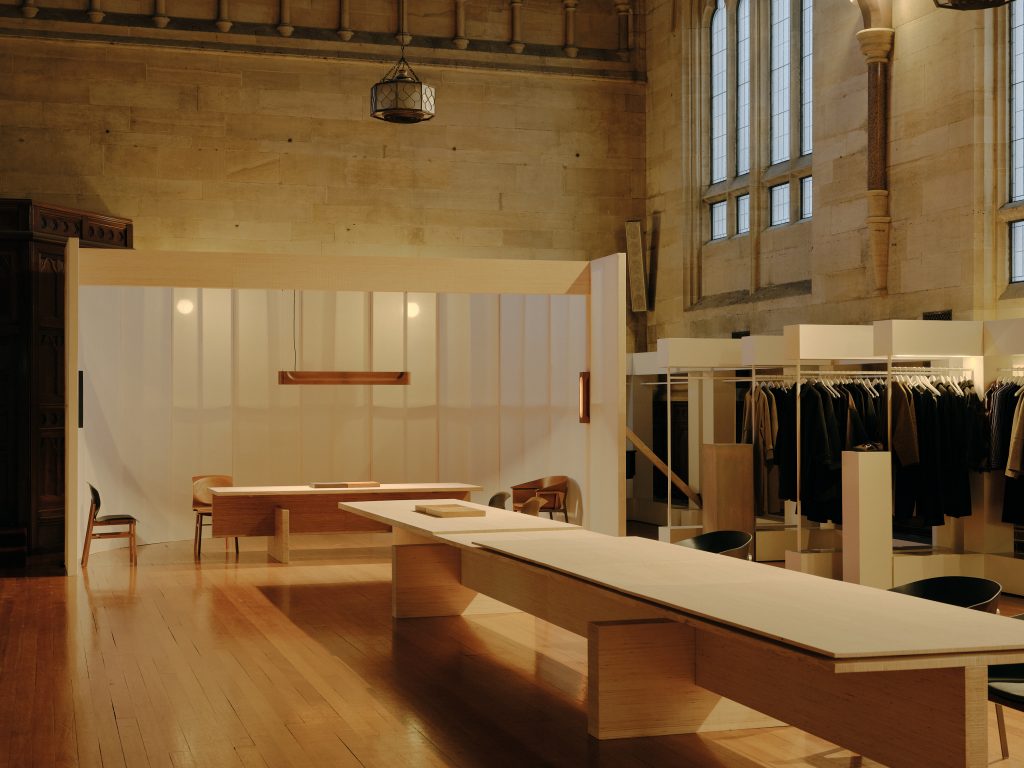
In this cavernous space, racks of clothes occupy structures designed to make the space somewhat more intimate. In muted and modest colours, the apparel appears to have been carefully selected so as not to overshadow the main events – a couple of tables, a light fitting and a series of chairs, with both the light and seating featuring saddle leather as the main component.
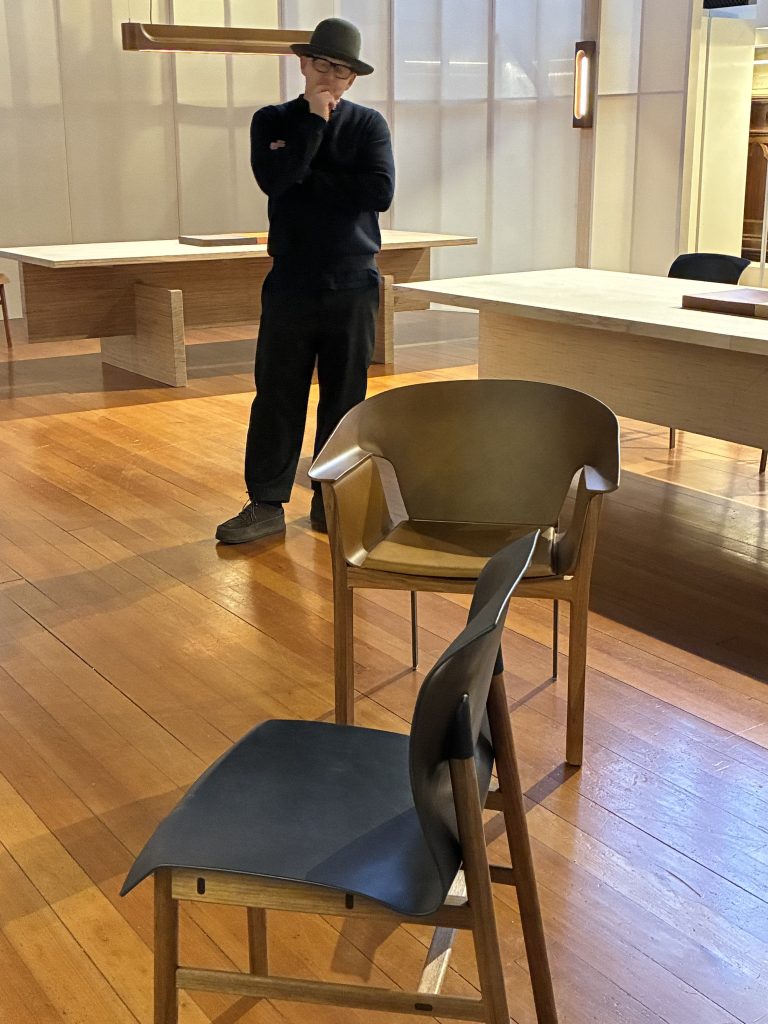
Working with designer and craftsperson Andrew Carvolth on the furniture and architect Henry Williams, Goulder once again exemplifies the epitome of considered, unfussy design, working to discover new approaches to unexpected materials with robust and finely crafted results.
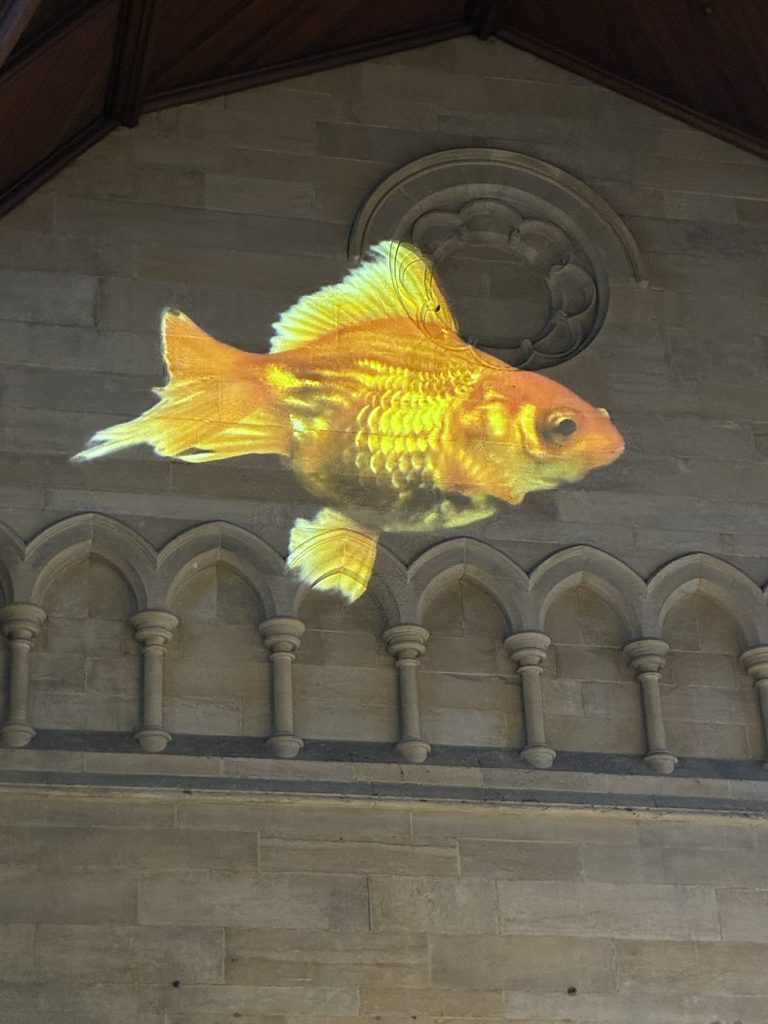
High on the wall a goldfish is being projected swimming around with no clear intent. It definitely catches the attention, but no one ever really did explain its presence.
Arts and crafts
Navigating the age-old nexus between craft and art, Craft Victoria (a hop, skip and not even a jump from the Goulder and co display) has given a select group of practitioners a specific challenge – to reimagine timber supply sources in contemporary woodworking practice – for the modest exhibition, Felled.
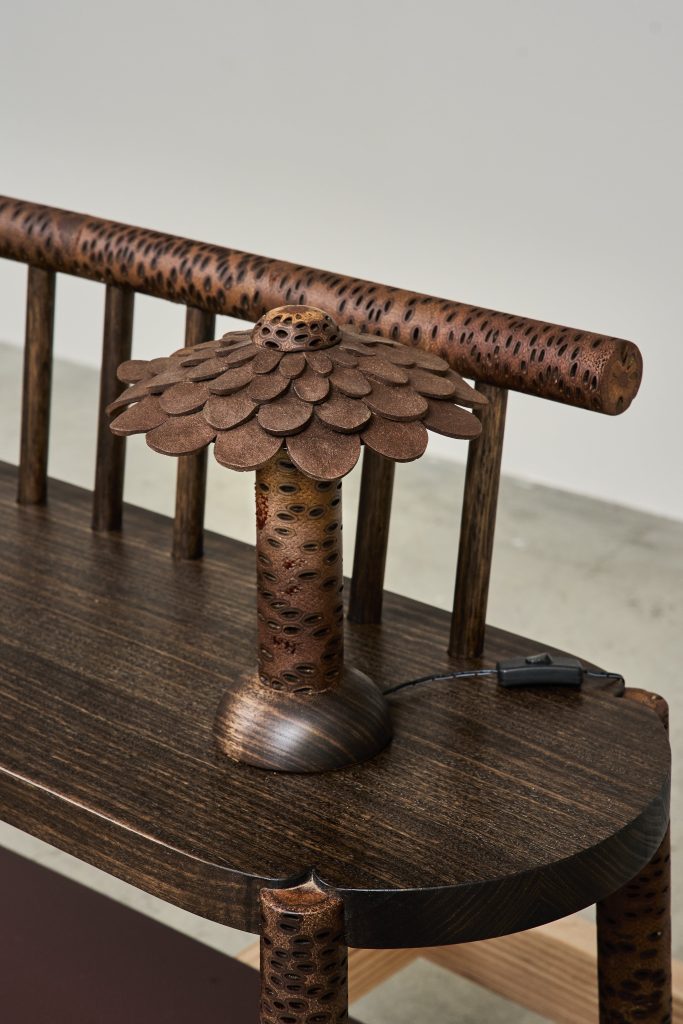
Using wood in unexpected or unusual ways, Kyoko Hashimoto and Guy Keulemans, Jess Humpston, Mark Lilly, Craig Murphy-Wandin, Bolaji Teniola and Andy Ward offer a range of objects that use ‘low grade’ or ‘difficult timber’ that may often be discarded in common practice to speak to the material’s hidden properties, secret strengths and inarguable beauty, while also discussing themes of consumption.
Back to Blak
At the heart of any Melbourne Design Week there is the work of First Nations practitioners. When you hold an event on the unceded lands of cultures that have been using design in their craft, practicality and art for over 65,000 years, surely this is always the starting point.
And there is arguably no First Nations designer who exemplifies breadth of practice better than the multidisciplinarian Alison Page, the acclaimed designer and IDEA 2021 Gold Medal winner, filmmaker, jeweller, artist, product designer, rug maker and more.
Presented by the Melbourne School of Design and co-curated with Associate Professor, Landscape Architecture at the University of Melbourne, Jillian Walliss, Page’s exhibition housed in the university’s Glyn Davis Building is titled Creative Shape Shifter. It is a succinct and beautifully curated display that explores the seemingly limitless applications of Page’s work in design. A particularly powerful element is a linear series along three walls, that uses text, film and still images to chart her life and career, while short chalked footnotes below detail the significant political and historial moments over the same period.
It works brilliantly, perfectly contextualising the work and the evolution of Page’s practice within the wider Australian landscape.
At the launch this morning, Page called for greater access to career pathways for young Aboriginal designers and talked of the huge legacy of First Nations Cultural practice as the bedrock of Australian design.
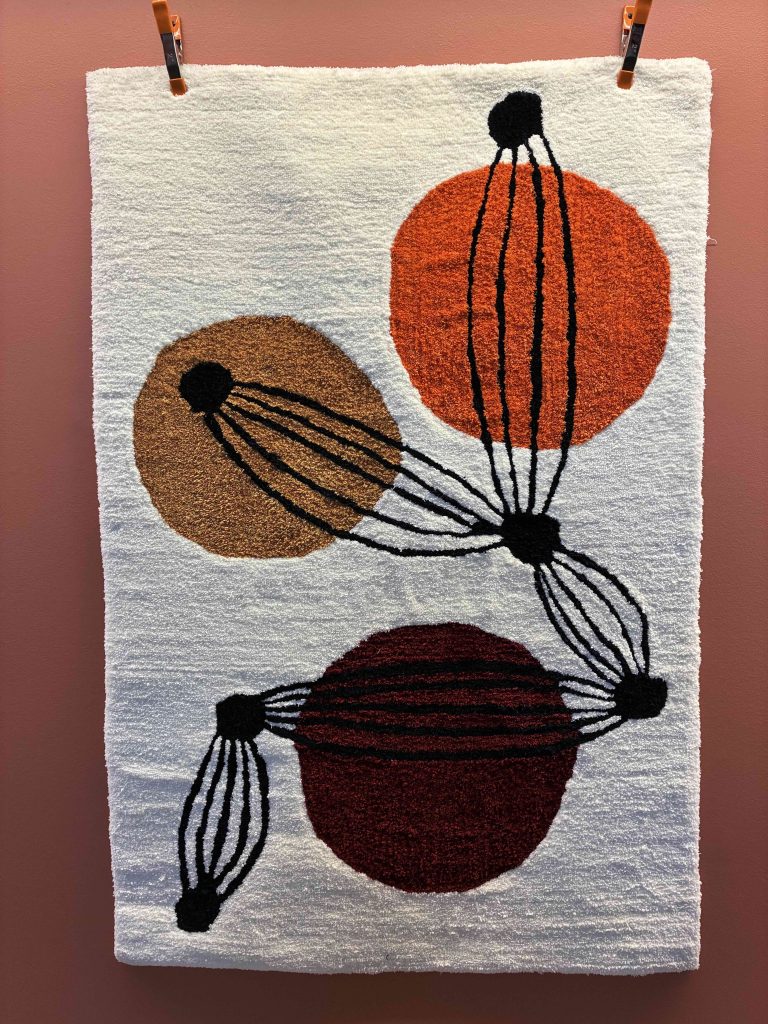
Clan Estates rug, designed by Alison Page, made by Tuft and Craft.
“I remember Jillian [Walliss] saying we want kids who study design to realise that design training is so transferable to any industry. It really is… I’ve got this vision that I want to get street kids into architecture,” she said.
“And I think we can. Australian design is 65,000 years old and it’s taken me a long time to bring my Cultural beliefs and this world of contemporary design together and understand it as a coherent story and to understand everything we make and build is an extension of Country.
“And the great cultural inheritance of all Australians is that there is no separation between our arts, our science, our medicine, our Cultural practice. So even song and dance and all these little categories that the colonial project has put everything into get completely smashed open and broken open when designing with Country. And that’s the revolution that we’re all witnessing right now.”
Page was reiterating a message she’s been stressing for some years now. “Like Robin Boyd said, ‘let’s not be second hand America or second hand England’. We’ve got this opportunity to build an Australian design aesthetic that started thousands and thousands of years ago.”
Melbourne Design Week, incorporating the Melbourne Art Book Fair, runs until 24 May 2026 at venues across the city. Explore the program here.
All photography, unless specified, by Australian Design Review.

© Niche Media 2026