

Waste finds form at Melbourne Design Week

Share
A bold exhibition at Melbourne Design Week reframes surplus as substance, drawing international and local designers who treat discarded materials as the starting point for enduring design.
In the Richmond showroom of Eco Outdoor, Waste to Wonder presents as a study in transformation, where construction waste and factory offcuts embrace new life through careful manipulation, material insight and a sharp architectural lens. The exhibition opens with a VIP event and a ‘meet the makers’ panel on 15 May, running to 23 May and offering visitors a tactile encounter with pieces that hold both memory and momentum.
Material as origin
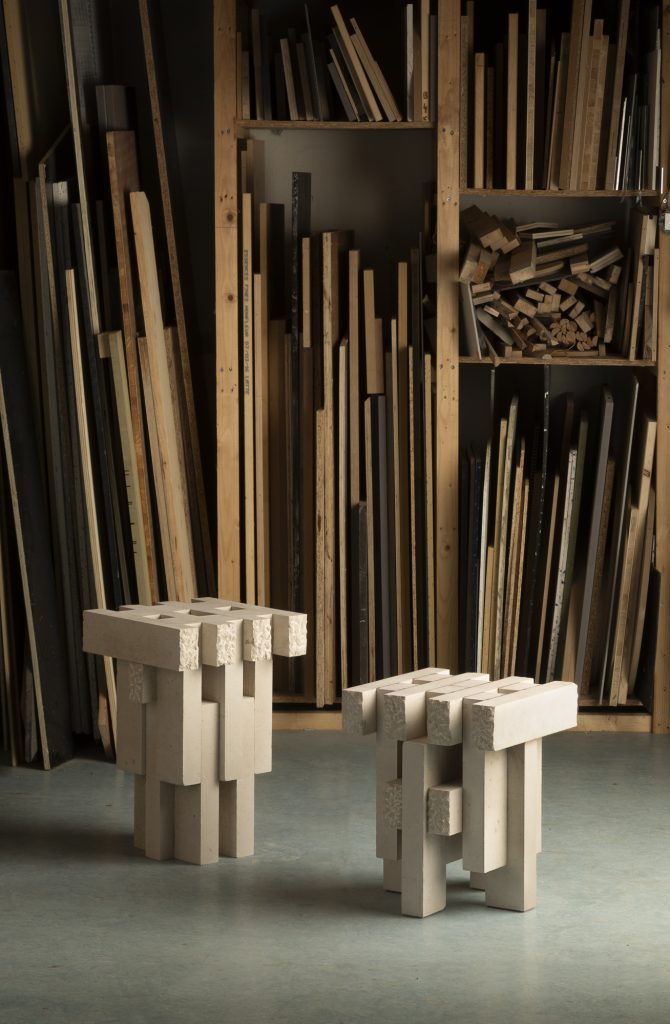
Emerging from MVE Collection, the centrepiece takes shape as three sculptural tables built from solid stone construction bricks that carry the logic of architecture to furniture. Founded by Vincent Eschalier and Mattéo Lecuru, the Paris-based studio has built its practice on reclaiming materials directly from construction sites, shaping objects that sit between artefact and function.
Their process begins long before form. It starts with reading the material itself. “Imperfections are a strength,” they explain. “They give materials their singularity and lend the objects born from them a unique presence.” Each brick holds variation in tone and texture, some darker, some porous, some marked by time, and these qualities remain untouched, allowed to guide the outcome rather than be erased.
Working with Eco Outdoor introduced a new material language, one grounded in stone rather than terracotta or aluminium. The density and precision of the stone brick shifted the studio’s approach, opening the door to more structured assemblies and refined balance. Surfaces fracture with intention, revealing a dialogue between raw and smooth, while pewter poured into the joints settles into fine seams that catch light against the matte stone.
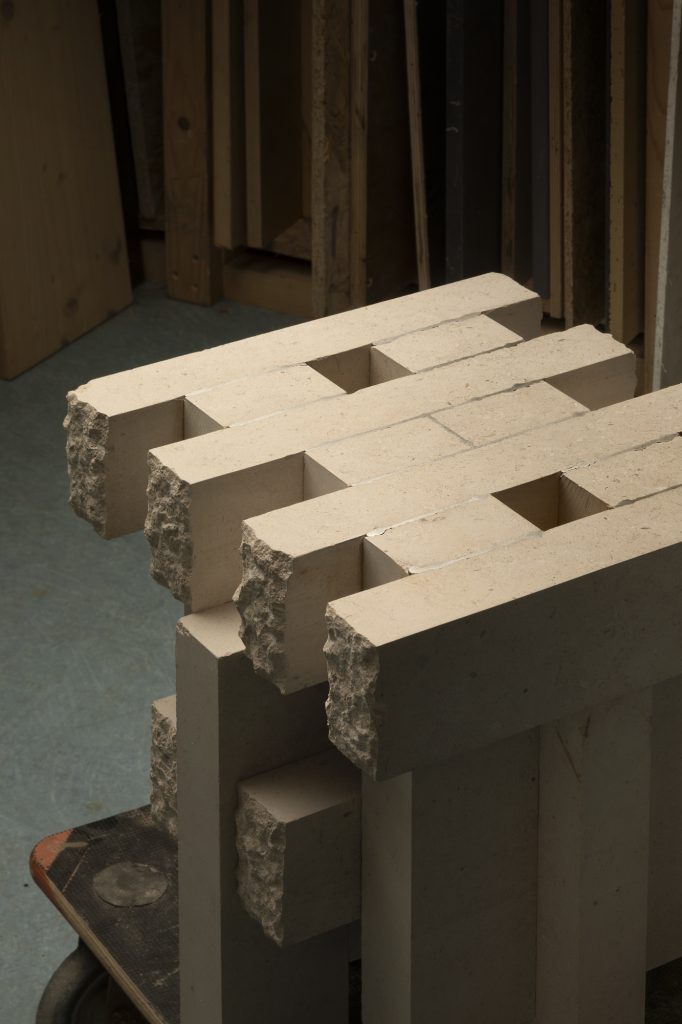
“A fully resolved piece expresses the material and the story it carries,” Lecuru says. “It becomes central, sometimes pushing the drawing or even the function into the background.” The result feels anchored in time, objects that resist trend by leaning into origin.
Local voices, global material thinking
Across the exhibition, Australian designers bring their own responses to circular design, each grounded in a deep respect for material character.
For Matt Lorrain, the starting point lies in glazed lava tiles, produced from factory offcuts and rich with geological history. His pieces adopt a restrained, almost brutalist geometry, allowing the surface to carry the visual weight. “I wanted to express the material in the most direct way,” he says, describing a deliberate refusal to cut or alter the tiles beyond their existing dimensions.
This constraint sharpened the design through exposed edges that reveal raw volcanic basalt in contrast to the glazed face, amplifying the inherent tension within the material. The making process itself stretches beyond the workshop, reaching back through volcanic formation, quarrying and ancient glazing techniques. “Most of the work is already done,” Lorrain says, positioning the designer as a careful editor rather than a dominant author.
His approach points to a broader shift within design culture, one that embraces limitation as a generative force. “There is a responsibility to work within sustainable constraints,” he says, suggesting that adaptation and conceptual rigour can reduce waste while strengthening design outcomes.
Designer Tom Fereday explores a different material language, presenting sculptural tables formed from Mano glass blocks composed of up to 50 percent recycled glass. Known for a refined and material-led practice, Fereday leans into the interplay between light and mass, allowing the cast glass to capture and refract the natural brightness of the Australian environment.
“The concept was to celebrate the natural beauty of cast glass,” he says, describing a pursuit of clarity and restraint. Each block is hand cast, producing subtle irregularities that shift across the surface and within the depth of the material. These nuances come alive under light, creating a subtle sense of movement within otherwise static forms.
The fabrication process reinforces this focus on material, with each piece assembled from near invisible adhesive, giving the glass continuous sculptural volume. Hollow elements introduce intrigue, drawing the eye inward while maintaining a sense of balance and poise.
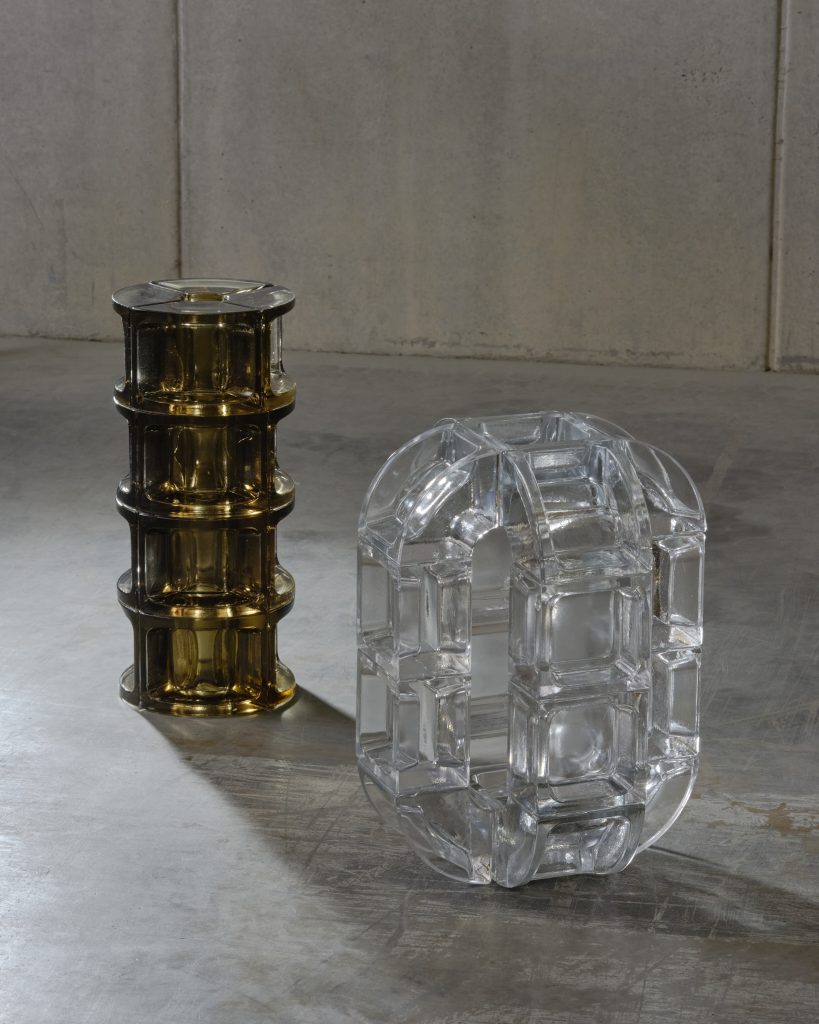
Fereday sees longevity as central to sustainable design. “We must celebrate durability and natural material selection,” he says, noting that recycled glass offers integrity without compromise. The pieces hold a sense of permanence, designed to exist across decades without losing relevance or performance.
Circularity with permanence
Running through Waste to Wonder is a shared belief that circular design extends beyond reuse. It calls for a deeper engagement with material histories, local production cycles and the emotional resonance of objects.
For MVE Collection, this thinking forms a closed loop: recover, transform, reintegrate. Materials sourced from architectural projects return as furniture or detail elements, extending the narrative of a place across scale. Aluminium window frames become cast objects. Timber structures evolve into finely crafted pieces. Each transformation perpetuates the memory of its origin across the exhibition.
As the doors open in Richmond, Waste to Wonder offers a compelling vision of design grounded in responsibility and imagination. It frames waste as a beginning, not an endpoint and, in doing so, it sets a clear direction for the future of material-led practice.
Top image: MVE Collection team. L-R: Mattéo Lecuru, Vincent Eschalier and Charlotte Dubois in their Paris studio with stone brick table prototypes developed for Eco Outdoor’s Waste to Wonder exhibition, Melbourne Design Week 2026. Photo: Jean-Pierre Vaillancourt.
You Might also Like

Related Stories

© Niche Media 2026