

30UNDER30’s Simone Carmody on advocacy and the climate crisis
30UNDER30’s Simone Carmody on advocacy and the climate crisis

Share
Having recently joined Grimshaw, following a stint at AJC Architects, Simone Carmody continues to be driven by her passion for the environment, for promoting regenerative and sustainable design, and for designing spaces that connect people, place and the planet. As a member of the 2025/26 cohort for Australian Design Review‘s 30UNDER30, she says she’s proud to bring authenticity, curiosity and collaboration to every project.
Australian Design Review: What do you hope to get out of the program?
Simone Carmody: I hope to meet both current and emerging leaders of the built environment, and to have the time and space to engage in the bigger conversations that are so often lost in the day-to-day demands of practice. I want the opportunity to hear their candid thoughts about how they see the role of the designer evolving, and what the future might hold for the profession in the context of a rapidly changing world.
What has been a highlight in your career so far? (For example, a project, collaboration, workplace, client, mentor, trip, award, realisation etc.)
One of the most meaningful aspects of my career so far has been the opportunity to contribute beyond traditional practice through advocacy, opening up pathways into broader conversations.
I am currently on the Learning Environments Australasia (NSW) committee, where I help organise site tours and conferences that advocate for thoughtful and high-quality education design. Through this volunteer role, I contribute to creating opportunities for architects, educators and researchers to come together, share lessons learned and build ongoing relationships that extend beyond individual projects.
These conversations are essential in bridging the gap between design intent and lived educational outcomes, and I value being part of a network that prioritises collaboration and continuous learning. It has also given me a deeper appreciation of how well-designed learning environments can support not only students, but teachers and communities, shaping places that enable curiosity, inclusion and growth.
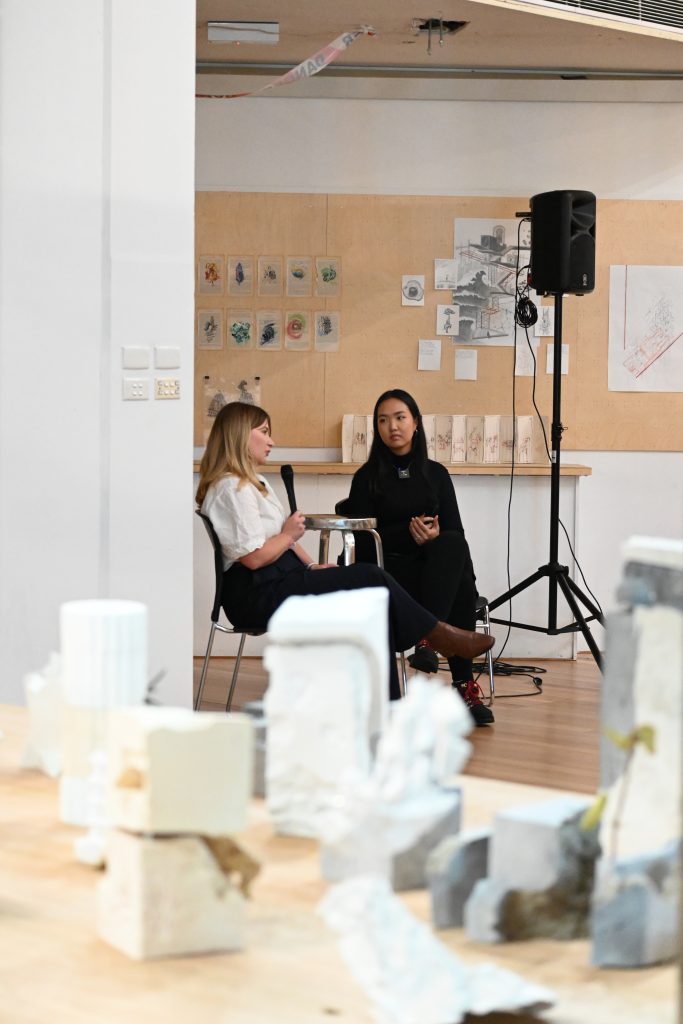
Recently, I spoke in conversation with a graduate at the inaugural Parlour Student Salon about my experiences as a young emerging female architect. It was quite surreal to return to my alma mater in a mentor role, in the very same room where I first began my architecture journey. Reflecting on my early experiences in that space, and sharing both the challenges and opportunities I have encountered since, felt like a full-circle moment.
The discussion focused on navigating the early years of practice, advocating for yourself within the profession, and finding ways to stay connected to your values in what can often be a demanding industry. Being able to offer transparency about the realities of practice – not just the highlights, but the uncertainties and lessons learned along the way – felt important, particularly for students and graduates seeking reassurance that there are many ways to build a meaningful career in architecture.
I’ve written pieces that challenge entrenched ideas about the identity of the architect – questioning the stereotypes and professional ‘boxes’ we continue to operate within. This kind of reflection is essential if we want to evolve the profession into something more representative, equitable and responsive to contemporary conditions.
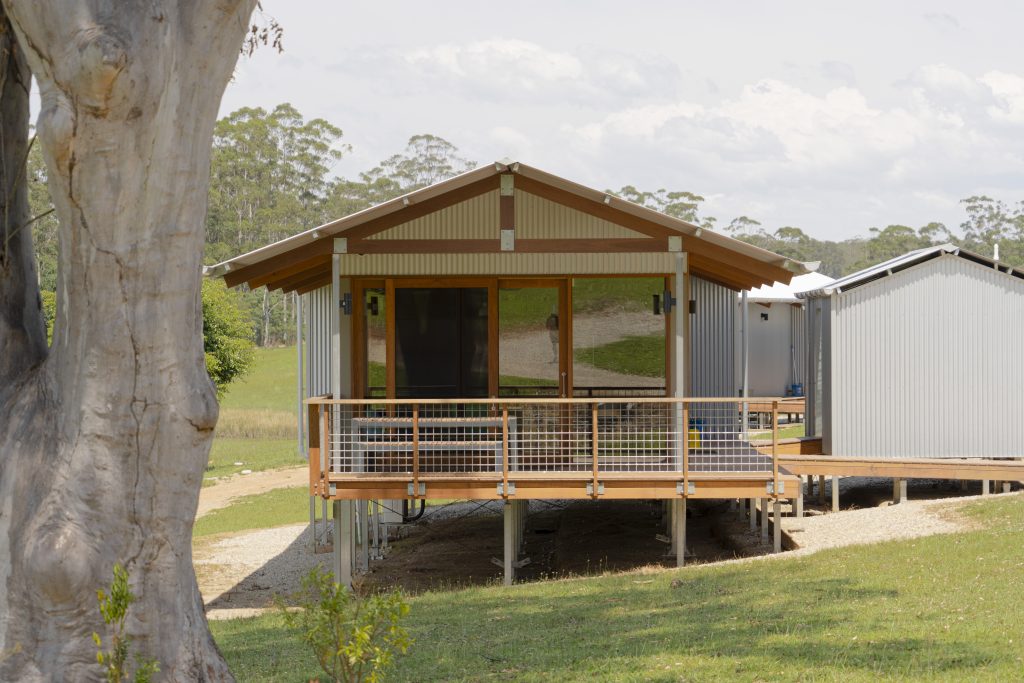
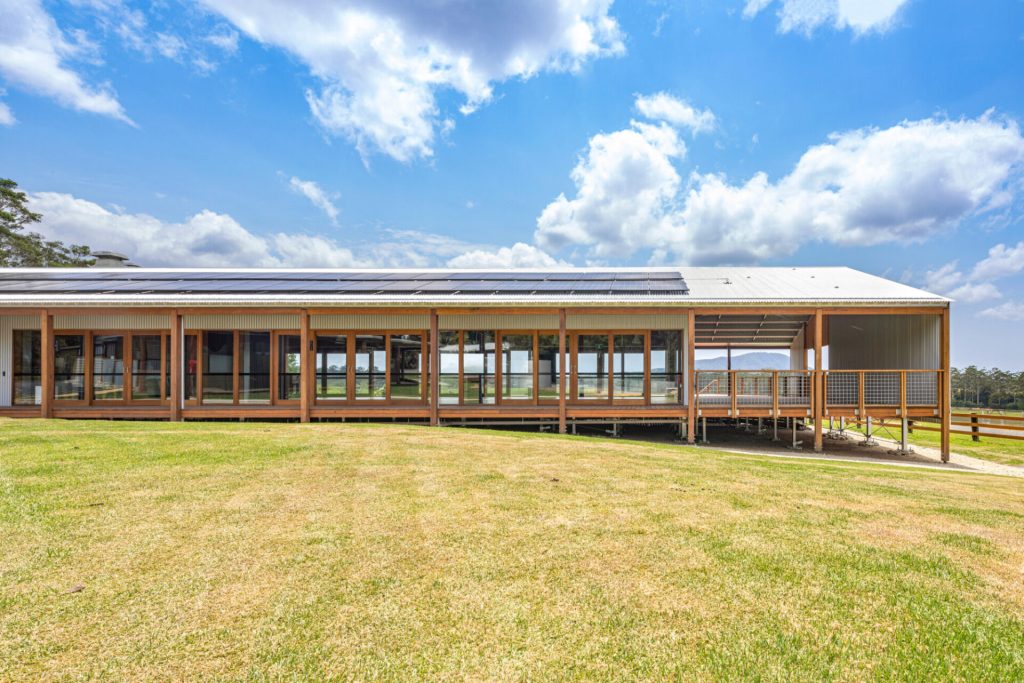
In terms of project work, Newington College Eungai Creek Campus stands out as a highlight. It represents a compelling prototype for regenerative campus design, embedding social and environmental responsibility as the key project consideration. Working for over two years on a project that moves beyond sustainability towards a more holistic, regenerative approach has been both inspiring and formative in shaping how I think about architecture’s role going forward.
Being a key team member gave me the confidence and experience to become a registered architect, a career milestone that would not have been possible without the thoughtful mentorship and guidance of my project leaders and encouragement of the wider project team.
What do you think are the most pressing challenges for designers coming up to 2030?
The climate crisis. We are heading rapidly towards irreversible ecological damage, and the built environment is the significant contributor.
Built environment professionals in Australia want to be better: architects declare, the AIA’s decarbonisation report and climate action sustainability taskforce (CAST) are all evidence of our advocacy in this area. But this isn’t enough – so many designers are not grasping the urgency of the situation at hand, and completely underestimate (or remain ignorant to) their agency to directly harm or restore our earth. We need to promote industry-wide education, regulation and legislation to encourage the systematic and widespread change this crisis requires of us.
Architects and other construction professionals need to be informed to be good advocates for best practice on embodied energy and energy performance. We should be more curious about the supply chain and life cycle of materials we use, and have the ability to gain this information from our suppliers and industry experts. We have no excuses, only opportunities to make real and effective change in the right direction.
Concurrently we are dealing with the effects of a changing climate, and need to design for resilience in a world affected by extreme heat, bushfire, flooding and natural disaster.
While the scale of these challenges is confronting, they are not insurmountable. Designers have always operated at the intersection of constraint and creativity – the climate crisis is now the defining constraint of our time. Every specification, every client conversation and every sketch holds power. When multiplied across an industry, those decisions become transformative. Designers are uniquely positioned to shift markets, normalise low-carbon materials and reshape expectations of what good design looks like. The future will demand more courage from us, but courage is not new to our profession. What is challenging today can become standard tomorrow, if we are willing to lead.
What guiding values drive you and what kind of impact do you hope to make through your work?
A deep sense of responsibility to the future shapes every aspect of my practice. The decisions we make as designers today will be felt by generations who had no say in them.
I hope to contribute to a profession that is more sustainable in every sense of the word. The scale of environmental change facing the built environment can feel overwhelming, but waiting for perfect solutions risks delaying the action that is needed now. I want to help move the profession forward in tangible ways, even if that progress is incremental.
I am motivated by the idea of starting now, and building examples that others can learn from, adapt and improve. If those who come after us learn anything from the mistakes we make first, they are better positioned to go further than we can today. In that way, impact is not only measured in individual projects, but in what those projects make possible for the next generation of designers. Ultimately, I hope to be part of a turning point for the built environment, where regenerative design becomes normalised rather than exceptional. The long-term goal is to shift our role from minimising harm to actively doing good, creating a built environment that restores environmental systems and leaves a positive legacy.
Australian Design Review’s 30UNDER30 is brought to you by major sponsor Neolith, alongside partners Designer Rugs, Laufen, Krost, Miele, Signature Appliances powered by Miele and Tongue & Groove.
Australian Design Review is also grateful to our 30UNDER30 practice partners AJC Architects, BVN, Cera Stribley, COX Architecture, Genton, GroupGSA, HDR, Richards Stanisich, RIZEN Atelier, Rob Mills Architects, Rothelowman, SJB and Design by WBL for helping us foster the future of Australian design.
Learn more about ADR’s 30UNDER30 here.
You Might also Like


Related Stories

© Niche Media 2026