

The spectacle that was Spectra
The spectacle that was Spectra

Share

On a cold mid-winter day, Australian Design Review ventured into Rydges Melbourne to experience Spectra, a temporary immersive project by award-winning artists Rowena Martinich and Geoffrey Carran. In the second instalment of our feature series exploring site-specific art and its power to shape place and experience, we discover that when artists are given creative free rein, the results are as surprising as they are refreshing.
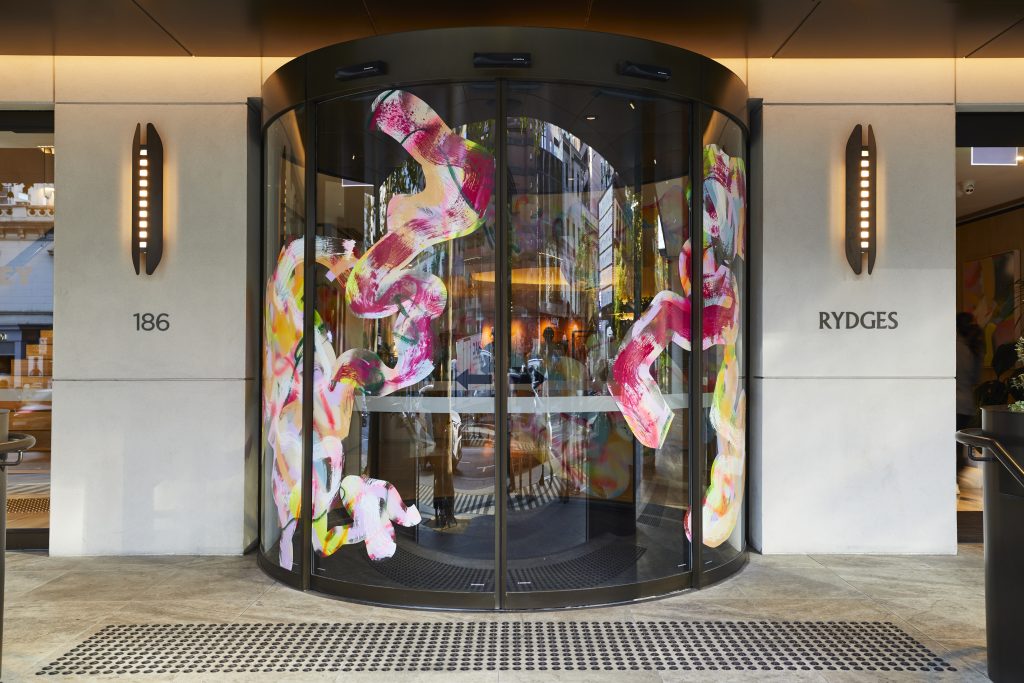
Located on the corner of Exhibition and Little Bourke Street, two of a handful of streets that make up Melbourne’s iconic network of street art-encrusted laneways, Rydges Melbourne is one of those hotels that the high-minded design set might typically overlook. It’s a stalwart, and as we all know, new is now and best is better when it comes to hospitality, retail and hotels.
Not flashy, gimmicky or quirky, it’s the place you stay when you want a hotel with location and a global standard of quality at a reasonably affordable price, with just the right amount of style.
Which is to say, Rydges is not known for being an ‘arty’ hotel where you’d expect to encounter something incredibly different from the photos on the website.
Elevating a stalwart to a destination
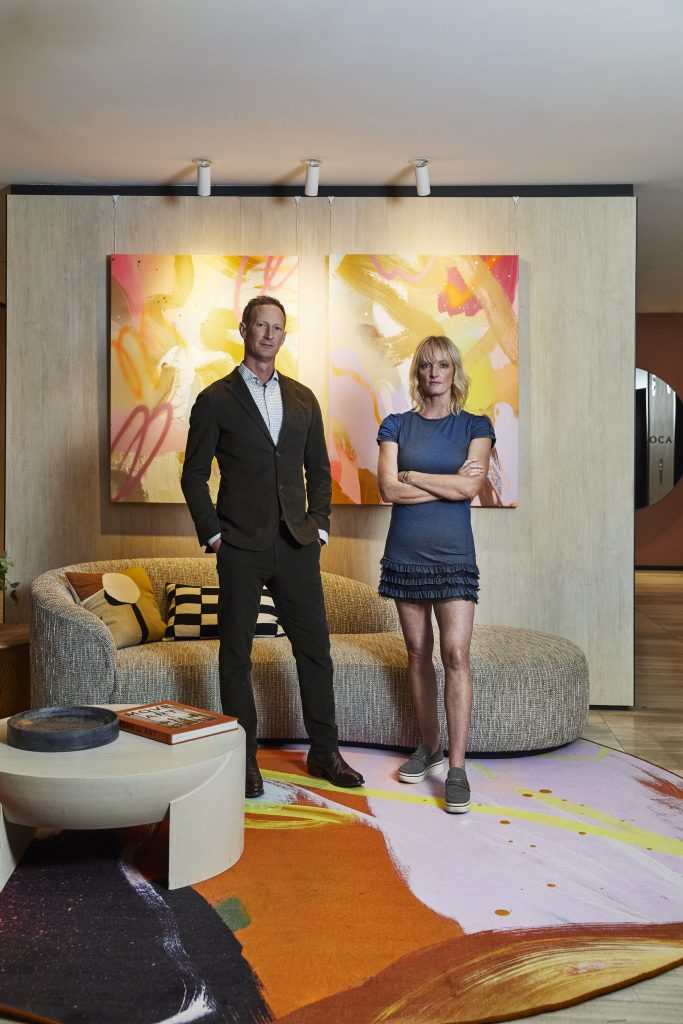
As a creative practitioner, Rowena Martinich straddles the worlds of fine art and design. Over the course of her award-winning career, she has worked with interior designers locally and internationally to create bespoke designs and custom artwork pieces across commercial and residential spaces.
Despite this collaborative way of working with designers, the one thing she hadn’t yet done, and something she had been wanting to explore for some time, was the translation of her original fine artworks into designs for wallpaper or carpets to create immersive, multi-zone art-led experiences.
Martinich and Geoffrey Carran have collaborated with hotels before, producing everything from room fitouts with limited edition prints to larger canvas works. “We’ve done murals in lobbies, created entrance ways,” she tells Australian Design Review. “These have all been fantastic conditions for us, but we felt like there was more that we could do, more that we could offer.”
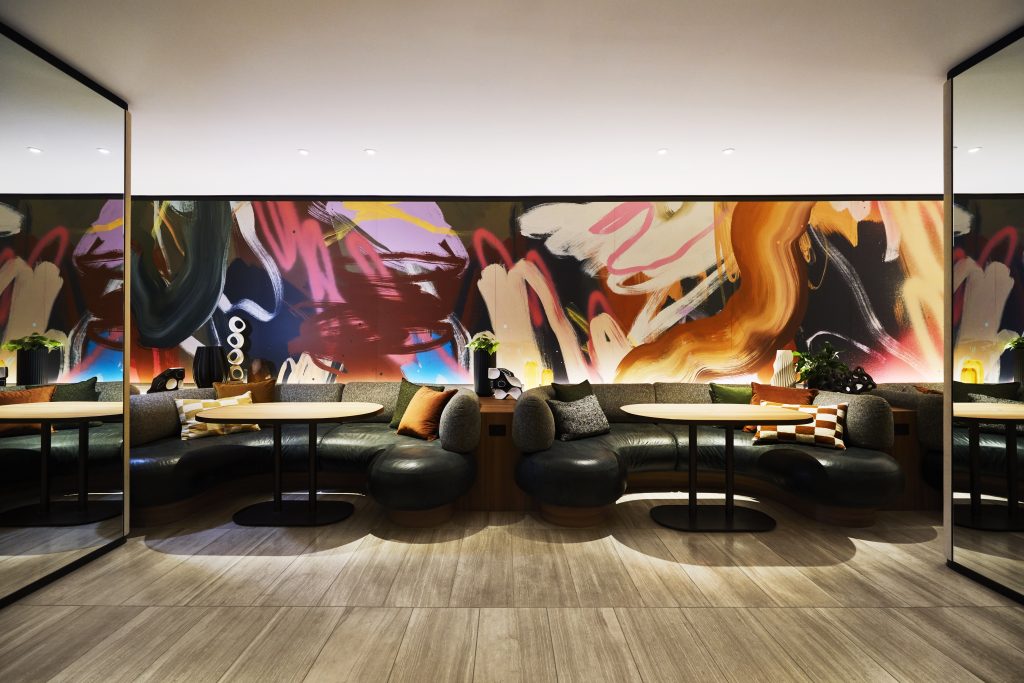
Owing to the pre-existing working relationship the duo had with Rydges general manager Lee Davey, finding the perfect space to experiment and wade into uncharted creative territories was the easiest part of the process. The only caveat given to them by Davey was not to damage the existing walls.
“We’ve always believed in making space for creativity, but with Spectra, we truly handed over the reins,” Davey says. “It’s been great seeing our spaces reimagined through new eyes. We’re proud to say it was a first for us too.”
When art crosses into the design world
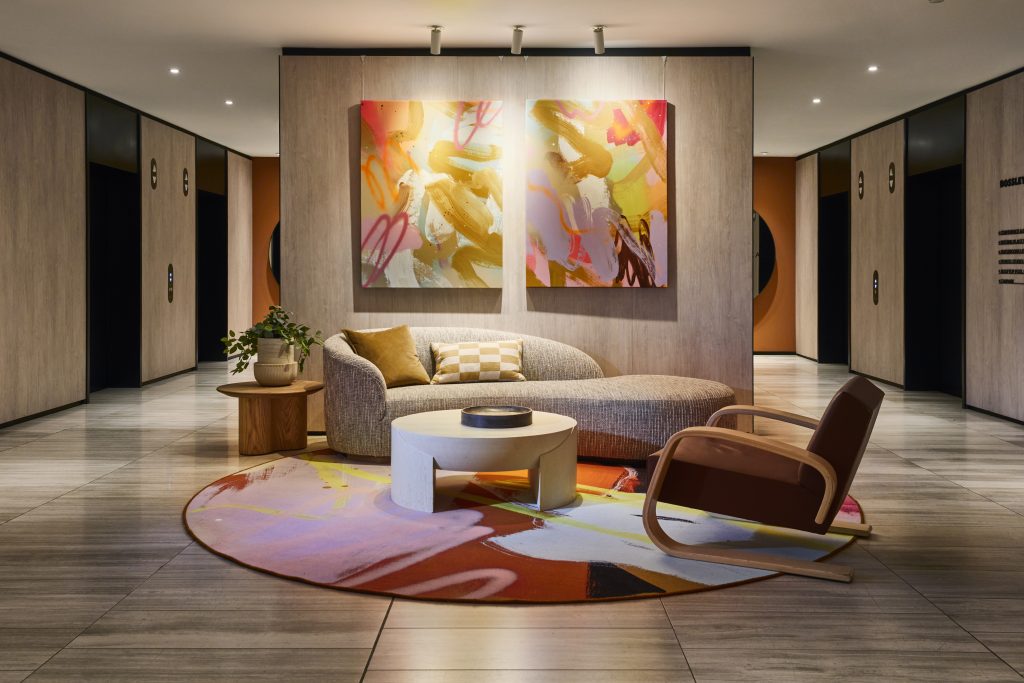
So where does one start when the canvas in front of them is quite literally hundreds of square meters?
“When we started thinking about doing something for Melbourne Design Week, we started thinking about the possibilities that exist when an artist crosses the art/design divide,” Carran says. “Unlike fine art, design has a purpose. We knew that if we were going to push the boundaries here, we needed a space that was alive with people. Rydges offered this, and what better place to do a project like this than in the heart of Melbourne, which is known for its vibrant culture scene and laneway art.”
Adding to Carran’s sentiment, Martinich adds, “Art sings outside of the traditions of the gallery space where it actually becomes integrated into the real world”.
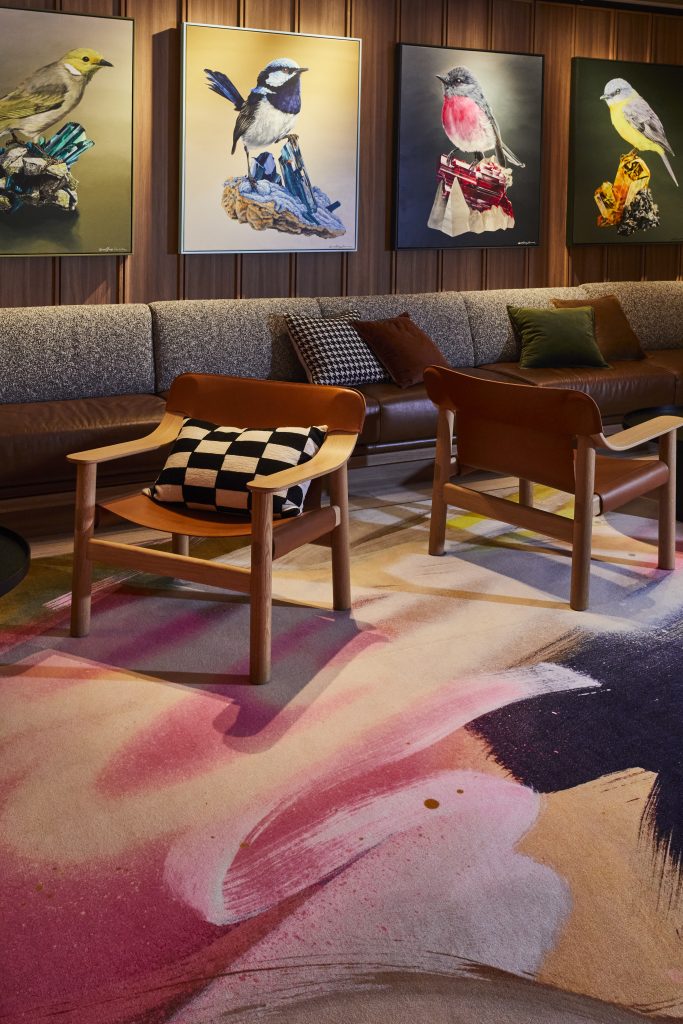
Rydges does indeed seem to sing with the introduction of Martinich and Carran’s exuberant swaths of colour adorning the walls, windows and floors. From the moment you cross the threshold, you’re enveloped by colour and taken on a journey into an abstract landscape that feels as far away from the concrete jungle of the street as it could be – for a functioning CBD hotel at least.
Despite the open-ended potential that creating this body of work presented for Martinich, the need to rein in her exuberant electric colour palette to be site responsive presented one of the greatest challenges. “It was a little bit outside my regular practice because a lot of my work is extremely vibrant,” Martinich says. “To bring it into a space that was a bit more conservative, a bit more earthy and successfully integrating into those palettes, gave me another stage to demonstrate my abilities as a colourist and as an artist working in the interiors world. Working with browns, dark greens and clays, while still maintaining my aesthetic and the essence of my work, without compromising that layer of excitement and energy, was a surprising challenge.”
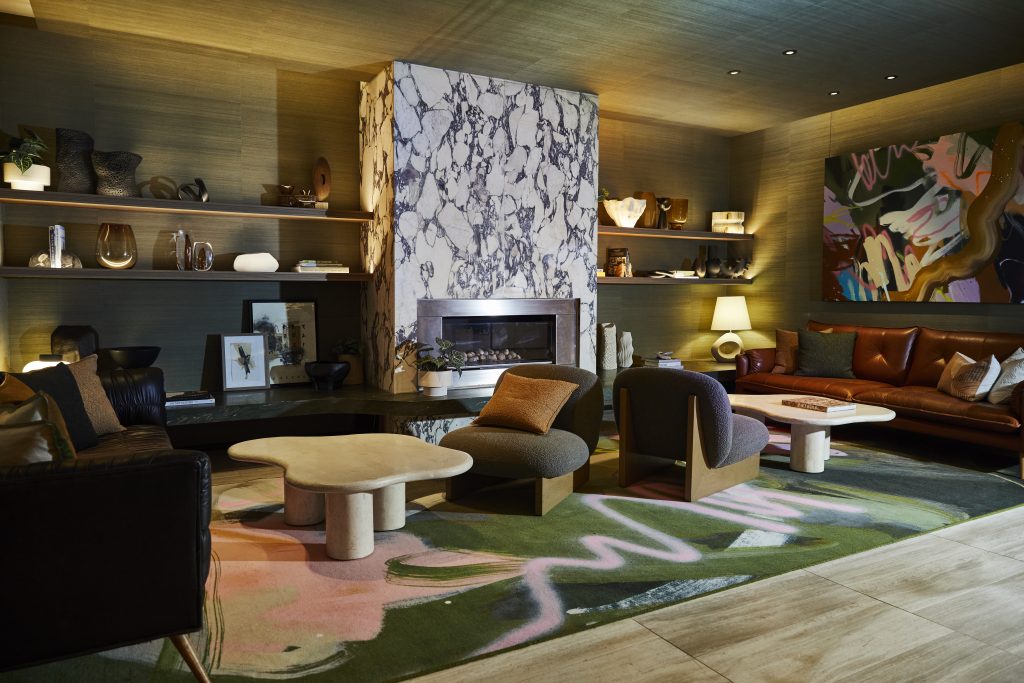
While the colour palette may have been a departure from Martinich’s typical practice, the walls and floors resonate with the colours of Australia, perfectly fitting for a destination hotel experience in the heart of Australia’s cultural capital.
“These are all the colours of Spring Creek and the coastal headlands around Geelong where we live,” Carran says. “The soft pastel pink, that’s the Anglesea heath. All of these colours have a biophilic resonance to them. They’re an intentionally emotive response to the colours of Australia and our own experiences of this land – the times I go fishing with my son or when we go camping. These are all the exact same greens, the shadowy dark olives and the rusty colours of the soil. They’re all here.”
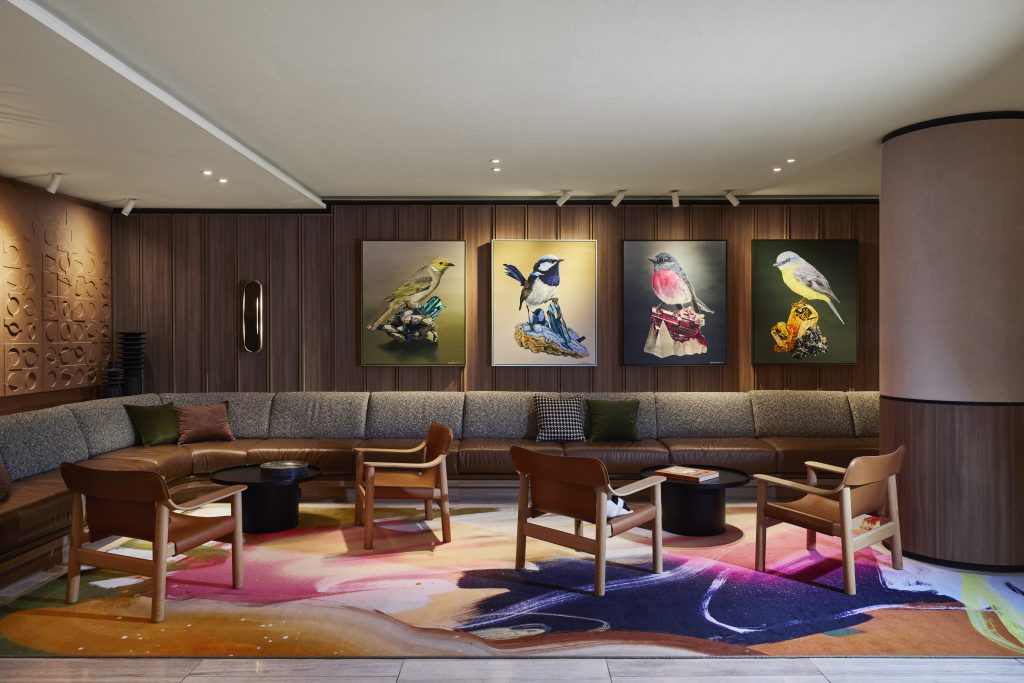
From Rydges’ perspective, this is the first of many collaborations, and with good reason. “It transformed our lobby into a place of discovery and connection and reinforced Rydges Melbourne as a hotel that’s proudly part of its local community,” Davey says.
This is where art perhaps comes into its own, excelling in directions where design’s capacity is limited. Unlike design, art has the unique ability to capture the visceral immediacy of place, hold it still and recreate it through the processes of creative distillation and interpretation, without the need to be in any way functional. In this way, art combined with design provides an entirely new mode for experiencing and perceiving a place – introducing an unsuspecting audience to something surprisingly unexpected, fresh and inspiring.
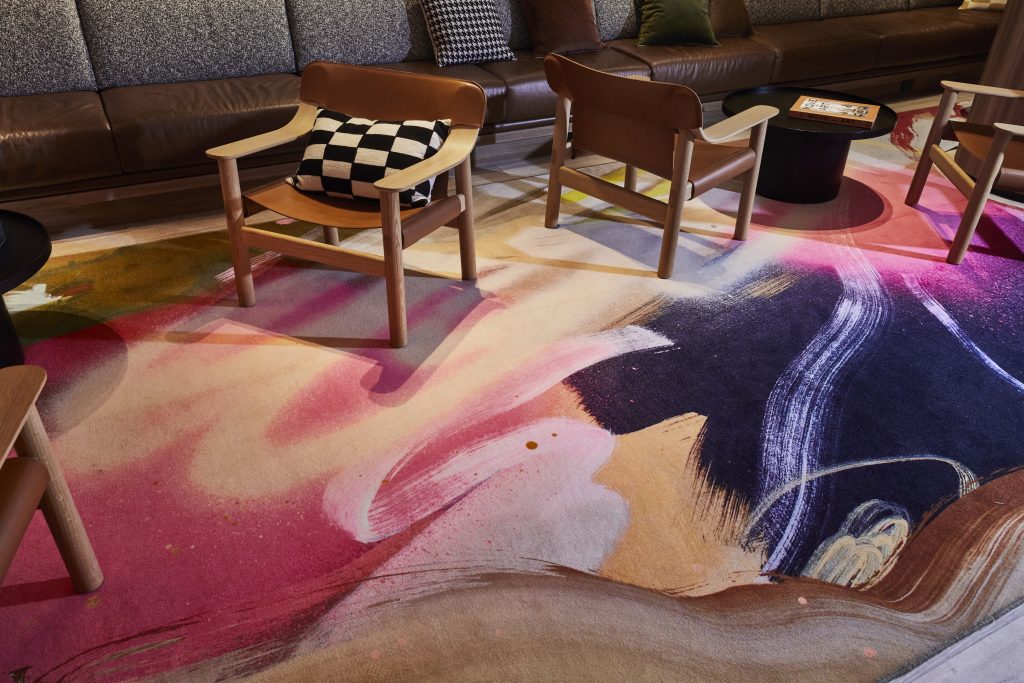
This is especially true of temporary site-specific art that co-opts a public space to transform it into an immersive, multi-dimensional event-like experience. Unlike a traditional gallery setting, where the art is presented on pristine white walls, perfectly lit and destined to be sold to collectors, when temporary art and the built world collide, both come to life in new, unpredictable ways. Feeding off each other, both are elevated beyond what they are.
While Spectra may be gone, for those who had the opportunity to experience it, the memory and the feeling of surprise, delight and joy will remain.
All images supplied.
You Might also Like


Related Stories

© Niche Media 2026