

Revitalising Ian Potter State Theatre, Melbourne’s home of opera and ballet
Revitalising Ian Potter State Theatre, Melbourne’s home of opera and ballet

Share

After 40 years of hosting the performing arts, Arts Centre Melbourne’s heritage State Theatre is undergoing preservation, modernisation and meticulous gilding before reopening this year.
The State Theatre has been closed for almost two years for its first refurbishment since doors opened in 1984. The revitalised venue is set to reopen in October 2026, making it the first completed milestone in the $1.7 billion Melbourne Arts Precinct Transformation.
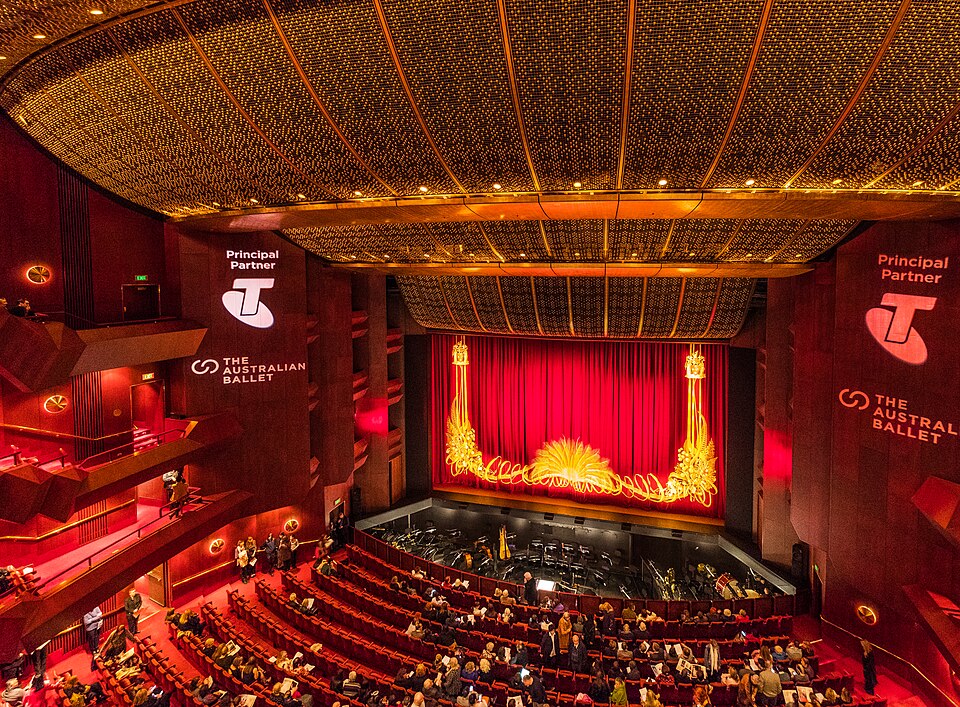
Home to The Australian Ballet and Opera Australia, the theatre was originally designed by Academy Award-winning set and costume designer John Truscott. When it reopens as the Ian Potter State Theatre, it’s “going to feel like the theatre you know and love”, says David Harvey, the design and technical director for the Arts Centre’s Reimagining Project.
“That was really important to us,” he continues. “We’ve worked hard to preserve or replicate the heritage characteristics, while weaving in the modern elements that audiences now expect.”
Accessible upgrades
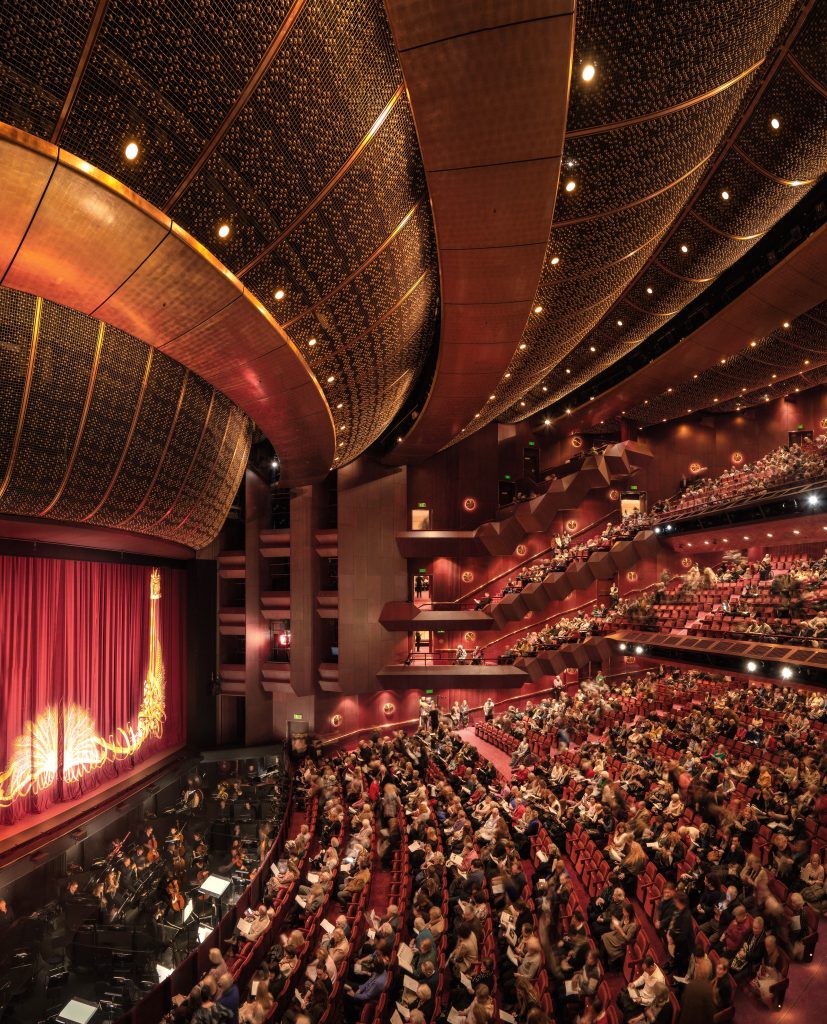
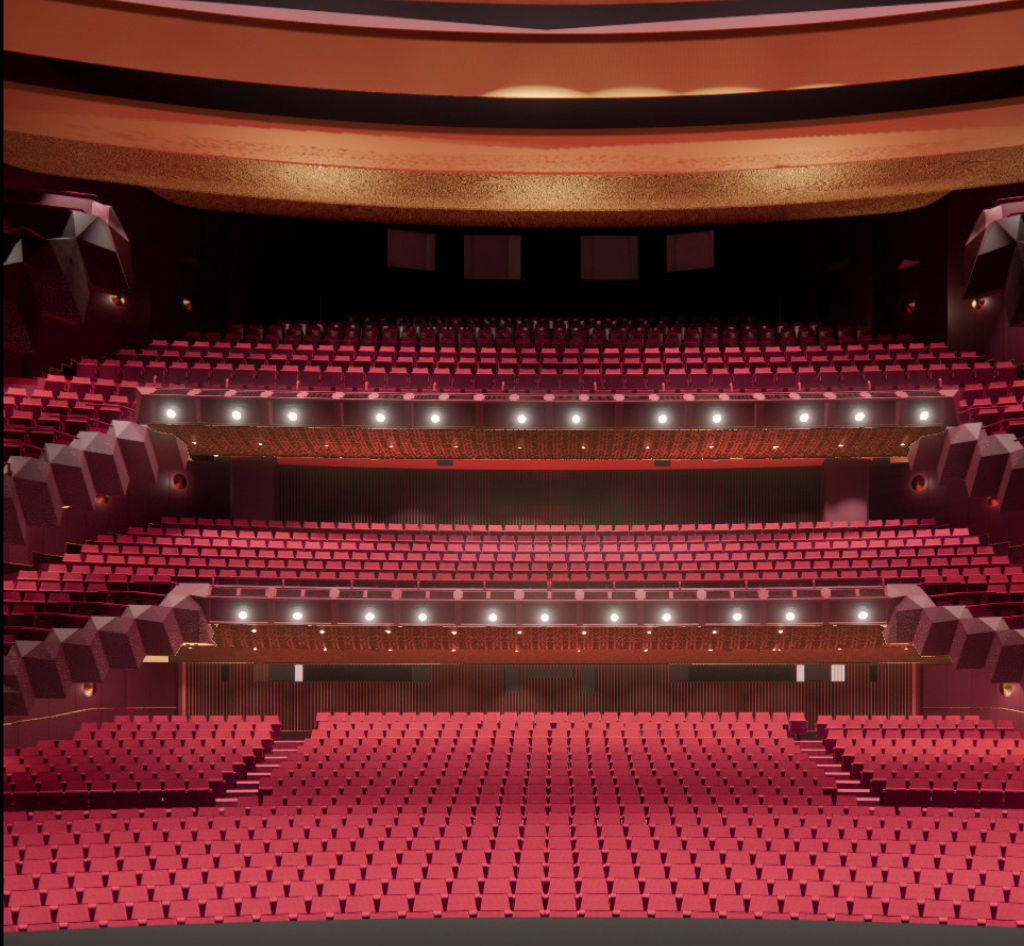
A key mission for the State Theatre renovation has been to improve accessibility. According to Harvey, the auditorium’s “most notable addition” will be new aisles in the stalls and circle, which are set to significantly improve access to seats toward the centre of theatre.
For the first time, patrons with mobility challenges will be able to choose new seating across all three levels. “The new aisles, passenger lifts and wheelchair positions in the stalls all improve the accessibility throughout the auditorium, without us having to dramatically reshape the space,” he says.
Balancing modernisation and preservation
Harvey has worked in close collaboration with design partners and NH Architecture to respect John Truscott’s original vision for the theatre, including its rich red velvets, finely detailed timber elements and the glistening gold ceiling.
“We are preserving Truscott’s theatrical opulence that defines the auditorium’s identity,” Harvey says.
To maintain its warmth, the team has “meticulously conserved” original timber wall linings that frame the auditorium. Behind the scenes, they have upgraded systems that were approaching the end of their life cycles, including air-conditioning, fire protection, sound and lighting. These services are located within existing cavities and service zones, carefully woven in among the heritage characteristics.
“The objective was clear – enhance performance and compliance and make this invisible,” Harvey says. “The audience experience remains anchored in live performance front and centre.”
Sound enhancements
According to Harvey, a combination of form, material selection and technology will enhance acoustic performance.
A new immersive surround sound system using “state-of-the-art technology” has been discreetly integrated within the existing fabric, he says. “While the system is visually recessive, it will dramatically improve the clarity and dynamic range of the sound in the auditorium.”
New timber floors made of sustainably and locally sourced Australian blackbutt have also been designed to enhance acoustics. They’re finished in a unique red stain – a colour set off by the new red carpet in parts of the auditorium.
Plush red velvet seating complements reflective timber on the front and back of each seat. This supports acoustic balance while reinforcing the theatre’s rich material palette.
Gilding the centrepiece
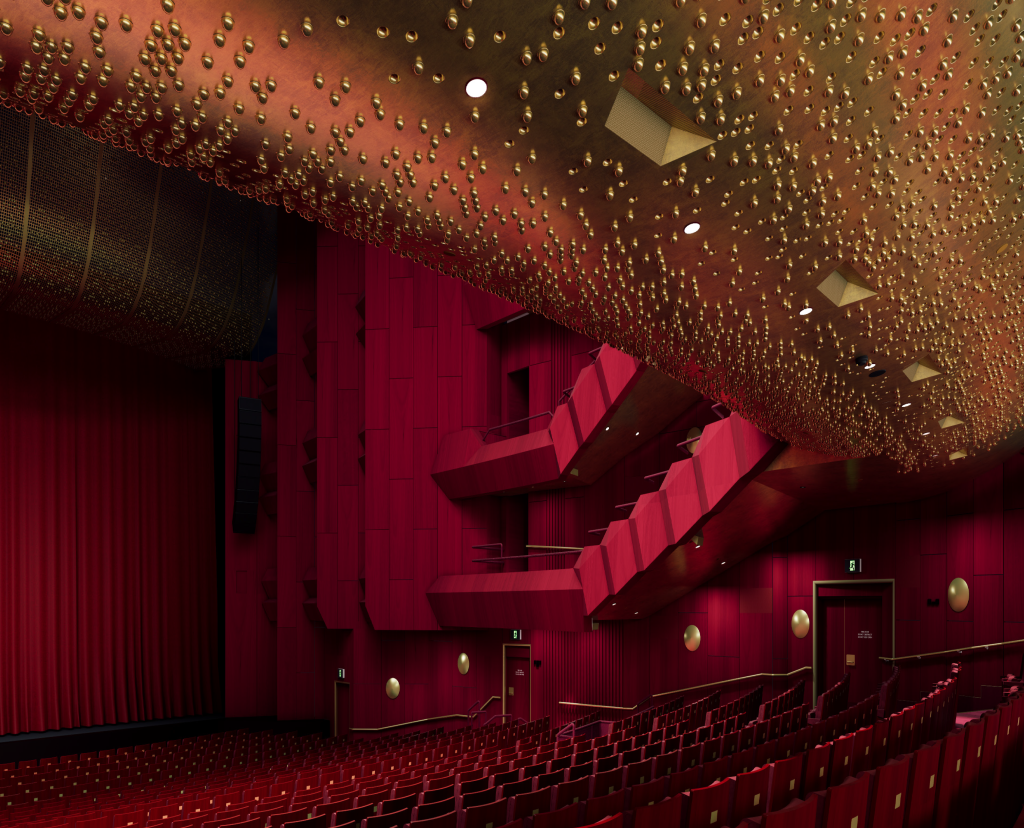
One of the theatre’s most cherished features is the original Truscott ceiling. This striking composition of brass mesh is embellished with a painted gold-leaf finish and approximately 75,000 perforated brass spheres. Regarding the refurbishment, CEO Karen Quinlan AM says Arts Centre Melbourne is committed to ensuring it “shines like it did on opening night”.
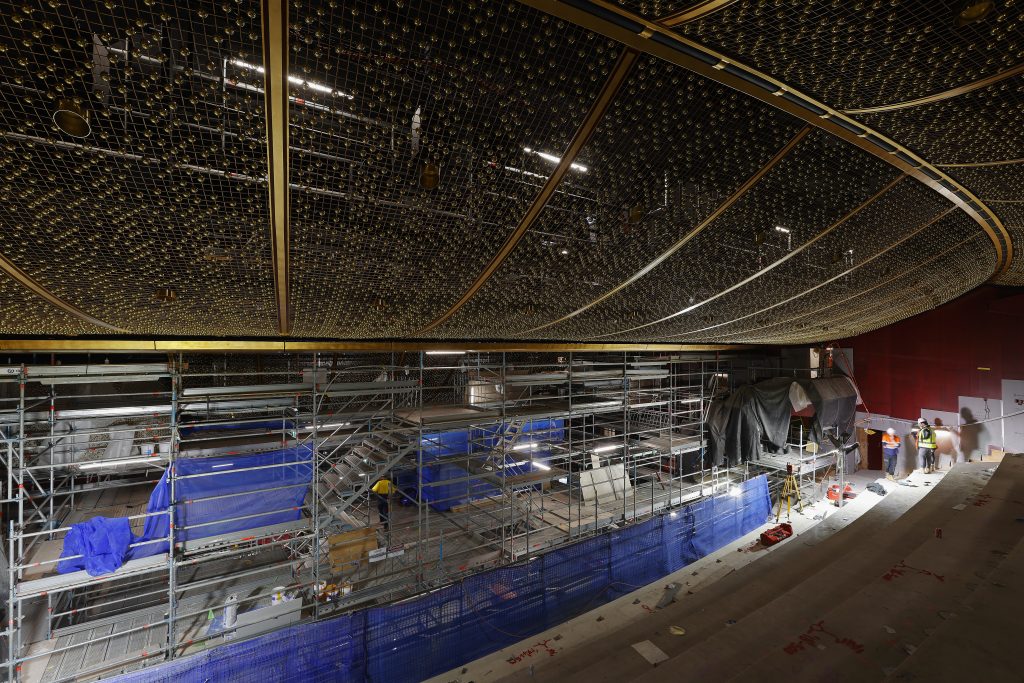
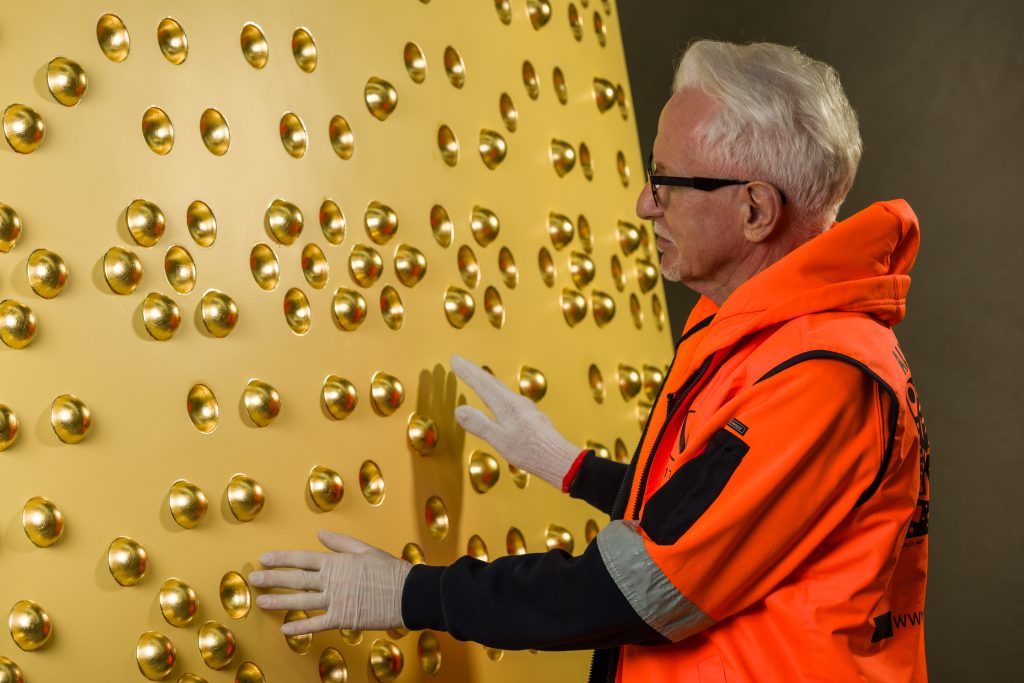
To achieve this, the project commissioned expert gilding firm Walkley Art to patch-repair surfaces of the original Truscott soffits and beams. Marcus Walkley and his team of artisan gilders have also hand-gilded an entirely new curved, Shape Shell ceiling designed by NH Architecture and Snøhetta, inspired by the snowflake pattern on Truscott’s original. “The new ceiling is a custom mould with thousands of concave and convex shapes that will improve the room’s acoustic response throughout the auditorium,” Harvey explains.
Walkley says he and his team have worked on this project for more or less six days a week since May 2025 (with a few breaks in between). And they’re still going.
“For about two months, there were 12 of us,” he says. “The rest of the time there have been four.”
Together, they have hand-gilded approximately 20,000 convex and concave semi-spheres.
“I would estimate that there’s approximately 80,000 squares of this material hand laid onto the two articulated ceilings,” he says.
Shaping the experience of the Ian Potter State Theatre
For Harvey, the accumulation of many thousands of small decisions ultimately defines the project.
“Each one may seem minor in isolation, but together they shape the entire experience of being in the theatre,” he says.
Following the reopening of the Ian Potter State Theatre, works will continue throughout the Arts Centre Melbourne Theatres Building, including the construction of a new and accessible stage door, an expanded loading dock, space for a new flexible rehearsal area with an adjoining function room, and new places to eat and drink.
Related: New Zealand’s new BNZ Theatre.
You Might also Like


Related Stories

© Niche Media 2026