

30UNDER30’s Zac Vassallo designs and makes as an advocate for nature
30UNDER30’s Zac Vassallo designs and makes as an advocate for nature

Share

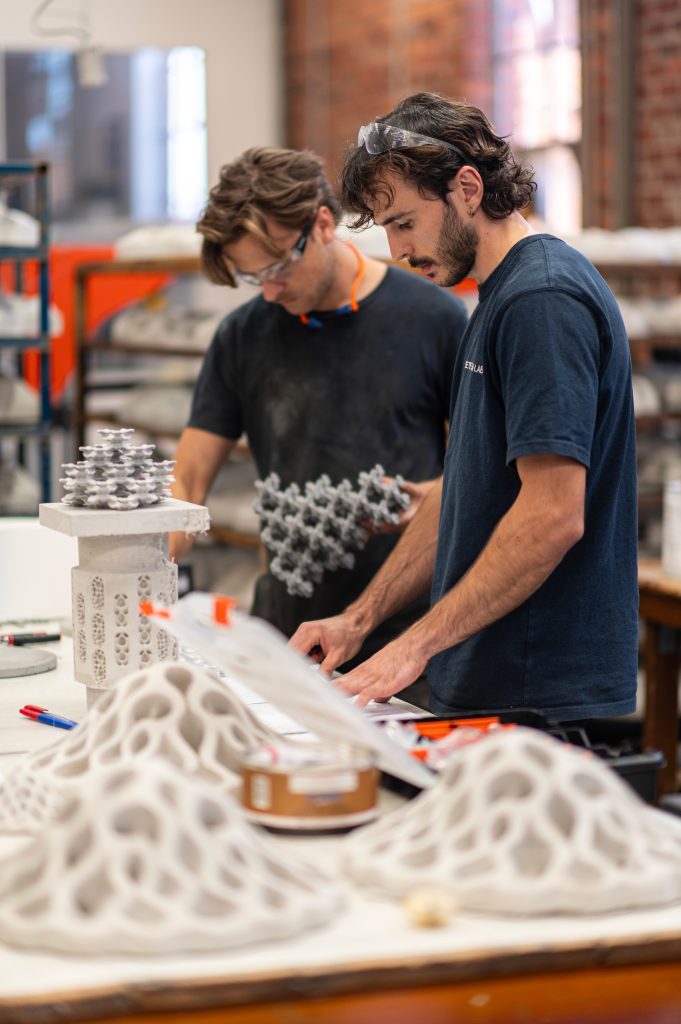
Zac Vassallo is an industrial designer at Reef Design Lab, a company that develops marine habitat infrastructure for a range of research and commercial applications. It’s a perfect fit for someone who has a firm conviction that “man-made creative objects should justify their existence in the world”. Named as one of Australian Design Review‘s 30UNDER30 for 2025/2026, he explains how his work sits in the space between art, engineering and ecology.
Australian Design Review: What do you think are the benefits of mingling with professionals from different disciplines – architects with interior designers with product designers etc?
Zac Vassallo: Learning how other professionals work to share their creativity with the rest of the world provides an opportunity to challenge and adjust my own expression of design. As designers, it’s easy for us to work ourselves into creative patterns that tend to have a similar aesthetic or flavour – and that’s not inherently a bad thing. Being known for a particular process or outcome is one of the ways we create a name for ourselves.
Nonetheless, when we step back to absorb fresh perspectives from creatives in other fields, the opportunity to share knowledge and inspiration is empowering. Good design isn’t made in a vacuum; it’s shaped by diverse and passionate individuals who learn from each other and care about people and the planet.
What do you think are the most pressing challenges for designers coming up to 2030?
As the challenges of climate change emerge, there is a growing appetite from the public to include nature and improve biodiversity within the built environment. In response to this, I think we need creatives who can offer holistic solutions and work collaboratively with other disciplines. Many projects adopting our products are often research-based and take time to prove their efficacy. Therefore, it can be a challenge to work within time frames that are longer than standard build projects to see results that improve biodiversity and support a healthier ecology. Solutions need to consider ecological performance, social value, government regulations, engineering constraints and, importantly, they need to be cost-effective to produce and replicate.
How would you describe your work?
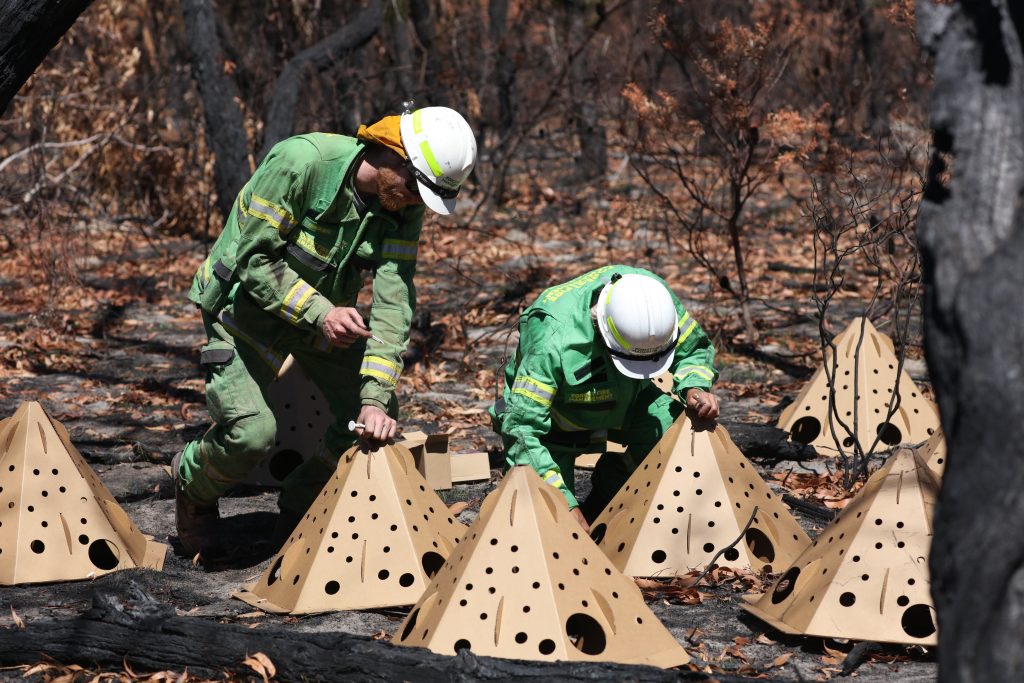
My work at Reef Design Lab lands somewhere in the space between art, engineering and ecology. Not being clearly defined by any of those categories allows freedom in the form of the product to take place. Over time, nature takes effect and the products evolve as they interact with the environment. While my work is creative, the outcomes are required to meet logistical and functional parameters to be pragmatic solutions. Generating ecological and social value drives the decisions I’m making in the design process.
What has been a highlight in your career so far? (For example, a project, collaboration, workplace, client, mentor, trip, award, realisation etc?)
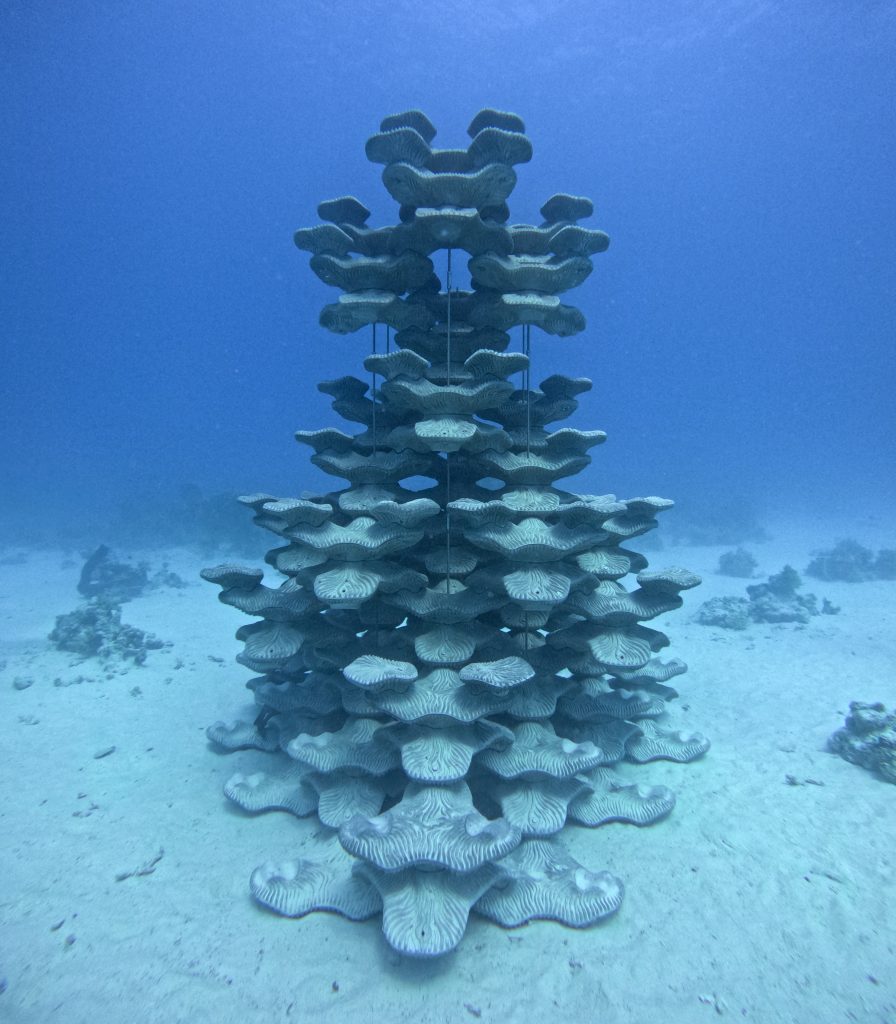
Since starting work at Reef Design Lab, it’s been a goal of mine to help install an artificial reef while diving. In August 2024, I had an opportunity to fly over to the Red Sea and train dive technicians on how to assemble our Modular Artificial Reef Structure II (MARS II) system underwater. When we finished building our first three-metre tall structure, I experienced this surreal moment of accomplishment. Nearly two years had passed since Alex Goad and I had first started the design process; so much time and effort went into development, production and planning. Placing the final piece on top of the structure will always be burned into my memory as a great achievement.
What do you do to kickstart your creativity when you’re in a rut?
I always start designing by sketching first. I’ve found removing expectations of an outcome and following the process of marking the page is more constructive than designing with intention too soon. Allowing myself to feel the creative muscle memory before getting into the specifics of a task helps me to gain momentum.
What guiding values drive you and what kind of impact do you hope to make through your work?
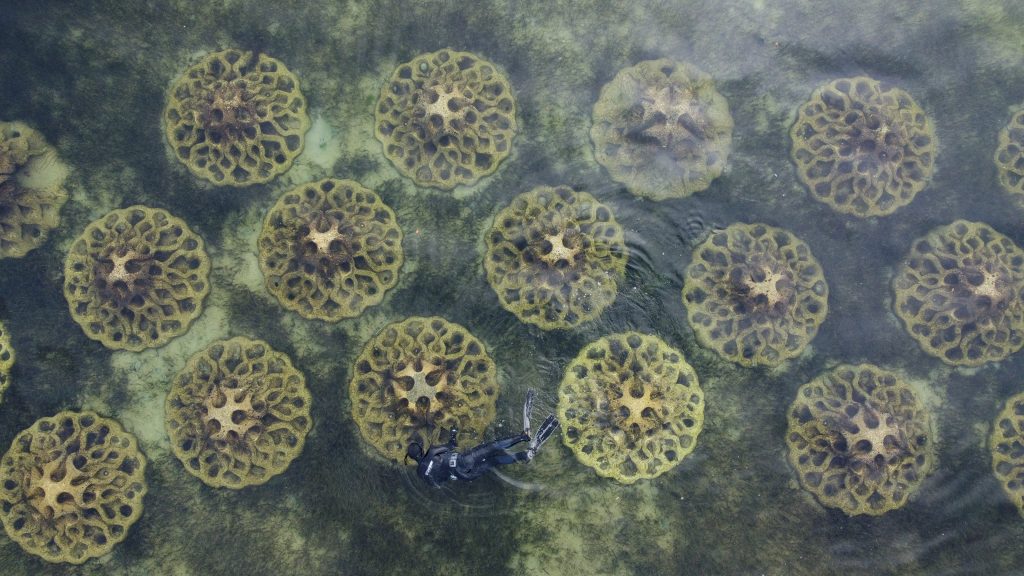
The interconnected nature of the environment, materials, places and people guides me within the design industry. Designing objects that enhance biodiversity and restore habitat is an incredible privilege, and this motivates me to make objects that work to support and strengthen the natural environment. I’m lucky that I can choose to work with it.
There are a limited number of opportunities like this in the industry, but I think we’re seeing that change slowly. We’re seeing clients focus on the ecological and social value in conjunction with the engineering performance of products and structures within the built environment. The public want to see more action to combat climate change and restore habitat. Being a part of this transition and motivating young designers to create for ecology is my main aspiration.
Top image: MARS II, Red Sea, Reef Design Lab. Photo: Supplied.
Australian Design Review’s 30UNDER30 is brought to you by major sponsor Neolith, alongside partners Designer Rugs, Laufen, Krost, Miele, Signature Appliances powered by Miele and Tongue & Groove.
Australian Design Review is also grateful to our 30UNDER30 practice partners AJC Architects, BVN, Cera Stribley, COX Architecture, Genton, GroupGSA, HDR, Richards Stanisich, RIZEN Atelier, Rob Mills Architects, Rothelowman, SJB and Design by WBL for helping us foster the future of Australian design.

© Niche Media 2026