

Melbourne show garden makes the case for wilder, smarter backyards
Melbourne show garden makes the case for wilder, smarter backyards

Share
A 310-square metre show garden is making the case that small green spaces can carry the ecological weight of an entire city.
When award-winning landscape architect Matt York began sketching the concept for We the Wild, Ratio Consultants’ entry in this year’s Melbourne Flower and Garden Show, his mind wasn’t on aesthetics first but on Melbourne, a city of five and a half million whose backyards could collectively either contribute to or quietly undermine the ecological health of an entire metropolis.
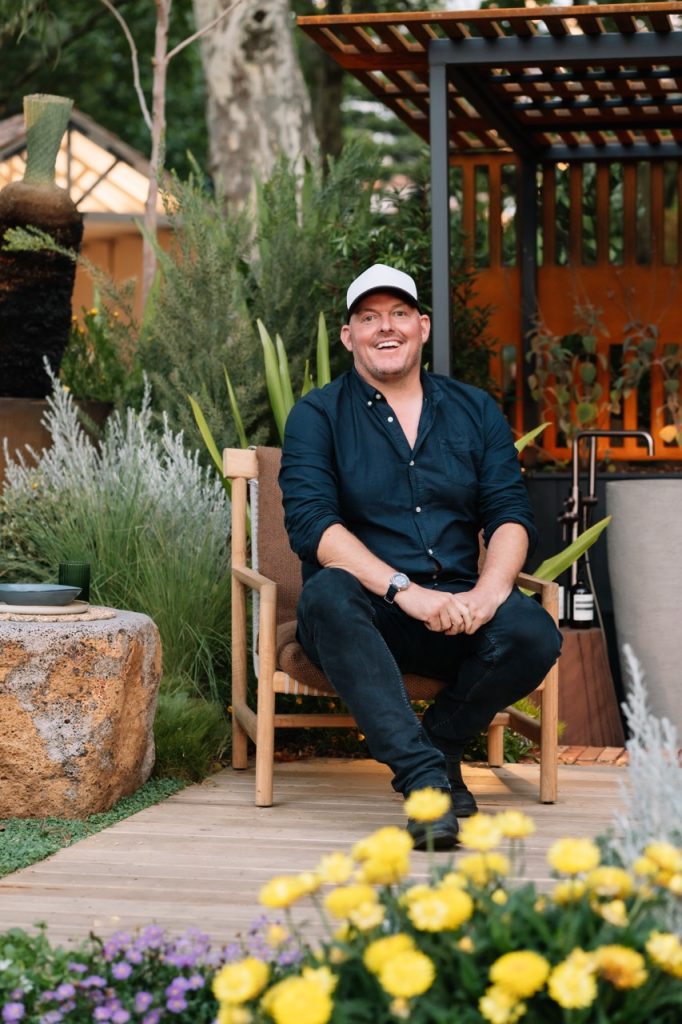
“As Melbourne becomes more populated, we really need to be thinking more about the responsibility of our domestic landscapes,” York says. “Not only for those individuals and their specific health and wellness, but also the responsibility of the city and its environmental quality. Suddenly a backyard or a domestic landscape is also a contributor to the broader mosaic of the city as a pollinator, its urban cooling, its biodiversity, its water quality and all of those layers.”
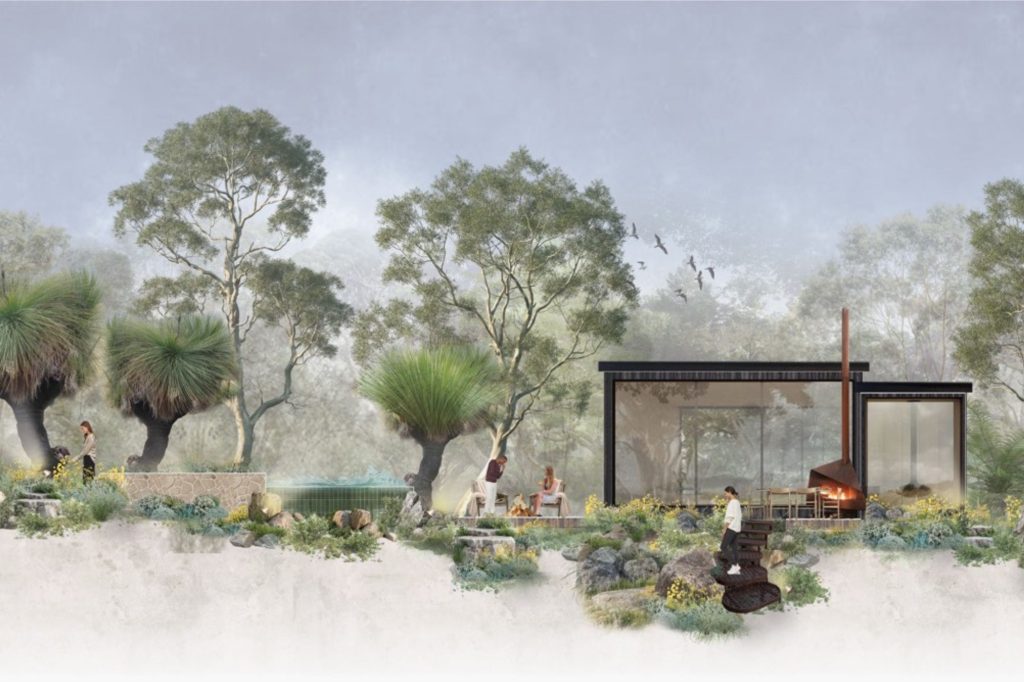
That thinking is embedded in every square metre of the 310-square metre installation, which opens at the Melbourne Flower and Garden Show on 25 March. Inspired by Victoria’s southern coastline, the sweeping granite outcrops of Wilson’s Promontory, the windswept eucalypt corridors of the Otways, We the Wild translates the restorative power of grand natural landscapes into a format that could plausibly exist at the bottom of a suburban block.
Metrics as a design tool
The sustainability credentials are considerable, with almost 70 percent of the site dedicated to softscape, while a mature tree canopy delivers 47 percent coverage across the site. One hundred percent of stormwater is captured for on-site reuse, and every piece of timber used in the build is recycled. The planting palette is entirely native Australian species, and the entire installation will be repurposed after the show.
What makes these figures notable is less their scale and more how they were generated. York is deliberate in describing landscape performance as a practice discipline, one that shapes design from inception rather than arriving as an afterthought through certification processes.
“The intent of this show garden was to start with these metrics and actually showcase how that can influence the design outcome,” he says, “not something that we do as a certification process afterwards.” The result is a garden where ecological rigour and spatial poetry are inseparable by design, where canopy cover goals and the evocation of coastal light work in tandem rather than tension.
Drawing on deep geological knowledge
York’s 25 years of practice across Australia, Southeast Asia and Africa have given him an unusually broad frame of reference for thinking about place and climate. He describes an unexpected synergy between Melbourne’s basalt geology and the reactive clay soils he encountered working in Kenya – a reminder, he says, that environments we assume to be radically different often share more than their surfaces suggest.
More broadly, his international work has sharpened his appreciation for Melbourne as a design context. “It’s interesting when you grow up in a city, when you study in a city that is regarded globally, but that we almost take for granted,” he says. Currently working on a project in Lagos nested between two lagoon networks, York speaks of collaborating with local communities from the village of Epe to understand how mangrove systems function, a process he describes as a genuine exchange of knowledge rather than a one-directional transfer.
That spirit of reciprocity is woven into We the Wild. Every plant, stone and piece of furniture has been sourced through local partners and suppliers, rooting the installation firmly in Melbourne’s people and place, including an acknowledgement of Gadubanud Country, the coastal landscapes of which informed so much of the design’s character.
The one move every homeowner can make
When asked to distil the garden’s lessons into a single action for Melbourne homeowners, York doesn’t hesitate: go fully native. “I think there’s still quite an education around the power and the diversity of the Australian native palette,” he says. “You can have seasonal excellence in your backyard throughout the year.”
The diversity, robustness and year-round floral display of native species remain widely underestimated, he argues, and closing that knowledge gap is one of the garden’s central ambitions.
There is also something worth noting in York’s view of gardens as inherently unfinished things. “There’s no such thing as a finished garden,” he says, a statement that applies as much to We the Wild – which will live on in new forms after the show closes – as it does to the broader project of reshaping how Australians think about the space between their homes and the street.
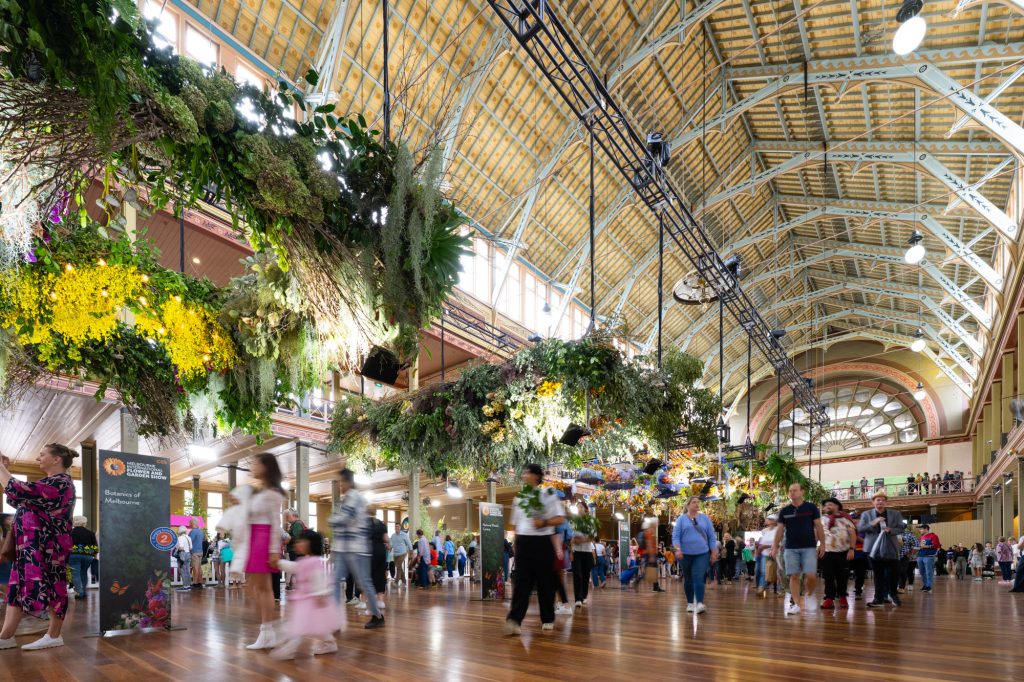
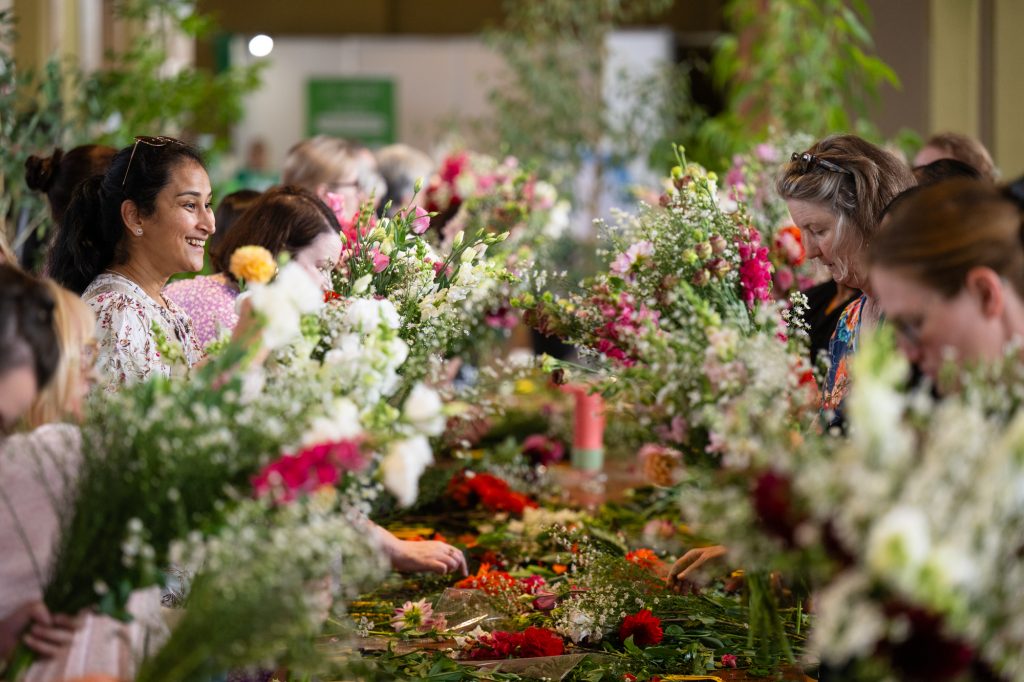
The Melbourne Flower and Garden Show runs from 25 March at the Royal Exhibition Building and Carlton Gardens.
Top image: In Ratio with Africa – a show garden by Matt York.
You Might also Like

Related Stories

© Niche Media 2026