

The West Gate Tunnel Project by Wood Marsh
The West Gate Tunnel Project by Wood Marsh

Share
More than a decade in the making, Melbourne’s landmark West Gate Tunnel Project designed by Wood Marsh opened in December.
The rubber has well and truly met the road for Melbourne’s largest road infrastructure project since CityLink opened in 1998. The State Government counted one million trips through the West Gate Tunnel between its opening on 14 December 2025 and 7 February.
It’s a relatively slow start, considering more than 200,000 vehicles use the West Gate Freeway every day. However, the Government said it expected traffic to grow as people returned from summer holidays and familiarised themselves with this major piece of ‘city-shaping’ infrastructure.
Project scope and purpose
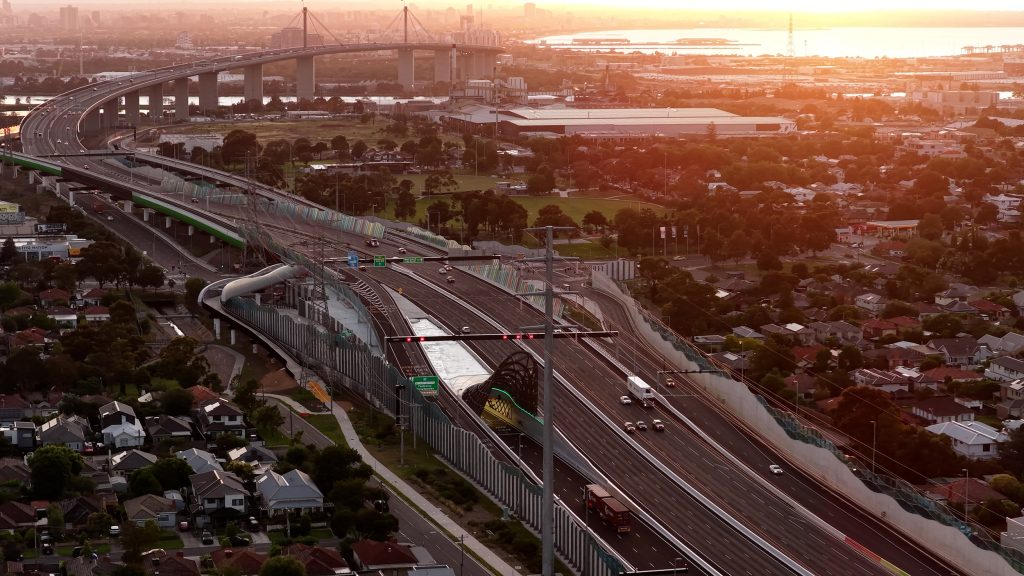
Significantly more than a tunnel, the West Gate Tunnel Project encompasses a 17-kilometre corridor of new tunnels, ramps, bridges and elevated roadways. It was designed to relieve congestion on the West Gate Bridge and remove trucks from residential streets in the inner west.
Located underneath Yarraville, the West Gate Tunnel is itself divided into two: the four-kilometre westbound Eureka Tunnel, and the 2.8-kilometre citybound Bundawanh Tunnel.
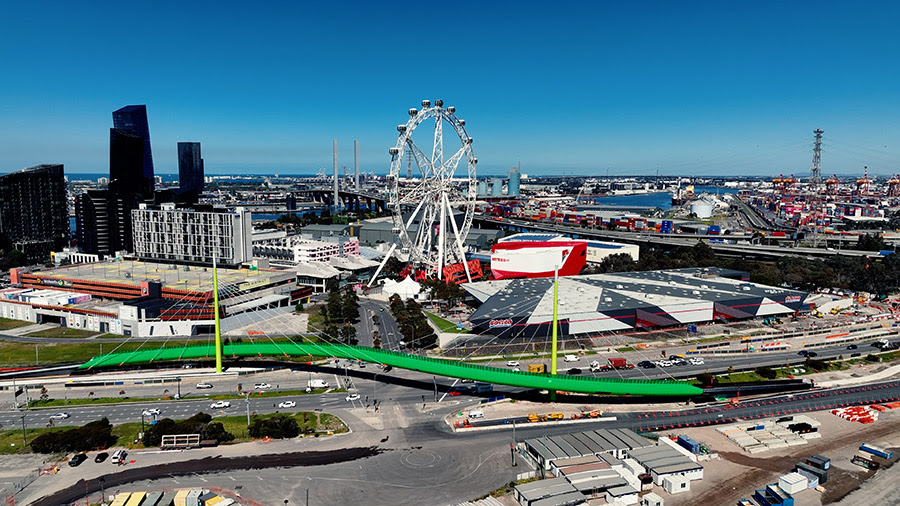
The urban design for the overall project includes more than nine hectares of open space and incorporates a suspended 2.5-kilometre long, car-free bike path – named the ‘Dixon Veloway’ – located between Shepherd Bridge in Footscray and the city.
The consortium
Wood Marsh was the architecture and urban design practice behind the West Gate Tunnel Project, as part of a consortium with Tract Consultants (landscaping), CPB Contractors and John Holland (delivery).
According to Wood Marsh’s founding partner Roger Wood, his practice was selected by John Holland to be part of its consortium back in 2014 because of its urban design advantage. The pair had worked together on previous infrastructure projects such as the award-winning Eastlink Freeway project in 2009, Coburg and Moreland Stations in 2023, and Preston Level Crossing Removal Project in 2024.
“From the outset, they thought that urban design, architecture and landscaping were critical to this inner brownfield site,” Wood tells Australian Design Review.
Winning the bid
The bid process saw Wood Marsh make changes to the reference design provided by TransUrban and the Victorian Government.
“It took at least a year of weekly meetings, going and presenting, developing and listening to all the players from TransUrban and the Government side,” Wood says.
During this time, the consortium increased the lanes from eight to 12. It moved the reference design alignment from the northern side into the middle of Footscray Road to keep away from existing trees, with a view that there would be housing developments within 25 years time. “We wanted to keep the road away from houses and use the existing trees as a screen for when they did go ahead,” Wood says.
The bid also moved the outbound tunnel one kilometre closer to Geelong. “Because of the tightness of the corridor, it meant that they could get the tunnel boring machine out onto vacant land without disturbing local residential neighbourhoods,” Wood explains. “Also, it meant that traffic was kept away from houses.”
These two features, plus the design, were apparently key to the consortium’s success.
Eel traps, rainbows and other new landmarks for Melbourne roads
The West Gate Tunnel Project presented an opportunity to create new eye-catching road infrastructure architecture, adding to such Victorian icons as the yellow and red ‘cheese sticks’ and the rainbow-lit ‘ribcage’ on the Melbourne International Gateway, designed by Denton Corker Marshall (DCM) in the late 1990s.
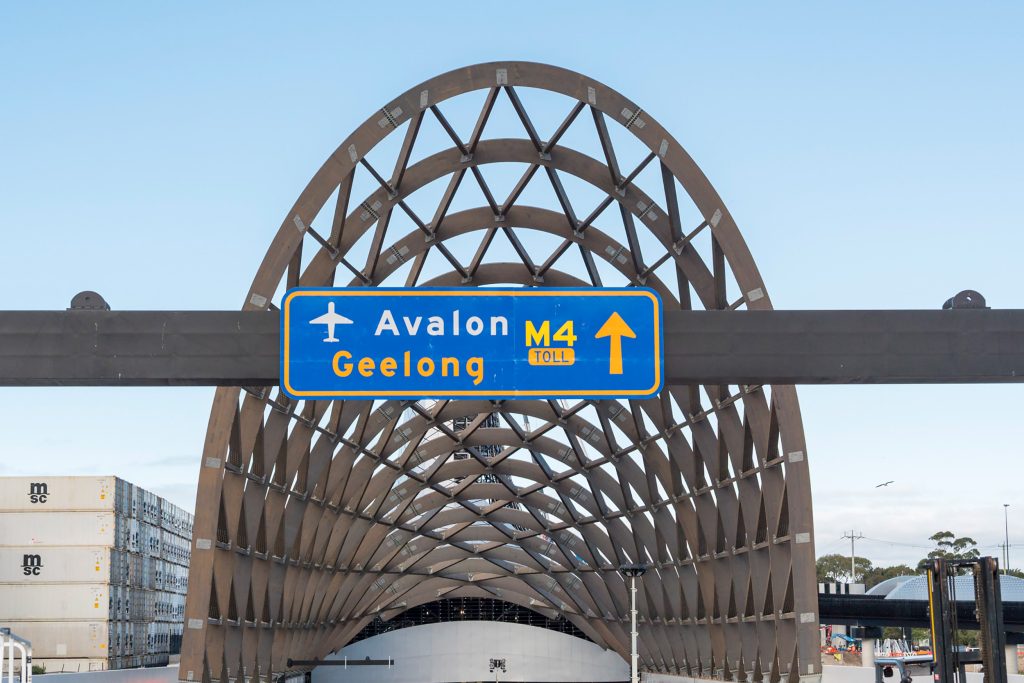
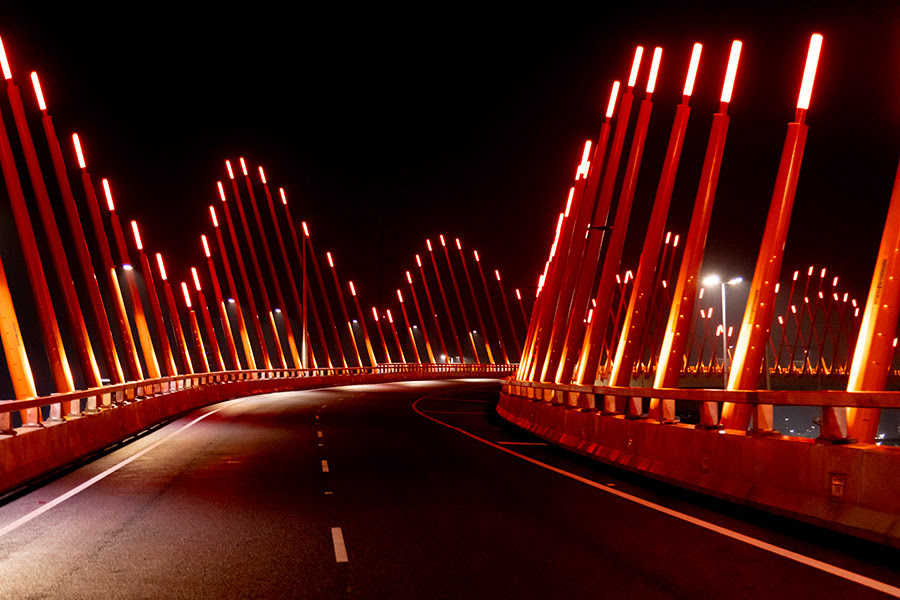
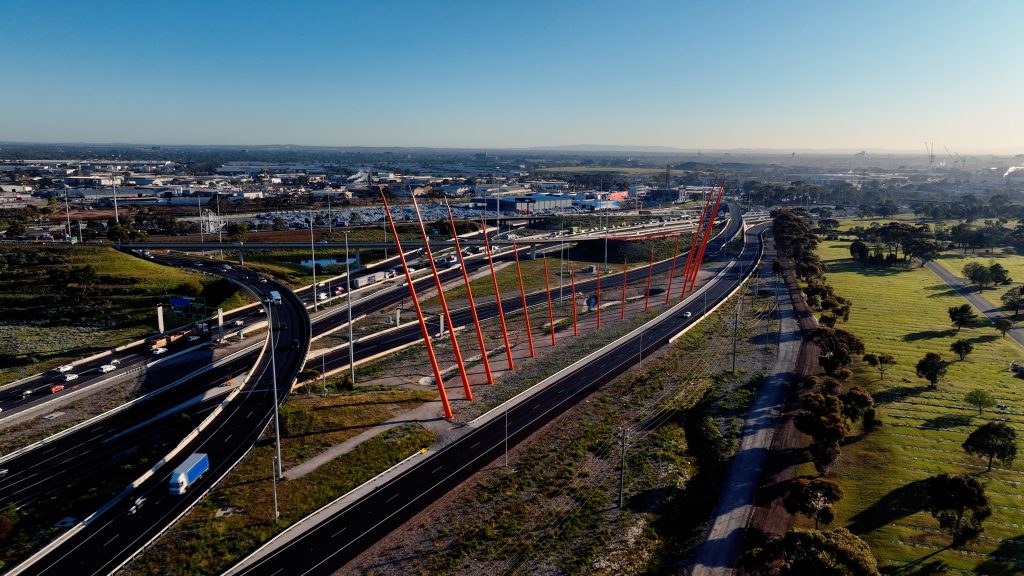
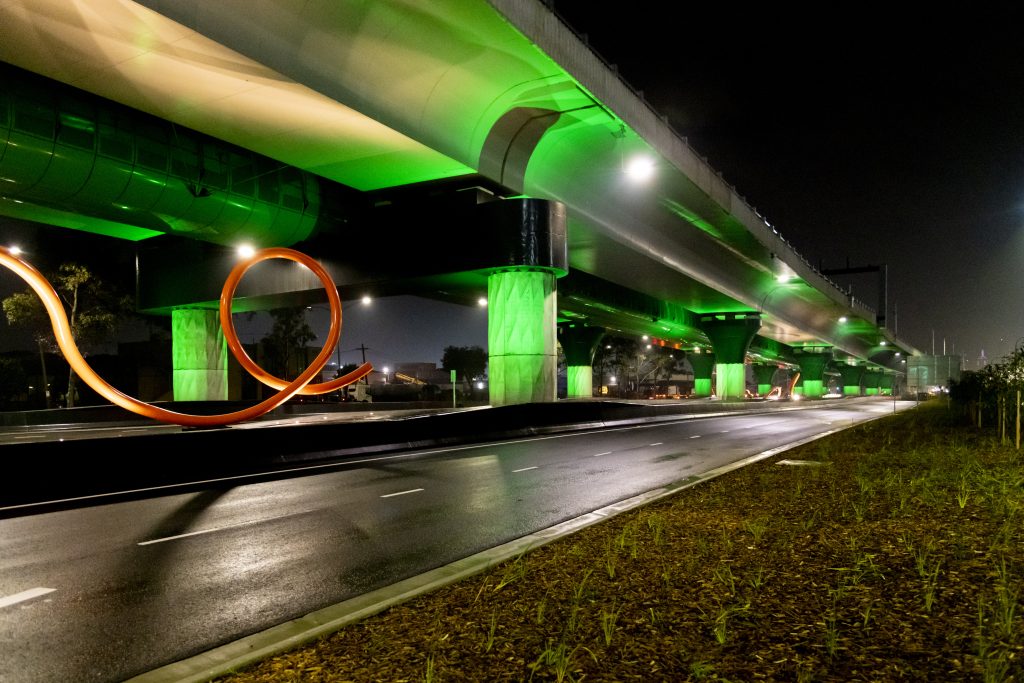
Illuminated orange poles mark the start and end of the West Gate Tunnel Project. They act as reference points for drivers and complement the design language of existing road infrastructure.
“Out of respect for DCM – who did the so-called ‘cheese stick and zipper’ – we mixed yellow with red and got orange to pay homage to the directors at DCM, who taught [Randal Marsh and me] as young undergraduate students working in their office,” Wood says.
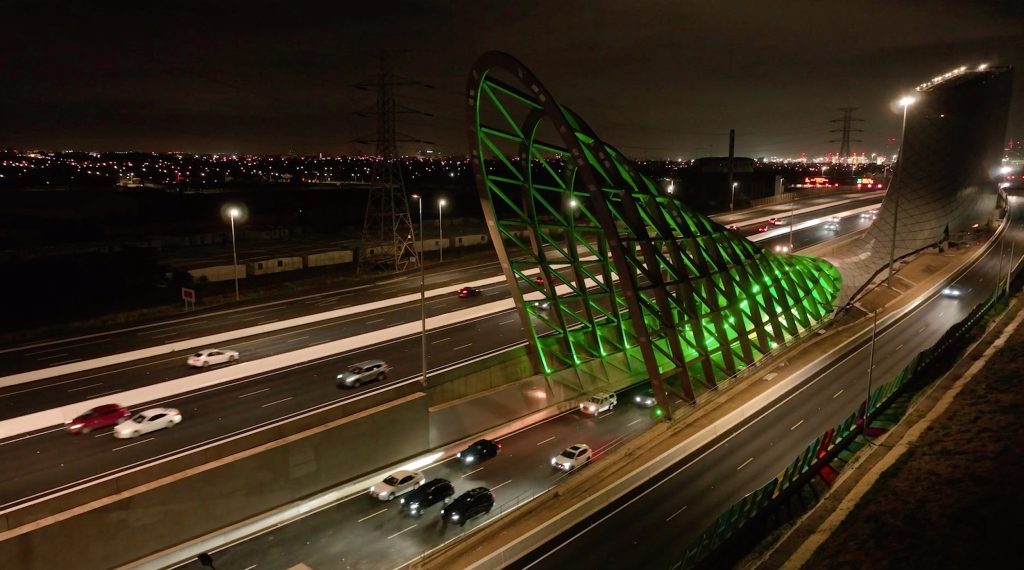
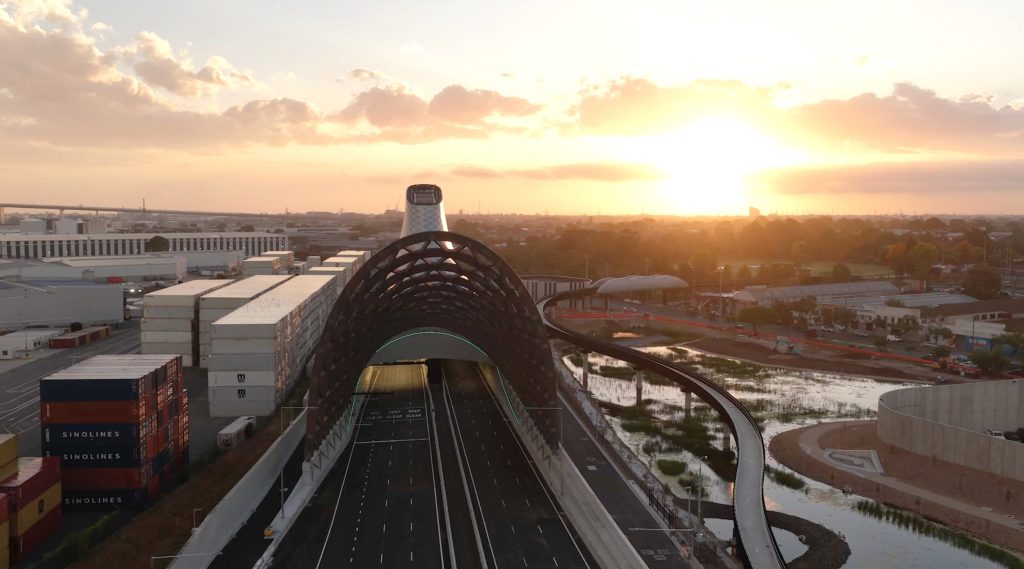
Crossing four waterways, the West Gate Tunnel Project’s most distinct architectural checkpoints draw upon much older First Nations traditions as well as the maritime history of Melbourne’s west. Large structures located at the tunnel portals resemble nets and traps that First Nations people used to catch eels.
“The idea of ropes and weaving seemed to me to be the start of a very exciting narrative,” Wood says. “That culminates ultimately in textured off-white concrete columns with black crossheads at the top supporting the road above, looking like ropes that have been dipped in tar to stop them fraying.”
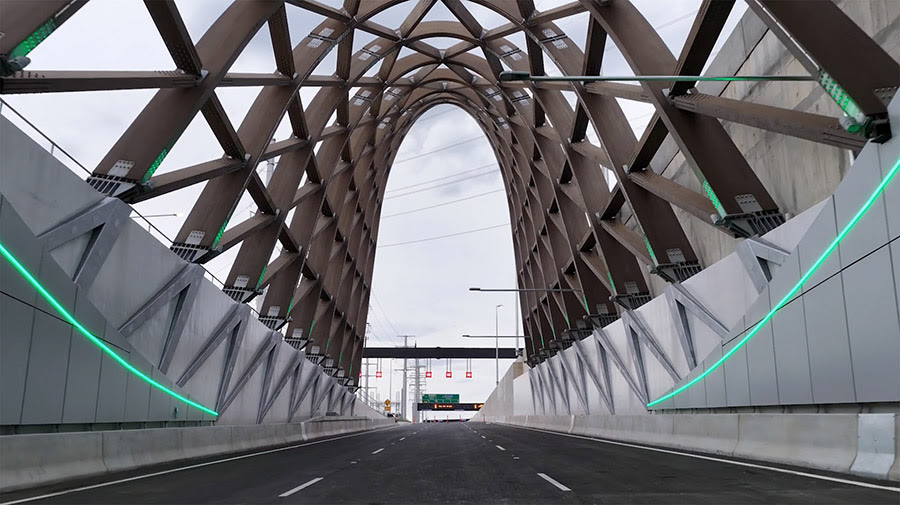
The net structures were engineered from sustainable plantation timber, reducing the project’s carbon footprint while requiring minimal maintenance. In daylight, they cast diamond-patterned shadows onto the bitumen, an effect designed to help drivers’ eyes adjust to changing light.
“Without those nets, in order to get the lighting up to the level your eyes need to adjust to quickly, it requires millions of dollars of extra energy and light fittings etc, to make it safe,” Wood explains.
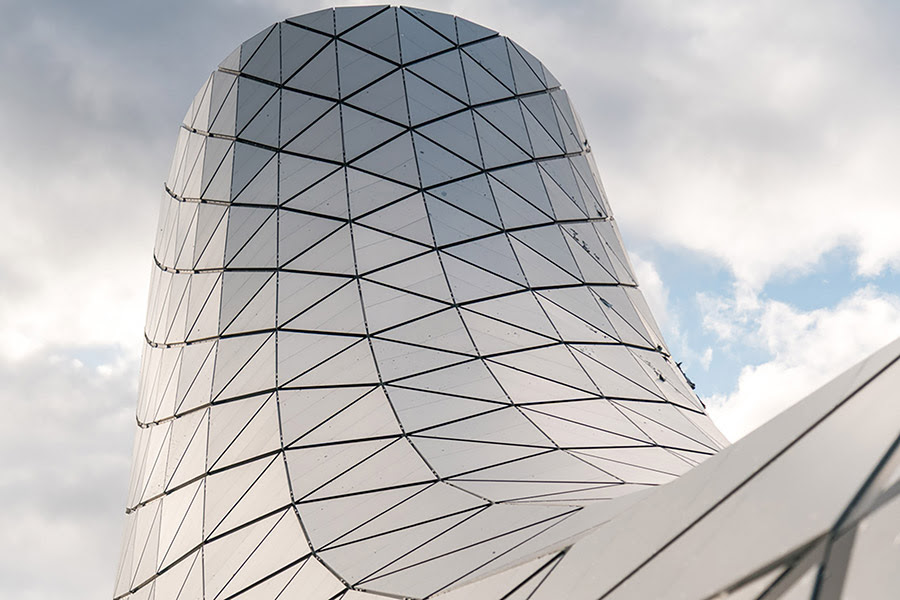
A 50-metre ventilation outlet – a technical requirement, according to Wood – is wrapped in silver cladding. This metal surface is designed to catch light and accentuate the fluid movement of the form.
A prismatic palette
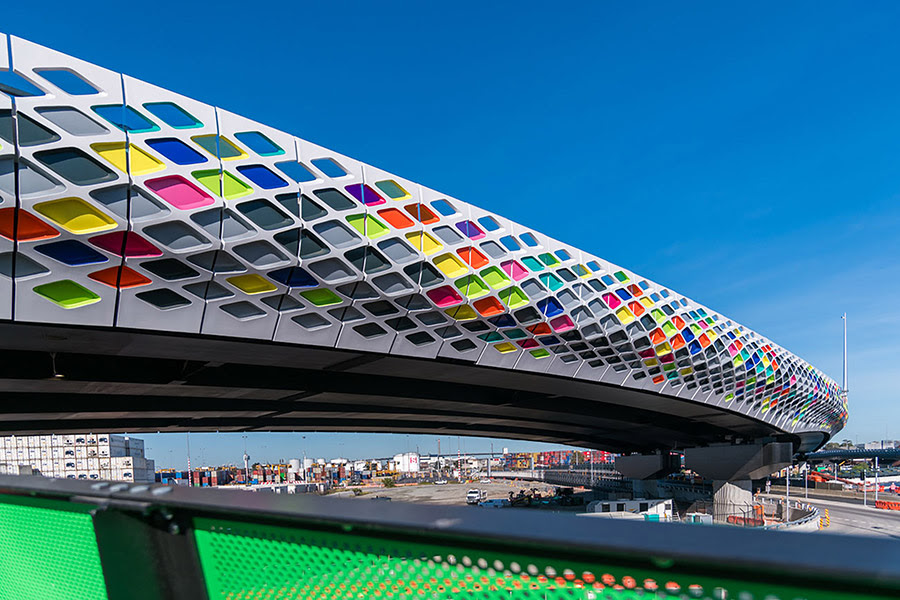
The design narrative continues along two side ramps over the Maribyrnong River. Conceived as a fish and two eels, one is rendered in dark tones and the other is brightly coloured. The brightly coloured ramp is finished in light silver-grey and incorporates Perspex panels, creating a prismatic effect that reflects the colours and patterns observed in close-up studies of fish scales.
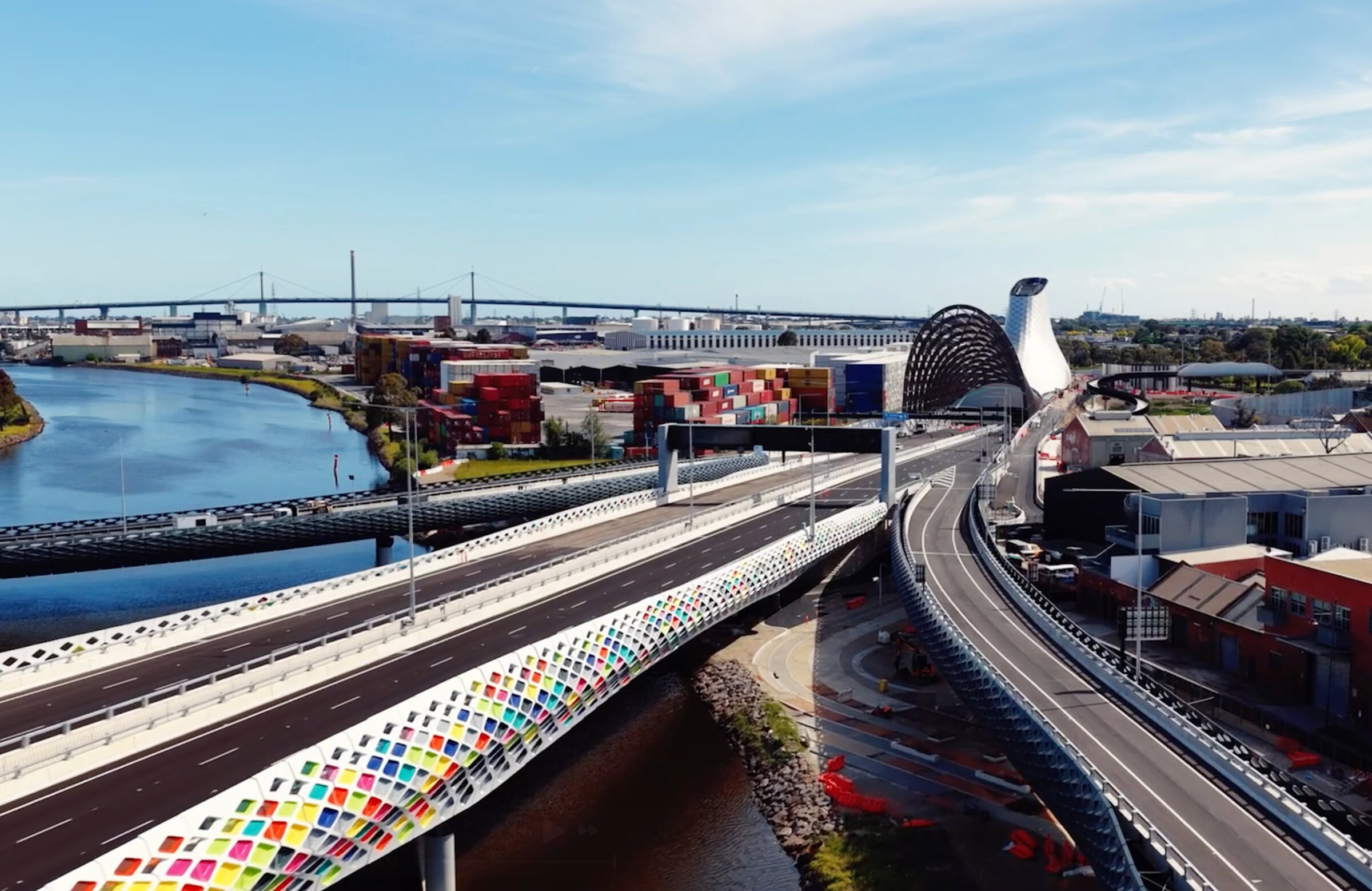
“People have said, ‘Oh, it’s the Pride flag’,” Wood says. “It could be – it’s not meant to be. It’s meant to be the colours that make up light, and you need light to see sculpture three-dimensionally.”
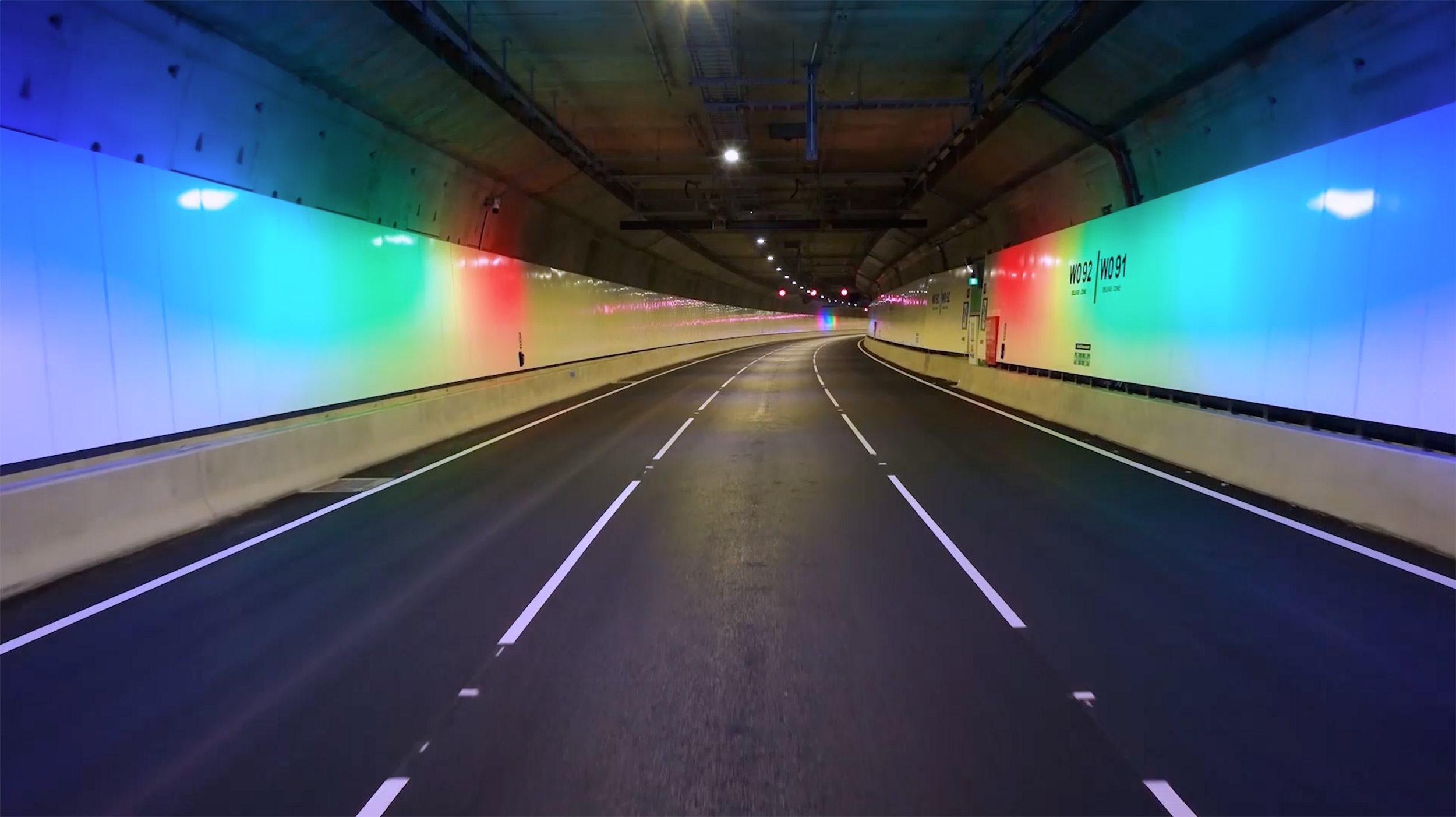
This ‘fizz of colour’ continues inside the tunnel, where the architects introduced pulses of rainbow lighting (one of the few inputs Wood Marsh had into the inside of the tunnel itself). With this, the studio aimed to create the effect of encountering fish underwater. The lighting also highlights speed and road signs along the tunnel walls.
“You know, it could all be monochromatic and grey and without any texture, or there could be a narrative,” Wood says.
The Dixon Veloway
Something that Wood Marsh did initiate was the Dixon Veloway. “The Veloway wasn’t part of the reference design, that was our idea,” Wood says.
A Victorian-first, the four-metre wide elevated cycling path avoids six road crossings at intersections. It has 24/7 CCTV monitoring, emergency vehicle access, two emergency exits and LED lighting. A stainless steel mesh overhead lets in light and air, and prevents objects from Footscray Road falling onto cyclists.
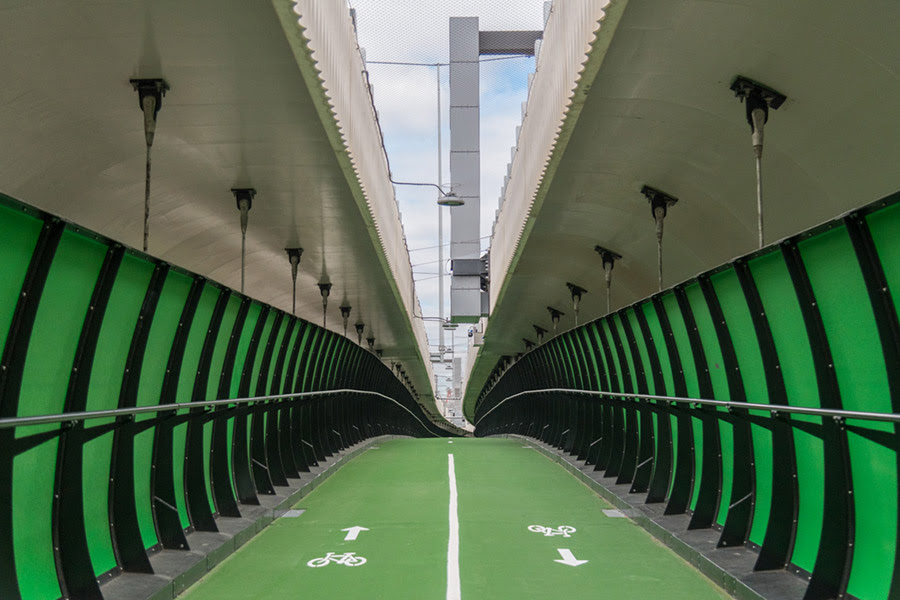
Coloured in a striking vibrant green, the Veloway contrasts with the surrounding infrastructure, acting as a visual signal and helping cyclists navigate.
“We wanted it to look a bit like a boulevard,” Wood explains. “Footscray Road is never celebrated, but Royal Parade is [and] St Kilda Road is. Outside the National Gallery, they light the plane trees at different seasons with different colours.”
For that reason, Wood Marsh decided to light the Veloway’s textured concrete columns in green. “The Veloway becomes canopy, the columns become trunks,” he explains. “There’s a touch of Lewis Carroll or Alice in Wonderland about it, but we wanted a virtual boulevard at night.”
Dixon Veloway unsafe for women, say cyclists
Despite being named after the late Iris Dixon, a pioneering female cyclist, the Veloway drew criticism from women riders after the designs were originally made public. Speaking to ABC News in 2023, Wheel Women Cycling Club founder Tina McCarthy questioned whether women had been considered in the design, citing the Veloway’s limited escape routes and lack of passive surveillance.
Wood says, from memory, the consortium did consult with two main cycling groups. “We’re not experts in cycling, but we did listen to the groups that are, and the outcome is what they felt was appropriate,” he says.
Australian Design Review recently spoke to McCarthy to see how the finished veloway works for her and other women in practice.
“I’m actually formerly a graphic designer, married to an architect, so from the design point of view, I think it’s really spectacular and it’s a real treat to ride on it,” she says. “However, that safety issue – I simply wouldn’t go on it at night, I would choose to go a different route.”
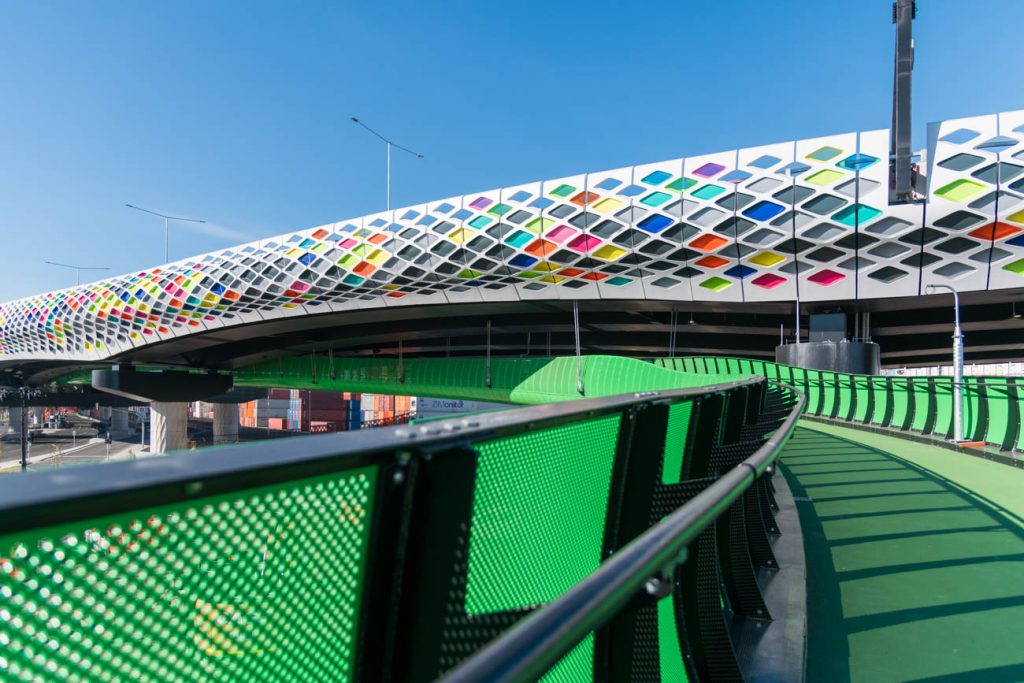
McCarthy says the enclosed nature of the completed Veloway provides poor sightlines.
“From my point of view, the CCTVs were kind of useless,” she says. “You could see who did it and what happened afterwards, but it’s not going to protect you right at that moment when you might need it.”
In an emergency, the Veloway’s two exits – stairways located behind closed doors – may also pose problems, McCarthy says. “Particularly if you’re a woman that may have a heavy e-bike or you’ve got one of those e-bikes that has kids on the back of it, getting that down the stairs would be almost impossible.”
Her suggested solutions include clearer signage for the escape routes and design changes. “I don’t think they should be enclosed in black because they’d be really dark and creepy inside,” she adds. “And I also think that there should be more of them, which of course, that’s going to be damn near impossible to do now.”
A ‘city-shaping’ legacy
Wood acknowledges the complexity involved in an undertaking as wide-reaching as the West Gate Tunnel Project.
“I think it can be more complicated designing a chair, but these challenges are things that my practice looks forward to in architecture,” he says. “They can be daunting by scale, but they are also different to designing a house with a kitchen and an exhaust fan. Our practice does residential work, multi-residential work, art galleries, exhibitions, etc. To have urban design – and we’ve been involved with eight railway stations and 15 level crossing removals – just means, particularly for younger architects, if you work through the challenge of something at this scale and achieve the outcome, you can do almost anything, I think.”
Images courtesy of West Gate Tunnel Project and Transurban.
You Might also Like

Related Stories

© Niche Media 2026