

Footscray Hospital exemplifies community-first design
Footscray Hospital exemplifies community-first design

Share

A new model of hospital opened yesterday (Wednesday 18 February 2026) in Melbourne’s western suburbs. The Footscray Hospital was designed by COX Architecture and Billard Leece Partnership (BLP) and built by Multiplex, partnering with the Victorian Government, Western Health and Victoria University.
‘Delivered on time and in budget’ is not an expression you hear too often, but that’s the claim being made by the team responsible for the new $1.5 billion health facility, which is now welcoming patients. Those first users will include all of those who, up until yesterday, were receiving treatment at its 311-bed predecessor in Gordon Street, which was built in 1953.
With much of the design conception and planning taking place during the COVID-19 pandemic, the hospital is one of Victoria’s biggest health infrastructure investments and has been delivered as a public-private partnership by Plenary Health consortium. But it’s that first ‘P’ that is perhaps the defining element of this striking new health facility.
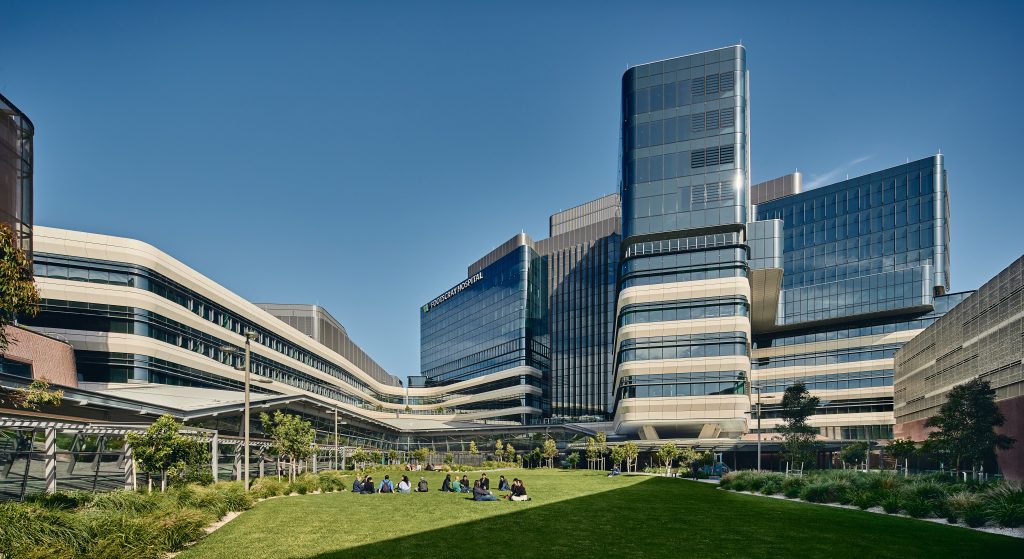
During the community consulation period of the design development process, the consortium conducted around 600 meetings with user groups, reference groups at Western Health and a diverse group of local community members about what they wanted to see in a community hospital. There was one particular request that came to epitomise the entire project…
“There was a gentleman in the community consultation who said, ‘I’d like to imagine I could come to this hospital even if I weren’t sick,'” said COX director Patrick Ness at a walkthrough of the new facility last month.
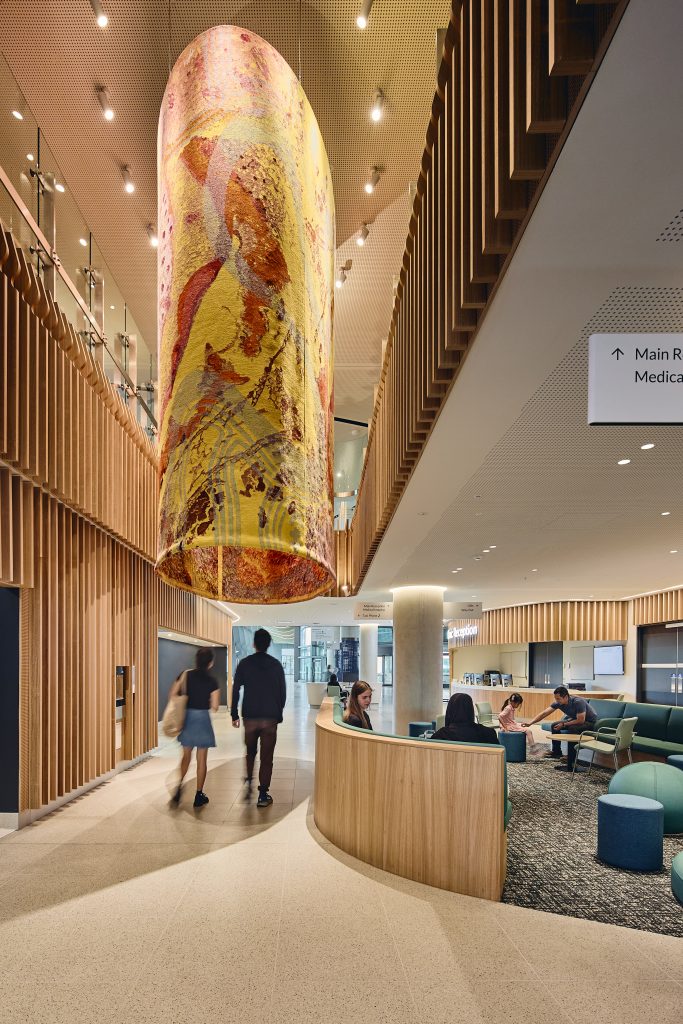
Community first
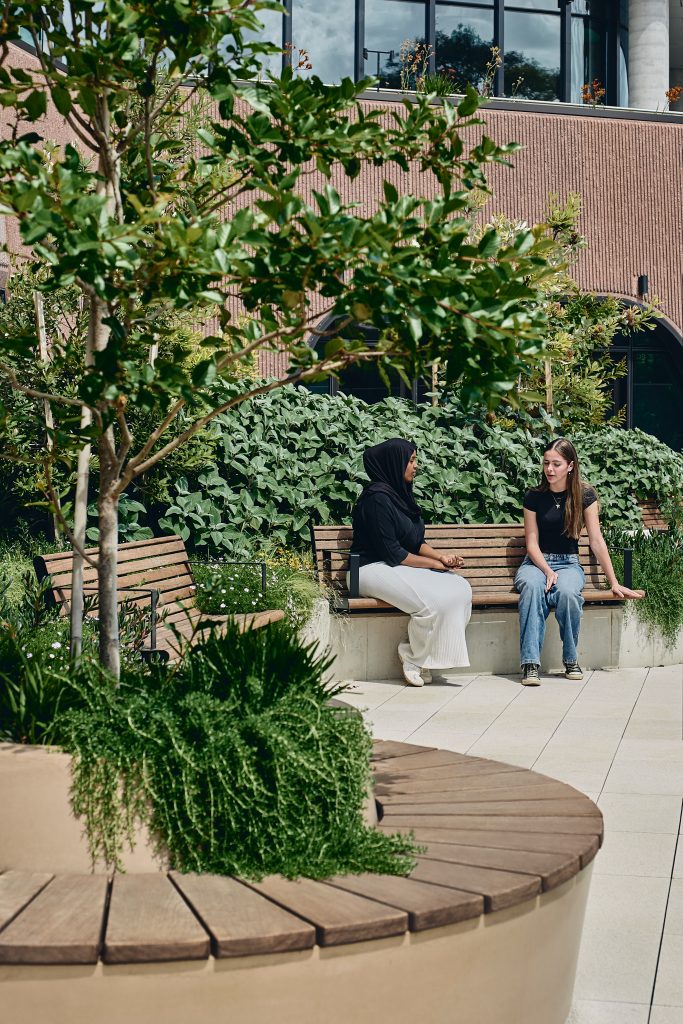
Designing a new hospital from the ground up afforded the design team to do so much more than simply pay lip service to a ‘community-first’ approach. The entire facility has been designed with its end users in mind. Divided into several buildings, the hospital is built around a welcoming grassed open-air space – a village green if you like. It can be used for rehabilitation, for recreation, waiting for family/friends or simply as a place of respite. And wherever you are inside the facility there will be a window close by that looks down over it or out to the surrounding areas.
“When we design these spaces, we have to think about all the potential people that are coming here,” BLP senior associate and interior design lead Allison Jessup said at the walkthrough. “Why are they coming here, what are they feeling? Patients who may be incredibly stressed and vulnerable, people from different cultures. And what that means in terms of that experience of an environment is really key in how we work. So we work from that massive master planning architectural perspective. At the same time, we are thinking at the level of that one human being who’s feeling very stressed and may really struggle to walk through the doors of the hospital.
“Then, at the other end of the spectrum, there are all the staff and an incredibly stressed workplace. So how do we bring all of that together? My focus has very much been on the interior of the building, but that really starts right here in where you have this beautiful green space that just gives you that moment to breathe and pause before you walk in and experience what you need to experience. This access to green space and what that means to wellness here and all of the upper levels has been such a key driver for the design of this project.”
Kelvyn Lavelle from Plenary explained how the old hospital’s challenges informed the design decisions of the new. “Signage was important, but what does that mean to young people trying to take their grandmother through the existing hospital and the confusion that caused? It was a rabbit warren.”
“That idea of experience for everybody moving through the hospital and looking at the evolution of hospital design over the last 20, 30 years, Australia’s really at the forefront of what’s happening in the world,” said Ness. “And we did our trips around the world to see what’s happening, to really make sure we continue to evolve the model. But working with Kel and the Plenary team and understanding the community, the experience that people wanted, different cultures and the response to institutional buildings lent insight into how we sought to break down scale.”
Permeability and transparency
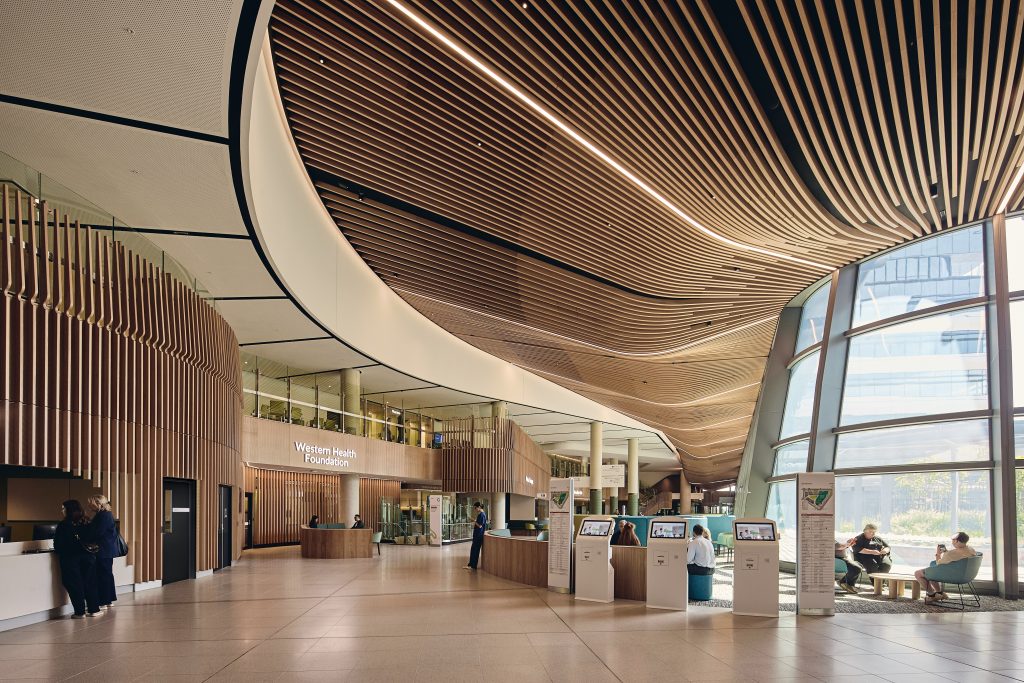
From the moment you enter there is an openness and transparency to the facility. A corridor going off the main entrance is glassed on both sides so that visitors can immediately see straight through to the village green.
And then again, they don’t even have to come through that main entrance… “Most hospitals, you come in the front door. Here we’ve broken the campus up so you can walk in any way you want,” said Ness.
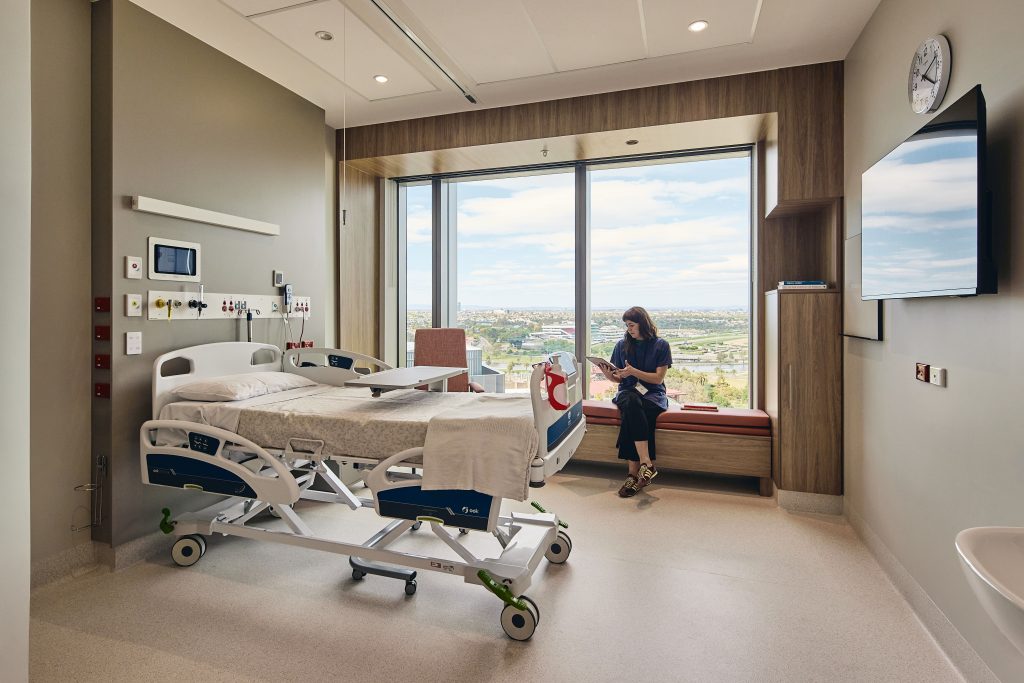
BLP principal Mark Mitchell added, “The hospital itself is actually buildings A and B and we divided them quite deliberately to try and make journeys easy and legible for the community, very focused on the community in every design decision that’s being made. And there are spaces between the buildings, which you don’t really get into in a hospital. They feel very much like public spaces, rather than clinical spaces.
“We’ve set it up so that all of the places that people frequently go to are on the ground floors. So it’s all really accessible. From the main hospital street we have all the ambulatory care, which is clinics, diagnostics and the gyms and allied health facilities in a sub-acute building on the left hand side. So people who go into that building may not ever need to go to the main building. And then the main building, building B, is really where we provide our high ambulatory care and public facilities, procedural areas, and then the inpatient areas, the wards above.”
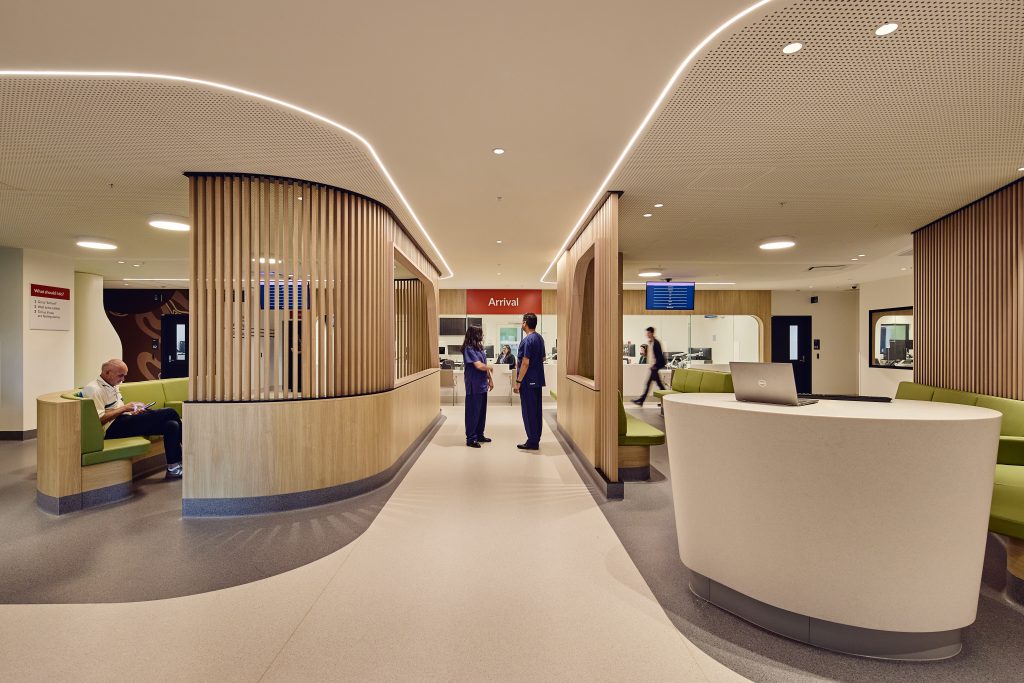
The proof of the pudding is always in the eating, of course, and as the weeks roll by the useability and efficacy of this new approach to hospital construction will be revealed. At first sight, however, the new Footscray Hospital isn’t just a superbly designed and executed new facility for Melbourne’s oft maligned and neglected western suburbs, but a world-class location to make any Victorian proud.
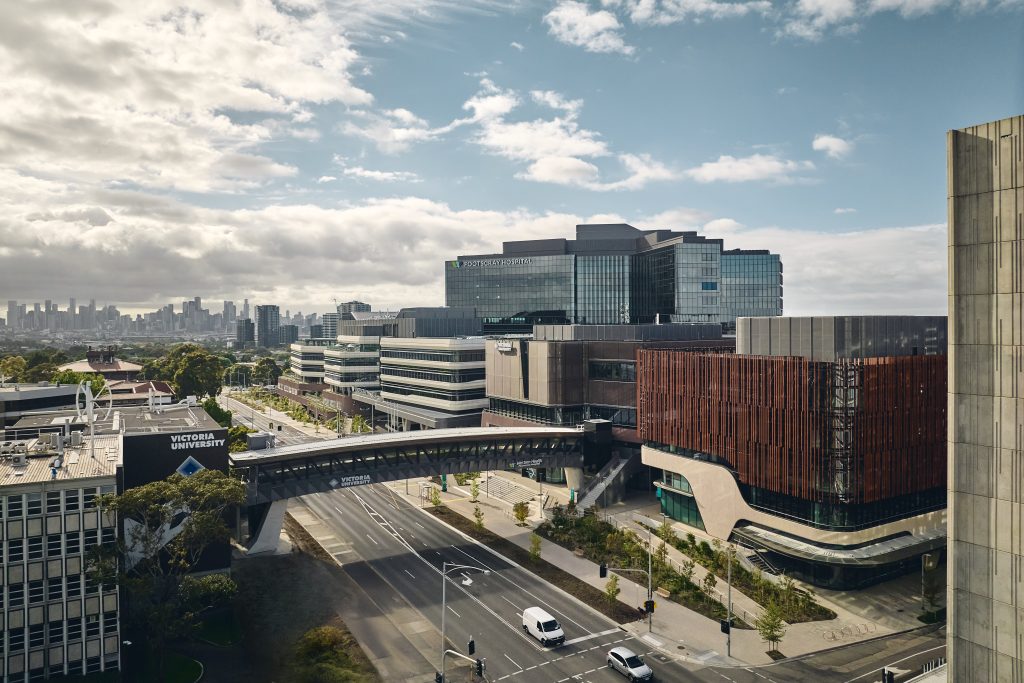
Photography by Peter Bennetts.

© Niche Media 2026