

30UNDER30’s Blake Hillebrand on sitting outside of the comfort zone
30UNDER30’s Blake Hillebrand on sitting outside of the comfort zone

Share
Applying to join Australian Design Review‘s 30UNDER30 in order to be ‘part of the conversation’, Blake Hillebrand currently works full-time at Kerstin Thompson Architects. He says his work is driven by ‘curiosity, generosity and accountability’.
Australian Design Review: Why did you enter the 30UNDER30 program?
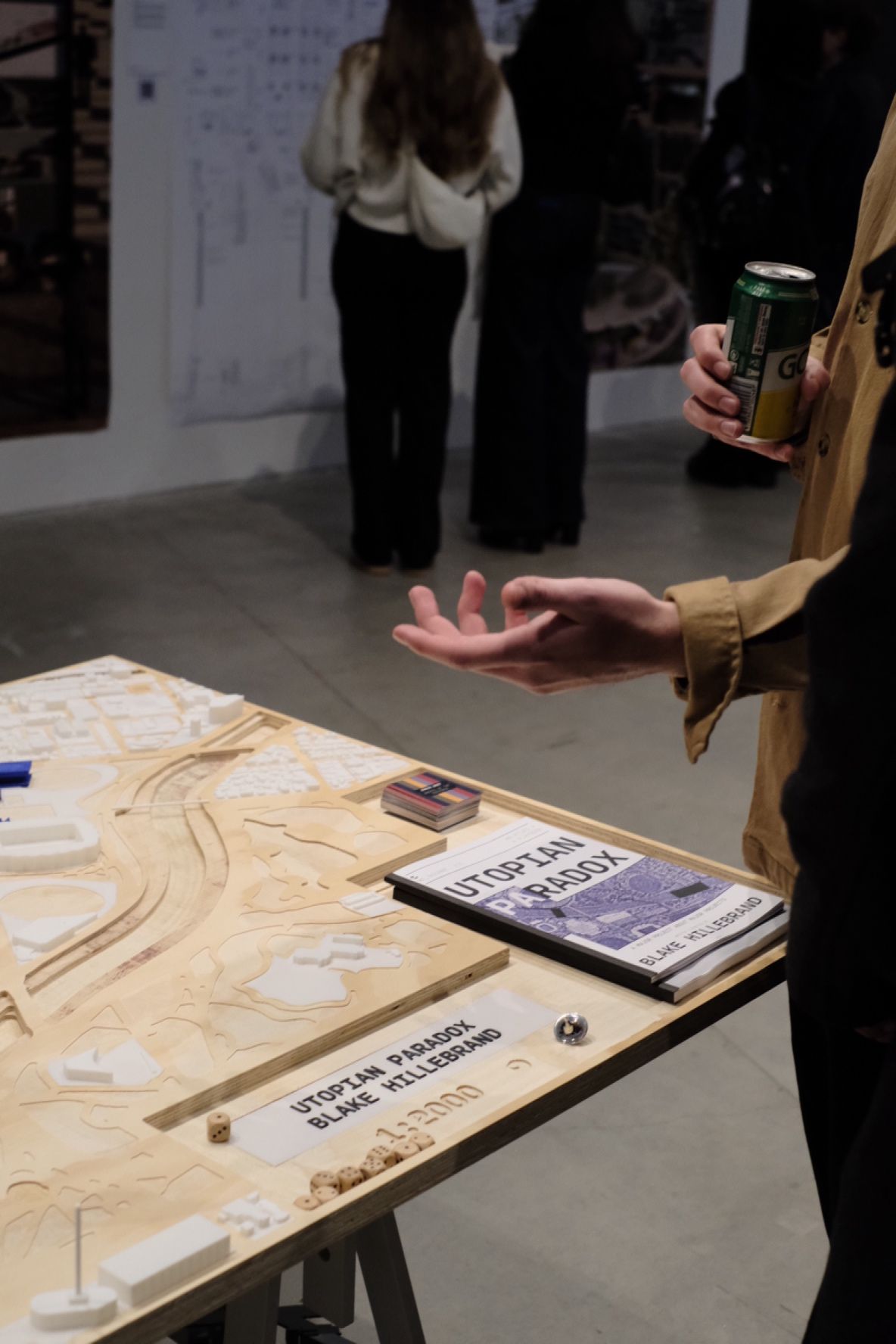
Blake Hillebrand: I entered because I care deeply about where the profession is heading and want to be part of shaping that conversation early. My work sits across practice, teaching, research and advocacy. I currently work full-time at Kerstin Thompson Architects, am a sessional academic at RMIT, and am undertaking a year-long research project through the Robert Caulfield Graduate Research Scholarship exploring First Nations engagement in architecture. For me, design is not confined to buildings. It is about systems, conversations and the frameworks that shape what ultimately gets built. 30UNDER30 felt like an opportunity to step into a room of people who are equally driven, curious and slightly impatient about the status quo.
What do you think are the most pressing challenges for designers up to 2030?
Climate is an obvious challenge, but I think the deeper issue is legitimacy, something architects have grappled with for a long time. Designers now operate within complex political, cultural and economic systems. Housing affordability, Indigenous sovereignty and social infrastructure are not aesthetic problems. They are structural ones. At the same time, the profession is often caught in a race to the bottom where design is treated as a service rather than a strategic contributor. This is something we continue to see across the industry. Ultimately, the challenge is how architects reposition their role and clearly communicate the value of spatial thinking within these systems.
What most excites you about the opportunities in the industry currently?
The blurring of boundaries. There is growing space for architects to operate beyond the building, including in policy, research, education and civic strategy. I am particularly interested in how spatial thinking can shape early-stage decision-making before projects become fixed. Technology is also changing how we test ideas and communicate scenarios. Used critically, it allows us to explore consequences earlier and bring more people into the design conversation. The opportunity is not only better buildings, but better processes.
What has been a highlight in your career so far?
Receiving the Robert Caulfield Graduate Research Scholarship last year was a real highlight. It allowed me to step outside the immediate pressures of practice and explore how architecture engages with First Peoples alongside a good friend and collaborator, Nathan Brandrick. Equally meaningful has been co-running a Master of Architecture studio at RMIT this year. Spending time in that environment reminds you that architecture is cultural work and that the next generation is watching closely how we choose to practice.
What guiding values drive you and what kind of impact do you hope to make through your work?
Curiosity, generosity and accountability drive my work. I am motivated by projects that sit slightly outside my comfort zone, whether culturally, politically or spatially. I value collaboration and long-term relationships over short-term wins. Ultimately, I hope to help expand the role of the architect, recognising that the profession has the capacity to engage with and rethink complex challenges well beyond the scale of the building. If I can contribute to a profession that is more open, more critical and more capable of navigating complexity, that would feel worthwhile.
Top image: Blake Hillebrand (centre) with Nathan Brandrick (left) receiving the Robert Caulfield Scholarship from Robert Caulfield (right). Photo: Supplied.
Australian Design Review’s 30UNDER30 is brought to you by major sponsor Neolith, alongside partners Designer Rugs, Laufen, Krost, Miele, Signature Appliances powered by Miele and Tongue & Groove.
Australian Design Review is also grateful to our 30UNDER30 practice partners AJC Architects, BVN, Cera Stribley, COX Architecture, Genton, GroupGSA, HDR, Richards Stanisich, RIZEN Atelier, Rob Mills Architects, Rothelowman, SJB and Design by WBL for helping us foster the future of Australian design.
You Might also Like


Related Stories

© Niche Media 2026