

Margaret Preston review – flora, flora everywhere, but then you stop to think
Margaret Preston review – flora, flora everywhere, but then you stop to think

Share
Do you like art depicting Australian flora? How about still life paintings? If so, there’s sure to be something to grab your attention at the latest exhibition to open at The Ian Potter Centre: NGV Australia.
In 2026, however, there’s more to interrogate when it comes to the work of one of the country’s best known early to mid-century artists.
For the first Margaret Preston retrospective in 20 years, co-curators and editors of an accompanying monograph, Beckett Rozentals and Michael Gentle, have taken the bull by the absolute horns when it comes to addressing the elephant in the room – if that’s not too laboured a metaphor.
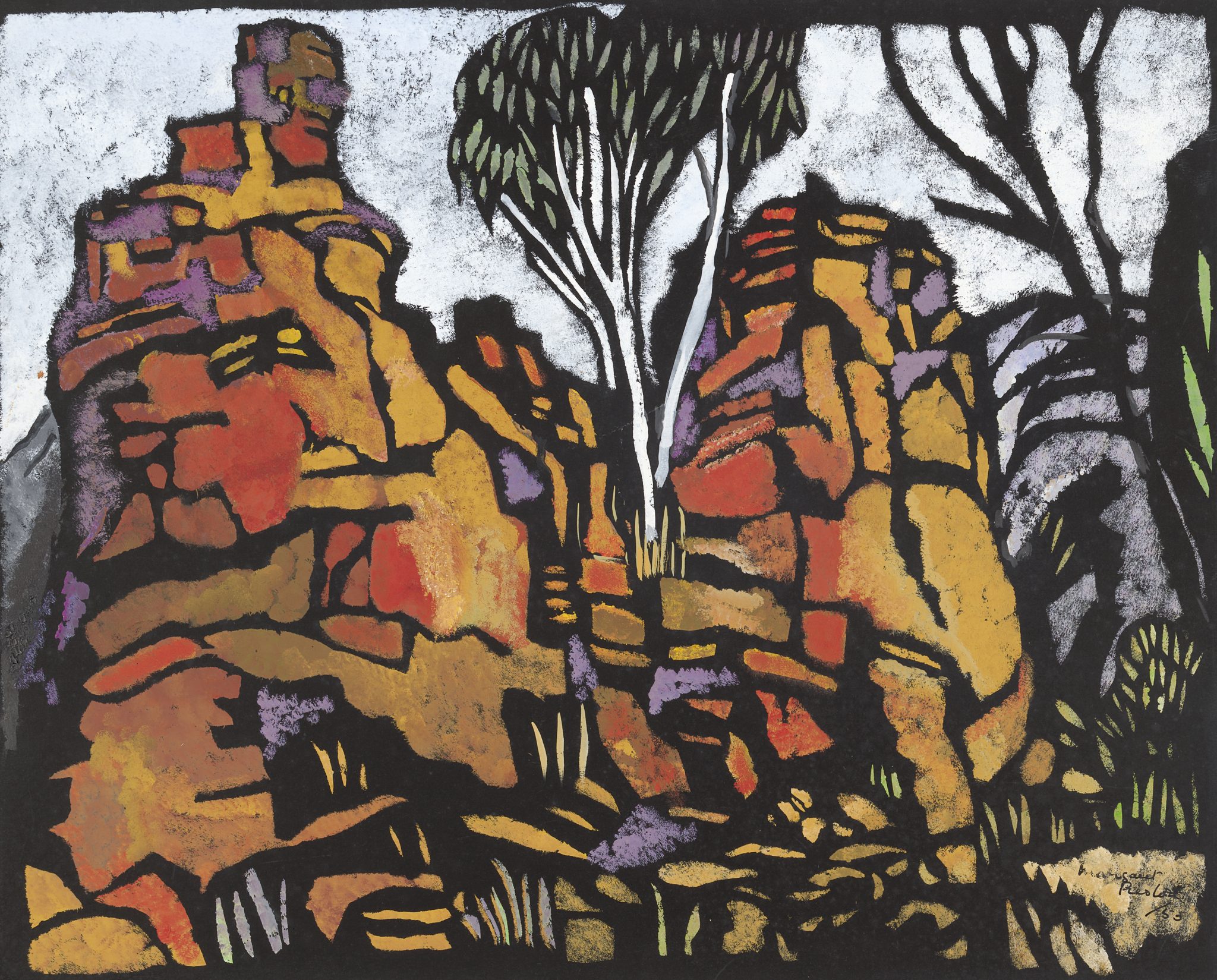
Preston (1875–1963) was one of the most prominent figures in Australian modernism and, as the NGV notes, she was someone who “significantly shaped the country’s cultural and aesthetic landscape”. Her work took her from Adelaide to Europe and back to Australia.
Extensive travels across the northern parts of the country in the 1940s saw her encounter First Nations art and imagery. Inspired by what she saw, she then adapted imagery, reproduced it and otherwise took a sweeping colonial lens to appropriating culture and art forms that were not her own.
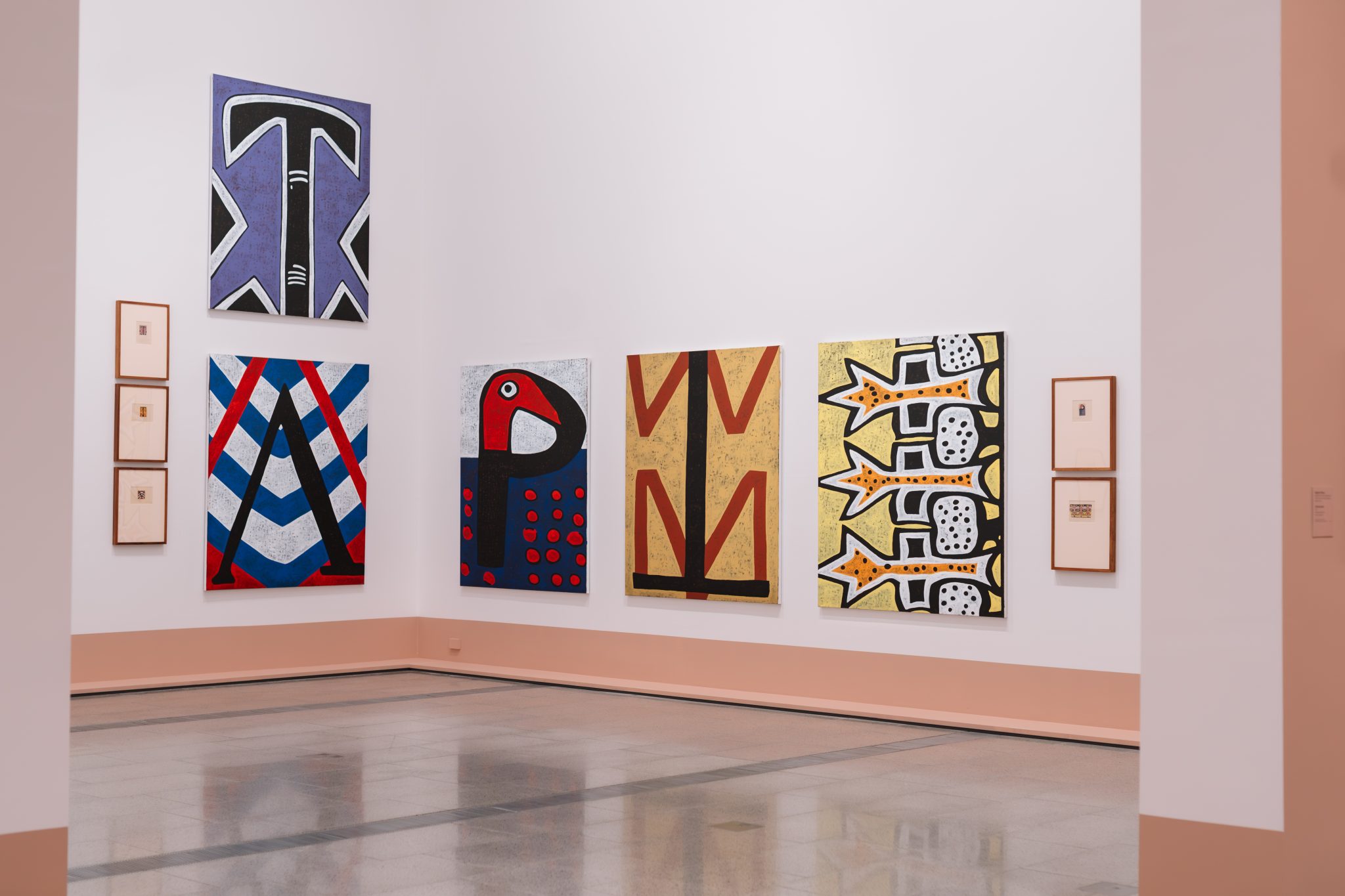
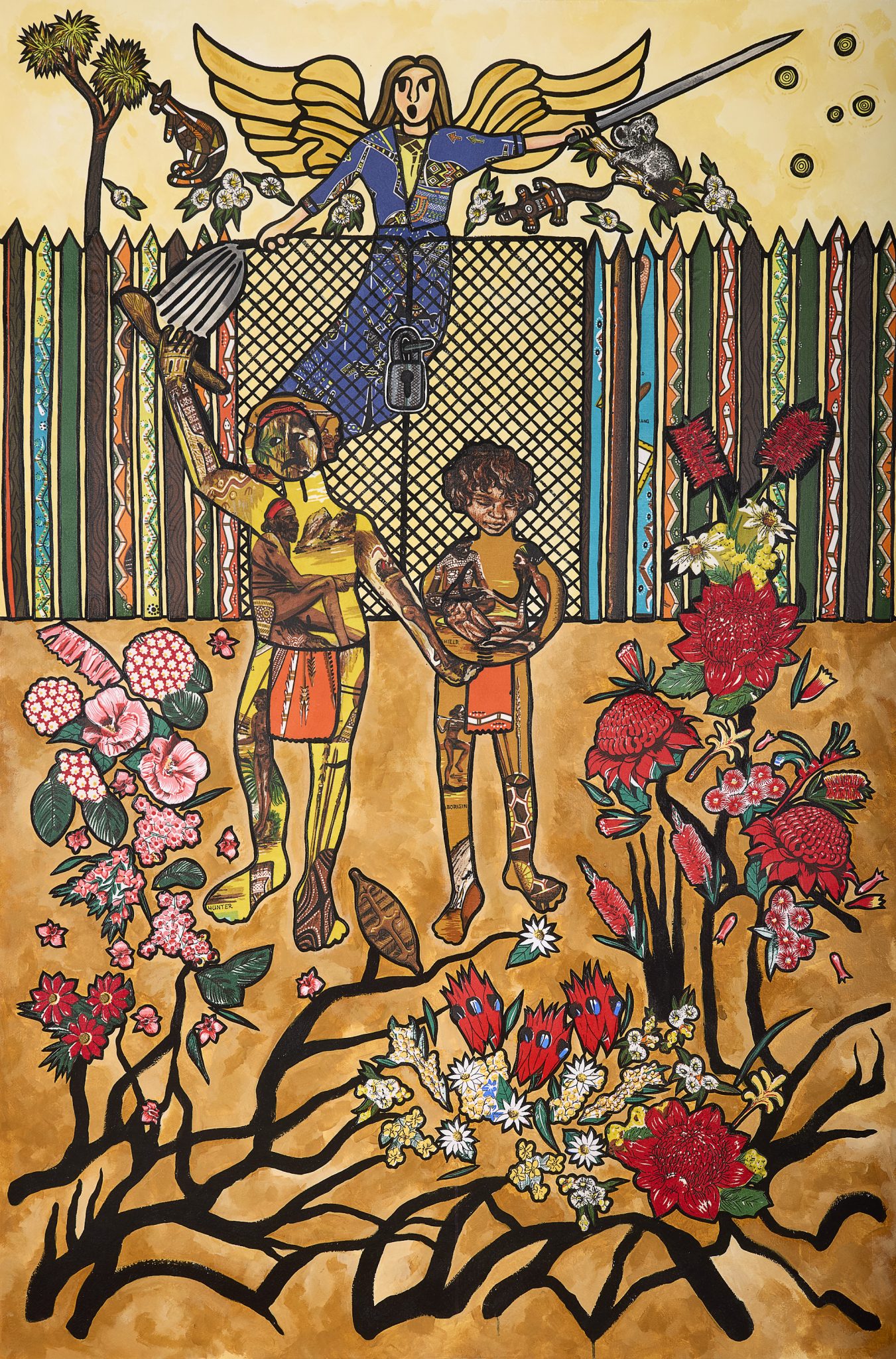
This has long been a point of contention in displaying her oeuvre, but this exhibition addresses the issue head-on. In this mammoth exploration of her work, which traverses more than 200 works – paintings, sculptures, prints and other archival materials – there are also works from past and contemporary First Nations artists. The works selected are in dialogue with Preston’s work, contextualise it and respond to it, sometimes with humour and sometimes without.
The 20 works include pieces by the likes of Gordon Bennett, Raelene Kerinauia, Mary Elizabeth Moreen and Kaye Brown; as well as work by Girramay, Yidinji and Kuku Yalanji artist Tony Albert, Wadawurrung artist Deanne Gilson and the late Ngarrindjeri artist Trevor Nickolls.
Perhaps one of the most arresting series comprises the paintings from Gordon Bennett, Home décor (after M Preston), which directly respond to a series of smaller works Preston painted that appropriated First Nations designs without permission or understanding and completely devoid of cultural context.
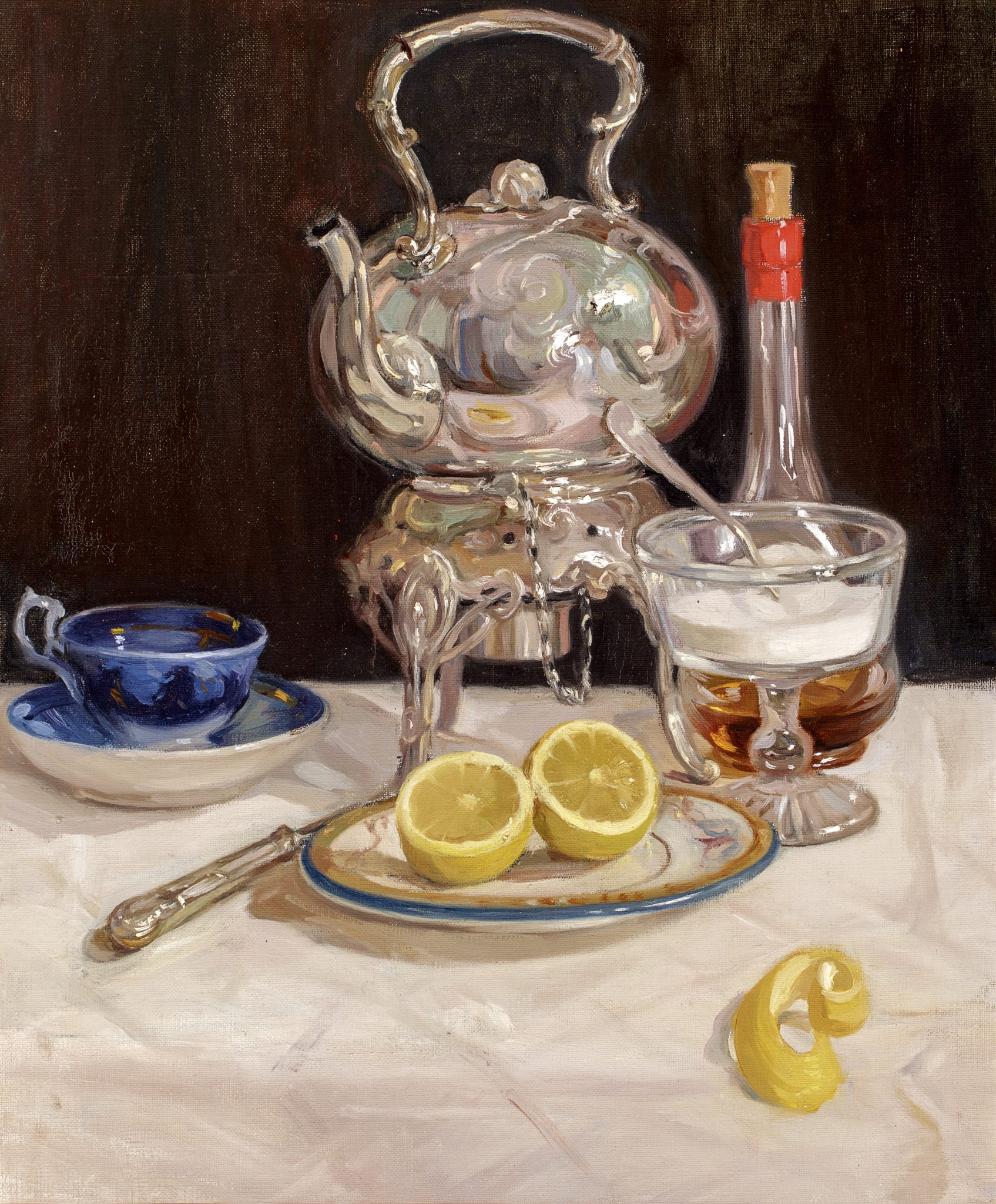
Outside of the First Nations perspectives, Preston’s works with less cultural baggage are also in abundance – including her boldly modern woodblock prints, influenced by Japanese printing techniques, and early vibrant still life works influenced by her European travels and the work of contemporaries, such as a couple of notable Pauls – Cézanne and Gauguin.
In 1929, the artist’s notable solo exhibition at Sydney’s Grosvenor Galleries included 16 works that are all included in this exhibition. A callout for further works also resulted in a late find – Gloxinia, painted in 1928 and included in the exhibition at the last minute, on loan from a private collection in Sydney.
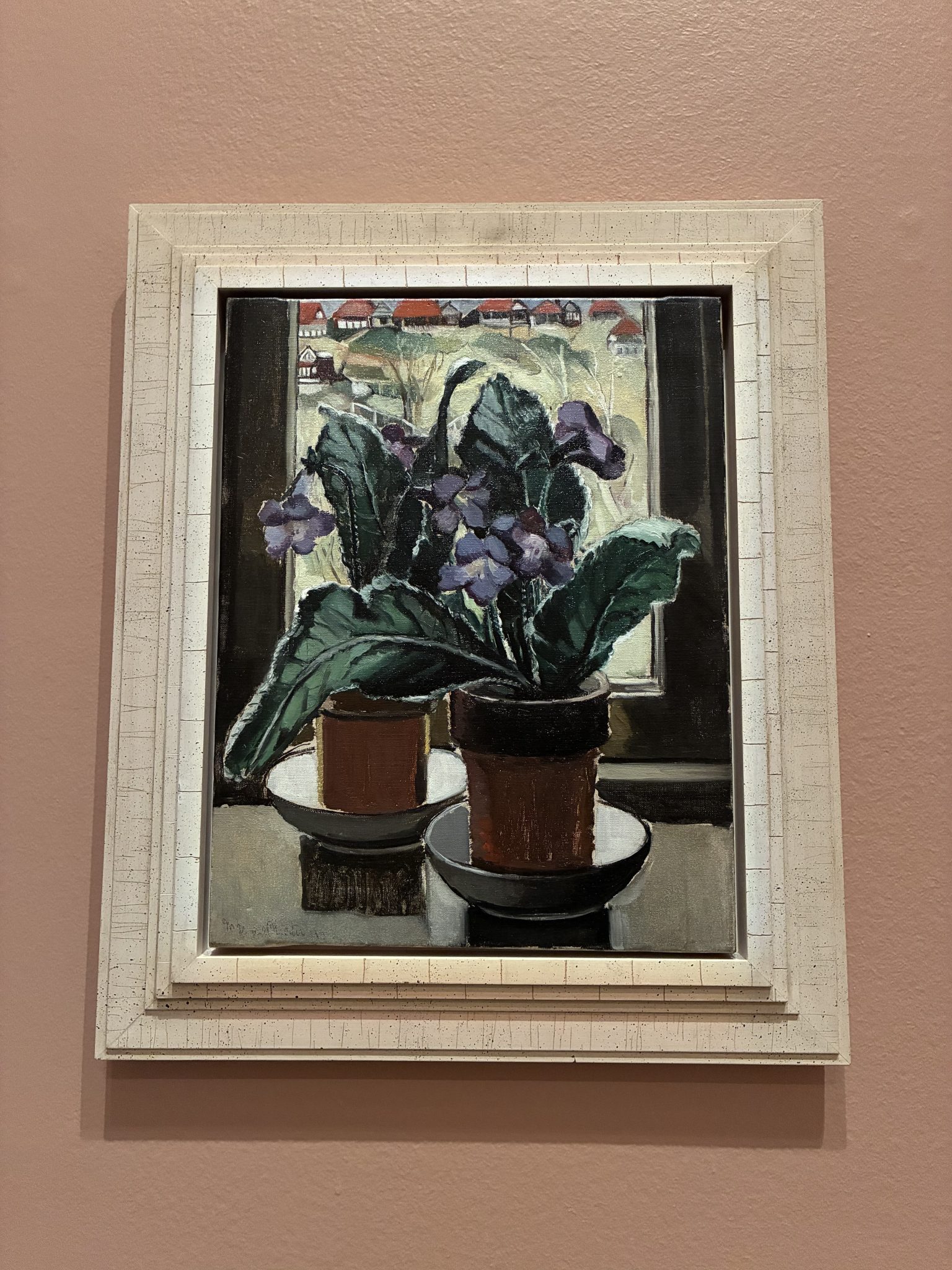
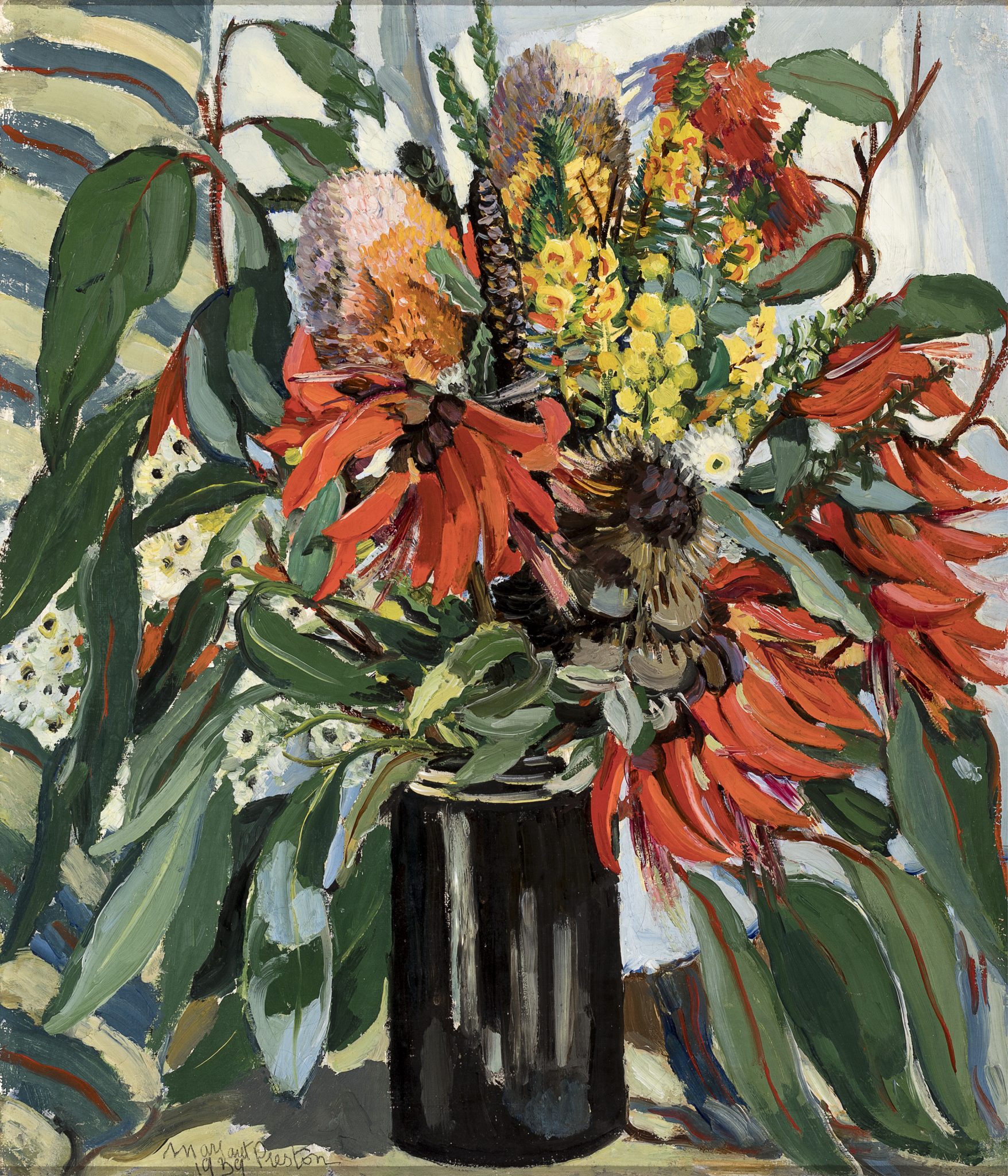
But it’s the native flora that dominates – everywhere you look banksias, flannels, fuschias and gum blossoms proliferate. Would that a scratch and sniff card have been offered on entrance. It’s a riot of colour and, for that reason alone, the exhibition is worth the escalator ride up to the Ian Potter’s third floor.
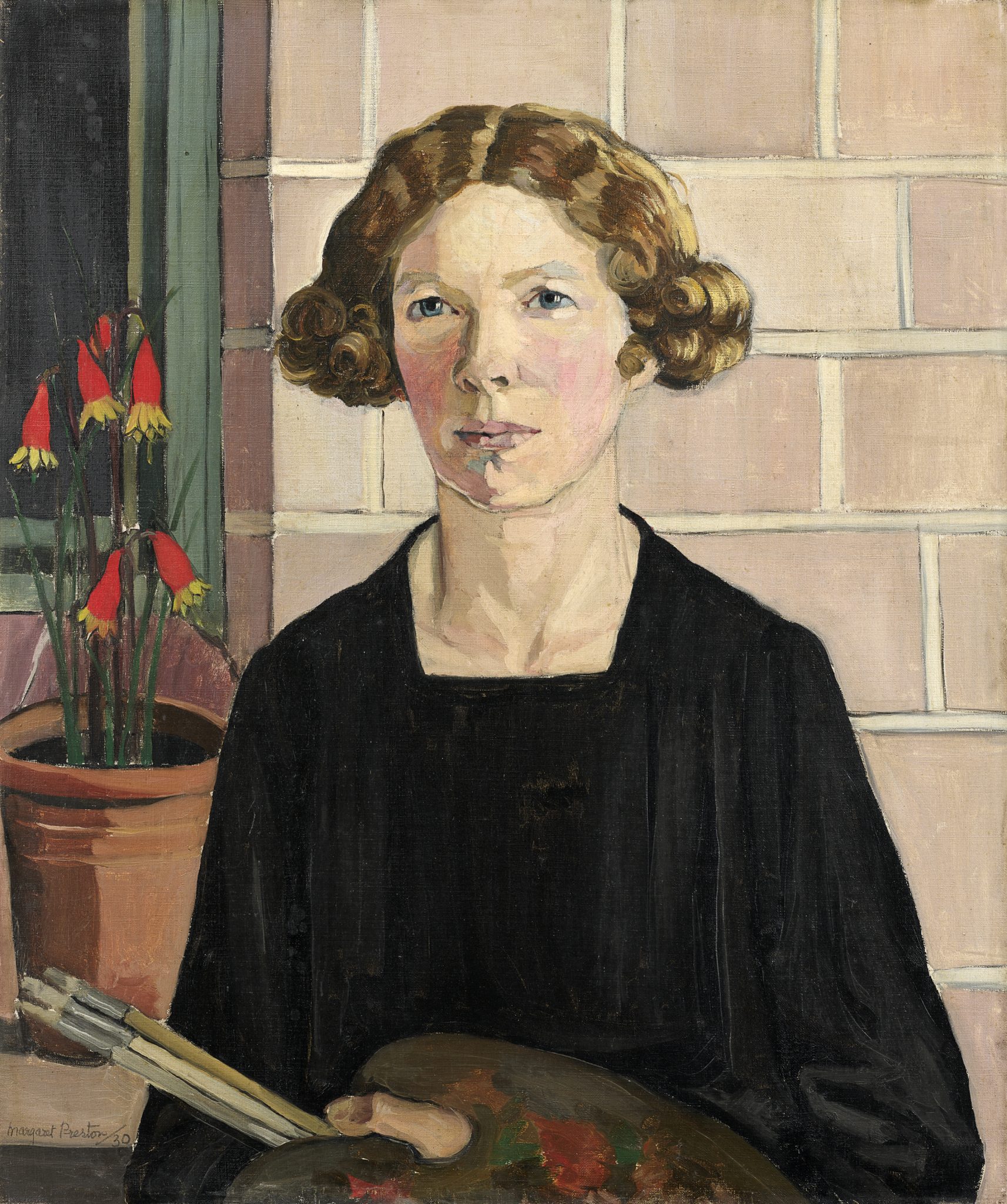
Top image: Margaret Preston, Aboriginal still life, 1940, oil on canvas, Queensland Art Gallery | Gallery of Modern Art, Brisbane, Gift of the Godfrey Rivers Trust through Miss Daphne Mayo 1940 © Margaret Preston/licensed by Copyright Agency, Australia.
Margaret Preston is open now at The Ian Potter Centre: NGV Australia, Federation Square, Level 3. The exhibition runs to 31 January 2027, ticketed.
You Might also Like


Related Stories

© Niche Media 2026