

Raw, untreated and locally sourced – the designs of Jiri Lev
Raw, untreated and locally sourced – the designs of Jiri Lev

Share
In a world dominated by mass-produced housing and fleeting design trends, the work of architect Jiri Lev offers a grounded and humane alternative, writes Virginia Montague.
Lev’s commitment to creating healthy, affordable and resilient housing prototypes, most notably the Tasmanian House series, is influencing a quiet revolution in Australian architectural thinking. Lev champions what he terms contemporary traditional architecture, focusing on design that is both deeply rooted in local identity (genius loci) and relevant to modern environmental and economic crises. His ethos directly challenges the prevailing globalised design fashion, advocating instead for buildings that are locally specific, durable and promote community cohesion.
Lev’s prototypes are built on a philosophy of using raw, untreated and locally sourced materials, deliberately avoiding construction plastics – a major source of microplastics – and harmful chemicals like PFAS (perfluoroalkyl and polyfluoroalkyl substances) that are prolific in most conventional homes. This health-conscious approach is central to his work, ensuring his homes contribute to optimal indoor air quality and occupant wellbeing.

The first of the series, Tasmanian House I (2021), is a tiny, 26-square metre dwelling that served as an initial experiment in self-sufficiency and low-cost construction. It demonstrated that excellent, sustainable design could be achieved at a cost equivalent to a budget off-the-shelf project home. Tasmanian House II (2023) scaled up the vision to a 120-square metre homestead prototype, engineered for affordability and ease of construction by a single owner-builder.
It was in this second iteration that Lev’s innovative convection doors first appeared. These full-height internal doors feature an upper leaf that can be opened for passive air circulation, allowing warm air from a central heat source to effectively circulate between rooms in cold climates, or promoting free passage of cooling cross-breezes in warm weather.
Tasmanian House III (2025) is a small 60-square metre cottage, designed to fit within the limits for a secondary dwelling or ‘granny flat’, further emphasising an easily replicable, debt-free and owner-built model.

Aesthetically, Lev’s architecture harks back to classic principles, incorporating classical symmetries and harmonious compositions that resonate with Tasmania’s Georgian-era architectural vernacular. This careful, measured approach is born from a belief that design quality should not be sacrificed for cost. Lev’s work serves as a powerful argument for a more beautiful built environment, a point he articulates in a recent interview for Architecture Australia (2025): “Beauty is not subjective. We all know where tourists like to take photos and it is not the Australian suburbs. Building ugly is not an economic necessity and that beauty pays. We also know that local traditions and strong, unique character draw both tourists and new residents. But none can tell the country nor even the continent from looking at our new inner city buildings.”
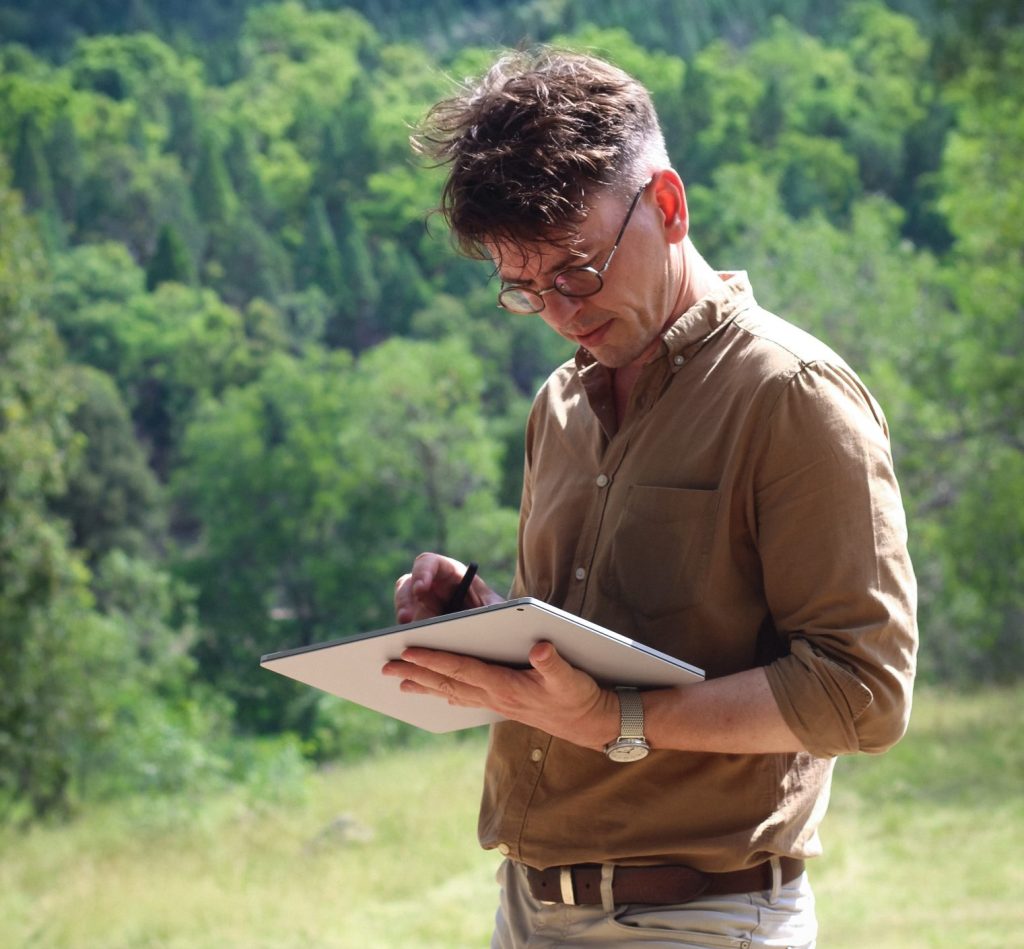
By releasing the plans for his prototypes as open-source, Lev actively fosters a broader influence on architectural thinking in Australia, redirecting the focus towards more grounded, traditional and locally specific architecture. The Tasmanian House series is thus more than just architecture; it is an advocacy for a more ethical, accessible and truly sustainable future for housing. As he once said, “Like healthcare and legal representation, a sustainable, resilient, healthy and beautiful living environment is not a luxury but a pragmatic necessity and a human right.” (Architects Assist, 2020)
Virginia Montague is an Australian artist and writer, with formal training in architecture and ancient history. She is also interested in ceramics, landscape oil painting, sustainable design and self-sufficient living.
Top image: Natural materials interior interior in Tasmanian House II – Contemporary traditional house in Tasmania, Australia, designed by Jiri Lev. Photo: PhotoArch 1, Wiki Images.
You may also like: Atelier Jiri Levi builds own home as ‘workshop’ for sustainable, economic design
You Might also Like

Related Stories

© Niche Media 2026