

WAM and Greenaway Architects design Atlassian’s Melbourne HQ
WAM and Greenaway Architects design Atlassian’s Melbourne HQ

Share
The software company’s first permanent Victorian office is a two-level adaptive reuse project inside the Queen & Collins tower.
Designed to be flexible and frictionless, the new CBD workplace features 93 ergonomic points to pull up and work, with space for events of up to 100 people, including employees from Melbourne and Atlassian’s global network.
The central design idea – ‘Urban Collage’ – seeks to align with Atlassian globally and express the Melbourne locality and culture. It has come to fruition courtesy of a collaboration between workplace specialist studio Warren and Mahoney (WAM) Architects in partnership with Indigenous architectural and cultural connector firm, Greenaway Architects.
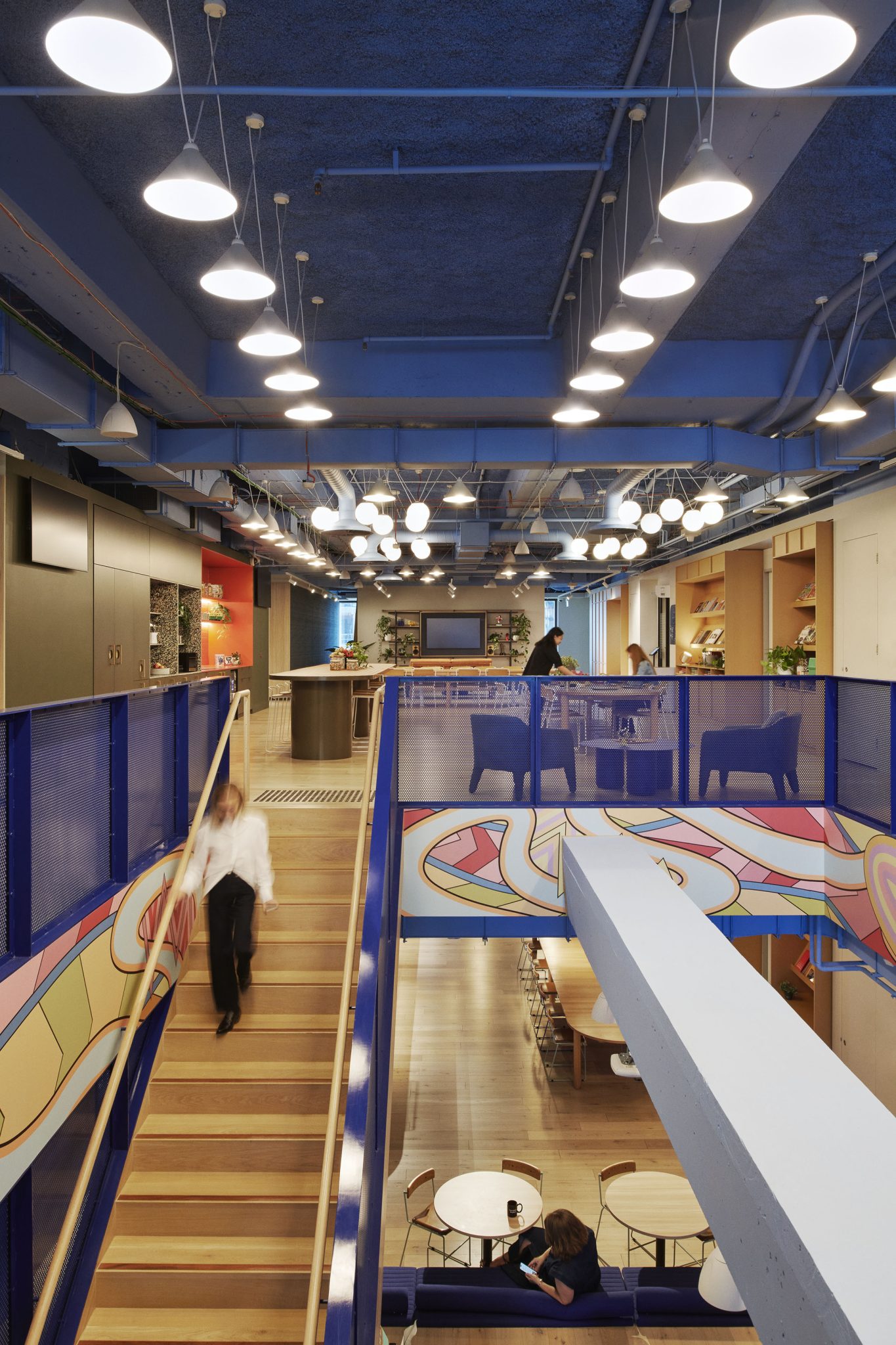
Function first
A behaviour-, function- and experience-led approach underpinned the design and guided planning, according to WAM principal Tamara White.
“Naturally, the project took a function-first approach when it came to meeting the anticipated and adaptive needs of staff,” she explains.
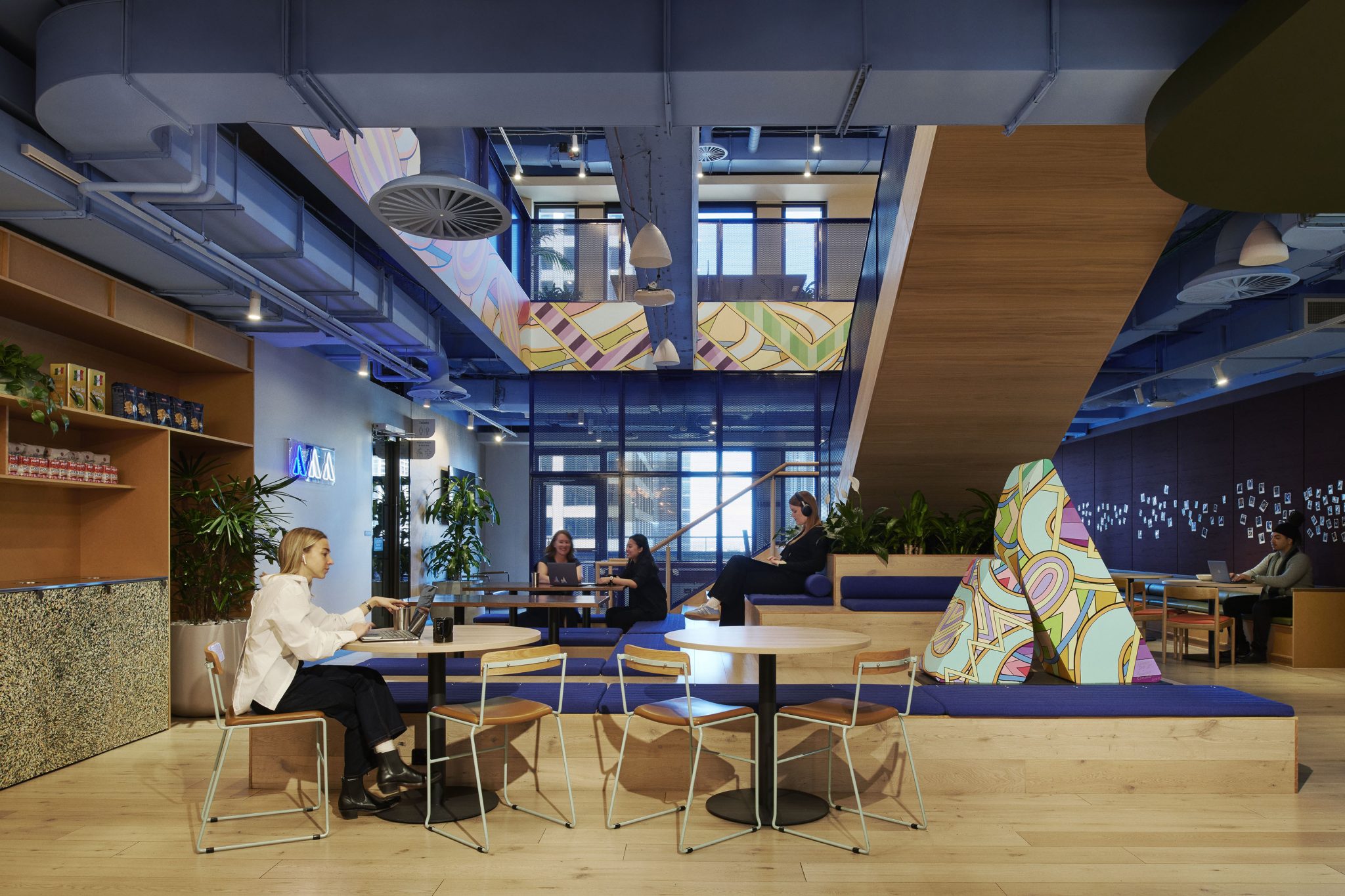
Various furniture configurations enable teams and individuals to customise their day. For example, level 20’s large centralised ‘town hall’ space features moveable café-style tables that staff use as they see fit: to eat, work independently or socialise.
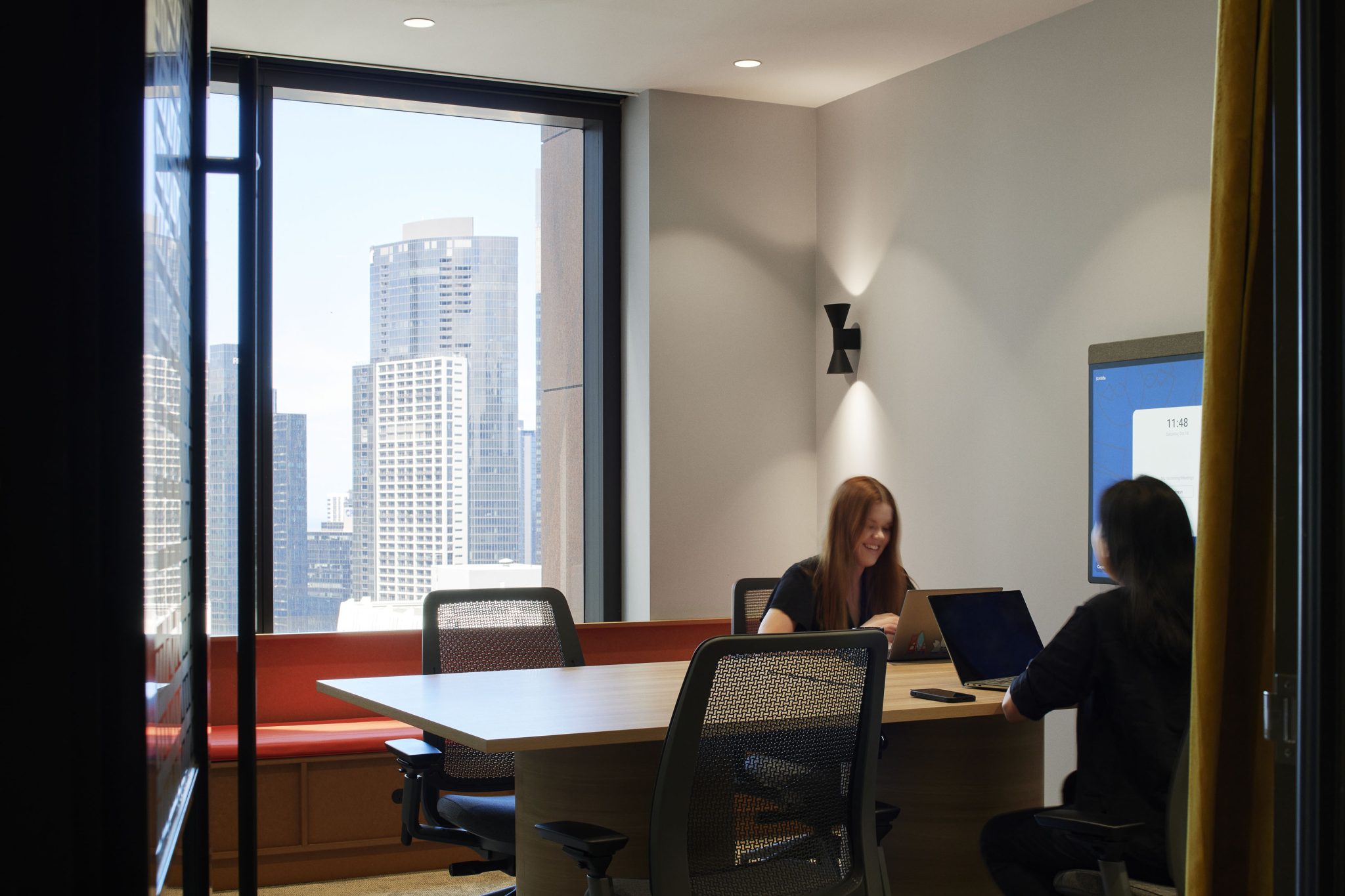
The remainder of the first level feeds off this central hive of activity. There’s a large flexible open workspace directly behind the kitchen area that can accommodate up to 80 people, plus a quiet workroom with 20 desks. Small meeting rooms and alcoves facilitate calls or focused work, while a parents’ and multi-faith room are nestled privately in the southern corner.
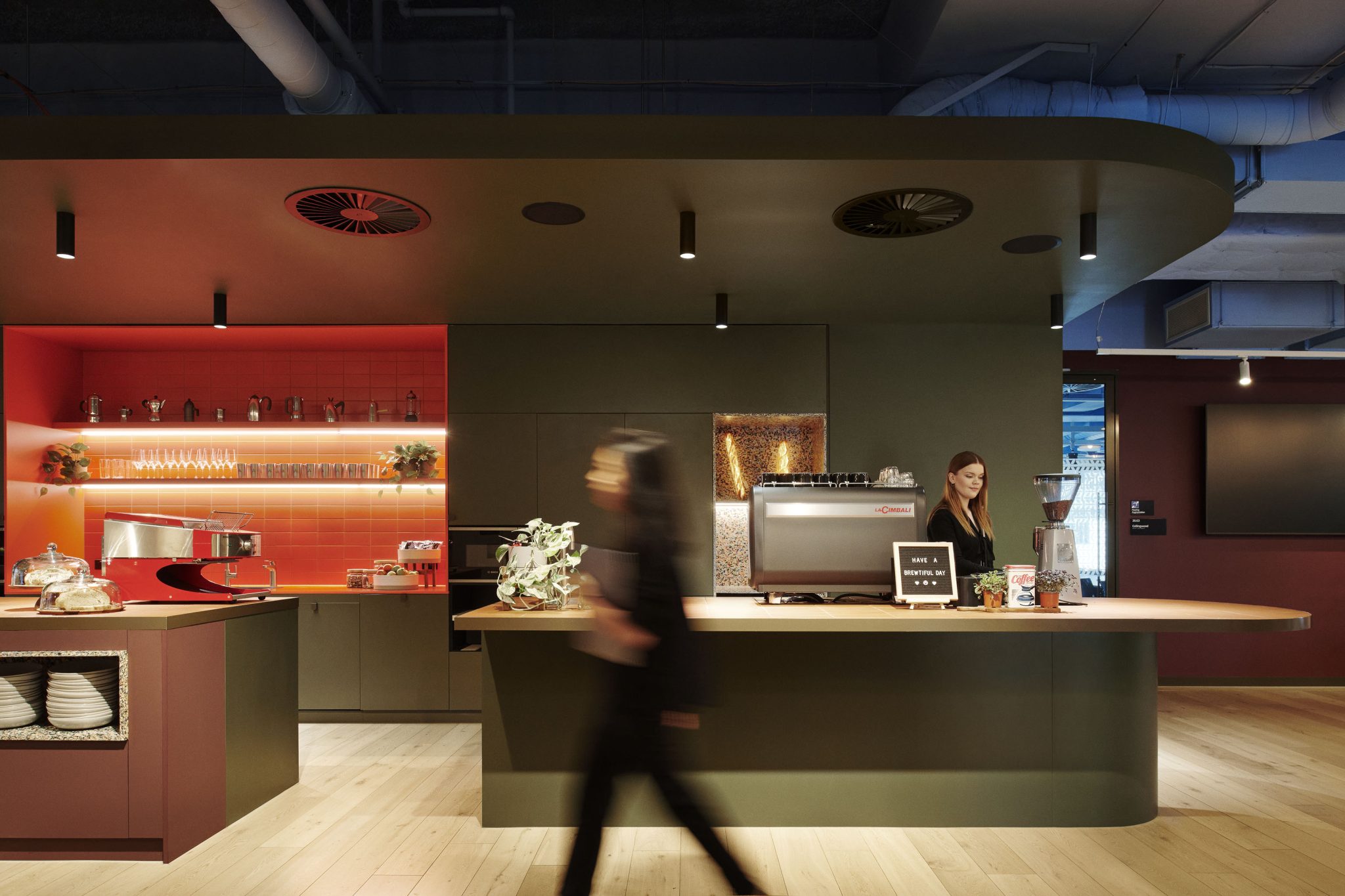
Level 21 offers more unique communal seating and lounge settings, bookable meeting rooms and capsule-like rooms – known as ‘Swift rooms’ – for quiet work. A surprise living room-scaled lounge nook is hidden behind a sweeping curtain to the northern end.
“When seeking a break, staff can immerse themselves in the rooftop canopy of Melbourne from one of the couch-furnished balconies, or just grab a colleague and pick up a table tennis paddle or Nintendo Switch console to clear the head,” White says. “This design enables individuals to curate their very own workday experience simply by shifting through the diverse range of settings on offer.”
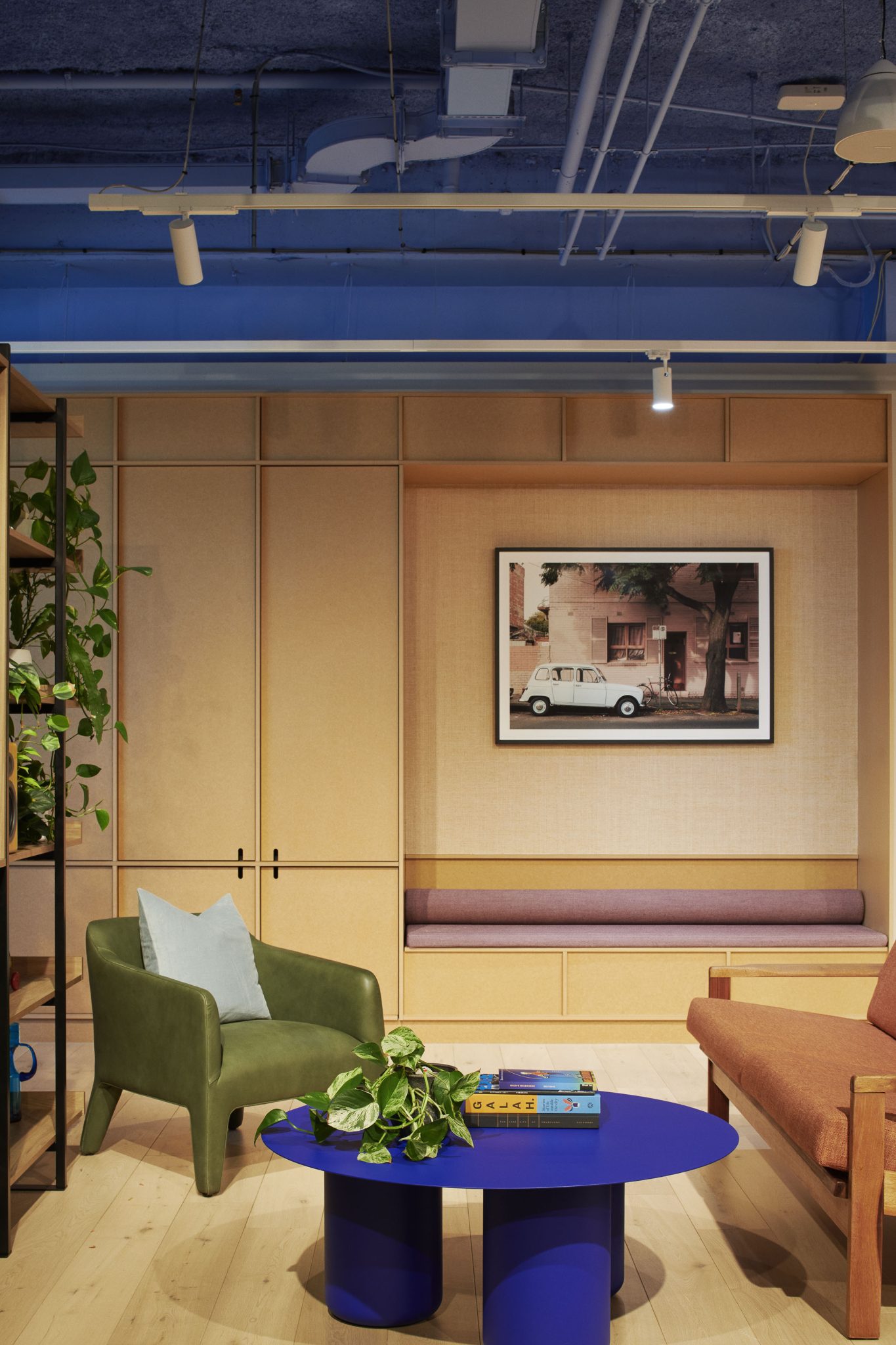
Localising Atlassian
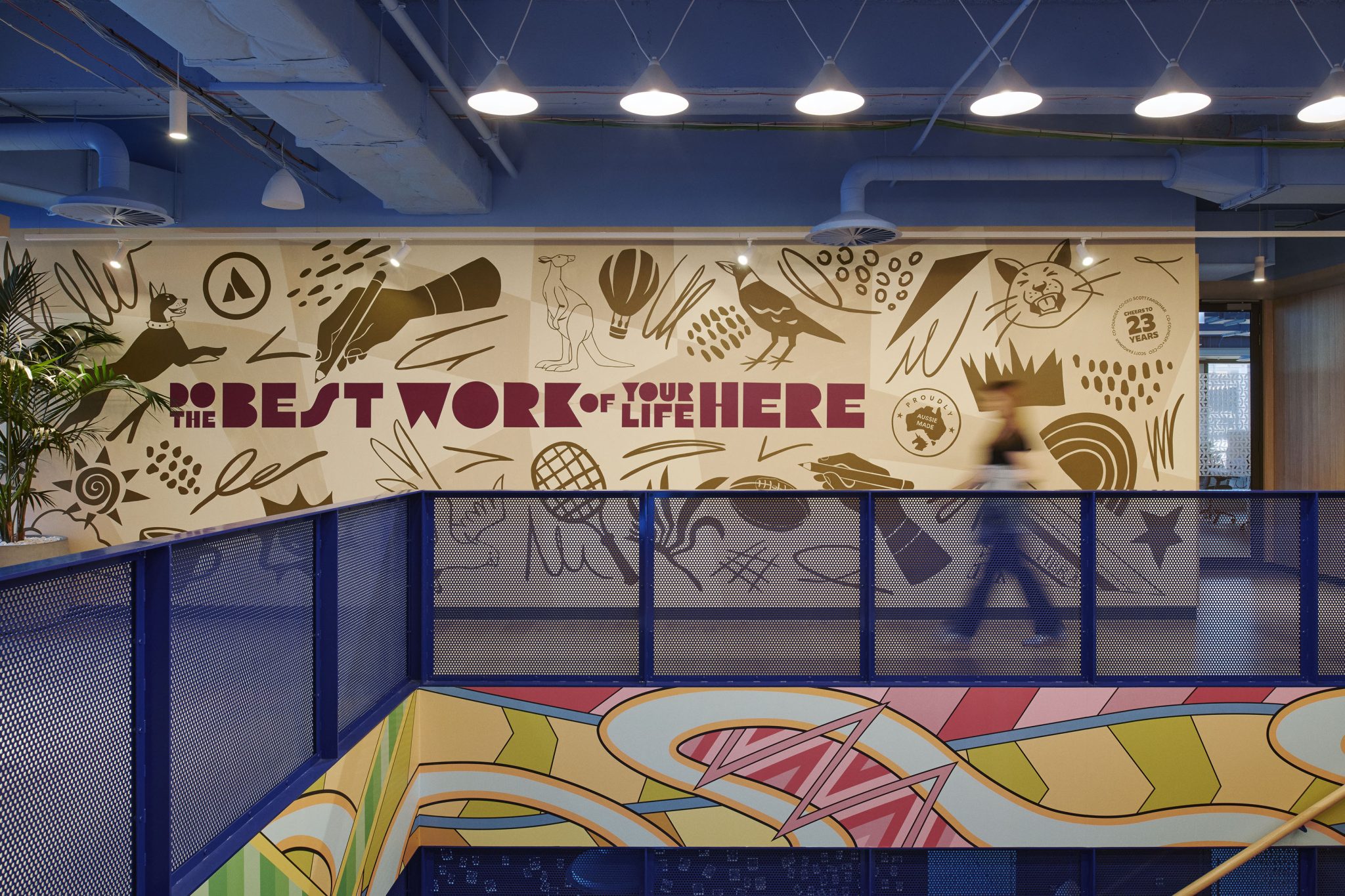
According to White, the uniquely Melbourne-style proposition comes alive with interesting use of colour, textures and an array of ‘Easter egg’ moments, with a graphic overlay enabling storytelling.
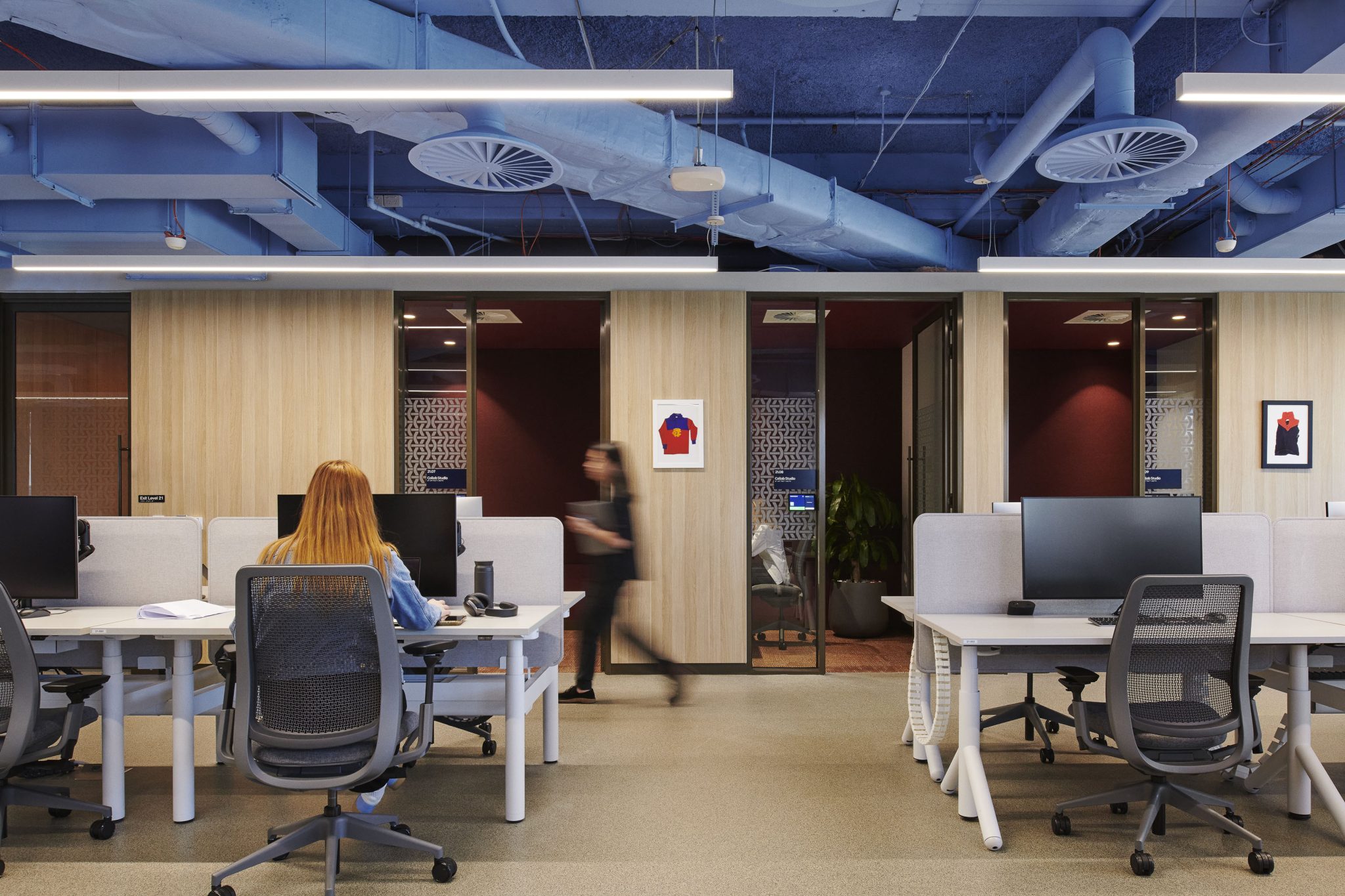
Greenaway Architects director Jefa Greenaway says strong cultural elements are carefully choreographed and authentically expressed in unexpected, contemporary ways throughout the hub. “Through the subtle integration of artists’ patterns in fabrics or panels or the hero sculptural works, those who arrive will understand you’re at Atlassian and you’re also on Naarm,” Greenaway says.
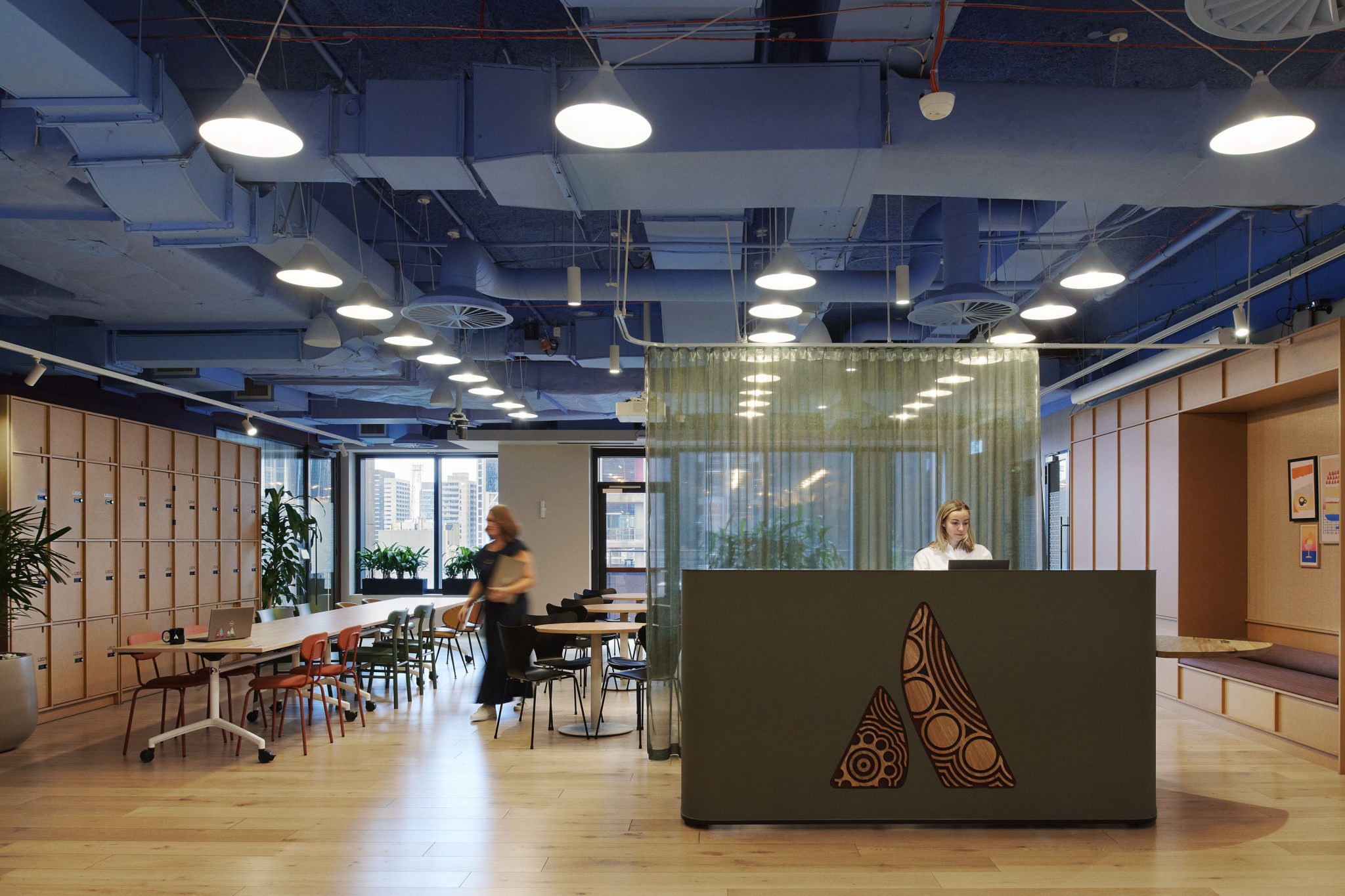
This begins at the entrance on level 20, where you’re taken from the striking Gothic entrance on Queen Street into a “highly contemporary space”, Greenaway says. Here, you’re greeted by a carved wooden Atlassian logo at the concierge desk crafted by First Nations artist, Iluka Sax-Williams.
“Look left and you’ll be met with the tempting sights and smells of the kitchen servery and barista station, complete with bespoke woven handles embedded within the joinery,” Greenaway continues. “In front of a vibrantly painted stairway spandrel, lined with staggered seating akin to a university setting, sits another bold piece of sculptural art in the form of the Atlassian ‘A’ by First Nations artist, Tommy Day III. His paintings also line the interior walls of the large internal stairwell, adding a vibrancy reflective of the creative energy within the technology company headquarters. They represent an emerging and unique style of modern Indigenous art.”
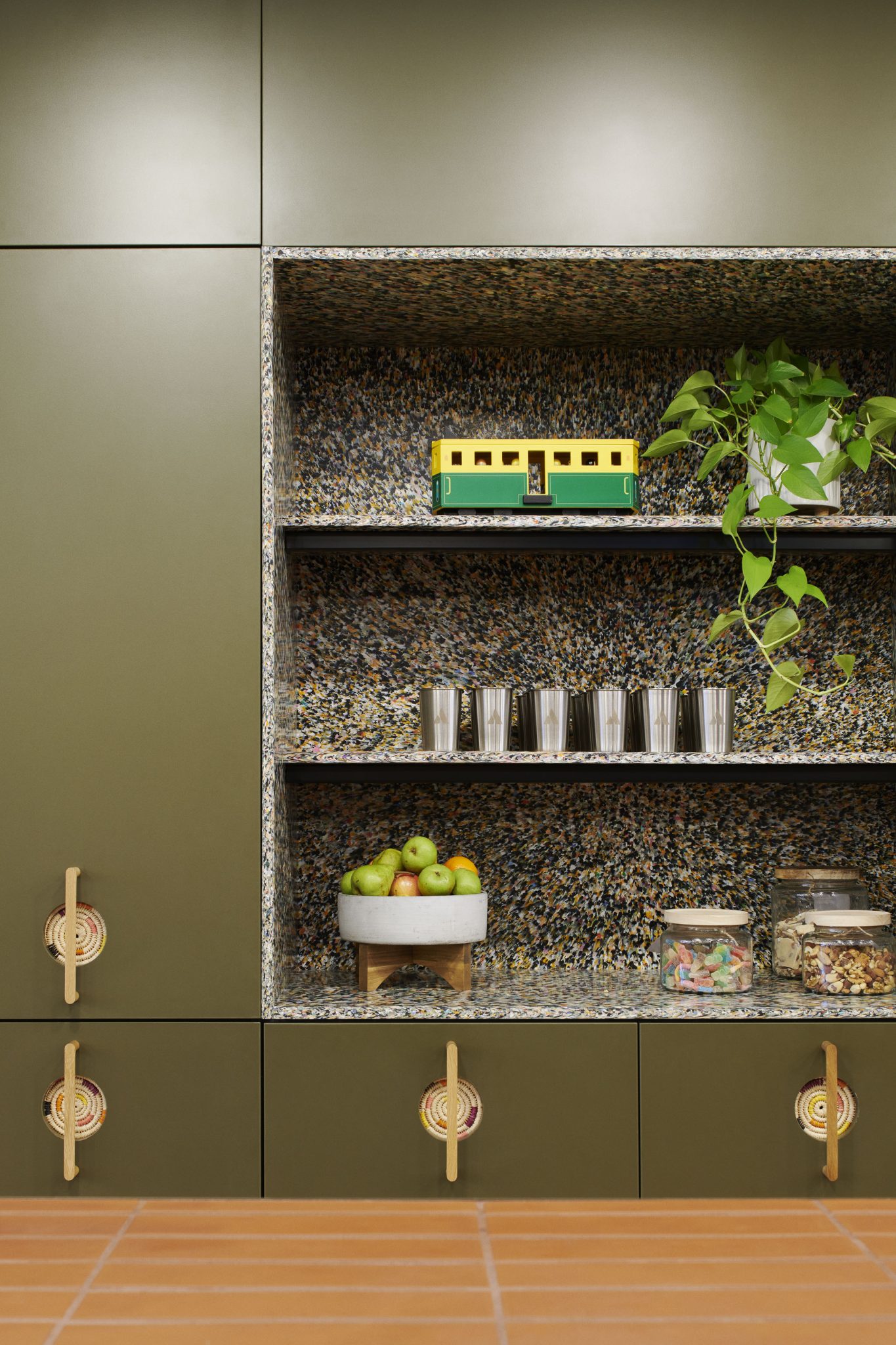
The influence of First Nations designs also manifests more subtly through soft furnishings.
“Courtesy of the curative efforts of Willie Weston – which collaborates with Indigenous artists for built environment furnishings – the work of Jean Ngwarraye Long’s pattern ‘Native Seeds’ features subtly in the sheer curtain divider behind reception,” Greenaway says. “Lee-Anne Wiliams’ pattern ‘Water Levels’ is woven into the curtain in the parents and multi-faith room, and Kathleen Korda’s pattern ‘Durrmu (KK)’ is incorporated into the wall panels of a presentation room on Level 20.”
An old fitout fits back in
The overall vision for Atlassian’s new Melbourne HQ was partly realised using 70 percent of the site’s existing furniture, fittings and joinery – originally curated by BVN Architecture in the building’s old fitout. Sustainable and experimental circular materials, such as Defy, were also used to introduce a strong graphic quality to complement existing joinery.
“Esoteric and visual – with a playful Atlassian wink – the colour palette was also heavily influenced by the existing furnishings and joinery, with us adding fresh hues to reinvigorate as we recycle.”
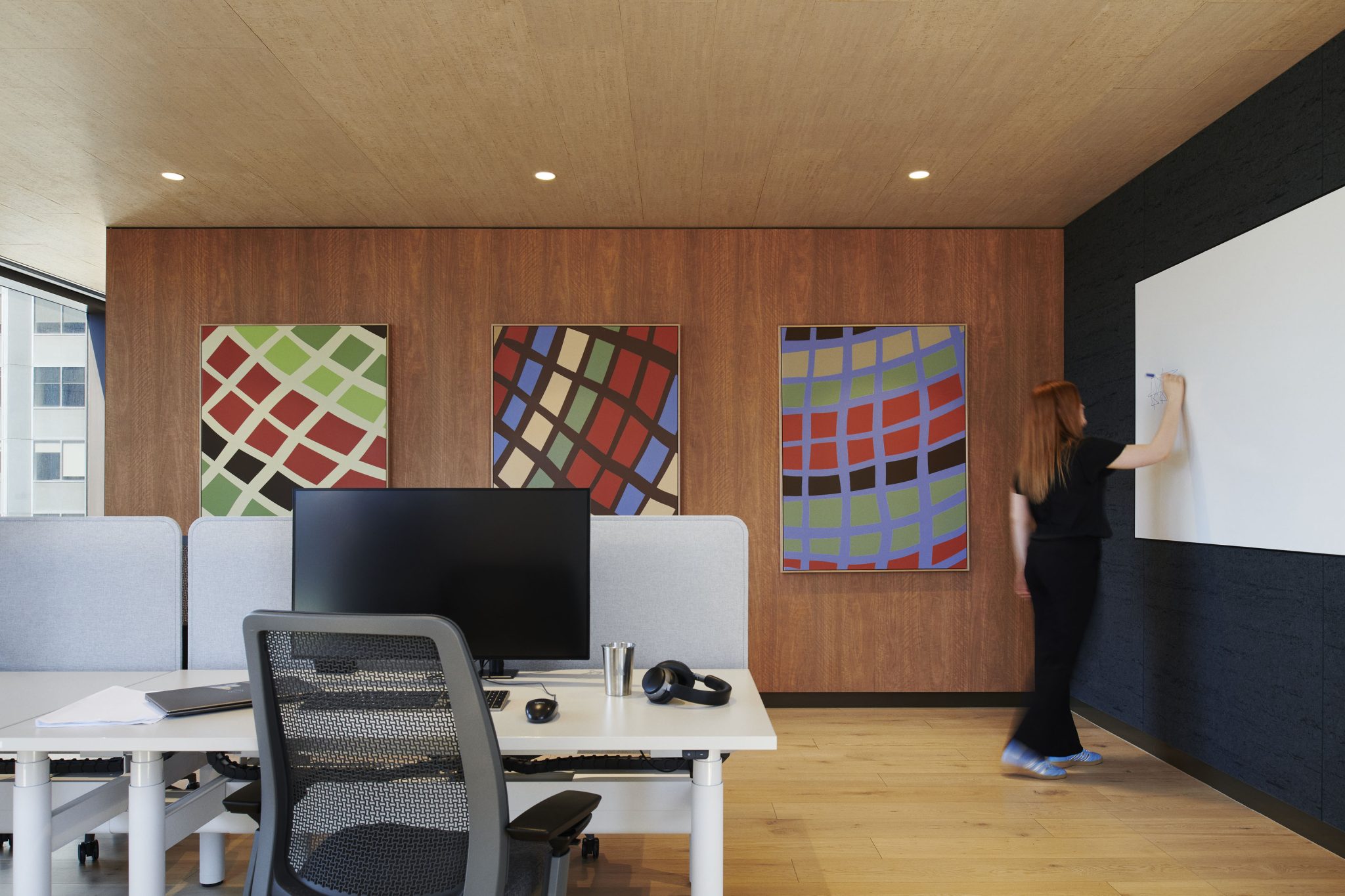
Photography by Nicole England.
Related: BVN launches free, open-source De-Fit Guidelines to help contractors reduce waste.
You Might also Like


© Niche Media 2026