

The Monty by Cera Stribley joins the motel renaissance
The Monty by Cera Stribley joins the motel renaissance

Share
An eye-catching pop of Palm Springs boldness has arrived on the Great Ocean Road in Victoria.
The Monty is the latest in a string of tired (albeit affordable) Australian motels to be transformed into boutique, design-driven accommodation. Completed in late 2025, the project is preceded by refurbishments like Motel Molly by Richards Stanisich and The Isla by Those Architects in New South Wales, alongside Flinders Cove Motel by Studio Tate in Victoria.
Playful colours, patterns and textures characterise these restorations. Applied to old bones, they create new narratives that dial up the typology’s inherent mid-century nostalgia.
The Monty
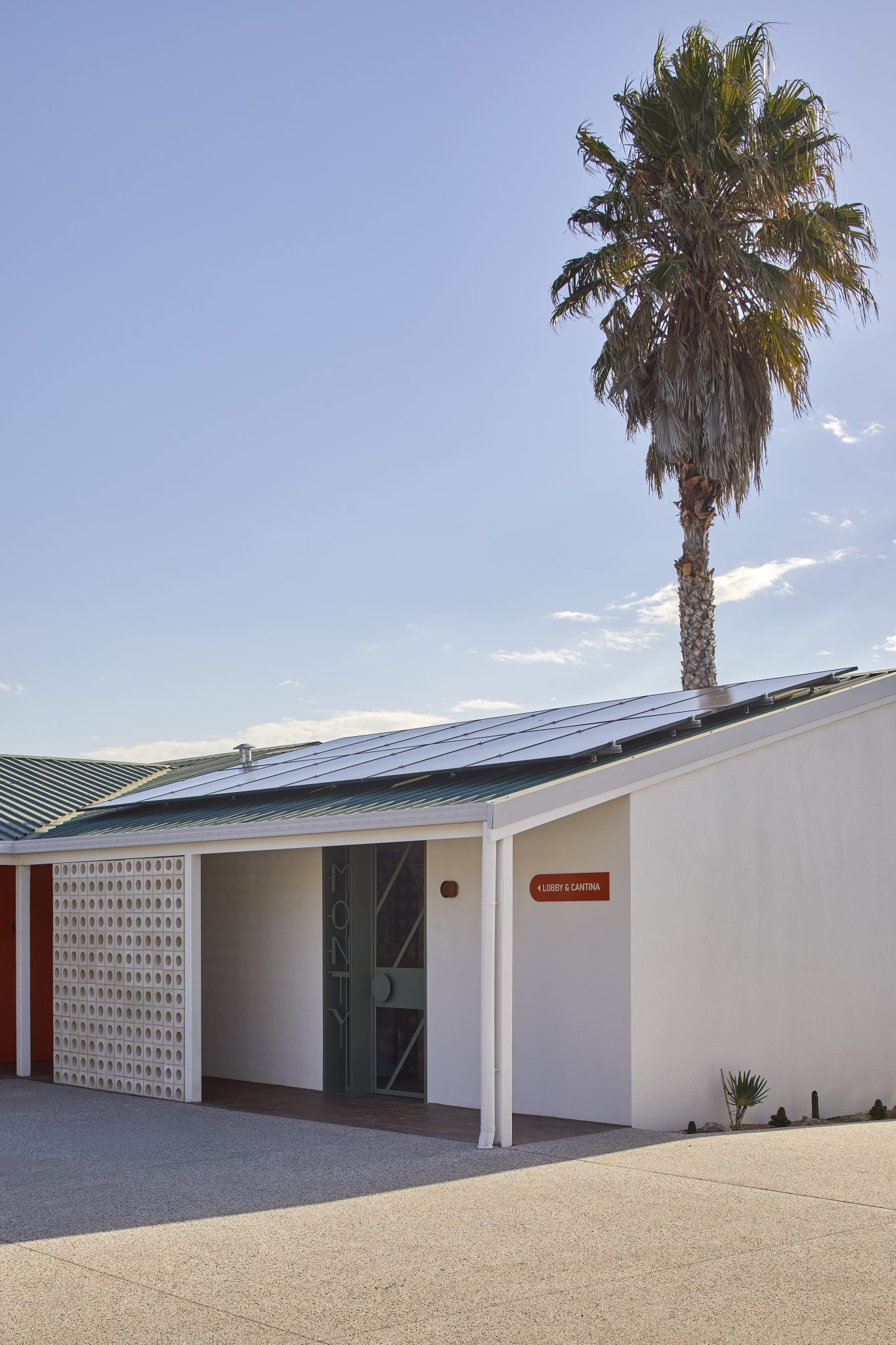
Located along a river bank in the small Surf Coast town of Anglesea, The Monty is the current incarnation of the old Anglesea Motor Inn, which was originally built in the 1980s and has seen different iterations over its lifetime. Architecturally it was a typical coastal roadside motel: low-profile, modest blockwork construction with simple, practical rooms arranged around the site.
What was once a drab brown building is now a stark white and forest green. Geometries saturated with colour beckon attention through The Monty’s broad reception window, thanks to a redesign by Melbourne-based architecture and interior design practice Cera Stribley.
According to the project’s design lead, interior designer Florence Davies, the client wanted The Monty to move beyond a typical roadside stopover, becoming “a destination in its own right”.
“Good design naturally plays a role in that,” Davies explains. “By giving the motel a stronger identity and a more memorable guest experience, it positions the rooms at a different level within the local accommodation market.”
Mid-century glamour and space-age optimism
The Monty’s new look is a cheeky nod to the Kaufmann House in Palm Springs, famously featured in the Slim Aarons photograph A Poolside Party at a Desert House – with a “splash of space-age optimism”. Retro silhouettes, bold patterns and chrome accents are layered with rich colour and curved forms.
“It’s intentionally a little irreverent,” Davies says. “The kind of place that doesn’t take itself too seriously.”
Cera Stribley previously worked with the same client, Damien Cerantonio, on Indie Spa in nearby Aireys Inlet. This bathhouse exists within Sunnymead Hotel, which underwent its own retro-inspired makeover in 2022.
Cera Stribley has also designed Cerantonio’s new Tumble and Tide laundrette on Anglesea’s main strip, which leans more Japanese nightclub than seaside laundromat, pulsing in cobalt blue and stainless steel, “almost like a small art installation within the town”. Davies says the project speaks to the type of client Cerantonio is – one open to creativity and experimentation. It also helps that he is the brother of Cera Stribley’s co-founder Domenic Cerantonio.
“There was already a strong level of trust from the outset,” Davies says. “That gave us a lot of freedom to explore ideas and push the design further than you might typically be able to with a hospitality refurbishment.”
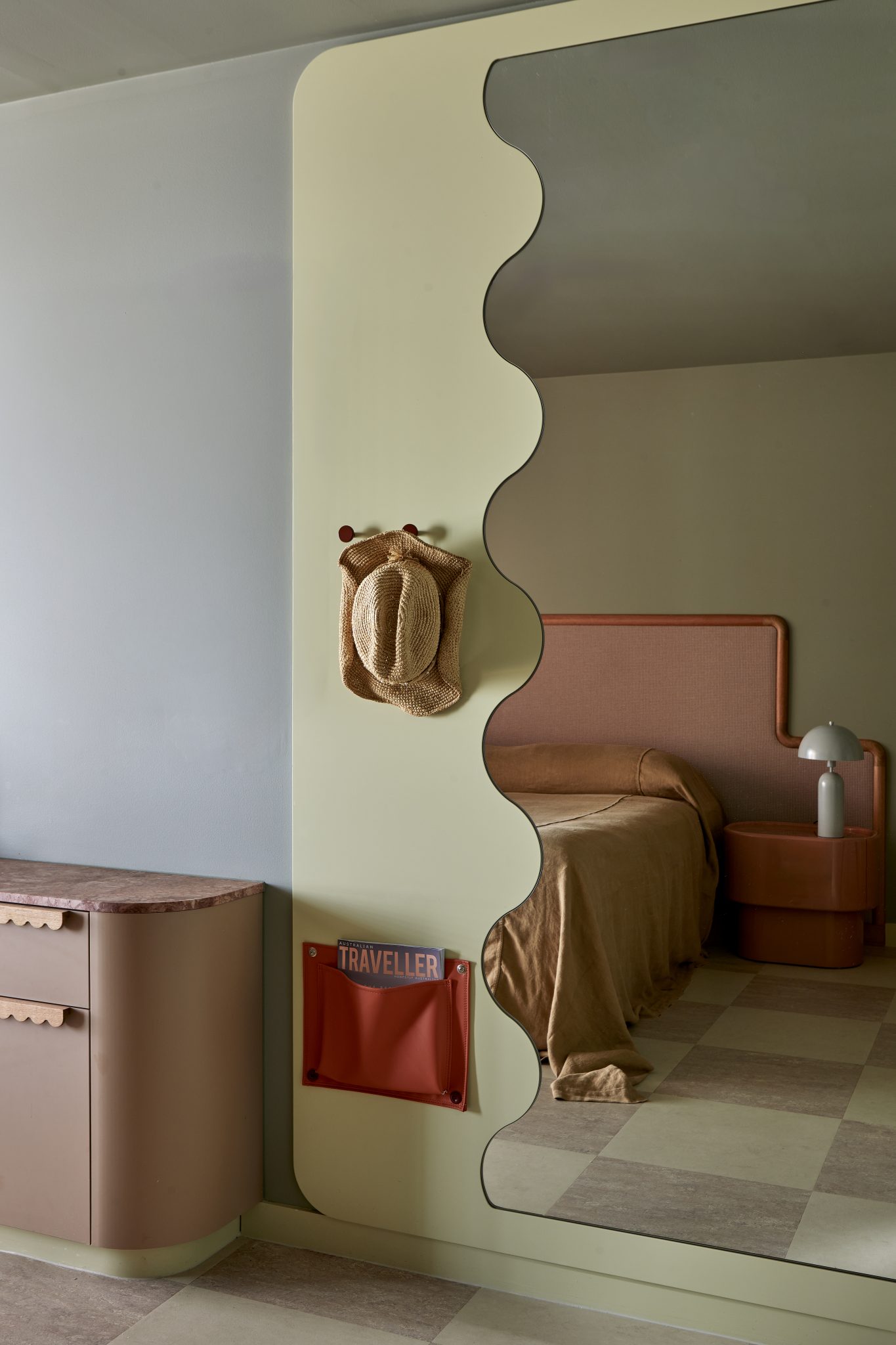
While alike, all three projects differ in their design narratives. The Monty is about “that sense of freedom and escapism that comes with driving down the Great Ocean Road – pulling up at a roadside motel that feels a bit special and slightly cinematic”, according to Davies.
Escapism was a driving theme, but The Monty’s design narrative is not as alien to its context as it may first appear. “Palm Springs provided a useful design reference point because it has a similar relationship to Los Angeles as the Great Ocean Road does to Melbourne: it’s a place people escape to,” Davies says.
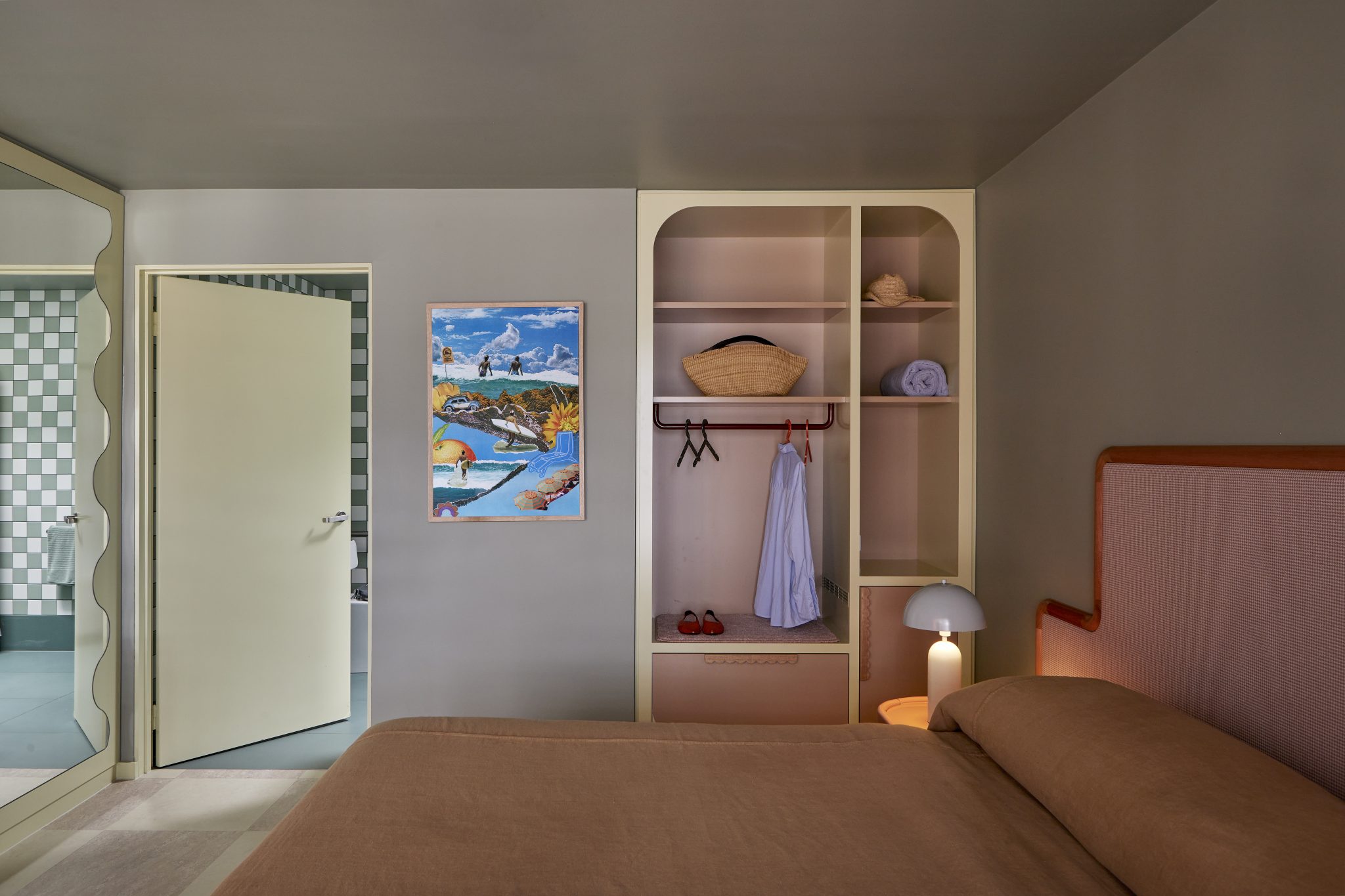
The winding nature of the Great Ocean Road inspired several of the curved architectural forms. To further enhance that connection to place, Davies engaged Brunswick-based art studio That Paper Joint to curate collage artworks. “Those pieces introduce a sense of humour and storytelling that feels very Australian, and help ground the design in its coastal context rather than feeling like a pastiche of somewhere else,” she says.
Design interventions
Rather than reinventing, Cera Stribley worked with the building’s intact bones, retaining the existing structure and spatial layout for economic and environmental reasons. Palm Springs architecture played a big role in shaping the new visual language, especially the use of breeze blocks, colourful front doors and bold, expressive landscaping with palms and cacti.
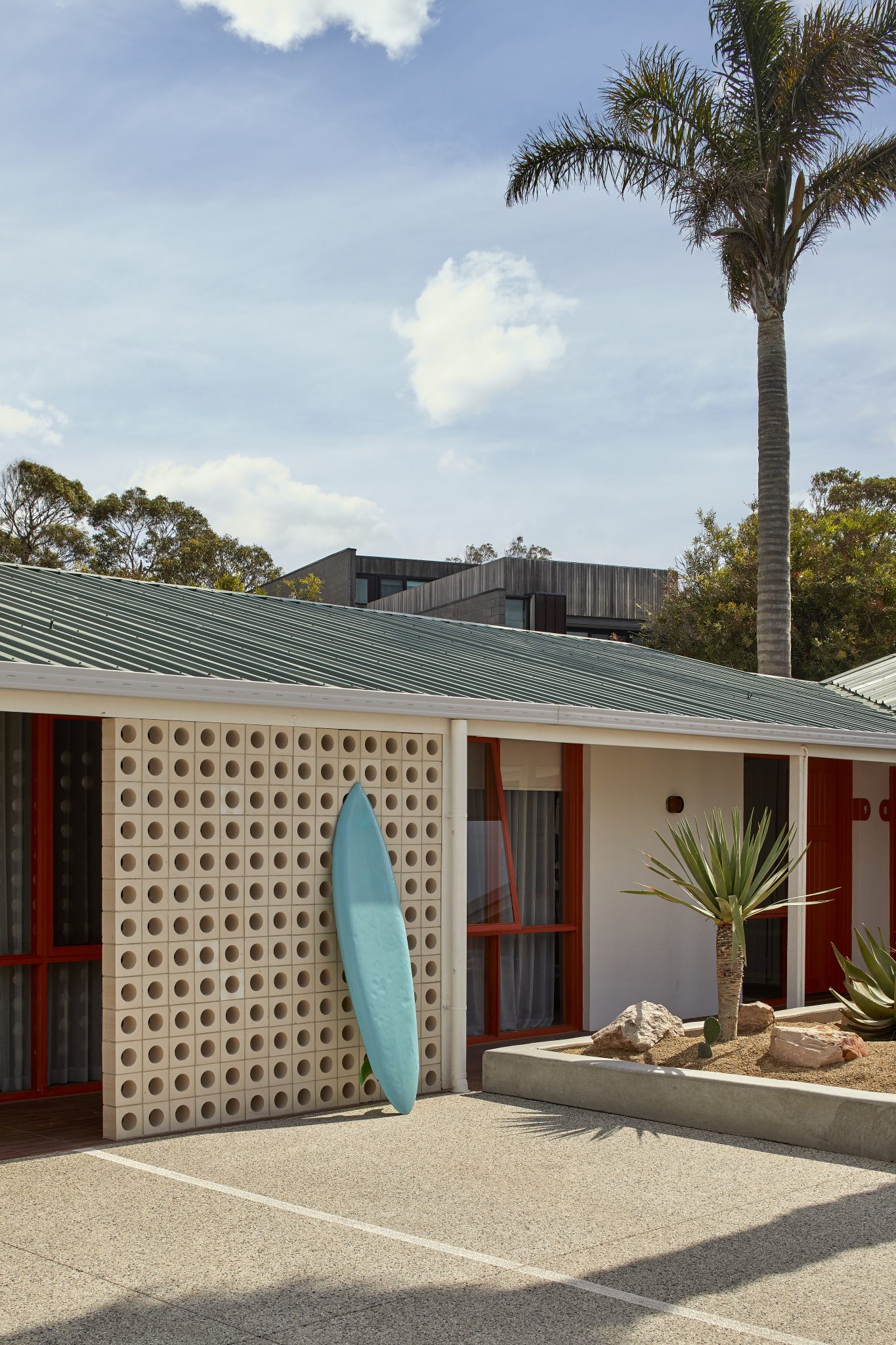
Cera Stribley did not seek to entirely erase the building’s history. “There’s still a subtle nod to that slightly kitschy 80s motel vibe, but it’s been reframed in a way that feels deliberate rather than accidental,” Davies says. The interiors, however, were showing their age – “particularly the bathrooms, which were very much a relic of the 80s”.
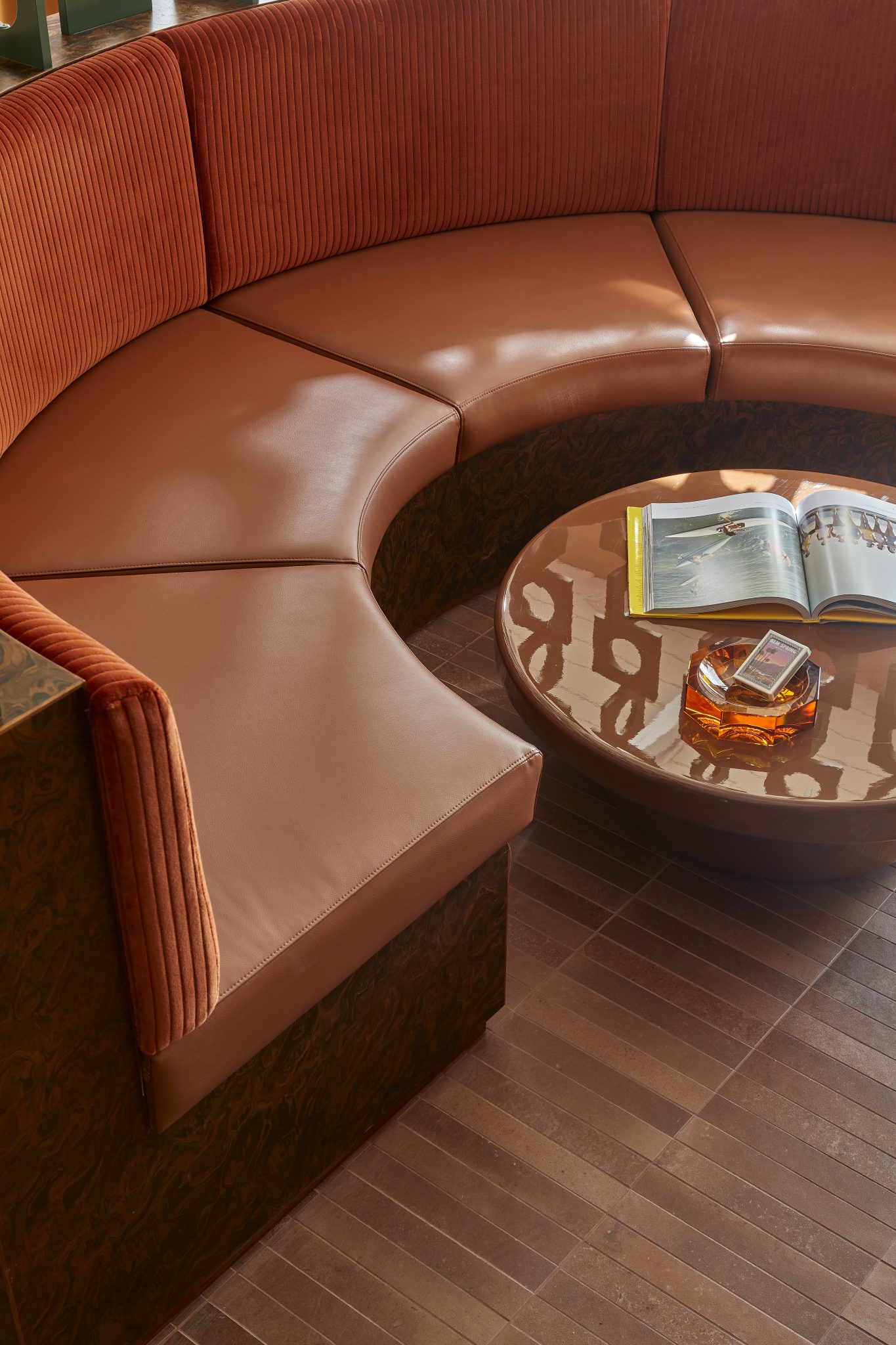
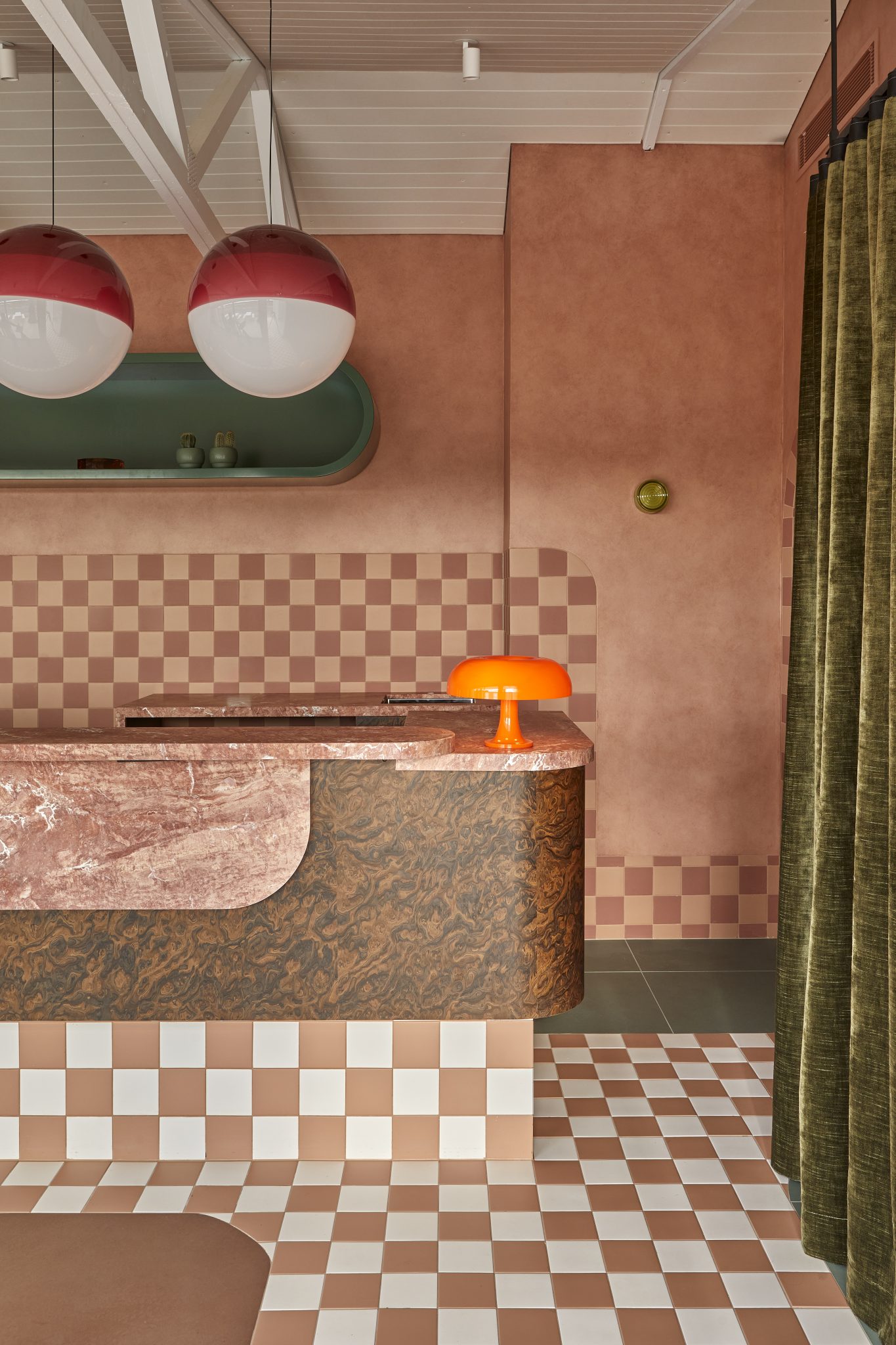
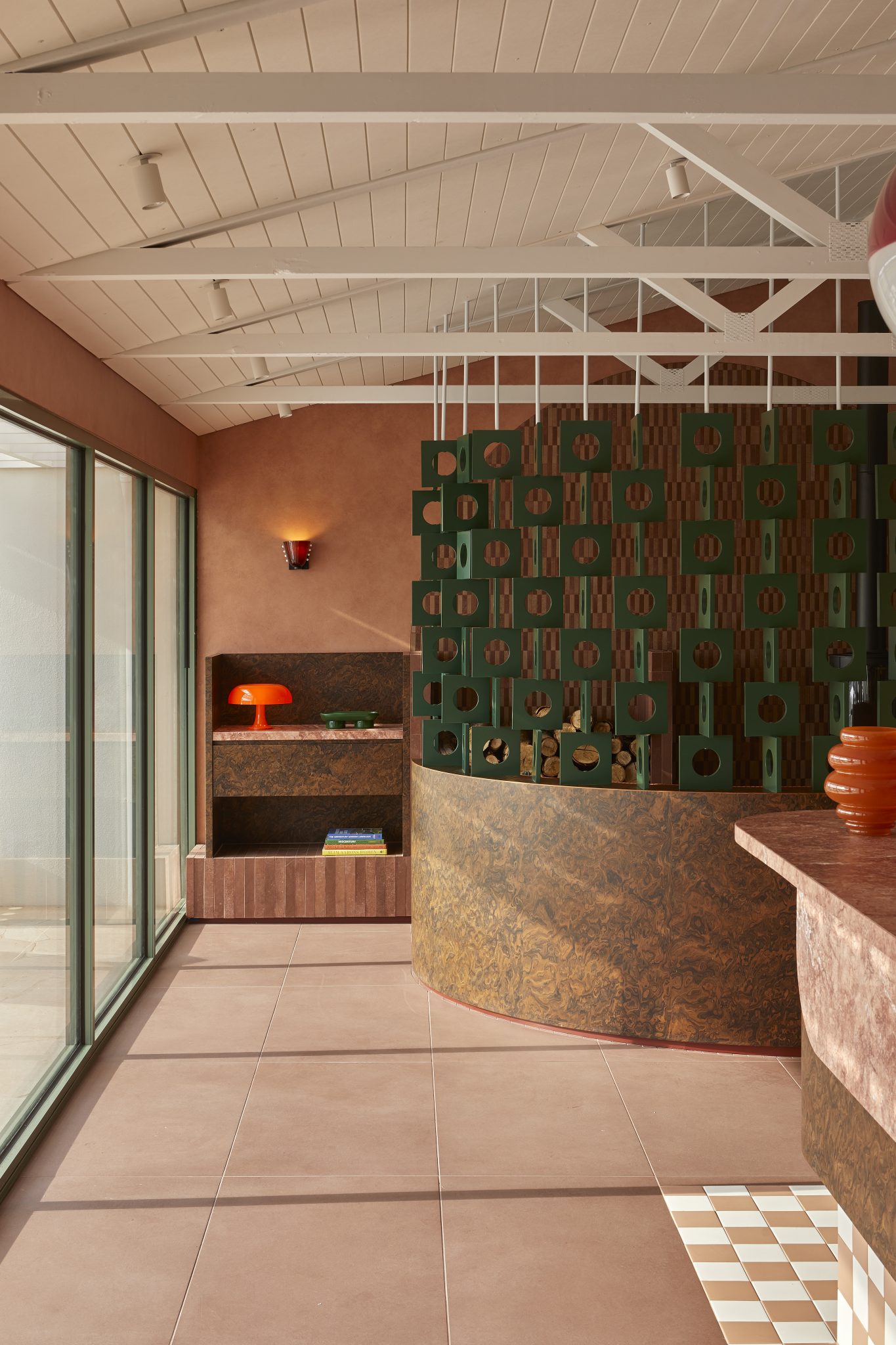
As the first place guests encounter, the reception is intentionally more vibrant and energetic than the guest rooms. Its palette comprises richer, deeper terracottas, forest greens and burled timbers for a slightly moodier, more dramatic atmosphere. There’s also a nod to ‘70s funk in the materiality and detailing.
“We deliberately avoided the typical washed-out pastels that you often see in coastal interiors,” Davies says.
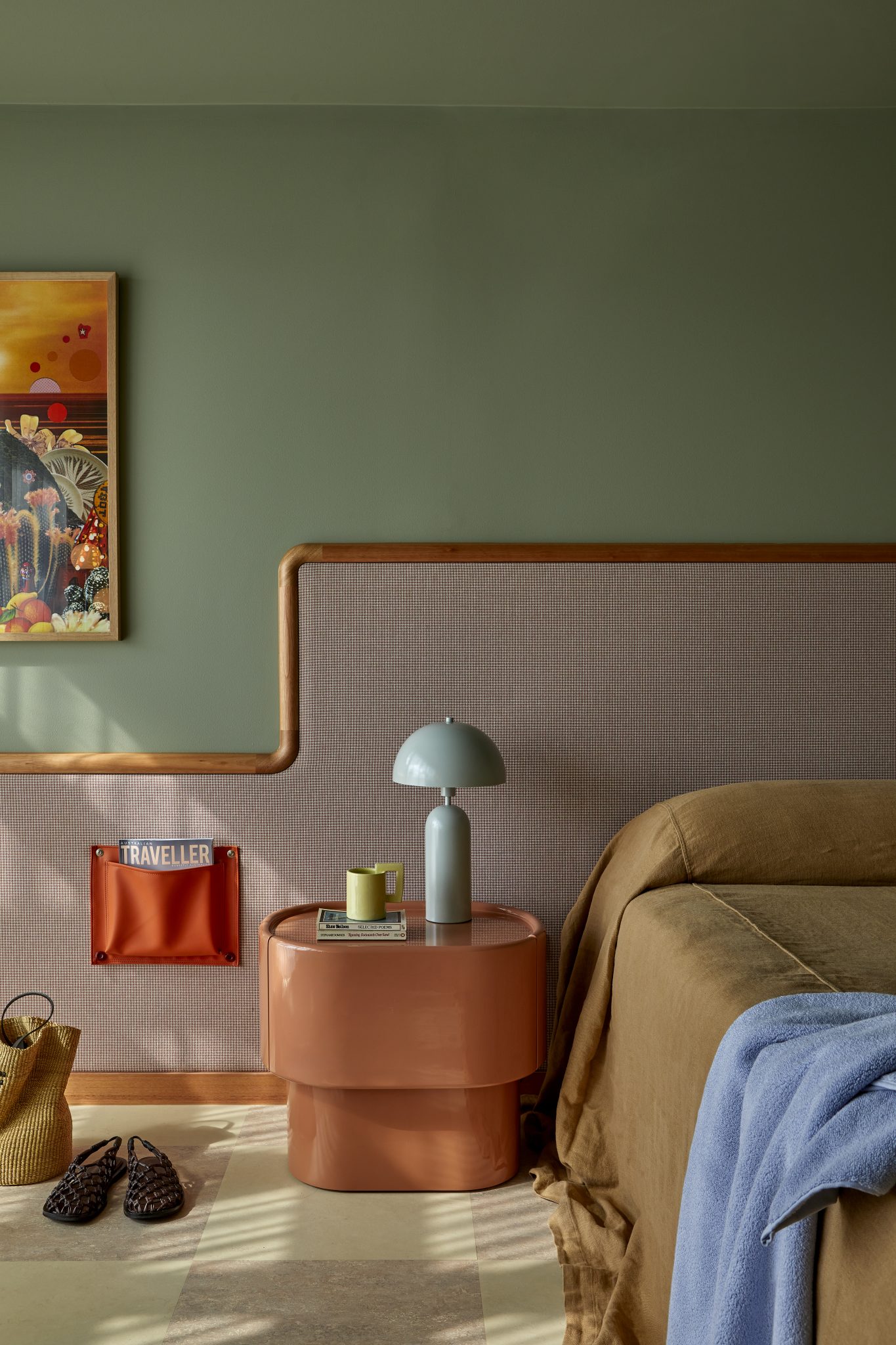
It was important for the rooms, by contrast, to feel calm and comfortable. Plaster covers the existing internal blockwork, softening the rooms and allowing the introduction of a more considered, warm and ambient lighting scheme.
Where possible, the designers reused certain elements, such as the existing blinds, as a way of reducing waste. Much of the original lighting, however, was replaced with new feature fittings.
Warm oranges and reds highlight certain details, balanced with greens, soft pinks and a smattering of blue. “Materials like velvet, chrome and textured finishes help create a slightly nostalgic feel, but everything is balanced,” Davies adds. Alongside a checkerboard motif on the floor, they “reinforce the retro aesthetic without overwhelming the space”.
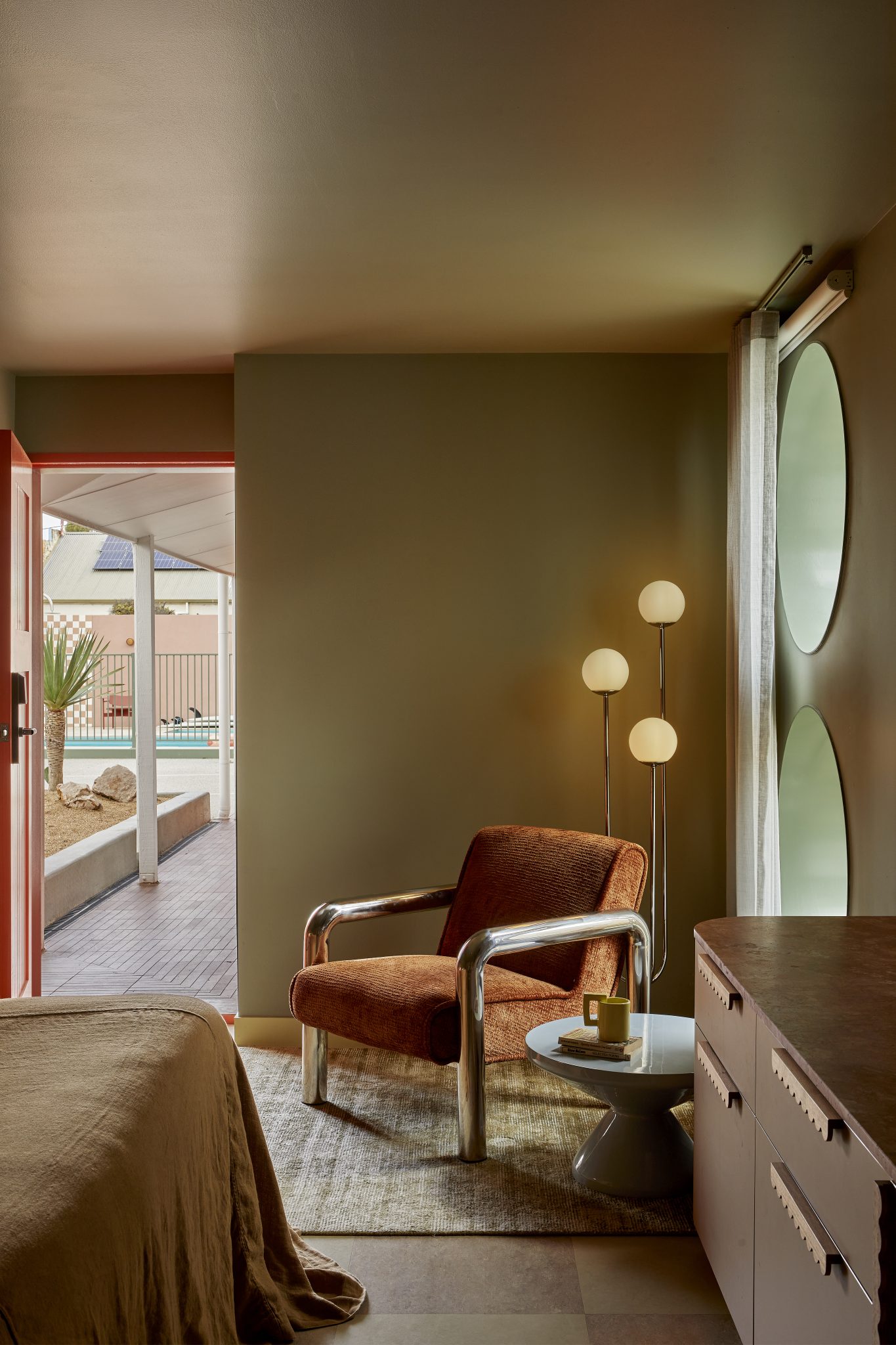
According to Davies, the use of a red checkerboard motif also ties in Indigenous storytelling:
“The checkerboard motif references the historical checkerboard pattern of land ownership in the Palm Springs region a result of 19th century federal policies that divided Cahuilla land between tribal and non-tribal entities. While not a traditional Cahuilla design element, its inclusion in the project offers a subtle acknowledgment of the complex and ongoing relationship between Indigenous land, identity and development in the area.”
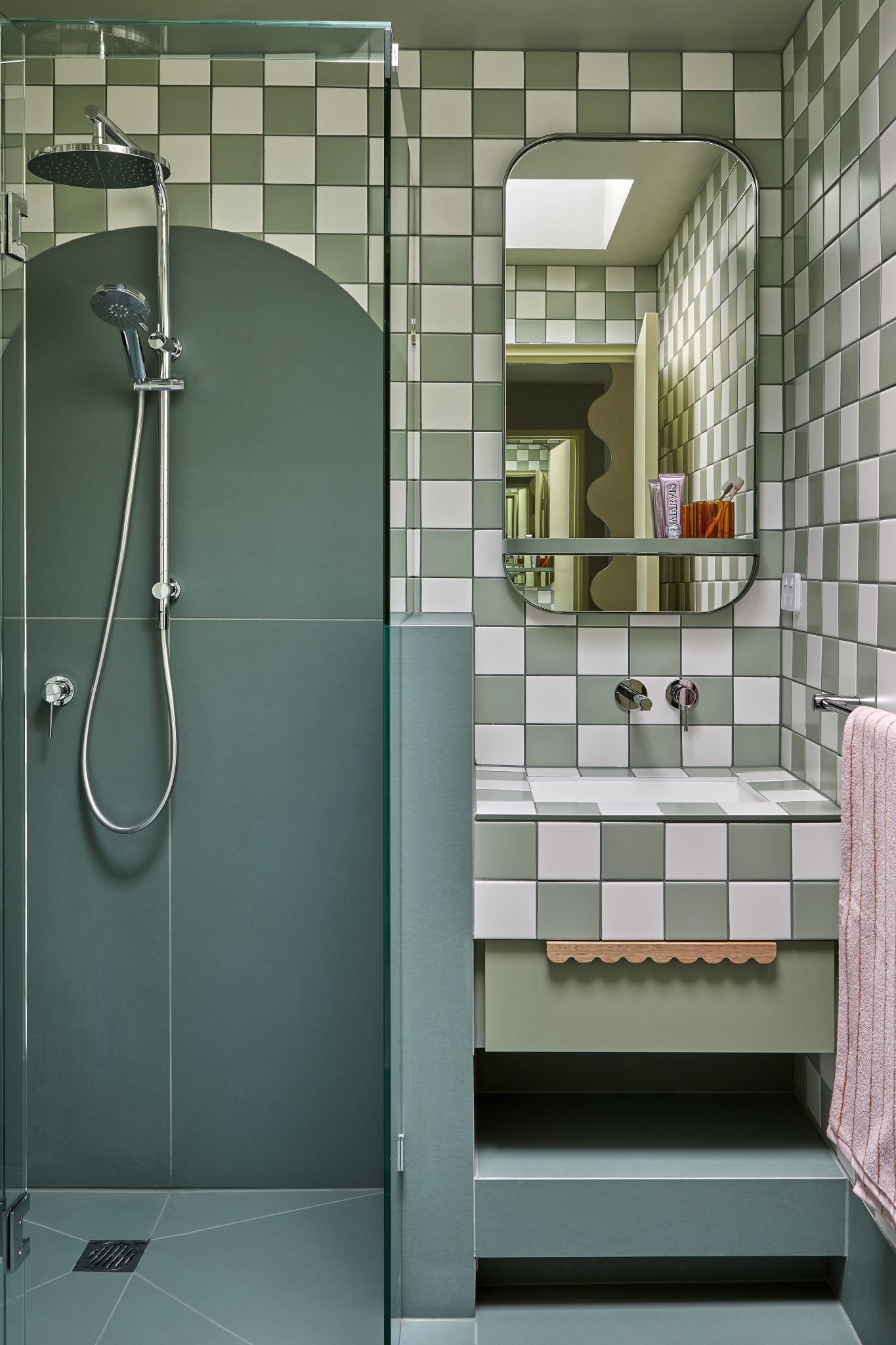
Retrofitting accessibility
Accessibility was an important consideration throughout the project, which has two DDA (Disability Discrimination Act)-compliant rooms.
“We wanted the accessible rooms to feel just as thoughtfully designed as the others, rather than clinical or overly utilitarian,” Davies says. “That meant maintaining the playful palette and forms while incorporating things like adjustable beds, ensuring amenities such as soap and fittings were within easy reach, and lowering certain elements like the minibar within the robe joinery. We also carefully considered circulation space to allow for comfortable wheelchair movement.”
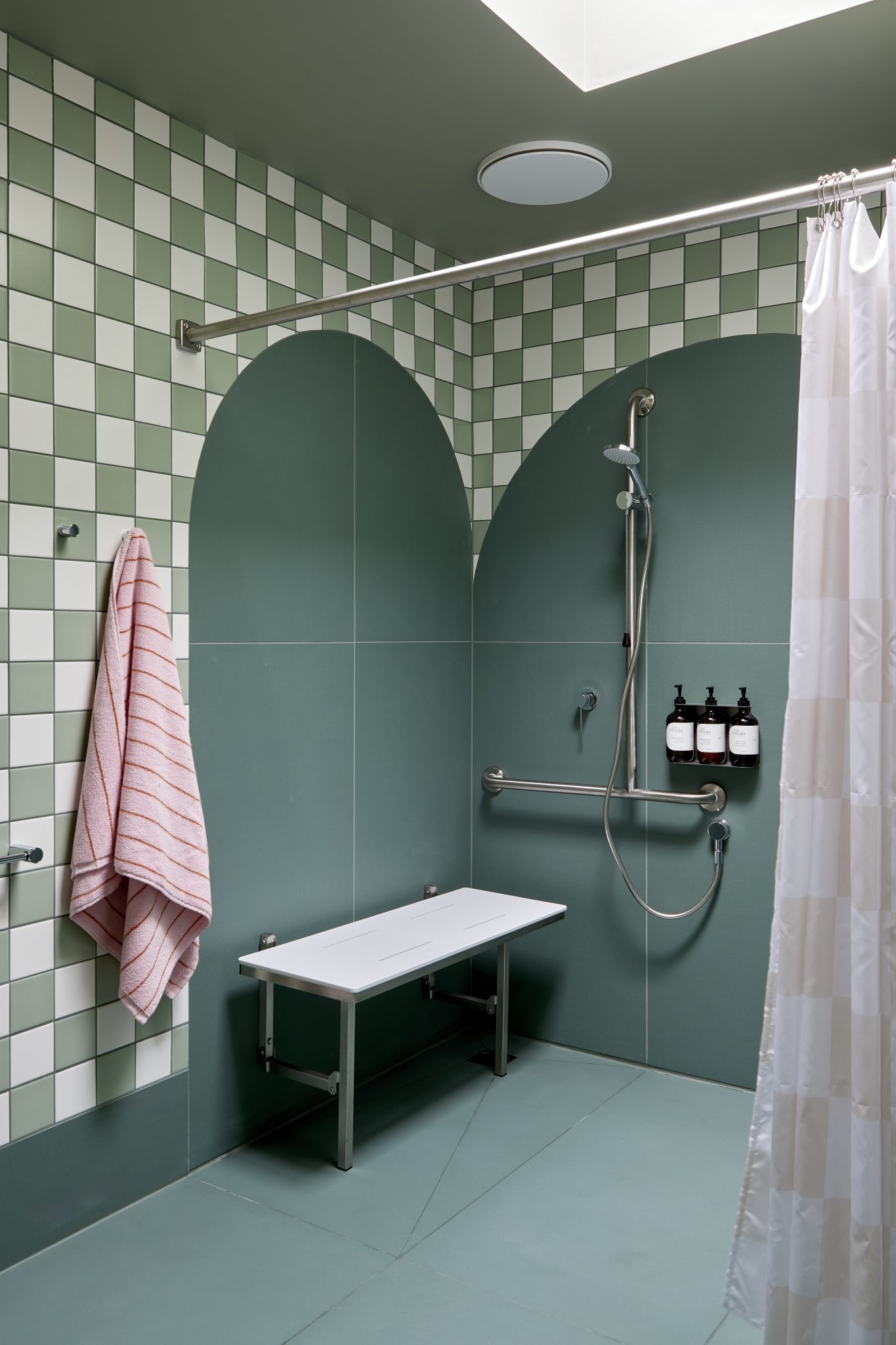
Retrofitting accessibility into an existing building came with fixed spatial constraints. Davies says this meant making small compromises in some cases; for example, reducing lounge space in certain rooms to maintain appropriate circulation.
“The project was recently reviewed by accessible travel influencers Have Wheelchair Will Travel, who gave the rooms really positive feedback, which was incredibly rewarding for the whole team,” Davies says.
More to come
Cera Stribley has also been involved in the design of an incoming new rooftop bar next to the outdoor pool, set to build on the same narrative.
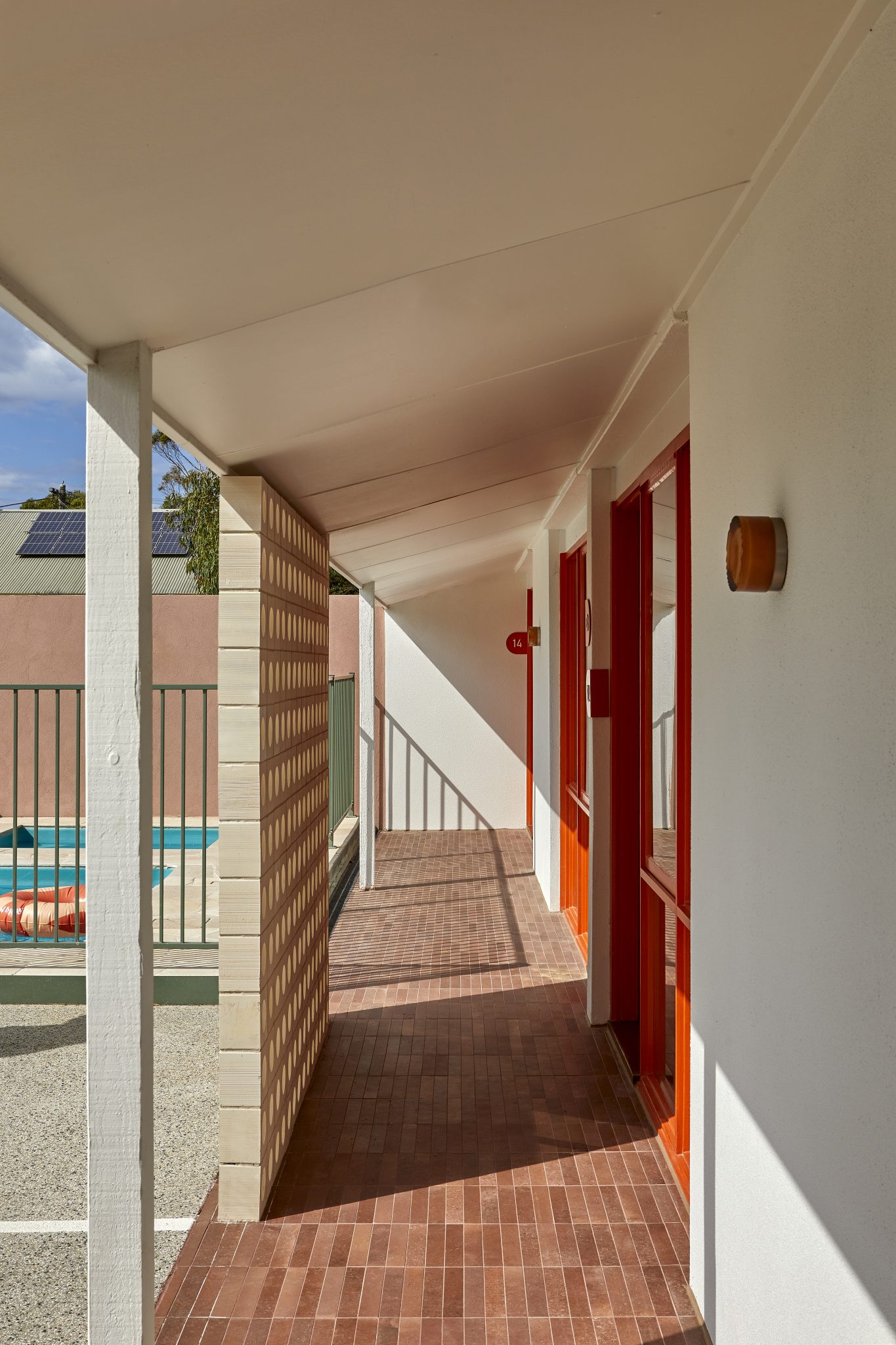
“The rooftop pool and bar amplify the resort-like atmosphere, while a Cali-Mex restaurant on-site cleverly nods to the Mexican influence found throughout Palm Springs,” Davies says.
She says it’s not every day that designers get the opportunity to work with such “bold colours, expressive forms and slightly tongue-in-cheek design references”.
“Projects like this are always fun because they allow you to create something with a really strong personality – somewhere that people remember after they’ve stayed there.”
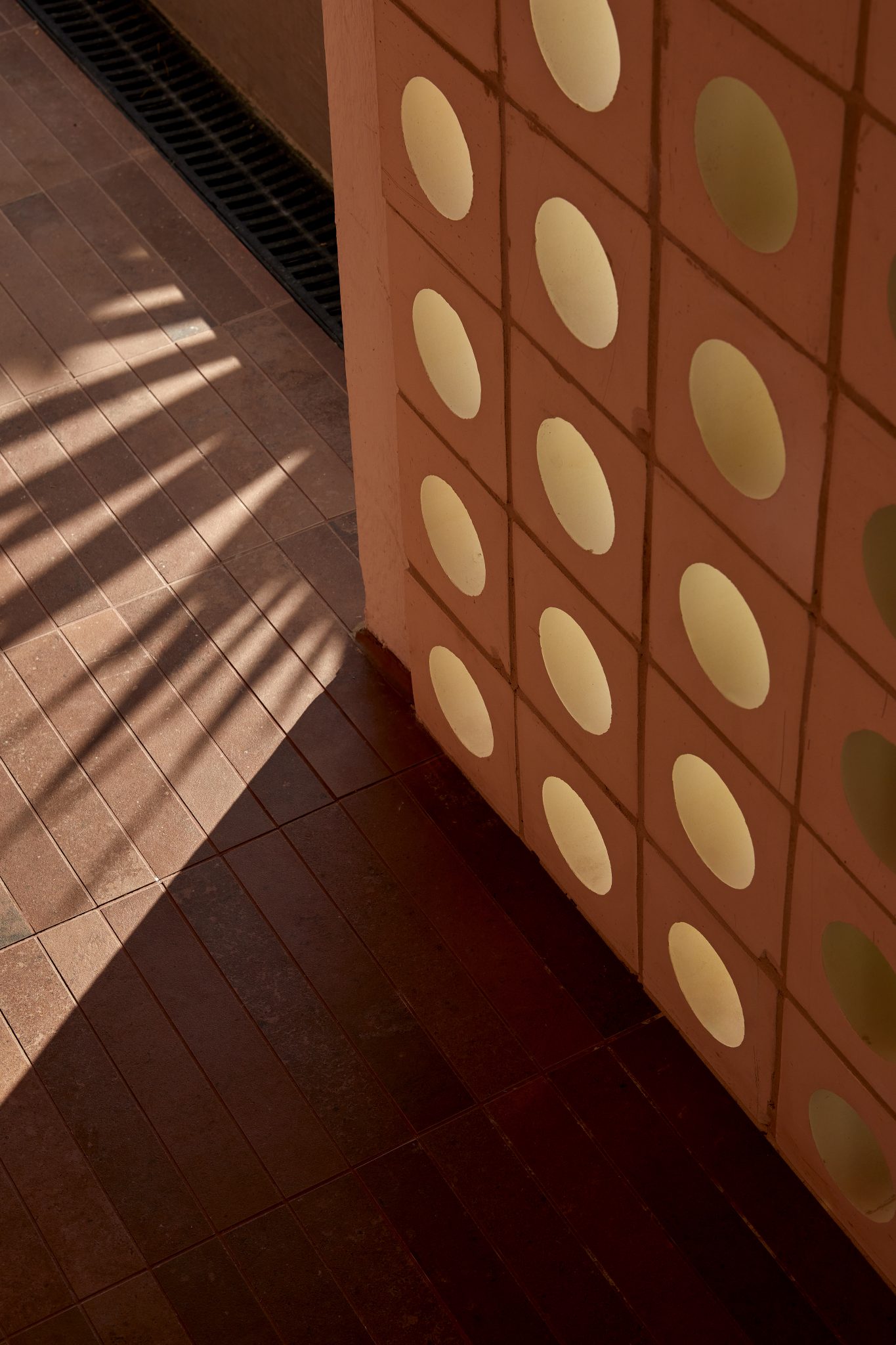

Photography by Dave Kulesza.
You Might also Like


Related Stories

© Niche Media 2026