

Ingo Maurer and Foscarini shone a light on 3daysofdesign
Ingo Maurer and Foscarini shone a light on 3daysofdesign

Share
Responding to the ‘Make This Moment Matter’ theme of 3daysofdesign 2026, two of Europe’s most influential lighting designers presented pieces that would occupy the centre of attention in any space. ADR speaks with the creative leads of Ingo Maurer and Foscarini to learn more.
Presenting two different approaches to interior lighting pieces, German designer Ingo Maurer and Italian lamp manufacturer Foscarini brought their own unique aesthetic philosophies to this year’s 3daysofdesign festival in Copenhagen. Exhibiting their iconic pieces, both celebrating decades on the global design stage, the two brands continue to transform the interior spaces in which their portfolios are displayed.
With designs that continually invite reinterpretation and reappraisal, the Twiggy lamp designed by Marc Sadler for Foscarini and the YaYaHo lamp by Ingo Maurer stood among the many highlights in the Copenhagen design exhibition across 10-12 June. Both pieces provide distinct responses to the same creative experiment: what happens when light is treated as a medium in its own right, rather than a background utility?
The everyday functionality of a light fitting adopts new significance when treated as a character within the room, rather than the invisible roleplay of nondescript infrastructure.
Shaping light according to need
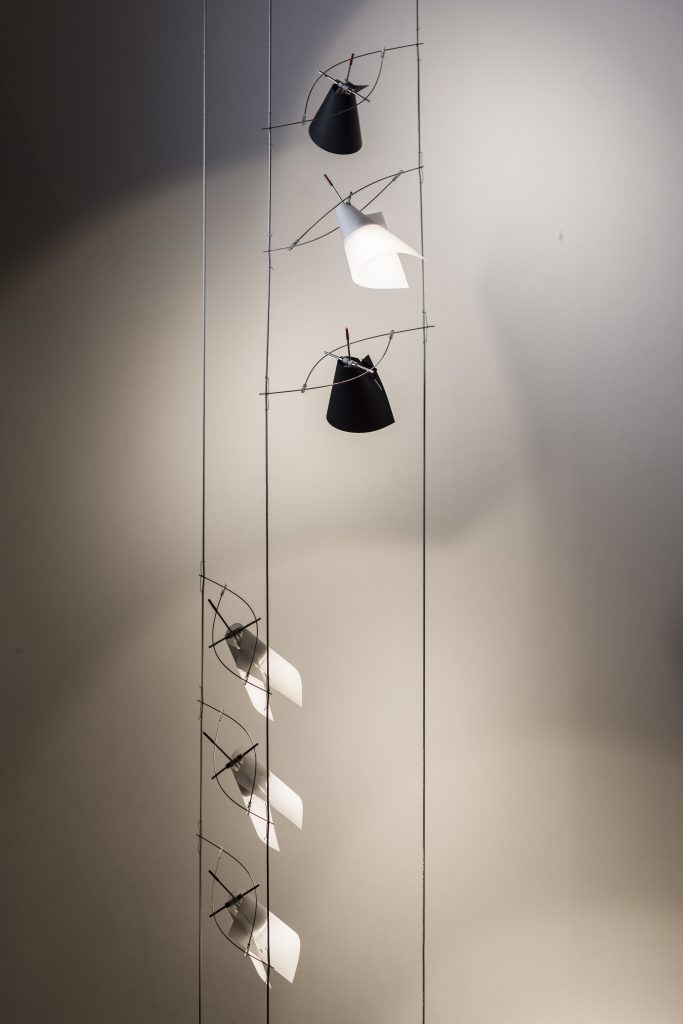
When Maurer first launched YaYaHo in 1984, the low-voltage lighting system fell somewhere between industrial rigging and bespoke jewellery. Now, 42 years later, its latest iteration has gained a renewed theatrical presence as it responds to the contemporary way in which interiors are utilised in the 2020s.
“What still feels most innovative about YaYaHo today is not only the technology, but the freedom it gives people to shape light according to their own needs,” says Ingo Maurer’s head of product and project design Axel Schmid. The design’s tensioned wires create a kind of spatial grid that, he suggests, “allows users to decide where light should be placed, rather than forcing them to follow the fixed logic of a ceiling outlet.”
The approach to YaYaHo’s presentation in Copenhagen this year was to position this grid as a central figure within the exhibition space, while the addition of mirrors and shades created a dynamic experience of what lighting can be in domestic spaces.
In all configurations – and there are many – YaYaHo is less a fixed light source than an arresting design framework that can restructure and reanimate any room in which it is installed.
“The technology has evolved significantly,” Schmid says, “but these technical improvements serve a larger purpose: expanding the possibilities of the original concept.”
Indeed, the evolution from halogen to LED elements has kept in line with contemporary environmental innovation over the years, but Schmid underlines that these changes are representatives of means, not ends.
As such, 10 new elements have been developed for this latest iteration, which extend the lighting system vertically and diagonally. This includes breathtaking modules that sit above the wires and create a unique composition that cuts through elevated space in striking, unexpected ways.
“We were not interested in a reboot. We wanted to continue a conversation that began 42 years ago,” Schmid says. At all times, Ingo Maurer rejected the temptation to restart the YaYaHo design. Across decades, the strong, tensioned wires have simultaneously remained the structural and conceptual core of the design.
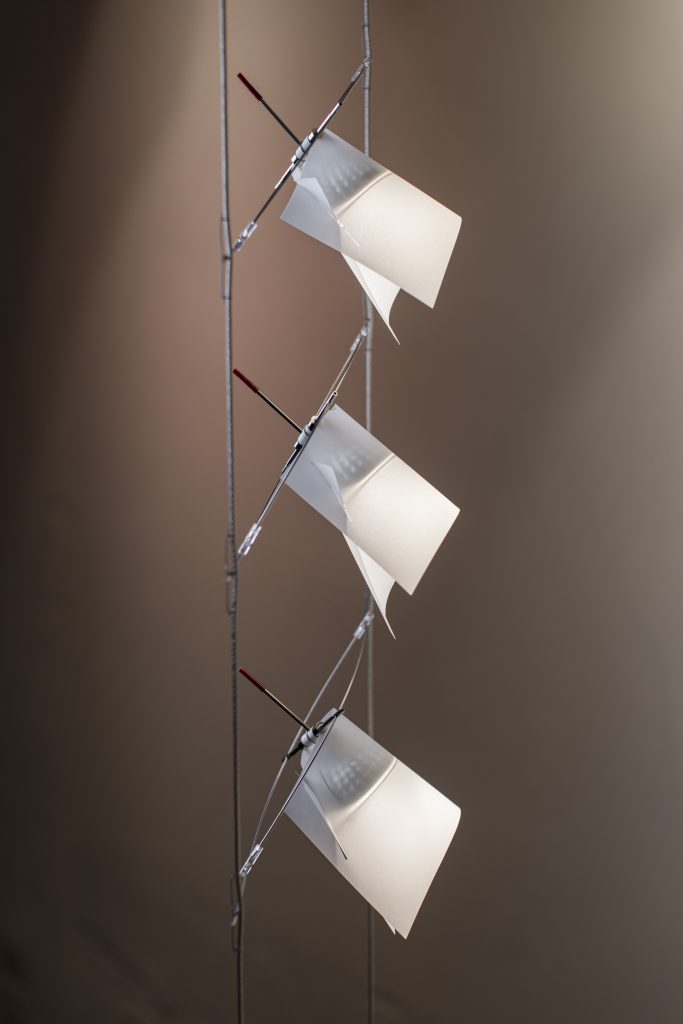
Yet as the technology improves over time, new components become compatible with existing ones, meaning that pieces from the 1980s and from 2026 can seamlessly occupy the same installation.
The overwhelming impression of all this, Schmid says, is “the combination of freedom and continuity: the realisation that a lighting system can be both highly flexible and deeply rooted in a design language that has remained relevant for more than four decades.”
In a globally recognised design festival that emphasises interactive spatial experiences over skin-deep product stalls, the endlessly configurable framework of YaYaHo remains as innovative – and attractive – today as it did over 40 years prior.
Deliberately extending beyond the limits of pure functionality
Just a short walk away from the YaYaHo installation, those attending 3daysofdesign will have found another piece of interior lighting history, this year celebrating a key anniversary. The Twiggy lamp, designed by Marc Sadler for Italian manufacturer Foscarini, turned 20 this year and remains just as aesthetically alluring as it was at launch in 2006.
For Foscarini president Carlo Urbinati, the lamp’s characteristic pose is key to appreciating its enduring appeal. “A slender line that occupies space without burdening it,” he says of Twiggy’s dramatic arch, “that extends without invading, that brightens without overwhelming.”
As many lighting fixtures simply hide in the surfaces of interior spaces and serve essentially technical roles, Twiggy is charmingly insistent on achieving just the opposite. There is nothing about the Twiggy lamp that strives to be purely functional.
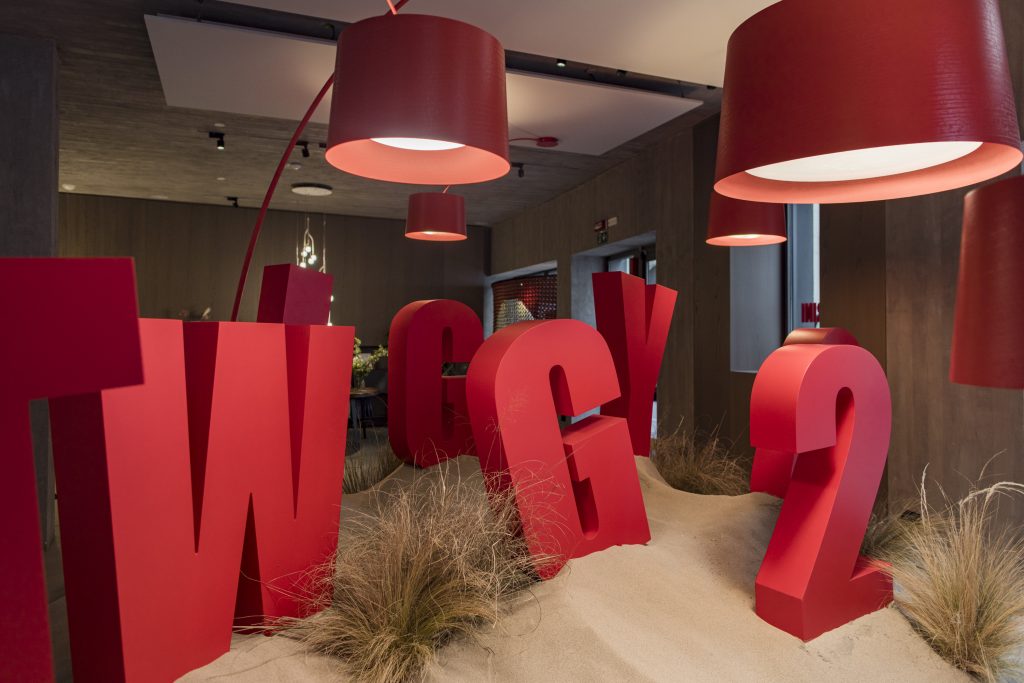
As Urbinati asserts, the design was born of a desire to do precisely the opposite. “It enters a room and transforms it into something of your own,” he says, “not a generic space, but a place with a precise identity.”
Notably, a sense of excitable momentum dominates the viewer’s first impressions of the Twiggy lamp. Sadler himself has likened the design to “a plant, a flower”, as something that blooms within a room rather than simply being plugged in.
Urbinati concludes, “Twiggy is not a static presence, but a dynamic one, which means every person in the space experiences a slightly different object depending on where they stand and when they look.”
3daysofdesign took place in Copenhagen this year from 10-12 June. For information on how to present at next year’s exhibition, visit website.
Top image: Marc Sadler at Foscarini, 20 Years of Twiggy. Photo: Giuliano Koren.
You may also like:
Craft, colour and the considered interior: dispatches from 3daysofdesign 2026
At 3daysofdesign 2026, Arper invites a fresh perspective on how we inhabit space
‘A serious industry platform’: what to expect from 3daysofdesign 2026
You Might also Like

Related Stories

© Niche Media 2026