

Rethinking the way we sit: why the Aeron chair’s ergonomic performance matters
Rethinking the way we sit: why the Aeron chair’s ergonomic performance matters

Share
The contemporary workplace is no longer defined by a single posture, a fixed desk or even a consistent way of working.
A working day may move between focused screen time, collaborative discussions, informal meetings and moments away from the desk, with the body continually adapting to different tasks and environments. Despite this shift towards greater flexibility, however, sitting remains one of the fundamental physical experiences of office life.
For workplace designers, that makes the chair more than a functional item of furniture. It is part of the infrastructure that supports how people occupy a space over time.
The question, then, is not simply whether a chair is comfortable. It is how it supports the body while allowing it to move.
This idea of supported, active sitting has been central to the story of Herman Miller‘s Aeron chair since the Bill Stumpf and Don Chadwick-designed original was launched in 1994. It had already been long acknowledged that unsupported sitting leads to a static, slouched position that eventually may result in not just physical discomfort and pain, but significant negative cognitive effects. Rather than treating the chair as a static platform, Aeron challenged conventional seating through an approach that brought together ergonomics, material innovation, inclusive sizing and an understanding of natural movement.
More than three decades later, that proposition continues to evolve. Developments including 8Z Pellicle, PostureFit SL and Aeron’s kinematic support reflect Herman Miller’s ongoing, research-led approach to the science of sitting – and offer a useful case study in why ergonomics deserves to be considered at the beginning of workplace design, rather than added as an afterthought.
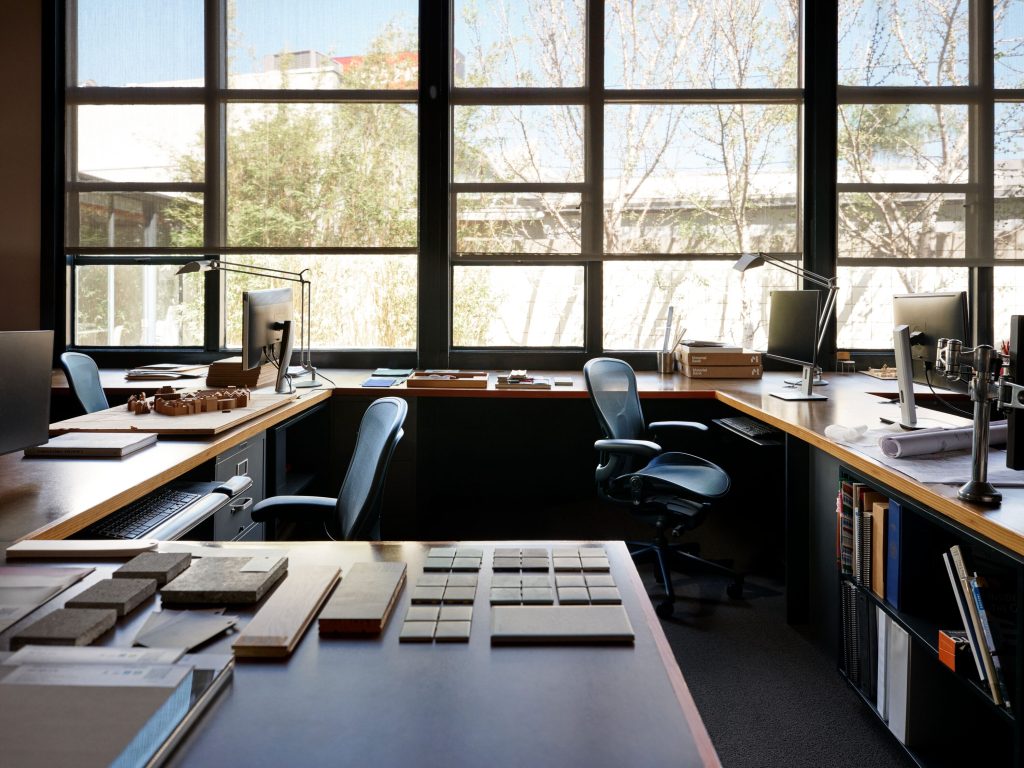
Designing for movement
One of the assumptions embedded in traditional office seating is that good posture means holding the body in a particular position. Contemporary ergonomic thinking presents a more nuanced picture. People naturally change position throughout the day, and a chair needs to accommodate those movements while continuing to provide appropriate support.
Aeron is designed around this principle of movement. Its kinematic approach enables the chair to respond to the sitter as they shift between different positions, supporting a more dynamic relationship between the person and the chair.
That may mean leaning forward to concentrate on a screen, reclining during a conversation or changing position simply because remaining still for an extended period does not reflect how the body naturally behaves.
For workplace designers, this is an important distinction. Movement does not necessarily mean leaving the workstation. It can be embedded within the act of sitting itself.
The chair therefore becomes less about prescribing a single ideal posture and more about creating a supportive platform from which different postures and movements can occur.
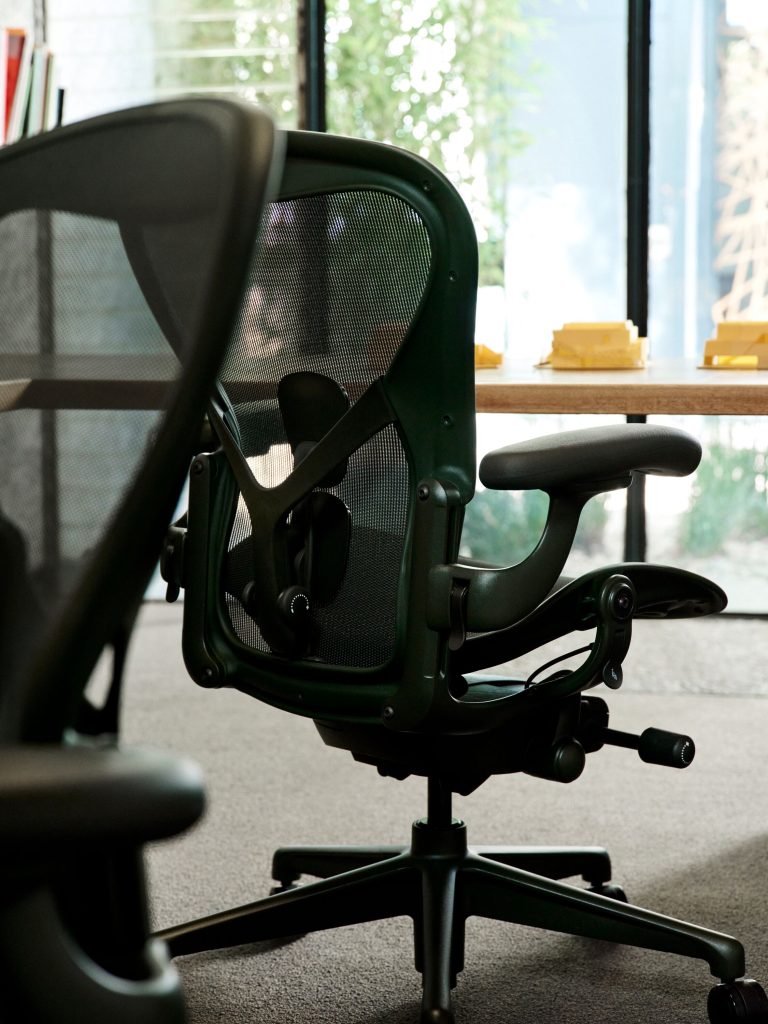
Responding to the body
Material innovation is equally important to this approach. Aeron’s 8Z Pellicle suspension material is designed around eight distinct zones of tension across the seat and back. Rather than providing a uniform surface, the zones are intended to respond differently to the body, helping distribute pressure while providing support and stability in different areas.
The result is an approach to seating that considers the relationship between material and body at a more detailed level. The suspension material is not simply a surface between the user and the chair; it forms part of the ergonomic system.
This is particularly relevant in workplaces where people may spend extended periods at a desk. Pressure distribution becomes an important consideration because the experience of sitting is shaped not only by how soft a chair feels initially, but by how effectively it supports the body as position changes.
A chair can therefore be understood as an interface between the body and the workplace – one that needs to respond to changing loads, movements and positions rather than simply provide a place to sit.
Supporting the spine, without restricting it
The relationship between support and movement is also evident in Aeron’s PostureFit SL system. Designed to support the sacral and lumbar regions of the spine, it forms part of the chair’s approach to maintaining a supported posture while allowing the user to move.
This distinction is central to ergonomic design. Support does not necessarily mean immobilisation. Instead, the objective is to provide an appropriate level of structure around the body while allowing natural movement to continue.
For designers specifying furniture across a workplace, that principle can be particularly significant. A chair is used by individuals with different bodies, working habits and preferences, and those variables can change throughout the day. The ergonomic challenge is therefore not to impose a single way of sitting, but to provide a degree of adjustability and support that accommodates variation.
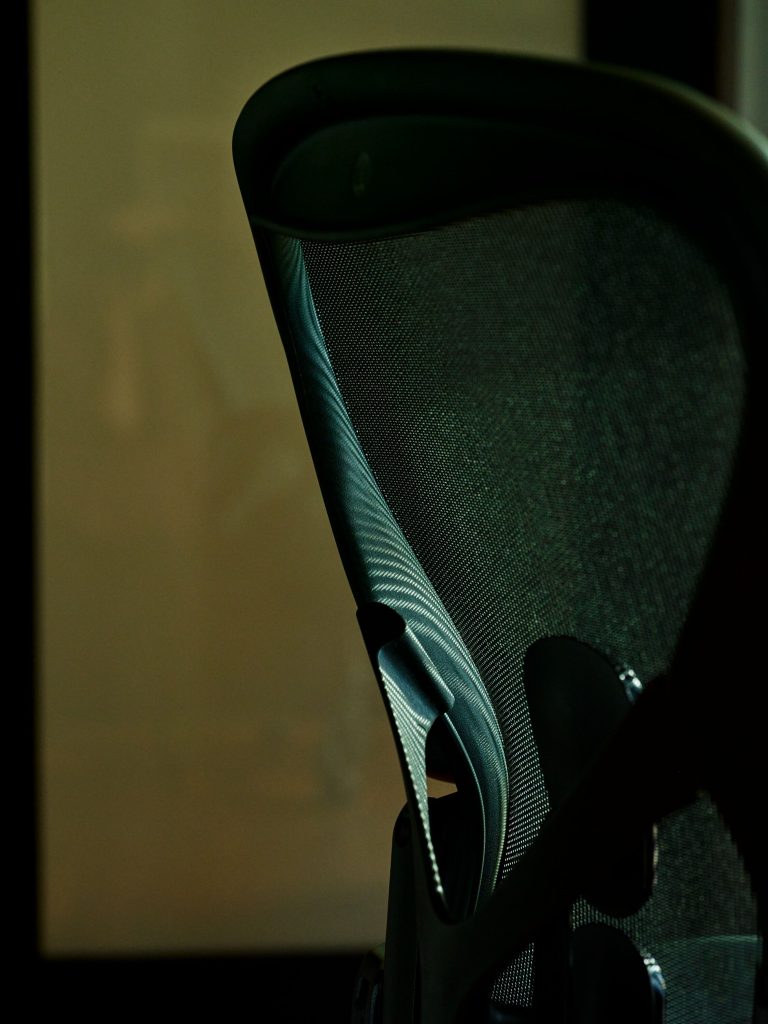
Ergonomics and inclusion
Aeron’s varied offering speaks directly to this question of variation. Available in three sizes, the chair was designed around the recognition that there is no single body type to which workplace furniture should be calibrated.
Inclusive fit is an important part of ergonomic performance. The effectiveness of support depends in part on how that support relates to the person using it, making proportion and scale fundamental considerations when selecting workplace seating.
This also reinforces a broader point for workplace projects: ergonomic specification is not simply about choosing a recognisable chair and distributing it across a floorplate. It requires consideration of the people who will use the space and the range of bodies, tasks and working styles that furniture needs to accommodate.
The bottom line
It’s not just the lumbar and sacrum that may suffer from unsupported seating. There’s another bottom to consider and it’s one that workplaces always need to address. With back pain and other work-related musculoskeletal injuries leading to absenteeism and sick leave – reported to cost in the region of US$50 billion annually in the US – there is a clear need for companies and workplaces across the world to ensure their employees are assisted in having healthy postures when at their desks.
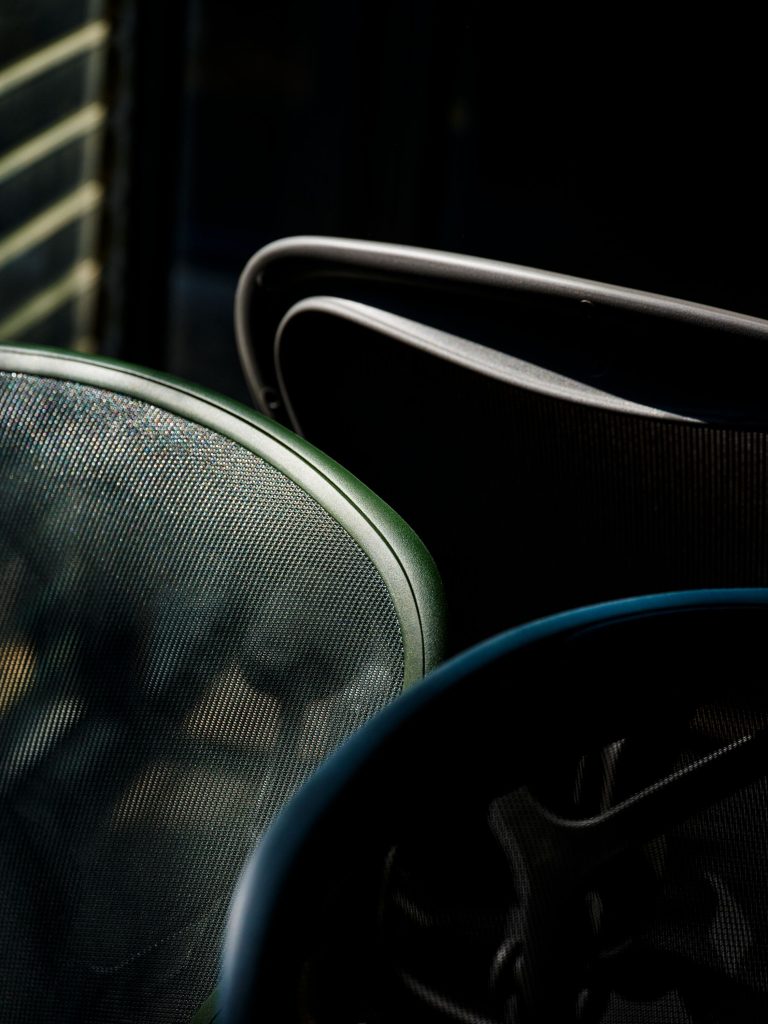
An evolving design icon
Aeron’s longevity is often discussed in terms of its distinctive visual identity, but its significance as a design object is equally connected to its capacity for ongoing development.
The chair has retained its essential identity while evolving through research, material innovation and advances in ergonomic understanding. The introduction and development of technologies such as 8Z Pellicle and PostureFit SL demonstrate a design philosophy in which an established product is not treated as finished, but as something capable of responding to new knowledge.
Its latest colour developments, including Jasper and Nightfall, extend that design evolution visually, offering new possibilities for specifying Aeron within contemporary workplace interiors, as an expression of the chair’s aesthetic evolution rather than a change to its ergonomic performance.
That distinction matters. In a workplace increasingly shaped by questions of experience, identity and visual character, performance still needs to sit beneath the surface of design.
The enduring lesson of Aeron is therefore not simply that an office chair can be comfortable. It is that ergonomic performance can be embedded within the design language of a workplace – and that supporting people over time requires furniture designed around the realities of how bodies actually move.
As workplaces continue to change, the most considered environments will be those that recognise sitting not as a static activity, but as part of a broader choreography of movement, focus and interaction. Ergonomics is central to that choreography: not an add-on once the interior has been designed, but one of the fundamental ways in which design can respond to the people who inhabit it.
You Might also Like

Related Stories

© Niche Media 2026