

New purpose for Sydney’s industrial past

Share
Six heritage warehouses beneath the Sydney Harbour Bridge have been reimagined into a thriving workspace.
Wedged beneath the hulking steel arches of the Sydney Harbour Bridge, where Lavender Bay’s industrial ghosts once rattled around empty concrete shells, six 1920s warehouses have swapped rust for revival with the energy of more than 100 businesses calling the space home. Work inc has taken the tired co-working formula and torched it, proving instead that a building steeped in a century of grit can become the ultimate proof point for how sharp design fuels commercial ambition and keeps heritage very much alive.
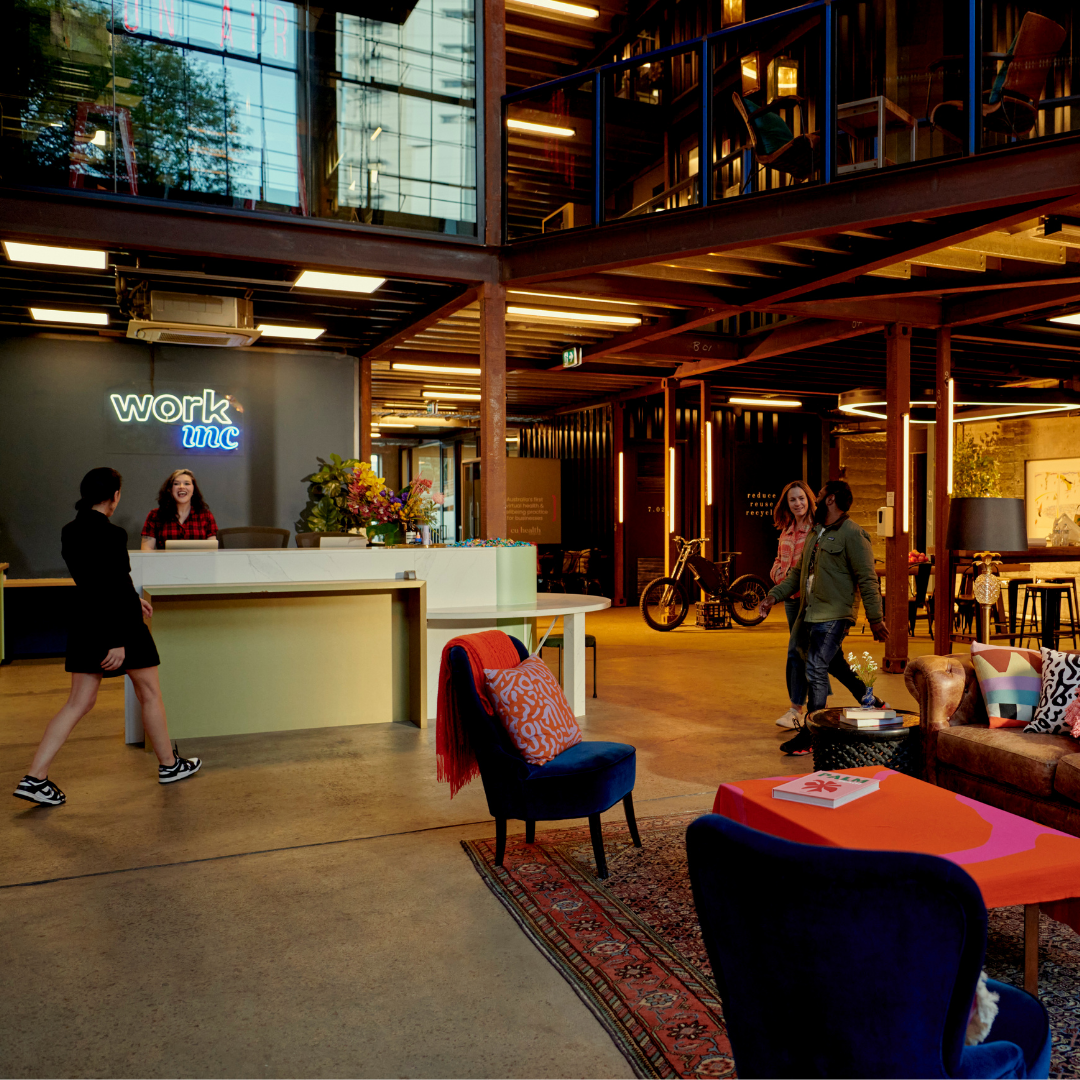
Constructed a century ago to house the engineering works behind the Sydney Harbour Bridge itself, the warehouses have experienced myriad lives over the decades, serving at various points as highway patrol units and commercial car dealerships before falling into disrepair. When founder Mark Davidson first entered the abandoned and leaking Bay 10 warehouses, he recognised an architectural canvas unlike any he’d seen in the city.
“We weren’t just building offices,” he says. “We were building a community, creating a space where the grit of Sydney’s industrial heritage could inspire the next generation of innovators.” Every beam and every wall carries a story, and that narrative has been woven into a functional and considered environment designed to foster success.
Where bespoke design meets raw industrial heritage
The project plays an architectural tug-of-war between its ancient industrial bones and contemporary polish, with 10-metre ceilings giving it space to soar, not clash.
Original, decades-old concrete walls and exposed structural steelwork remain intact throughout the space, forming a dramatic visual backdrop that preserves the site’s engineering legacy, while modern glass-walled offices are suspended within the vast warehouse space as floating pods, maintaining an open and interconnected feel without compromising acoustics.
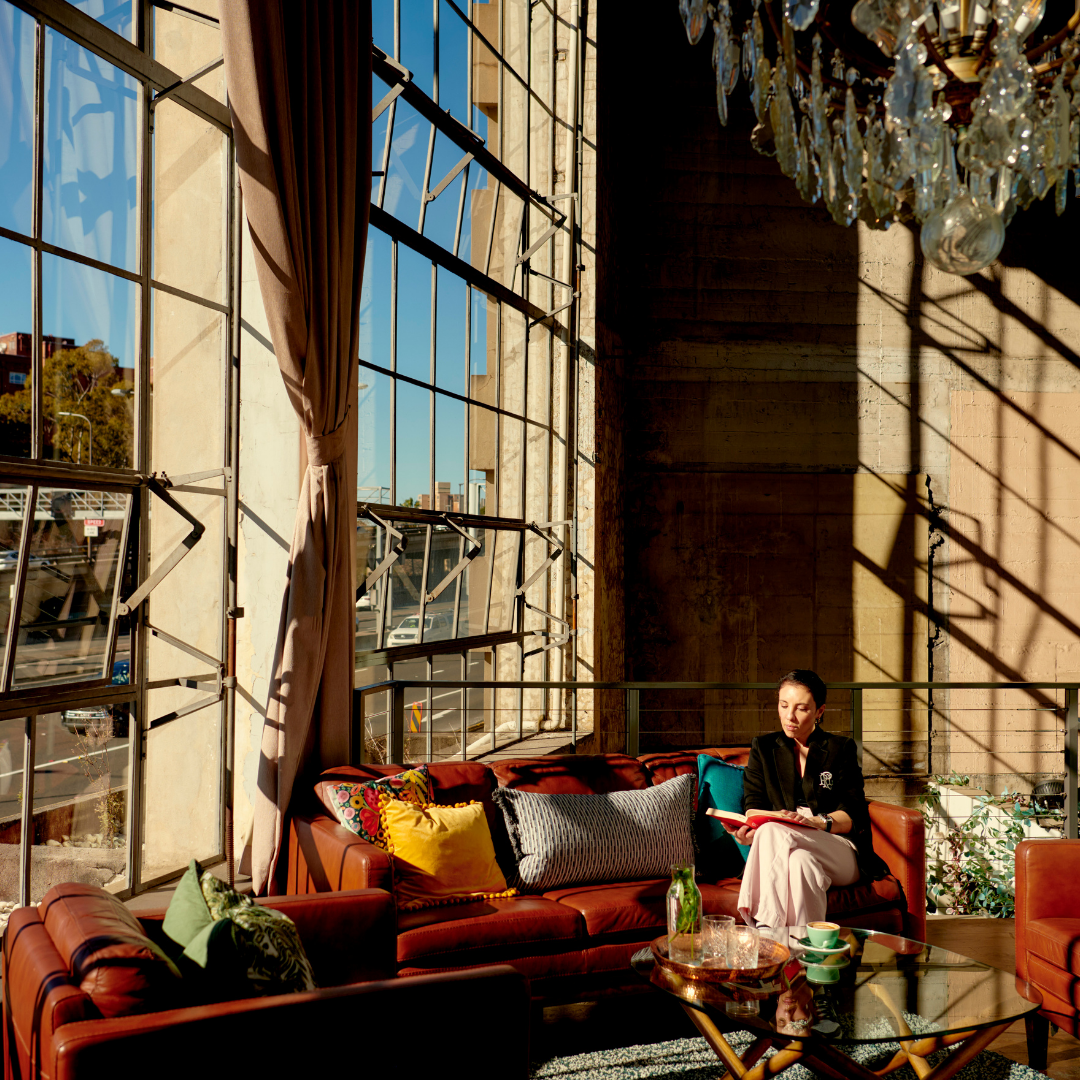
Softening that industrial scale is a hand-selected mix of vintage furniture and locally sourced art, curated for intuitive micro-environments for focused work and collaboration alike. Strategic window placements flood the deep warehouse floorplates with natural light, supporting wellbeing and the daily workflow in equal measure, while a considered floorplan carries that balance further still, with a gradient of breakout zones, quiet library spaces and open lounges arranged to foster casual collisions between members.
A café with an unlikely history
Housed inside an upcycled shipping container at the heart of the workspace, Bay Ten Espresso brings its own layer of reinvention to the story, one rooted in a rather notorious past. The container was seized during a major law enforcement operation after being used to conceal over 600 kilograms of illicit materials, a history that Davidson has embraced as part of the site’s broader narrative. “When we found this particular shipping container, its illicit past made it an even more compelling part of our story of reinvention.” Now serving as the main barista station and kitchen on Middlemiss Street, the container fuels Work inc members alongside the thousands of local cyclists and residents who pass through Lavender Bay each day.
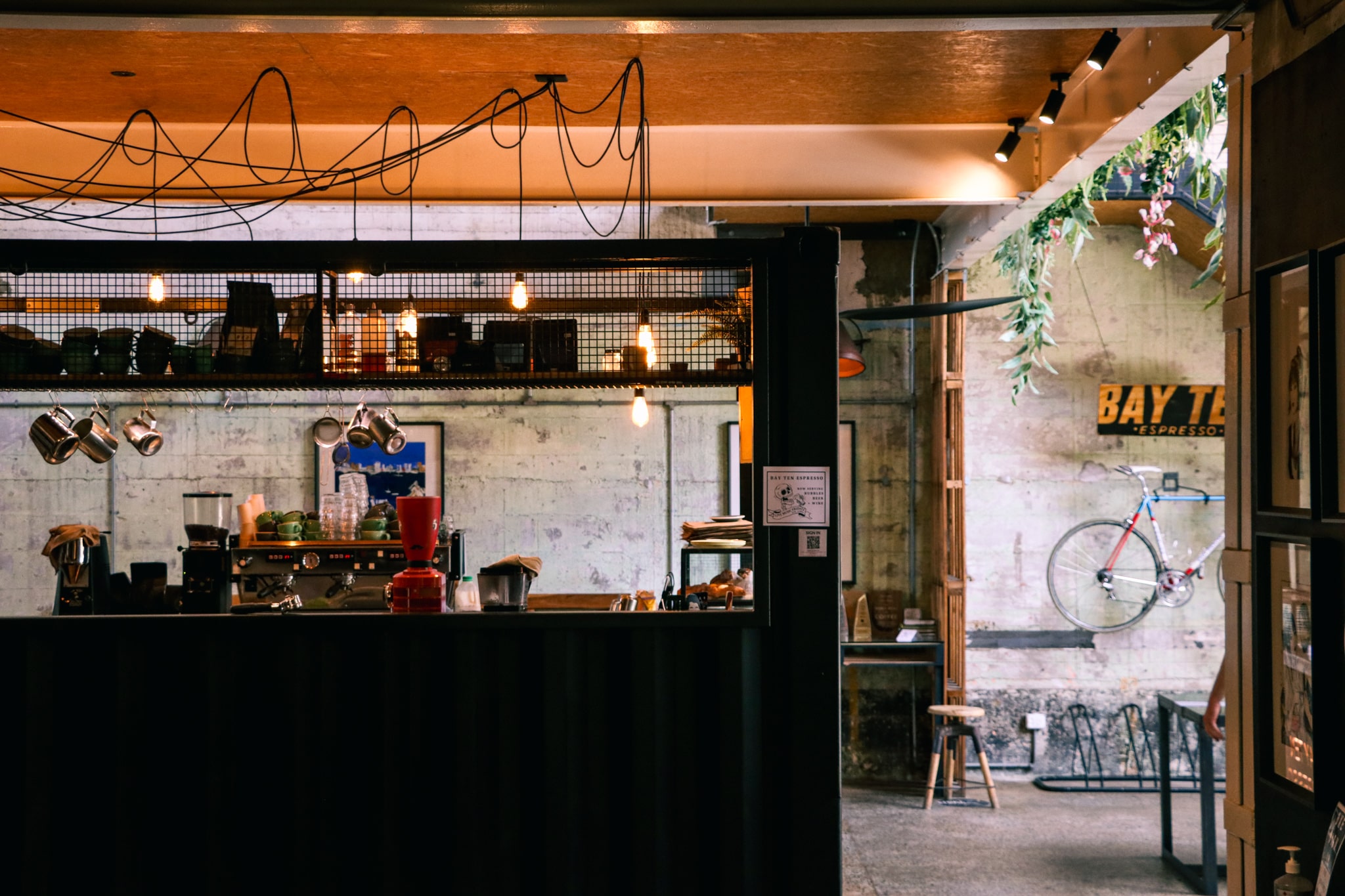
Taken together, the warehouses, the glass pods and the repurposed container exhibit a broad design principle beneath a stalwart bridge – proving the most compelling workspaces can be built not by erasing a site’s past and starting afresh, but by infusing modernity into a relic so it can keep telling its story.
Images: Supplied by Work inc.
You Might also Like

Related Stories

© Niche Media 2026