

Having chispa, kaizen and hard yakka – design the Yasmine Ghoniem way
Having chispa, kaizen and hard yakka – design the Yasmine Ghoniem way

Share
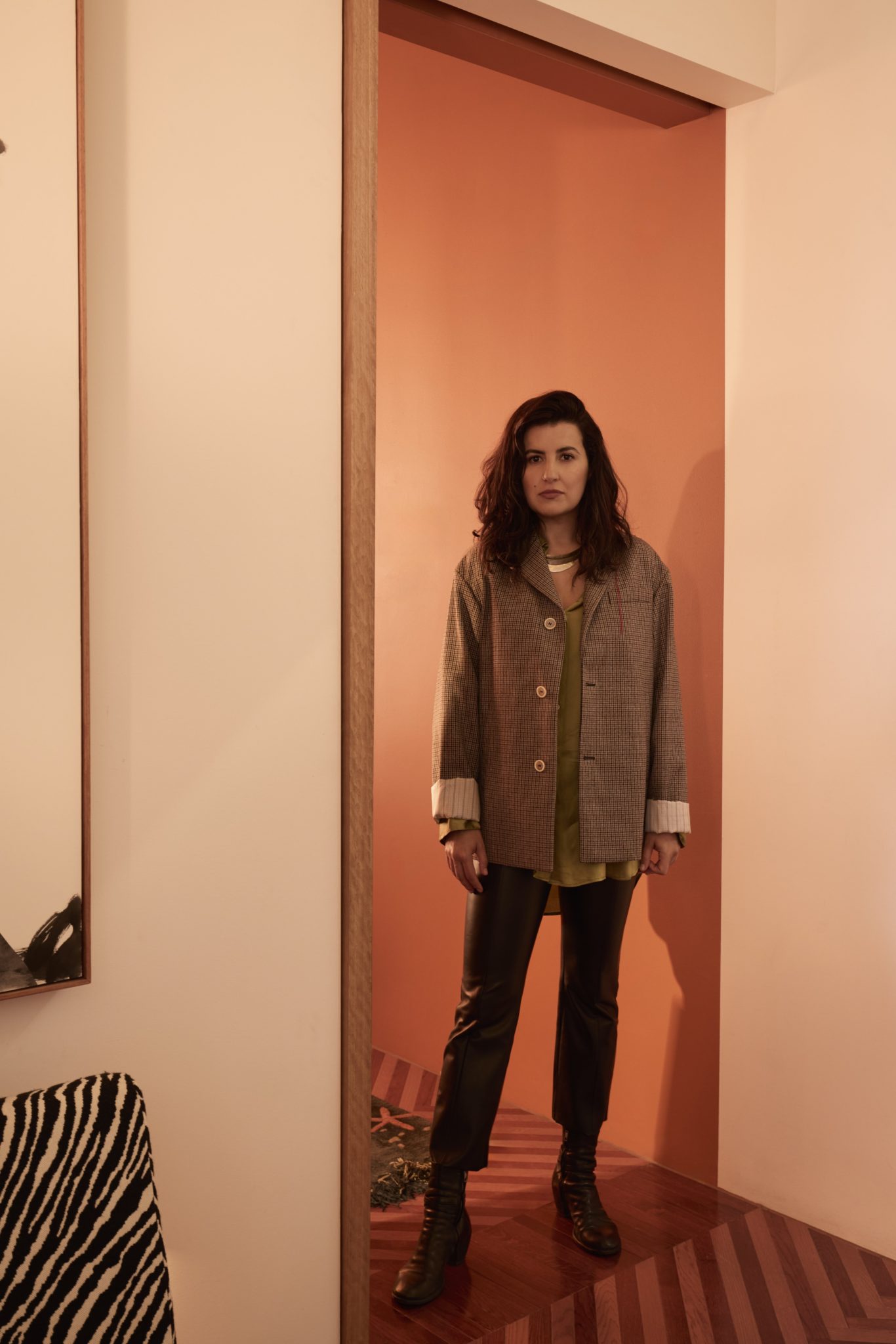
Yasmine Ghoniem is the founder and director of YSG Studio, which she established in 2020 as a multidisciplinary practice combining architecture, interiors and curation. She has now come on board as a mentor and judge for Australian Design Review‘s next 30UNDER30 cohort for 2026/2027.
Only a year after Ghoniem launched YSG, the studio was named Designer of the Year at IDEA 2021. And her star has only continued to rise. For the last couple of years, the Kuwait-born, Sydney-based designer has also become a familiar face on our screens, co-presenting Grand Designs Transformations on the ABC with Anthony Burke. And that’s not her only high-profile fruitful design relationship. One of her oldest and closest friends in the industry – and a frequent sounding board – is David Flack. When the invitation came up for the pair to join as 30UNDER30 mentors and judges this year, the chance to do it together was too good an opportunity to turn down…
Australian Design Review: We had a chat with David Flack a couple of weeks ago and he said that one of his chief motivations for joining 30UNDER30 this year and coming on as a judge and mentor was because you two could do it together. Was that your reason too?
Yasmine Ghoniem: Yes, it was a big reason. One of my team members [Lachlan Kirkland] actually got to join the cohort this year and there was a part of me that didn’t want to do it, because I wanted Lachlan to have his own experience and be separate from his boss. But then I spoke to Dave and he said, ‘I want to do it if you’ll do it and I think it’ll be a really fun thing to do together.’ So I’m excited to see how he mentors and what advice he gives and vice versa.
One of the things David Flack talked about was the strength of the relationship and the support system that you two have had for years. As you know, peer support is a really important element for 30UNDER30, but what does it mean for you?
I think it doesn’t change. It’s just the questions change. When Dave and I first met at the National Gallery of Victoria installation – next year it will be about 10 years – from that very first meeting it was an immediate ‘ask each other hundreds of questions’ to see if we were doing the same thing or how we were approaching things differently.
Then the questions just evolved and became more complicated. We’re both opening up architecture departments within our studios, so we [talked about] ‘how do you approach that?’ And ‘how do you work out fee proposals?’ It’s been so helpful. I don’t really do that with a lot of people. I do that with Flack because I’ve known him for so long, but it’s limitless the amount of support I get from those conversations. It makes you realise that you’re not doing it solo, although we do have a big group in Sydney of all my peers. They’re usually the directors of my favourite practices and everybody just shoots questions in it. ‘What do you do in this instance?’ Or ‘do you have a contact for this?’ That’s been really helpful too.
30UNDER30 is a program about creative pathways, about leadership and peer-to-peer support, but it’s also about mentorship. What’s does mentorship mean to you?
I think mentorship within your own studio to your team is often overlooked, I guess, because you’re so accessible, right? Everyone thinks, ‘Ah, I’ve heard that before’ or ‘I maybe could get more information or more relevant information elsewhere’.
And so sometimes I think a combination of getting it in-house, but also outsourcing your mentorship is really important because everyone has a different point of view and sees things slightly differently. I always tell my team, if you’re looking for additional mentorship, I want you to find that person outside the studio. I think it’s really important to find that different voice. Some people do, some people don’t.
Has the way you give advice or mentor people changed since you started doing it on television? Has that had any effect on the way you talk to people?
I am an interviewer of sorts. When I’m on telly, I can make suggestions, I can make recommendations, but it’s up to them ultimately if they want to take my advice, and nine times out of 10, they won’t. It’s much like my own team. I can give them what I think works and has done for me and it’s up to them to take it on. I’m probably more direct with my team members than I am with Grand Designs because they’re in the industry and they want to grow. Whereas the people on telly, they think, ‘Well, we know best and we don’t need your information or we don’t need your advice. We can do this solo!’
I think, ‘Cool, go for it.’ But my own team, being in the profession and wanting to always harness their skills and become better at their job, then they’re often way more inclined to take advice or guidance.
Did you have mentors when you were younger?
I wish I had, and this is why I love the idea of being able to do 30UNDER30. I had snippets of [mentorship] from random practitioners, architects and interior designers who I really admired and loved. But it wasn’t an ongoing situation. I’d see them at a conference or an industry event and they’d say something to me that really stuck, but it was never an ongoing mentorship. And I really wished I had done that or had that opportunity. It wasn’t really offered when we were coming into our own. So I think this is an amazing opportunity to have access to so many wonderful practitioners at this young age. Thirty is when you’re about to just catapult into all areas of your life.
Lachie came back super refreshed and he’s a hard one to refresh because he’s so gung-ho and really in it all the time. So for him to let go and just relax a little bit is quite difficult for him. But I saw that transformation and… I couldn’t believe it. I thought, ‘Wow, this is a totally different Lachie.’ He really enjoyed it. I know he got a lot out of it.
Were there any ongoing effects that you could see? Does he keep in touch with the rest of the cohort?
Oh, definitely. But he’s kept quiet about it because he’s so busy. And so every time I keep pressing him to do a presentation [on his 30UNDER30 experience], he says, “I know I need to!” But he wants to compile all the information accurately and succinctly. I’ve said, “You don’t need to do that. You just need to say what it was like.” So yes, there was a calmness to him.
And I know that part of the mentorship of the program gives guidelines as to how to not freak out all the time or to be a bit quieter in spaces where it’s really busy and quite intense. I think he took a lot from that. I could definitely see a change in his demeanour – just being more calm and collected, which was really nice to see. I’m sure there are personal developments too that he’s held on to and he’s matured. All the people he’s met, I’m sure will become lifelong friends. So yes, I look forward to his presentation…!
You pivoted from a creative performing arts career into design? What sparked that?
It was actually a cultural decision. I grew up in a relatively strict household and being in an entertaining role was not looked upon with open arms. So I had to look elsewhere for an artistic route. I had always been affected by my interiors; I knew that from a very young age. As for my parents – my dad wanted to be an architect and my mum was really good with interiors. So there was always that inherent love for space, because I could see my parents really enjoyed making our home feel special and fresh. I did see that growing up and I was very much drawn to how I feel when I walk into a good space or how I feel when I walk into a bad one.
So when push came to shove and college started, I began my career in visual communications. I loved graphic design. And then I realised a year into my degree that I couldn’t sit behind a computer screen forever and ever and not really see anything further than that screen. Everything was very 2D and flat. I saw my counsellor at that point and I said, “I love lighting design. I love textiles. I love architecture. I love all of these things.” And she said,”Well, have you considered interiors?” And I had always considered interiors. I just didn’t really think it was for me. But putting them all together and knowing how much I loved all of these beautiful disciplines, it made sense. So, that’s when I pivoted into interiors.
At that point I had started at a university in the US at Savannah College of Art and Design and it was a great program – very focused on art history and architectural classes as well. It was fantastic.
Apart from Lachlan, you have a few other younger and emerging designers in your practice. When you’re hiring, what traits are are you looking for in those young designers?
I think communication is key – the way they handle themselves or the way they speak about their work or their portfolio, or even the way they’re aware about time. I think that it is so important to be able to communicate your ideas successfully and passionately. That’s also really important. I look for passion, for ‘chispa‘. If you don’t have that spark or you don’t have that thing in your eye that excites me and I know that you live, breathe and eat design, I’m probably not going to hire you. Because, if you don’t have that, it’s so tough to work day in and day out on a project that you’ll start and maybe finish in five years. If you don’t have something that you want to see through to the end, then you’re going to walk.
And that’s not what I’m looking for. I’m looking for diehard designers. I’m looking for people who love it so much that they wouldn’t want to do anything else, you know.
Chispa?
It’s actually a Spanish word. Because we have such a large group of international team members, we created a series of, not badges, but words that encapsulate things that we love. So another one is kaizen, which is Japanese and it means self-improvement. If you’re not interested in self-improvement or making yourself better at something, then that’s also something I’m really wary of. Hard yakka – that’s another one. We’ve got some really beautiful terminology. And Ubuntu talks about humility… There’s a whole bunch of them. We actually do our end of year reviews for all of our team members and gauge where they’re sitting with all these values and talk about where there are areas of improvement and where there are areas where you’re just exceeding and excelling. We’ve got about seven of them and it’s a really nice way to talk about performance.
You know, it’s not just about design. It’s about everything. It’s about you as a human being and how you’re contributing to the broader picture.
It’s a challenging environment across the globe right now, not just in interior design, but in many industries. So what do you say to emerging designers who are trepidatious about the future?
I think ‘fear’ is a really terrible word. I think once you’re fearful of anything, it just stops you dead in your tracks. When we were designing and coming out of university, I’m sure everybody in our teacher network and professional industry, who were much older than us, were definitely saying the same thing. ‘You’re walking into a terrible time’, ‘the universe is going to be dead and the end of the world is coming’ and all of this sort of thing. And it’s cyclical.
Now, we’ve got AI, but there are ways to use all of these fears or fearful moments. I like to turn them into areas of challenge and think about how we can overcome them and how we can be better. Everyone’s freaking out about AI and I have to say it’s really helpful and it’s super useful and if it gives us ways to make our business work more efficiently, then why wouldn’t I do that? Why wouldn’t I save my team members an extra half an hour or an hour here? If it helps us write a proposal, I think it’s smart. I’m not doing it so I can have it design a restaurant interior for me. But if there are 10 patterns on a chair that I’ve designed and I don’t know which one to pick, then, yes, I’ll use it for that. There are great ways to utilise the things that people are scared of.
You have a unique aesthetic and one that is often described as eclectic and cool. Is that a heavy mantle to bear as you get older? Or conversely can you now relax a little bit because you’ve already got a reputation?
You know I always like to think of Madonna. She was like a chameleon. She forever changed and I think that’s what kept her relevant. And people loved her music because it kept changing and evolving. So I’d like to think that I’m not always seen as the same or as one type of designer. We’re in the middle of a massive rebrand at the moment. And that’s also been great and challenging because I think, ‘Why fix something if it’s not broke?’ But in my eyes, it’s not about being broken. It’s about evolving and getting better and changing. That’s ultimately what I’m trying to do. I hope I’m not cool all the time. I hope I’m not eclectic all the time. I want to be seen as all of those things. I’m always trying to not do what I’ve done before.
Finally, if you could go back to when you were an emerging designer yourself, like one of the 30UNDER30, what would be the one piece of advice you would give yourself?
Be patient. Know that, no matter what, if you’re a hard worker, it will come. And I think I freaked out so much. I thought, ‘I’m working my tits off and I’m just not getting where I want to be.’ And I think good things come to those who wait. I really believe that. No matter how many late nights I had or how many tears I cried, I just knew that there was something over that hump, over that hill, that would come eventually. I just think if I’d known it was so hard I don’t know if I would have done it, to be honest!
I’m glad nobody told me it would almost kill me, but also I can’t imagine doing anything else. So, I do think finding a mentor would be incredibly invaluable. I would definitely say, ‘Try and try and find somebody older and wiser to give you those little bits of advice to keep you going. And don’t give up!’
Entries for the 2026/2027 30UNDER30 program are now open. Click here for more information or apply here.
ADR’s 30UNDER30 program is brought to you by co-major sponsors Neolith and King Living, alongside partners Designer Rugs, LAUFEN, Krost, Miele, Signature Appliances powered by Miele and Tongue & Groove.
ADR is also grateful to our 30UNDER30 practice partners AJC Architects, BLP, BVN, Cera Stribley, COX Architecture, Design by WBL, DKO, Genton, GroupGSA, Gray Puksand, Hare + Klein, Hassell, HDR, Lawless & Meyerson, Luchetti Krelle, Made For, Mim Design, Richards Stanisich, RIZEN Atelier, Rothelowman, SJB, T. Black and Tom Mark Henry for helping us foster the future of Australian design.
Follow @ausdesignreview and @adr30under30 and subscribe to ADR’s newsletter to stay up-to-date with the program.
You Might also Like


Related Stories

© Niche Media 2026