

Fast horses, fine fashion and Hockney

Share
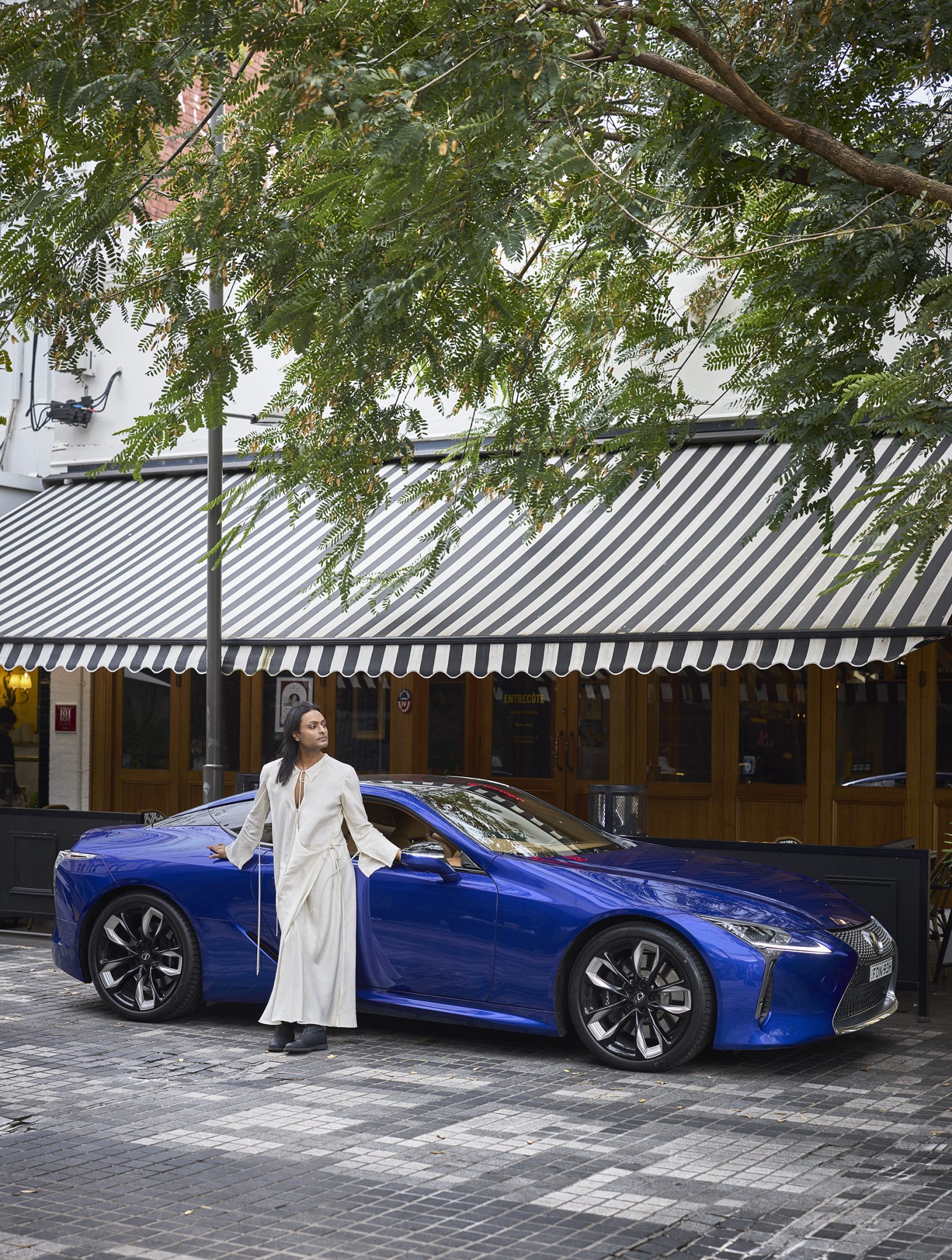
Ahead of Melbourne Cup day next week, Australian Design Review talked to award-winning interior designer Brahman Perera about his multifaceted design for the LANDMARK by Lexus pavilion. Through Perera’s deft eye and attention to detail, this temporary structure emerges as an elegant, cohesive expression of the historic camera obscura for future-focused guests.
ADR: The theme for the Lexus pavilion at the Melbourne Cup is Future Catalyst 35. What did this theme conjure for you when you first began to think about it?
Brahman Perera: To me, Lexus represents detailing, quality and performance. These three archetypes are also very indicative of what we want to achieve at the renowned LANDMARK by Lexus pavilion at the Melbourne Cup Carnival and my approach to design in general. This is to be a space and event that we want to be unique, memorable and stand apart from the rest. It’s not about applying a lens of ‘futuristic’ aesthetics, but rather, thinking about quality and meaningful experiences.
Unlike a high-performance vehicle, this event is a fleeting experience, only to be experienced by a few. My strategy in its design is to examine this event and space and how we can create a lasting impression on both those who visit and those who see it through the lens of social media and engagement. Integral to this vision was to layer the environment with sentiment and history.
ADR: Where did you start in terms of your design concept for the pavilion? Did you start with a specific mood, material or colour, for example?
BP: A project like this is different to standard interior design projects, as there is a consideration of impermanence, so design interventions need to be created without structural interference to the original building, and considerations must be made for how elements can be recycled and reused.
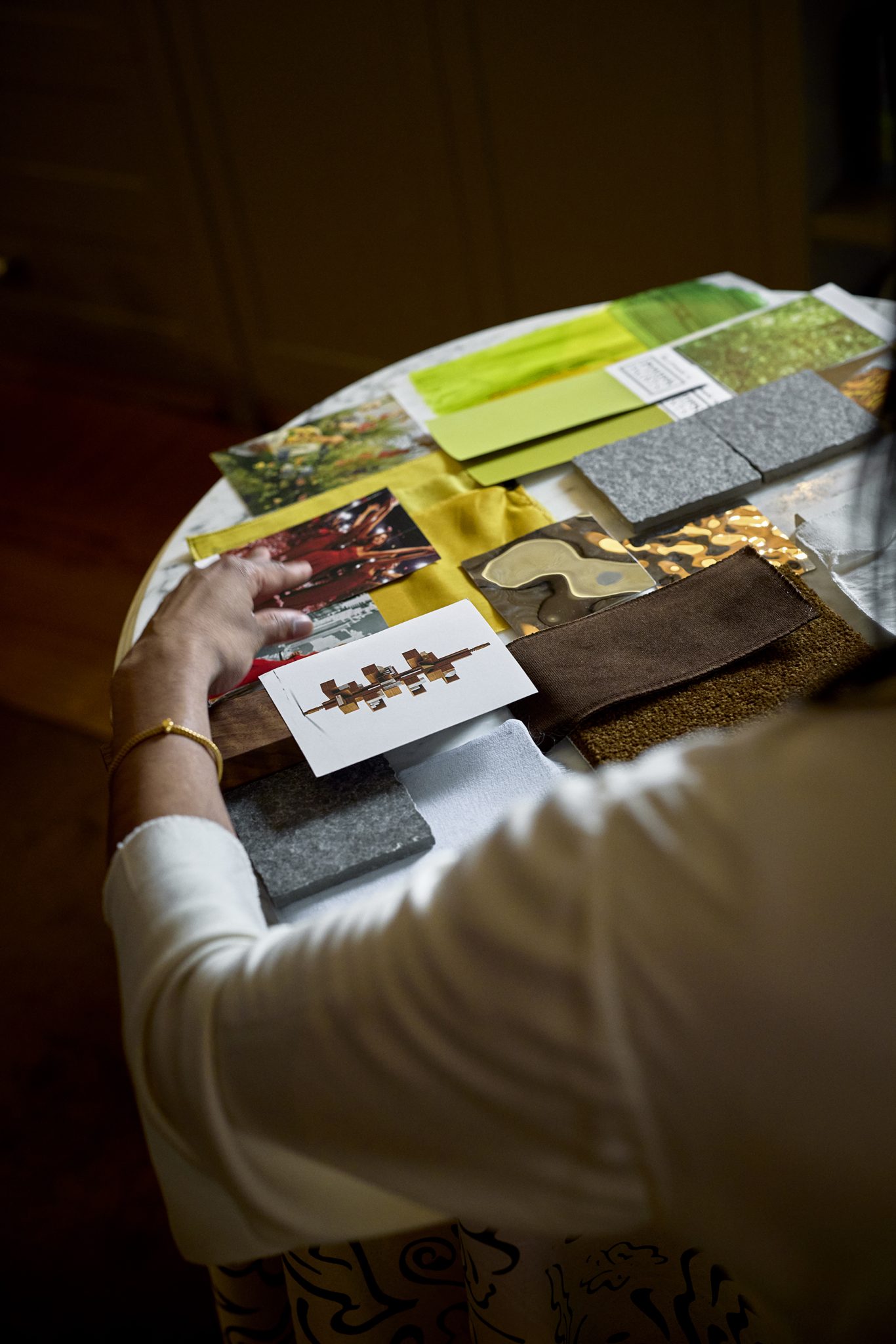
With any project, I like to start with imagery and inspiration for the client, it could be anything: imagery of art, film, colour, fashion. From the initial kernels of ideas, design is implemented through material selections and understanding the use of the space. We explored Hockney exhibitions, the music of Sade, the theatre of projected imagery – so many things!
But all under a lens of ‘hospitality’. LANDMARK by Lexus is sectioned over three levels, so it allows for a varied but also cohesive narrative to play out as you use the space. Using that understanding, my approach, which mimics my own design sensibilities, was to create purpose-driven individualised spaces that celebrate their own identity and function.
ADR: Designing a temporary interior across three levels must pose very different challenges and opportunities compared to designing a permanent interior. Can you talk to us about how the temporary nature of the pavilion played a role in your overall design?
BP: I tried to consider this project almost as a set design. Design that is beautiful and operable but configured to create lasting impressions through photography and the guests’ experience of it. It’s almost like designing two spaces: the in-person experience, and the online/digital experience.
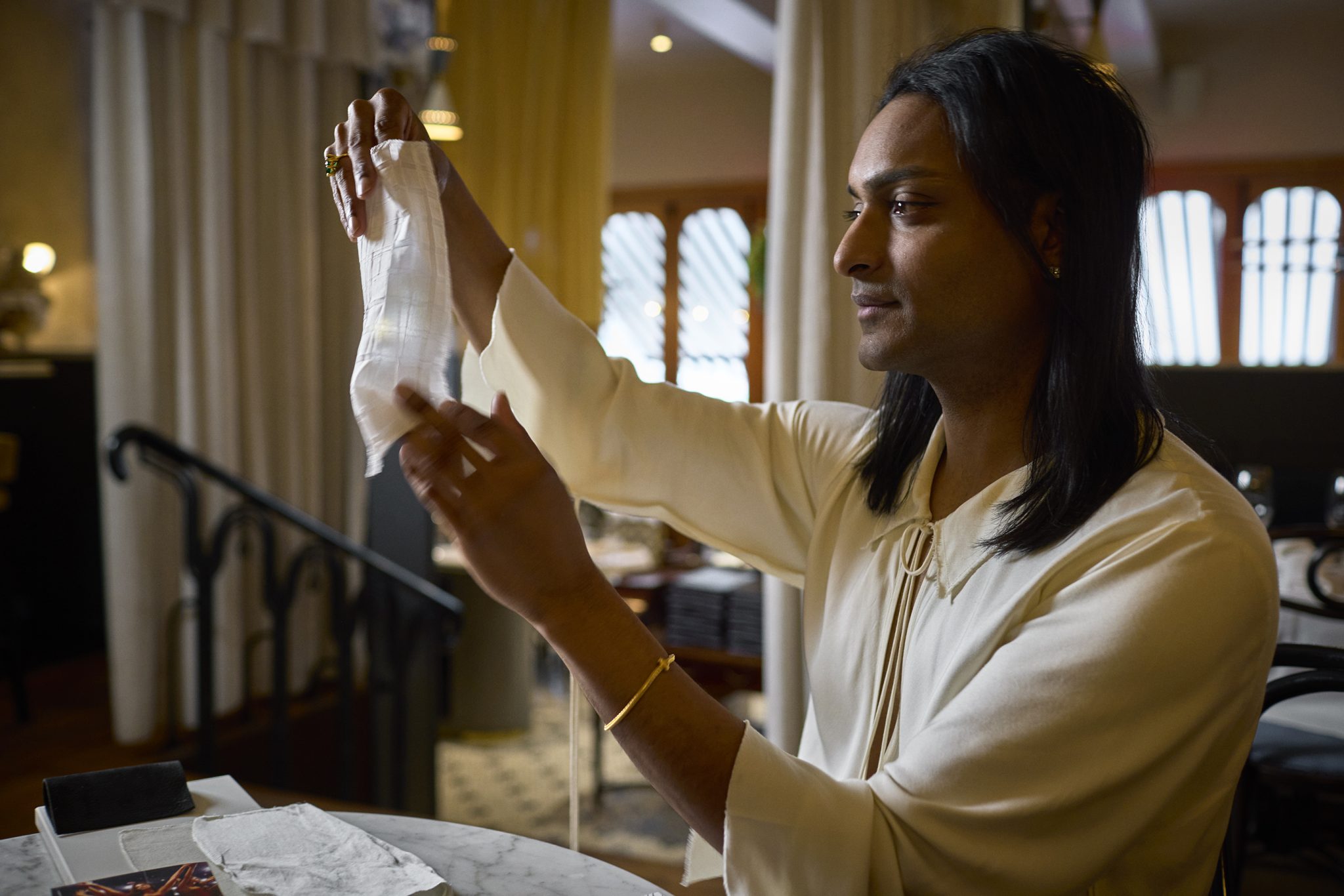
The historic method of camera obscura was considered throughout the project; a sense of a physical space being distilled through a pinhole, informing material detail, planes and scale. Designing for events is very different to standard hospitality projects and it was important to use materials that created the maximum impact for the least intervention.
ADR: How have you combined elements of Lexus’ brand, your own brand, and the Melbourne Cup into the design narrative?
BP: A recurring concept that helped drive the design narrative is ‘attention to detail’; a core value for Lexus and myself. The idea that we could rely on artisanal craftsmanship, theatre, innovation and, well, ‘fun’ was always weaving its way in and out of the design language as it became more and more realised through the journey.
Working alongside a legacy product and company, it is important to design a space that is indicative of their heritage, their innovation and their spirit. Parlaying Lexus’ core values is one of the most important considerations for me and using them to create an immersive and unique event while still retaining the spirit of pomp and festivity of spring racing.
ADR: Personal touches and having one’s needs anticipated in advance are the epitome of contemporary luxury. The pavilion will offer this to guests through Japanese ‘omotenashi’ hospitality. Can you share how you wove this concept into the design of the pavilion?
BP: To offer hospitality to another person is surely one of the most significant, generous and caring aspects of human interactions. Anticipating one’s needs, understanding their levels of comfort and putting them at ease – these are all human movements that we engage in across all aspects of our lives – whether it’s welcoming you to a meeting or into your home.
In designing LANDMARK by Lexus, the paths of circulation, suggestions of ‘rooms’ and a desire to slow the journey down with key pieces of furniture or art are all devices that help to curate the experience for the guests, and for the ease of staff facilitating the event. Critical to this planning was to reference this ‘wholehearted’ approach to hospitality.

ADR: Which element of the design or zone within the pavilion are you personally most proud of and why?
BP: Often in my work I’ll come across a tricky spot that needs the most amount of work – and it’s this challenge that will invariably reap the most rewards. LANDMARK by Lexus was no exception – being essentially a temporary structure, yet housing bathrooms, kitchens and a myriad of back of house spaces all designed to ensure a smooth service across three levels.
There are so many nuanced and evocative moments as you journey through the pavilion, but one that really spoke to me was these two grand staircases that flank either side of the structure. Here, we have enveloped the space, wrapping floors and walls with a material saturation of luxe ebony carpet and tessellated mirror panels, with a focus being on the landings, where a Hockney-inspired projection of softly moving canopy foliage creates a dreamy and saturated moment before blossoming out onto the various levels, each with their own identities. The idea here was to hero these transition spaces, slow down the journey and create a moment of delight.
Images supplied.
To see more of Brahman Perera’s design work, check out his Designer Selects piece.

© Niche Media 2026