

BTR is rewriting the architectural brief

Share
When buildings go from products to homes, everything about the architectural design changes.
As institutional money settles into long-term residential ownership, architects are finding the brief itself has subtly changed in ways that alter how they think, who they talk to and what quality actually means.
For decades, multi-residential design in Australia has been calibrated to a single moment: the sale. Finishes are chosen to photograph well at completion, amenity packages are engineered to hit a price point and materials are selected with the builder’s warranty period – rather than the building’s life – in mind.
Build-to-rent (BTR) dismantles that logic entirely. When an institutional owner holds an asset for 20 years or more, the incentive structure transforms and, with it, the entire design conversation.
“When you’ve got a long-term owner, they take a long-term view,” ARM Architecture director Jesse Judd says. ARM completed its first BTR project back in 2017, well ahead of the sector’s current wave. “The benefit for people who live in these places – because these are people’s homes after all – is they get a far more robust outcome, a higher quality level of finish typically compared to mum and dad rentals or market housing.”
Durability as design intelligence
The transition begins at the material level, but extends well beyond specification. Where a build-to-sell developer may select apartment flooring on upfront cost and aesthetic appeal alone, a BTR operator is weighing supplier warranties, maintenance cycles, carbon credentials and the reality of replacing high-traffic finishes across hundreds of units over decades.
Bates Smart associate director Lucy Sutton describes a process that looks fundamentally different from traditional residential practice. “We’re engaging with both operations and leasing teams very early,” she says. “While we’re designing, they’re already thinking about how the building’s going to run, how spaces are used, cleaned and maintained.”
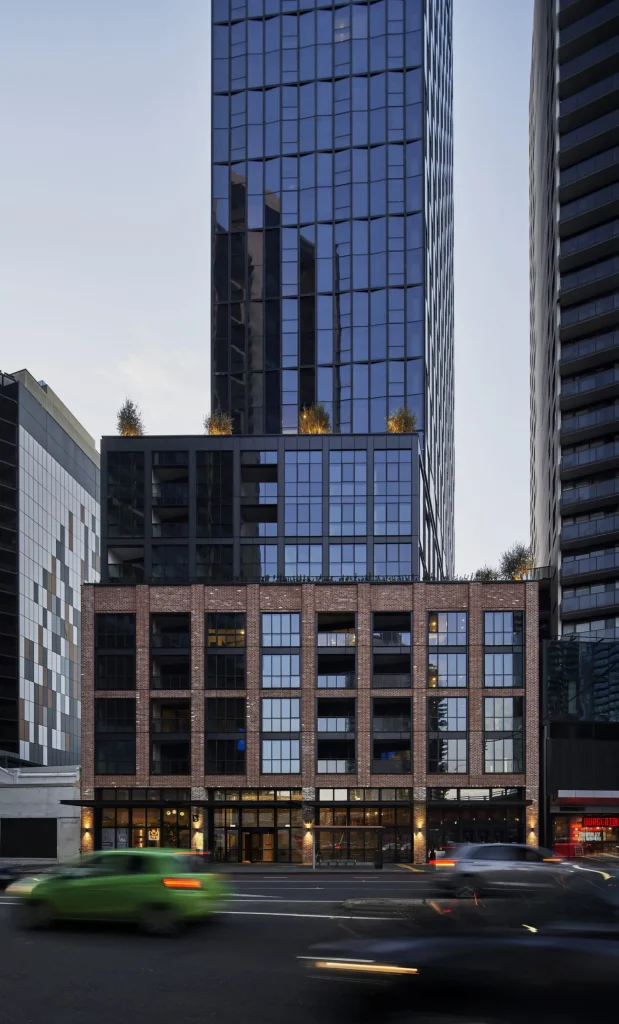
She also notes significant resistance from BTR clients to integrated kitchen appliances, not for aesthetic reasons, but because operators are thinking hard about how individual components will be maintained and replaced over a building’s life. It may be a small detail, but it speaks to a broader truth that designing for longevity requires every decision to be fully considered, a practice the build-to-sell model rarely demands.
The case for building less
Within this shifting landscape, another architectural thread takes place, centred on dematerialisation. What may seem abstract at first glance lands with clarity in built form, where lighter construction strips back excess, surfaces speak plainly and restraint becomes the final act of resolution.
“We’re definitely seeing a shift towards a more dematerialised construction approach,” says Sutton. “The architecture really becomes more pared back, but also more resolved. Ultimately, it’s more liveable. It’s a philosophy that’s about building less, designing better and becoming a driver of quality.”
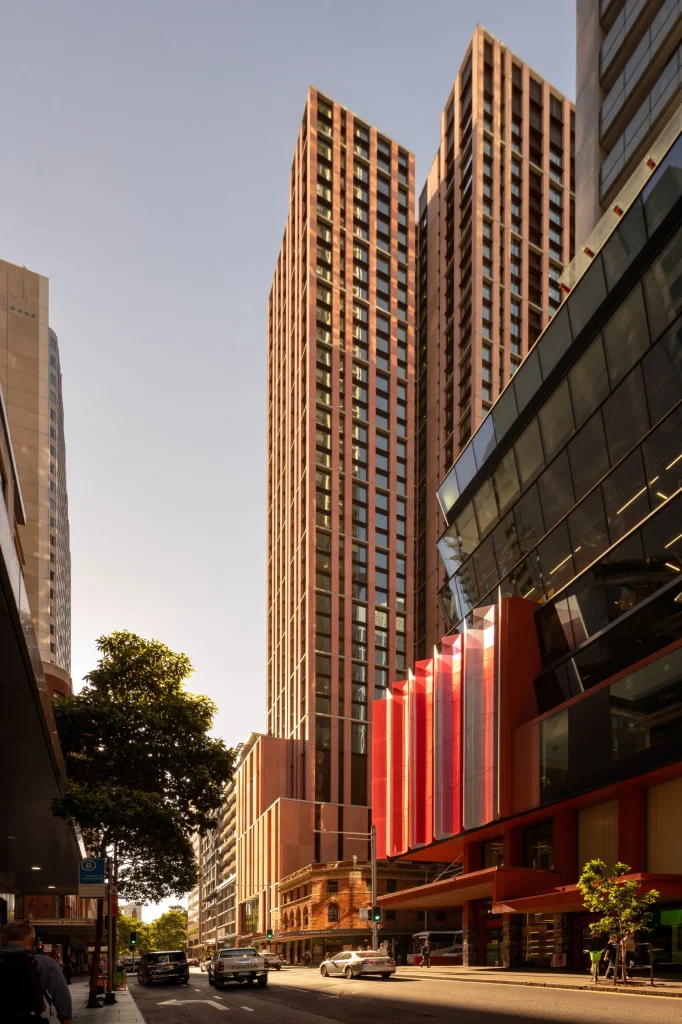
The alignment between this approach and BTR’s operational logic is not accidental. Institutional clients arrive with clear carbon reduction and ESG (environmental, social and governance) targets, which naturally push toward modularity, efficiency and material honesty. Exposed structure, curated services and natural materials become architectural expressions of a discipline applied directly to the act of construction itself.
ARM’s Judd offers a cautionary note, however. “There is a trend around dematerialisation that some architects are translating to exposed brick and exposed concrete,” he says. “That’s pretty dangerous, because it’s not necessarily the most sustainable approach – that’s probably lightweight construction.”
In Judd’s view, pared back aesthetics and genuinely reduced material impact are related but not synonymous and conflating them is an easy mistake to make in a market hungry for both.
Context beyond the street edge
One of the more revealing tensions in BTR design is the question of local identity. By nature, institutional models carry a risk of homogeneity – the same amenity stack, the same material palette, the same community offer replicated across cities and suburbs with little regard for where a building actually sits.
The architects working at the sharper end of this sector are pushing hard against that tendency. ARM director Mark Raggatt frames context as something that operates across multiple registers simultaneously.
“There’s the fundamentals of responding to a context, but then there’s also a cultural context around places in which people will live together in a larger building over many years.” Judd punctuates his point, arguing that context is not what’s next door, but carries socioeconomic, demographic and historical overlays that should shape everything from apartment mix to amenity offer.
A building that keeps becoming
Perhaps the most consequential shift BTR introduces is temporal: the idea that a building is not a finished object, but a continually evolving environment. Sutton compares it to a hotel model, with staged refurbishments replacing the single point-of-completion handover that defines build-to-sell.
Raggatt says the components that go into making any building, whether it’s the structure or cladding or mechanical systems, age at different rates. “We have to consider the life cycle of each of those layers so that we can repair, replace or adapt each of those components in a way that is appropriate to each of those cycles,” he adds.
For Judd, the scale at which BTR operates unlocks something that the strata model forecloses: genuine shared living. “The strata model cuts things up into small pieces and boundaries are really important, whereas BTR communities can leverage shared amenities in a much stronger way. This means your apartments can be more efficient and ultimately cheaper to rent, but your lifestyle assets can be bigger.”
The challenge, as he frames it, is to deliver on those economic and systemic demands while building places that are “full of soul” rather than “filing cabinets in the sky”.
That challenge of rigorous, operational, contextual and deeply human builds is what the new BTR brief looks like. And Australian architecture, it seems, is only just beginning to rise to it.
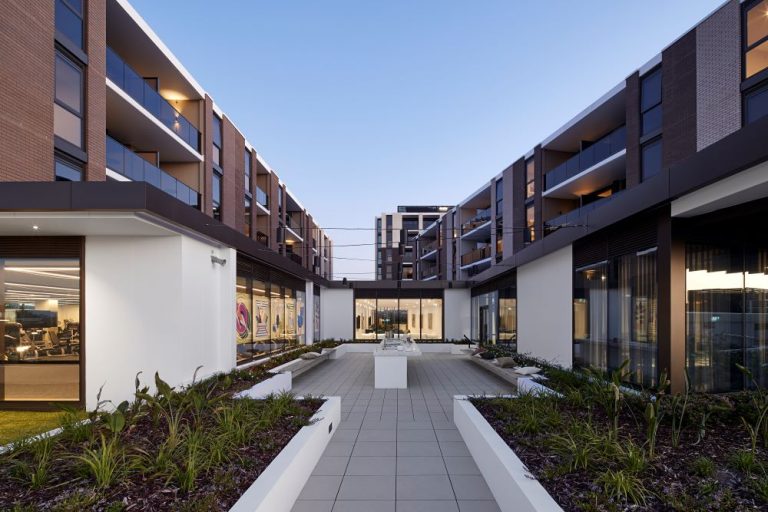
Top image: Originally constructed as the 2018 Commonwealth Games Athletes’ Village, the Smith Collective was transitioned by ARM Architecture designed into one of Australia’s very first and largest operational BTR masterplans. Photo: Smith Collective.
You Might also Like

Related Stories

© Niche Media 2026