

Escea’s evolved electric range redefines what’s possible
Escea’s evolved electric range redefines what’s possible

Share
Escea’s next-generation holographic fireplaces bring unprecedented realism and design freedom to Australian interiors.
When architects and interior designers specify a fireplace, they are making a statement about the space as much as the product but, until now, that statement has come with constraints. Flues, clearances, structural considerations and planning restrictions have dictated where fire can and cannot live within a building. Escea’s latest evolution of its holographic electric fireplace range quietly dismantles those limitations, without asking designers to sacrifice a single degree of visual drama.
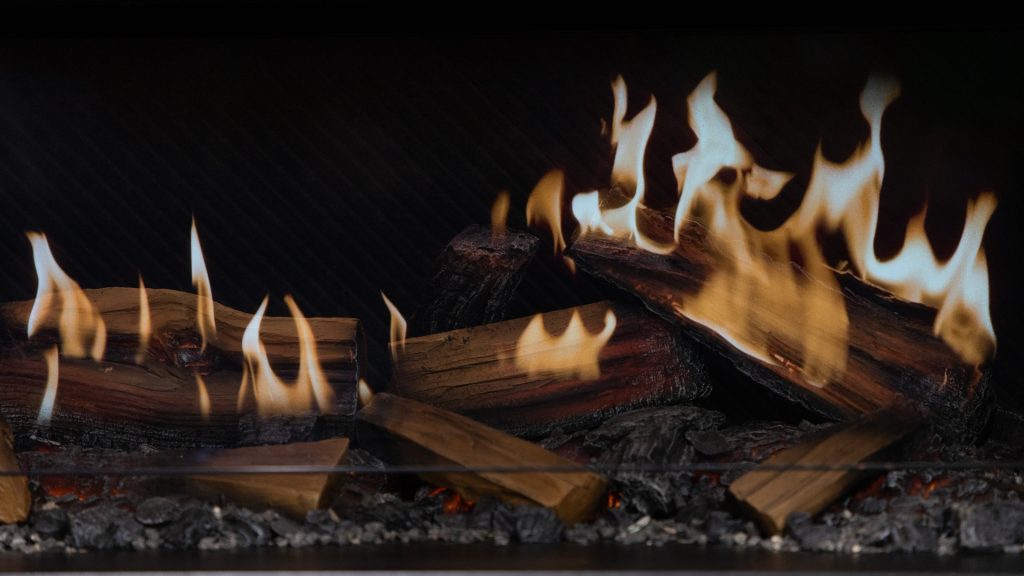
The New Zealand-based manufacturer, long respected for its rigorous approach to gas and wood fireplace engineering, has unveiled a significantly upgraded electric collection that advances both Flame-Map Technology and holographic projection systems. The result is flame movement of extraordinary depth and naturalism, which is richer in tone, more layered in dimension and, by most accounts, genuinely convincing.
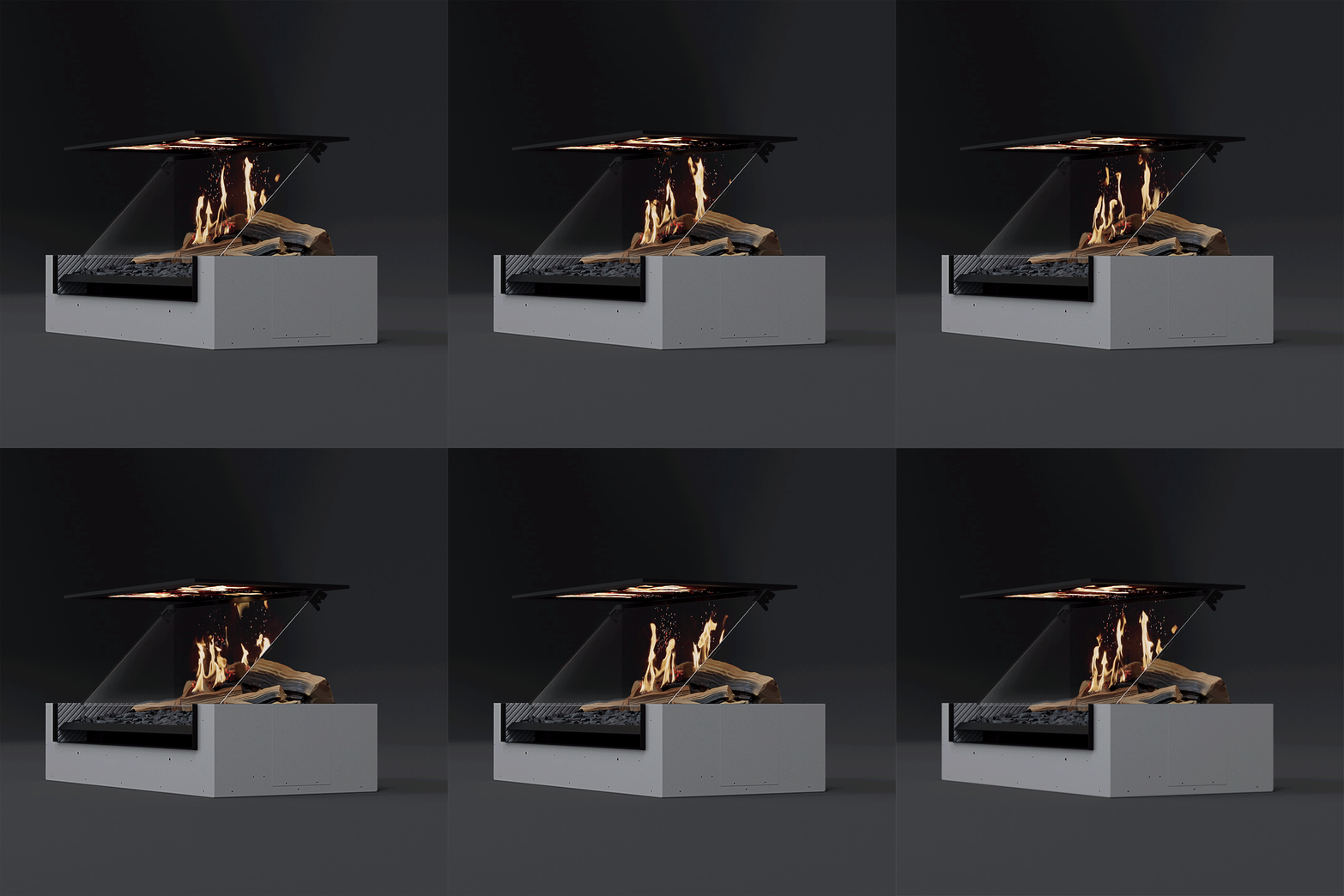
“People often ask where the electric fires are, all while standing right in front of one,” Escea electrical engineering manager Owen Clements says. That moment of confusion, he suggests, is the clearest measure of how far the technology has come.
Closing the realism gap
The realism question has historically been the electric fireplace’s Achilles heel, the point at which even sympathetic specifiers have hesitated. Escea’s evolved range addresses this directly, delivering flame visuals that most observers struggle to distinguish from a working gas or wood fire. For designers working on projects where authenticity of atmosphere is non-negotiable, this is a meaningful shift.
The expanded model range broadens the specification palette considerably. Compact formats suit apartment living and boutique hospitality, while linear models stretching to nearly two metres wide bring a commanding presence to large residential and commercial interiors. Inbuilt and free-standing configurations, paired with a growing suite of surrounds and accessories, allow the collection to integrate across a wide range of architectural languages, from heritage renovation to sharp-edged contemporary builds.
Zero clearance, zero compromise
Perhaps the most compelling proposition for specifiers is what Escea’s electric range eliminates from the design equation. Zero clearance installation, no flue requirements and no ventilation infrastructure open up locations that would simply be impossible for traditional fireplaces: a feature wall in a high-rise apartment, a commercial lobby with strict fire safety requirements, a heritage interior where structural intervention is off the table.
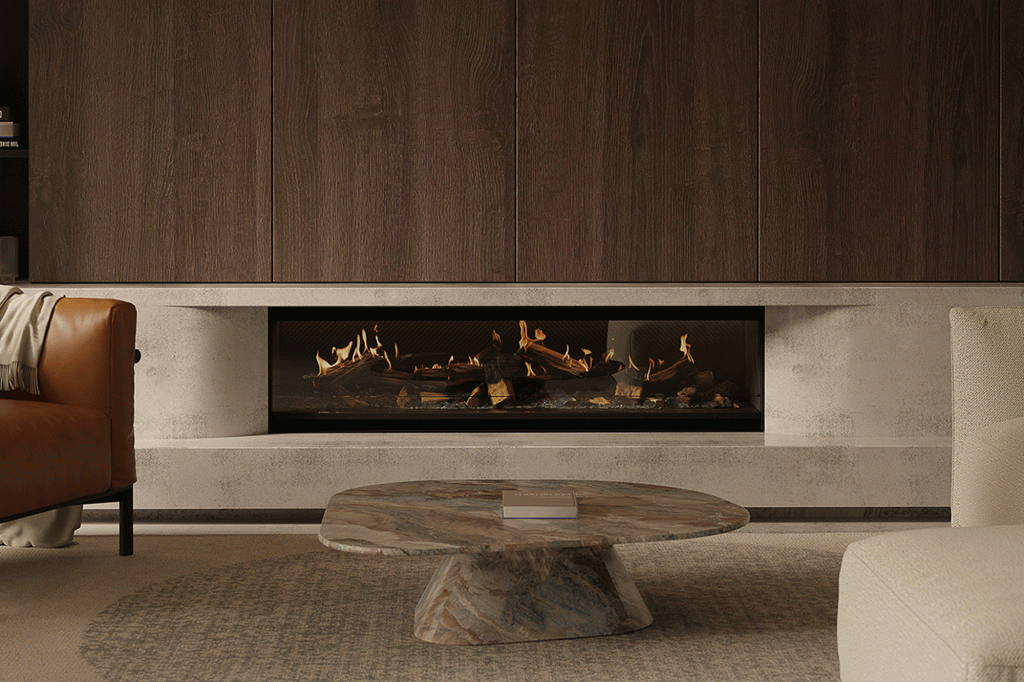
Flexible heat output of 1.5 kilowatts or 3 kilowatts on installation adds practical utility, while flame-only operation means the fireplace functions as an atmospheric element year-round, relevant in the Australian climate, where the desire for visual warmth often outlasts the need for actual heat.
“We’ve taken the standards we’re known for in gas and wood and applied them, without compromise, to electric,” Escea founder and CEO Nigel Bamford says. “Electric fireplaces now belong in the same conversation as gas and wood.”
Designed for how people live
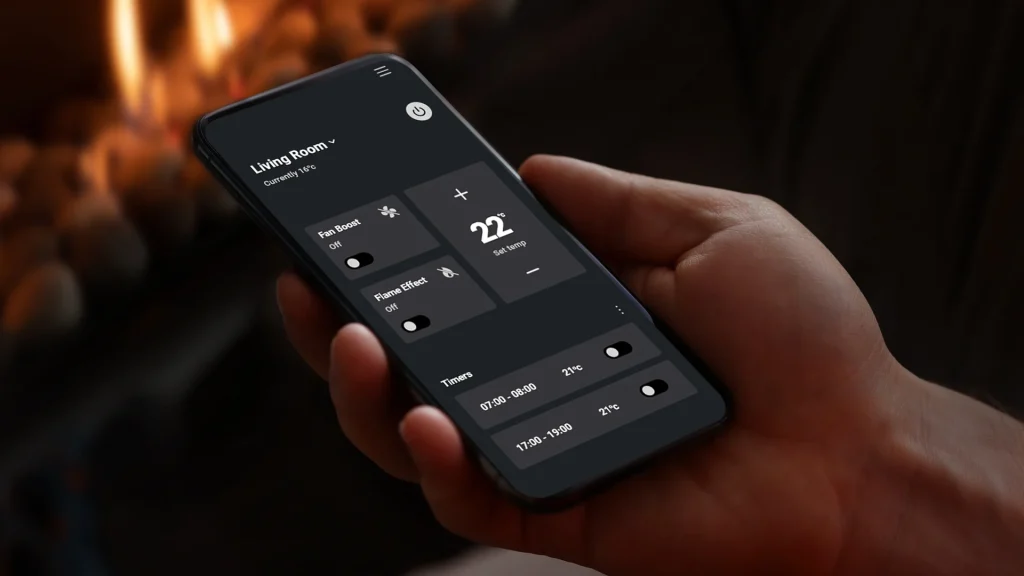
Wi-Fi connectivity and control via Escea’s SmartHeat App round out a product designed for the rhythms of contemporary living. The ability to adjust flame height, heat output and ambience remotely, speaks to a growing expectation that every element of a well-designed interior should respond intuitively to its occupants.
Since 2002 Escea has built its reputation on the conviction that aesthetics and performance are not competing priorities. Designed and crafted in New Zealand, the evolved electric range carries that philosophy into a category it is rapidly reshaping. For Australian specifiers seeking fire without the footnotes, it arrives at exactly the right moment.
Escea’s latest electric fireplace collection is available through the brand’s established retailer network across Australia. Explore the range at escea.com/electric.
Images: Supplied.
You Might also Like


Related Stories

© Niche Media 2026