

Going on The Ghan – reinforcing luxury with Grid Glass
Going on The Ghan – reinforcing luxury with Grid Glass

Share
Receiving a brief to deliver discrete and private spaces without resorting to separation, developer and manufacturer of architectural surface systems, Axolotl, selected Grid Glass as the perfect product for The Ghan, Australia’s luxury rail option for passengers travelling between Adelaide, Alice Springs and Darwin.
Australian Design Review: How did Axolotl become involved in The Ghan project?
Kris Torma: Axolotl was approached by Woods Bagot after they saw our Grid Glass used on another architectural project. They were looking for something that felt refined, contemporary and bespoke, while also respecting the timeless elegance of luxury rail travel.
We developed a series of prototypes together before customising the final design specifically for The Ghan. The result is a completely bespoke architectural glass system created exclusively for the train.
What was the design brief?
The brief was to create privacy without creating separation.
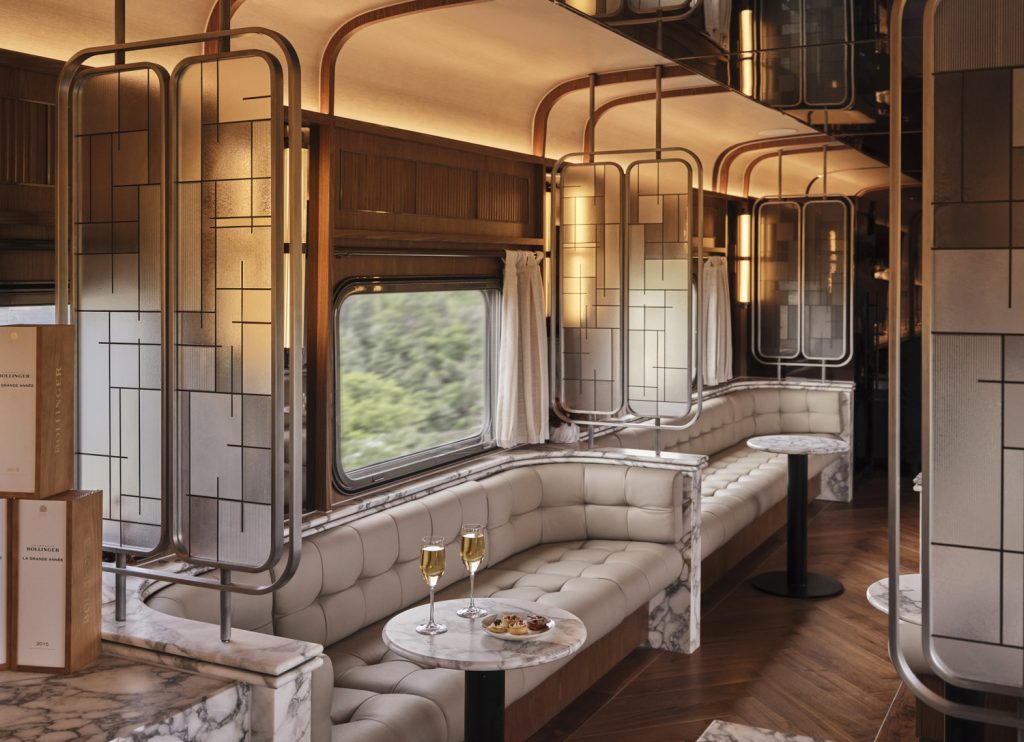
The glass needed to subtly define spaces while maintaining openness, light and connection throughout the carriage. It also needed to reinforce the luxurious, contemporary interpretation of Art Deco that runs throughout the interior.
Rather than simply supplying decorative glass, we created an architectural material that actively contributes to the atmosphere of the space.
Who collaborated on the project?
The project was a close collaboration between Woods Bagot, Axolotl and specialist metal fabricator Nicholas Fuller. Woods Bagot developed the interior vision and established the design language. Axolotl engineered and manufactured the custom Grid Glass panels, while Nicholas Fuller produced the precision metal framework that surrounds and complements the glass.
It was a genuine collaboration where every detail was refined to ensure the materials worked together as one integrated architectural element.
What makes this glass different from conventional architectural glass?
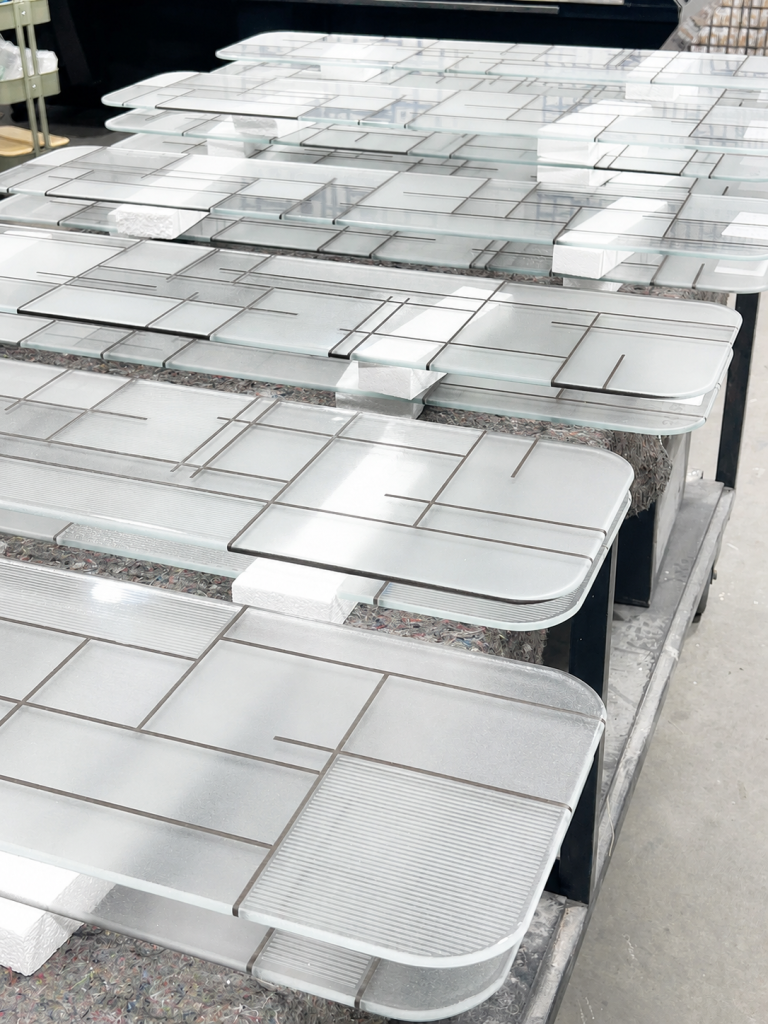
Grid Glass is unlike any other architectural glass currently available. Over the past 30 years we’ve developed a series of proprietary manufacturing techniques, which are combined into a single product. These include kiln forming, precision metal inlay, engraving, frosting and, where required, 3D printed detailing and coloured glass elements.
Because each panel is individually manufactured, every aspect can be customised to suit the architecture. To our knowledge there is no other manufacturer worldwide producing architectural glass using this combination of integrated processes.
Can you explain the material selection?
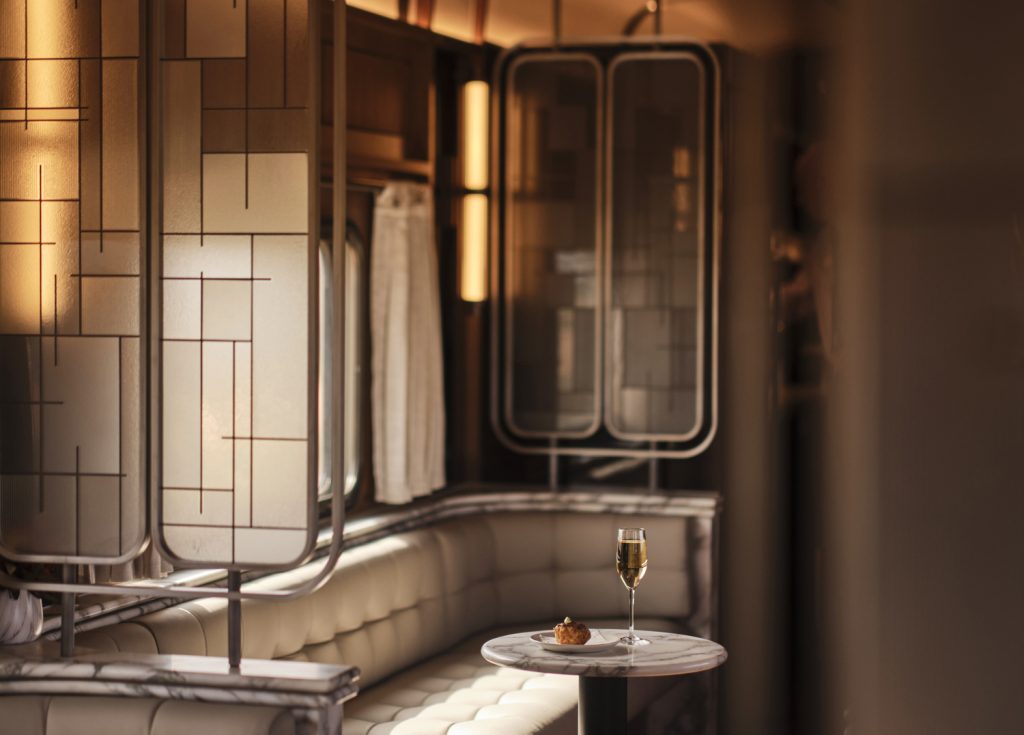
Glass was the perfect material because it allows light to become part of the architecture. Unlike solid partitions, Grid Glass creates privacy while still allowing the interior to feel open and connected. Throughout the day it continually changes as natural and artificial light move across the surface.
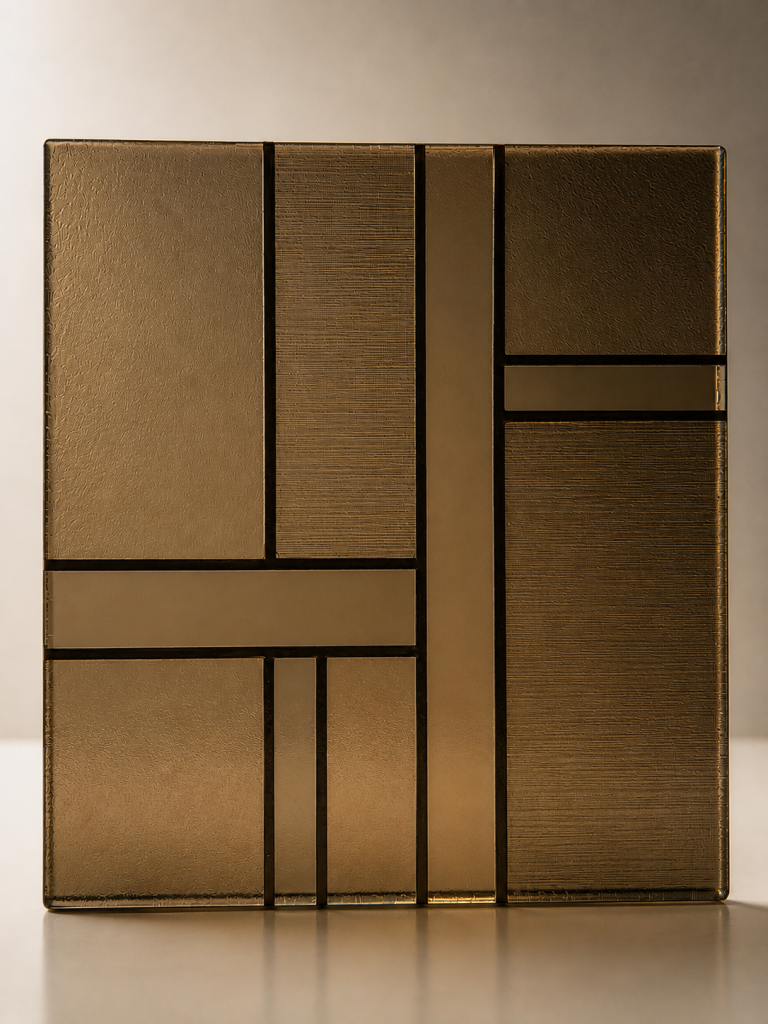
For The Ghan we simplified the design using bronze metal inlays within low iron glass, producing something that feels understated yet incredibly sophisticated.
Was there much experimentation during development?
Absolutely. Every custom project begins with sampling. Although we’ve been producing Grid Glass for several years, every design requires refinement.
Numerous prototypes were produced to perfect the spacing of the metal grid, the surface texture, transparency and overall visual balance. The final product appears effortless, but achieving that simplicity required considerable technical development.
What inspired the design?
The inspiration came from the interiors themselves. The Ghan celebrates timeless luxury rather than fashion, so the glass needed to feel equally enduring.
The fine bronze grid references classic Art Deco geometry, while the soft texture, subtle translucency and changing reflections create something unmistakably contemporary. It’s a modern interpretation of luxury rather than a reproduction of the past.
What were the biggest technical challenges?
The greatest challenge is that Grid Glass isn’t created through a single manufacturing process. Each panel moves through multiple specialist departments, including kiln forming, metal inlay, engraving, frosting and finishing. Every stage has to be completed with absolute precision because even the smallest variation can affect the finished result.
Fortunately, we’ve refined these processes over several years, allowing us to confidently produce extremely complex architectural glass while maintaining exceptionally high quality.
Was there anything particularly rewarding about the project?
Seeing the completed installation. As manufacturers we often work from drawings and samples for months before seeing the finished space.
Once installed, the glass became much more than a partition. It interacts with the lighting, furniture and architecture to create atmosphere throughout the carriage. That’s incredibly rewarding because it’s exactly what we designed it to do.
Have you travelled on The Ghan?
Unfortunately not – yet. It’s definitely on my bucket list!
Seeing the glass in photographs is one thing, but experiencing it while travelling through the Australian landscape would be something very special.
How has the project performed since installation?
Exceptionally well. There have been no issues since installation, which is always gratifying given the complexity of the product. The project demonstrates that highly customised architectural glass can be both visually striking and robust enough for demanding commercial environments.
What has the response been?
The response has been overwhelmingly positive. Clients, designers and passengers consistently comment on the atmosphere the glass creates rather than simply noticing the material itself, and that’s exactly what good architecture should do.
The glass softens light, creates privacy without isolation and reinforces the sophisticated character of the carriage. It doesn’t compete with the interior; it elevates it.
Why is Grid Glass significant for Australian design?
Grid Glass is an Australian-developed architectural product that demonstrates local manufacturing can compete on the world stage. Rather than importing decorative materials, we’re exporting innovation, developing proprietary manufacturing techniques that simply aren’t available elsewhere.
Is every project custom designed?
Yes. There is no standard catalogue.
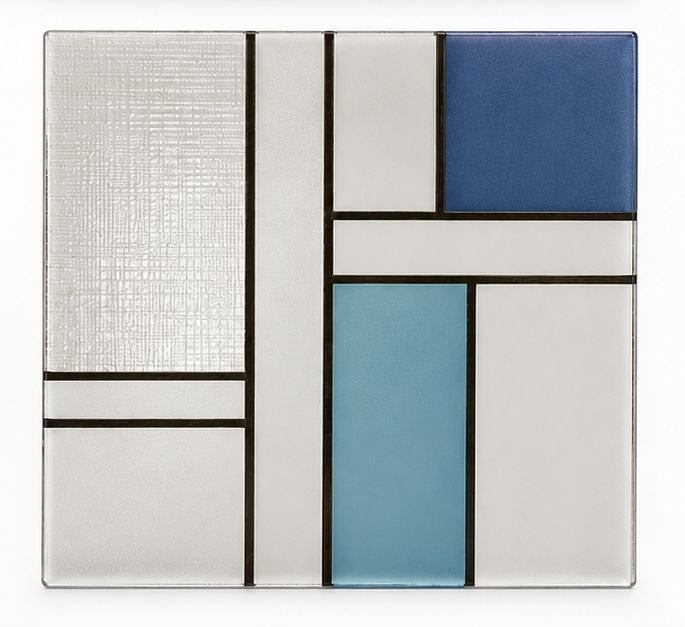
Each Grid Glass project is designed specifically for the architecture, allowing designers to alter the geometry, metal finish, glass colour, transparency, texture and integrated processes to suit the project. Every installation becomes unique.
Where do you see this material being used next?
Anywhere designers want glass to become part of the architectural experience rather than simply a transparent barrier.
We’ve already applied the technology across luxury hospitality, high-end residential, commercial workplaces and transport projects, but the possibilities continue to grow as new manufacturing techniques are developed.
The most satisfying part of this project wasn’t simply manufacturing beautiful glass, it was creating something people remember without necessarily realising why. Good architecture is often about atmosphere rather than objects, and Grid Glass was designed to shape that atmosphere through light, texture and craftsmanship.
Photos: Rhiannon Taylor except where specified.
You Might also Like


Related Stories

© Niche Media 2026