

Victoria’s Parliament House gets a glow-up

Share
Advanced lighting technology hits Victoria’s heritage Parliament House façade in Melbourne
If ever there were a reason to show Victoria’s Parliament House in a new light, it’s with the advanced lighting control technology of Pharos Architectural Controls. A new project undertaken by the British manufacturer has replaced the ageing sodium vapor floodlighting of the heritage façade with a considered solution that reveals the texture and detail of the sandstone architecture.
Completed in early 2026, the project brings to a close a development process that began more than a decade earlier, when designer Filter Point of View (FPOV) first received a commission from the Victorian Government to explore an illuminated treatment for the building. Occupying flagship positioning at the northern end of Bourke Street, in Melbourne’s CBD, the Parliament of Victoria dates back to 1888 and carries with it a legacy that demands a careful hand when it comes to nighttime presentation. The brief asked for a solution that would honour the building’s heritage while presenting its architecture in a more natural light.
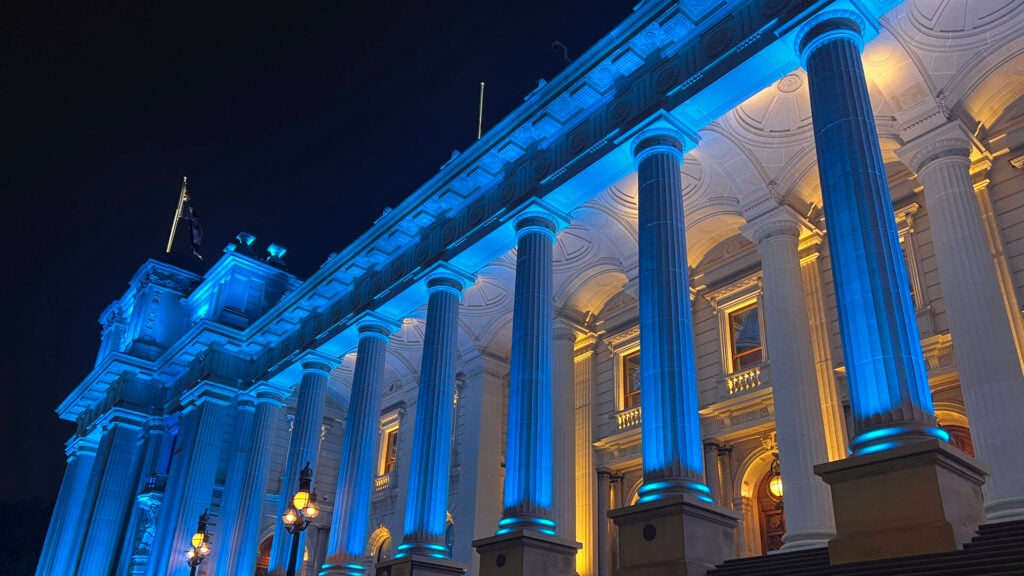
Given the age and prominence of the building, the previous lighting scheme had grown out of step with contemporary expectations for heritage illumination. Sodium vapour floodlights mounted at a shallow angle produced an even wash of light that flattened the façade and masked much of its detail. The previous colour also altered the appearance of the sandstone and reduced the clarity of the building at night.
Working within these constraints, the design team set out to correct the flattening effect of the old scheme by presenting the building more faithfully, while keeping the installation discreet and visually unobtrusive. The new system also needed to reduce maintenance demands, improve efficiency and allow the façade to be lighted in neutral white for everyday use, with the option of colour reserved for civic occasions.
A decade in the making
Spanning more than ten years from commission to completion, the project moved through a number of external and technical hurdles, including changes in government, budget adjustments, pandemic related testing delays and advances in LED technology. Each of these factors prompted a review of the specification, ensuring the final system remained robust and future ready by the time it reached completion.
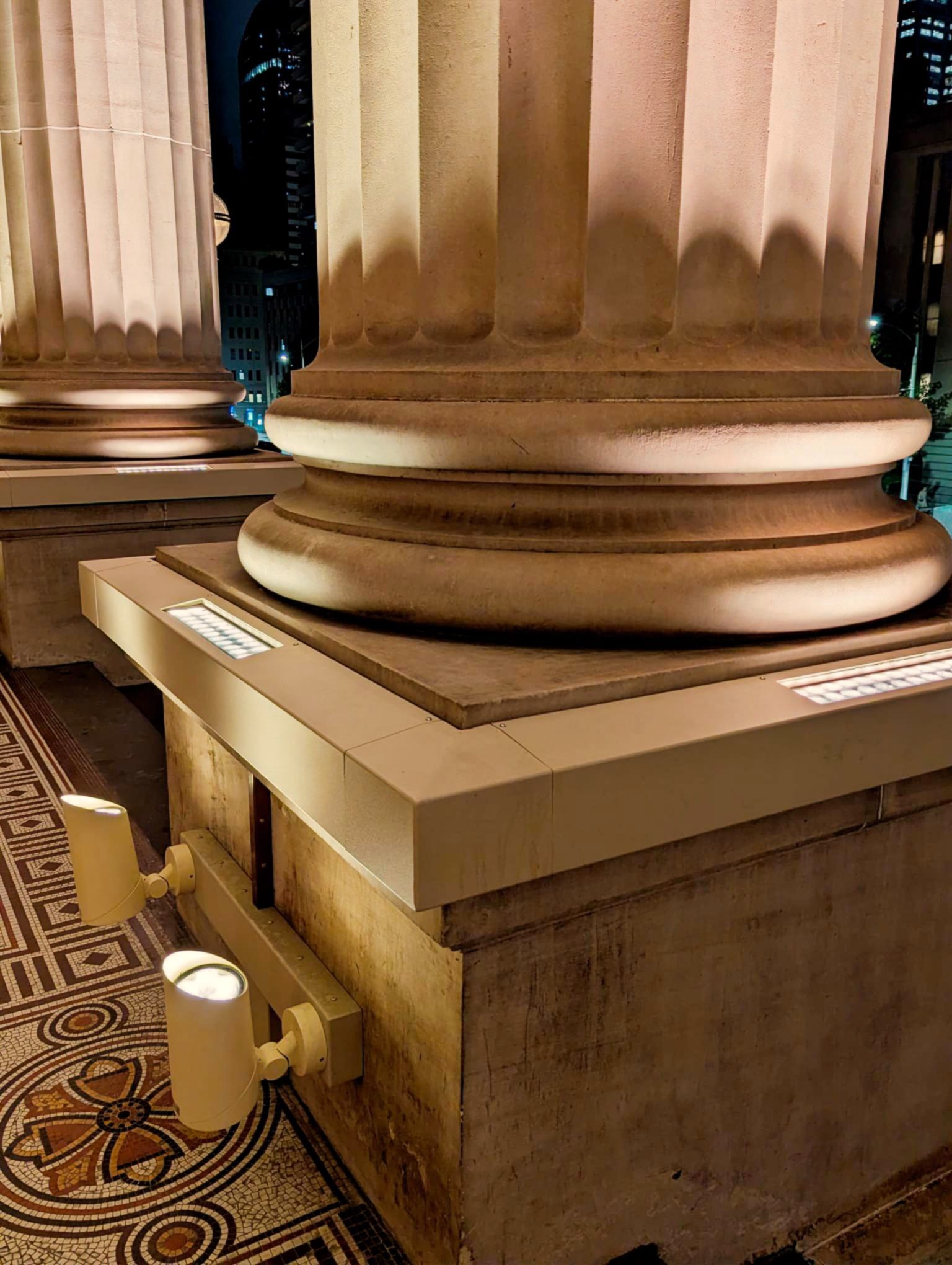
Sitting at the core of the installation are two Pharos Designer LPC controllers, which together provide four universes of Digital Multiplex (DMX), for you technical nerds out there. Two 8 inch touchscreens give authorised users the ability to manage scene selection and colour changes when required.
Because the new approach favours subtlety over saturation, the result is a lighting scheme that brings greater control and nuance to the presentation of the Parliament building, revealing its material qualities more clearly and retiring a dated and overbearing approach to illumination.
Christopher Page associate at FPOV said working with Pharos allowed the team to deliver a reliable control platform with the flexibility and ease of use needed to support both daily operation and longer term adaptation of the scheme.
Asia Pacific at Pharos regional manager Tony Symms added that the project demonstrates how intelligent control can support the sensitive illumination of heritage architecture, combining reliability and flexibility so the façade can be presented consistently while still allowing for moments of variation.
Balancing preservation with performance, the project stands as a demonstration of how advanced control technology can help heritage buildings meet contemporary lighting demands without compromising architectural character, delivering a scheme that is both practical to operate and sensitive to the building it now illuminates in a considered new light.
You Might also Like



Related Stories

© Niche Media 2026