

Swedish baked goods, but not as you know them
Swedish baked goods, but not as you know them

Share

Researchers at Chalmers University of Technology in Sweden and Aalto University in Finland have developed a new bio-based, zero-waste material product from an ingredient you’ve probably got in your kitchen: yeast.
The innovative material is completely biodegradable and made from renewable raw materials. With its zero-waste manufacturing process, the product is also completely customisable for use in architectural and interior design projects, providing a sustainable alternative to fossil fuel-based materials such as plaster, plastic and synthetic products.
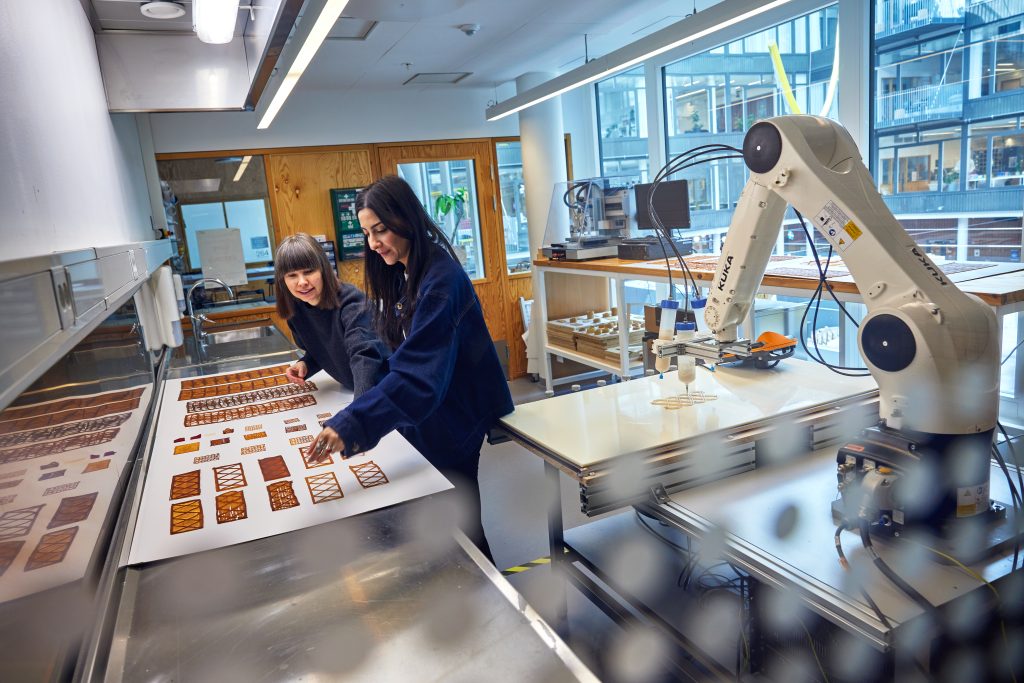
Led by Professor Malgorzata Zboinska and co-authored by Yagmur Bektas, a doctoral student at the Department of Architecture and Civil Engineering, the recently published study combines design, materials innovation and advanced manufacturing technology to investigate how industrial residual products can be repurposed for new products.
A recipe for circularity
Championing circularity in manufacturing, the new material consists of baker’s yeast, cellulose fibres from wood, alginate from algae, glycerol from plants and water. Together, the ingredients form a hydrogel – a soft, jelly-like material that’s malleable enough to be 3D printed.
The use of yeast as a material component hasn’t yet been explored in architecture. But what makes this new material particularly unique and exciting is how the yeast is used. Zboinska and Bektas are using it as biomass, rather than for fermentation. This makes it a robust component that provides volume, strength and stability, while making use of by-products from brewing and agriculture industries that would otherwise go to waste.
“I’ve always been interested in the combination of architecture and living materials, and essentially this research is about creating an architectural material made entirely from organic, renewable ingredients. By combining biomaterials with digital manufacturing, we can take a novel approach to both the design and production of architectural components,” says Zboinska.
“Yeast grows exponentially. It does not require strictly controlled environments and is not particularly sensitive to contamination. Because it consists of single-celled organisms, we can produce a more homogeneous, predictable material.”
From the kitchen to a building site
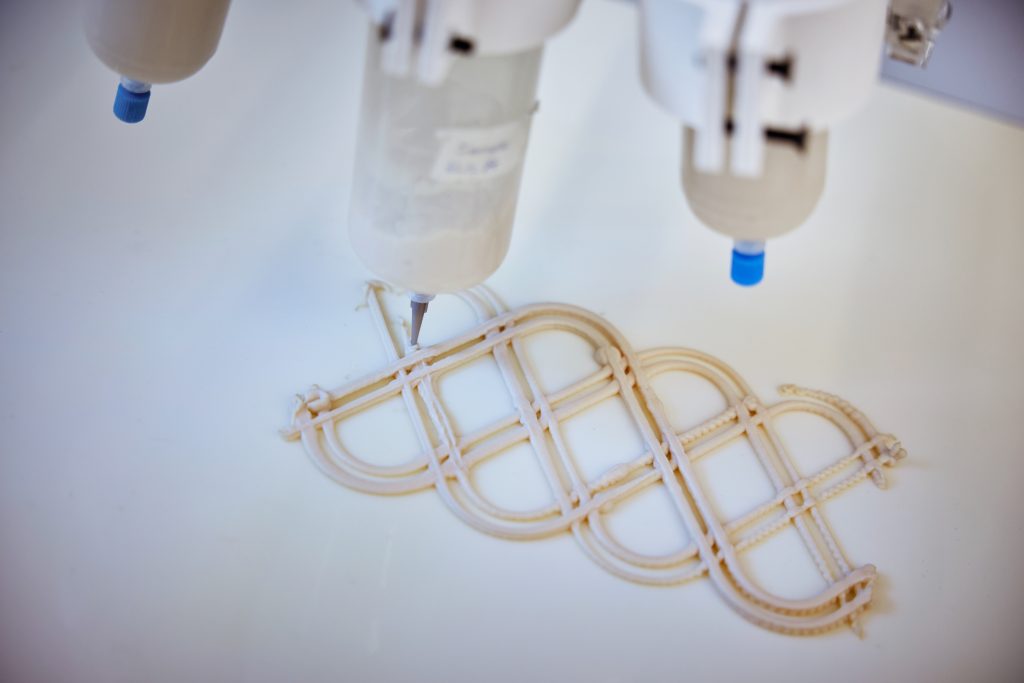
Like baking in reverse, the production process first involves heating the yeast to deactivate it before combining the other ingredients. The smooth hydrogel is then 3D printed at room temperature, meaning no power-hungry, intensive heating or additional support structures are required.
“3D printing makes it possible to create complex shapes without producing waste. We can design and manufacture the material directly – with a high degree of control over its shape, texture and material distribution,” says Bektas.
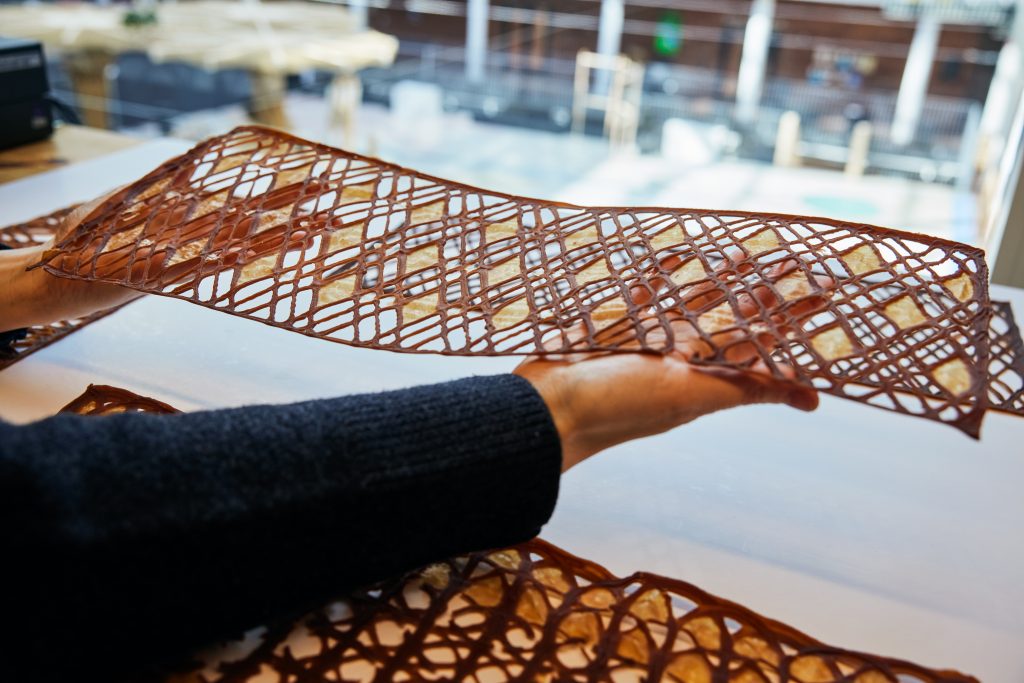
This process allows for alterations to the final product’s transparency, colour and surface texture, making it highly customisable for project applications, particularly in interiors as sunlight screens, wall panels or room partitions. While its natural hue ranges from yellow to amber and brown tones, the colour can be altered with natural pigments or pigment-producing colourful yeast strains.
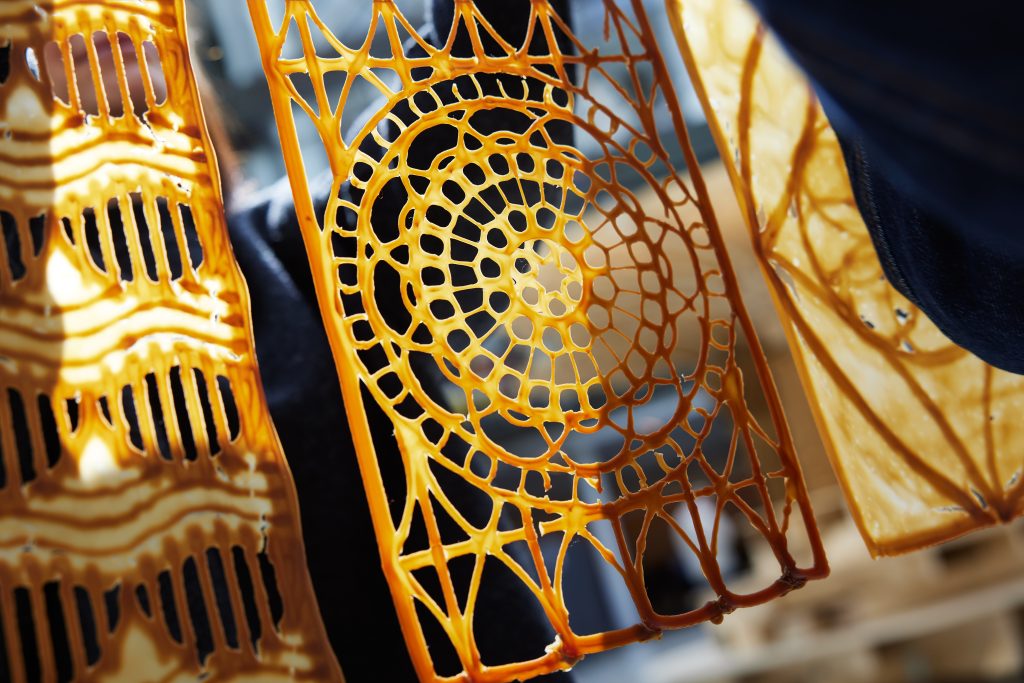
Looking ahead, further testing is needed to assess fire safety, strength and moisture performance before the material can be used widely in buildings, but the team is optimistic that it could be a viable alternative to plastics and other petroleum-based products.
“The future of architectural ELMs, or Engineered Living Materials, is very exciting, with great potential to customise them to perform a variety of functions,” says Zboinska. “This could, for example, involve self-healing materials or materials that purify the air by neutralising harmful substances and pollutants. What we have achieved so far is an important first step towards establishing a completely new type of architectural material. You could say that we are laying the foundations for future developments that combine sustainability, functionality and design in entirely new ways.”
Images: Chalmers University of Technology | Henrik Sandsjö

© Niche Media 2026