

The sound of now – from noise pollution to perfect pitch

Share
How does someone go from making aeroplanes quieter to optimising the sound emanating from the finest speakers in the world?
When an interior designer expands their fitout remit to specify high-end sound systems into a brief, they are perhaps unaware of the precision and acoustic skills that go into designing the equipment selected.
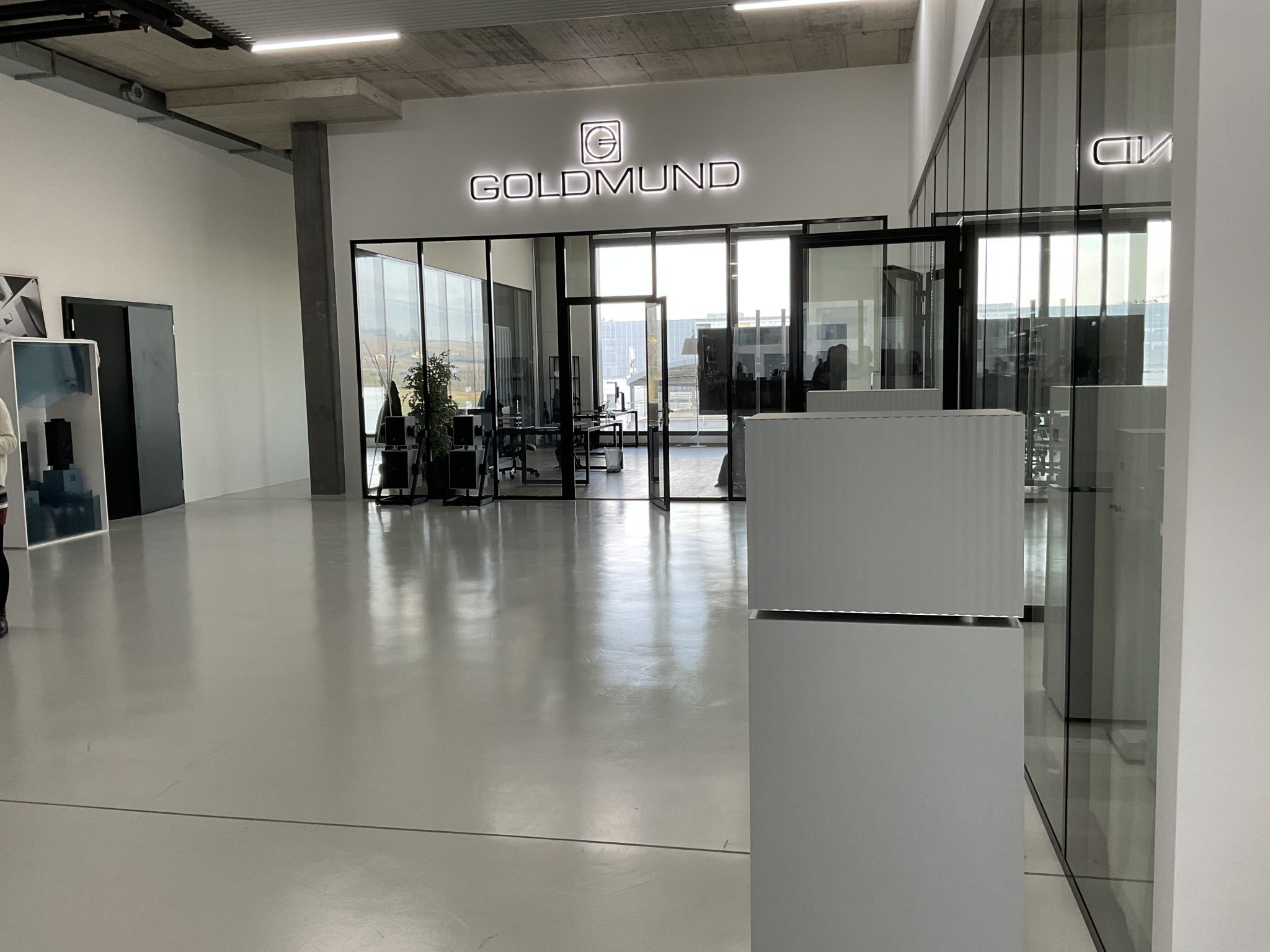
Dr Veronique Adam is the head of Acoustics at Goldmund, the Swiss manufacturer of high-end and high-precision sound systems, located at a pristine facility in Geneva. Her job is a hugely technical one, working on the modelling of Goldmund’s loudspeakers and the calculations required to deliver optimal sound quality.
“I also do everything related to home theatres,” says Adam, “meaning that we can modelise everything inside the room.” This means calculating the dimensions of a space where the speakers will be placed, and then proposing the optimisation in terms of the number and location of speakers for the best results. Once the speakers are installed, Adam takes care of the configuration of the speakers and the settings that best suit the individual customers.
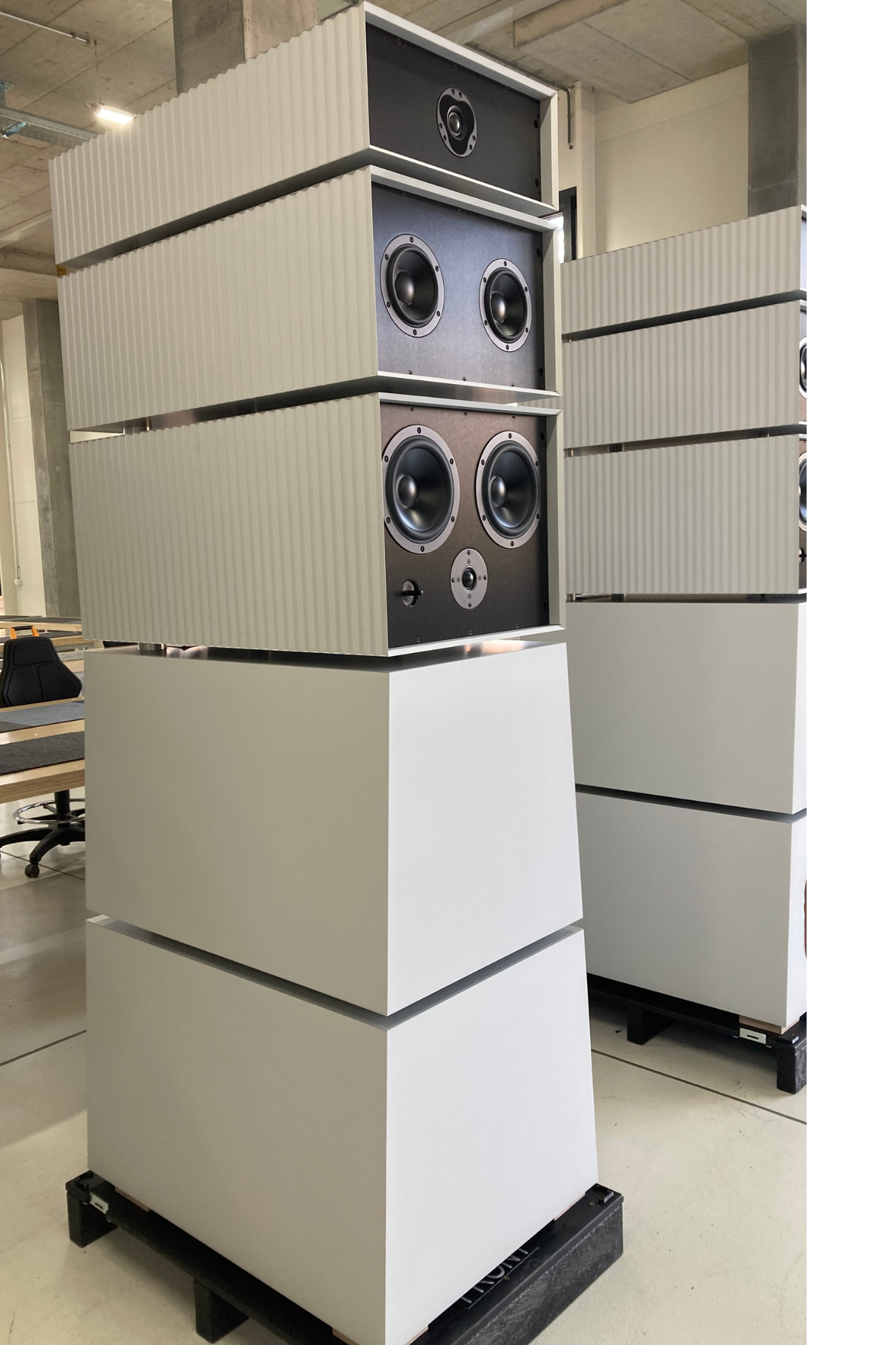
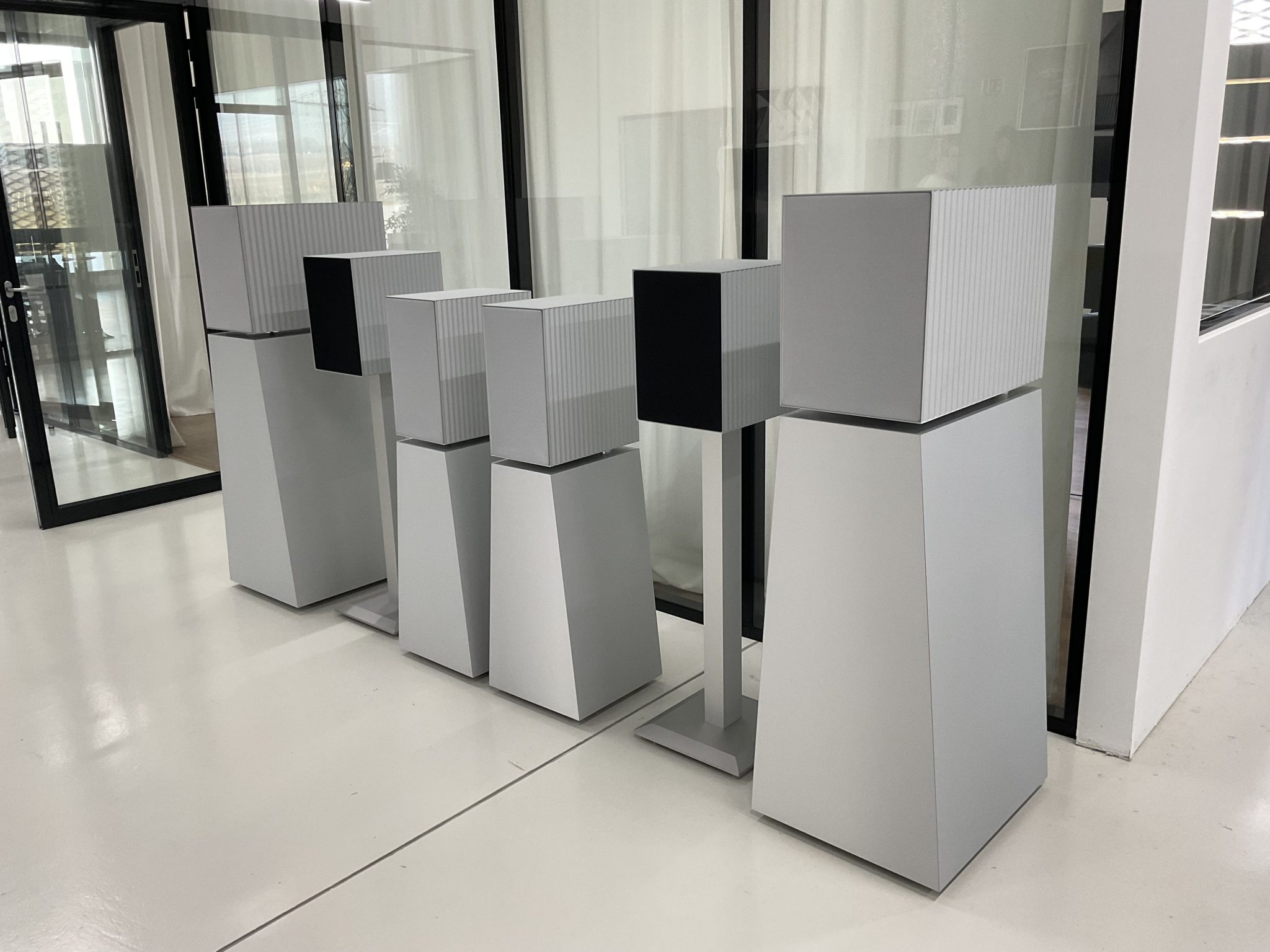
Considering the quality of the speakers concerned and the affluent VIP customer base, this can entail Adam flying around the globe to deliver the personal touch. The absolute top end of Goldmund’s range is a pair of GAIA active wireless speakers, which consist of five boxes mounted one on top of the other, a couple of metres high. Each speaker is equipped with eight drivers and eight channels of Telos amplification and they weigh around 400 kilograms. They come in at a cool $1.5 million.
Clearly, they’re a long, long way from your run of the mill portable Bluetooth affair and Goldmund only makes about five pairs a year. Using state-of-the-art technology, one part of GAIA’s drivers is directed towards the front of the speaker and the other towards the back, resulting in what Goldmund describes as a “natural, powerful and very accurate sound system”.
Those VIPs who order them are genuinely looking for sound of the most exquisite quality, as well as a space big enough to achieve it. And Adams is on hand to help that happen.
Peculiar pathway
But how did she get here? And what’s that about telling aeroplanes to quieten down?
Adam did her PhD at the prestigious EPFL (École Polytechnique Fédérale de Lausanne), the Swiss Institute of Technology that is ranked among the top 10 universities worldwide in a range of engineering disciplines. She says she was always interested in music, but acoustics? Not so much. Her studies, however, were in noise and specifically the noise of aeroplanes.
“I was working on a European project where we were trying to put speakers inside plane engines to control the noise of the engine by anti-noise solutions,” she says.
She describes the process as “passive or inactive solutions with drivers,” adding, “The idea was we had to put the speakers very close. All of the speakers were put inside the engine, but very close to each other.”
The researchers were trying to discover if the drivers in one speaker would have an influence on the drivers in another – in effect cancelling each other out. “So the subject of my PhD was to determine the relation of the mutual effects of two drivers when they are close together,” she says.
All very technical and perhaps a little obtuse for layfolk, but in a world where noise pollution is now a major and ever increasing issue, it was important work.
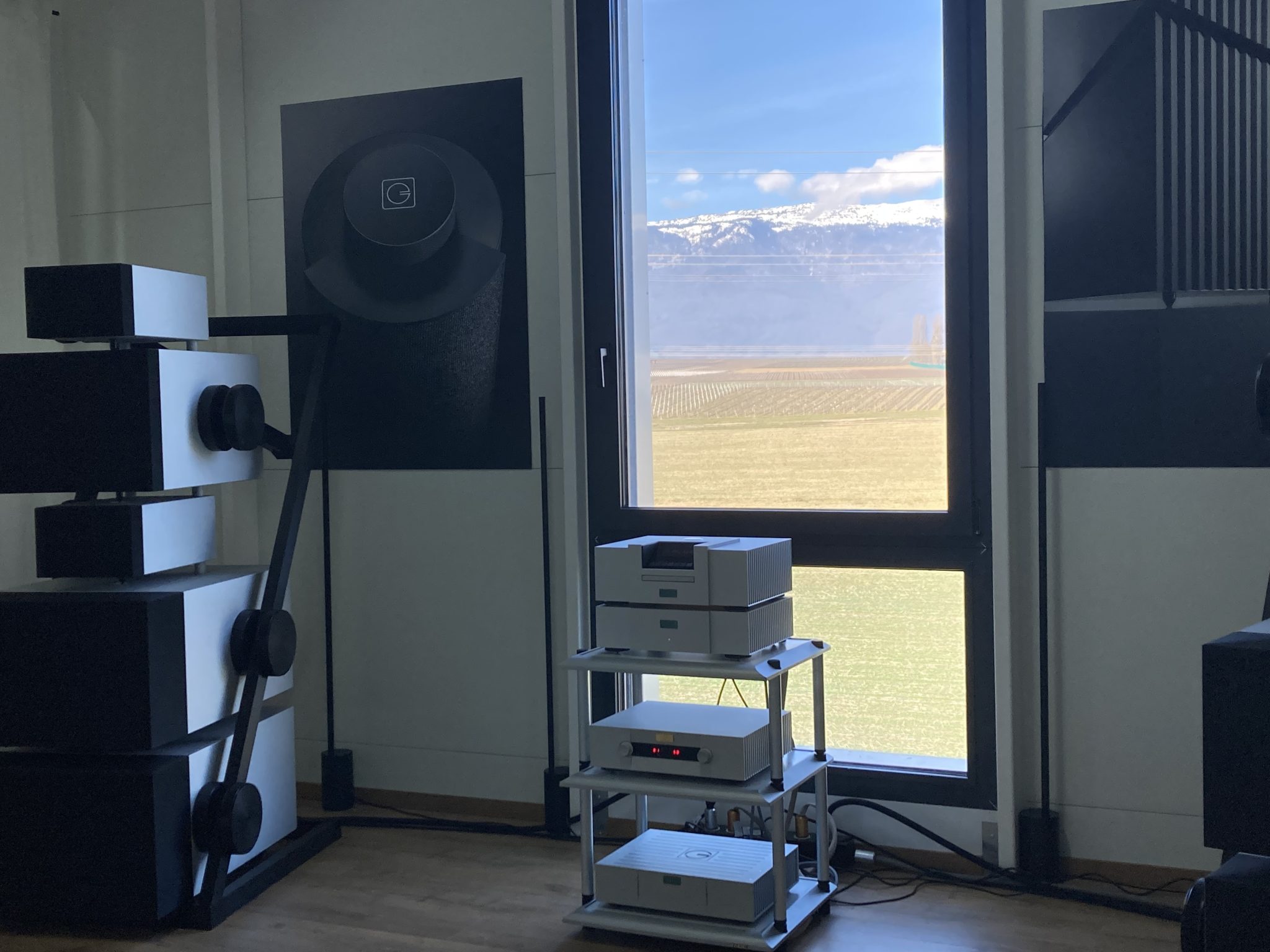
Adam agrees. “A lot of people talk about noise pollution now, because it’s really annoying, especially in the cities. And here we’re close to the airport and if you open the window, we’re in the line of take-off, which is just horrible. You can’t open the windows and continue your discussion, so we just look at the view instead,” she says, indicating the splendid sight of the snowcapped alps overlooking the Geneva facility.
There’s some sort of irony around the idea of a factory that makes some of the most impressive sound systems in the world subject to an unbearable ambient outside noise, but I’m not quite sure what it is…
Finishing her studies, however, Adam wanted to return to an earlier love. “My PhD was about noise and I preferred to work in audio and music, so when I wanted to leave the academic world and go into industry, this solution was perfect for me.”
The solution?
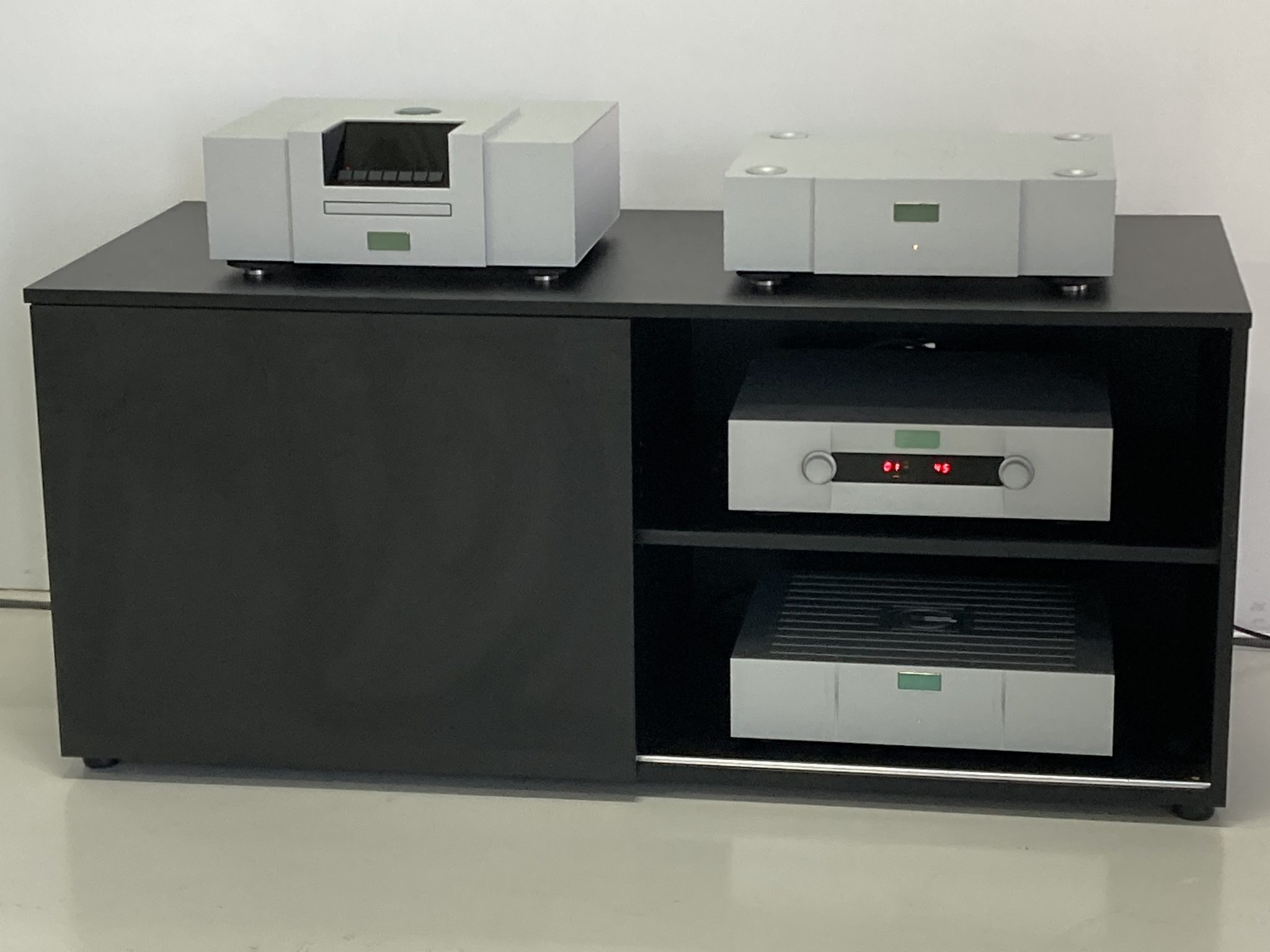
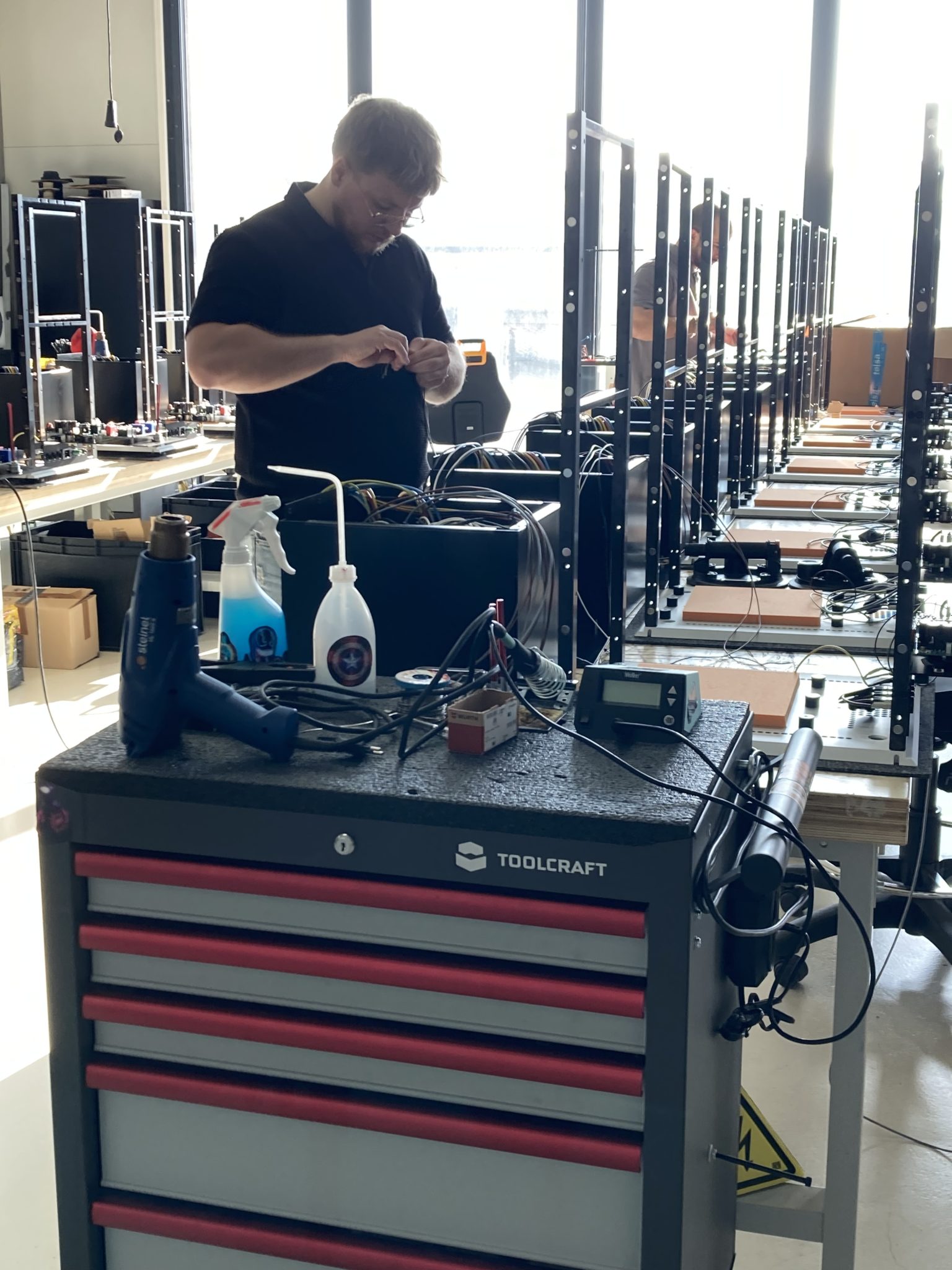
In a role that is tailor-made for Adam, at Goldmund she now gets to bring all of her engineering skills and acoustic expertise to helping audiophiles enjoy the best sound possible. And it’s all done with software. “Normally, I don’t touch anything inside the speakers,” she says. “I prefer that they have the original settings. But if the customer also buys a processor we do a customisation of the room.”
This is done simply by listening. “I have huge experience of listening to the sytems,” she explains, “and I do my corrections according to the room.”
The corrections can often be influenced by taste. For instance, Adam says that in Asia there’s a preference for a lot of bass. “It’s funny,” she says. “Normally I have to increase the bass even if I personally don’t like it!”
Some of her work is hard to describe, she says, including the almost intangible elements such as quantifying the emotions in sound quality. But when she plays music through speakers like the GAIA or the APOLOGUE in a listening room, an emotional response is palpable.
“The emotions come from the reality in fact,” she says. “When we produce a song, it’s not natural. It’s a song that we have to reproduce through our systems. So the idea is to be as realistic as possible and the emotion comes when the brain just recognises the reality.
“And you can control a lot of things… but it’s not very clear when you listen whether you have the correction or not. But when you listen with the correction, you can listen longer and at a higher level. Because the song sounds more natural.”
It may sound esoteric, but the results speak for themselves, even in the temporary listening room – in use while a custom-made space is under construction.

And what does she herself like to listen to when she’s not correcting and tweaking the systems for others? Adam nominates classical and pop rock as her favourite genres. “In classical I like all the Romantic period from Beethoven to Richard Strauss,” she says. “I also like Baroque and Mozart, but I prefer 19th century music. And in pop rock I have a lot of Depeche Mode, Kate Bush, Peter Gabriel…”
It’s a very different world from the days of trying to make noisy aeroplanes as quiet as the proverbial church mice…
Goldmund sound systems are available in Australia through Addicted To Audio.
The writer visited Geneva courtesy of Addicted To Audio.
You may also like:

© Niche Media 2026