

On practising your soft skills – with Made For’s Mitchell Jones

Share
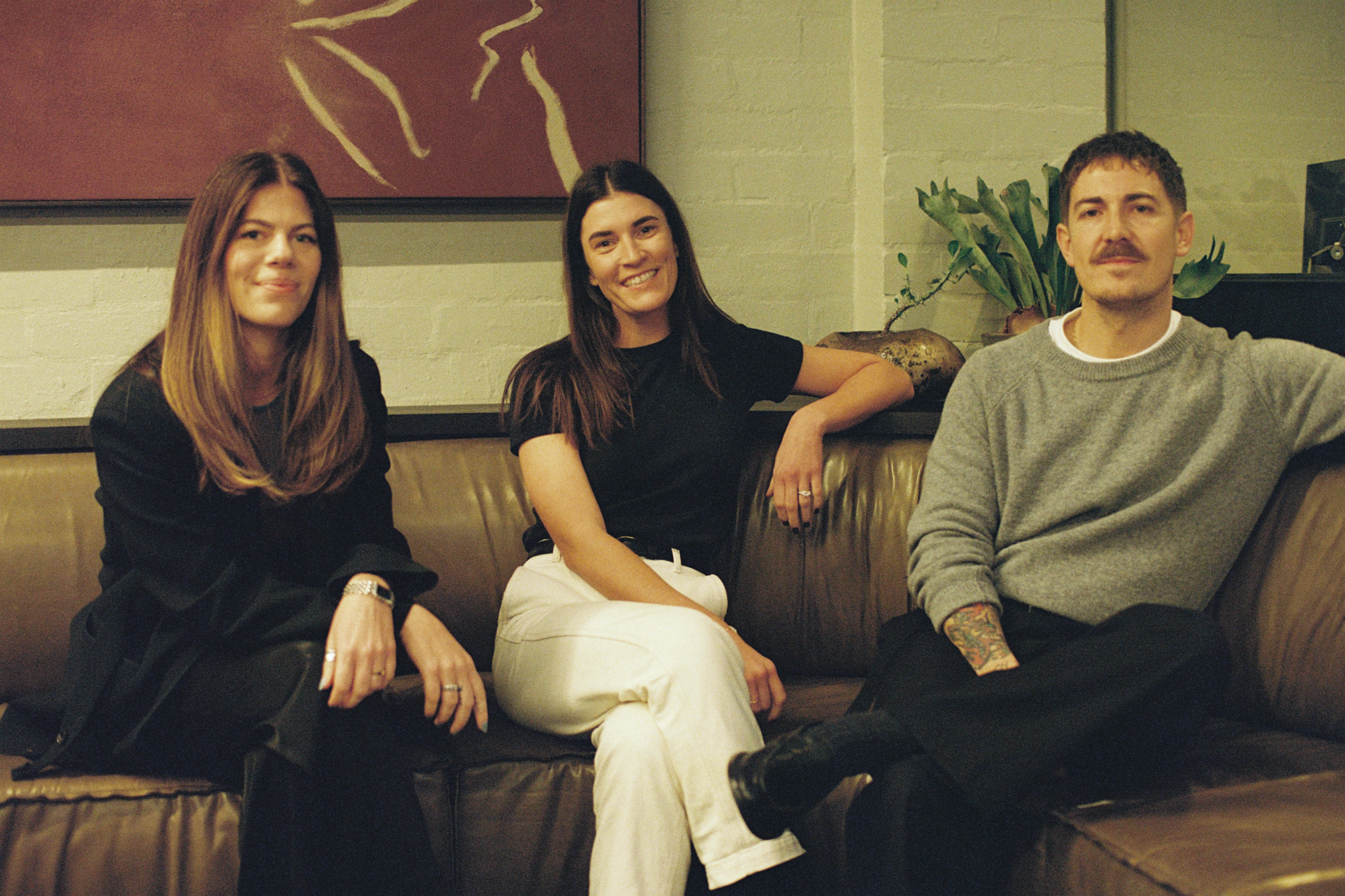
Mitchell Jones co-founded Made For with Cara Stizza in 2016, and together they grew the practice from two to 20 in its first six years. A decade later, Jones is now the creative director of the studio, which is the latest company to join ADR‘s 30UNDER30 as a practice partner.
Here he explains to ADR why this was the right time for Made For to get on board, while also stressing his favourite piece of advice for emerging designers – work on your practical skills, but don’t neglect the soft ones! Learning how to speak in public and present your work effectively could make a huge difference to your career success, he says.
Australian Design Review: Talking about 30UNDER30, how long have you been aware of the program?
Mitchell Jones: We submitted our first team members to the program about four or five years ago.
Pretty much from the beginning, then?
Yes, I think that was the first year it ran. And that was when it was alternating between architects and interior designers.
That’s right. The first three years we alternated and then this year for the first time we had everybody in together, because being cross-discipline makes so much more sense. So with that history of involvement why did you decide to become a practice partner this year?
Our studio is really trying to be on a trajectory to be a very well-known firm, both inside and outside of the industry. So exposure is probably one thing, but I think the thing that we’ve really aligned with is that really good firms participate in their industry. They’re not just spectators in it. And it was probably realising that we’re now in a position where we can do something like this, so we should do something like this. And it’s part of one of many initiatives where we’re trying to participate in the industry more rather than just watching it go by.
Do you have many young or emerging designers in your practice?
Yes, 50 percent of the team members have less than six years in studio experience. We’ve always found that was part of what keeps it exciting, innovative and interesting in the studio. We have someone who will be submitting an application to join the cohort this year and we can already think of the person that will be submitting for the next couple of years as well.
For you personally, did you have any sort of program like this when you were coming through?
No. I was thinking about this. The person we’ll be submitting this year, she’s just gone away on holidays. And before she went away, we laid out a three-year path for her to the role that we think that she’s capable of achieving, and what we’re going to do and how we’re going to work to get there. And I think it’s really important to have that internally, but when you’re a younger designer, there’s not a lot to strive for externally for recognition. And I think that it’s important that there’s something that you can set your mind to. And for our applicant, it’s a big deal for her to be able, in the next couple of years, to submit to this program and hopefully get in. So I think giving people an early career point of aspiration is really important, and it certainly didn’t exist when I was coming up. It was internal, you’d get recognised, but I think it’s always nice to be able to have some external recognition as well.
And what about mentors? Did you have people that you could go to for advice when you were younger?
Yes, I was lucky. I started D&C side and I came from a firm that really had a lot of lateral support. So, rather than having one specific mentor, there were a lot of people available to you. And then I worked design side in a firm that was maybe a little bit more vertical in the way that it does things. But no one ever says to you, ‘Hey, this is your mentor and you can go and seek this person out whenever you need to.’ So I encourage all of my staff members to find a mentor from outside of this studio.
Our director of architecture, Gab [Gabrielle Charpentier], has a coffee once a month with the head of architecture at Studio O’Brien. And we are always looking for things like that for our team to have an external mentor.
How important do you think it is for for designers to foster peer-to-peer relationships in the early years of their careers?
I think there should even be more done on this peer-to-peer thing. I find a lot of my team get to 33 or 34 and they think, ‘OK, I have to take the next step in my career. How can I get out there? And how can I start making more peer-to-peer relationships?’ But the answer to that is you need to organically be building them softly through your mid to late 20s, when the stakes aren’t that high and you don’t have to go out the next day and build forced relationships. I think that the industry should probably try and do more around supporting peer-to-peer relationships for people with less than five years’ experience.
Because every problem shared with a friend is a problem halved, and sometimes it’s hard to do that directly in your own studio. You can’t always halve it with someone that you work directly with.
If there was one piece of advice you could give to emerging designers, not just those coming through 30UNDER30, but across the board, what would it be?
Work on your soft skills as something that you do constantly, as in even if you can put 20 minutes a week or 15 minutes a day to listen to a book about presenting, selling or whatever it may be. I think that I’m not doomy and gloomy about AI taking our jobs, because I think that AI is really terrible at creativity and taste.
Maybe it’ll get better, but algorithmically it’ll always point out the same thing. One thing that it’ll never be able to do is stand up in a room and present your ideas for you. And I would even just say practise. I tell my guys that if we’re going to plan out a presentation, we may plan 10 to 15 percent for them to stand up and present, because generally they’ve worked really hard on it. Practise it! Work on those soft skills just as much as you work on your hard skills. And even if they don’t feel natural to you, they’re definitely going to play a pivotal part in progressing your career.
Talking about AI, what do you see as the biggest challenges for the design industry currently and in the near future?
The global design industry is really small now, which has meant that things like Pinterest work algorithmically now. So we’re often being all served the same thing. It’s almost like Pinterest is driving the creative direction of design to some degree now. What it decides to show you that people like, it shows you more of, and then we just all see the same thing, so we’re taken to the same place. So I think, again, computers are super necessary, but the best creativity is going to come from when it’s not guided by reference images, regardless of if your clients desperately want to see them or not. Find a way to translate your ideas and your thinking without being super reliant, because I think the same thinking is coming back into a lot of the industry, because it’s being driven by algorithms.
And that leads to a lot of homogenous design?
Exactly right. Yes.
Conversely, what excites you about the future?
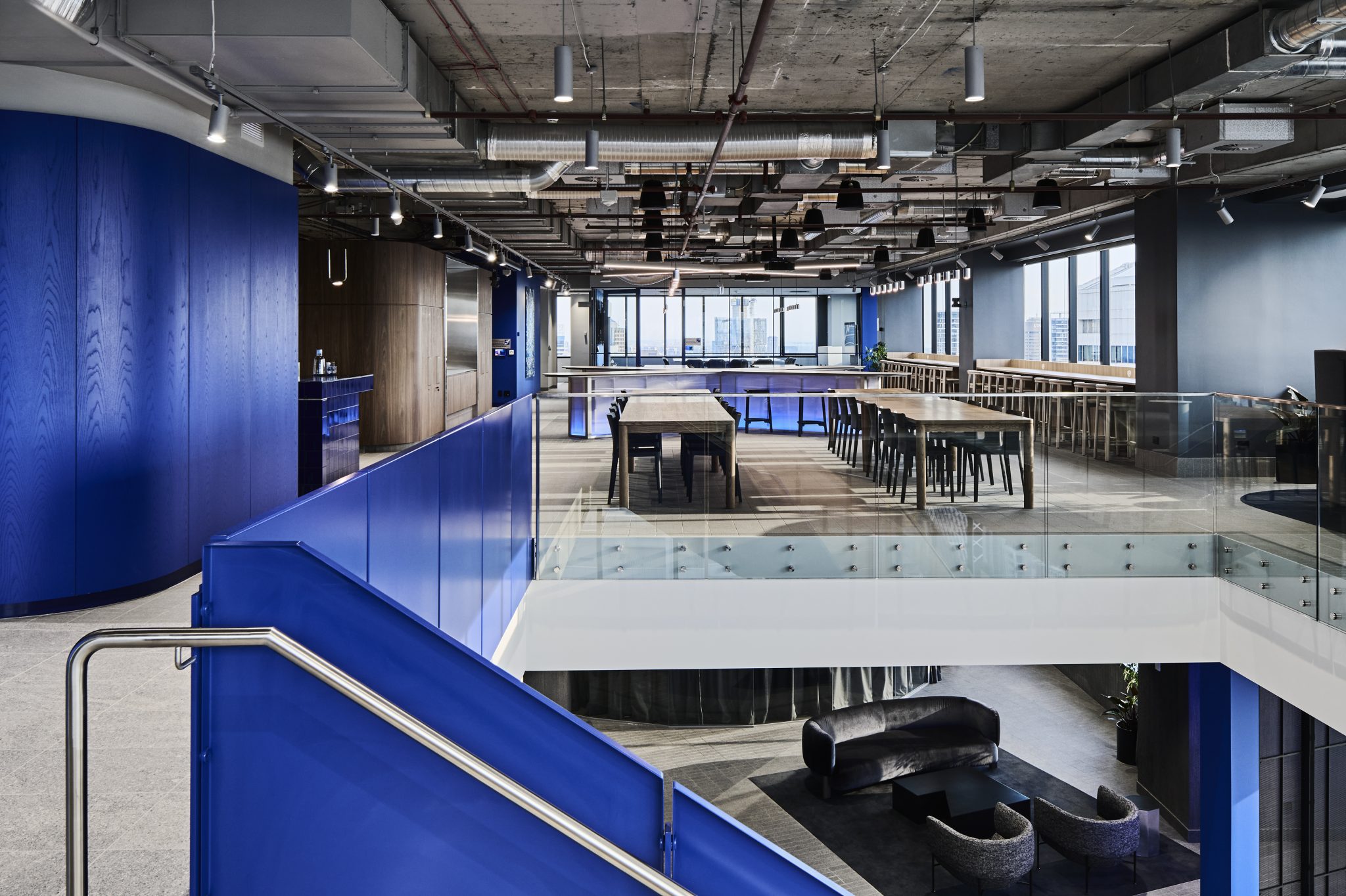
We’re primarily in workplace design and the conversations that I’m having with leaders of businesses – small, large and in between – is that their staff are wanting to come back to the office and spend more time together. So people want to be together, but they want to be together in great spaces that work. And because we’ve been at home a lot more than we used to for the last five years now, I think that people are putting a higher value on quality of space.
There’s been this gloom around workplace design. ‘Well, you won’t even be designing offices in five years, because nobody’s going to go to them.’ But highly effective, emotively uplifting design has clearly got a place, because businesses that have great offices often bring the best people in. And when the best people are together, you get the best ideas being shared. So I’m excited about that.
I’m really excited about people coming back to work and businesses leading the way there. There was a lot of doom and gloom about commercial, but I even know the unis are going to really be pushing for bringing their students back in more often or more frequently than they have in the last few years. So that’s exciting too.
I mean, quite literally 80 percent of my best friends I’ve met through work. And I wouldn’t have met them if we weren’t going to things together and going through the same challenges. And so, yes, we are social beasts.
Regarding projects, you’re currently really busy at Made For., but are there a couple that you can talk about that you’ve been working on recently?
We [have one project] that we submitted to the awards and was recognised, which is really exciting because it’s not the sexiest project we’ve ever done, but it’s a massive reuse project. And I think, excitingly, it feels as if it used to be something that only really big businesses wanted to do, but now small to medium projects are looking to be more aware of their environmental impact.
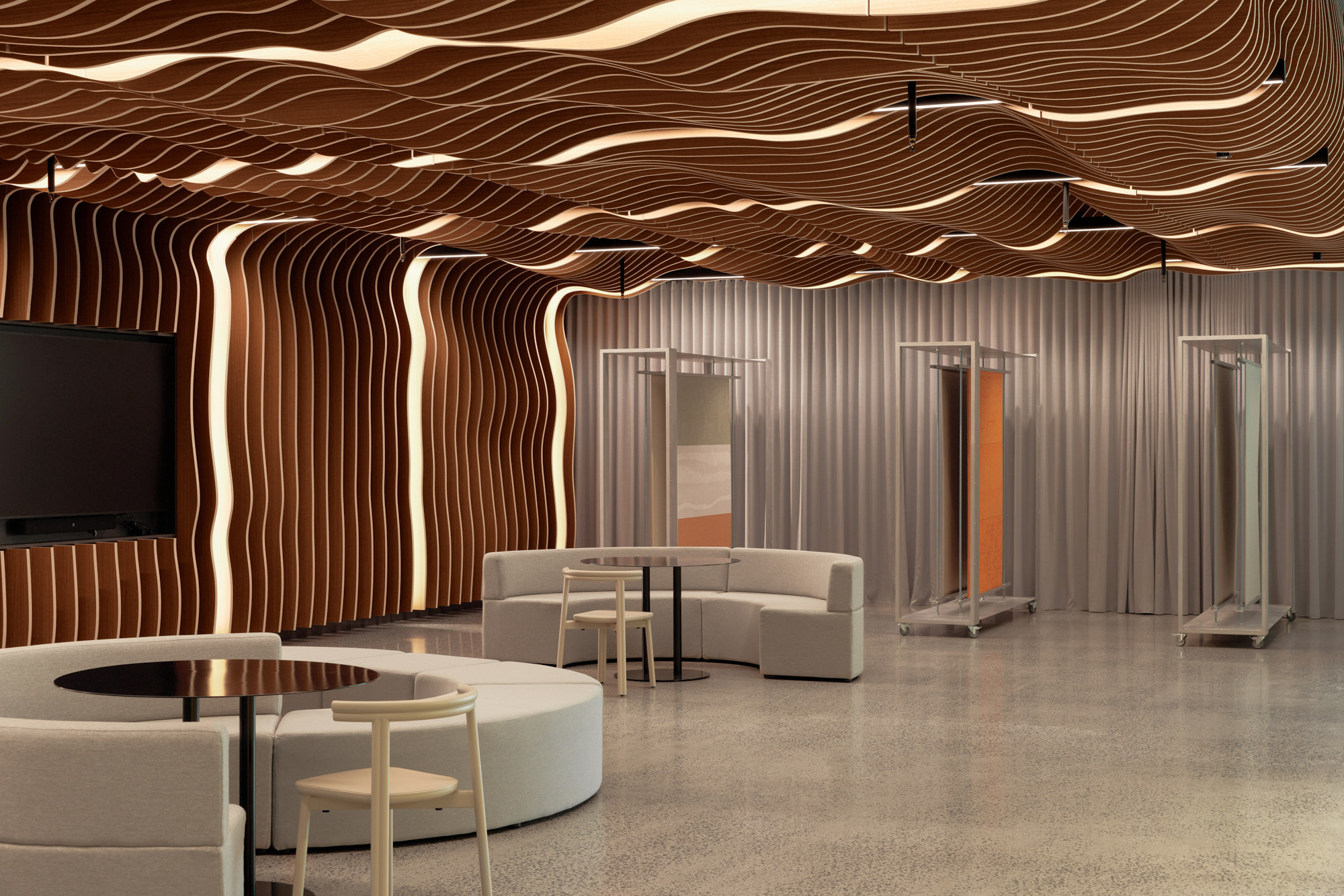
And one of those is the most exciting project that we’re working on in the studio. It’s a three-level, absolutely derelict warehouse in Port Melbourne that most people looked at and thought ‘we should knock this thing over’. And we engaged with the builder who is also the client, and we’ve been bringing it back to its former glory and putting a new workplace inside.
And we’ve reused heaps of the timber for the wall linings and we’ve recycled heaps of concrete and re-turned it into a formed step on-site and all different sorts of things. So I think the studio’s starting to move into its era where it’s getting better and better at reuse, and that’s super exciting.
Is that completed yet, that project?
No, but they’re going to move in November, so we’re targeting end of October. This is definitely the most special project we’ve ever done. Have you got Instagram?
We certainly do.
If you’re on there and you go to our page, you should be able to see a couple of the work-in-progress photos of it. There’s one that says ‘converting a warehouse to workplace’. And it’ll generally be Gabrielle, who’s my business partner, facing the camera to start talking about it as her baby.
Have you ever been to a site when it’s at 80 percent, when everything’s really still work-in-progress, but you can start to see the finished product coming through? That’s where we’re at right now.

Finally, what would you say to other potential cohort members or other practice partners who are considering getting involved with 30UNDER30?
I think because we’re doing this for the first time, I’m not sure I’ve got the perfect answer to that, but I do think that when you’re a firm that has the ability to start to participate, I think it is important that you give back to the industry that gives so much to you.
All images: Supplied.
For more information visit Made For.
Neolith and King, alongside partners Designer Rugs, LAUFEN, Krost, Miele, Signature Appliances powered by Miele and Tongue & Groove.
ADR is also grateful to our 30UNDER30 practice partners AJC Architects, BVN, Cera Stribley, Design by WBL, DKO, Genton, GroupGSA, Gray Puksand, Hare + Klein, Hassell, HDR, Lawless & Meyerson, Luchetti Krelle, Made For, Mim Design, Richards Stanisich, RIZEN Atelier, Rothelowman, SJB and T. Black for helping us foster the future of Australian design.
Follow @ausdesignreview and @adr30under30 and subscribe to ADR’s newsletter to stay up-to-date with the program.

© Niche Media 2026