

From shortlist judge to mentor – Steven Toia rejoins 30UNDER30

Share
The 2026/2027 30UNDER30 will be a special iteration of the program, with the year’s cohort not the only ones at the Creative Retreat in Bali next May. For the five-year Reunion, all previous cohorts, mentors and sponsors are also on the invitation list.
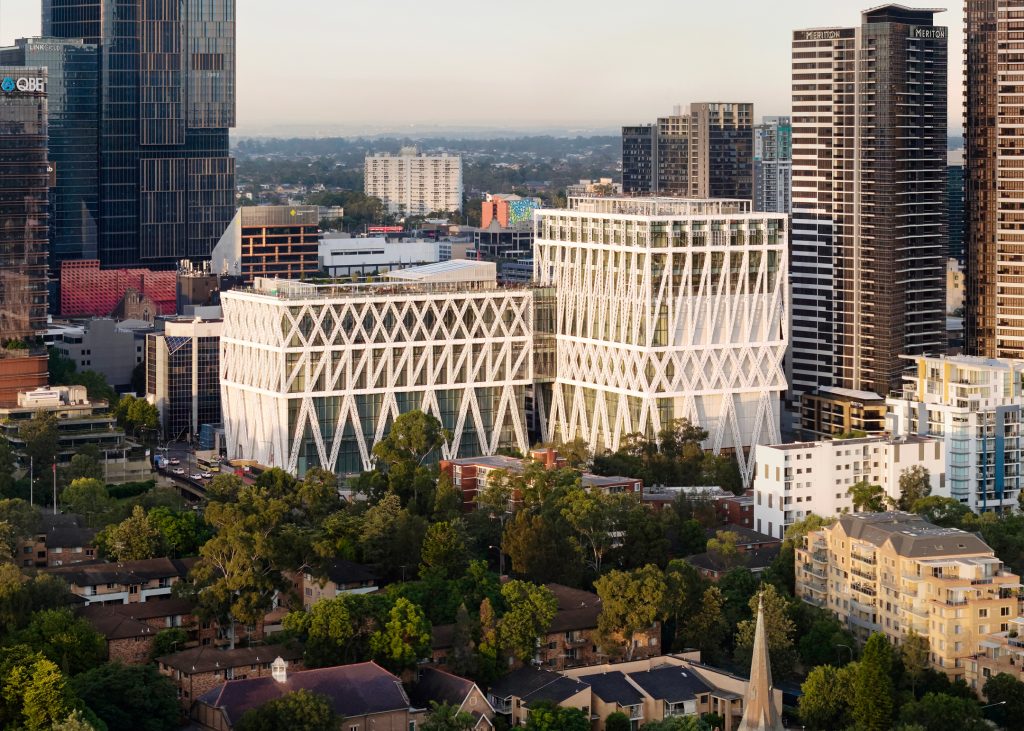
Which also makes it a special event for the dedicated 2026/2027 judges and mentors. David Flack, Yasmine Ghoniem, Amy Papas and Sophie Bond have already been announced, and the final luminary to join the group is Steven Toia, principal at Genton – the Australian practice behind the highly anticipated Powerhouse Parramatta opening in November this year.
A month before the project welcomes the public through its doors, Toia chats with ADR about 30UNDER30 and how his own formative years as a young designer inspired him to give back through the program.
Australian Design Review: What is it that motivated you to join the program as a mentor?
Steven Toia: A few things. Holistically, I’ve always enjoyed being part of the broader architecture and design community. It’s always something I’ve been passionate about and I’ve always looked for opportunities to be involved. I’ve maybe not been able to do that as much over the last few years, but now I’m really looking forward to doing more.
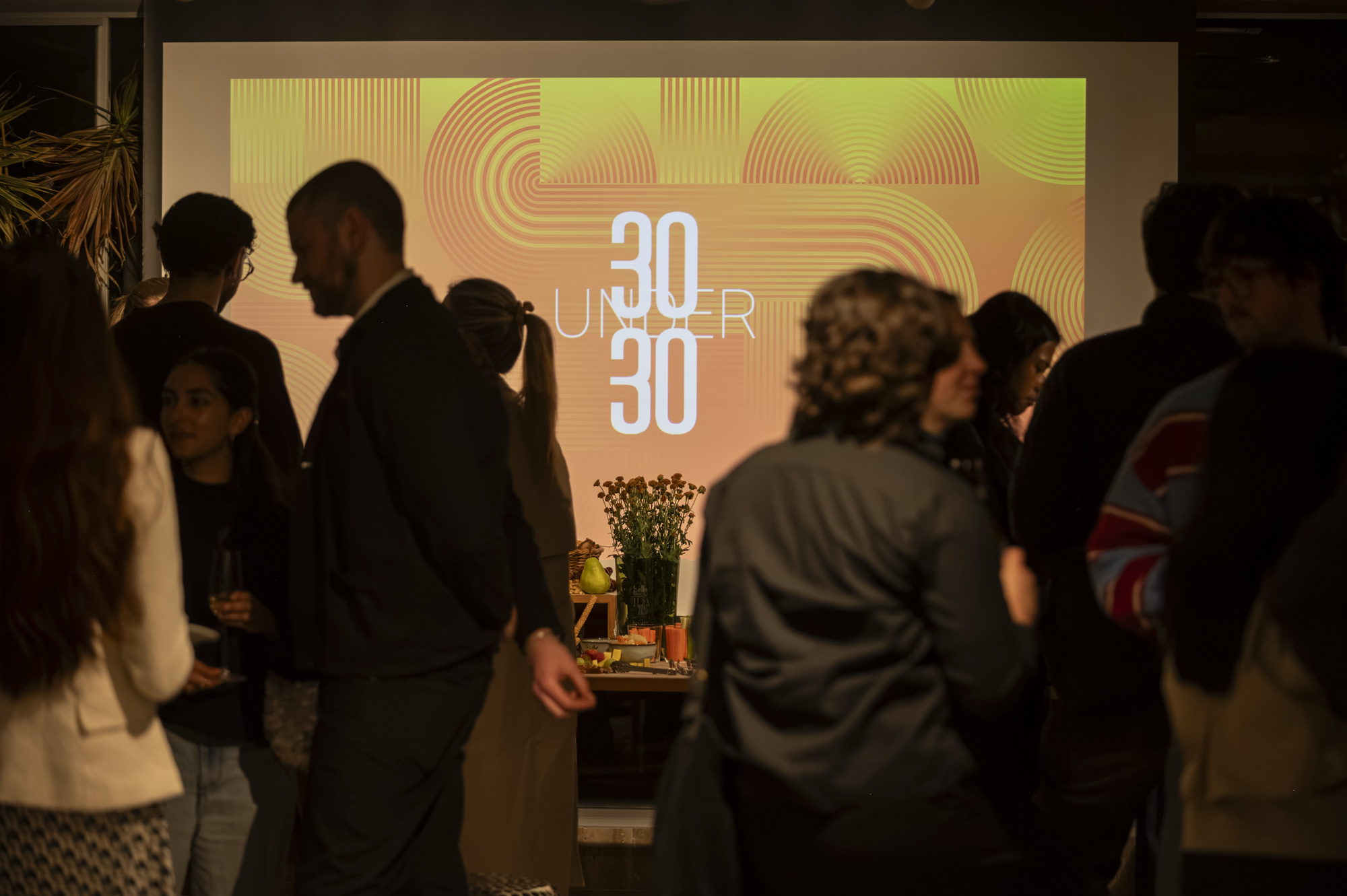
Additionally, having done the 30UNDER30 previously in more of a shortlist judge capacity than the mentorship capacity, it really re-energised me engaging with talented young creatives and professionals coming through. It was a pleasure to be involved.
It sounds like you have had a taste and now you want to have a proper go this time?
I’ve been thinking about getting reengaged with the universities and I’m at stage of my career now where there are some nice opportunities to reengage with education and the profession more broadly.
I participated in the Young Architects Committee in the New South Wales chapter when I was a graduate, which I think was very formative. There was a group of young architects at that time who were all really passionate about architecture and what architects do, and you could get a new kind of team or collegiate energy around this diverse group because we’re all in different practices and they were basically all the first practices we’d ever worked in because we were all young architects. But it was interesting to see what the different experiences were when you really had no other benchmarks than what your colleagues were telling you.
I think for those getting involved [in 30UNDER30], it gives them a chance to have a similar experience. I like being involved in this because I knew how valuable that experience was to me at that time in my career. And it was great when we were doing that and we had some mentors that would come in and give us some advice on how to navigate issues and things. I guess that’s more my role this time around.
And do you find that there’s also a benefit to being a mentor as well, because you’re surrounded by all of these new ideas and new energy?
Oh, exactly. I’m not going into it thinking that I have all of the answers. It’s more of an exchange. I’ll probably learn as much, if not more, from them than they’ll learn from the mentors. It’s more about creating, I guess, an environment and a dialogue and a conversation between us all that will generate shared ideas and new ideas. I think it’s going to be fantastic. I’m looking forward to it this time around and being more involved as a mentor than last year.
When you are looking at emerging designers coming through or people applying to your practice, are there certain characteristics or qualities that you look for in young designers?
Honestly, when you’re looking at younger professionals coming through, you’re looking at what path they’ve started to define for themselves without having completed it yet. Do they have a clarity around a process or a pathway that they’re wanting to pursue?
Seeing people that are on a pathway, they’re open to those new ideas, they’re open to learning. They’ve developed some really great natural skills and they’ve got their talents, but they’re really ready to engage and apply and learn. I think you’re more looking for a temperament and an attitude towards design and architecture and professional life, because then they’re going to be learning more technical skills and other skills through the work with us.
It’s an energy, it’s an approach that you’re really looking for. When we’re hiring younger candidates, we love bringing them in the office and getting them busy on different challenges. And with younger people we have the luxury then of being able to have a few of them working on the same things or different things. So you can see what outcomes you can use, an approach where you get more testing and design thinking and design testing by combining their energy and new ideas with what we’ve been maybe exploring through our user practice.

And I know that at Genton you have architecture and urban design in-house, so how important is it to have that crossdisciplinary approach, both in-house and also in your career – engaging with other sectors and professions within the industry?
We’ve always sought to be more involved in fewer projects, than touching many projects lightly. And we’ve always loved gravitating from city shaping work or even if we’re doing a single site development, the urban design, the public domain, the way that the project sits and gives back to the public domain is important to us. And we do actually have interiors as well.
Sometimes I think, even with interiors, we tend to design all our residential projects almost from the inside out because you’re designing for light and ventilation and positive environmental controls and experience and aesthetics. It’s this constant cycle or loop from the urban to the interiors and the architecture in between bringing it together. For us, it’s always been that way. We’ve always had interior designers in the office among the first five employees; we’ve always valued all aspects of the design.
That being said, we’ve always collaborated as well with other architects, with interior designers, landscape architects and engineers – developing really strong and positive relationships where you can push the boundaries of creativity through sketches and drawing.
It’s always such a wonderful experience when you find a really great team of other professionals in their respective disciplines doing great work that you can work alongside with.
Bringing it back to the 30UNDER30 program, obviously the cohort will have a mixture of people in it working in architecture and interiors, product design and more. At such an early point in their careers, is it valuable to have that mix of ideas in the room?
Absolutely. It’s hugely valuable because it’s a rare opportunity to get that kind of cohort or group together. Often you’re going to your industry events, but they are quite focused on a particular thing, whether it’s architecture, interiors or industrial design. Actually having a bit of more of a diverse group where you can get cross-pollination of ideas across those different disciplines is great, because they each have their own opportunities and challenges. It’s a really great opportunity to learn from each other.
How important is resilience and problem solving when it comes to sustaining a career in architecture and design?
That’s a good question. I’ve been talking about this a lot with people, and I personally feel that people that can combine mind and hand together in the way they do their work are people that are going to be able to take the benefits of being more resilient to the changes that are going to come with the technology that’s afoot. This is because it’s more of an artisanal approach if you’re combining hand and mind together in your creative thinking.
The unique value proposition for all of us as designers and architects or industrial designers is being able to bring together the ability to think creatively, put our hands to it, communicate it, share it. And that’s the thing that’s going to hold us in good stead, but still enable us to use modern and contemporary tools alongside those that we’ve already got confidence in.

The 30UNDER30 program is also about promoting leadership and setting the cohort up for future opportunities. What do you think successful leadership in the industry looks like now and where do you think it’s heading?
My traditional thoughts about leadership that have always resonated are about leading by example, being open to the new. Leadership is not about necessarily knowing everything. It’s about realising the things that we know, but also the things that we need to explore to get a better understanding, being confident to run a process and pursue the things that we don’t know and ask those more challenging questions to advance our knowledge or our capabilities. Leadership is being willing to take on those challenges with confidence and positivity, not to avoid or divert from those energies.
As technology provides volume, it’s also about being incisive. It’s about being able to ask the right questions. I’ve actually been telling a lot of people that I think careers or training in things like journalism, for example, teach you to appreciate the source, and teach you how to ask the right question, so that you’re getting the right answers. That’s the challenge: asking the right questions to get to the right answers, because there’s such a volume of information and data that’s now becoming available.
Leadership now is about knowing how to cut a path through this huge wall of information that’s building, because you can see that now if you do use AI or other technologies, you can be sent on all kinds of weird paths if you don’t have the right questions.
That’s true; tailoring your questions is important.
Very specifically so that you can get to a breakthrough. In combination though with using the mind, hands, thinking, process, questions – all that has to come together to create something new.
That leads into the next question: are you excited about the future of Australian design?
Oh, always. Absolutely. Especially after last year. When I went through all of the [30UNDER30] submissions last year, there was a phenomenal number of incredible submissions, so it was impressive. And my role was to try and work out the top 60 out of all the submissions. It’s such a well-recognised and received program that you’ve put together there. It was challenging. It was really hard, but it did give me confidence about the future of the industry when you see what’s possible and what people are able to produce and put together.
I think Australian architecture and design is in a really good place. The role for all of us though is to continue excelling in our work and celebrating it so that the broader appreciation of design and what is actually being carefully thought through by a team of people continues to be the thing that we value and rise to the surface.
I have one more question for you: are you excited about going to Bali?
I love going to Bali, and I think it’s a beautiful time of year. It’ll be nice to be immersed in the conversation and away from the day-to-day. I think it’s a great opportunity for all of us to have that time away from the desk and from the office and the usual day-to-day and be able to celebrate design and young Australian design in particular.
Entries for the 2026/2027 30UNDER30 program are now open. Click here for more information or apply here.
ADR’s 30UNDER30 program is brought to you by co-major sponsors Neolith and King Living, alongside partners Designer Rugs, LAUFEN, Krost, Miele, Signature Appliances powered by Miele and Tongue & Groove.
ADR is also grateful to our 30UNDER30 practice partners AJC Architects, BLP, BVN, Cera Stribley, COX Architecture, Design by WBL, DKO, Genton, GroupGSA, Gray Puksand, Hare + Klein, Hassell, HDR, Lawless & Meyerson, Luchetti Krelle, Made For, Mim Design, Richards Stanisich, RIZEN Atelier, Rothelowman, SJB, T. Black and Tom Mark Henry for helping us foster the future of Australian design.
Follow @ausdesignreview and @adr30under30 and subscribe to ADR’s newsletter to stay up-to-date with the program.
You Might also Like


Related Stories

© Niche Media 2026