

Escultura and the discipline of liveable sculpture

Share
Three women redefine furniture through material intelligence, craft lineage and objects designed for everyday life.
At first glance, Escultura reads as a furniture brand. Spend a little time with its founders, and it becomes clear the studio operates closer to a design philosophy, one shaped by material intelligence, lived experience and an insistence that furniture earns its place through use as much as form. As design director Kat Nitsou explains, “We wanted to design furniture that we would want to live around. All of us have young children and like to get up on a table and dance. It was important to create something we could actually live with.”
Founded by three women with established practices and a shared frustration with compromise, Escultura has emerged as a quietly radical presence within Australian design, proposing furniture as something both sculptural and deeply inhabitable.
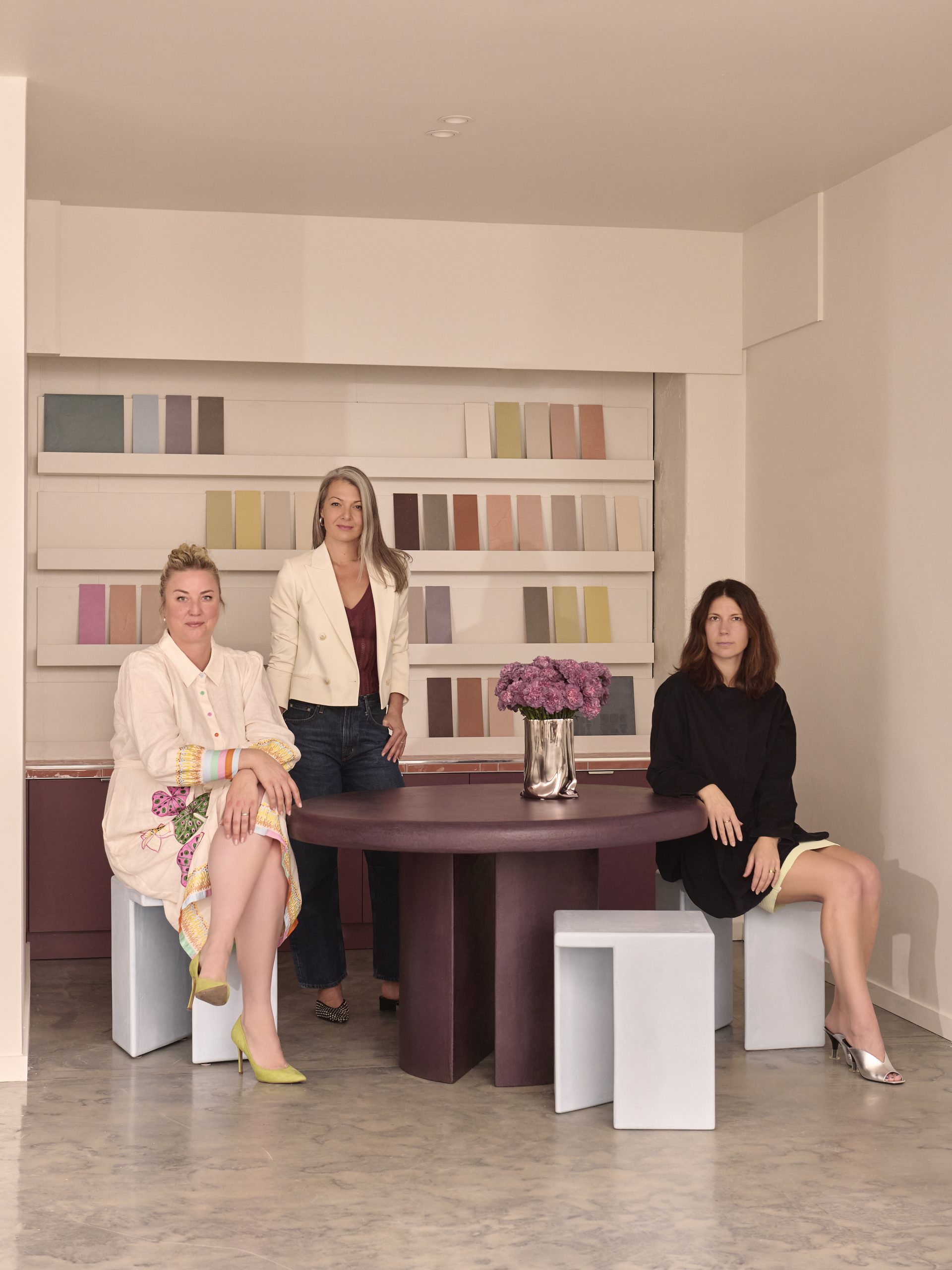
The studio grew from a convergence of talent rather than a clean slate. Kat Nitsou and creative director Imogene Pond brought long-standing experience designing bespoke pieces for a range of clients, shaping a design sensibility attuned to both form and functionality.
Director Maryke Bishop contributed the depth of her leadership at Bishop Master Finishes, a family business with more than three decades of experience producing rendered interiors for high end residential and hospitality projects, grounding the collaboration in craft expertise and material knowledge. As Bishop says, “We know that you can do a beautiful blue piece of furniture today and then a year later you want to change it to red. It ticked a lot of boxes in terms of sustainability and the beauty of it.”
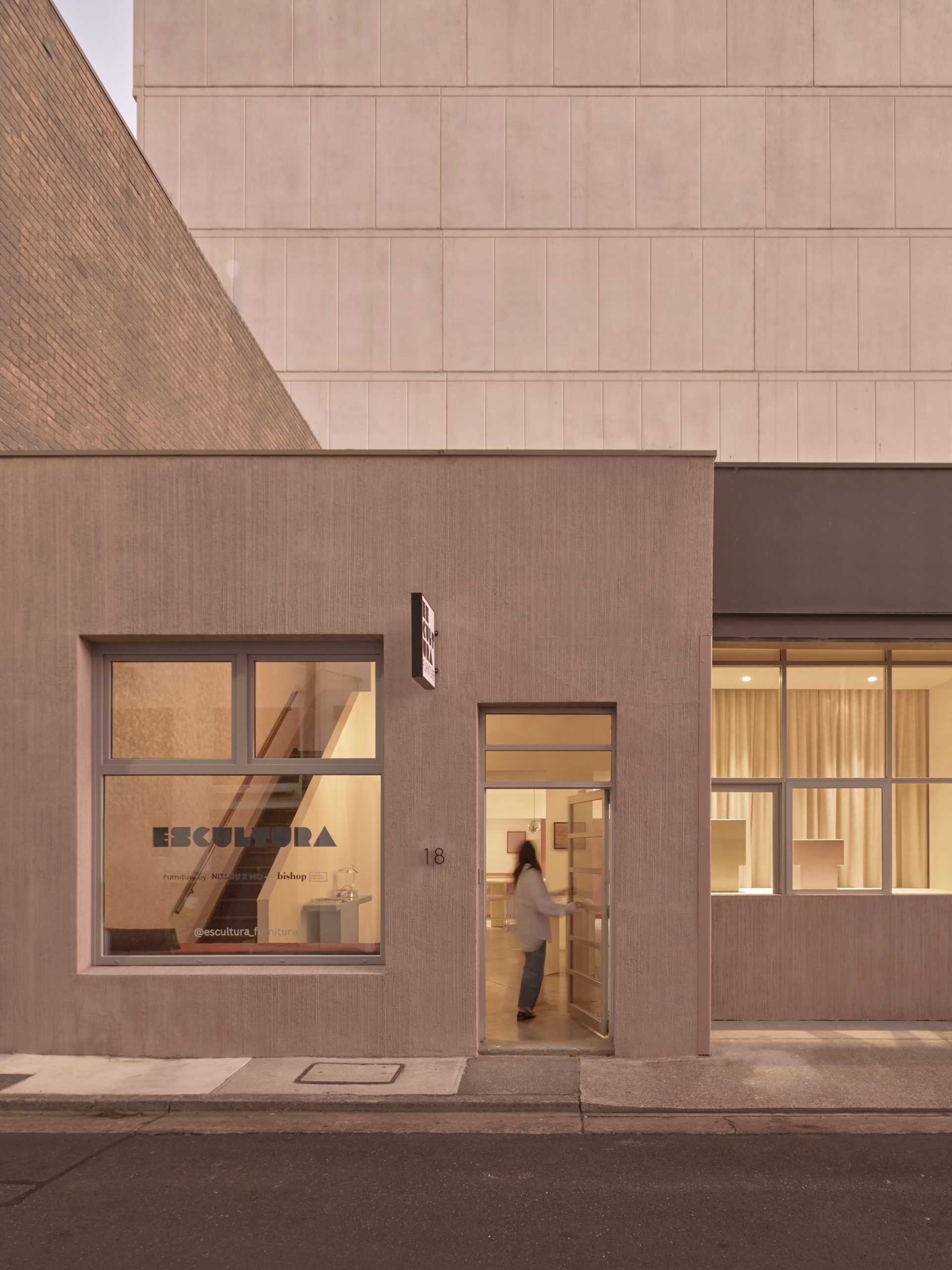
Their collaboration transpired during the design of Bishop’s own home, when a search for the right table revealed a gap between aesthetic ambition and material reality.
Nitsou recalls, “When Maryke did her private residence, we were challenged to find a table that suited the brief. We designed a substrate table for her and had her team render it. It was really successful, and we thought, ‘this is a thing we need to do’.”
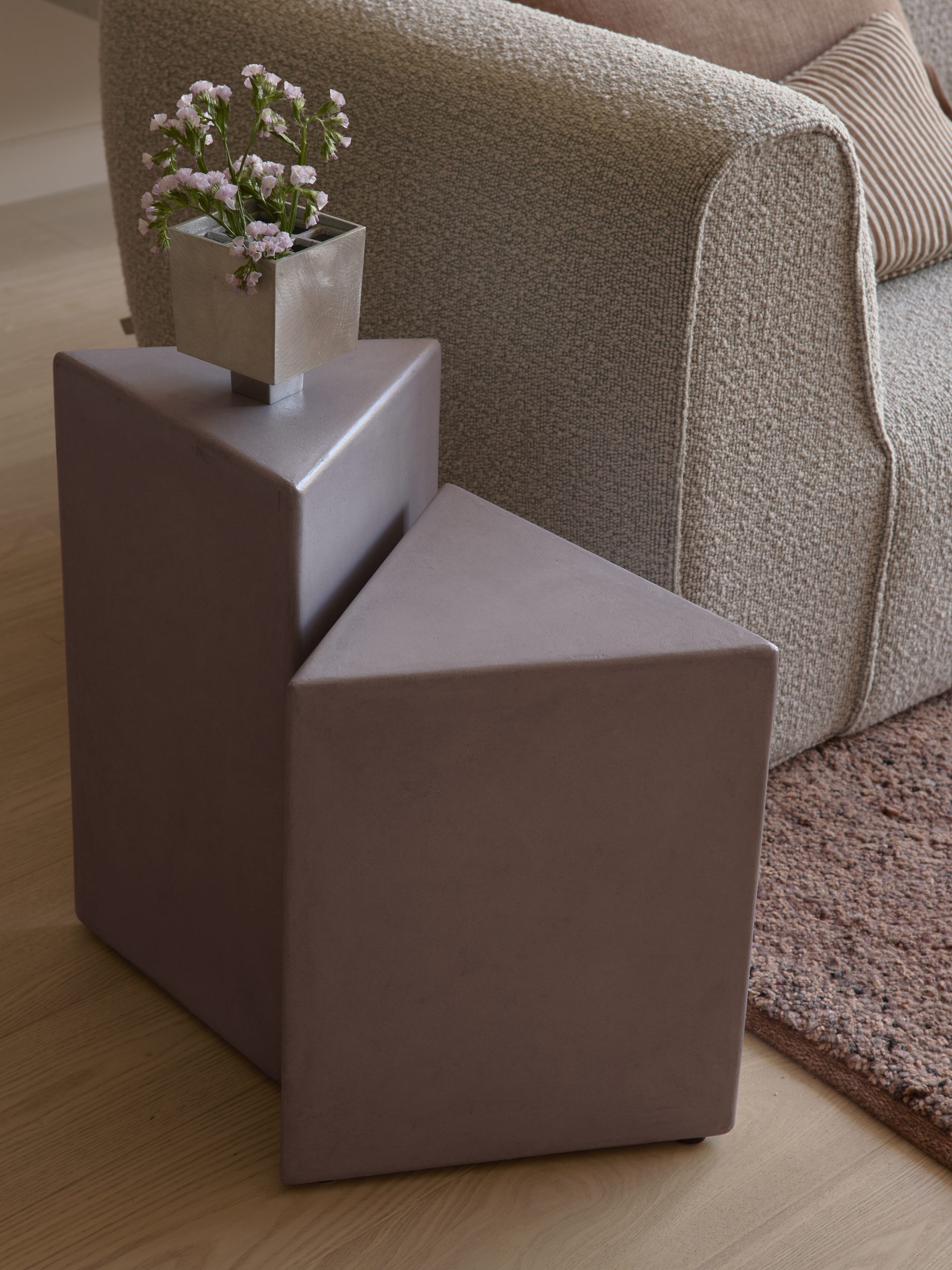
That success sparked a larger conversation, one that quickly became Escultura. Even the name Escultura reflects the trio’s ambition, merging the Spanish word for sculpture and the cultural lineage of rendered materials in Spanish architecture. “The design intent was really centred on creating pieces as liveable art, liveable sculpture. A table is a table, but there’s an opportunity to push the boundary and play with form,” Nitsou says.
Material intelligence as foundation
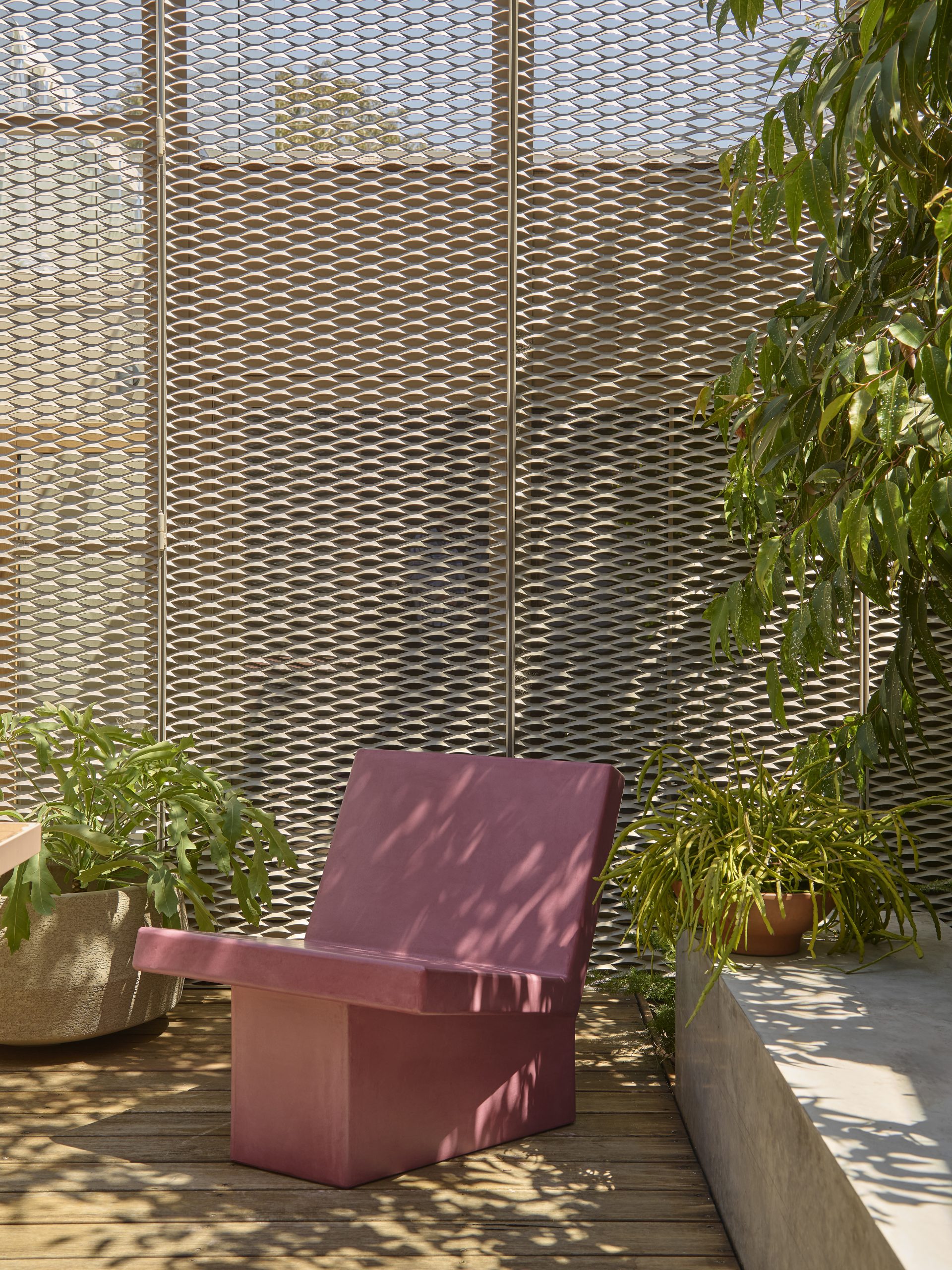
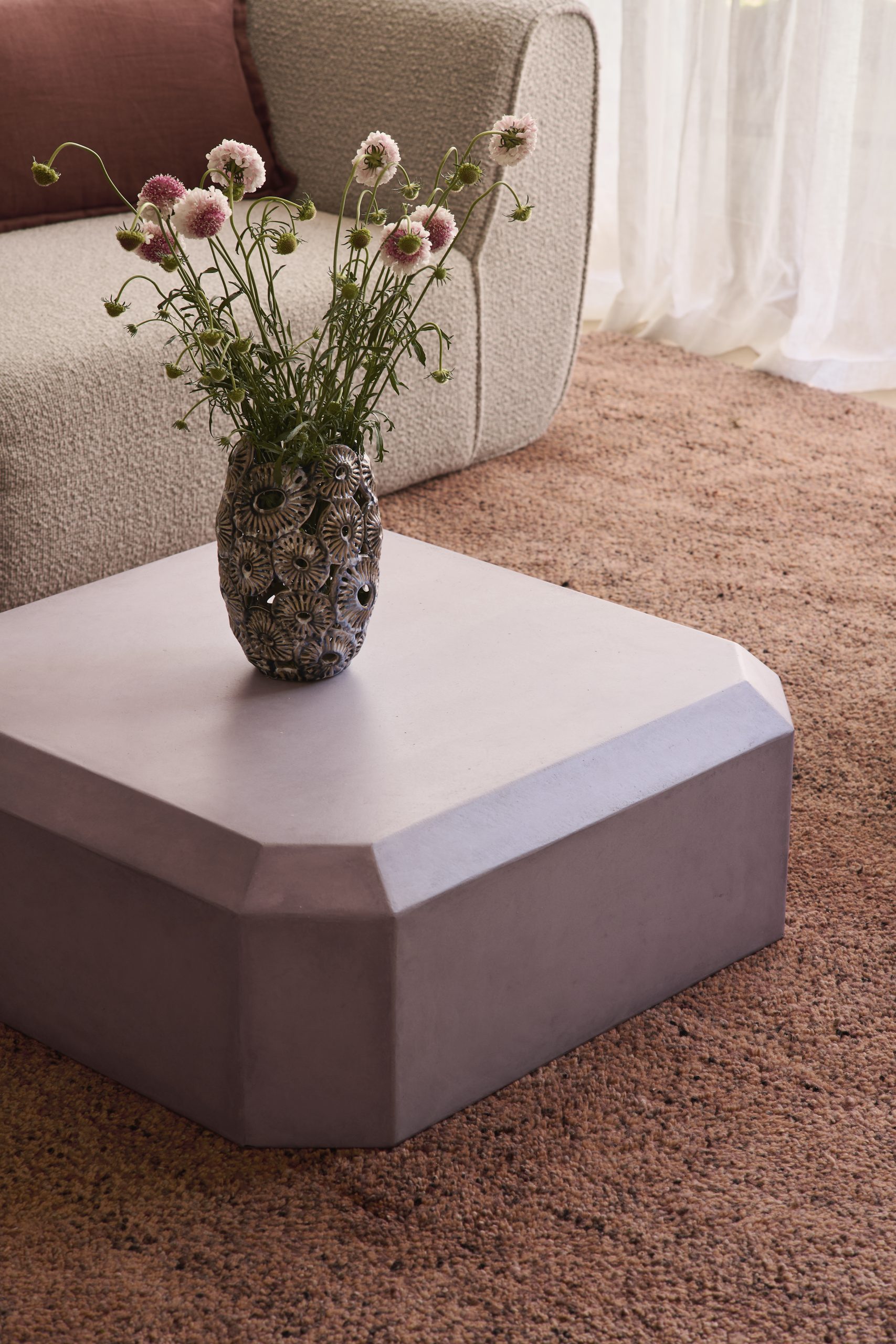
At the core of Escultura’s identity, materiality stands as a guiding form as much as it defines finish. The studio works primarily with a rendered material combining microcement and lime, chosen for its strength, flexibility and visual depth. “The material gives us a lot of flexibility to manipulate forms that you may not be able to achieve easily with other materials,” says Nitsou.
For Bishop, confidence comes from decades of experience: “We understand the product very deeply and have an understanding of how it can be manipulated and made more beautiful.” Each Escultura piece benefits from this knowledge, with finishes tinted by hand and applied by skilled artisans. “Just before Christmas, we did a side table and the client wanted more character than the sample. The skill of the person putting it on achieves the look the client envisioned,” Bishop adds.
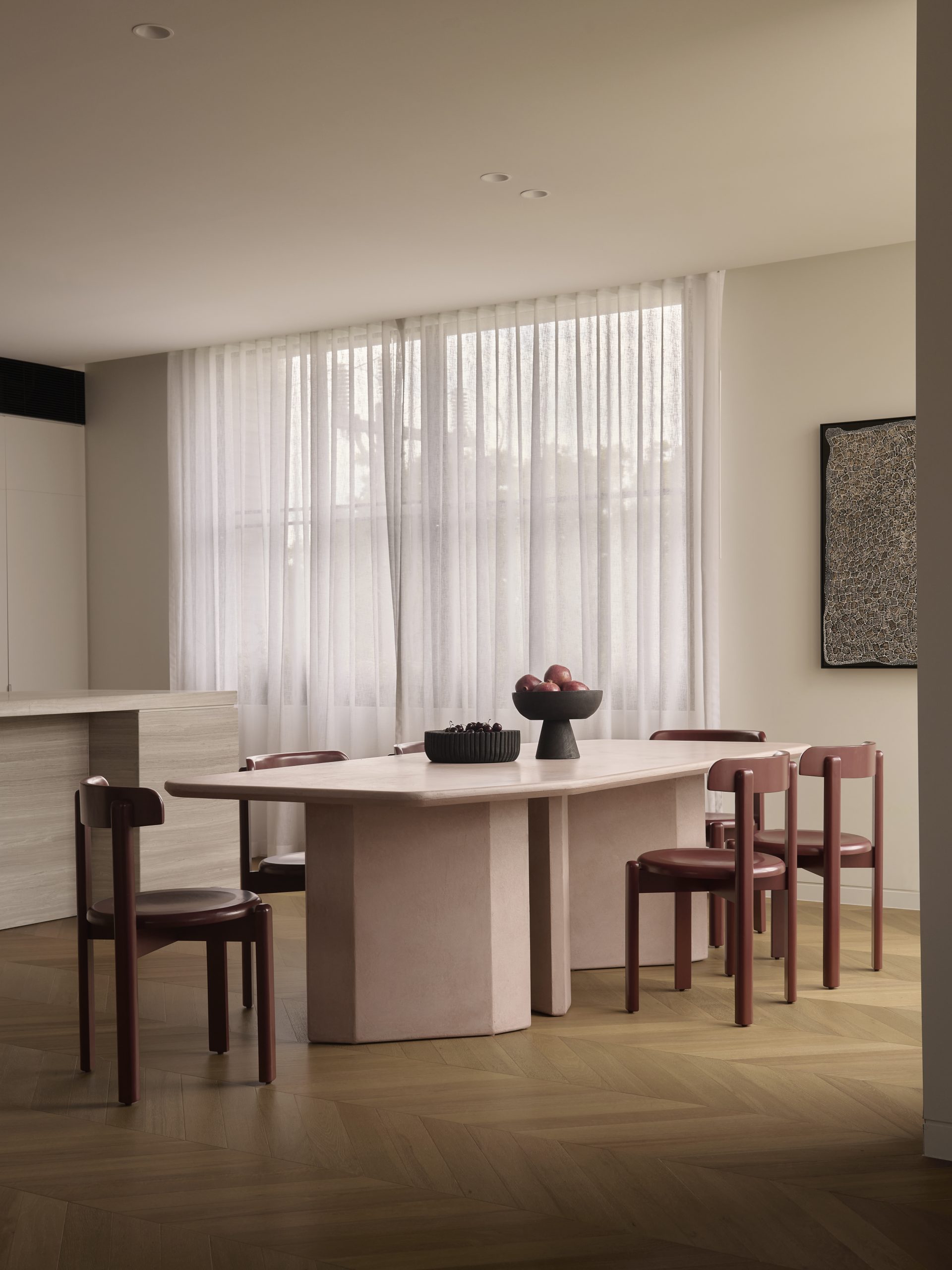
This approach extends to colour, which remains entirely customisable. Nitsou describes it as, “From black to white, anything in between. You can really explore colour and form, as long as it’s structurally stable.”
This capacity for renewal shapes the studio’s sustainability ethos, anchoring environmental intent in longevity and adaptability. All pieces are made to order, eliminating excess production and allowing precision at every stage. “We don’t hold stock, we’re not wasteful,” she adds. “Everything is made to order, so designers can come in with their own vision.”
Design authorship and collaboration
Design direction flows primarily through Nitsou, whose interior practice shaped Escultura’s commitment to flexibility. Years of specifying furniture revealed the limitations of fixed dimensions and finishes. “I wanted more control and more customisation for my clients,” she says.
Escultura welcomes designers into the process, whether adapting existing forms or developing entirely new ones, balancing ambition with stability and ergonomics. Pond ensures this openness remains disciplined. “While the possibilities remain broad,” Pond says,”the studio’s visual language stays tightly curated, and the forms celebrate the handcraftedness of the pieces.”
Nitsou notes that living with the furniture informs every decision. “We all have pieces in our own homes,” she says. “It’s a delight to live with them. You can take the coaster off the table, it’s fine. That durability supports freedom, allowing objects to host family gatherings and daily life without fear.” That lived experience anchors the studio’s ethos, ensuring beauty remains inseparable from use.
Positioning within Australian design
Escultura arrives at a moment when Australian design is focused on making, producing and presenting work that is local, traceable to its makers and truthful to its materials.
Directly polarised from long lead times and offshore production, the studio’s commitment to local making offers a pointed alternative. “It’s exciting for designers to come in,” Nitsou says. “They’re connected to the project, whatever it may be, and they can work with us on their vision.”

For Escultura, recognition arrived early, with the studio winning the Design Anthology Award within months of launching. Nitsous reflects, “Winning was a big surprise, especially being so new. It gives us street cred, validates what we’re doing and creates excitement around our work.”
But expansion remains measured, with new pieces emerging with intent, often as evolutions of existing forms. For the founders, scalability centres on training and collaboration, preserving integrity while meeting demand. In a design culture often pulled between pageantry and performance, Escultura offers a quieter proposition: furniture where sculptural presence coexists with everyday use, shaped by material understanding and shared authorship.
Images: Eve Wilson Photography

© Niche Media 2026