

RMIT University innovators nab national award for resurrecting coffee ground waste
RMIT University innovators nab national award for resurrecting coffee ground waste

Share
The university’s coffee concrete innovators have developed an ingenious decarbonising solution for the built environment that strengthens concrete by 30 percent by using biochar made from recycled coffee grounds.
RMIT University continues its reputation for delivering industry-leading sustainability innovations with the development of a coffee biochar that can replace sand in the creation of concrete.
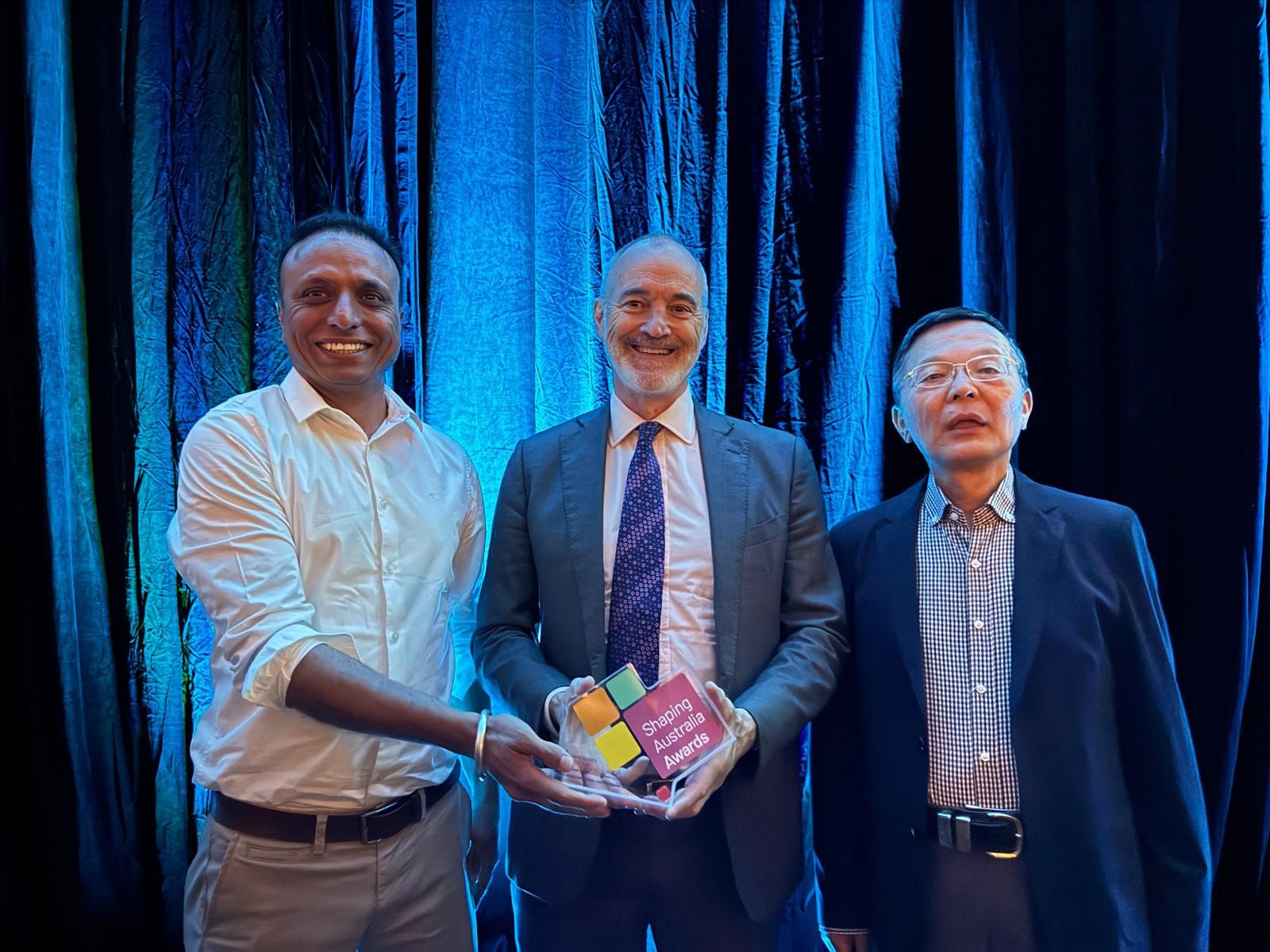
Dr Rajeev Roychand, Professor Jie Li, Associate Professor Shannon Kilmartin-Lynch, Dr Mohammad Saberian, Professor Guomin (Kevin) Zhang and Professor Chun Qing Li snagged the Problem Solver 2024 People’s Choice Winner award for their invention that fuses circular economy principles with waste reduction.
Roychand and Li accepted the award on behalf of the team at Parliament House in Canberra on 25 February and have since enjoyed global acclaim and celebration – coffee concrete has been profiled by The Washington Post, CNN and Reuters, alongside being endorsed by The World Economic Forum on social media.
Quotidian item may bolster built environment’s sustainability credentials
Startling statistics that Australia generates approximately 75,000 tonnes of ground coffee waste every year inspired the team to devise a solution that resurrects humble coffee grounds. The byproduct contributes to 6.87 million tonnes of organic waste in landfills, which accounts for three percent of Australia’s greenhouse gas emissions.
Additionally, the development responds to an evolving built environment appetite for sand, as global sand demand is expected to balloon by 45 percent over the next four decades. Dr Saberian says the team was driven to safeguard an abundant future for the critical mineral resource.
“We’re not only addressing waste management but also helping preserve this increasingly scarce natural resource that is vital for construction worldwide,” he says.
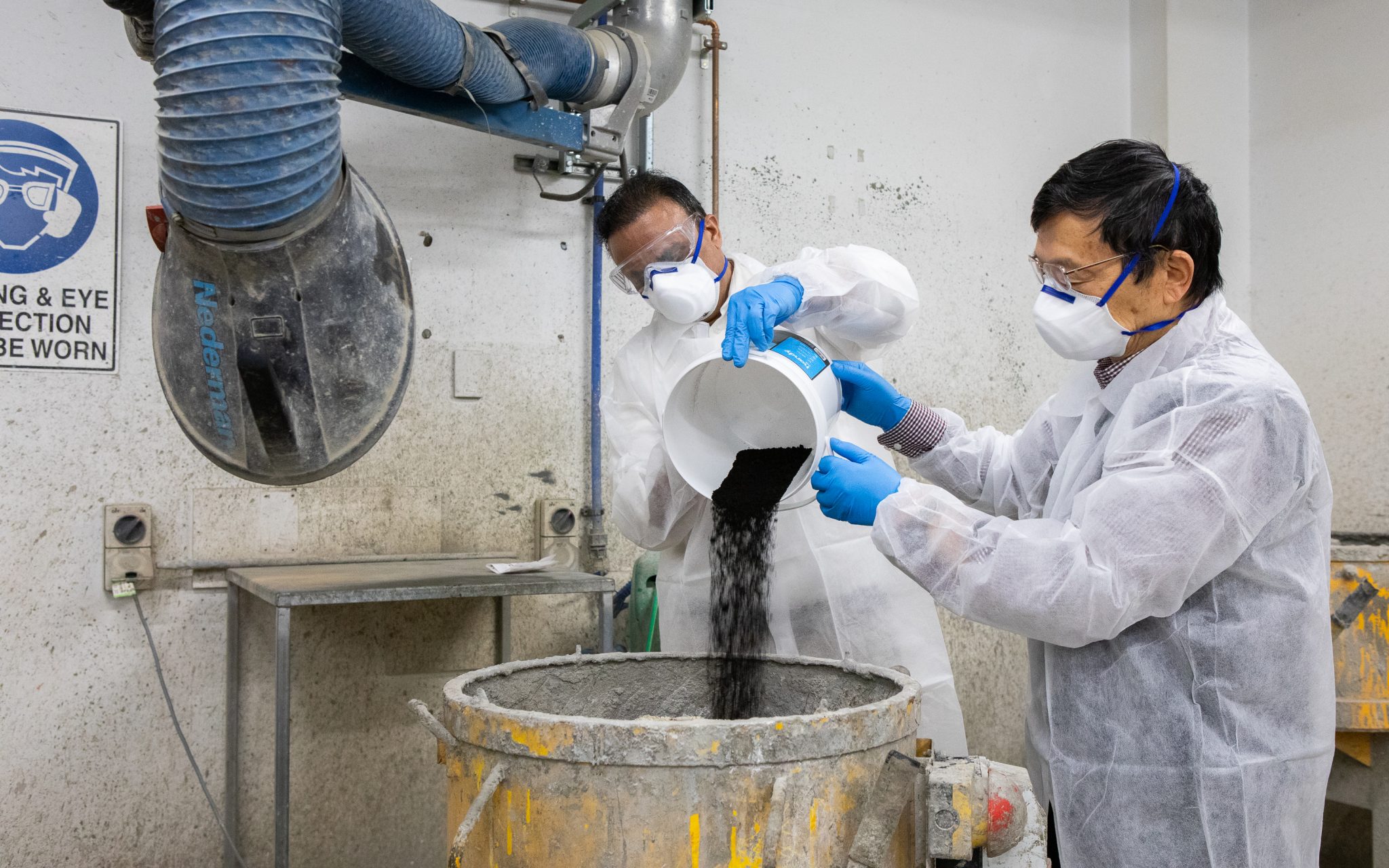
Dr Roychand says the team is honoured that their successful reimagining of everyday waste as a construction resource is receiving recognition.
“What began as research into coffee grounds has now evolved into a comprehensive program converting various types of organic waste into biochar that could help reshape the environmental footprint of the built environment,” he says.
Victoria’s Big Build Projects are already trialling the coffee concrete in projects and Germany’s Futurium museum is displaying the product as the exemplar of innovative sustainable materials.
Fusion of circular economy and advanced engineering
Professor Li says the team’s invention expands the limits of sustainable construction by transforming organic waste into high-performing construction materials.
“We can pioneer solutions for global environmental challenges,” he says.
Associate Professor Kilmartin-Lynch echoes Li’s belief in the power of solutions such as coffee concrete to elevate structural performance and slash carbon emissions.
“By integrating the circular economy with advanced materials engineering, we’re creating new pathways for reducing carbon emissions while enhancing structural performance,” he says.
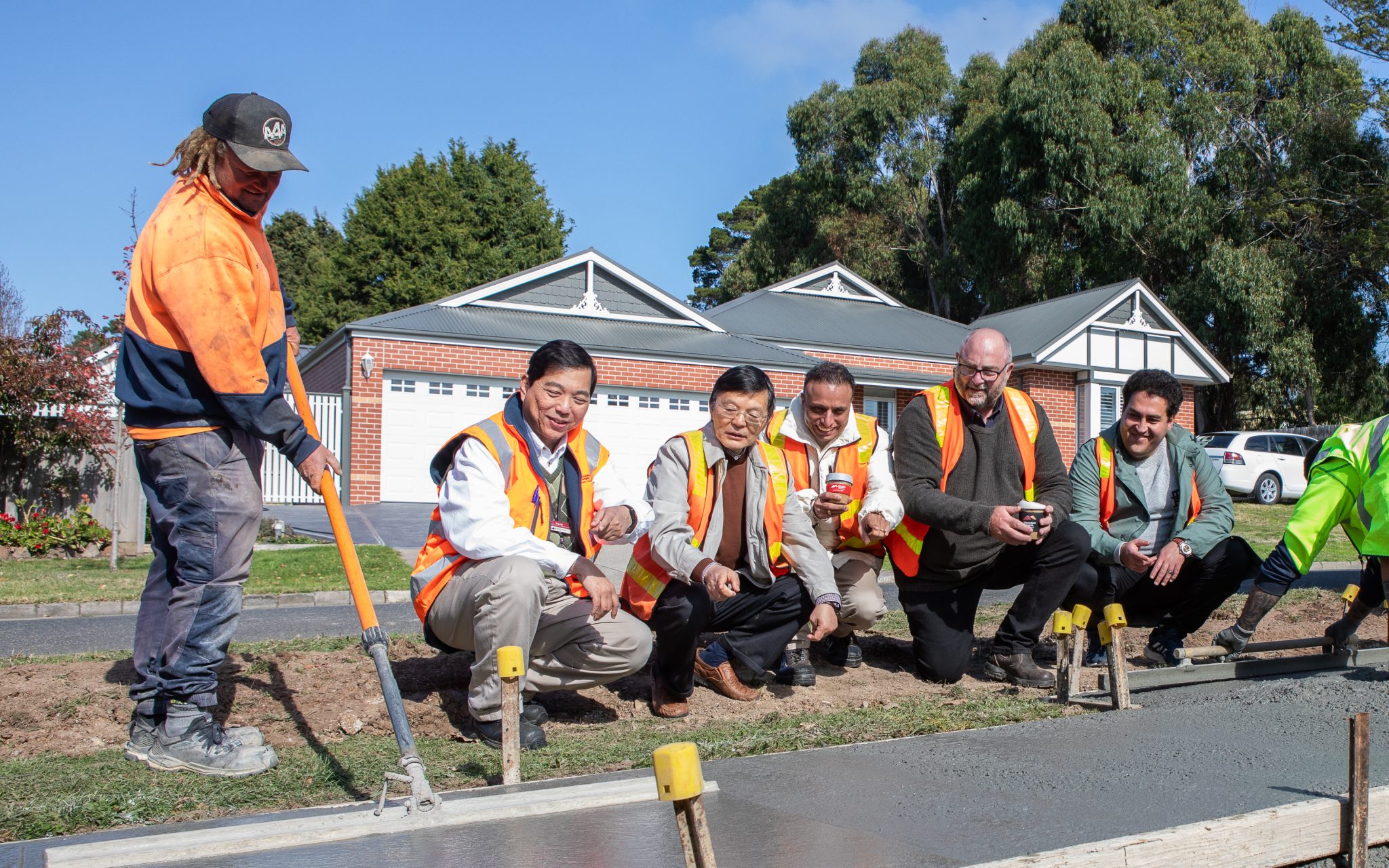

Team enters partnerships to commercialise innovative solution
RMIT’s partnership with Australian-based Ambiolock – committed to combatting PFAS contamination – and C-Green in Sweden marks a productive leap forward in advertising coffee concrete’s appeal to mainstream infrastructure as a low-carbon biochar-based material.
The university is collaborating with a partner to commercialise coffee concrete and forge relationships with key stakeholders and supply chain partners in the construction and agriculture industry.
“Winning this national award is an outstanding recognition of our vision to transform waste materials into valuable construction resources,” Roychand concludes.
Learn how Bankston and Sans-Arc Studio reimagine the rules of hardware design.

© Niche Media 2026