

The AIA launches ‘Walk Together: Design Guided by Country’
The AIA launches ‘Walk Together: Design Guided by Country’

Share
The Australian Institute of Architects (AIA) has launched a new guide titled Walk Together: Design Guided by Country. Freely available online, the document has been developed by the AIA First Nations Advisory Committee (FNAC) and Cultural Reference Panel as a resource specifically for the built environment industry.
The guide covers a range of areas, including communication protocols, relationship-building, Indigenous cultural and intellectual property, and funding models and procurement pathways specific to working with Country and First Nations Peoples. Focusing on processes and outcomes, the guide also directly addresses competency requirements set out in the National Standards of Competency for Architects 2021.
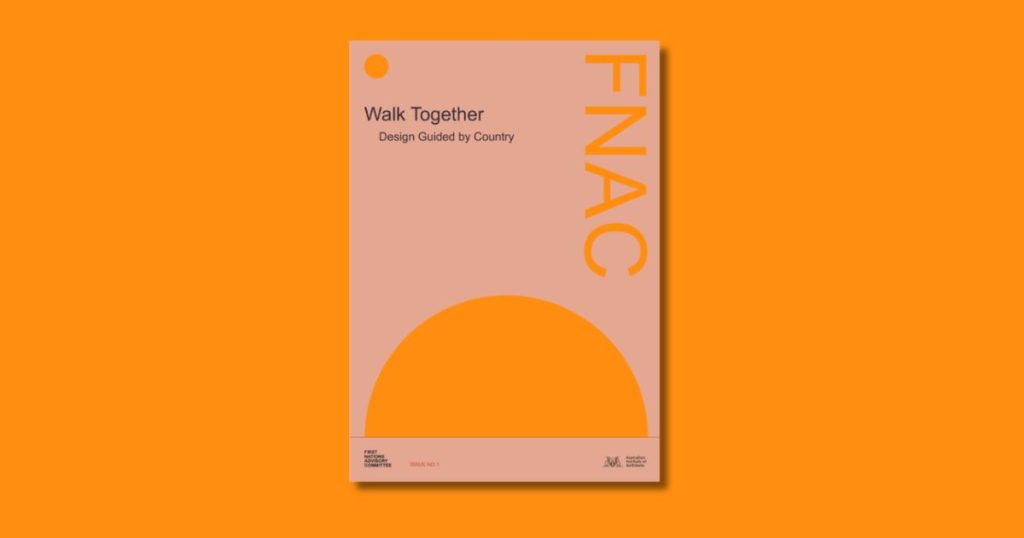
Born from a desire to meet people where they are, the guide is “based on the lived experience and professional practice of the committee [and panel] members, including engagement and consultation work,” says Associate Professor Michael Mossman (Kuku Yalanji), co-chair of the FNAC. He says the guide “consolidates thinking on strategic items” and invites the industry to “be guided by Country”.
Alongside guidance for design practice, the guide also outlines practical recommendations that prioritise the health and wellbeing of Country, respect for cultural authority, the protection and celebration of cultural heritage, and strengthening of First Nations communities’ capacity to continue caring for Country.
Designed to be a companion piece to existing legislation, policies, frameworks and guidance documents, the guide acknowledges that “architects are responsible for their own due diligence in the states, territories and local councils (First Nations and non-Indigenous) statutory and regulatory frameworks that they work within”.
Bridging a knowledge gap
Developed collaboratively over the last few years, Walk Together: Design Guided by Country responds to a knowledge and communication gap in Australia’s architecture industry. It states “architects cannot do this important work alone”, and that collaboration and collective responsibility are crucial for enacting meaningful change. Taking a relational approach, the guide strives for good intention over perfection.
Spearheaded by Mossman and co-chair Dr Shaneen Fantin, and authored by members of the AIA First Nations Advisory Committee and Cultural Reference Panel with Dr Danièle Hromek, founder and director of First Nations cultural design and research studio Djinjama, the guide advances the work of Indigenous Elders and Knowledge Holders, architects, designers, activists and academics.
Mossman says the guide is a baseline to extend discourse, supporting practising architects as well as graduates and students to champion culturally responsive approaches and design methodologies. “It’s an invitation to the broader design and built environment community, along with universities, allied professions and government to engage and learn.”
A call for action
By shaping the built environment, architects have a unique opportunity to champion necessary changes that support the aspirations of First Nations Peoples. As the guide states: “Architects, project teams and their clients design and plan future spaces and experiences. As part of their roles, they can advocate for respectful ways that are responsible and caring towards Country.”
The goal for the guide is to enhance visibility and empower architecture and design professionals to engage meaningfully with First Nations Peoples and Country throughout project lifecycles.
The guide is available on the AIA website.
Top image: Redfern Community Facility designed by Djinjama. Photo: Carlos Porras.
You Might also Like



Related Stories

© Niche Media 2026