

Emerging designer Nicholas Gilbert launches new practice Studio Nicholas
Emerging designer Nicholas Gilbert launches new practice Studio Nicholas

Share
Noosa-based creative Nicholas Gilbert has accomplished the impressive feat of becoming director of his own interior design practice at just 25. The ambitious designer has long held a passion for visual flair, rooted in his earlier fashion studies.
With a bachelor’s degree in interior architecture, combined with a worldview informed by extensive overseas travel, Studio Nicholas director Nicholas Gilbert brings an energetic outlook to the interior design industry.
In the early phases of operation, the Noosa-based practice undertakes projects in the residential, commercial and hospitality sectors. A core tenet of Studio Nicholas is the emphasis on precise, personal details.
With a commitment to client vision across every aspect of its design practice, Studio Nicholas strives to evoke emotion in every space while serving the functional requirements of the design brief.
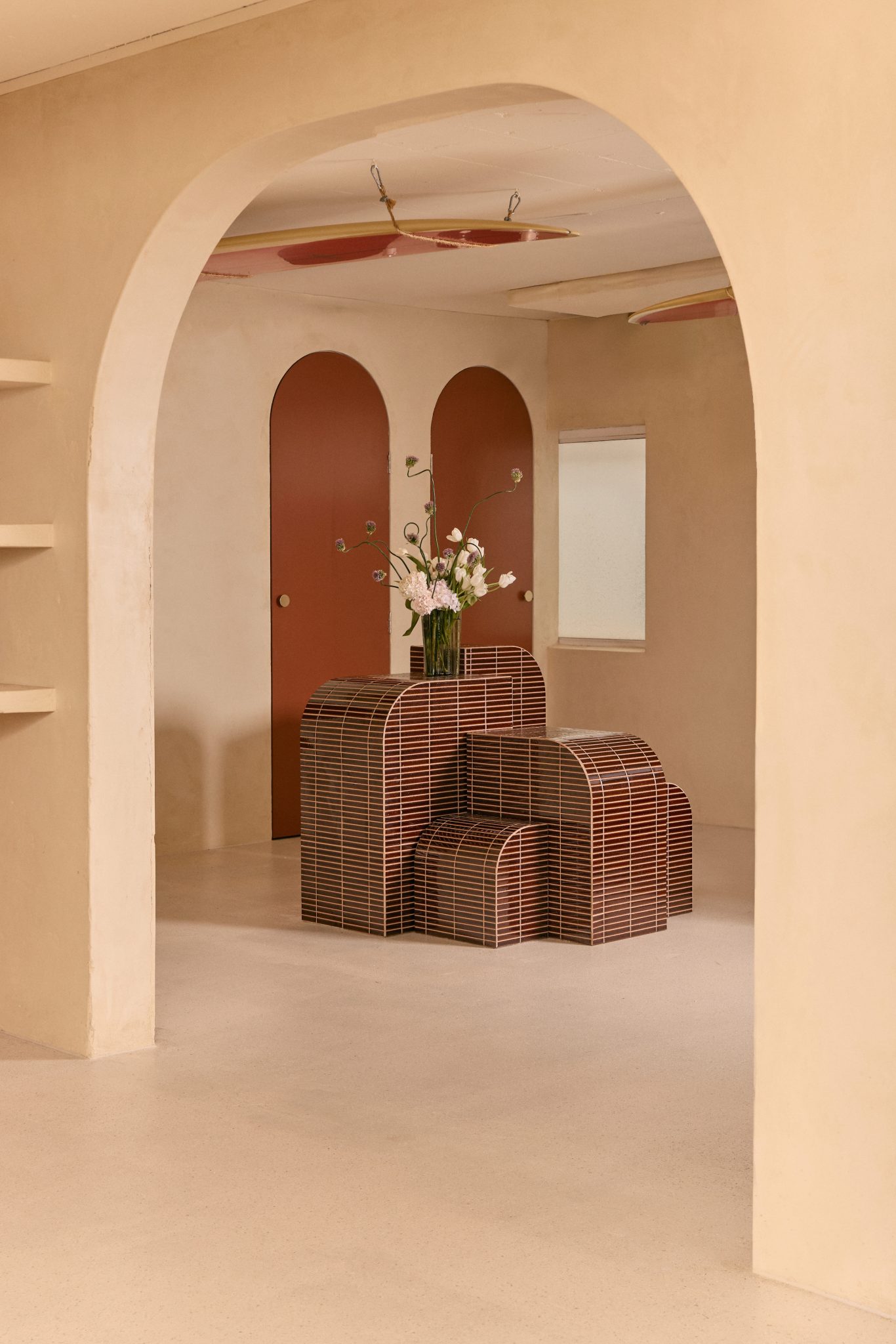
Studio Nicholas, Glass Project. Photo: Taylah Golden.
However, the 25-year-old did not always envisage a direct pathway into interior design. Like many things in life, it came about in an organic and unplanned way.
An early, crucial pivot
He had long been drawn to the discipline, but Gilbert’s passion for interior design was consolidated following his studies in creative direction for fashion at London College of Fashion (LCF).
His interest in interior design was first piqued by his parents’ own renovations and builds. “When I started [at LCF], I decided that that fashion direction really wasn’t the place that I wanted to go,” Gilbert recalls. “Interior design, and creating spaces that make people feel particular ways and serve different purposes, was the avenue that I wanted to take.”
This realisation triggered a pivot toward Curtin University, where he studied a Bachelor of Interior Architecture. Gilbert’s studies led him to CLO Studios, a designer furniture and luxury homewares retailer based in Noosa. It proved a fortuitous move for the aspiring designer.
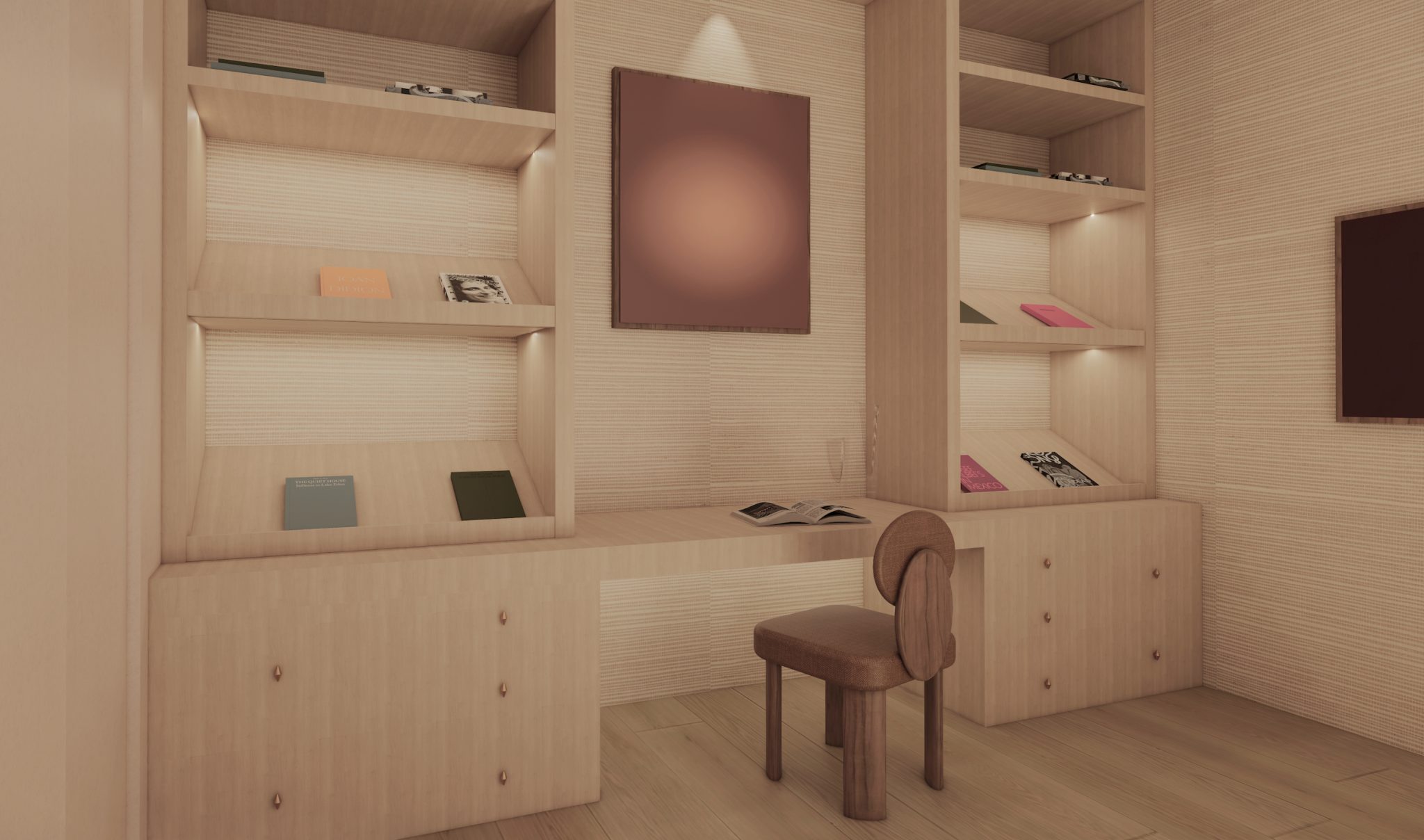
Studio Nicholas, Bronze Wing project – Office. Image supplied.
“The opportunities that arose let me create my unique identity within the industry, as well as serve the purposes of the client,” Gilbert says.
In the year since his time at CLO, Gilbert has been active across a number of residential and commercial projects. Yet these commitments have largely proceeded behind the scenes, with much of his energy being directed towards the launch of his own practice in August.
“I’ve got quite a high-end residential project finishing [in September], which features amazing designers from all over the globe, like Pierre Yovanovitch and people from Lisbon and the US,” he says. “It’s going to be a unique kind of home within the context of Victoria.”
A handful of commercial projects for office interiors are among Gilbert’s other responsibilities, all set to wrap up by the start of 2026. While they are a while away from completion, Gilbert says, “I think I’ve learned that the process is a little bit slow and you’ve got to take your time to develop those.”
Aesthetic principles driven by sensory experience
In describing the stylistic touchpoints of his personal design approach, Gilbert admits it’s hard to determine a single identifying factor. Instead, it relates to the individual client, ensuring the emotional and sensory experience they want within the space.
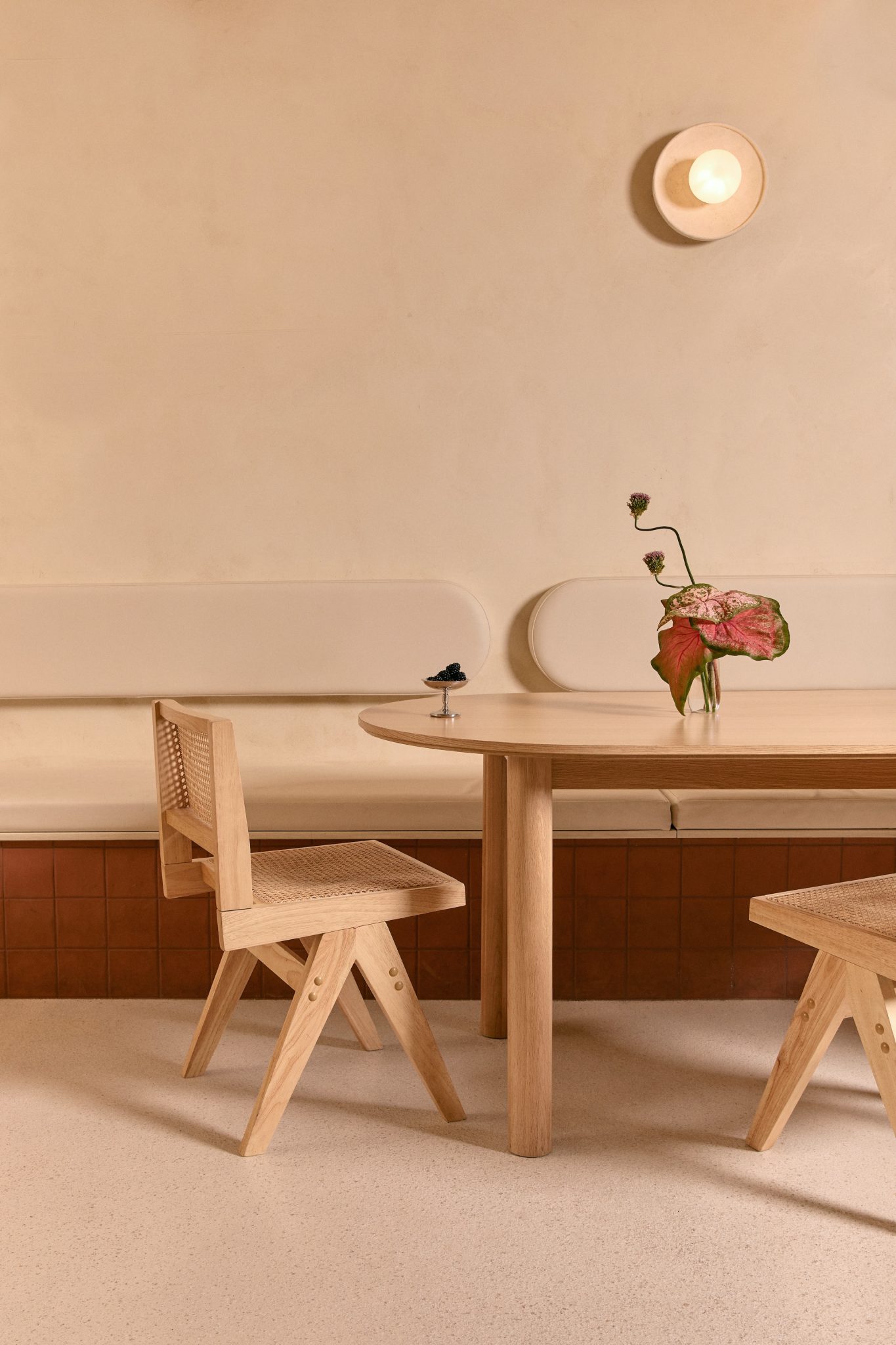
Studio Nicholas, Glass Project. Photo: Taylah Golden.
“But I like to inject all different eras and styles to make something that is cohesive, that works with delivering what the client requires,” he adds. “It leans towards a modern, contemporary design with that injection of a bit of vintage, to give it layers and depth within the room.”
The importance of sensory experiences will remain a key focus point for Studio Nicholas, particularly given Gilbert’s interest in hospitality venues where diners expect more than just delicious food.
“What’s elevating that food?” Gilbert asks. “Is it the sound within the space? Is it the scent? What are they touching? What kind of light is reflecting in that room?”
He underlines the theatrical elements of hospitality, highlighting the allowances that can be made in restaurants to introduce diners into a space. The atmosphere that is generated by these rituals – and how the space accommodates them – is ultimately what will enhance the food being served.
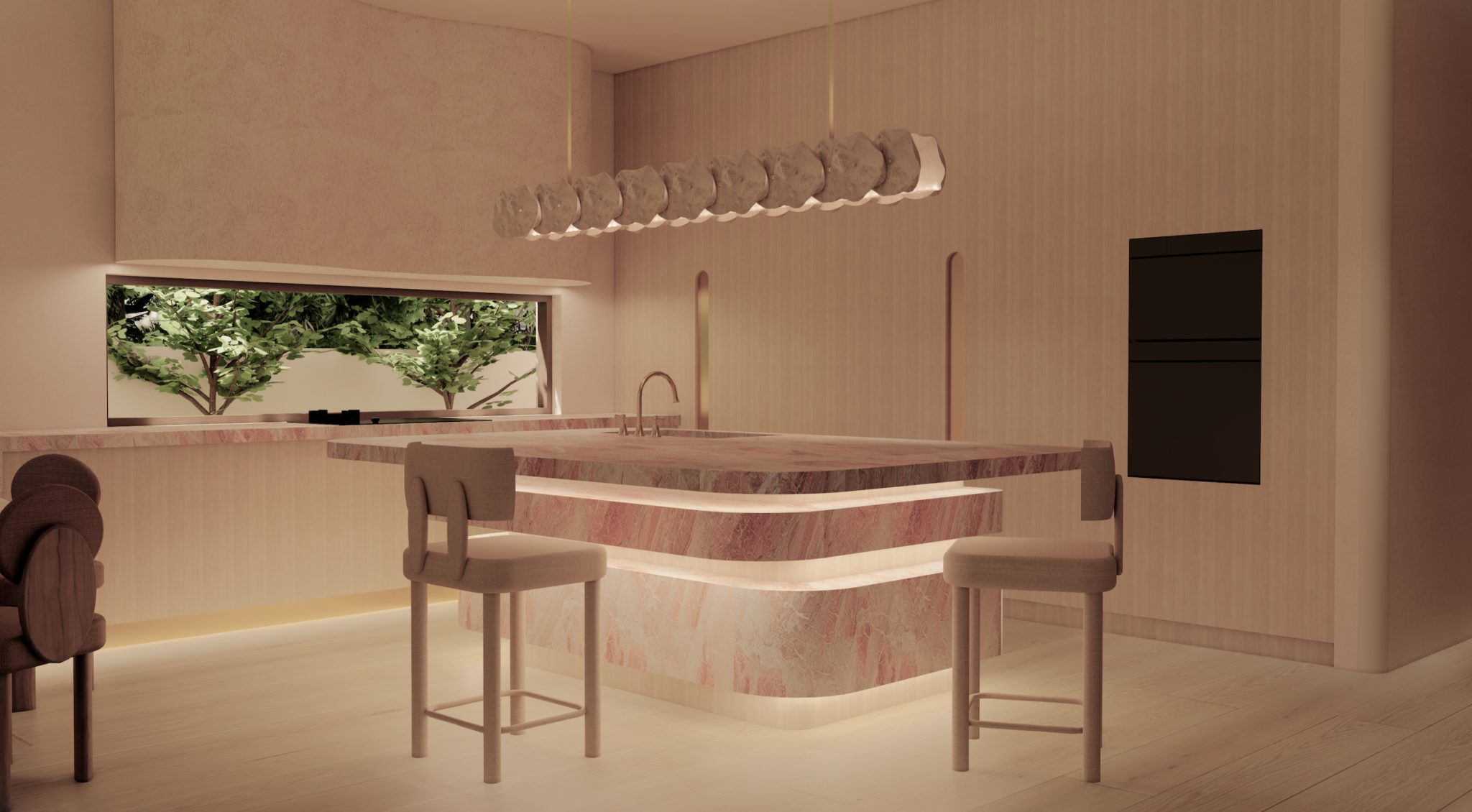

Studio Nicholas, Bronze Wing project – Kitchen. Image supplied.
“Hospitality is creating a space, reflecting what food [customers] are eating,” Gilbert says, “but ideally you want to make them forget where they are and enter the world of the restaurant. That creates the memorable experience that ultimately leaves a mark on them and makes them want to come back.”
Dining in a restaurant should be a form of escapism, Gilbert proposes. Social media, in particular, informs much of that escape from the more ordinary aspects of the Monday-to-Friday lifestyle.
What breaks that cycle is a finely tailored dining experience. “Hospitality venues can create that space,” Gilbert concludes. “Where [diners] feel they’re getting that escape – without having to be attached to their phone – is the end goal of a restaurant.”
Lead image of Nicholas Gilbert supplied.
Related: A Place in the Sun – Sunrise Studio by Noosa-based practice Bark Architects.

© Niche Media 2026