

Crafted Hardwoods × Jon Goulder – from conversation to centrepiece
Crafted Hardwoods × Jon Goulder – from conversation to centrepiece

Share
Most people, at some point in their work, know the particular satisfaction of a plan landing better than they’d hoped for. This is what that looked like, at 10 metres long, in the middle of Chapter House.
When Jon Goulder and Henry Williams were invited to create a work for Chapter House – the cavernous Melbourne venue opened for Melbourne Design Week 2026 in partnership with fashion label Alpha60 – the original plan was aerial. “We were originally going to hang some really massive parabolic sculptures through the ceiling, but then we were restricted by hanging points and heritage,” recalls Goulder. “At that point we panicked a little bit, to be honest!”
It’s a familiar moment for any designer: the original plan falls over and, somehow, a better one takes its place.
Aerial became grounded, in the form of a monumental hardwood table. Ten metres of it, resting on two monolithic feet, with a three-metre cantilever hanging free on either side.
At that size, there was no room for guesswork, and Goulder knew exactly who to call. Because behind the apparent boldness of that decision sits something quieter: a familiarity with a very particular material, and a genuine relationship with the small team who now makes it.
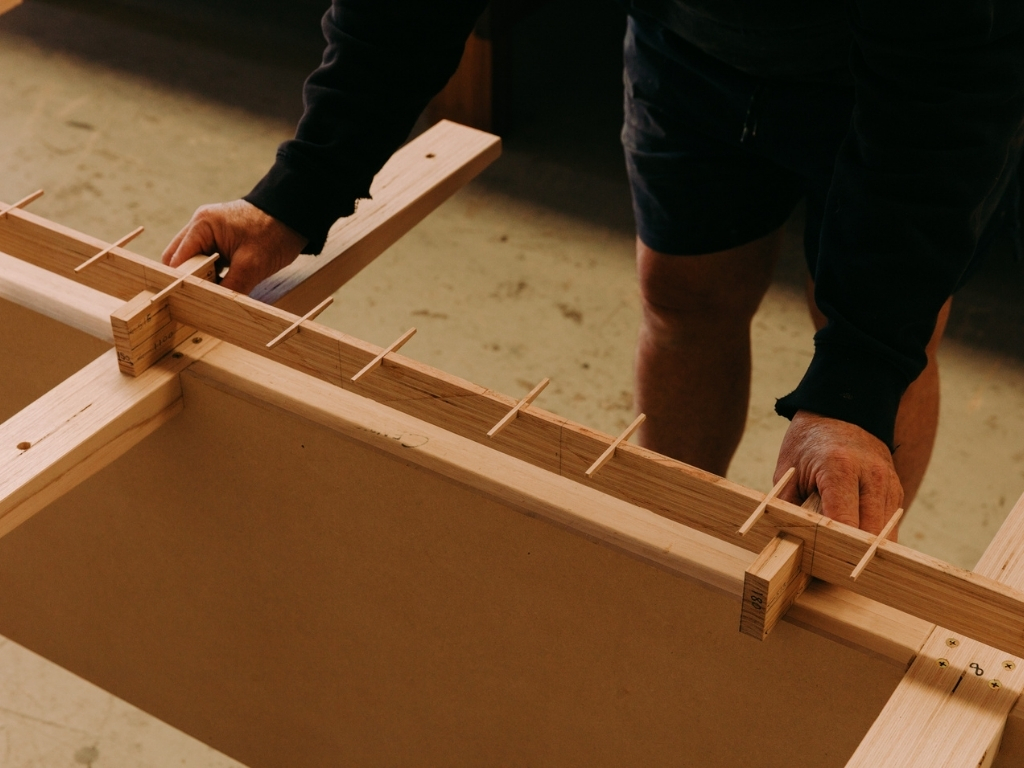
Goulder was senior designer at Snøhetta when he first came to know the engineered hardwood that Crafted Hardwoods now manufactures in Adelaide. “It’s a really, really good product,” says the designer. “I used it a lot at Snøhetta, so I got to understand the nature of it through that.”
Snøhetta is also where Goulder began collaborating with multidisciplinary designer Henry Williams. Goulder and Williams first toured the Adelaide factory not long after Crafted Hardwoods launched, guided by Darren Minto, client relationship manager. What started as a factory visit turned into a couple of years of returned calls, honest answers, and a standing invitation to come back and test whatever came to mind next.
“Jon has been talking to Darren ever since,” explains Williams. “We love the material. Jon has made benches with untrimmed block-ends, which showed the staggered veneers like a brush. We were excited by these artefacts of the material’s production – a material logic that bridged between the artisanal and the industrial.”
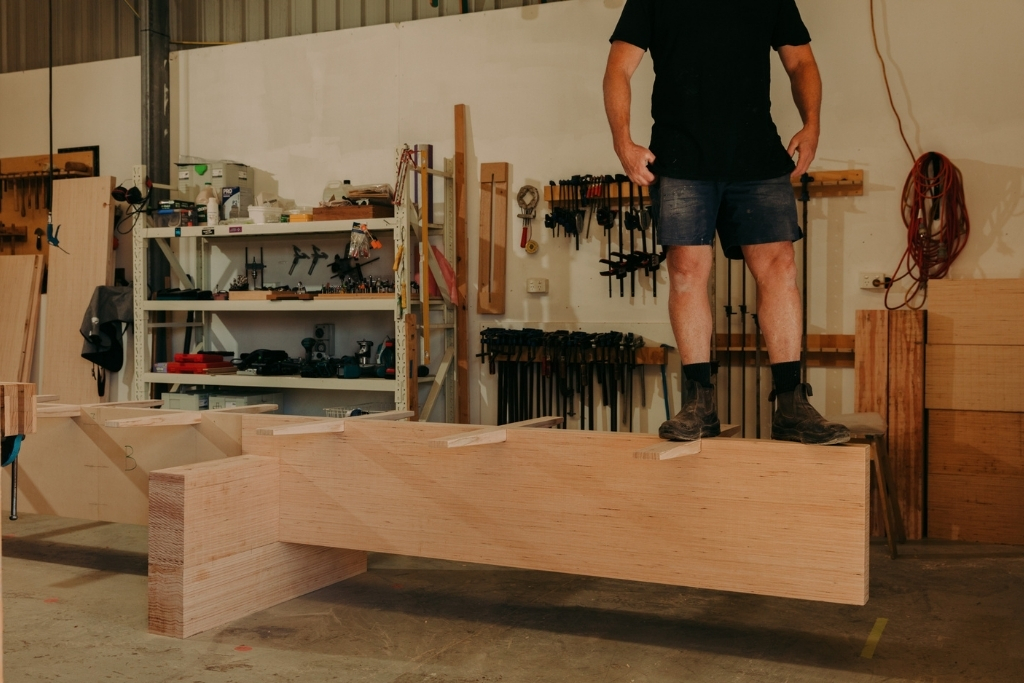
By the time Goulder and Williams were asked to fill Chapter House, the material wasn’t new to them, and neither was what they wanted to achieve – only the scale was. “Henry and I had worked previously on similar table designs,” Goulder recalls. “We wanted to build something that showcased how Crafted Hardwoods could be applied. I think products like this often go into building applications like stair treads or posts, but we wanted to make a really beautiful fine piece of furniture. We think it has massive potential through the design and architecture industries.”
For Minto, this was the challenge he’d been waiting for. “What I’ve always said to Jon is that we create this unique material in unique proportions. A lot of our work is conventional, but I think we can throw down the gauntlet and design something that can’t be done in any other material.”
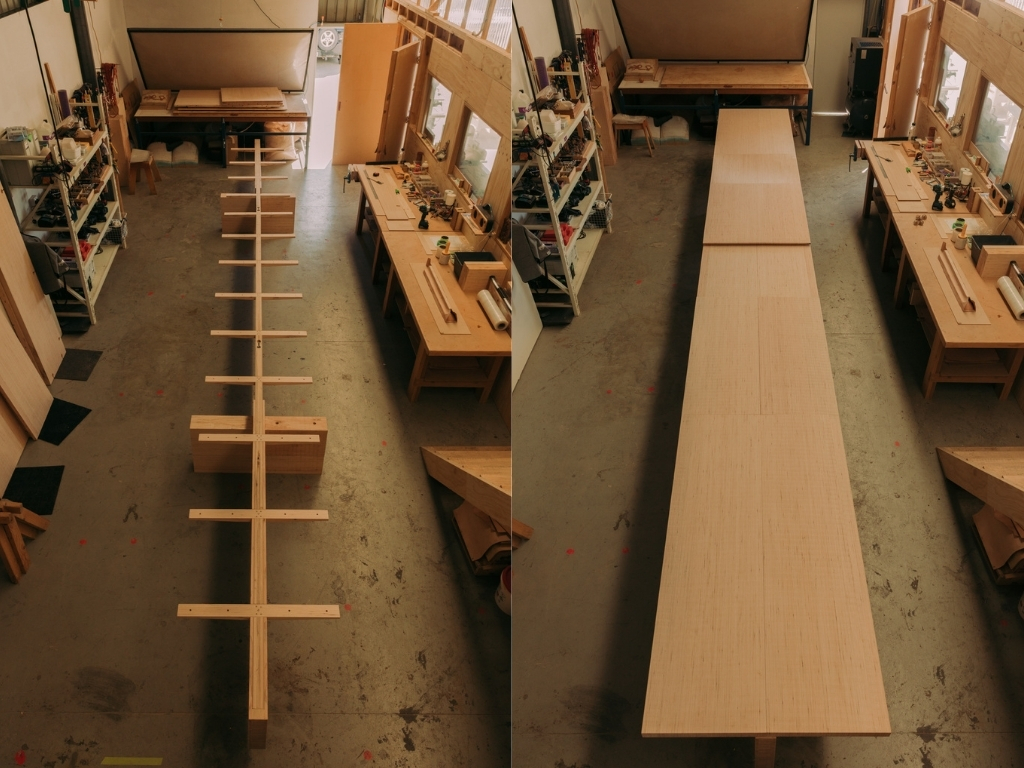
The properties of Crafted Hardwoods
But what is it about this material specifically that made it the choice?
“To build a table of this scale out of solid timber, you’d never get the stability. It would move too much,” explains Goulder. “So we needed a material that was very stable. So, yes, Crafted Hardwoods was the ideal material.”
Williams elaborates: “We needed a lot of material for such an ambitious piece and I’m not sure we could have justified building it from conventional timber. We have an obligation to use the material responsibly, as every designer does on every project.” That responsibility shaped the design itself – the table was drawn to the dimensions of Crafted Hardwoods’ billets, not the other way around, leaving exceptionally little wasted material.
It’s the same obligation Crafted Hardwoods holds itself to, further up the chain, before a billet ever reaches a workshop. The company gives overlooked timber somewhere to go, through a process that upcycles lower-grade logs into high-quality material for architecture and design. The process starts with rotary peeling rather than sawing, recovering roughly twice as much usable material from each log. For designers working to the same standard, that means starting with a material that’s already made the responsible choice, before the design ever begins.
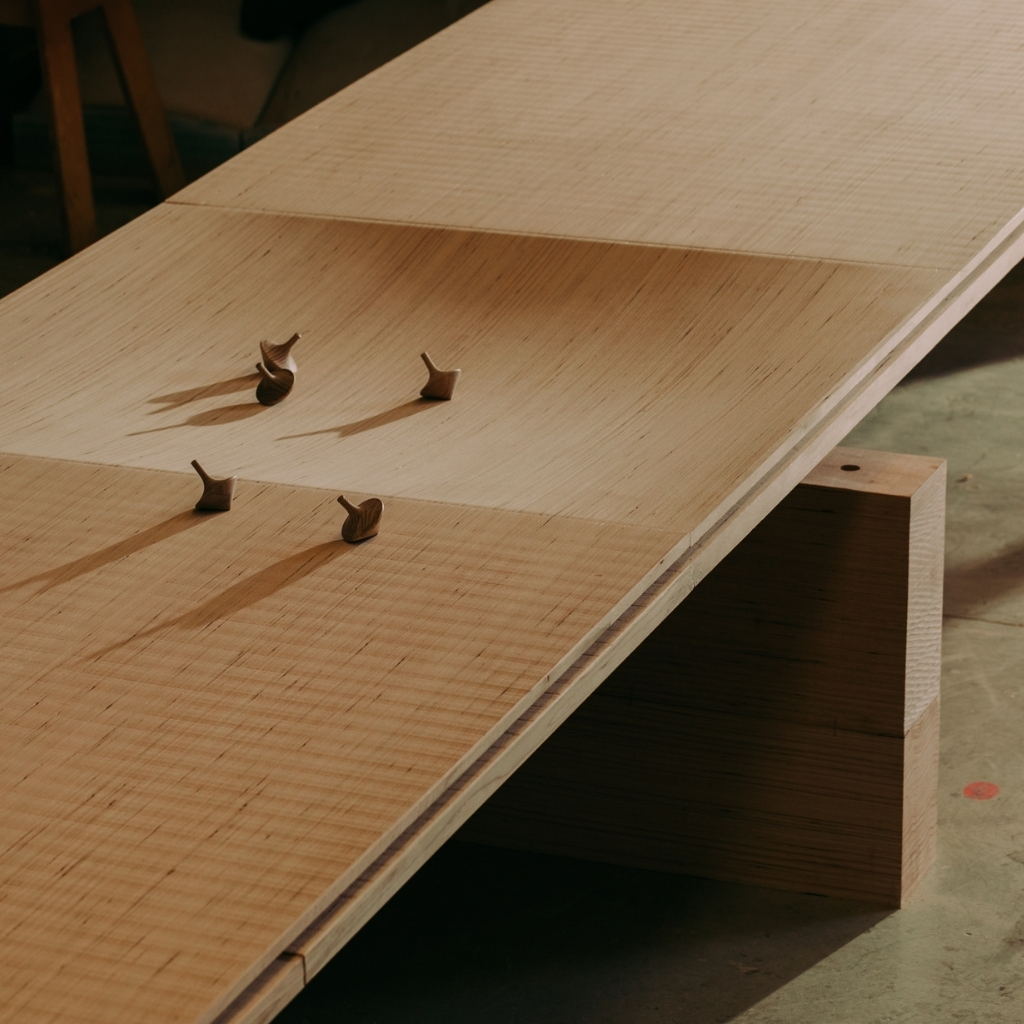
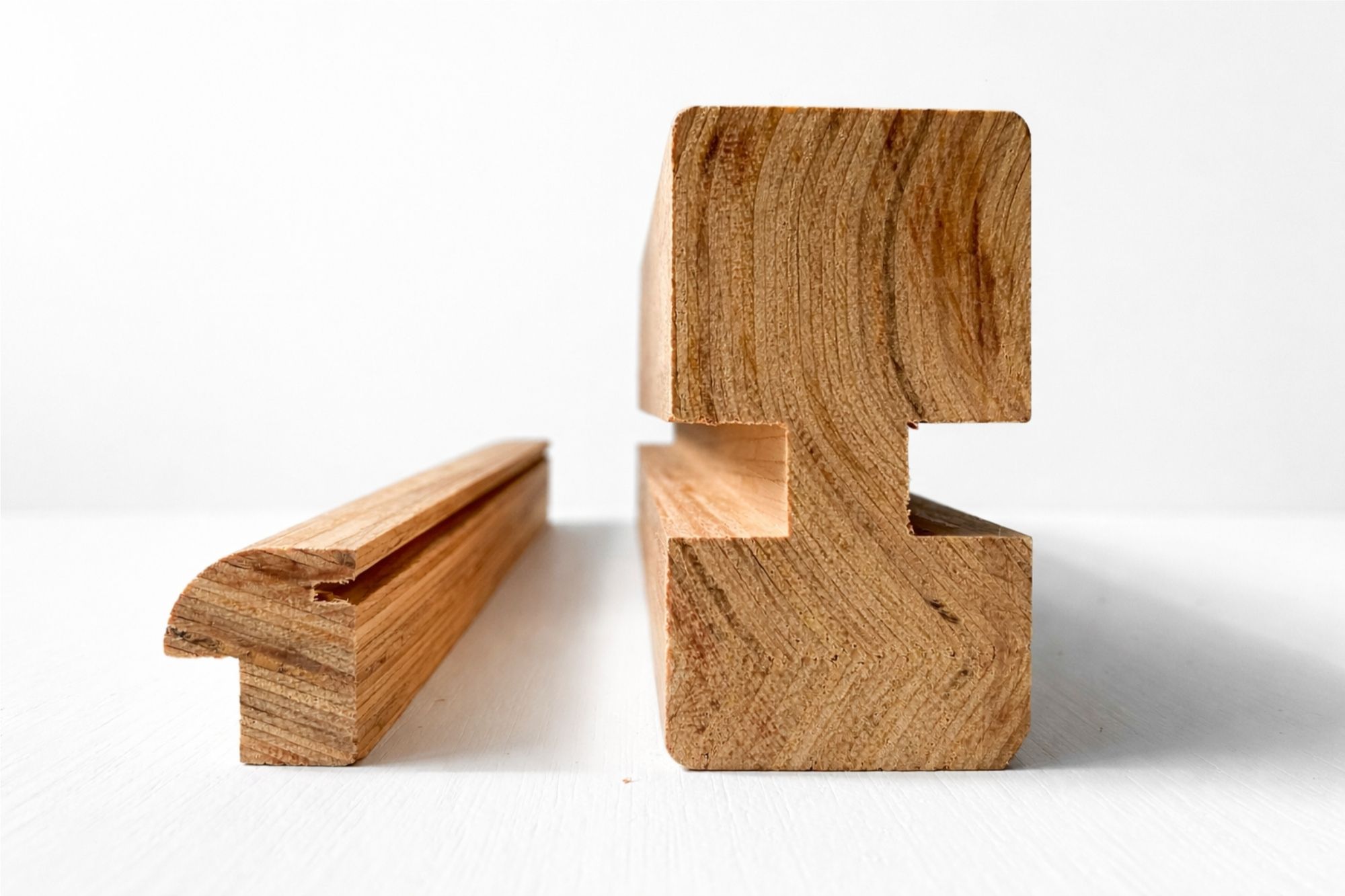
The process gives the material its character. Three hundred-odd veneers, stacked and pressed into a single billet. Veneers, to most, mean a decorative surface. Here, it’s the whole structure. “Our material is solid engineered hardwood, made from veneers. You can cut it, machine it, join it anywhere in the section, it’s hardwood all the way,” explains Minto.
For Williams, that’s where it gets interesting. “The manufacturing process introduces visual, tactile and structural traits that are quite different from traditional sawn wood,” he says.
“We loved the counterintuitiveness of a raw, seemingly natural, industrially manufactured material. This counterintuitiveness became a theme that threaded through many aspects of the design. It sustains many contrasts and tensions, between craft and industry, the raw and the refined, the continuous and the composite, the rectilinear and the sensual.
“The grain in the material comes from the lamination of veneers rather than the growth patterns and fibrous structure of natural wood,” continues Williams. “As a designer, this combination of the sensory qualities of natural wood, with the consistency of an industrial process creates many possibilities. Foremost, there’s the ability to join it together to create large blocks and panels that have a monolithic quality, quite unlike those made from natural wood. Second, the block dimensions allow for huge section sizes that are not readily available with natural timber. The table was supported on two monolithic blocks that quite simply could not have been produced as single pieces of natural wood – at least not from sustainable forestry.”
And in the room?
For the Intersection table, the results were profound. “Nothing prepares you for seeing it in person. We were all a bit taken aback by the piece,” says Williams. “None of us had seen anything like it before. Yes, it’s a table, but it makes more sense to think about it as something that generates the space around, above and below it. It changes the way light and sound behave, and it influences how people move and interact with one another.”
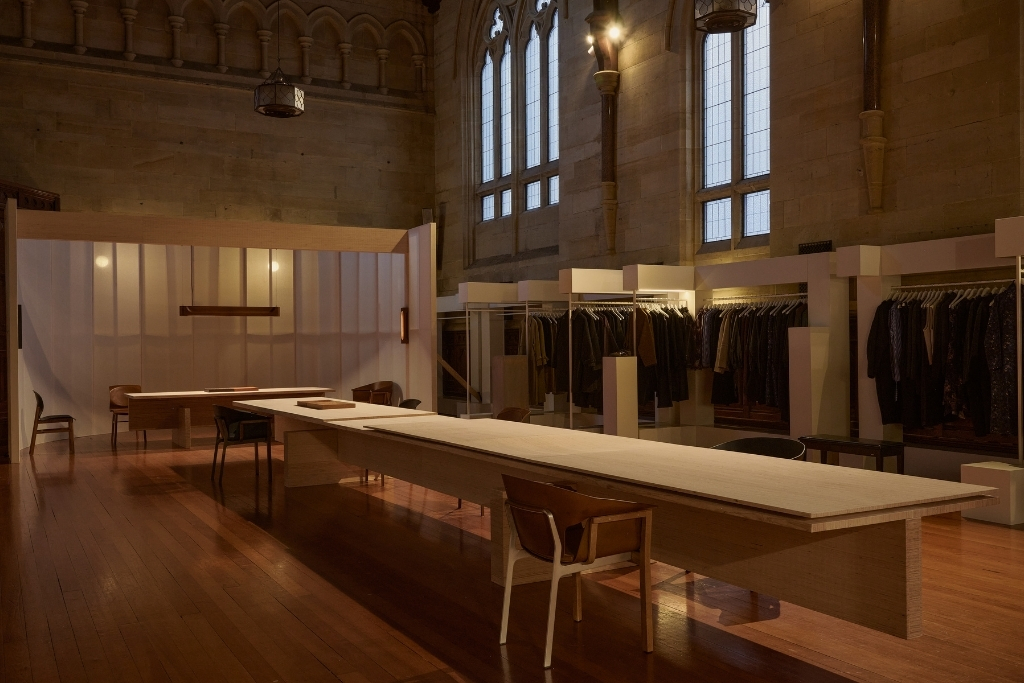
The Intersection table stood at Chapter House for 10 days, at the centre of the presentation for which Goulder would receive the 2026 Melbourne Design Week Award. But what made it possible had been building for years, and the conversations it produced show no sign of stopping.
See more of what Crafted Hardwoods makes possible at craftedhardwoods.com.
You Might also Like




Related Stories

© Niche Media 2026