

A juxtaposition of spirit

Share
Two neighbouring Ballarat penthouses by Studio Nicholas explore how shared values can give rise to distinctly personal interiors shaped by family, craft and quiet confidence.
Designing two neighbouring penthouses for members of the same family presents a particular kind of intimacy, one that asks for alignment without repetition and cohesion without compromise, and for Nicholas Gilbert the solution began not with drawings but with conversation.
The early phase of the Ballarat project unfolded as a collaborative workshop, bringing all family members together to map out preferences, boundaries and everyday needs.
“We found conjoining likes that could work to create a cohesion between the two,” Gilbert explains, “but they were both very much individual in their tastes and what needed to be comfortable and practical.” That balance became the project’s anchor, with comfort and usability treated as non-negotiable foundations rather than constraints on ambition. “The design should not exclude comfort and practicality,” Gilbert adds. “It still needs to be beautiful for both apartments.”
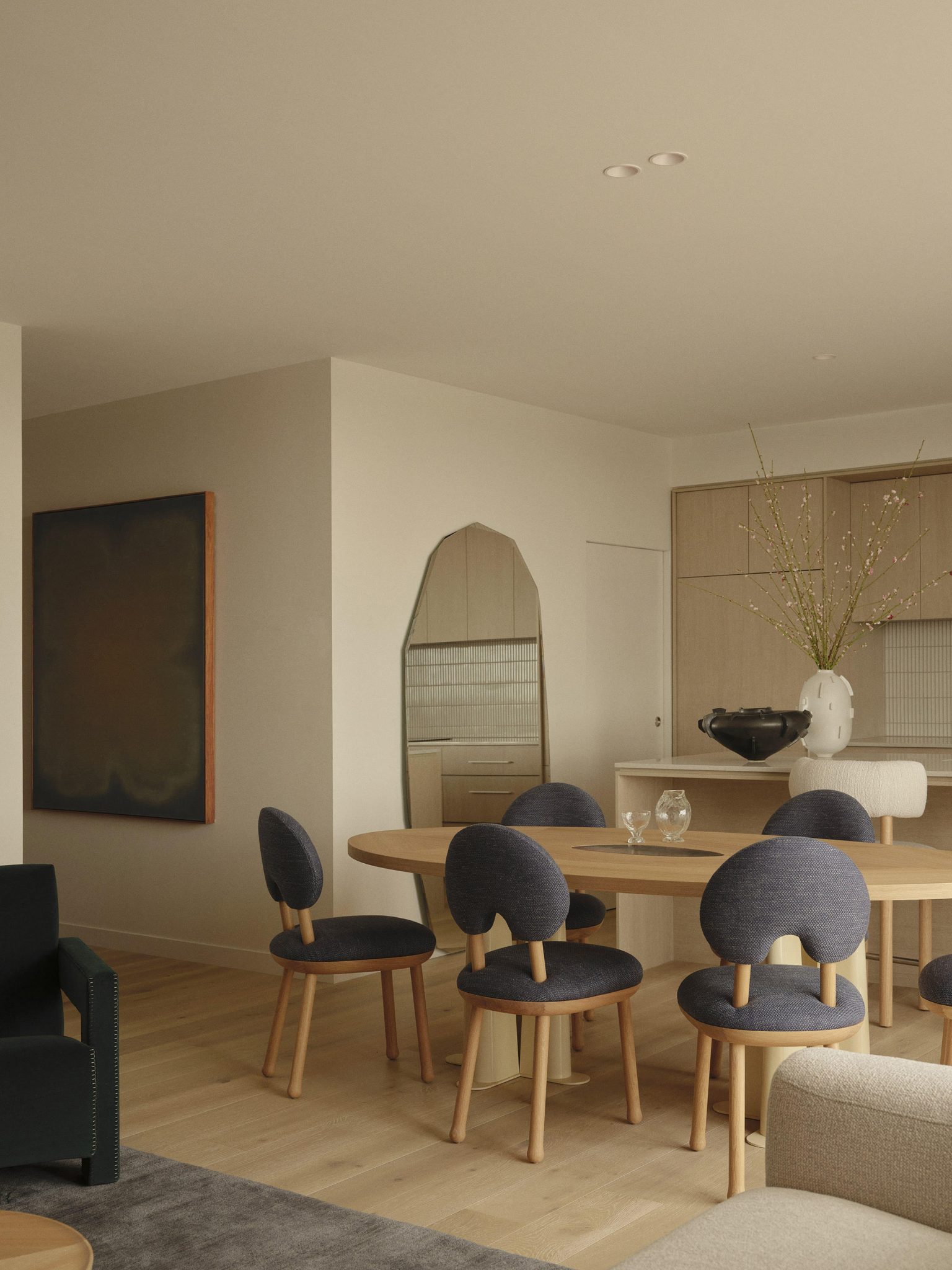
From the outset, Studio Nicholas approached the penthouses as related yet autonomous environments, shaped by shared sensibility rather than mirrored outcomes. The intent was never to create twins, but to allow a common design language to flex in response to how each home would be lived in. This approach allowed intimacy to sit alongside independence, with the interiors speaking to one another through tone and material rather than overt symmetry.
Atmosphere as architecture
Although the apartments sit side by side within the same building, their emotional register shifts markedly from one threshold to the next, with colour and spatial purpose guiding the experience. In one penthouse, a restrained palette of blues layered with moments of green defines the main living spaces, chosen to foster calm and continuity between kitchen, dining and lounge.
“That is a quiet tranquil space for everyday living,” Gilbert says, describing it as intentionally softened and composed. In contrast, a dedicated bar lounge introduces a deeper register, one that leans into richness and mood to create a sense of occasion within the home. “It creates more boldness and an elevated experience,” he explains, allowing the interior to shift character depending on use and time of day.
These tonal decisions operate as spatial cues, marking transitions between social and private modes of living. The second apartment responds differently again, shaped by an alternative layout and rhythm yet tethered to the same underlying values. Rather than enforcing uniformity, Studio Nicholas has allowed atmosphere to emerge room by room, ensuring each penthouse carries its own narrative while remaining part of a broader dialogue.
Furniture with memory and meaning
That dialogue is most clearly articulated through furniture, with Studio Nicholas collaborating closely with Mobilia and Criteria Collection to source and customise pieces that bridge collectible design and contemporary classics. The selection process unfolded through in-person visits to Melbourne showrooms, where clients were encouraged to sit, touch and engage with each piece.
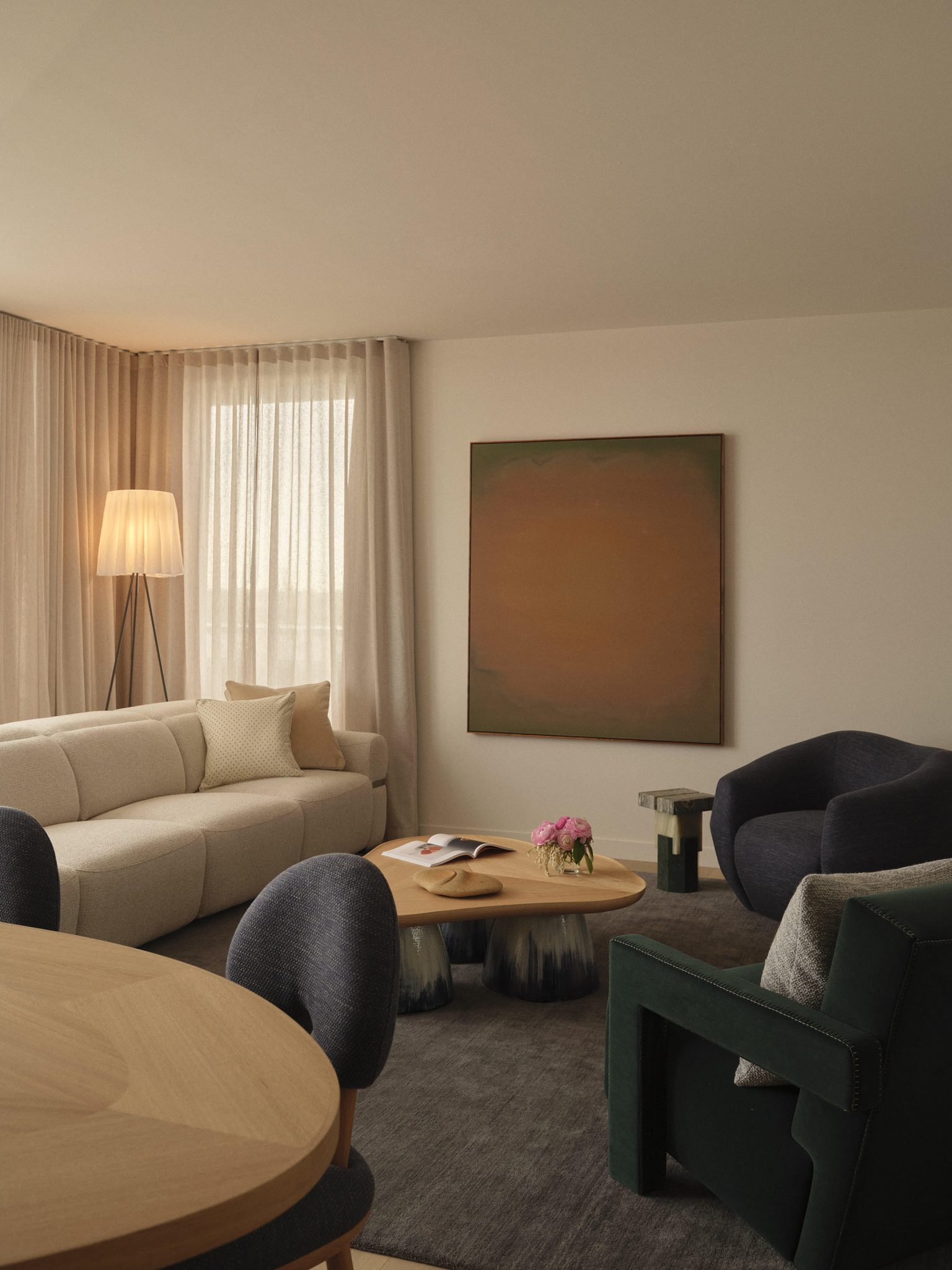
“They connected with the stories behind them and the craft,” Gilbert says, emphasising how physical experience shaped decision-making. These encounters opened conversations around finishes and colourways, allowing selections to tie back to architectural and spatial decisions already in motion.
Customisation played a critical role in ensuring furniture felt embedded rather than imposed, particularly with key pieces such as the Pierre Yovanovitch Roze dining table. While the table was selected for its craftsmanship, its legs were customised in colour to align with surrounding elements and adjacent seating.
“We wanted to use the same fabric on pieces that sit side by side,” Gilbert says, describing how the dining and living areas were visually linked. “So they can talk to each other between the rooms, and the story continues.”
The result is an interior where furniture operates as connective tissue, carrying material and narrative threads across thresholds without overt repetition.
Designed to endure
Context also played a defining role, with Ballarat’s climate and character informing material decisions at every level. While the building itself presents a distinctly contemporary presence within the regional city, the interiors respond with warmth and tactility.
“Ballarat is a very cold place and very indoors orientated,” Gilbert says, noting the importance of selecting textures that feel grounded and insulating rather than coastal or lightweight. The aim was to create homes that feel deeply attuned to their setting, supporting comfort through long Victorian winters while maintaining architectural clarity.
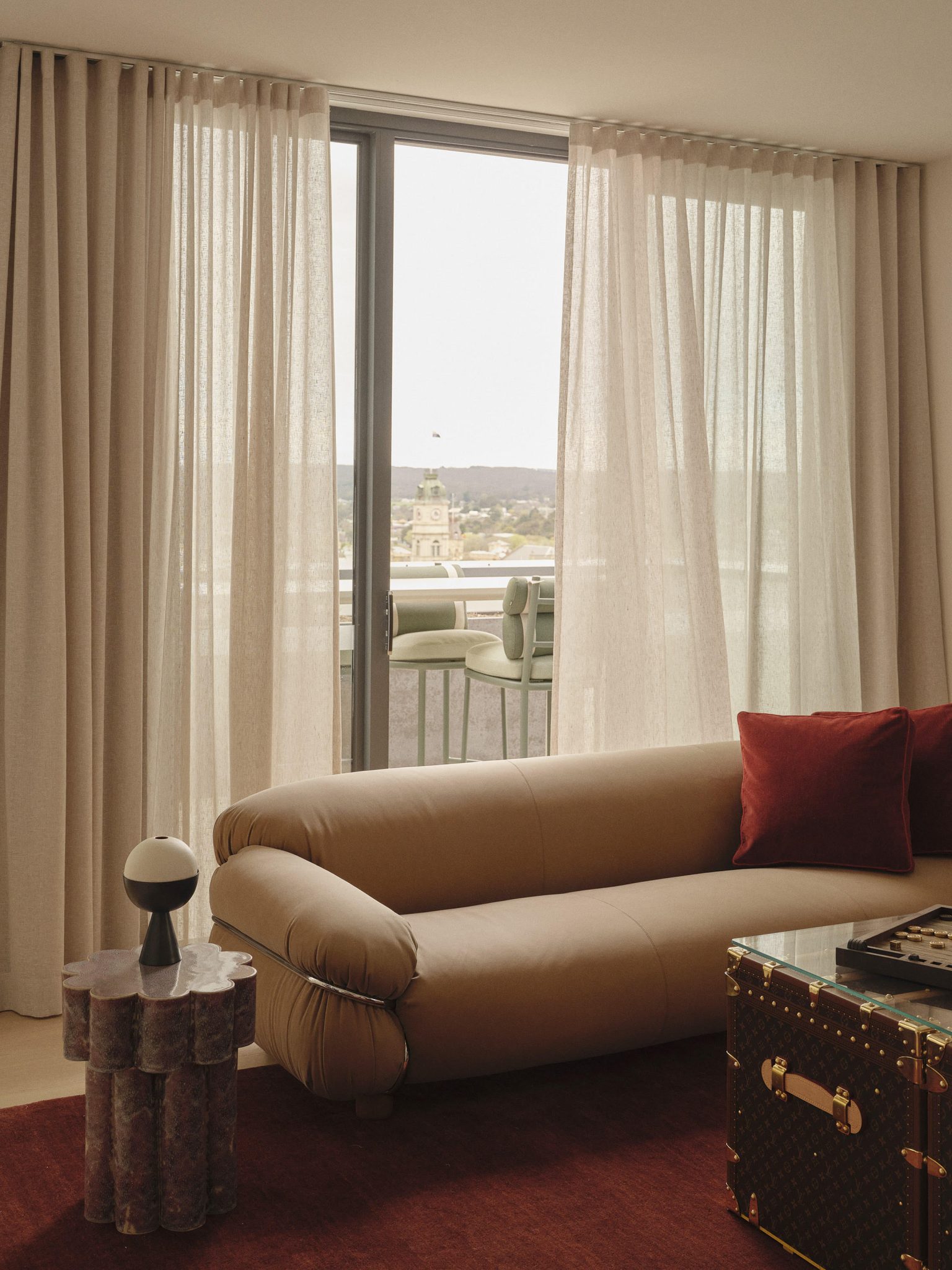
Perhaps the most resonant outcome of the project emerged gradually through the selection process itself, as each piece revealed its own lineage and future potential.
“Each piece ended up having such a strong story behind the craft and the makers,” Gilbert says. With family members involved at every stage, the furniture took on a significance that extended beyond immediate use. “These items could be passed down through generations,” he says, describing them as objects chosen with longevity and affection in mind.
In these two penthouses, Studio Nicholas has crafted interiors that honour shared values while embracing difference, proving that proximity can deepen individuality when guided by care, clarity and respect for how people truly live.
Photography: Sean Fennessy
You Might also Like

Related Stories

© Niche Media 2026