

Scaling MMC from strategy to system

Share
As Australia searches for faster and cleaner ways to deliver housing at scale, modular construction continues to promise much yet deliver selectively. A major Build to Rent project in Parramatta shows what can shift when Modern Methods of Construction (MMC) becomes a corporate strategy rather than a project experiment.
With the persistence of labour shortages, rising costs and elusive housing targets. Australia’s construction sector has reached a point of reckoning. Modern Methods of Construction have circulated in the industry for years, often relating to bathroom pods, façades or isolated pilot schemes. But the application of such methods at scale has been rare, particularly in dense urban housing where the pressure to build better and faster is most acute.
For Helen Kuo, principal at FK Sydney, the momentum around MMC often falters long before design enters the frame. “The decision on this project was actually made when the client company started,” Kuo says of the 81–83 George Street, Parramatta development. “It is a strategy for the company rather than a project-specific approach.”

For Kuo, that distinction matters. Instead of asking how MMC can be fitted to a site, she describes reverse thinking, where suitability for modular construction becomes a key criterion in site selection itself. “Consultant teams with proven MMC experience are assembled early,” she says, “not as specialists brought in to solve problems later, but as part of an integrated program driven by repetition, rigour and long-term delivery pipelines.”
The shift brings broader benefits too. Factory-based construction environments demand a wider range of skills, opening pathways beyond traditional site labour. For Kuo, this diversification strengthens resilience across the industry while improving safety and predictability on site.
Designing to the factory
At George Street, volumetric parameters were embedded from the outset, a move that challenges long-held assumptions about architectural freedom. Kuo rejects the idea that modular design constrains creativity. Instead, she frames MMC as a process that exposes how much of contemporary construction already relies on standardised systems.
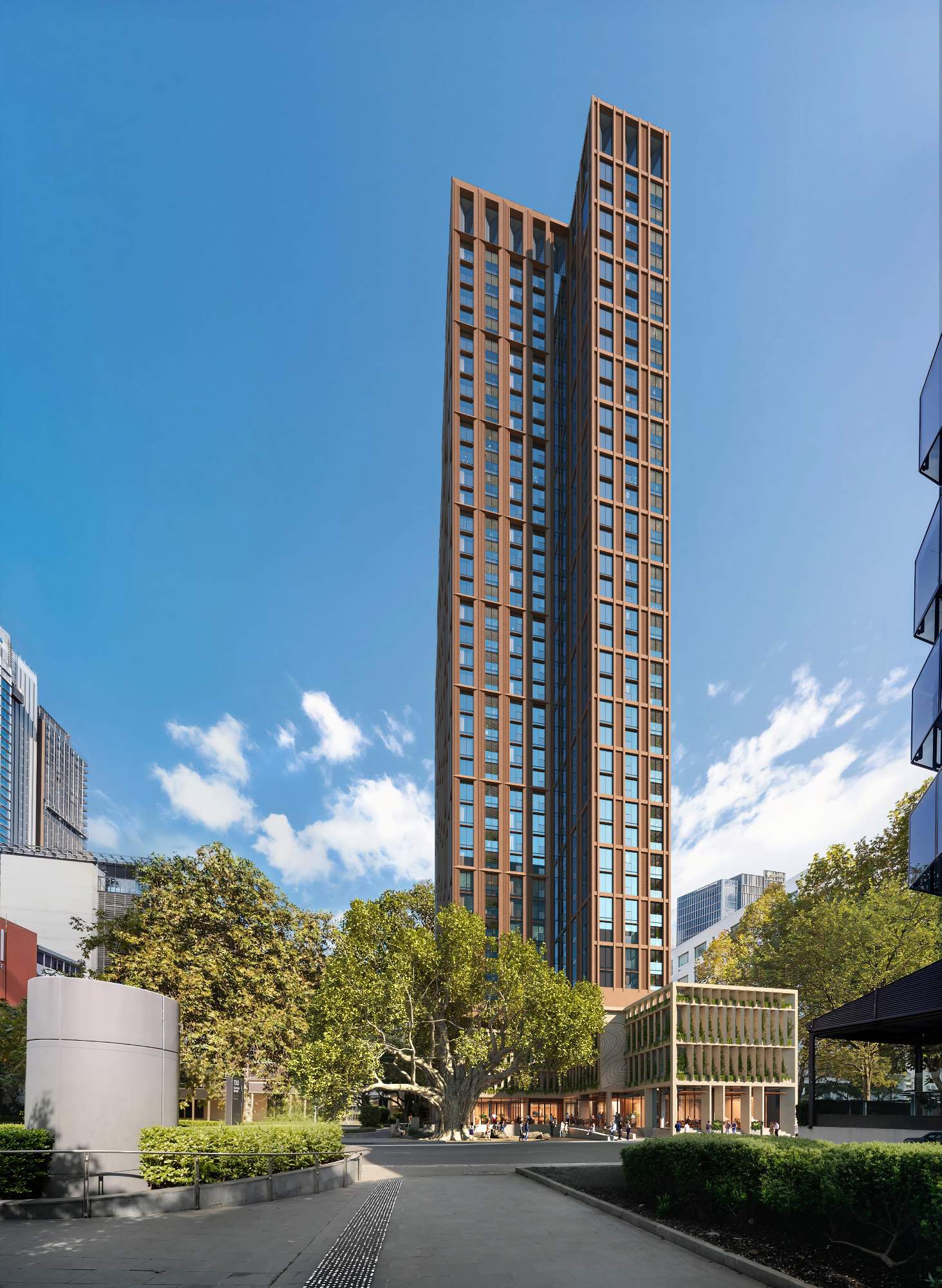
“Our in situ buildings already consist of building systems that exist,” she notes. “What they lack is the rigour of considering how those systems come together early enough to reduce waste and inefficiency.”
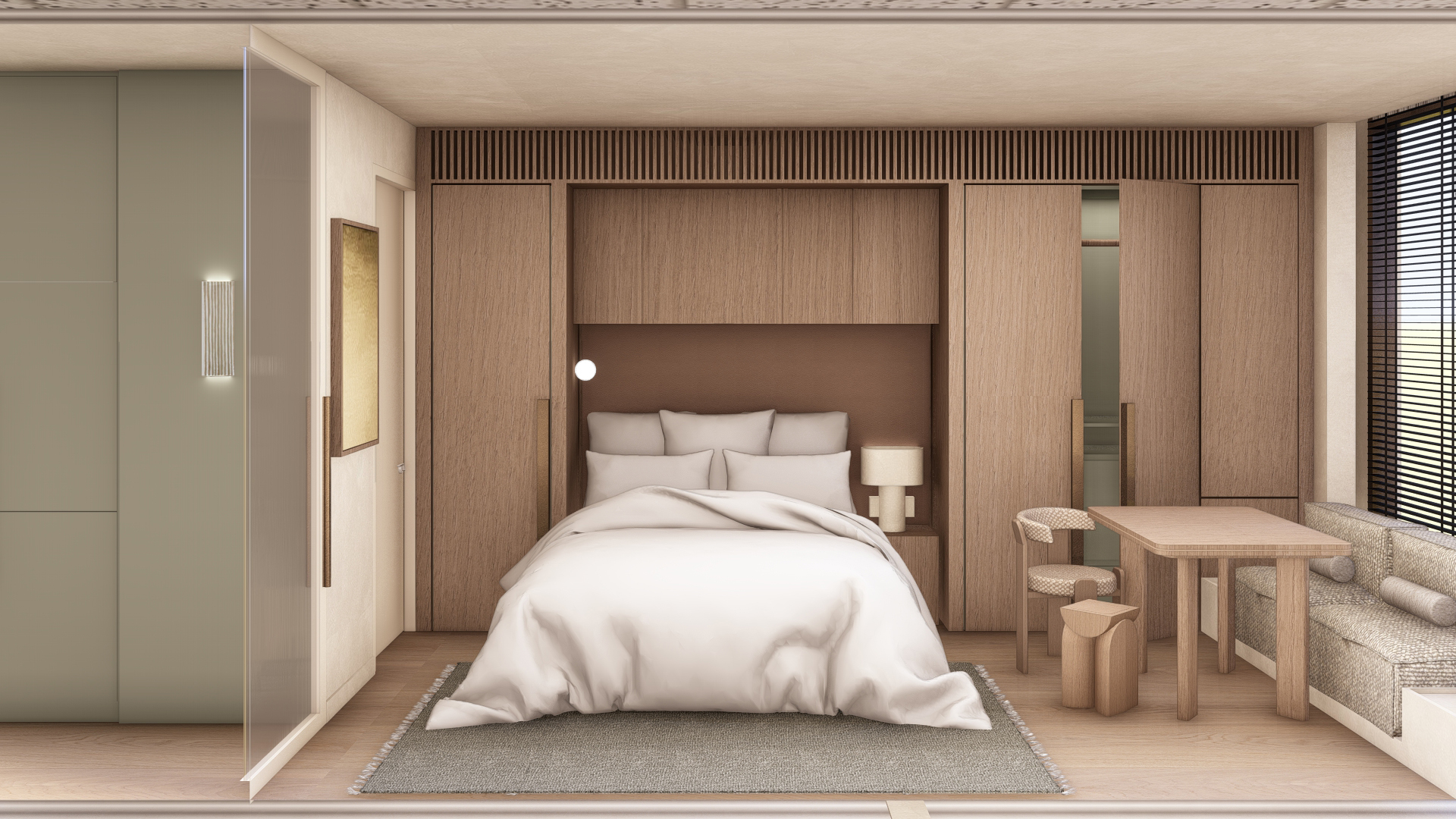
“By studying room sizes, layouts and module dimensions in depth, before design development, we were able to lock in efficiencies that flowed through manufacture and construction,” Kuo says. The result was not a loss of design quality, but a redistribution of effort. “That frees us up to spend on the site-specific responses,” she explains, pointing to façade articulation, public interfaces and the elements that residents experience daily.
In higher density projects, MMC rarely replaces everything. Podiums and ground levels remain largely in situ, responding directly to street conditions and urban grain. At higher levels, standardised modules repeat with precision. This hybrid approach allows placemaking to occur where it matters most, while upper levels benefit from speed and consistency.
Curtain wall and window wall solutions also play a crucial role, providing stronger weather performance and clearer compliance with the Design and Building Practitioners Act while offering flexibility in expression. Façades can be integrated with modules or installed separately, allowing architectural character to emerge without disrupting manufacturing logic.

Planning certainty and repeatability
Where MMC struggles most, Kuo argues, is in planning frameworks that reward bespoke change over tested performance. “We already know what works for living rooms, bedrooms, bathrooms and circulation,” she says. “We should not have to re-examine those layouts every time.”
Under current systems, even minor dimensional adjustments can trigger fresh rounds of approval, undermining the economic logic of offsite manufacture.
“For modular housing to scale, New South Wales needs pathways that recognise previously approved apartment layouts as transferable assets rather than site bound artefacts,” Kuo says. “If an internal apartment unit design has been approved by a consent authority, it should be able to be repeated.”
Review effort could then focus on where it adds value, how buildings meet streets, shape podiums and serve communities.
This approach mirrors pattern book models emerging elsewhere, where standardised components coexist with place-specific urban design. Consistency in manufacturing enables longer production runs, reducing costs associated with retooling. Those savings can be redirected into better materials, stronger insulation and improved baseline quality.
Kuo’s advocacy is grounded in pragmatism rather than ideology. “Bathroom pods are already widely standardised. The more consistently they are produced, the more economical they become, and the more quality can be built back into the system,” she notes.
George Street Parramatta stands as evidence that MMC can operate at metropolitan scale without sacrificing architectural intent. What remains is the collective will to treat modular construction as infrastructure rather than novelty. As Kuo sees it, “The tools are already in hand. The task ahead lies in aligning planning, procurement and industry confidence so they can finally work together.”
You Might also Like
Related Stories

© Niche Media 2026