

Designer Rugs announces Evolve 2026 shortlist
Designer Rugs announces Evolve 2026 shortlist

Share
Designer Rugs has unveiled the six rug designs shortlisted in its Evolve competition.
The Evolve Design Competition is Designer Rugs‘ premier platform for Australian creatives to explore rug design. Over the years, Evolve has provided a unique opportunity for new voices and seasoned professionals to see their work produced by one of the country’s leading rug companies, fostering innovation and highlighting the vital role of colour and design in transforming interiors.
The Power of Colour
In September 2025, Evolve launched its fifth edition under the theme ‘The Power of Colour’. This iteration invited architects, interior designers, decorators and stylists from across the country to submit original designs that showcased bold and innovative uses of colour alongside exceptional artistry.
This prompt yielded diverse sources of inspiration and explorations, from geological formations to emotional landscapes. The jury members – including DKO Architecture associate Jacob Olsen, Bates Smart director Brenton Smith, Designer Rugs senior designer Lia Pielli, Williams Burton Leopardi director Sophia Leopardi and Geyer Valmont design studio leader Tamara Rozo – have now shortlisted those submissions to just six rug designs.
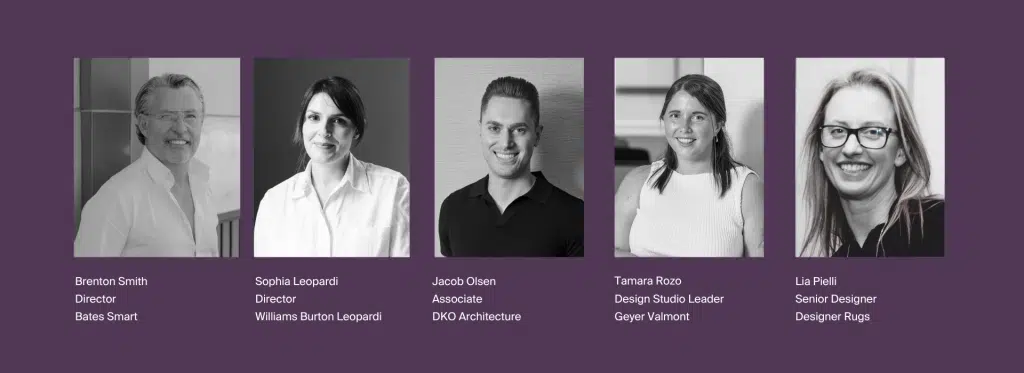
Pielli says she is “always excited to see how interior designers approach the process of designing rugs”.
“The shortlisted designs demonstrated a sophisticated use of colour in unexpected combinations – a real a point of difference,” she says.
For Rozo, the submissions that stood out were the designs that felt “genuinely fresh”.
“I was drawn to the designs that fill a gap in what we’ve been craving within a commercial interiors context,” she tells Australian Design Review. “Designs that showed confidence, distinctiveness and adaptability across different shapes and scales.”
The shortlist and road to the winners announcement
The six shortlisted designs will officially comprise the Designer Rugs Evolve Collection for 2026, due for release in April, marking a significant milestone in the competition’s legacy of fostering design talent.
This prestigious collection features three finalists from the ‘Under 30’ category and three from the ‘Over 30’ category, selected for their innovative approach to pattern, colour and texture. Each rug will be handmade with 100 percent New Zealand wool and shiny nylon to bring the visions to life, translating digital concepts into luxurious, tactile reality.
In the spirit of letting ‘true design excellence speak for itself’ and fostering a merit-based competition, Designer Rugs has said that the identities of the designers will remain confidential during the adjudication period.
Those names will be officially revealed when the final winners for each category are announced in late March or early April. Meanwhile, the judges will convene on 26 March to make their decision.
‘Under 30’ category highlights emerging talent with three distinct concepts
Maggie
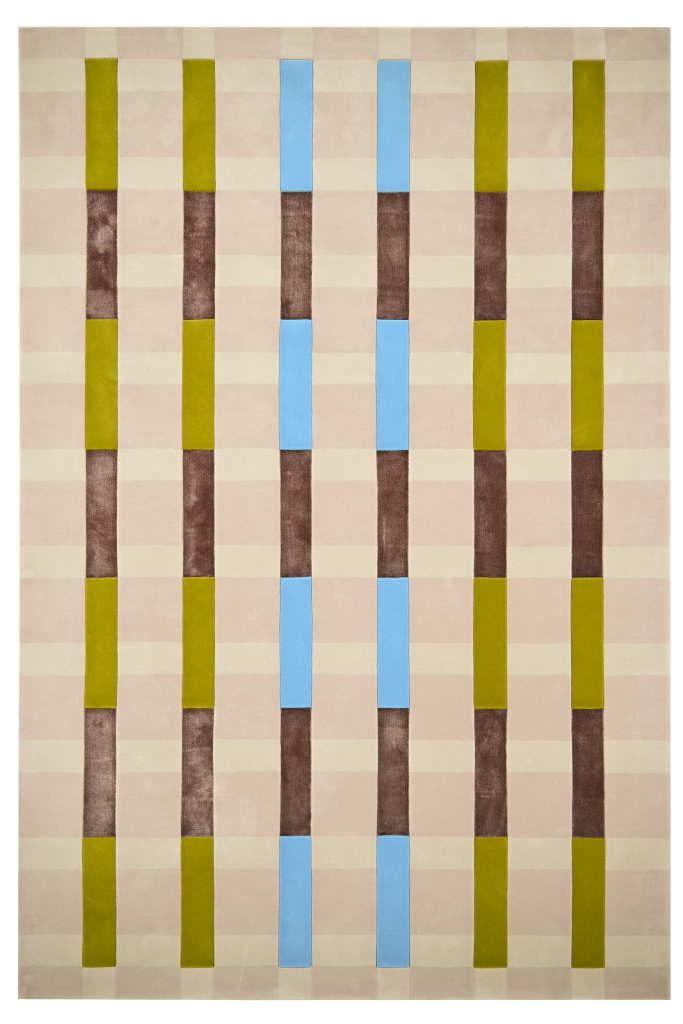
According to its creator, the Maggie rug design was inspired by US abstract painter Harriet Korman’s 1971 piece Untitled.
“The clean lines and delicacy in Korman’s work feel calming to me,” they say in their submission. “Every element of the print has a place; every line has rhythm.”
The design of Maggie is built around a subtle grid, providing structure and rhythm that organises the composition. Within this framework, tonal colour shifts create gentle, almost imperceptible, variations that add depth and softness to the pattern.
Ultimately, this rug hopes to ground a space, bridging calmness and vitality.
Abstracted View
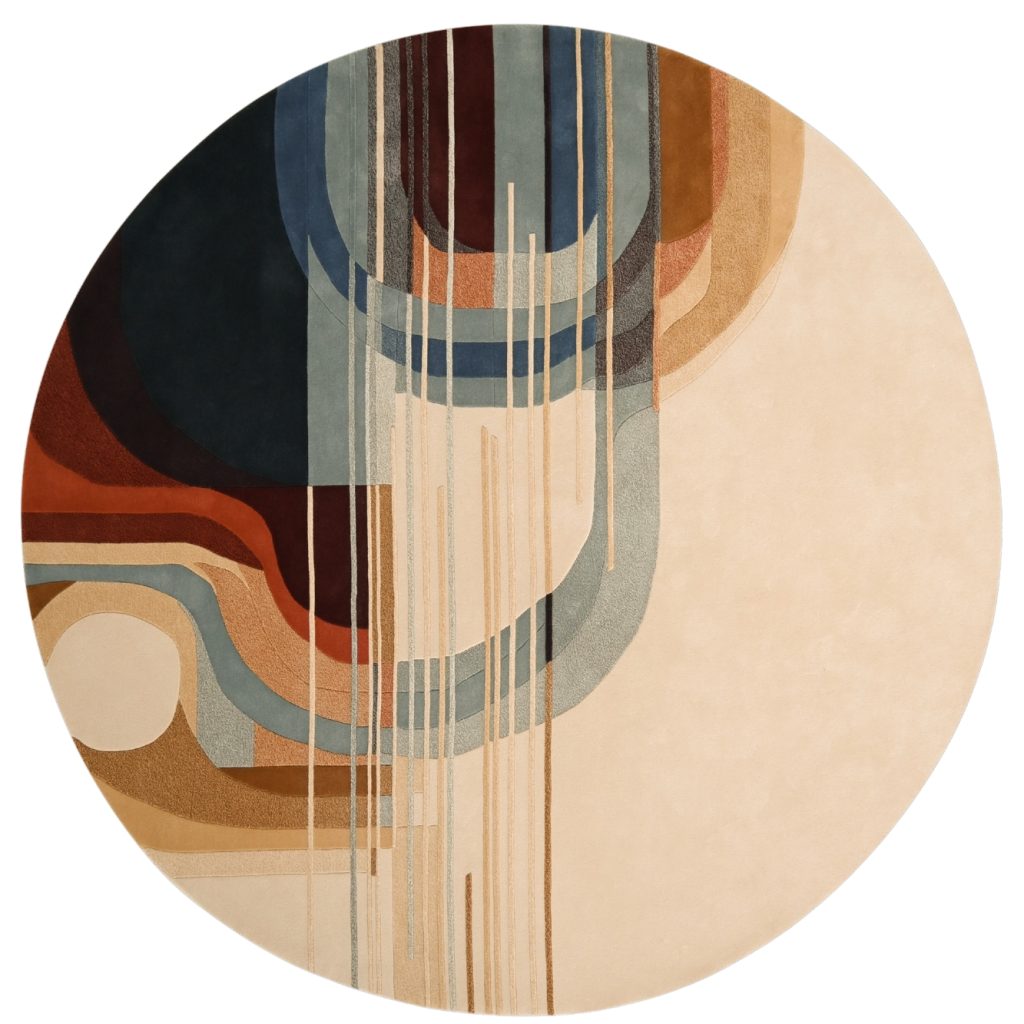
This design is inspired by the Ionian Islands, where sea, sky and land align in rhythmic layers and the architecture is defined by bold arcs, curves and stacked forms.
Abstracted View distils the deep blues, muted teals, terracottas, sandy beiges, limestone whites, warm clays, soft greys and golden light of the Ionian landscape.
“The power of colour lies here in its ability to define form while evoking memory, transforming simple shapes into an emotional connection to place,” Abstracted View’s creator says.
The design was created through a mixed-media process that combines hand drawing with digital refinement. It has a striking presence while remaining versatile across different settings.
Kine
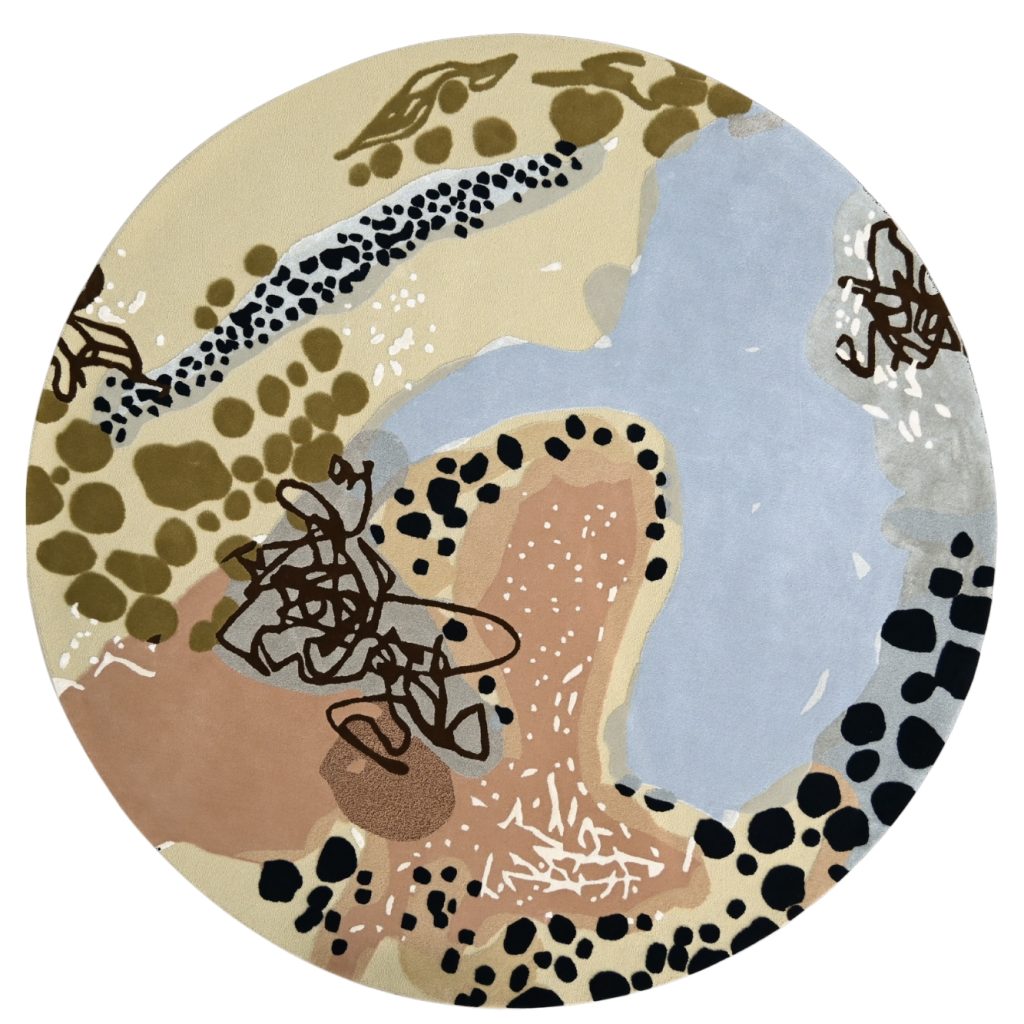
Meanwhile, Kine sought inspiration closer to home.
“A land called ‘arid’, yet so abundant with colour,” the designer explains. “Our ochres, deep greens and luminous blues all speak of our nation’s resilience and richness. These are more than pigments; they are culture, identity and connection.”
In a world “so unsettled by political division”, the creator – who immigrated to Australia in 2004 – gravitated toward the thing they believe transcends borders and connects: nature.
“I experienced first-hand the beauty of a nation that once celebrated wonderful colour and diversity of thought, culture and race,” they say. “This design is a reminder to our nation of that beauty – that difference is not something to overcome, but rather something to embrace.”
They took specific inspiration from an aerial photograph of salt lakes by photographer Michael Schweiger, which “captures this harmony of pigments perfectly”.
“Colour is most powerful when it is a collective, just like this photograph. A single shade can feel lifeless and shallow. But when colours contrast and harmonise, they create a far deeper and more compelling story,” the rug designer says.
Established design sensibilities shine through in ‘Over 30’ category
Lazuli
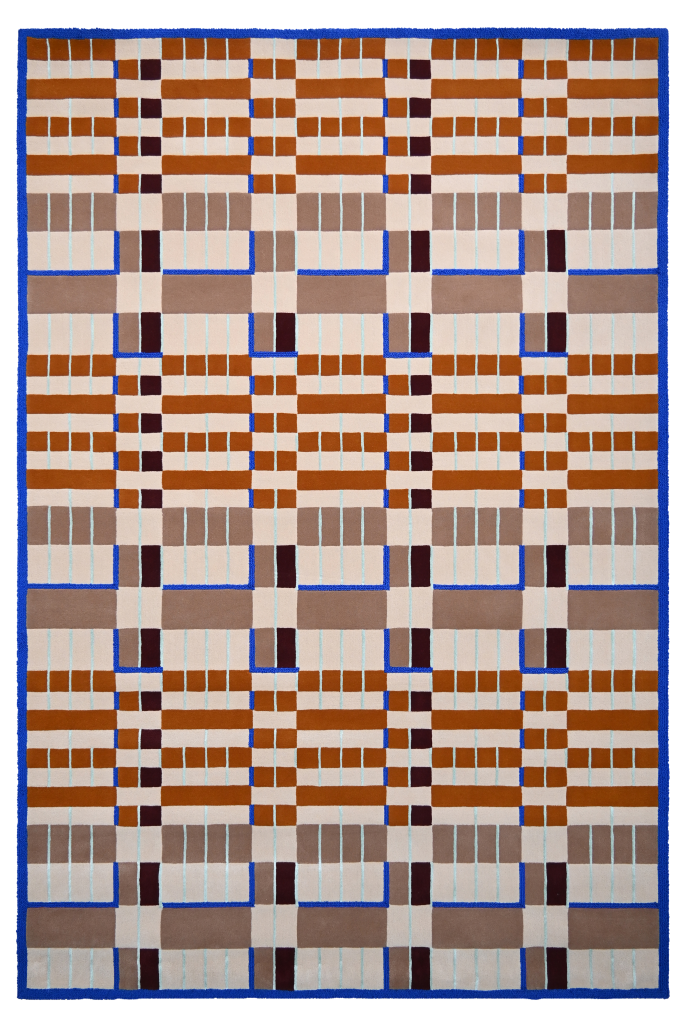
Lazuli explores the tension between materiality and abstraction, where the tactile structure of woven textiles meets the boundless intensity of Yves Klein Blue.
The design balances the spiritual power of blue against a grounded, earthy palette anchored by Pantone’s 2025 Colour of the Year: Mocha. This warm, tonal base evokes the familiarity of natural fibres and handmade craftsmanship – a counterpoint to Klein Blue’s ethereal energy.
The design references the foundational warp and weft of weaving, structured as a rhythmic grid of interlocking bands. Lazuli speaks to the power of colour and texture as emotional materials.
Slice
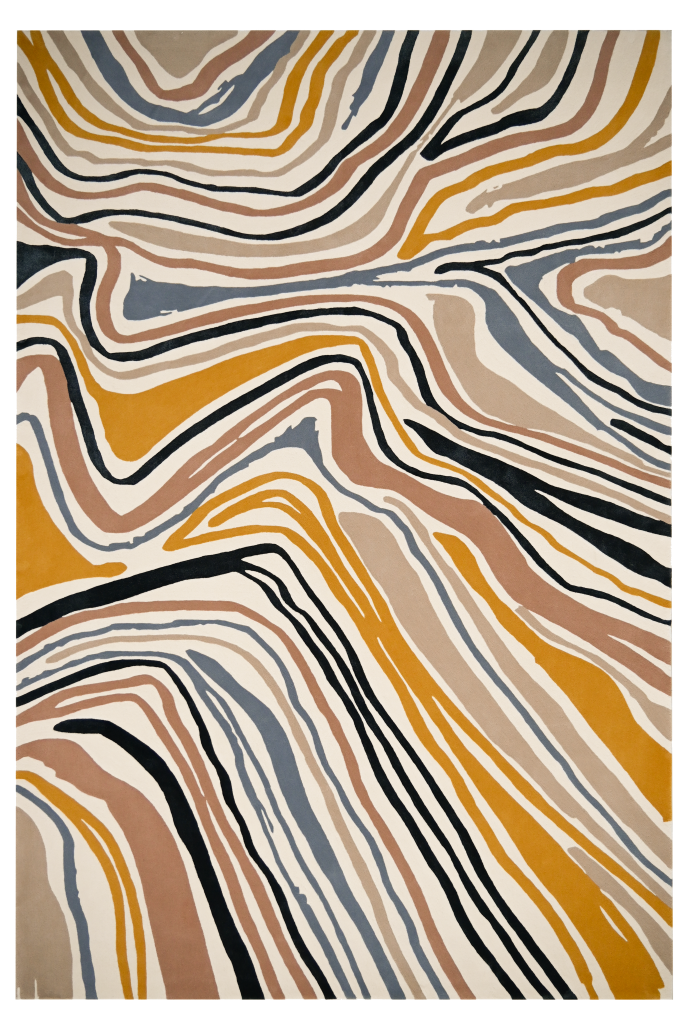
Slice is inspired by the intricate and organic veins within a cross-section of marbled rock. Through a process of hand-drawn tracings, simplified ribbons of colour capture the fluid forms and layered movements of mineral deposits and elemental flows.
The palette uses contrast to achieve vibrance and layers. Set against a neutral off-white/cream background, accents of soft earthy mauve, pink clay brown and steely blue are offset against a rich golden yellow ‘flow’, bringing warmth and movement. Black contrasts punctuate the ‘layers’, guiding the rhythm.
“The design for this rug functions not only as a bold organic graphic, but as a tactile ‘landscape’ underfoot, inviting reflection on the hidden processes that shape the natural world,” Slice’s creator says.
Zozo
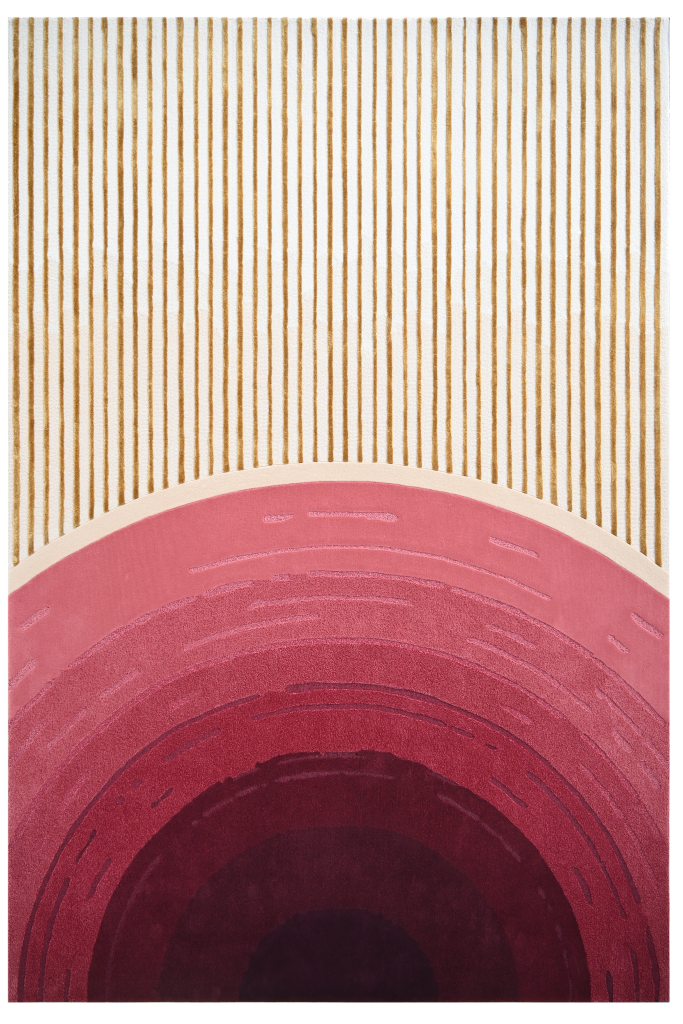
Zozo applies a more human concept to rug design. It is a visual reflection on the transformative power of colour through the lens of early parenthood – a time “suspended between stillness and chaos, darkness and light”, according to its designer.
“It captures the emotional vortex of those first months: sleepless nights, a haze of uncertainty and the quiet intensity of a world turned inward,” they say. “Yet, within that darkness, there are moments glowing, grounding that pull you through.”
The design is anchored in a central circular form, symbolising both the cyclical nature of this life phase and the immersive state of new beginnings. Layered concentric forms shift from stippled, tonal gradients to sharply defined contours, achieved through precise colour placement and variation in pile construction.
The composition plays with contrast – circular versus linear, blurred versus defined, dark versus light – to evoke emotional tension and resolution. This juxtaposition is mirrored in texture: the core is predominantly cut pile, offering depth and richness, while the outlines of the inner rings are subtly defined with a loop pile for tactile variation.
The Evolve 2026 collection will officially launch in April. Learn more about Evolve 2026.
You Might also Like


Related Stories

© Niche Media 2026