

Rone is finally Home
Rone is finally Home

Share
Australian street artist Tyrone Wright, best known as Rone, turns residential decay into interior delight in his latest project titled Home – his first large-scale project in three years.
For Home, Rone has converted a 400-square metre retail space at Chadstone into a tiny-sized home, collaborating with his wife Alice Goulter on the ambitious project.
Together they have sourced old and new materials, with furnishings and found objects reclaimed from op shops while on thrifty road trips that took them as far as Nagambie, Victoria.
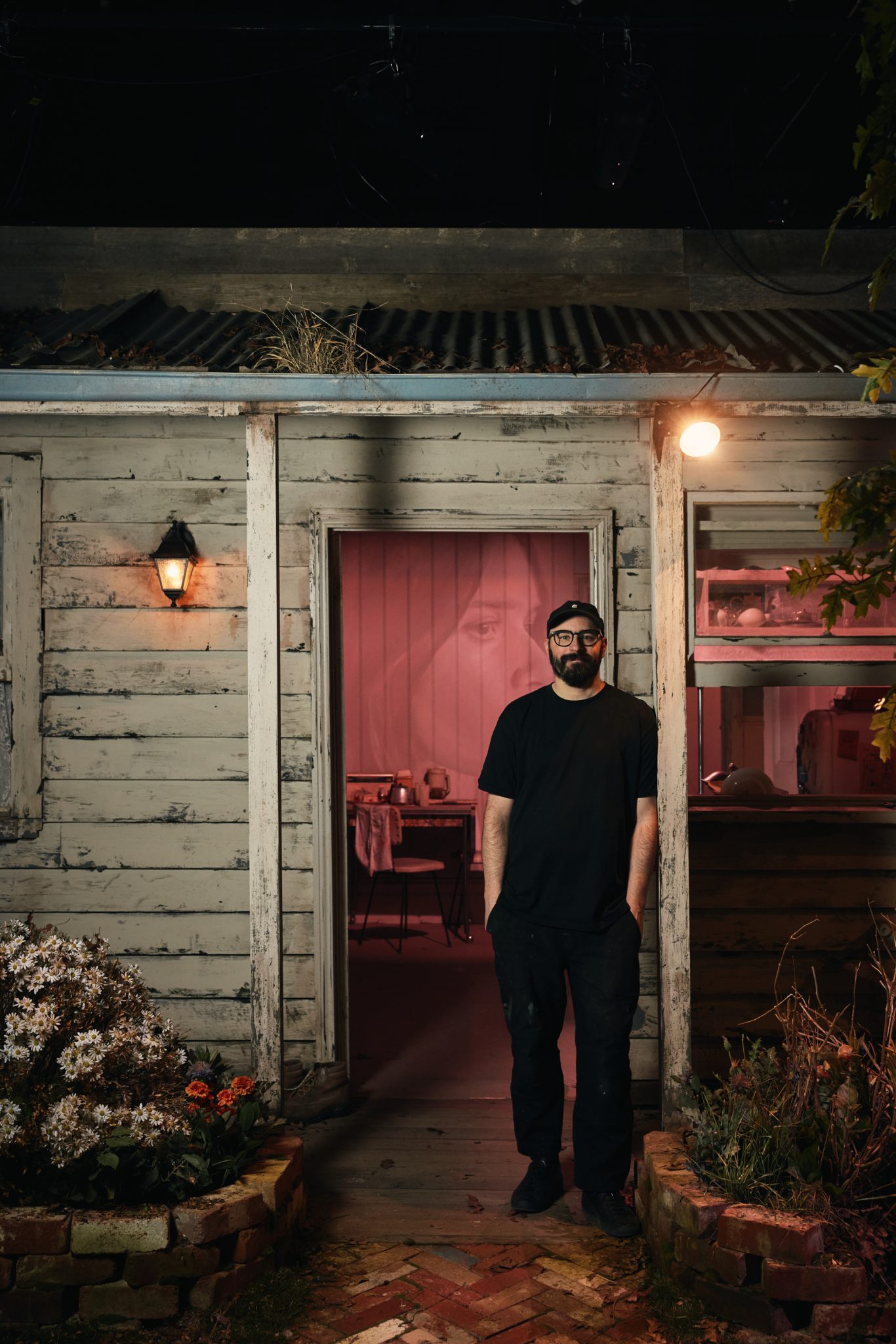
Home is truly labour of love. Rone was in charge of creating the weatherboard home – constructed by Charm Building Group – that’s packed with all the hallmarks that makes his artwork multilayered and interactive.
From the croaky front porch and white picket fence as you arrive, to the custom-built 1950s inspired kitchen, it’s a poetic mix of frailty and reflection. There’s wallpaper on bedroom walls, a retro inspired bathroom and a fireplace for nostalgia’s sake, as Rone rewinds the clock yearning for a simpler time in Australia – where clutter inside the home revealed so much about us.
Home riffs on the notion of what has become of the great Australian dream of owning your own. But instead of getting political, he’s broaching the subject differently – recreating an era of home ownership where what you owned within said so much about you as its custodian.
You’ll also find a paved backyard where brick paths are filled with accents of green moss, while a large oak and lemon tree sit alongside a Hills hoist for a nod to a suburban past. You hardly feel like you’re in a shopping centre; and that’s exactly the intention.
Outside in and vice versa
For Rone, Home allows him to bring the conversation between architecture and interior design. And for a guy who began as a laneway graffiti artist in his late teens, had a retrospective of his work at Geelong Art Gallery several years ago and became a cult hit when he turned a derelict Alphington home into an immersive experiment in 2017, the project expands on this concept with a free exhibition.
“Home merges my interest in architecture, furnishing and objects, and what they say about people and how they can tell stories about us,” says the artist.
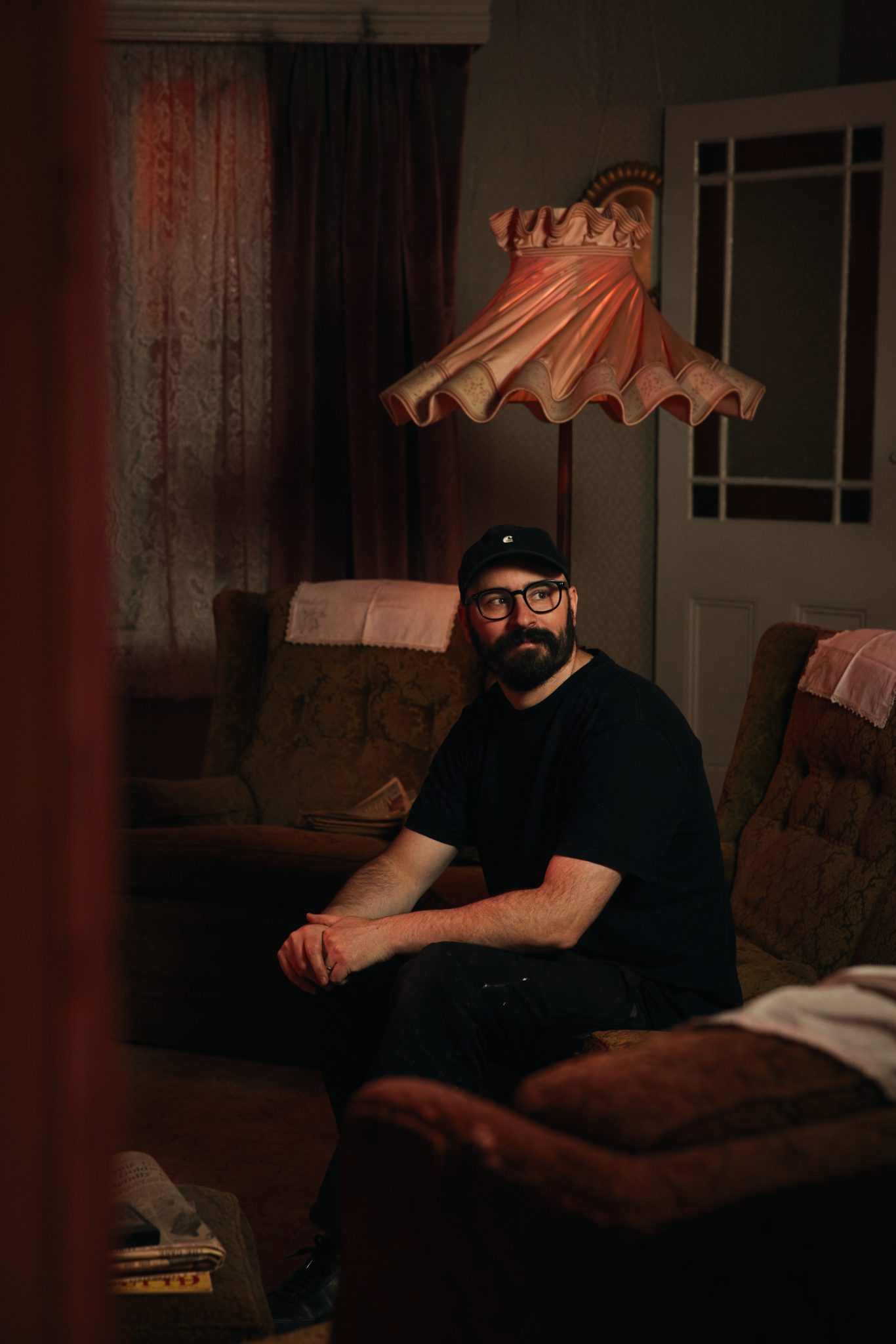
The home comes with vintage high-low carpets in the living room. The effect takes him right back to sitting in front of the TV in his grandmother’s house – and that’s exactly the sort of tactile nod he’s hoping to conjure.
“All the aspects of this home are supposed to stir memories,” he says.
“A project like this is designed to make you think about your own legacy of what you may leave behind in your own home – and begs the question: how do your objects tell a story about you?” he says.
“This isn’t about the flat canvas work I am known for; it’s a way to connect with people emotionally [in a way that’s] so much deeper and instantly,” says Rone.
Demolition bound old window frames were purchased from Renovators Paradise to give the home a weathered charm.
Rone’s signature mishmash of found objects is what gives this home character – from finding a sewing basket in Nagambie to pin nail artworks, and sourcing old maps and cookbooks to give Home a feeling of just that.
There are cornices, skirting boards and an atmospheric finish to the weatherboard timber to look lived-in and a little neglected – wherever your eye scans, there’s something to discover.
The treasure trove that is Marketplace
Old carpet in shades of dusty salmon and rose nod to the past, while the enamel green kitchen’s colourway was inspired by the vintage oven he picked up free of charge on Marketplace.
“I found the oven in the back shed of someone’s home, who had listed it online. It was perfect, but it also meant we had to build the kitchen ourselves to fit it in,” says Rone.
“We built it to look a bit awkward and pokey with small push button doors from the 50s/60s era – when life was a little simpler – and our cupboards are only 400 centimetres deep. The sink proved hard to find, but a guy called Costa had one in his farm in Seymour. He collected memorabilia from Flinders Street Station when it got cleared out. He has old gym equipment and desks, old light switches and a kitchen sink. That’s the part of the art installation we love – meeting people who have kept stuff we can use,” says Rone.
The installation is Rone’s first artwork in Melbourne since Time in 2022, when the artist took over the top floor of Flinders Street Station. He says this was the next step after his Omega Project, where he transformed a condemned house in the inner Melbourne suburb of Alphington.
Up to 70 lights inside Home are all controlled through a lighting sequence synced to a 16-channel audio system. The filmic score – a 12-minute loop on repeat – has been created by Rone’s friend and collaborator, Nick Batterham.
The wallpaper is a mix of brown wrapping paper with a colourway created by interior design artist Maree Wilding from Fitzroy. “That allows for a vintage feel to it,” says Rone. “The wallpaper crinkles and creases quickly, but it’s that imperfection that looks aged and sagging off the walls that we were after.”
You’ll recognise the piano from his Flinders Street installation, some silverware from Geelong Art Gallery and a wacky edge cutter that makes a quirky addition in the backyard.
“We’ve always worked together ever since we met, and we’ve become pretty good at bringing our ideas together. I’m a textile person and Tyrone has the bigger picture vision,” says Alice Goulter.
“When Chadstone approached us, we had a project in Tasmania that didn’t eventuate, so the idea we could create this work and make it completely free and open to everyone really appealed to us,” says Rone.
Home is part of Chadstone’s Light to Night festival, a new program of art, food and music, which will include the World’s Longest Dinner, for 400 guests, in collaboration with the Melbourne Food & Wine Festival, and an after-dark music festival.
Photography: Hugh Davies.
You Might also Like


Related Stories

© Niche Media 2026