

Pierre Paulin’s F300 Lounge Chair makes long-awaited comeback
Pierre Paulin’s F300 Lounge Chair makes long-awaited comeback

Share
Gubi and Cult Design are reissuing the 20th-century modernist classic, at once a work of art and feat of comfort.
When it first appeared in the late 1960s, French designer Pierre Paulin’s F300 Lounge Chair caused quite a stir. Unlike anything ever seen before, with its organic curves and novel materiality, it looked like a chair that had somehow been beamed in from the future.
Looking at the F300 today, it is apparent that this chair captures the playful side of its origin times, perfectly aligned to the casual, comfort-led, low-slung lounge aesthetics of the 1970s, an instant icon prized for its statement looks and versatility.
Yet the design embodies a futurism that has ensured it has remained relevant over time. Recognising this, design house Gubi have reissued the F300 Lounge Chair, alongside the companion T877 Table, now available in Australia through Cult Design.
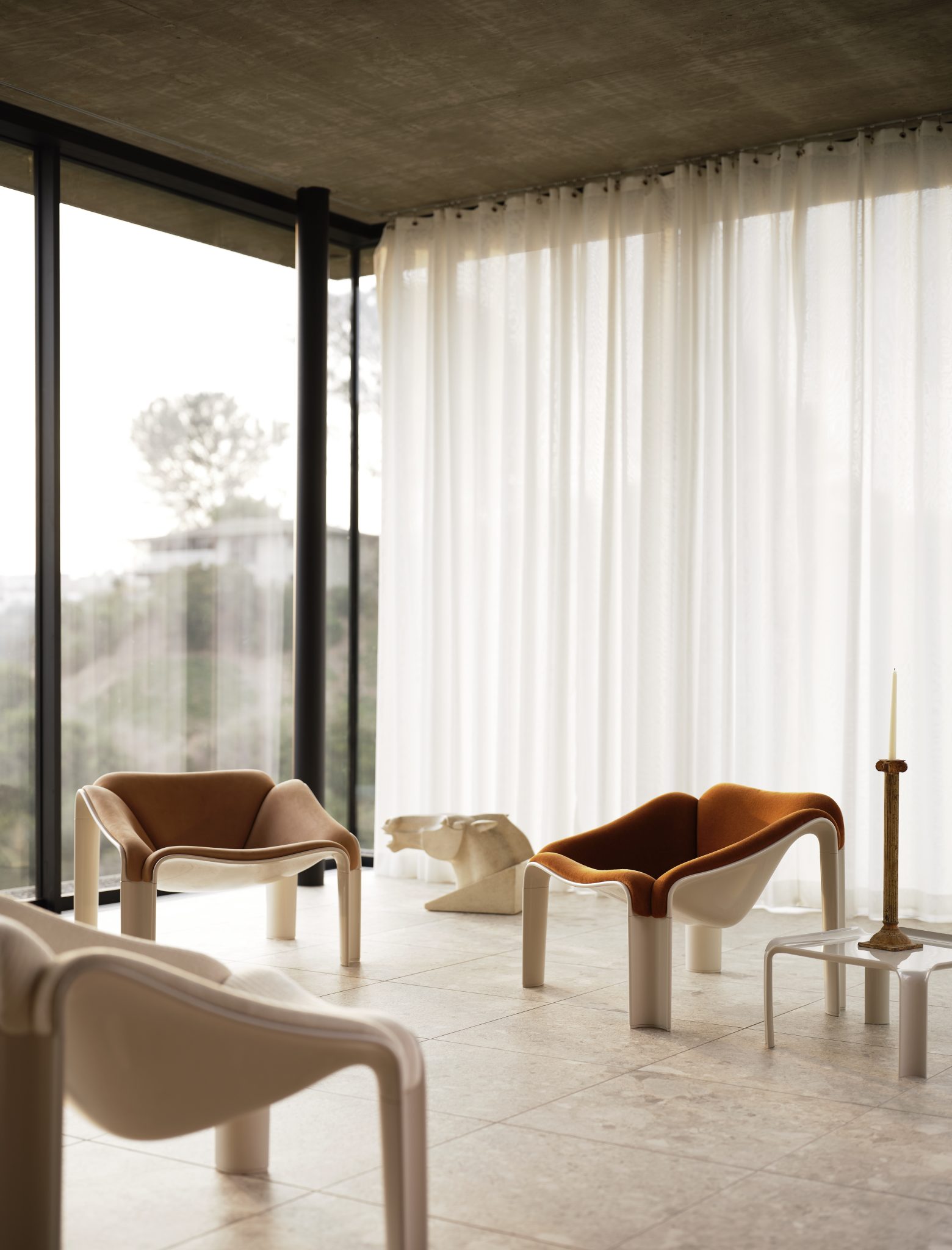
The F300 fuses art and functionality. Photo: Adrian Gaut.
The art of Paulin
Paulin (1927–2009) had hoped to become a sculptor before shifting into design and this impulse is clear in his work.
His low-lying furniture provided a new laid-back perspective on life and his forward-looking and eclectic approach to design reflected the swinging ’60s and the freewheeling spirit of the ’70s.
Ten of his works, including the F300, are now housed in MoMA’s permanent collection.
A functionalist at heart
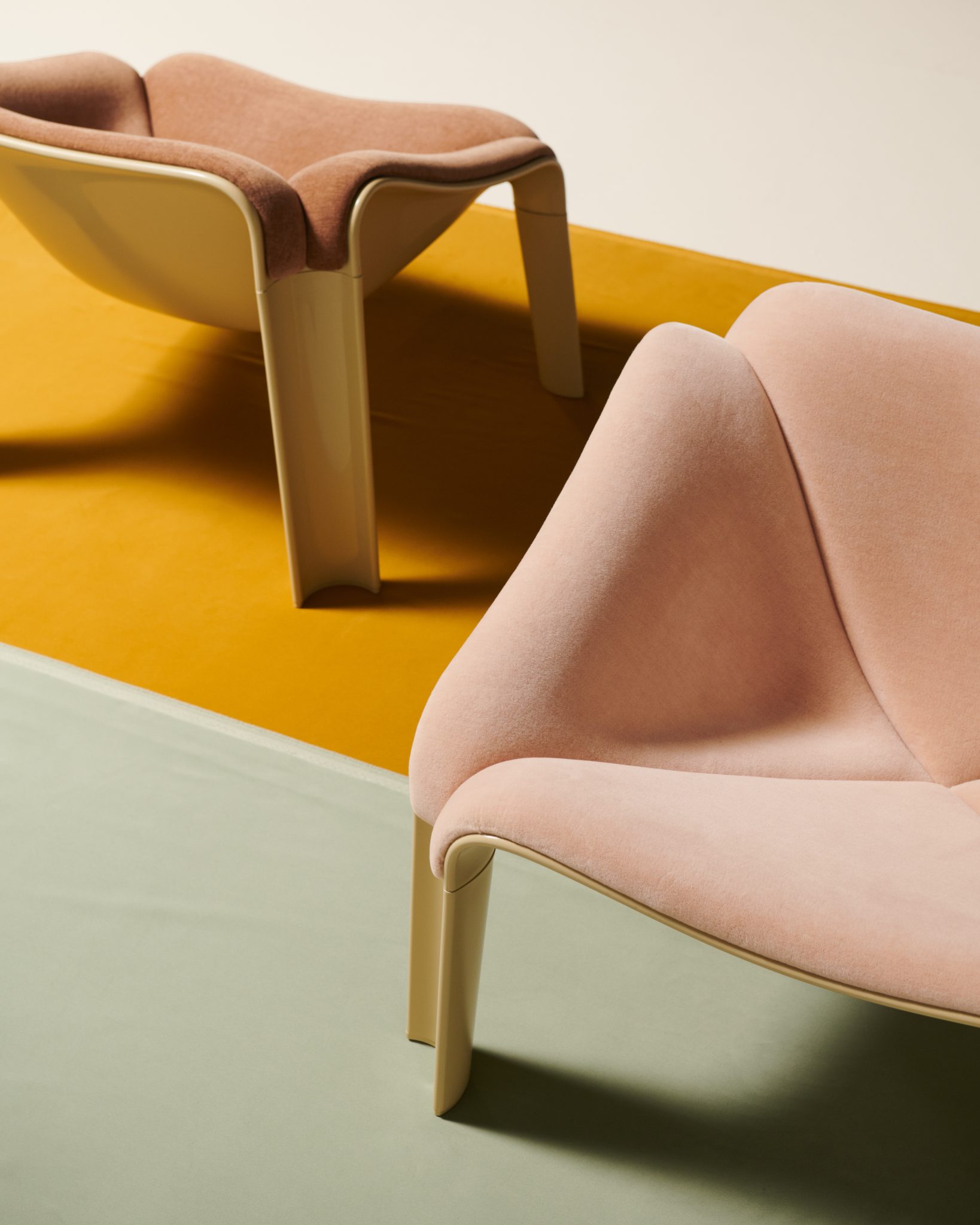
Sculptural beauty is informed by limitless practicality.
Paulin considered himself a functionalist who added “two little drops of poetry” to his work. The F300 Lounge Chair is no exception to this philosophy.
Benjamin Paulin, son of Pierre Paulin, has described the F300 as “much more than a photogenic sculptural novelty”.
“The design is rooted in research and a practical understanding of how people sit,” he says. “Such is the F300’s shape that it is almost impossible not to relax when you sit in it.”
The F300 is not unlike its fellow Paulin chair design, the Pacha. Both manage to look like a completely new design concept while still ticking every practical box demanded of a chair. But where the Pacha is soft, fluffy and pillow-like, the F300 – and its companion side table – is harder and more defined in form, while maintaining a distinctive sculptural fluidity facilitated by its material composition.
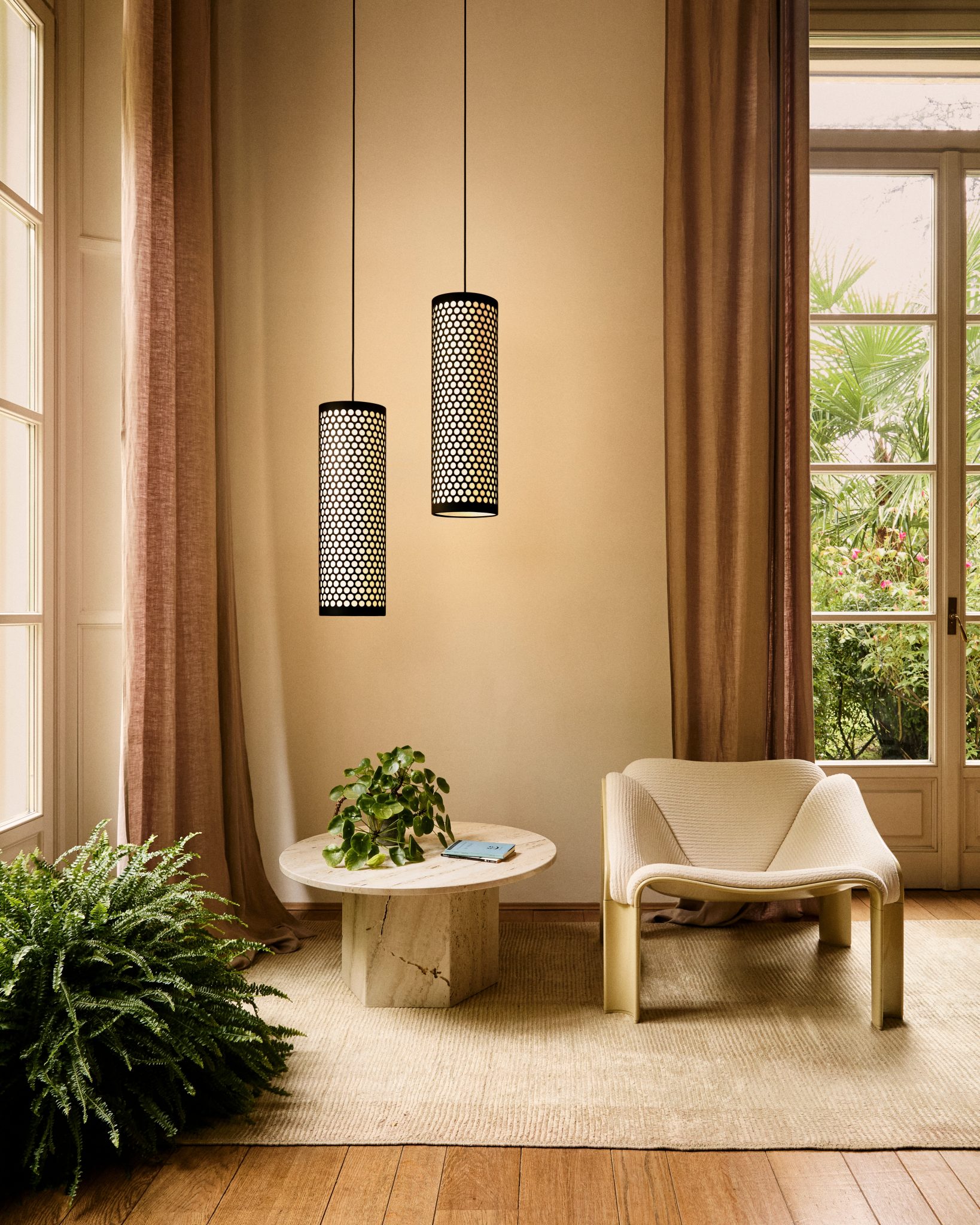
The F300 seamlessly enhances any interior space with its elegant, invitational lines.
“After GUBI’s successful reissue of the Pacha, it is wonderful to see another of Pierre Paulin’s most cherished designs return to production,” Benjamin says. “The F300 perfectly embodies my father’s approach to design and the balance between sculpture, elegance and comfort he sought in his work.”
Responsible reimagination
The first F300s were produced in fibreglass or injected polyurethane, allowing for contoured ergonomic comfort while maintaining a visually light expression. Responsibly upgraded for the 21st century, the F300 is now crafted in Italy from the engineered polymer HiREK®, which is made using industrial plastic waste.
Retaining the durability of plastic, HiREK is lightweight and resistant to UV, weathering and pressure. Most importantly, HiREK produces a smooth, high-gloss surface without requiring additional finishing processes, perfectly replicating the performance and aesthetic of the original materials while minimising waste created during production.
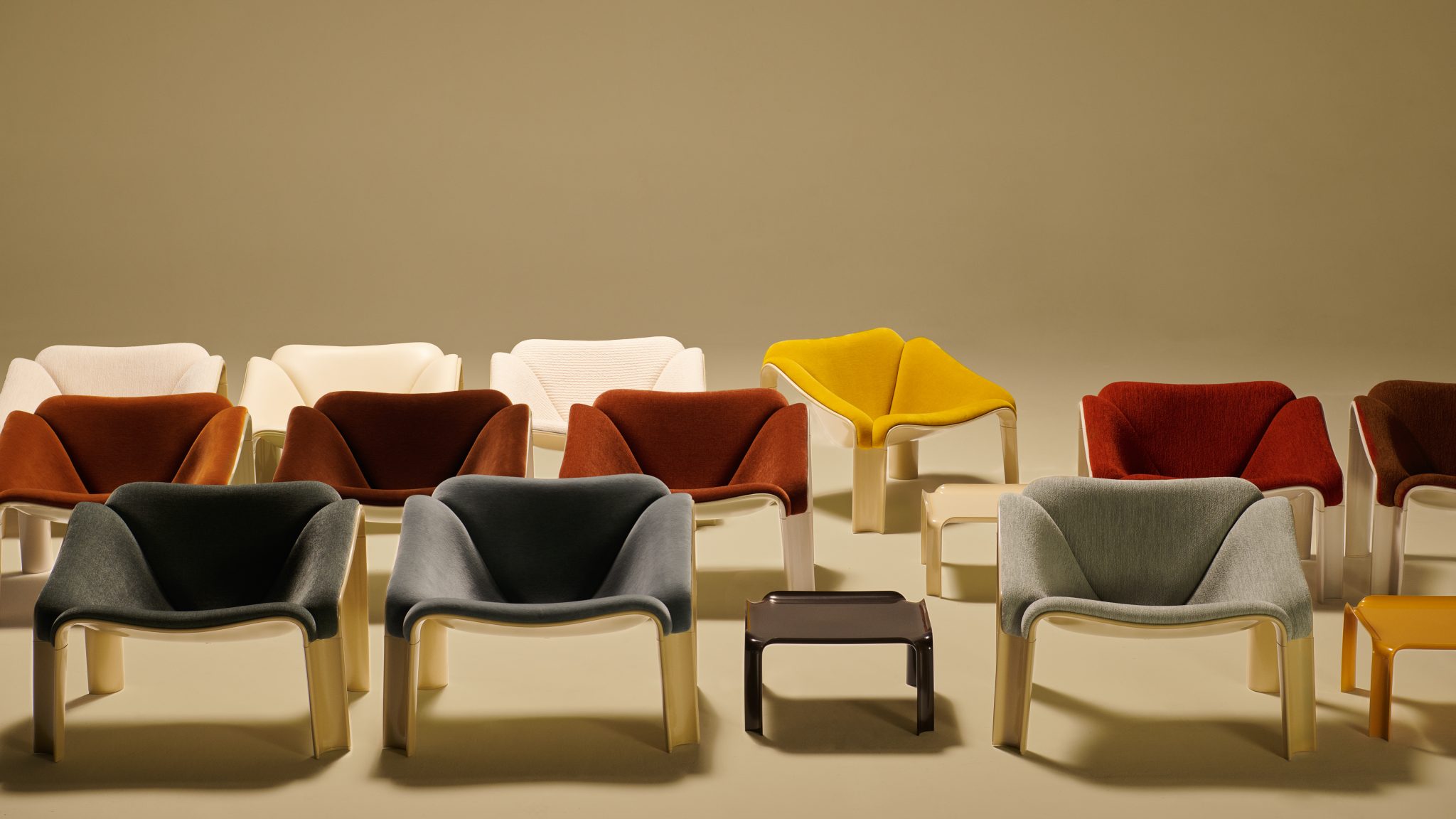
The F300 embodies a futurism that has maintained its relevance since the late 1960s.
HiREK lends itself perfectly to Paulin’s penchant for organic, curvilinear forms and bold, minimalist silhouettes. To shape the raw material for the F300 Lounge Chair, GUBI has developed bespoke moulds that press the injected HiREK into its final form.
Versatile design
With no flat surfaces anywhere, the F300 is playful in shape and flexible in function. It invites multiple sitting positions, from standard seating to legs slung casually over the side.
Like the Pacha, the F300 and T877 work well as standalone statement pieces, or can be combined with multiple others as either function or style requires. Thanks to the lightness of the material, both chair and table are highly portable, so they can be spontaneously moved around the house as needed or taken outside for sunny spells.
A selection of colourways adds further versatility to an already highly adaptable design. The F300 is produced in Alabaster White and a characteristically 1970s Pastel Green.
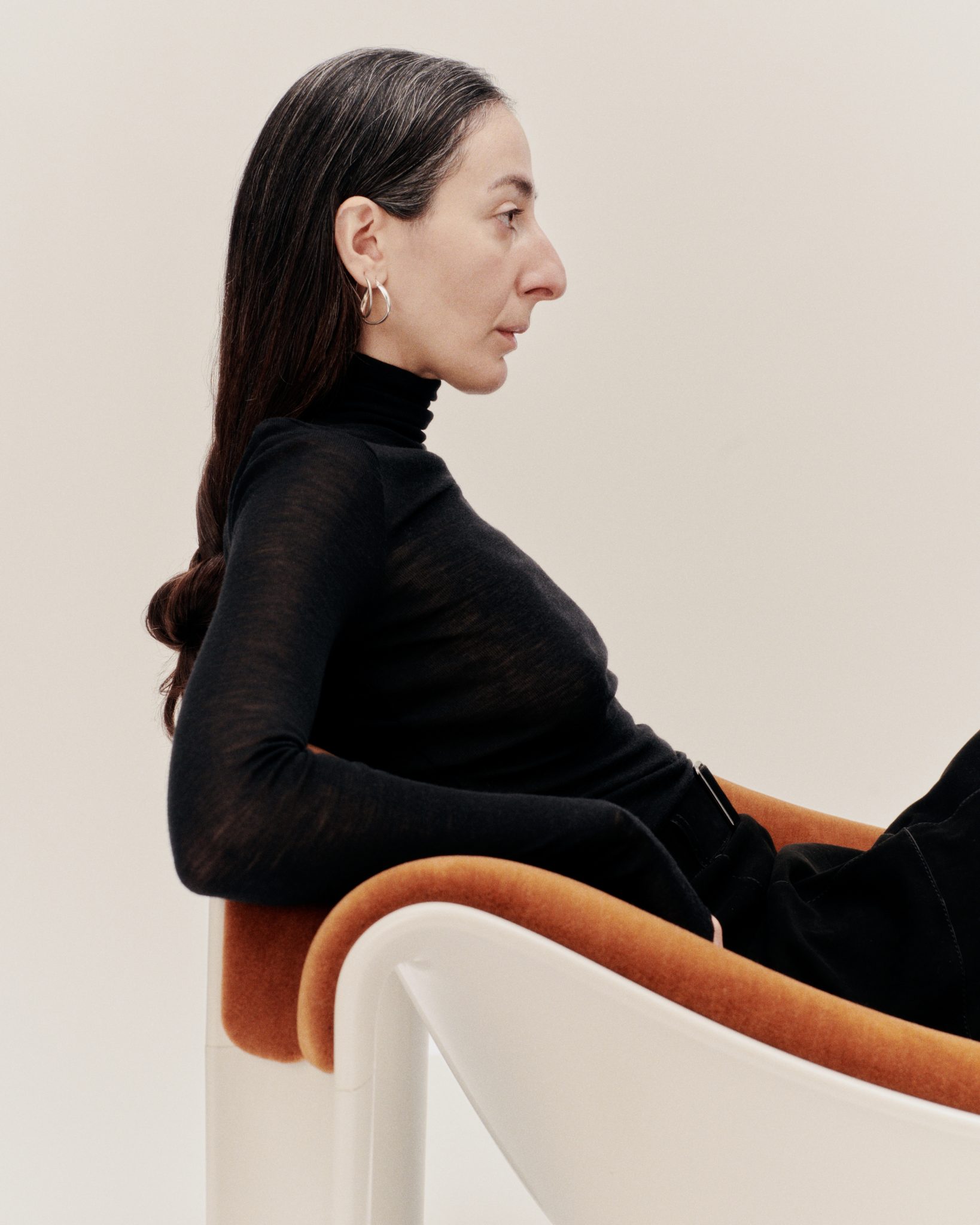

The design is rooted in research and a practical understanding of how people sit.
The T877 is available in both colours with the addition of Violet Ice, Honey Gold and Molé, allowing it to complement almost any interior aesthetic.
GUBI’s revival of both the F300 Lounge Chair and the T877 Side Table is a vivid demonstration of Paulin’s peerless blend of sculptural sensibility, material sensitivity and modernist vision.
Explore their design possibilities in a contemporary context on the Cult website.
Photography supplied.

© Niche Media 2026