

Let’s go with LEGO

Share
For a toy that will celebrate its 100th birthday in six short years, LEGO remains one of the most popular playthings across the planet. Its assistance with developing young (and not so young) imaginations is well-established, but that’s just the start of its selling points.
A new guide has been developed and released by engineering firm Accu, prompted by findings revealed in the annual BBC Bitesize Careers survey.
The survey listed include the top 10 jobs that 4000 teens across the UK would choose as their preferred profession, and engineer again came second only to doctor. Simultaneously other research has found that 78 percent of young people who regularly participate with their parents in STEM (science, technology, engineering and mathematics) activities will voice an interest in an engineering career.
The link to LEGO is not a big stretch to make, and so Accu, a provider of engineering and precision components, created the guide to assist parents, guardians and other care givers when it comes to steering their young charges’ LEGO play in fascinating ways that could develop their critical thinking and engineering skills.
Engineers of the future
Patrick Faulkner, lead engineer at Accu, explains how LEGO can be used as a simple yet effective prototyping tool:
“LEGO stands out as a low-fidelity prototyping tool because of its versatility, accessibility in education environments and ease of modification. LEGO engineering sets come with modular pieces that snap together seamlessly, letting designers experiment with structural layouts and simple design ideas, including mechanical functions, at minimal cost.”
Faulkner adds, “When something doesn’t work, you can quickly disassemble and rebuild it, making iterations both fast and intuitive. This hands-on approach also helps you to spot potential design challenges early, well before moving on to more complex stages of product design and development. LEGO also has more advanced modules such as gears, hubs, axels, motors and even sensors. These can allow an even greater level of prototyping, allowing both physical and motion prototyping.”
Simple examples of LEGO prototyping could include:
- creating a small robotic arm to observe how pivot points and linkages might behave under motion, or
- assembling a basic gear train from a LEGO engineering kit to see if the gear ratios function as intended.
It’s all child’s play
So how can this work with children and help them develop their engineering skills?
The guide mirrors how engineers use LEGO for prototyping, allowing children to explore the ideation and practical stages of engineering and building through play.
Start with a question
Begin by giving your child a simple challenge or question to guide their build. This helps them build with intention rather than just stacking bricks.
Examples may include:
- “Can you build something that moves?”
- “Can you make a bridge strong enough for your toy car?”
This helps children:
- Think with purpose
- Test ideas
Add rules to the build (these are called design constraints)
Introduce a few gentle rules to shape the challenge. Engineers always work within limits, and children can learn to do the same through play.
For example:
- “It has to fit on this table.”
- “It must lift something small.”
This helps children:
- Plan ahead
- Understand real-world problem solving
Choose a LEGO set that encourages engineering skills
Being intentional with the LEGO set you choose can make a big difference. Sets that include gears, wheels, axles and beams encourage children to think about movement, mechanics and structure, rather than just appearance.
This helps children explore:
- How parts connect
- How movement is created
- Cause and effect
Sort pieces together before building
Before building begins, encourage your child to group similar pieces together and lay them out so they can clearly see what’s available. This small step makes it easier to build, test, and adapt ideas.
This helps children:
- Learn organisational skills
- Develop independent thinking
Start by building a strong base
Encourage your child to create a sturdy base or frame before adding any moving parts. A strong foundation helps everything else work more smoothly.
This helps children explore:
- Structural thinking
- Why things fall over
Add one piece at a time and test often
Encourage your child to add just one gear, lever or wheel at a time, rather than all at once, and test it before moving on. This mirrors how real engineers check each part of a design as they build.
This helps children develop:
- Patience
- Logical thinking
Encourage rebuilding and trying again
When something doesn’t work as expected, encourage your child to take apart only the most recent section and try a different approach. LEGO makes it easy to experiment without fear of getting it wrong.
This helps children explore:
- Problem solving
- Failure as a part of learning
- Iteration
Test the strength and stability of the structure
Once the build is complete, gently test it. Press lightly on the structure or place a small toy on top and observe what wobbles or stays firm.
This helps children understand:
- Weight
- Balance
- Support
- Why engineers test designs before using them!
But that’s not all…
Playing with LEGO can also assists in the development of health and safety awareness, something all engineers need to be across.
“Using LEGO as a building tool taught me as a budding engineer about incidents and near misses in a controlled and playful environment. A collapsing LEGO tower becomes a physical metaphor for structural failure without any real danger, and it teaches you as a child to test different builds and be cautious of failure in the future. After all, health and safety is a number one priority in our industry,” Ben Massey, MEng and customer success coordinator at health and safety software provider innDex, says.
“LEGO also makes it easier to see how infrastructure interacts with human behaviour. As a child, LEGO can be built as a group, encouraging teamwork and collaboration.”
LEGO really is the gift that keeps on giving
For further inspiration, there’s a new exhibition opening in Bendigo in early March. A collaboration between Bendigo Art Gallery and Discovery Science and Technology Centre, CURIOSITY: Building Breakthroughs in LEGO Bricks is an exploration of scientific knowledge, technological advancements, engineering feats and mathematical puzzles, recreated in detail with the bricks.
It’s presented by Bendigo Art Gallery as the first of a series of off-site events while the gallery is closed for a major refurbishment.
Created by Ryan ‘Brickman‘ McNaught, one of the world’s leading LEGO brick artists and the only LEGO Certified Professional (LCP) in the southern hemisphere, the CURIOSITY exhibition was launched at Questacon, Canberra’s National Science and Technology Centre and explores the very building blocks of the universe.
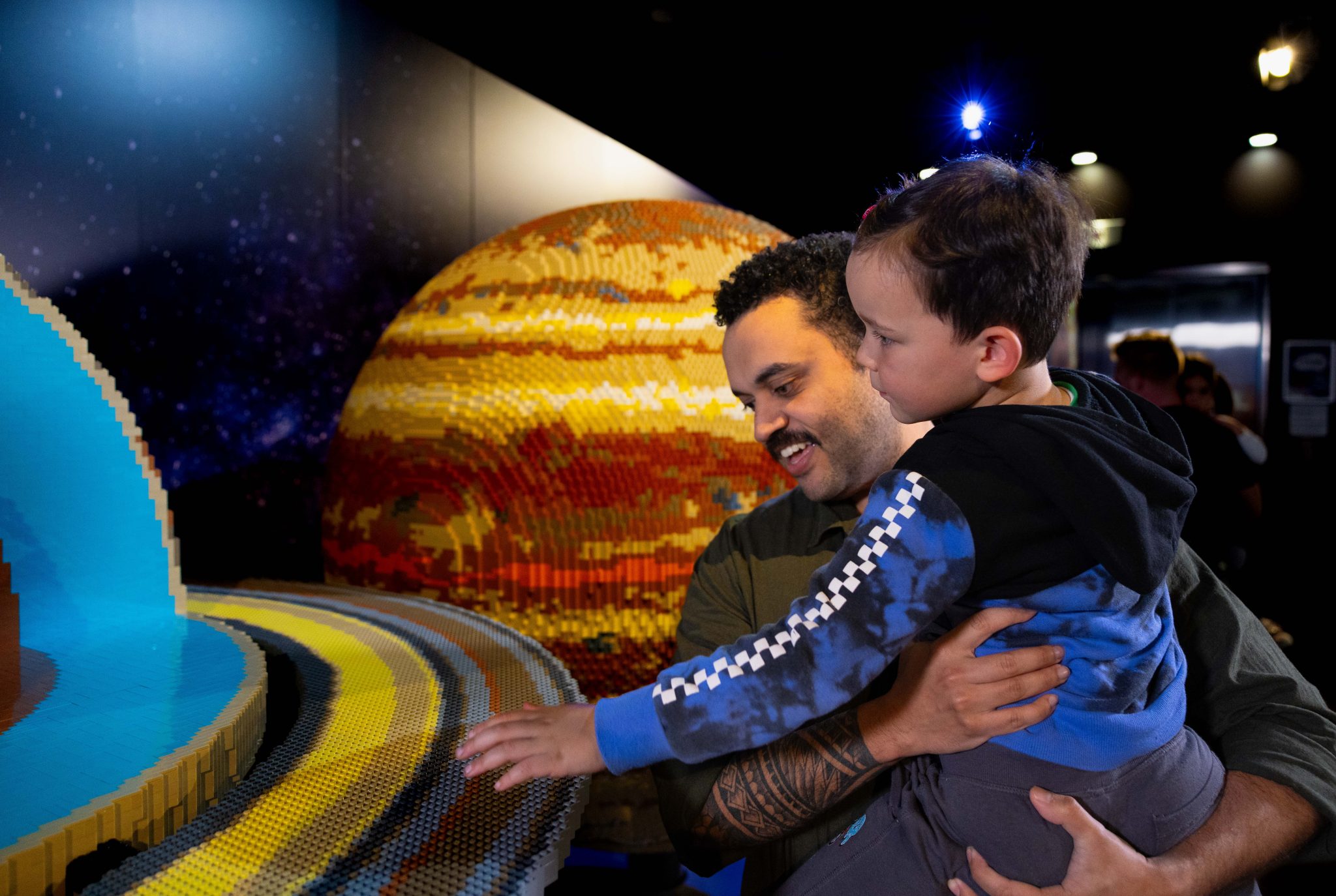
The exhibition includes :
- a 7.5-metre tall replica of the NASA Space Launch System (SLS) Rocket made from over 460,000 LEGO bricks, and fitted with lights and speakers, which took Brickman and his team 563 hours to design and build
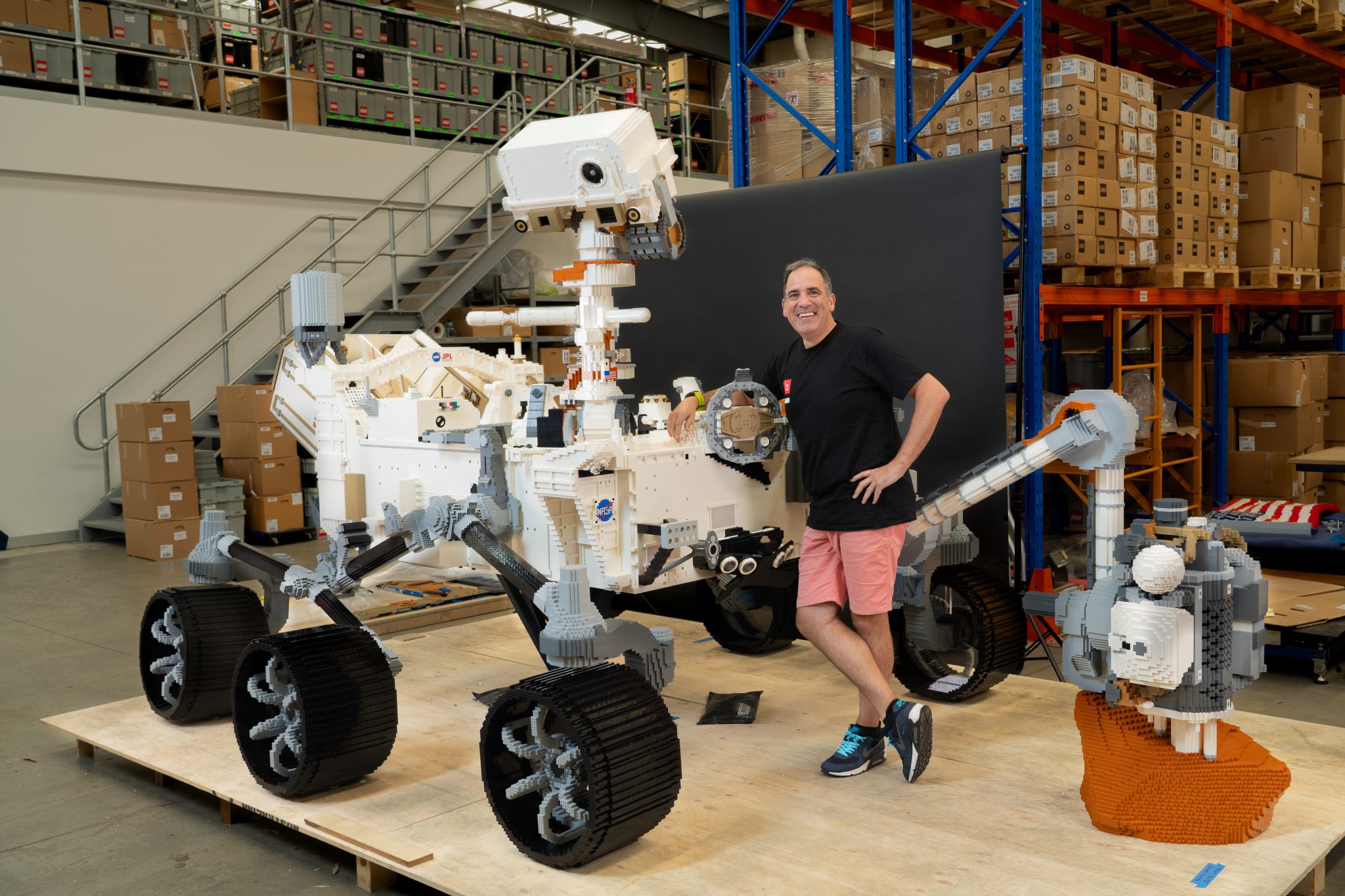
- a life-size model of the Mars Rover Perseverance and Mars Helicopter Ingenuity all crafted out of LEGO bricks
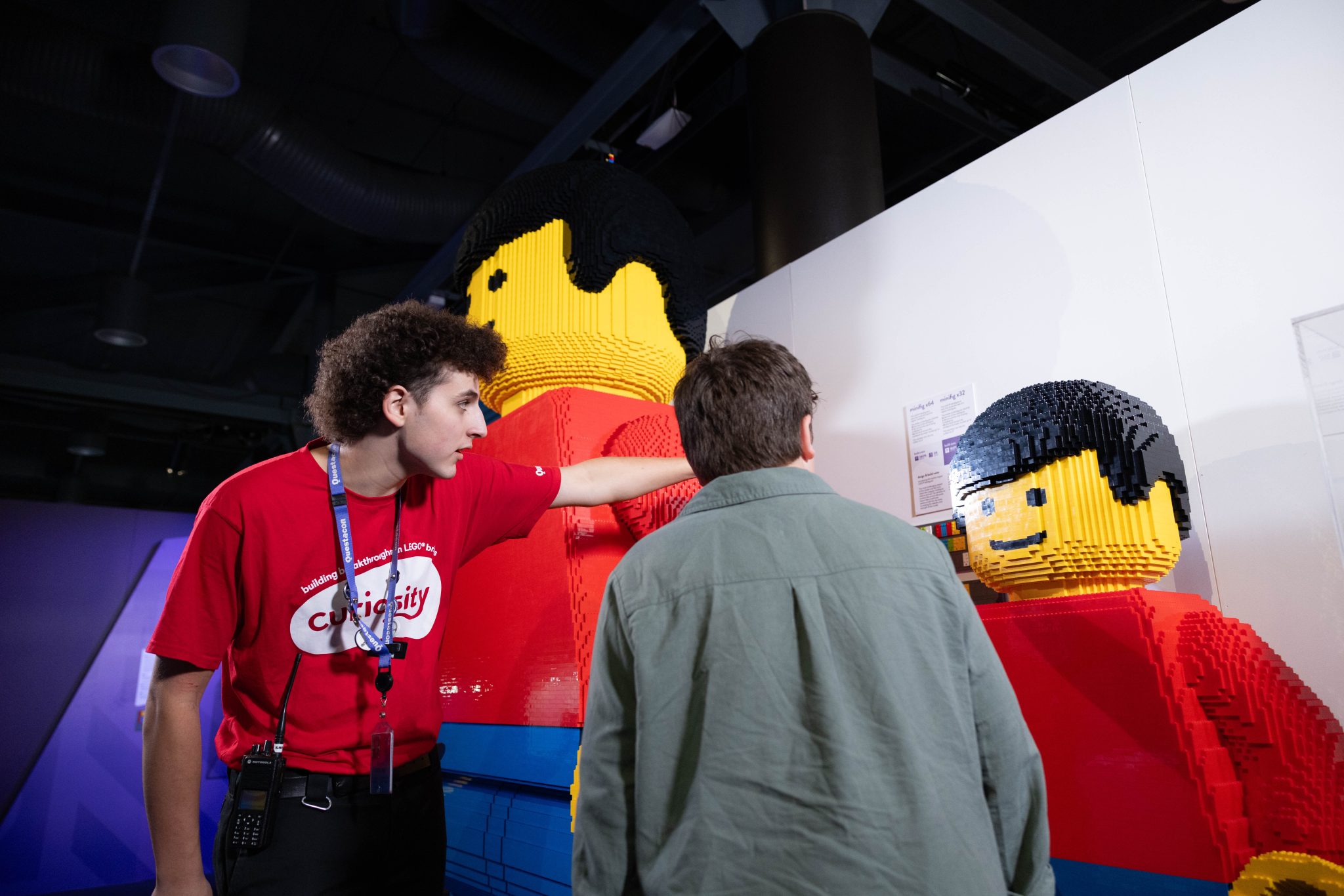
- seven models of a LEGO minifigures built at different scales, from the towering x64 scale 256 centimetres tall to the 2 centimetres half-scale; meet Bob, Bob, Bob, Bob, Bob, Bob and Bob…
- an enormous periodic table of elements and models of bridges and spacecrafts from around the world, demonstrating various principles of engineering and design
- inspiration for future innovators of all ages, including featured displays showcasing the contributions of iconic female scientists reimagined in LEGO bricks, and
- interactive displays that combine knowledge and creativity for kids and adults alike to get hands-on building their own creations.

The exhibition runs at Discovery Science and Technology Centre in Bendigo from Tuesday 3 March to Sunday 29 November. Details here.
Top image: Xavi Cabrera, Unsplash.

© Niche Media 2026