

Hassell launches its 2026 Workplace Futures Survey

Share

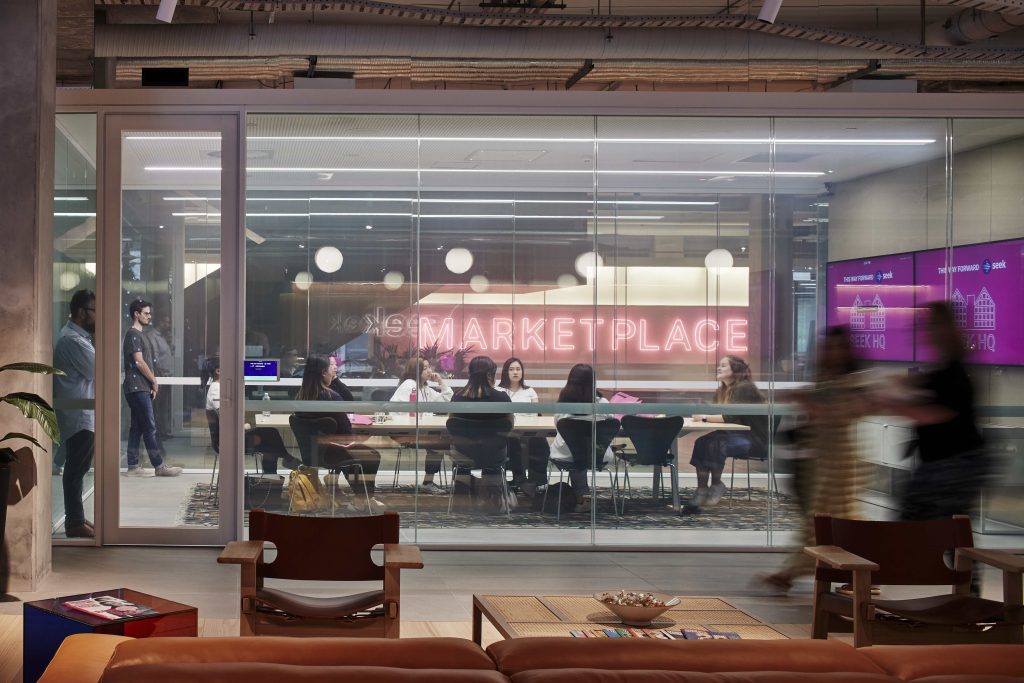
Titled ‘Too Connected to Concentrate: 2026 Workplace Futures Survey’, the report is based on a survey of 2500 knowledge workers across Australia, Hong Kong, Singapore, the UK and the US.
The report’s central argument is that workplaces are changing at two speeds: the physical workplace is gradually recovering from the pandemic shift, while AI is rapidly changing how and where work happens. The key takeout is that technology is making work increasingly portable while the physical workplace needs to become more valuable as a result.
Here are the main takeouts:
The office is returning – but not to its old state
The report argues that the shift back to the office is happening slowly and unevenly. In Australia, the proportion of people working from the office four or more days a week has increased from 52 percent to 59 percent over three years, but remains below pre-pandemic levels. Meanwhile, frequent workplace AI use has roughly doubled in just two years. This means that workplace strategy can no longer focus solely on hybrid work, but must also respond to rapidly changing technology.
Older buildings can compete with new ones
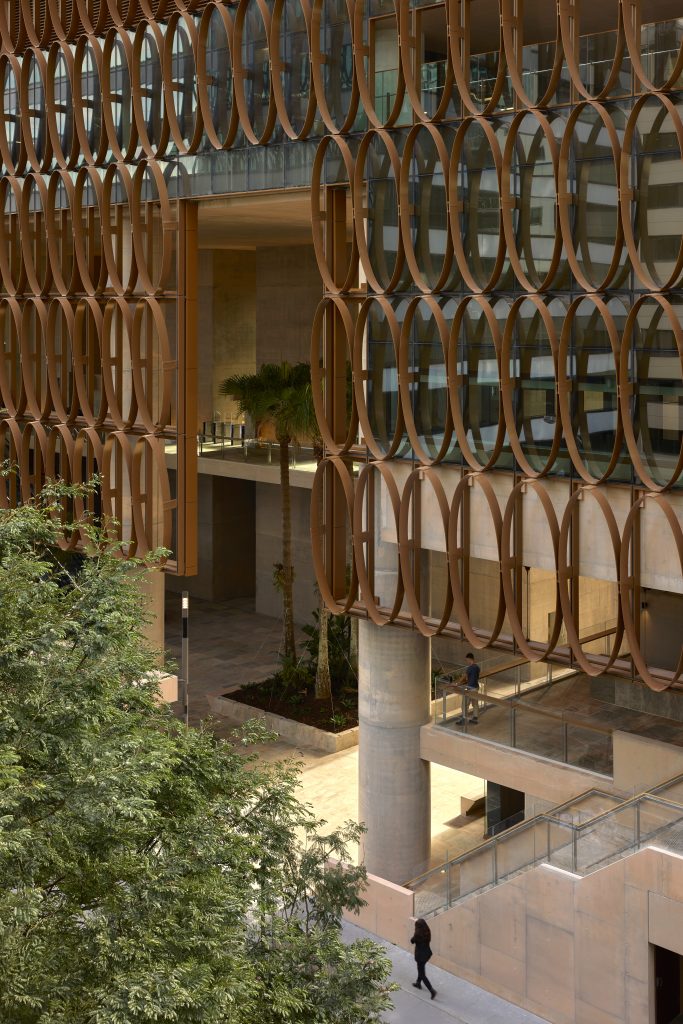
One of the more interesting findings is that newness isn’t necessarily what makes a building attractive. People in newer, generic buildings rated them positively, but people in older buildings with distinctive character and updated amenities did too. The report suggests older buildings don’t need to imitate new developments or be demolished; instead, they can retain their character while upgrading the user experience, which is particularly relevant to adaptive reuse and refurbishment.
The lobby matters more than you may think
The strongest relationship in the survey was between pride in a building’s lobby and people’s overall perception of the building. Among respondents who were extremely proud to bring a visitor into their lobby, 88 percent considered their building better than others in the area. Among those who weren’t proud of the lobby, that figure dropped to just seven percent.
The report isn’t saying a fancy lobby automatically creates a premium building. Rather, the lobby acts as a visible expression of quality, care and identity. The basics matter: comfort, cleanliness, greenery, seating, lighting, activity, considered design, and efficient arrival and access.
The six priorities for improving buildings
Hassell identifies six factors that have the strongest and most consistent relationship with perceived building quality, lobby pride and preference for office-based work:
- make the lobby visitor-worthy
- add seating, greenery and outdoor cues
- modernise older stock
- fix comfort problems
- create reasons to dwell, and
- provide space for exercise and wellbeing.
A key message is that there is no magic amenity. The fundamentals of the workplace experience matter more than novelty.
Individual work is more important than the workplace conversation suggests
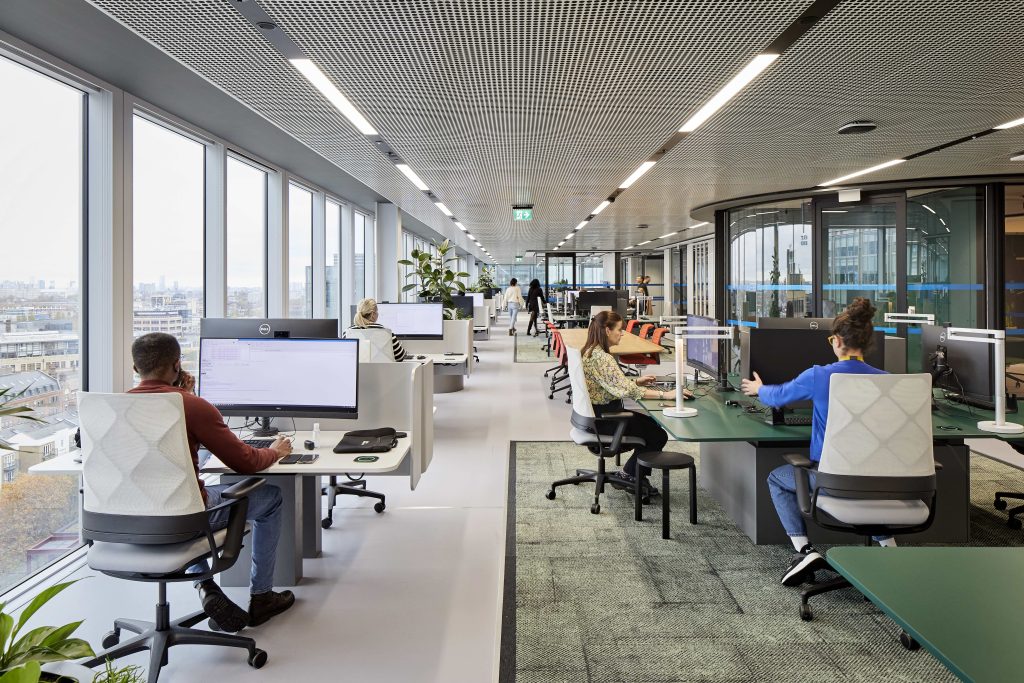
Perhaps the strongest finding in the report is that people consistently preferred workplace scenarios designed around individual work rather than group work. The preference held across age, gender, country, seniority, personality, industry and meeting load.
This challenges the post-pandemic idea that the primary purpose of the office is to bring people together for collaboration. The report’s argument is more nuanced: collaboration still matters, but individual work cannot be treated as something that happens elsewhere.
Don’t design for one technological future
The people surveyed for the report were much less aligned on how technology should shape the workplace. Some wanted highly technology-enabled environments; others preferred places where they could disconnect from technology. No single workplace scenario captured more than around a quarter of the estimated preference share.
The solution proposed is choice and variety rather than committing to one model. In practical terms, this could mean a workplace offering a spectrum of environments.
AI is making work more portable
The report’s most significant technology finding is that AI is further weakening the connection between work and specialised physical settings.
More than eight in 10 respondents said they could use AI effectively almost anywhere as long as they had internet access. People reported using AI not only at desks and offices, but also on sofas, in bed, while commuting, in cafés and even in bathrooms. Younger respondents and frequent AI users were particularly likely to work with AI in unconventional locations.
The AI-ready workplace isn’t necessarily the most technologically advanced
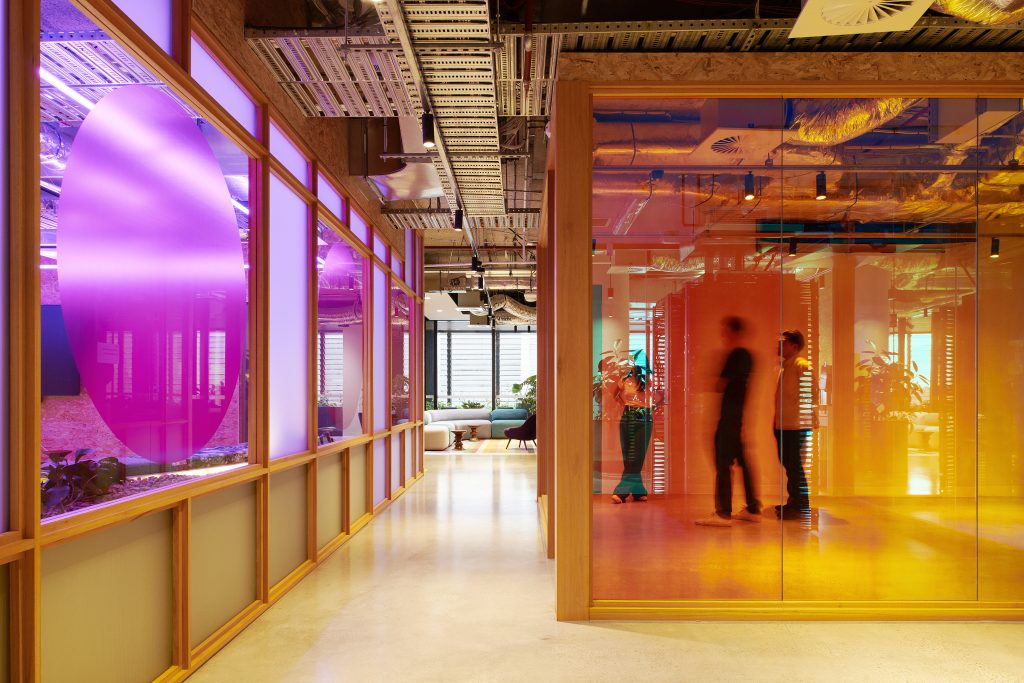
This is arguably the report’s most useful message for designers. When respondents were asked what would help them use AI at work, the leading answer wasn’t more technology. It was more:
- space for learning and mentoring – 33 percent
- space to focus – 30 percent
- privacy – 29 percent
- training space – 25 percent
- quiet – 23 percent, and
- space to take a break away from the computer – 23 percent.
By comparison, only 18 percent selected an extra monitor, while 12 percent wanted better microphones and cameras. So the workplace’s value increasingly lies in providing things that technology can’t easily provide anywhere else: learning, mentoring, concentration, privacy, quiet and human interaction.
The overarching idea
The report essentially argues for a shift from ‘the office as a place where work happens’ to ‘the workplace as a place worth choosing’.
As work becomes more portable, the physical workplace needs to become more purposeful. It doesn’t have to provide everything, but it needs to provide the right things.

© Niche Media 2026