

Grid Glass: where craft meets contemporary manufacturing

Share
Axolotl’s Grid Glass reinterprets the centuries-old language of stained glass through architectural glass, digital manufacturing and material experimentation – with the Ghan providing a particularly demanding setting in which to push the process further.
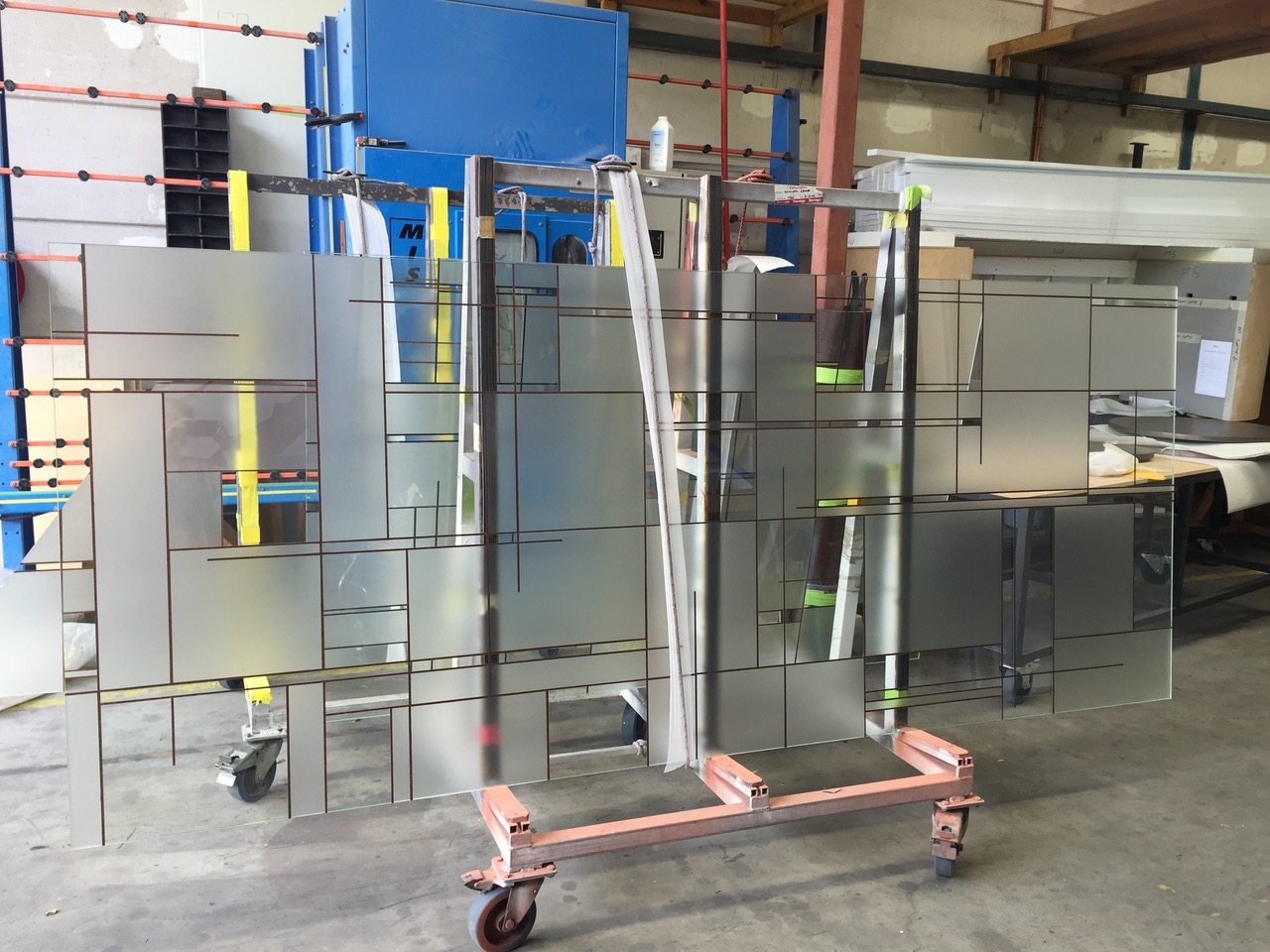
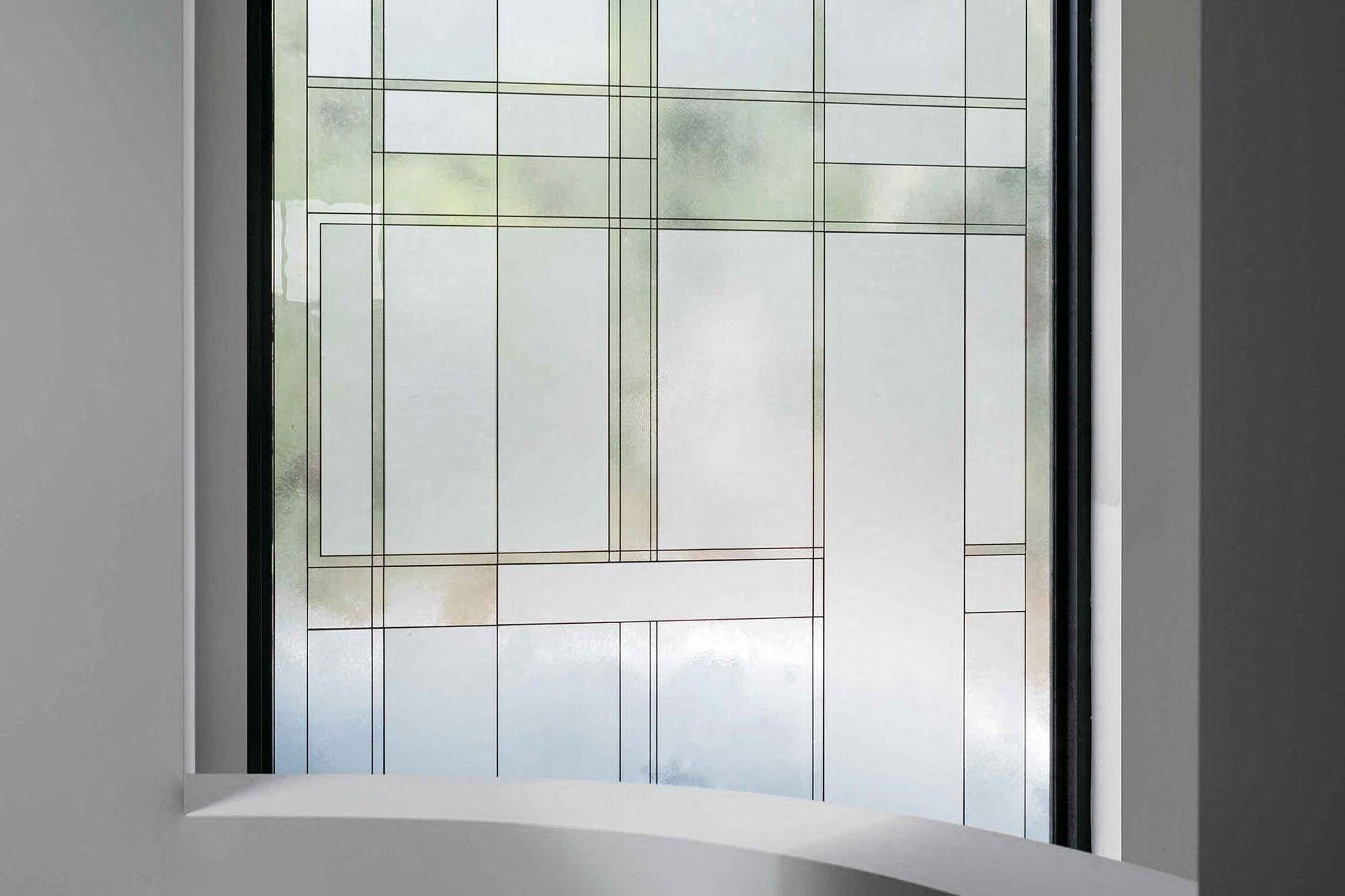
There is something inherently familiar about Grid Glass. Its geometry recalls the leaded lines and coloured fragments of traditional stained glass, a craft with centuries of architectural history. But while the visual language may have a historical precedent, the way Axolotl approaches it is distinctly contemporary.
Rather than assembling individual pieces of coloured glass with lead, Grid Glass begins with architectural glass and treats the grid as part of an overall material and design system. Metal, colour, texture, transparency and other Axolotl surface treatments can be brought together within a single panel, resulting in a finish that can be highly graphic and architectural, or deliberately restrained.
For Axolotl, the distinction is important. Grid Glass is not a fixed product with a predetermined appearance; it is a process capable of producing something different for every project.
Going for the Ghan
That adaptability became particularly significant when Axolotl was commissioned to develop a version of Grid Glass for the interiors of the Ghan. Contrary to the assumption that the process was invented specifically for the iconic Australian train, Grid Glass had already been developed and used on other projects. The Ghan instead presented an opportunity to adapt the process to a new set of aesthetic and technical conditions.
It is an approach that reflects Axolotl’s broader philosophy. With more than three decades of experience in developing architectural surfaces, the company rarely sees a material process as finished. Instead, existing techniques become starting points for further experimentation.
“Once we work out how to do something, the next question is usually: what else can we do with it?” says Axolotl CEO, Kris Torma.
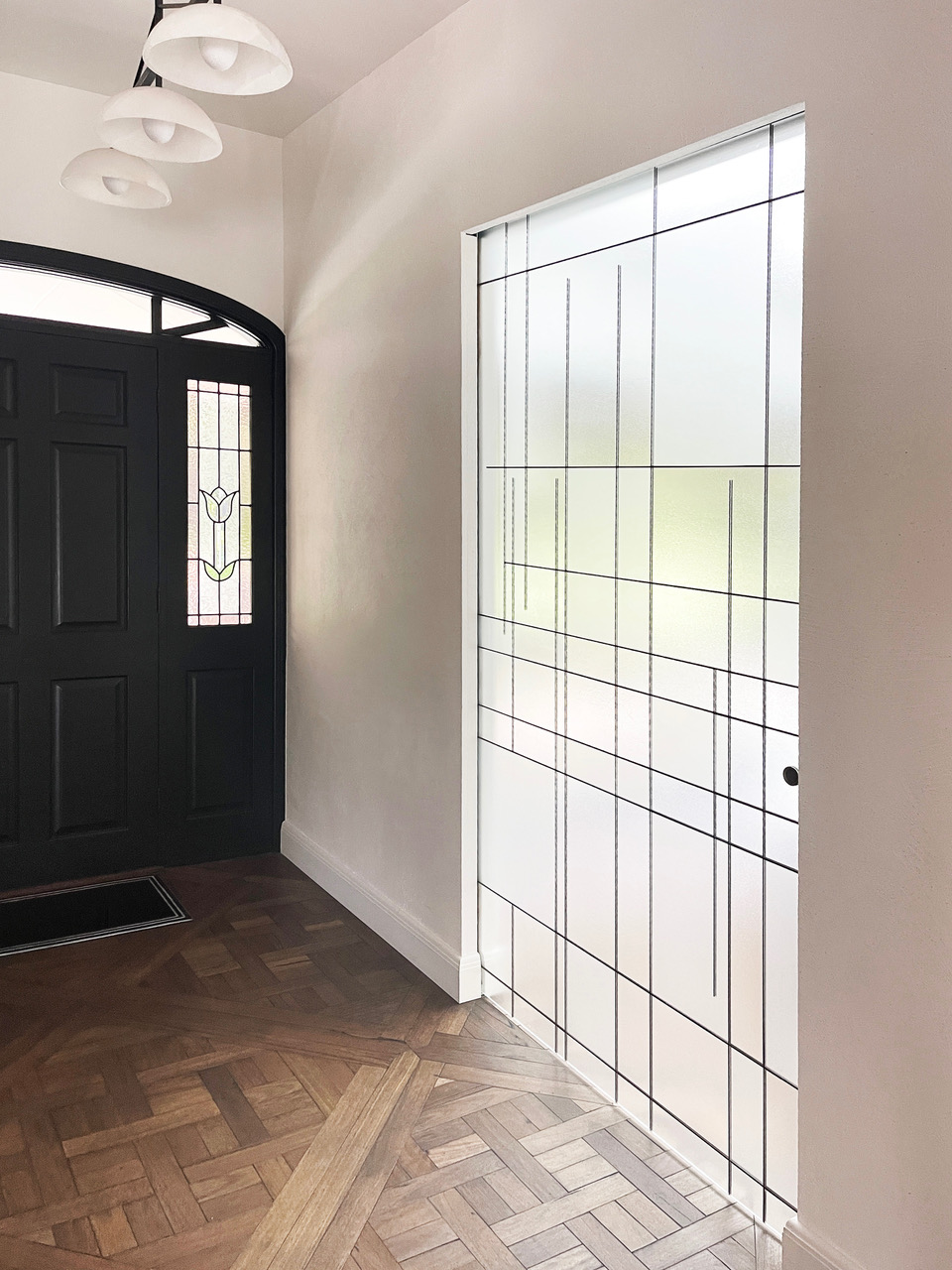
The question is particularly pertinent to Grid Glass, the potential of which extends well beyond the Ghan. Doors, screens, partitions, feature walls, hospitality interiors and residential applications can all be created through the process, with the geometry, glass, metal, colour, transparency and texture adjusted according to the requirements of each project.
This capacity for variation also reflects the intersection of craftsmanship and advanced manufacturing that sits at the heart of Axolotl’s work. Technology, in this context, is not positioned as a replacement for the hand of the craftsperson, but as a means of expanding what can be achieved.
“Technology gives you precision. Craftsmanship gives you character,” explains Torma. “When the two work properly together, you can create something that neither could really achieve on its own.”
Aiming for accuracy
For Grid Glass, digital manufacturing provides the accuracy required to establish complex geometry and repeatable detail, while material selection, finishing, colour and texture contribute to the individuality of the completed surface. The result is less about industrial uniformity than about using manufacturing capability to make highly considered, project-specific outcomes possible.
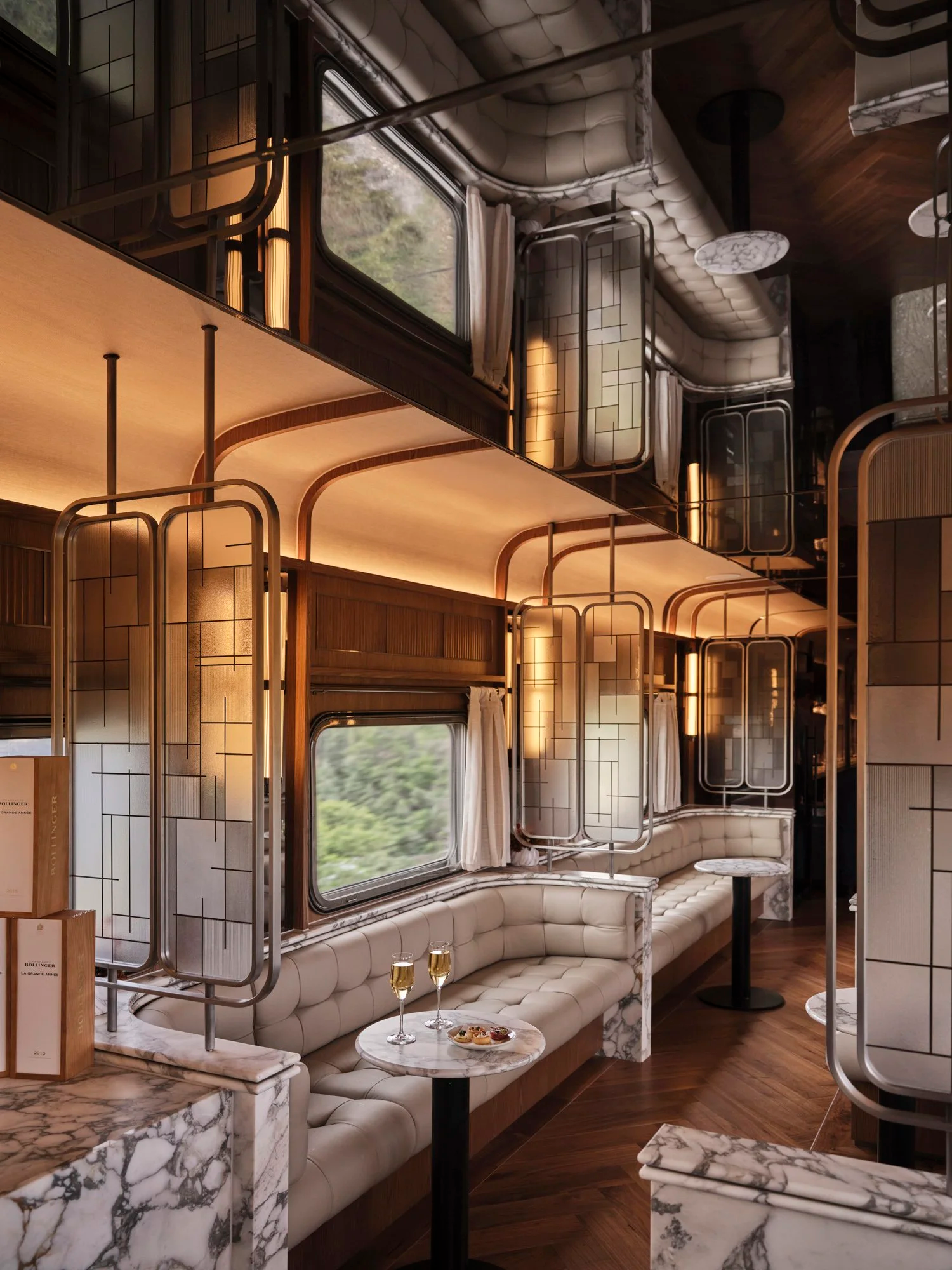
The Ghan brought this philosophy into particularly sharp focus. Unlike a conventional architectural interior, a train is a constantly moving environment, subjecting materials to vibration and imposing strict requirements around weight, dimensions, durability and installation.
The challenge, therefore, extended well beyond creating an aesthetically compelling piece of glass. The process needed to be capable of consistent manufacture and able to perform under the conditions of a moving train.
Testing, prototyping and refinement became an essential part of the development. As with many of Axolotl’s processes, the journey involved making, testing, modifying and remaking – an iterative approach that allows the technical requirements of a project to inform the eventual aesthetic outcome.
Yet aesthetics remained equally important. The Ghan carries a strong visual identity and a long history, requiring a material that could feel distinctive and enduring rather than simply decorative or fashionable.
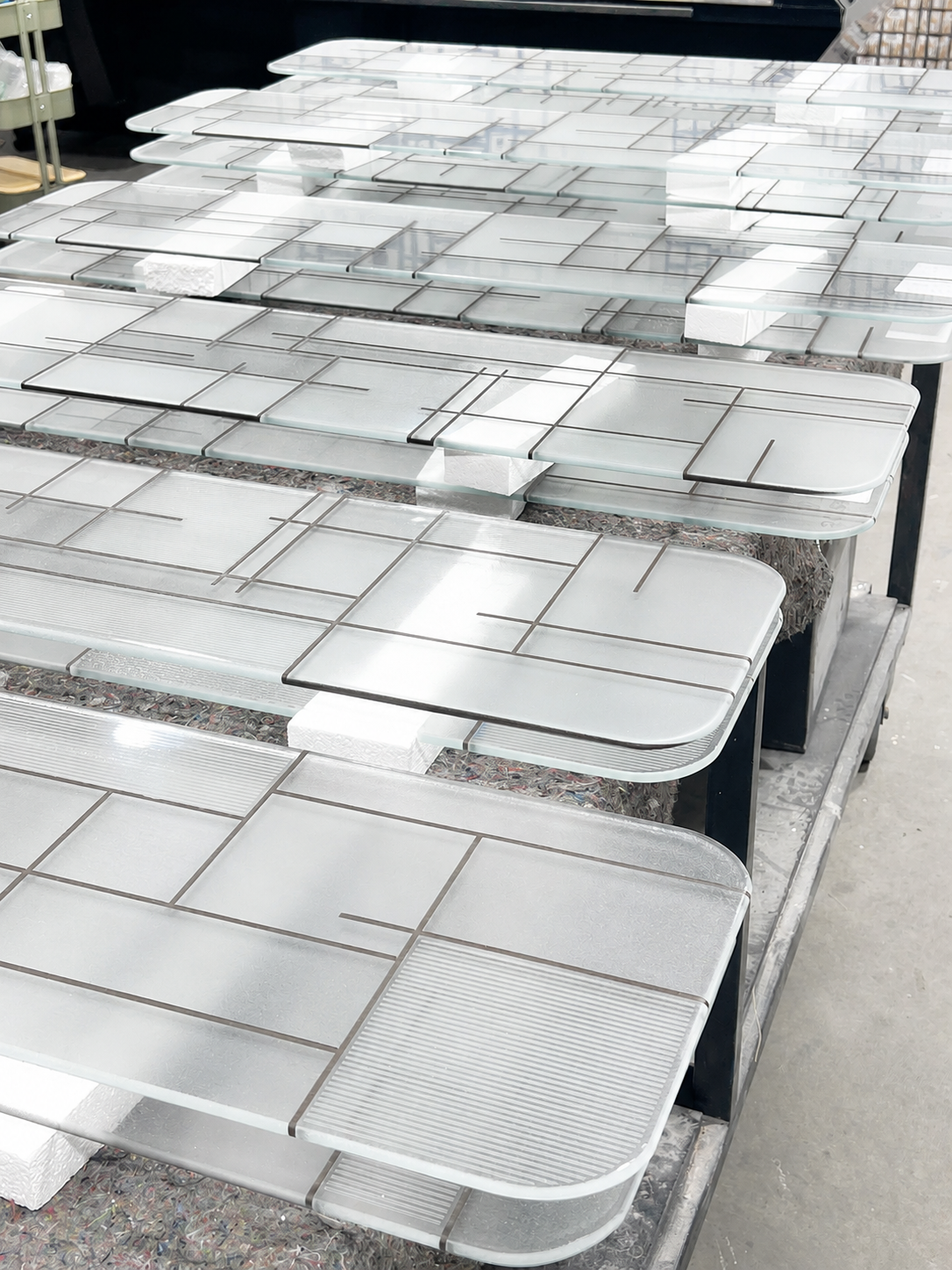
Grid Glass offered an opportunity to create that sense of permanence through its interaction with light. Transparency, reflection, colour, metal and texture shift as passengers move through the space and as daylight changes. It is an effect that can be difficult to capture photographically, but becomes apparent when the material is experienced in situ.
There is also a conceptual resonance in the process: an architectural material with a lineage in stained glass is being reconsidered through contemporary glass, manufacturing and surface technology.
Achieving that outcome was a collaborative exercise between the client, design team and manufacturer. Rather than treating fabrication as the final stage of a design process, Axolotl sees early engagement with architects and designers as an opportunity to explore what might be materially possible.
That exchange is central to the company’s wider practice. Axolotl’s history began with Applied Metal and an ambition to rethink the possibilities of metal as an architectural surface. Over time, that same curiosity has extended into concrete, terracotta, glass and other materials and processes.
Culmination of capabilities
Today, those capabilities can be combined across a single project, bringing together glass, metal, colour, texture, transparency, carving and digital manufacturing.
It is this culture of experimentation that makes Grid Glass more than another decorative glass finish. Its value lies not in a prescribed aesthetic, but in the possibility of developing something specific to a particular architectural vision.
For Axolotl, some of the most productive projects begin with a simple question: can you make this?
Sometimes the answer is not immediately known. The process then becomes one of figuring it out – testing the limits of materials and manufacturing until a new solution emerges.
“That’s an important part of Axolotl’s position in the market,” says Torma. “We’re not simply supplying finishes from a catalogue. We’re a manufacturer that can work with architects, designers and artists to develop highly specialised architectural surfaces and solutions specifically for their projects.”
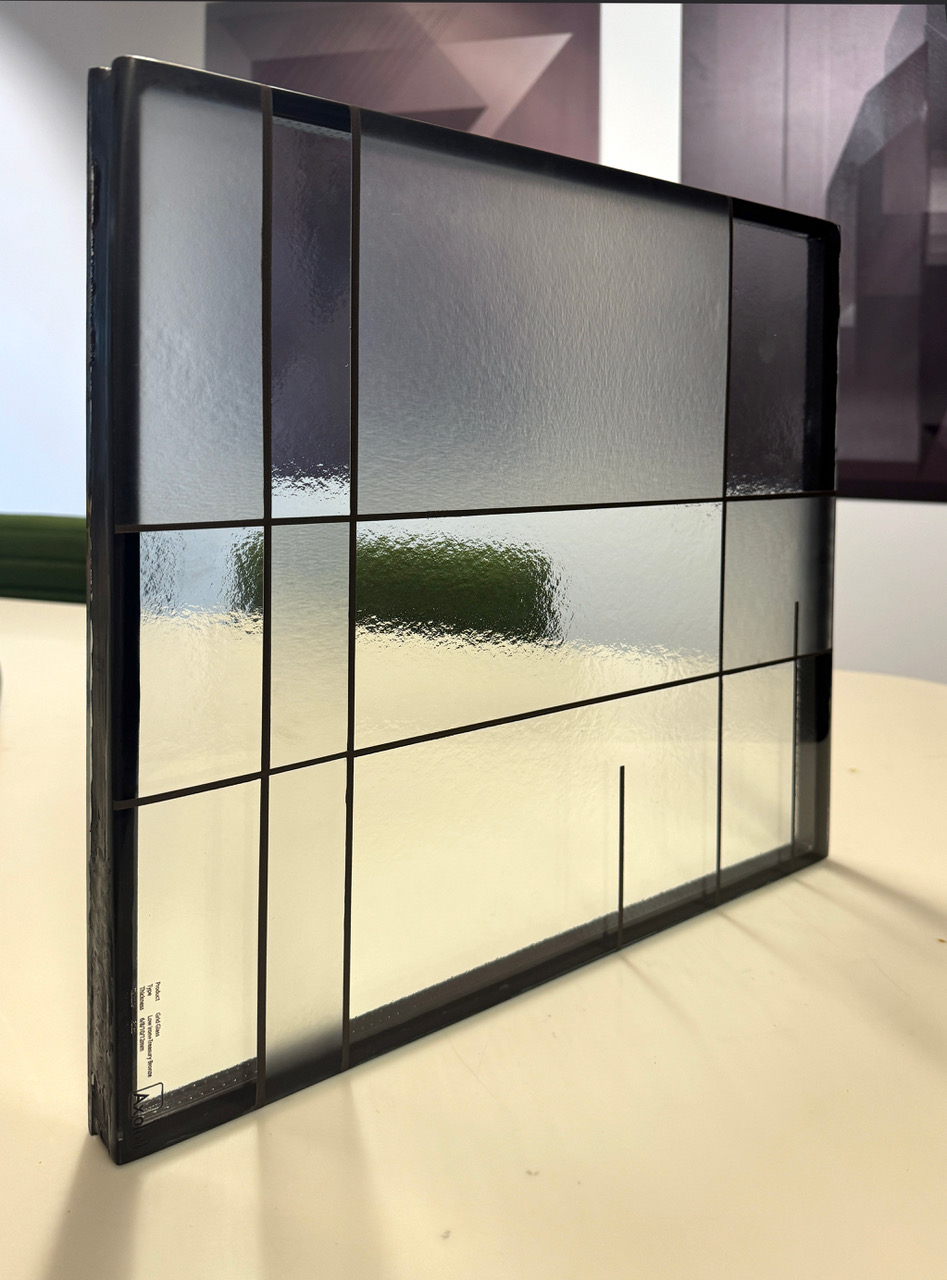

The Ghan provided one such opportunity, taking an established Axolotl process into an environment with an entirely new set of demands. What emerged was not simply a bespoke application, but another step in the continuing evolution of Grid Glass – and a demonstration of how contemporary manufacturing can give an old architectural language an entirely new expression.
Dedicated website
Axolotl has created a website for Grid Glass, which includes an interactive visualiser where clients can create their own design, selecting individual areas within the grid and applying their preferred colours, textures and finishes. It’s also possible to enter panel dimensions and download an A4 specification sheet of any design.
For more information, visit Axolotl.
Photos: Supplied unless specified.
You Might also Like


Related Stories

© Niche Media 2026