
Great Jones finds its corner from coffee to cocktail
Great Jones finds its corner from coffee to cocktail

Share
Brahman Perera designs an Armadale corner café for takeaway coffee, long lunches and afternoon wine.
For a neighbourhood café that must serve the morning commuter, the long-lunch table and the guest who lingers over a tipple, a convincing interior depends on a plan that accommodates each visit with equal ease. At Great Jones in Armadale, interior designer Brahman Perera answers that challenge with a hospitality interior that draws its identity from the corner of High and Lambeth streets.
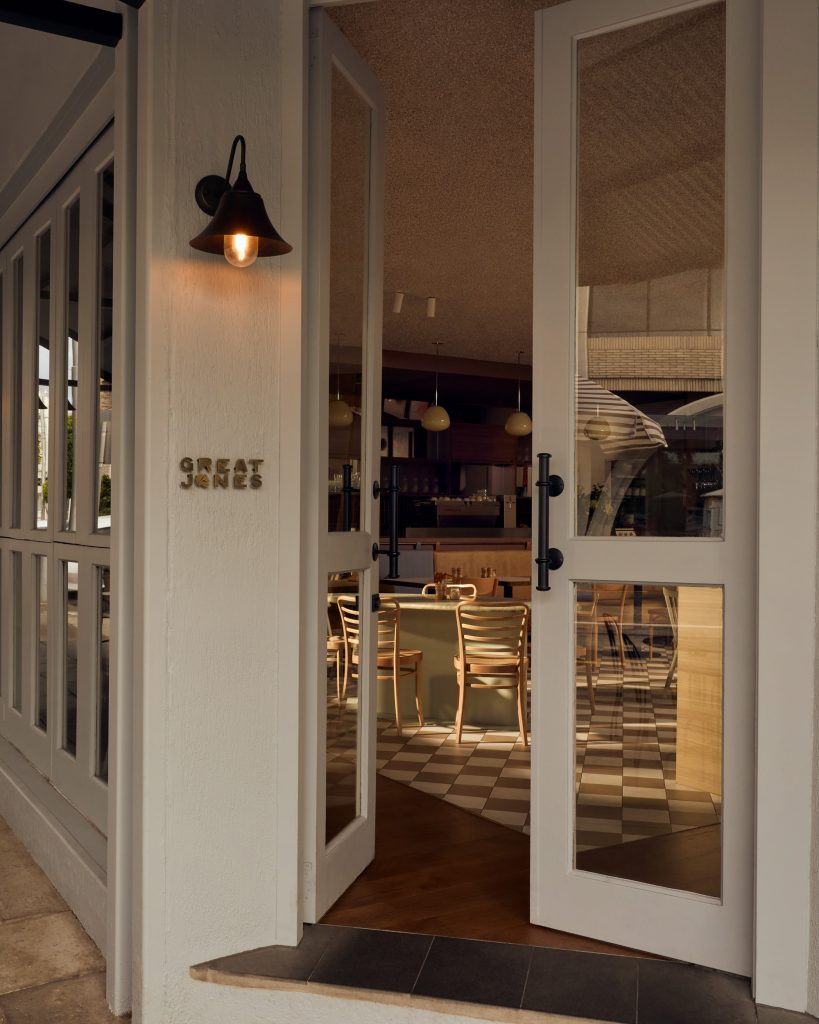
Although owners Josh Evans and Nick Duckworth spent almost a decade creating Australian-style cafés in New York, their first Australian venue had no need to turn up wearing the design equivalent of a souvenir T-shirt. Perera drew the line. “We wanted some of that energy, but never a themed New York café.”
With Manhattan cosplay off the menu, the designer could turn his attention to the personality of the site and the habits of the people around it. For his bearings, he looked outside. “Armadale gave the project its grounding: the corner of High and Lambeth Streets, the rhythm of the local retail strip and the idea of a place people could return to regularly.” A modest little label followed. “One of the earliest phrases in our concept work was simply ‘that café on the corner’, familiar, distinct and easy to use,” Perera says.
Pockets full of possibilities
When a café occupies one big, boxy space, even a perfect macchiato may struggle to make customers feel snug and settled. Perera says the starting point was the corner itself and the broad, relatively cubic floorplate. “We didn’t want it to read as one large, undifferentiated room, so the first concept was structured around a series of connected pockets: a quick coffee or perch zone, a livelier central area and more intimate places for longer meals.”
While plenty of bright ideas lose their sparkle somewhere between the mood board and the final chair delivery, this scheme proved to be a sturdy little creature, and its family resemblance remains. “Most of that original DNA survived,” Perera says. “The changes in flooring, warm timber, deep glossy tiles, open display joinery, mixed chairs, banquette seating and coloured-glass screen were all there very early.
“Some individual materials changed as the design developed – carpet disappeared, for example – but the main idea remained: traditional café elements, loosened and reworked through colour and a little play, so that the room feels familiar without becoming nostalgic.”
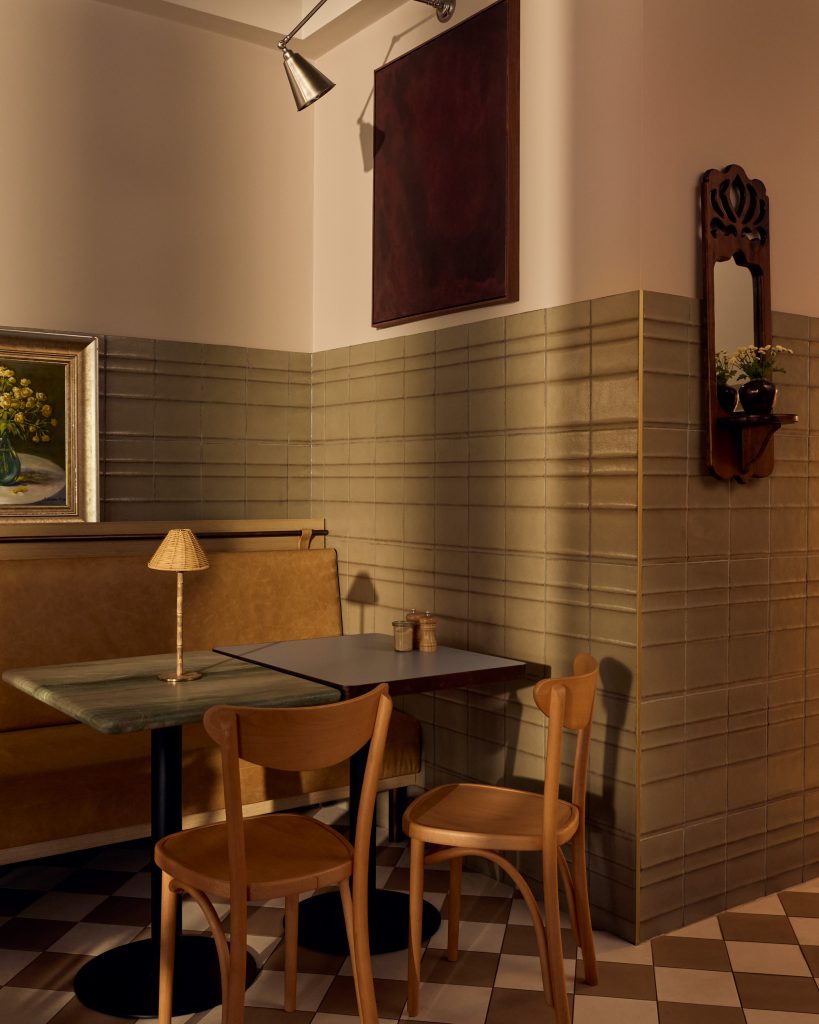
Because a café can ask a lot of its floor space before the lunch crowd has even decided what to order, the plan had to accommodate caffeine on the run alongside the noble art of lingering. Perera sorted the choreography accordingly. “The coffee counter and takeaway path needed to work quickly in the morning, while the seating offers different degrees of commitment,” he says, “a perch for a 10-minute stay, a table for lunch or a banquette and quieter corner for wine and a longer stay.”
Perera adds, “We used more hard-wearing finishes in the areas with the highest traffic, then brought warmer materials and more intimate lighting deeper into the room.”
Same address, different groove
As the hands on the dial edge toward wine o’clock, the venue reveals another side without staging a dramatic makeover. Perera sets the scene. “During the day, the windows and coloured glass bring in changing light; later, the pendants, table lamps, dark timber and glossy tiles give the interior more depth. The room doesn’t need to change costume between breakfast and drinks – it simply changes tempo.”
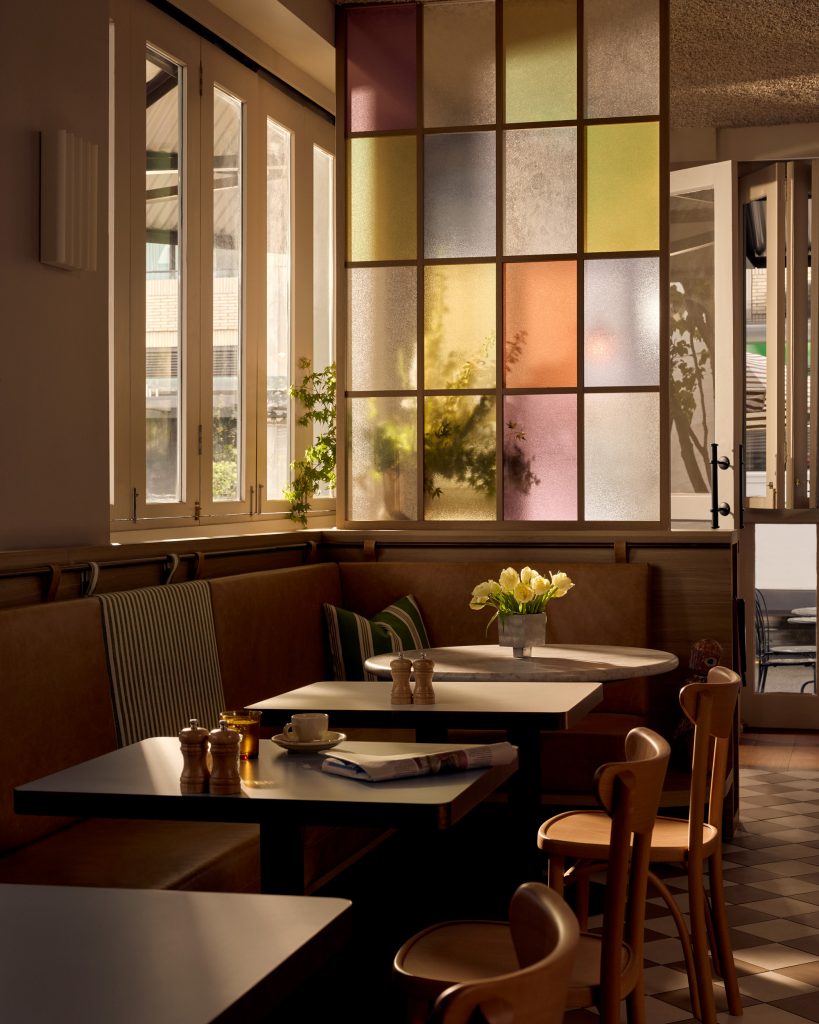
For all the pleasures of tactile surfaces and handsome lamps, a café faces its real test when hungry people walk through the door and the team gets busy. Good looks can’t rescue a confusing queue. Perera goes back to basics. “It probably shows that I think hospitality begins with generosity and function.”
With customers needing to find their way and staff needing a workplace that supports service, the practical groundwork matters long before anyone admires the finer details. “Once that structure works, atmosphere can be layered through material, colour, light, artwork and objects,” Perera says. “I’m less interested in a space looking completely resolved on opening day than in it having enough character and flexibility to gather more life over time.”
Whether your ritual involves a hurried coffee or a lunch that blurs into the afternoon, Perera sums it up this way: “What makes a hospitality space endure is rarely one oversized ‘hero’ gesture. It has good planning, durable materials, a sense of familiarity and a few memorable details that people want to return to.”
Photos: Lillie Thompson.
You Might also Like




Related Stories

© Niche Media 2026