

30UNDER30 practice partner RMA on collaboration, mentorship and the future of architecture
30UNDER30 practice partner RMA on collaboration, mentorship and the future of architecture

Share
Now in its fourth year, Australian Design Review’s 30UNDER30 program has established itself as the leading mentorship and career development program in the architecture and design industry. The unique program brings together game changers, industry leaders, practice founders, product manufacturers, suppliers and sponsors to celebrate and empower young architects, and interior and product designers of the future.
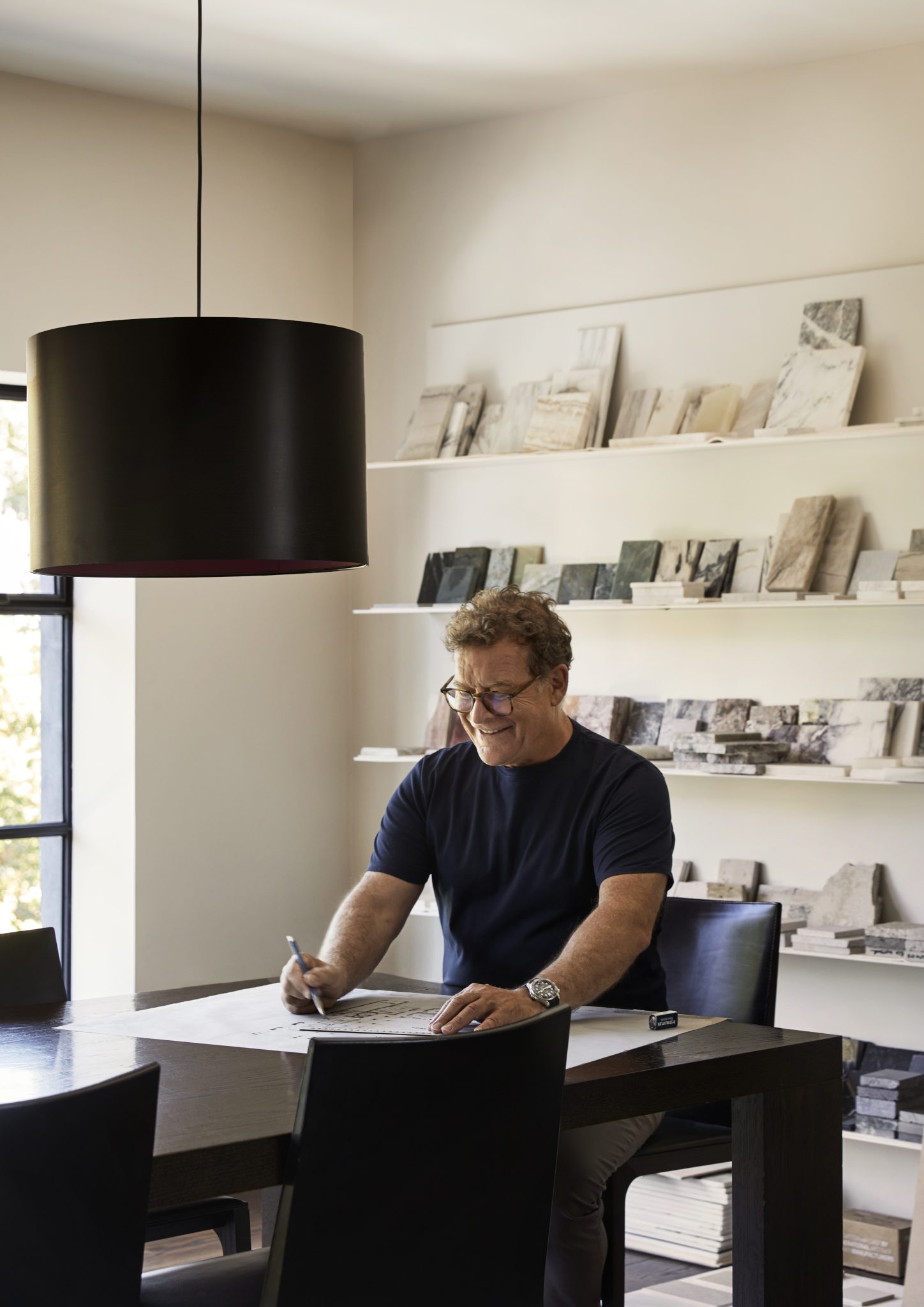
There was a time when architect Rob Mills, founder of Rob Mills Architecture & Interiors (RMA), designed in isolation. Now, more than 30 years on, the award-winning practice thrives on collaboration – with clients, consultants and a new generation of designers who bring fresh energy and technological fluency to the studio. For Mills, moments of co-design with his team are some of his most joyous.
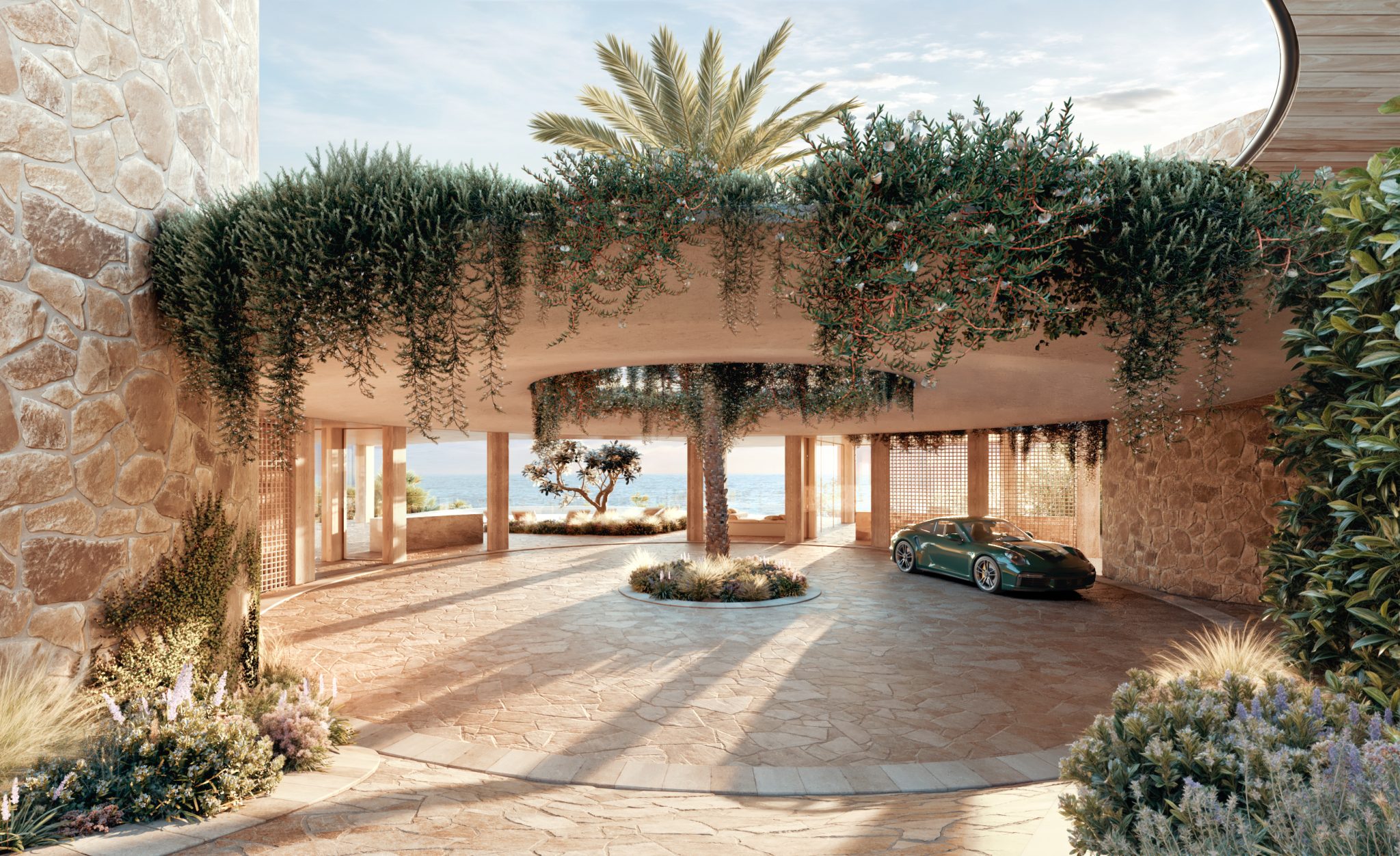
From studios in Melbourne and Sydney, satellite offices across the country and plans for a US presence, RMA has earned international acclaim for luxury residences that blend intelligent architecture, thoughtful interiors, craftsmanship and a deep connection to nature.
With nearly half of RMA’s 25-strong team under 30, Mills says mentorship is a two-way street: young designers absorb experience, while seasoned staff gain fresh perspectives.
Core values at RMA
In this Q&A with Australian Design Review, Mills explains why the next generation of architects must pair evolving skills with responsibility to lead the profession into the future.
Australian Design Review: What is your driving philosophy or core values behind your studio that make it stand out in the industry?
Rob Mills: Our core values and philosophy are centred on our clients. It’s their land. It’s their resources. They’re the reason why we’ve come together to create the vision. We keep our clients completely in the foreground and that allows us to design a residence that is designed for them. It’s quite a seamless, frictionless relationship because we share the same ambitions.
ADR: Do you have staff aged 30 and under?
RM: Nearly half of our team is under 30. They bring a freshness and an energy to our firm. They arrive with strong technological skills, supported by our investment in the best and newest tools, and what they don’t know, they pick up quickly.
ADR: What do young designers bring to your practice?
RM: RMA is made up of a highly talented team of architects and interior designers. To best support them – informed by our experiences last year and our commitment to initiatives such as 30UNDERunder30 – our recruitment policy has evolved. Today, we no longer seek to fill senior positions from outside the practice. Instead, we focus
on empowering our loyal, long-standing team members who have contributed significantly to RMA and our clients over the years. We recruit talented graduates and junior architects who possess the right attitude, expertise in the latest technology and a willingness to learn through mentorship to develop the skills and capabilities to design and document award-winning high-end residential projects.
It also naturally supports our established team members, because they’ve got younger colleagues coming up behind them. The young mentor the established and the established mentor the young – it’s a real collaboration. Relationships are built quickly, grounded on generosity and sharing knowledge and skills.
The culmination of this was the other night. Our head of interiors Louy Bell, associate architect Clement Cheng and I were just sitting around the table designing together. Clement has been with RMA for eight years and Louy for six and a half, and we just designed together. For me, it was such a joyous moment because they’re rare in my career. Previously, as a designer, I used to work in isolation, and today we don’t work that way. We work as a real team and everybody makes a contribution. It’s really rewarding.
The importance of collaboration at RMA
ADR: Collaboration often plays a vital role in successful design projects. How does your practice approach collaboration, both internally among team members and externally with clients and stakeholders?
RM: Time is that rare commodity that none of us have much of in our lives. And if you really are good at collaborating, the time it takes to produce exceptional outcomes is less. We’re driven and we’re intelligent, with a continual commitment to growth and improvement.
I like sport as an analogy in business. We’re like a football team, and each person has their best place on the field. By all means, people do move around, but they naturally gravitate to their position on the field. And if everyone’s in position and playing their role and understands their role, that’s the best form of collaboration.
Internally, we have consistent meetings with the team to encourage that collaboration. We encourage everyone to come into the office and to speak up. We love Teams, but we find that speaking in person and collaborating in person is also really effective.
On an external level, we pride ourselves on our communication tools. We work with industry-leading technology to make sure that, with our clients, we’re communicating their designs to them in the most effective way possible to help them understand the design and what we’re crafting for them. We meet with our clients fortnightly, if not more regularly. We also meet fortnightly with our consultants. That’s really important to us throughout the life of a project.
Evolution of design at RMA
ADR: The architecture and interior design landscape is constantly evolving. How do you think young architects and designers will need to develop their skill sets to meet the demands of future practice?
RM: Technological skills and the understanding of how to design and make a building – they’re kind of obvious things. I think, more importantly, is people’s attitudes. Relationships will always come first. You need to be able to read your client, understand their brief, ambitions and politics. You need to know everything about the client. If you can do that, then you’ll manage to produce something that the client really wants, and that is the reason the clients come to you in the first place.
I think if architects are going to shape our industry, rather than be shaped by the marketplace, then architects need to change. The problem is that architects and designers have let others take over many areas that were historically their responsibility. That puts us in a subservient position, dependent upon the decisions of others. To be truly creative, architects and designers must lead. They respect their clients’ wishes, but they don’t blindly follow.
The greatest challenge to the next generation is to hone their skills and pair them with responsibility – only then can they make a difference.

ADR: What inspires you about the successive generation of designers?
RM: We’ve got a great team, and they are all inspiring to work with because they’re good people, their attitude is fantastic, they’re willing to learn new things and keep evolving.
It’s like climbing Everest. Once you’ve got to base camp, you’ve then got to get to camp one, two, three and four, and then the summit. So as designers, in your career, you can’t stop at base camp, because all you’re doing is looking at Everest. So, we are surrounded by people who constantly evolve and become better at what they do, and they never stand still.
I think the younger generation is also very conscious of sustainable design and living consciously – how people live their day-to-day lives. Many are ambitious and they travel a lot. The more travelled, educated and ambitious we are, I think, is a real positive for the industry, because it encourages us all to design better.
The future of design according to RMA
ADR: What do you predict for the next five years in Australian design?
RM: It’s a very international environment now. Our clients today are quite different to the clients who first came to us at the beginning of our history.
People are talking about quality and wanting diversity in their home, more intimate spaces. For a while, that was not as valued and people just wanted really large, expansive spaces. I think people have realised that coming home to quality and comfort is what makes them happy, and that achieves a great design outcome.
ADR: Why did you come on board as a practice partner of Australian Design Review’s 30UNDER30 for 2025/26?
RM: We’ve always been strong advocates for the next generation, and that’s deeply reflected in our workplace culture. Mentoring has long been a cornerstone of our practice and we’re proud of the role it plays. By coming on board, we wanted to reaffirm our commitment to young talent in the industry and showcase our ongoing support. It’s important we stand by our values and show support where we can.
Australian Design Review’s 30UNDER30 is brought to you by major sponsor Neolith, alongside partners Miele, Krost, Signature Appliances powered by Miele and Tongue & Groove.
Australian Design Review is also grateful to our 30UNDER30 practice partners AJC Architects, BVN, Cera Stribley, COX Architecture, Genton, GroupGSA, HDR, Richards Stanisich, RIZEN Atelier, Rob Mills Architects, Rothelowman, SJB and Design by WBL for helping us foster the future of Australian design.
Photography supplied.
You Might also Like
Related Stories

© Niche Media 2026