

Only angels have wings at Relic Design & Craft

Share
An aeroplane wing abandoned at the edge of a driveway, a silent fragment of sky and history, sparked the beginning of a Brisbane design studio now shaping meaningful work in the world.
At that moment, Relic Design founder and artisan Zach Briggs saw more than a scrap of metal. He recognised stories told through structure, shape, aerodynamics and possibility.
He recalls visiting the Air Force museum near Brisbane while studying industrial design, a day that changed the way he looked at what the world had already labelled as scrap.
“I went in there and said, ‘why are you scrapping these things?’” Briggs recalls. “They told me they just needed the space, so I said I’d repurpose it.”
Saving the orphaned wing, he took it to his garage to give it new life, building a conference table that maintained the curved geometry of flight and marked the start of a practice rooted in memory, material truth and human experience. Briggs founded Relic in Brisbane with a belief that discarded machines still hold purpose and legacy, and he preserves that truth in every piece he makes.
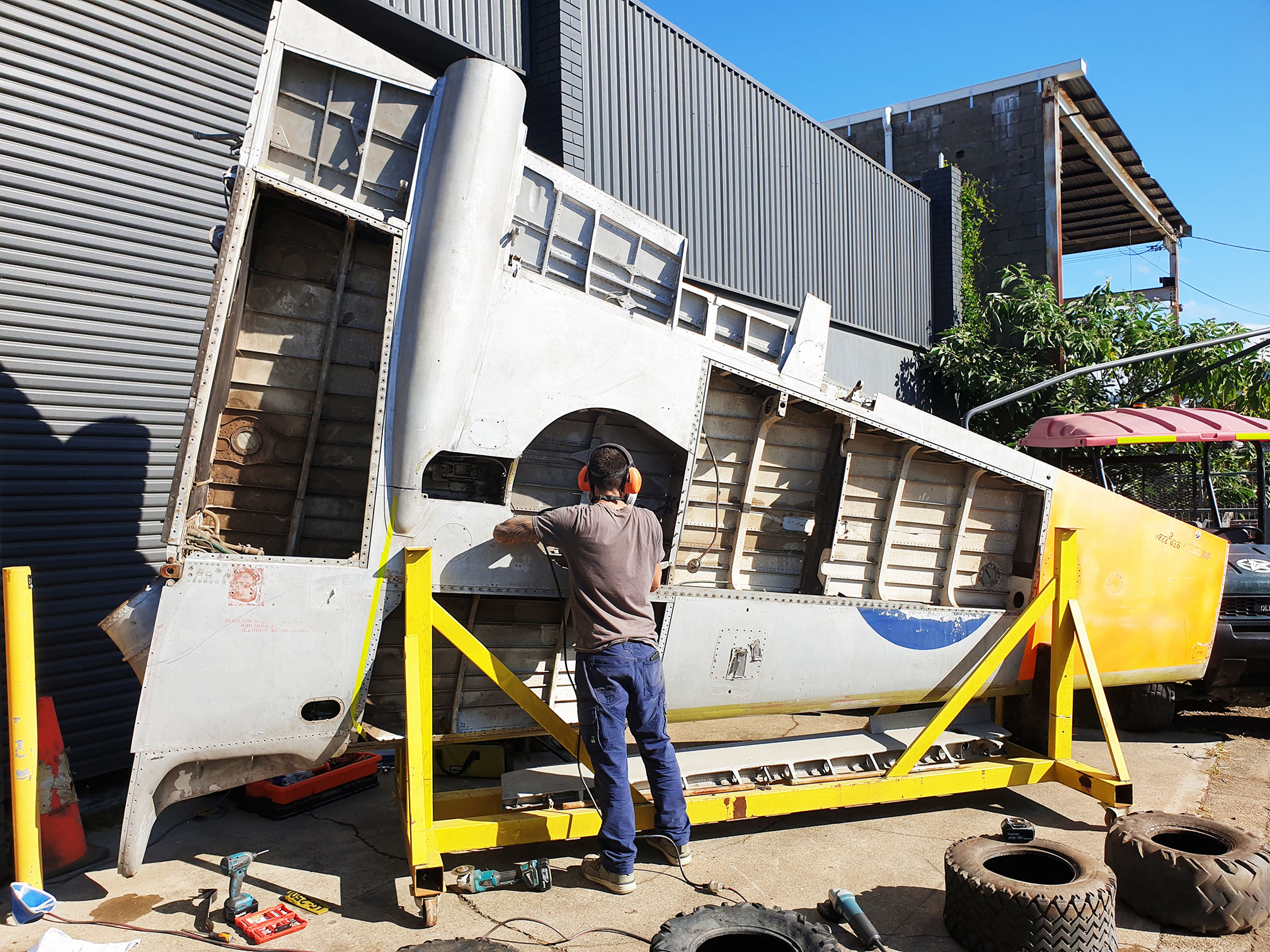
Briggs spent 12 years as an avionics technician working on Caribous, Black Hawks and KC-30s. “All aircraft are built structurally in quite a similar way,” he says. “Everything is aluminium – except for very modern aircraft – and has a skeleton frame, and the main part is called a rib. Then you have stringers that give it shape like a rib cage.”
With lived experience of rivets, fold lines and the geometry of flight, Briggs speaks about construction with clarity. “If you look closely at a passenger 737, the rivets will all be smooth. The aluminium is countersunk, a little ‘V’, and then the rivet is stuck in there smoothly on top to reduce any drag.”
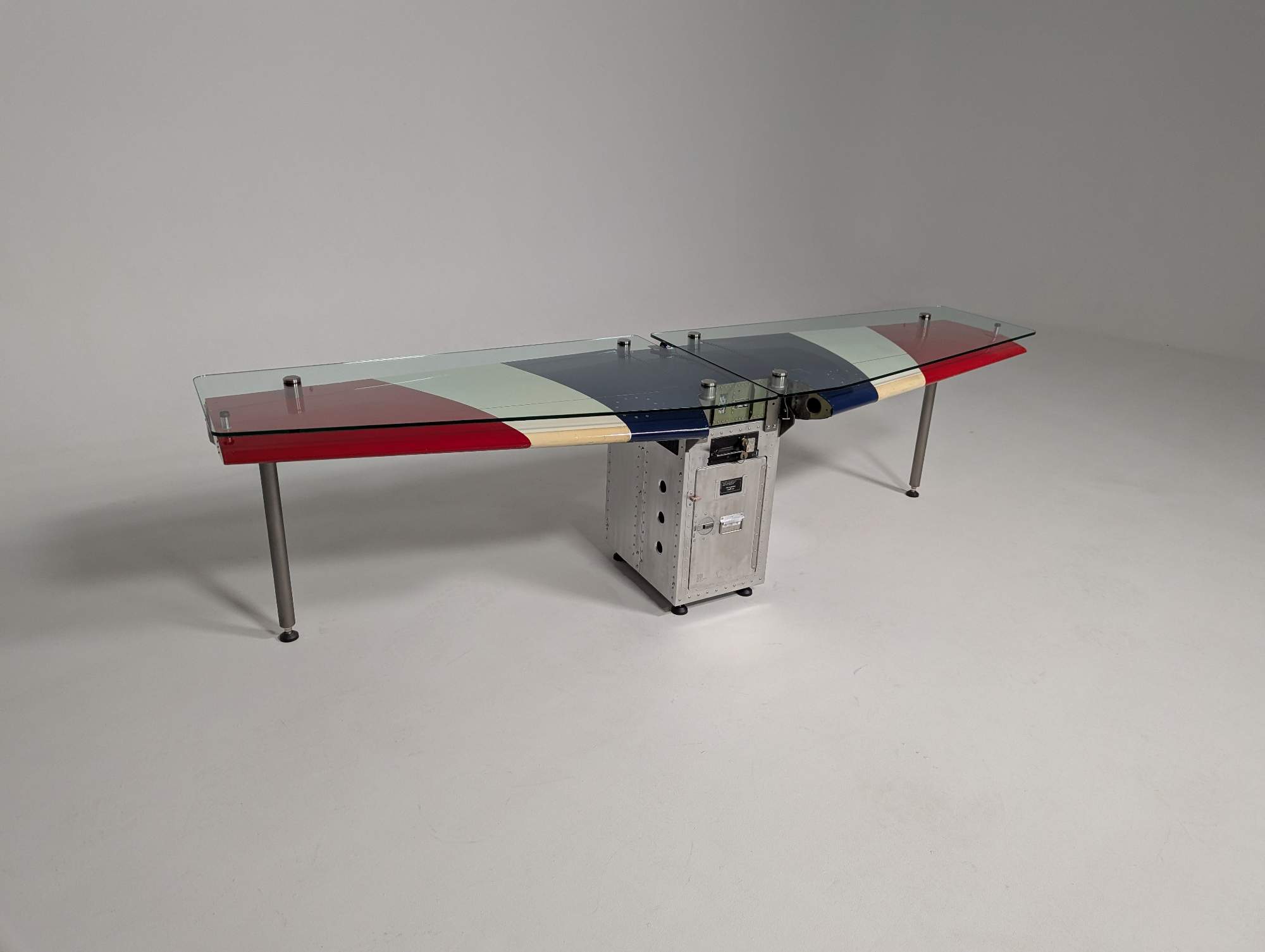
That knowledge sits at the heart of his design practice. “I try to keep every piece of a plane as original as possible and just add functionality to it,” he says. A wing, he explains, curves too much to make a flat surface. “In order to keep that shape and its aesthetic, I add a glass top. You can still see that it’s a wing, while also being a functional desk or table.”
To honour the pieces, Briggs engraves plaques into the surface. “I write all the aircraft’s history and information, so as you’re sitting at the table, you can look through the glass and read all about it.”
Form, craft and the quiet work of intuition
Briggs is commissioned to create his pieces, each one shaped by the vision of those who approach him. Some clients specify an aircraft type down to the model, while others bring only the seed of an idea.
“Clients tell me, ‘We want a table. We want it made from this type of aeroplane.’ Then they give me freedom to design.” He then models multiple versions in 3D graphics and sends them through. “They tell me what they like, and I start building.”
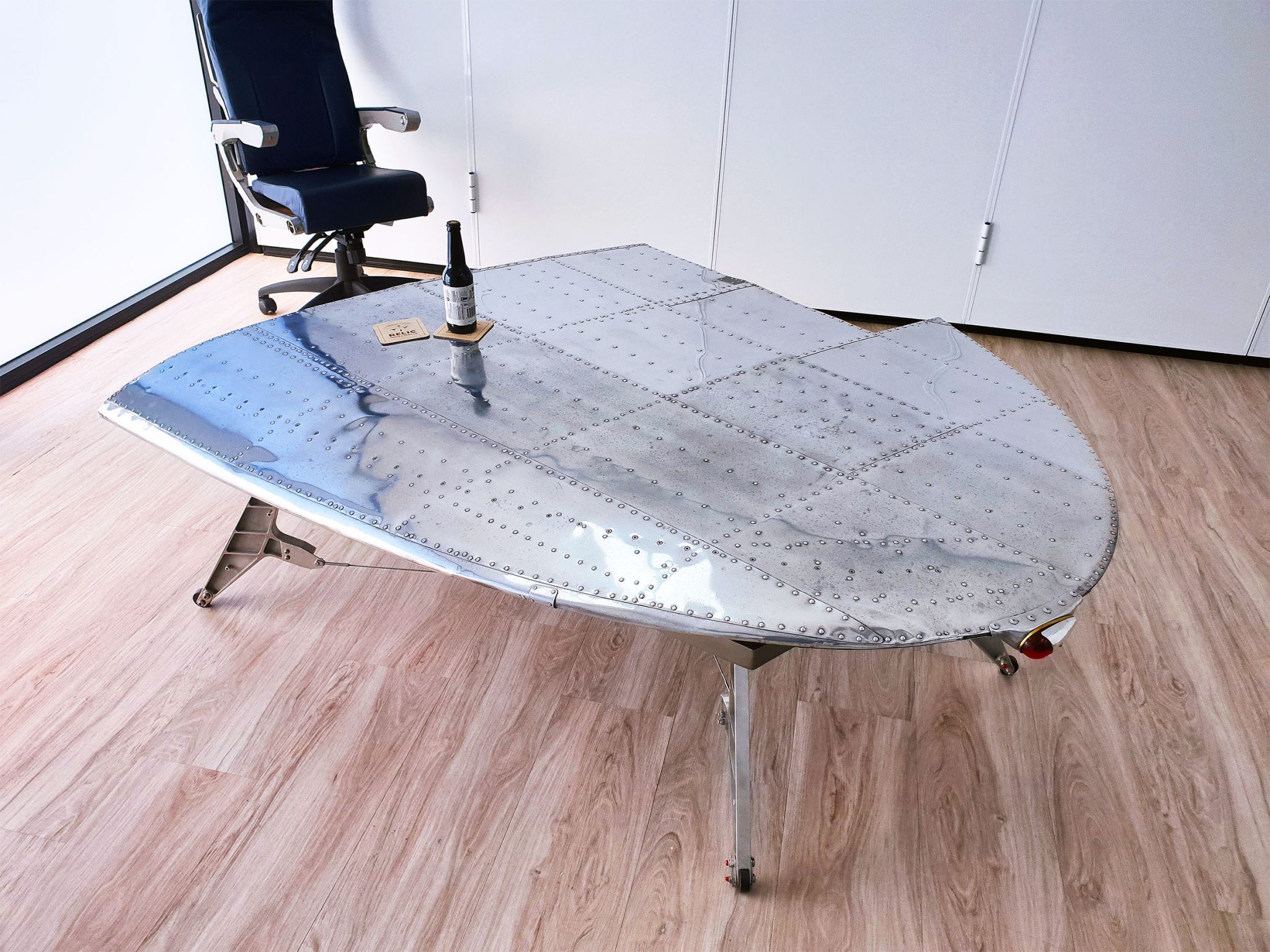
Briggs’ attention to detail and the integrity of each piece drives everything he builds. “You don’t just want to shove it on with some bolts and nails,” he says of attaching a leg to a wing. “That just looks out of place. So I had to learn these aviation techniques to make it look like it was meant to be like that, rather than some sort of Frankenstein’s monster.” He uses CNC plasma cutters, folding and shaping metal into form, which keeps the flow of engineering alive inside the object.
The studio’s commissions include Sydney Airport and the Australian War Memorial. “One day, an unannounced delivery showed up,” Briggs recalls. “A delivery truck pulled up, and I thought they were going to give me a parcel. It ended up being a full wing from Sydney Airport – 14 metres long. I was frantically cutting it up to get it off the street.
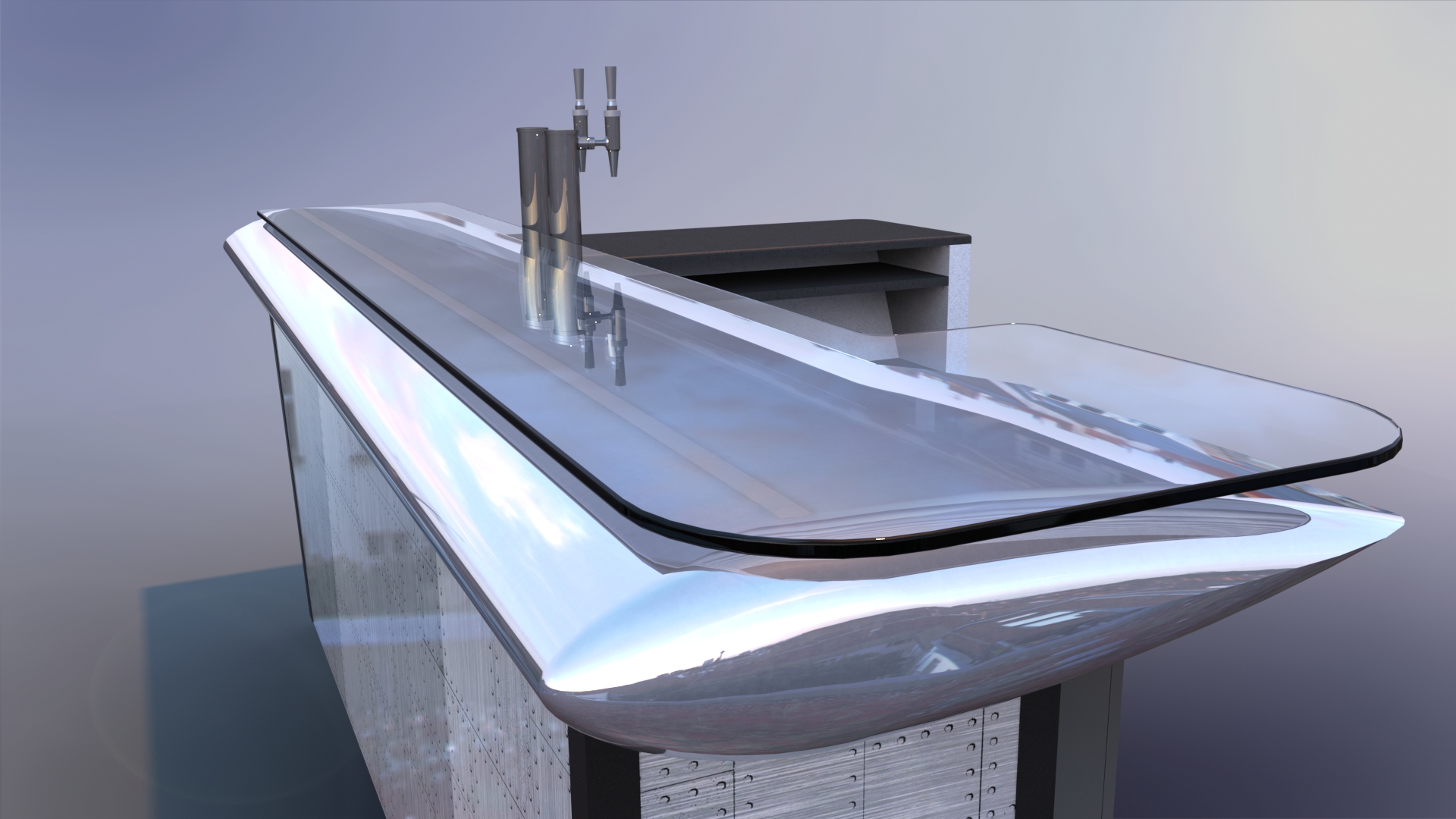
His dream project lives beyond furniture. “I’ve always had the dream of making a complete bar, and the bar feels like you’re walking inside an aeroplane.”
Studio as refuge, artefact as connection
More than a workshop, Relic is a place shaped by lived experience. “The people that I have working here are guys of similar age to me, medically discharged from defence,” he says. “They can’t really work a full-time job anymore, and they somehow find their way here.”
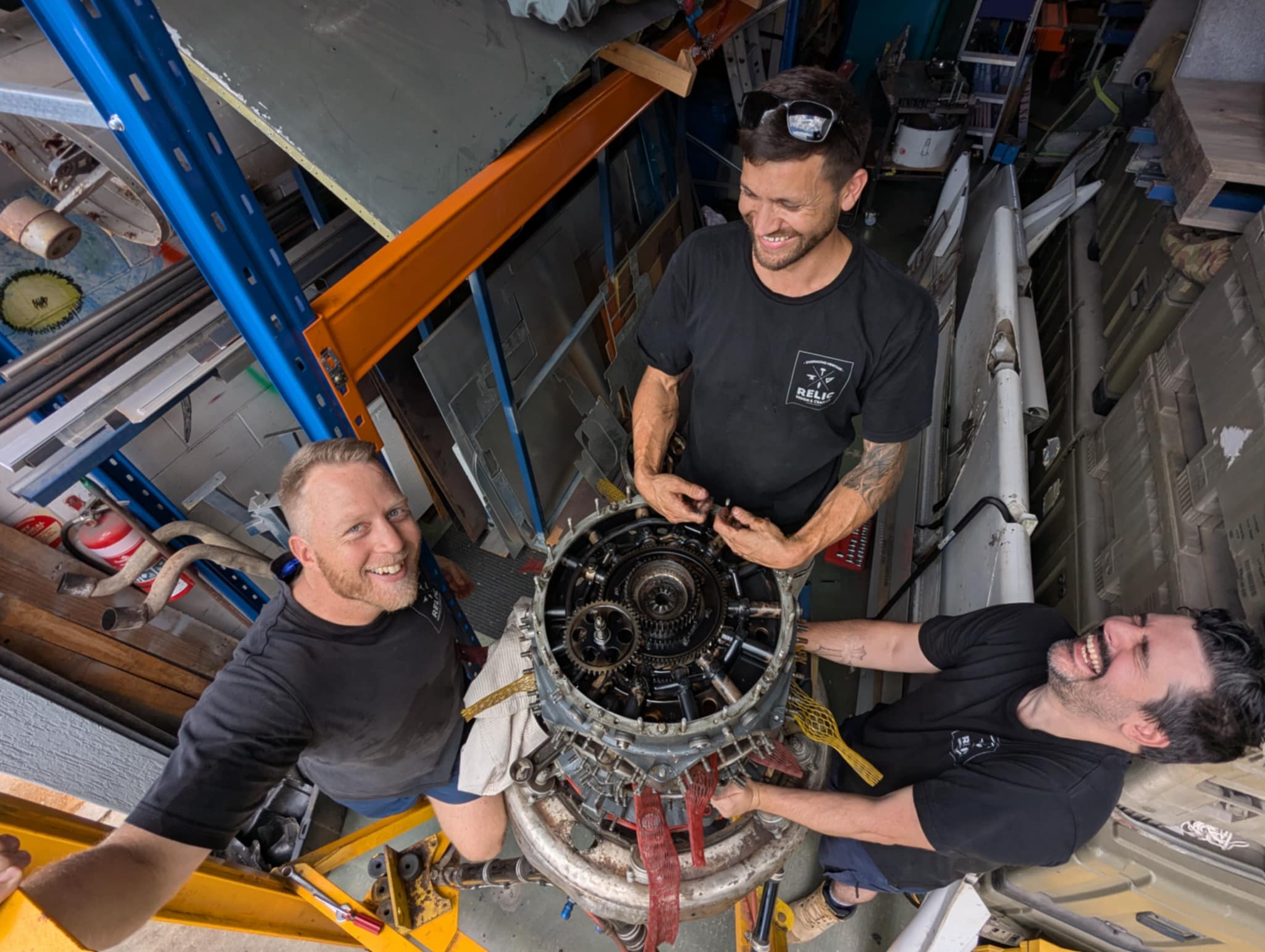
Briggs says it begins with presence, with colleagues drifting in and asking if they can simply watch and talk for a while, and soon he is asking if they would like to be paid and work the hours that feel right for them, with no pressure to produce.
“Creativity is quite a fickle thing,” Briggs says. “It’s hard to have it all the time. It just comes and goes depending on mood.” His studio makes space for that rhythm. “You work when you feel like you can work.”
Though Briggs wants to scale Relic, he doesn’t want to stray too far from its essence. “I’d like it to grow, hire more veterans and make the business more sustainable, but I’d still like to remain in creative control.” He speaks about legacy with clarity. “I enjoy the preservation, hanging on to those stories and ensuring they’re not lost.”
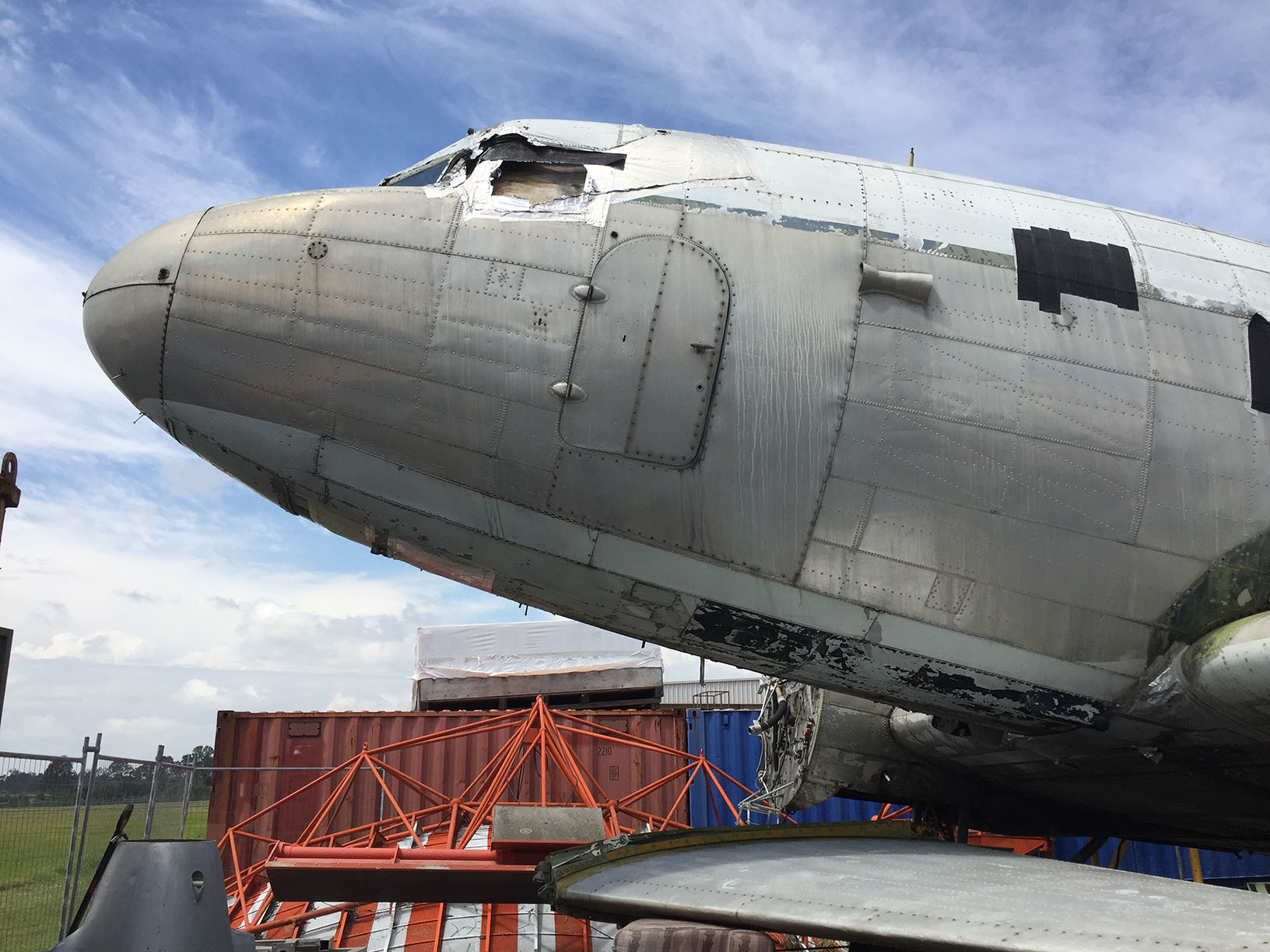

An aircraft wing that once sliced through the clouds now sits in elegant retirement, carrying a glass top in a boardroom or serving as a bar etched with history. In the hands of an artist who builds furniture, memory stirs back to life, and Briggs says he loved this pursuit so deeply that he realised it could become both career and craft.

© Niche Media 2026