

Lewer’s portrait of Elder Iluwanti Ken claims 2026 Archibald Prize

Share

Three remarkable artists have claimed Australia’s most celebrated art prizes, reaffirming the enduring power of paint, place and cultural story.
Aboriginal and Torres Strait Islanders are advised that the following article contains references to a deceased person.
There are years when Australia’s most storied art prizes feel like a collective exhale, a moment when the country pauses to reckon with who and what it values through the language of paint, sculpture and mark-making. The 2026 Archibald, Wynne and Sulman Prizes, announced at the Art Gallery of New South Wales and on display from 9 May to16 August, delivered precisely that kind of reckoning, with three winners whose practices are as distinct as the communities and landscapes that inform them.
Archibald Prize: Richard Lewer and Iluwanti Ken
Melbourne-based artist Richard Lewer claimed the $100,000 Archibald Prize, Australia’s most prestigious portrait award, established in 1921, for his life-size portrait of Pitjantjatjara Elder, senior artist and ngangkari (traditional healer) Iluwanti Ken. Selected from 1034 entries, the work is among 59 finalists on display, marking Lewer’s sixth time as an Archibald finalist, and his first win.
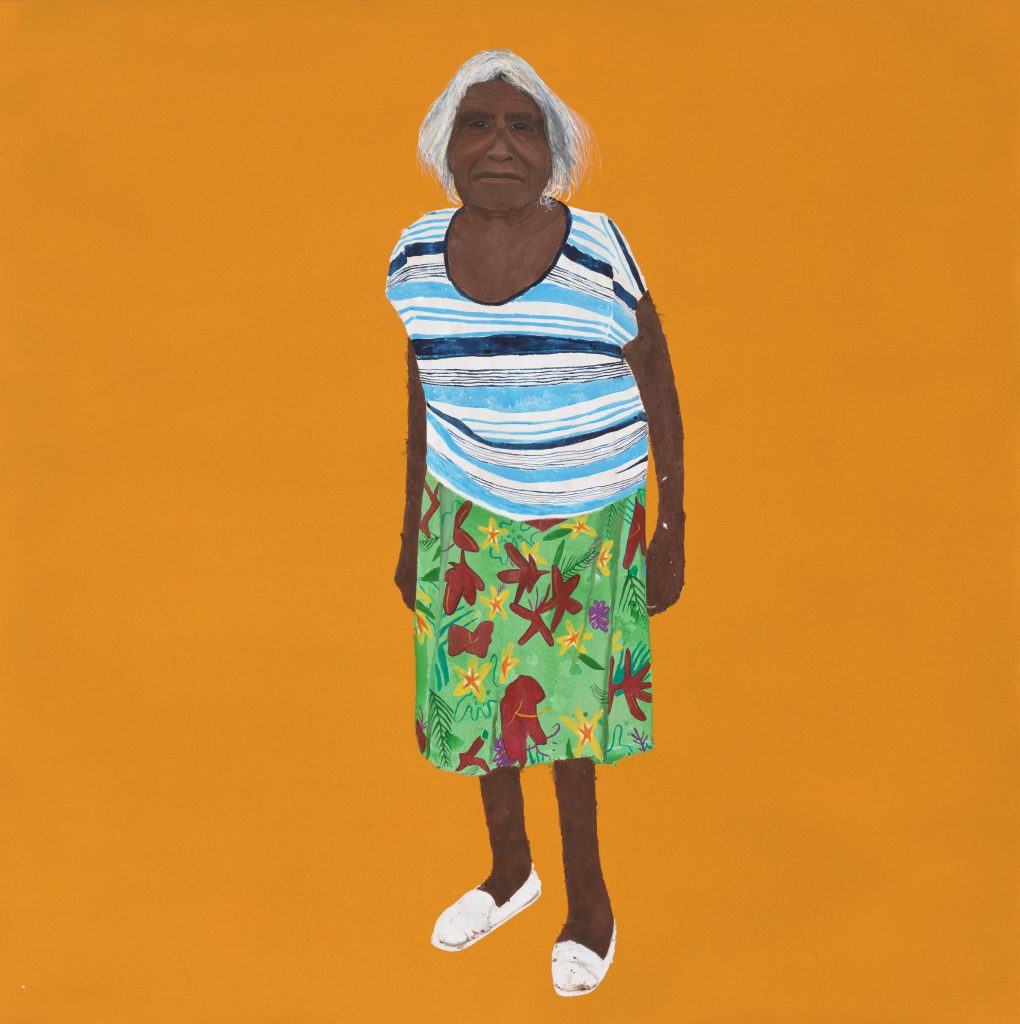
The painting’s origins are inseparable from its meaning. Late in 2025, Lewer travelled to Amata in the Aṉangu Pitjantjatjara Yankunytjatjara (APY) Lands of South Australia to spend time with Ken at Tjala Arts, her art centre, working beside her on Country. Though the pair had known each other through shared exhibitions for years, the immersive experience deepened Lewer’s understanding of the weight that Elders carry – to kin, to community and the preservation of fragile cultural knowledge. Their conversations covered family, loss and responsibility. That gravity is directly translated in the finished work.
Rendered at life-size, the portrait allows Ken’s presence to meet the viewer as an equal. A warm yellow ochre ground evokes the heat and light of her Country; her clothing, vivid and joyful, reflects her vitality. Lewer has deliberately included flecks of paint on her arm, a quiet acknowledgement that she is a working artist who has momentarily stepped away from the studio. Small in stature but carrying what Lewer describes as a “quiet authority”, Ken’s direct gaze, noted by Art Gallery director Maud Page as “particularly striking” for its combined strength and warmth, commands the canvas with calm attentiveness.
Ken’s own practice, informed by walawuru tjukurpa (the story of the eagles) and centred on care and protection, shaped Lewer’s entire approach to the portrait. The result honours an individual while also speaking to the broader and enduring role of Elders as watchers, teachers and custodians of culture.
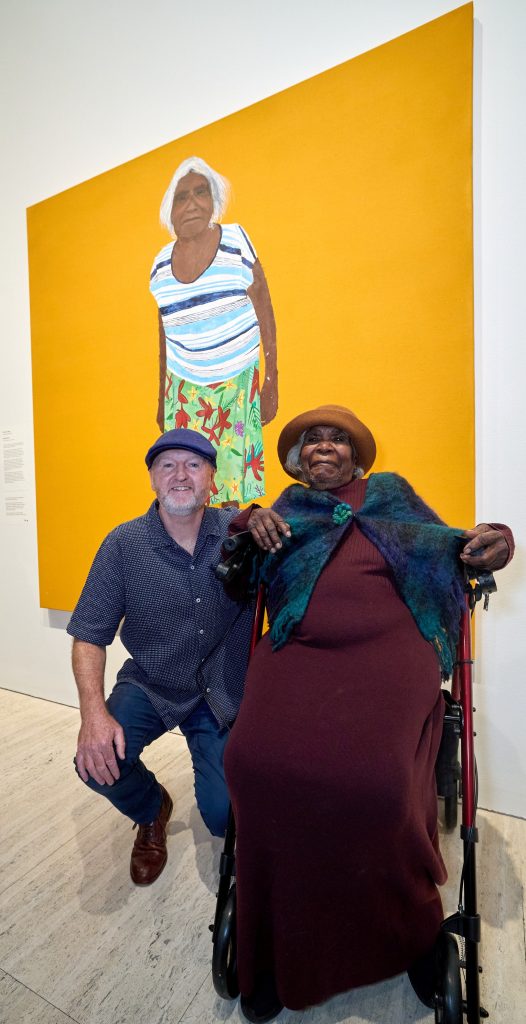
“I feel deeply humbled to have won the Archibald Prize and especially happy that this recognition brings a spotlight to Iluwanti, which was always my intention,” Lewer said. “I hope this work recognises her role as a healer, artist and custodian of the knowledge she carries and so generously shares.”
Board president Michael Rose echoed the sentiment, noting that all trustees were immediately drawn to the work’s powerful energy and the palpable admiration Lewer holds for his subject.
Wynne Prize: Gaypalani Waṉambi and the ancestral Waṉambi tree
The $50,000 Wynne Prize, Australia’s oldest art award, went to Yolŋu artist Gaypalani Waṉambi for her large-scale, double-sided work The Waṉambi tree, executed in spray paint on etched steel. A first-time Wynne finalist, Waṉambi works from the Buku-Larrŋgay Mulka Art Centre in Yirrkala, north-east Arnhem Land (Miwatj), and is widely regarded as the leading female practitioner of the Found movement, a practice in which artists repurpose discarded roadside materials into significant works of art.
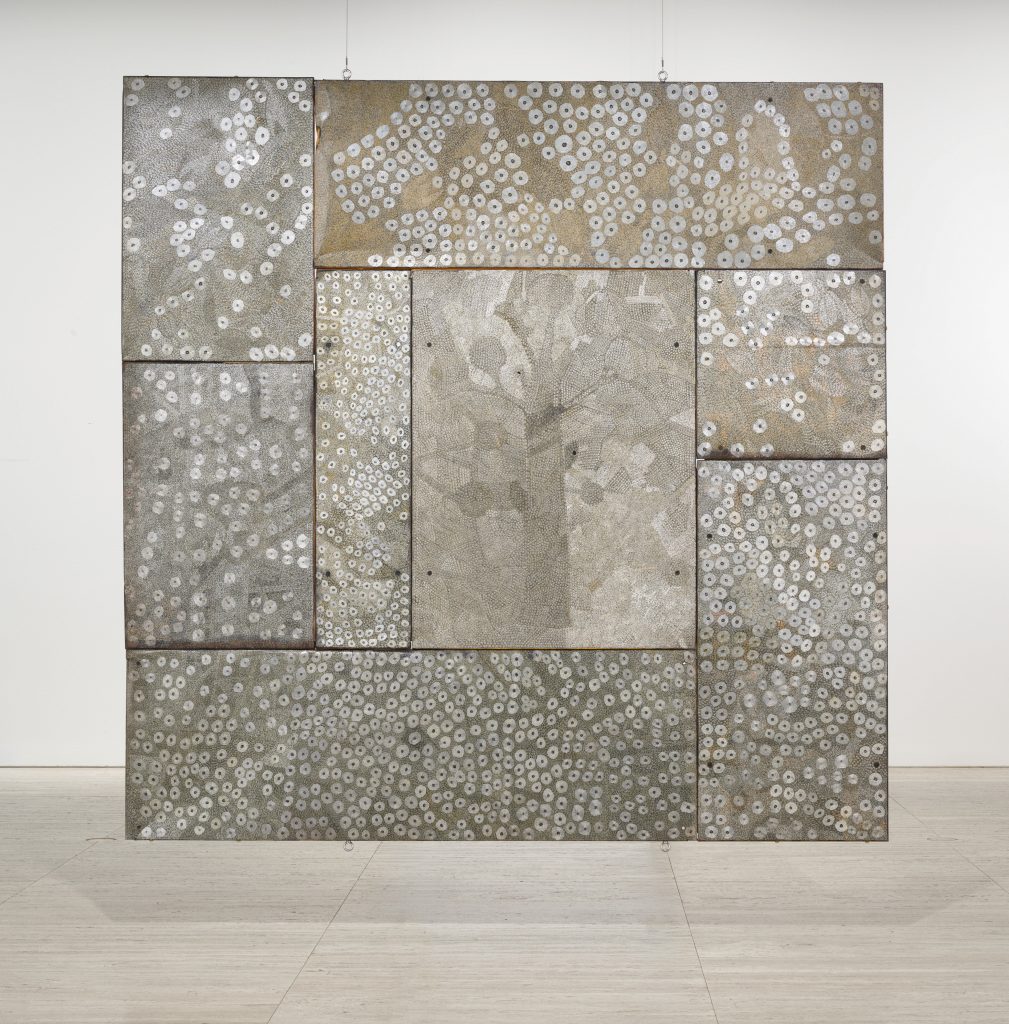
Selected from 773 entries, the work maps the songlines of the Marrakulu clan and the ancestral honey hunter Wuyal, with intricate markings tracing the life cycles of bees, honey and stringybark blossom across the steel surface. The double-sided format is deliberate, with a recto and a verso – a seen side and a hidden one – mirroring the layered, multidimensional nature of songlines themselves. Waṉambi, the eldest daughter of the renowned artist Mr Waṉambi who died in 2022, brings both personal lineage and artistic rigour to the work. In 2025, she was awarded the Telstra NATSIAA, the country’s most prestigious Aboriginal and Torres Strait Islander art award.
Sulman Prize: Lucy Culliton’s quiet protest
Sydney-born painter Lucy Culliton took the $40,000 Sir John Sulman Prize for Toolah, artist model, an intricately realised oil-on-canvas portrait of one of her seven rescue greyhounds. Judged this year by artist Del Kathryn Barton, who described the work as “pictorially ambitious and technically consummate”, the painting is simultaneously a celebration of animal life and a pointed critique of the greyhound racing industry.
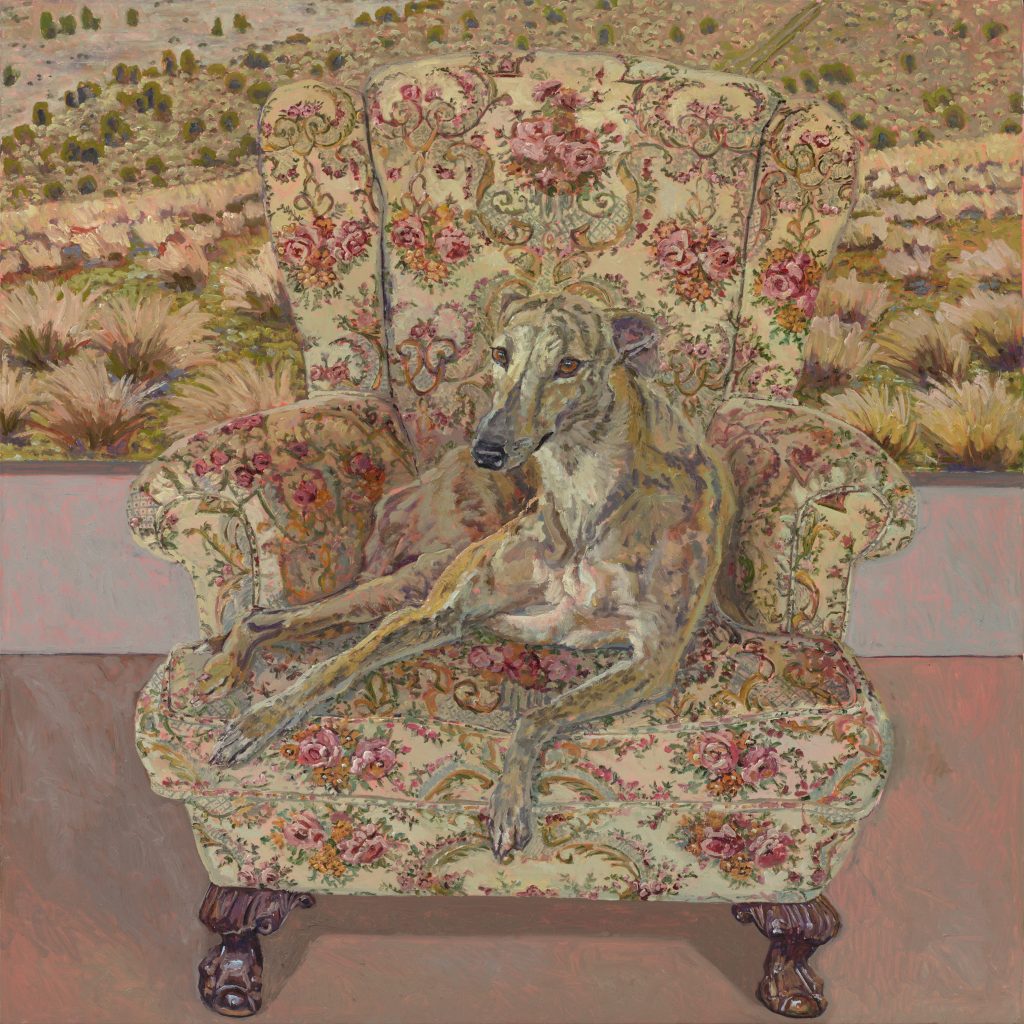
“This is my quiet protest against greyhound racing,” Culliton said. Living and working in Bibbenluke in the Snowy Monaro region, Culliton’s seventh time as a Sulman finalist produced her first win, and it landed with the same grounded conviction that defines her entire practice.
Together, the 2026 prize-winners present a compelling portrait of Australian art in this moment: expansive in geography, deep in cultural responsibility and unafraid of tenderness.
The Archibald, Wynne and Sulman Prizes 2026 exhibition runs at the Art Gallery of New South Wales from 9 May to 16 August 2026, before the Archibald tours to six venues across NSW and Victoria.
Top image: Gallery view of the Archibald, Wynne and Sulman Prizes 2026 exhibition at the Art Gallery of New South Wales. Photo: Jenni Carter.

© Niche Media 2026