

Canberra turns its landscape into a gallery at its 2026 Art Biennial
Canberra turns its landscape into a gallery at its 2026 Art Biennial

Share

Fifty artists across 20 venues will transform the capital’s gardens, lakes and public spaces into a free contemporary art trail this spring.
Returning for its sixth edition from 11-31 October 2026, the Canberra Art Biennial has unveiled a spring program that treats the capital itself as raw material. Presented by contour 556, the free festival spans more than 20 venues and public spaces, from Reconciliation Place and the Australian National Botanic Gardens to Canberra Contemporary and the Nangari Street Car Park, and compiles over 50 Australian and international artists for newly commissioned, site-specific work.
Leading the program is a major new commission from Kamilaroi and Bigambul artist Archie Moore, whose kith and kin won the Golden Lion for Best National Participation at the 2024 Venice Biennale, the first time an Australian artist has taken the award. Moore’s Biennial work, Walk around like you own the place, will be presented at Reconciliation Place.
Butchulla and Burmese artist Mia Boe will also debut in new territory with The Aboriginal Robot, her first work in glass, developed with artists at Canberra Glassworks and shown at the ANU School of Cybernetics.
Artists respond to a designed landscape
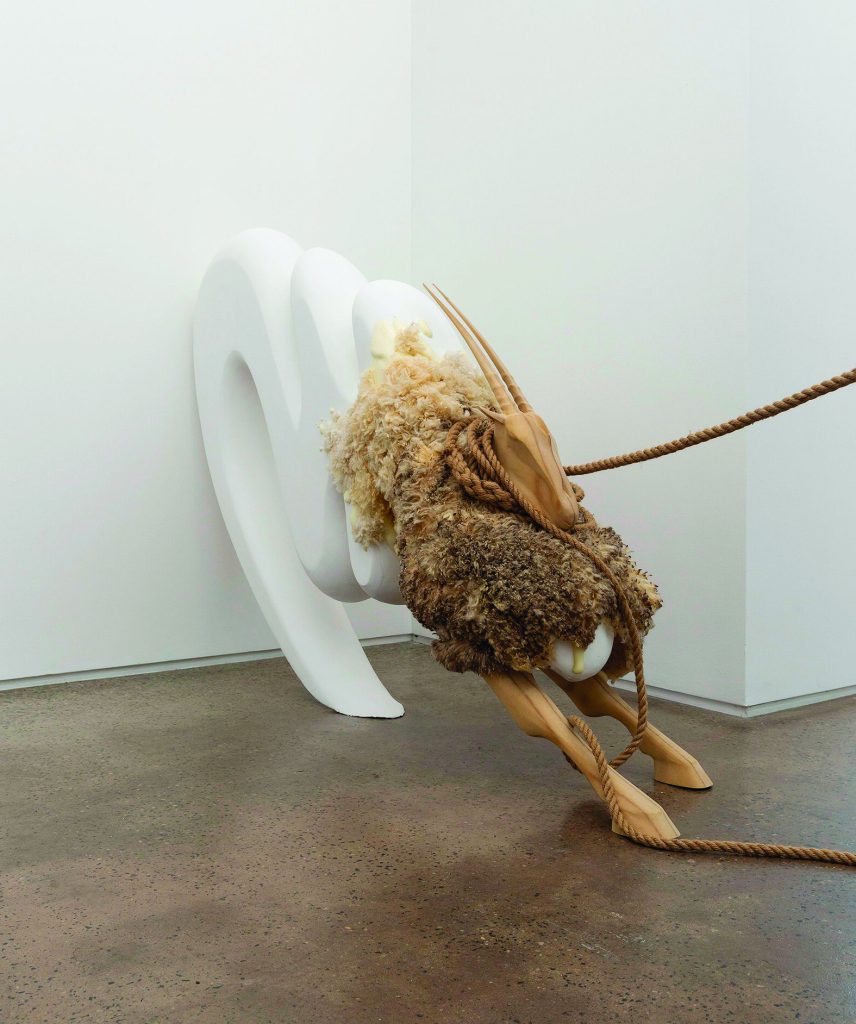
Because Canberra was itself conceived as a landscape rather than simply built upon one, many of the Biennial’s commissions have grown directly out of that design history. Artists have spent months researching the city’s gardens, lakes, plantings, buildings and pathways, producing work across sculpture, installation, performance, printmaking and new media that responds to histories embedded in the capital’s public realm.
Canberra artist Jacqueline Bradley’s new commission, sited in the rainforest gully of the Australian National Botanic Gardens, exemplifies that approach. Bradley has cast objects collected with her two-year-old son – including correas, seedpods and mulch – in bronze and embedded them in a bench of recycled timber alongside bronze casts of the Gardens’ own tools of care, from Seedbank calico bags to well-worn face washers.
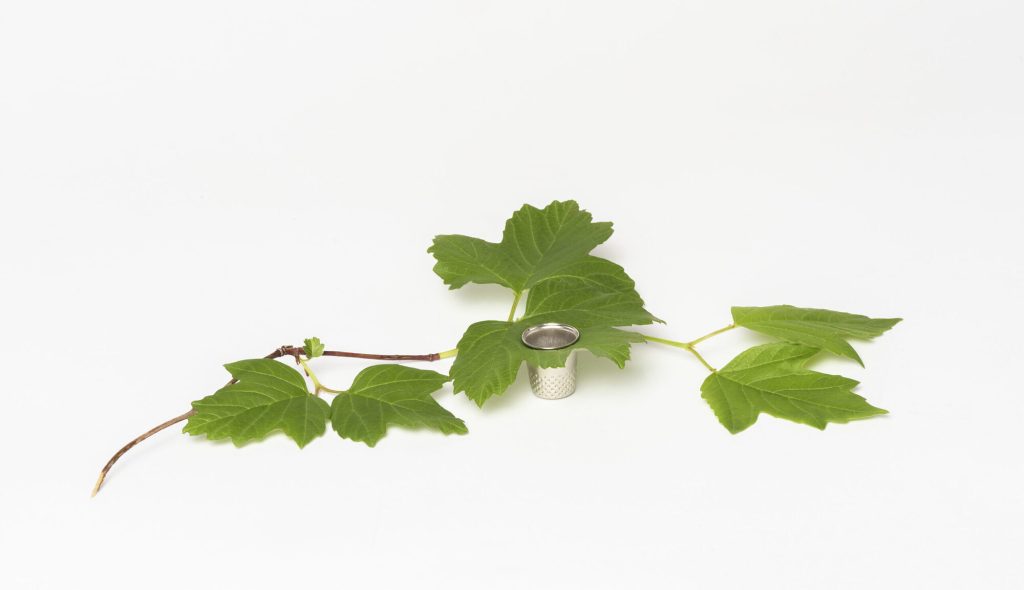
“Public spaces are full of private memories, the moment you met a friend under the tree, the first encounter with a magpie on the lawn, a moment of falling in love in the rainforest, or nursing your baby on the bench,” Bradley says.
A program built on partnership and place
Alongside the major commissions, the 2026 program includes ARI BANAL(E), Canberra’s first hotel-based art fair, staged at the Hyatt Hotel Canberra across the opening weekend and curated by Sydney-based ARI Sydenham International. The headline exhibition, Takeaway: Tales from the Flavour Superhighway, opens at Canberra Contemporary under curators Denise Thwaites and Mariam Ella Arcilla, featuring James Tylor, Gianna Hayes, Marley Dawson and Zora Pang among others.
Elsewhere in the city, Bronte Cormican-Jones will use glass as architecture at Canberra Airport, Harrison Witsey will install a giant sculpted crab on the façade of Canberra House and Paris-based Australian artist Gregory Hodge will show at Canberra Museum and Gallery in partnership with Sullivan & Strumpf.
Speaking at the program launch, ACT Minister for the Arts Michael Pettersson said public art meets people where they are, allowing audiences of all ages and backgrounds to take part in cultural life outside the walls of a gallery or theatre. The Australian National Botanic Gardens joins the Biennial as a partner for the first time in 2026, reinforcing the festival’s central premise: that Canberra’s design as a landscape city gives artists a public canvas that few other capitals can offer.
The full program, including artist talks and opening weekend events, is available at canberraartbiennial.com.au.
Top image: Artist Tony Albert with his 2024 work, Forbidden Fruit. Photo: Daniel Sherrington.

© Niche Media 2026