

Knoll celebrates nine decades of partnership with world’s leading designers
Knoll celebrates nine decades of partnership with world’s leading designers

Share
When Florence and Hans Knoll married in 1946, they formed a union – both in design and in life – that would entice the best and brightest of 20th-century designers. That legacy continues today.
With the founding of Knoll Associates in 1938 by Hans Knoll, a new era of 20th-century design emerged, one defined by a school of designers who married elegance of form with everyday practicality. For nearly a century, Knoll has represented the pinnacle of furniture and exquisitely designed seating that revitalises any space while serving core functions.
The union of forward-thinking, German-born entrepreneur Hans Knoll and American architect Florence Knoll laid the foundation of an aesthetic philosophy that would go on to shape interiors across the world. At its heart, Knoll upholds the adage of Florence Knoll’s revolutionary “total design” approach. All aspects of interior space – architecture, textiles, furniture – are incorporated in the pursuit of a unified whole.
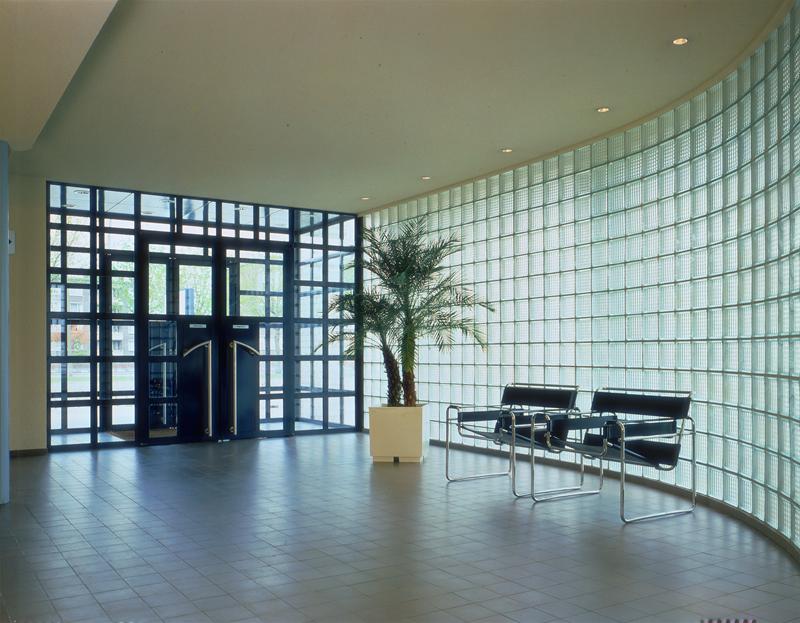
A pair of Marcel Breuer’s iconic Wassily Chairs, the trademark for which is now owned by Knoll
This holistic vision has been channelled through a suite of mould-breaking architects and interior designers since the company’s inception, in the process building a legacy of iconic products that have reshaped the way we look at interior spaces. Beauty doesn’t need to be a frivolous bonus, but can be just as vital as workaday utility.
The designers who keep the flame alight at Knoll
When Knoll first lit the flame for exquisitely elegant, infinitely practical interior design almost 90 years ago, it represented the first spark of an aesthetic principle that would go on to illuminate the 20th century.
Engaging designers from every continent, across wide-ranging locales including Denmark, Italy, Germany, the US, Canada and beyond, the past and present suite of Knoll design voices remains the same in this century as it did in the one preceding it. Good design at Knoll continues to be informed by standards of the international, the intentional and the consistently impactful.
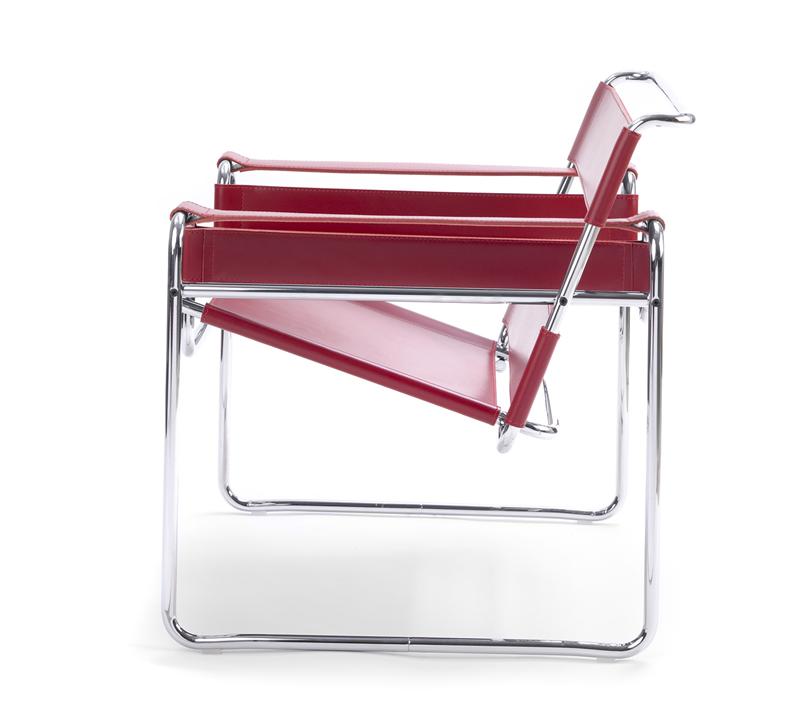
Closer look at the exquisite lightweight steel frame of the Wassily Chair
As an industry leader in interior design, Knoll prides itself on its capacity to enliven the artistic vision of every designer it engages. Across the decades, the company has shepherded some of the most iconic interior design staples of the past 100 years, including the Tulip Chair by Eero Saarinen, the Barcelona Collection by Mies van der Rohe, and the iconic Wassily Chair by Marcel Breuer, to which Knoll currently holds the design trademarks.
Here are some of the designers, of yesteryear and today, who embody the international relevance of Knoll design principles and their lasting impact in the 21st century.
Icons of mid-century design
Mies van der Rohe
Twentieth-century trailblazer of modern architecture and iconic interior design, Ludwig Mies van der Rohe is perhaps best remembered today for coining the “less is more” aesthetic philosophy. Starting out in life as a stonemason’s son in Germany, it was under the apprenticeships of Bruno Paul and Peter Behrens that he developed the necessary skills and industry knowledge to found his own Berlin practice in 1912.
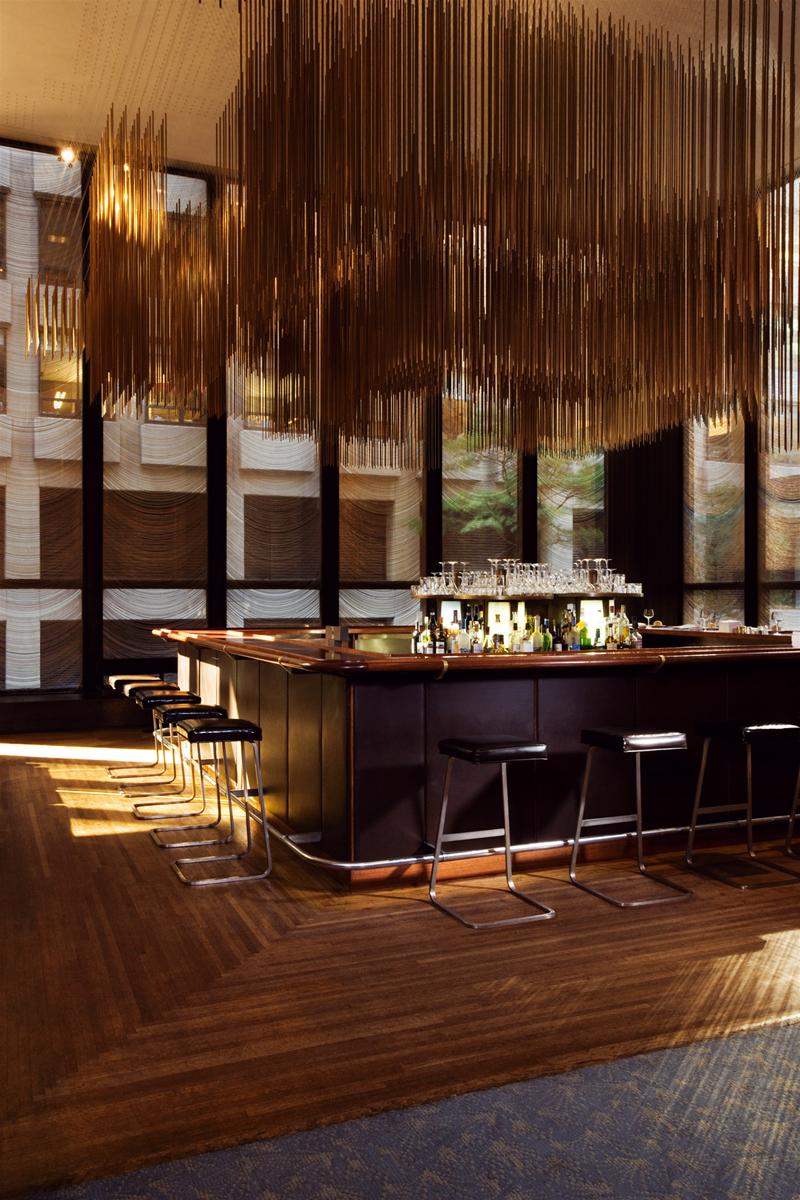
Sleek bar stools from van der Rohe’s iconic Barcelona series
His 1929 showcase of furniture designs, the Barcelona Pavilion – featuring the iconic Barcelona Chair – is credited today as redefining spatial design. It was later in life, as director of the Bauhaus and then at the Illinois Institute of Technology, that Mies van der Rohe went on to further sculpt the landscape of American architecture. In doing so, he mentored Florence Knoll. In 1948, Knoll secured exclusive rights to his furniture designs, ensuring his legacy would live on through timeless modernist pieces like the Brno and MR chairs.
Marcel Breuer
A Bauhaus protégé and pioneer of modernist design, Marcel Breuer made lasting contributions to both fields of architecture and furniture design. As a Bauhaus master carpenter, he reshaped domestic interiors with innovative tubular-steel furniture, including the iconic Wassily Chair, which was inspired by lightweight, high-strength bicycle frames. Though never employed by Knoll, Breuer influenced the company’s legacy for innovative, beautiful design through his mentorship of Florence Knoll and his successive recommendation to hire textile designer Eszter Haraszty.
In 1968, Knoll purchased Gavina SpA and in the process acquired the Breuer Collection, which featured the Wassily Chair, Cesca Chair and Laccio table. Breuer’s work continues to define the modern design industry’s union of form, function and ongoing innovation.
Bold voices in contemporary settings
Antonio Citterio
Italian architect and industrial designer Antonio Citterio is the co-founder of interior design firm Antonio Citterio Patricia Viel (ACPV Architects). Citterio is recognised today for a design practice that creates “spaces that embody a new culture and shared wellbeing”. Responsible for major projects across some of the world’s most significant brands and organisations, some of Citterio’s notable collaborations include his work with architect Terry Dwan across buildings in Japan and Europe.
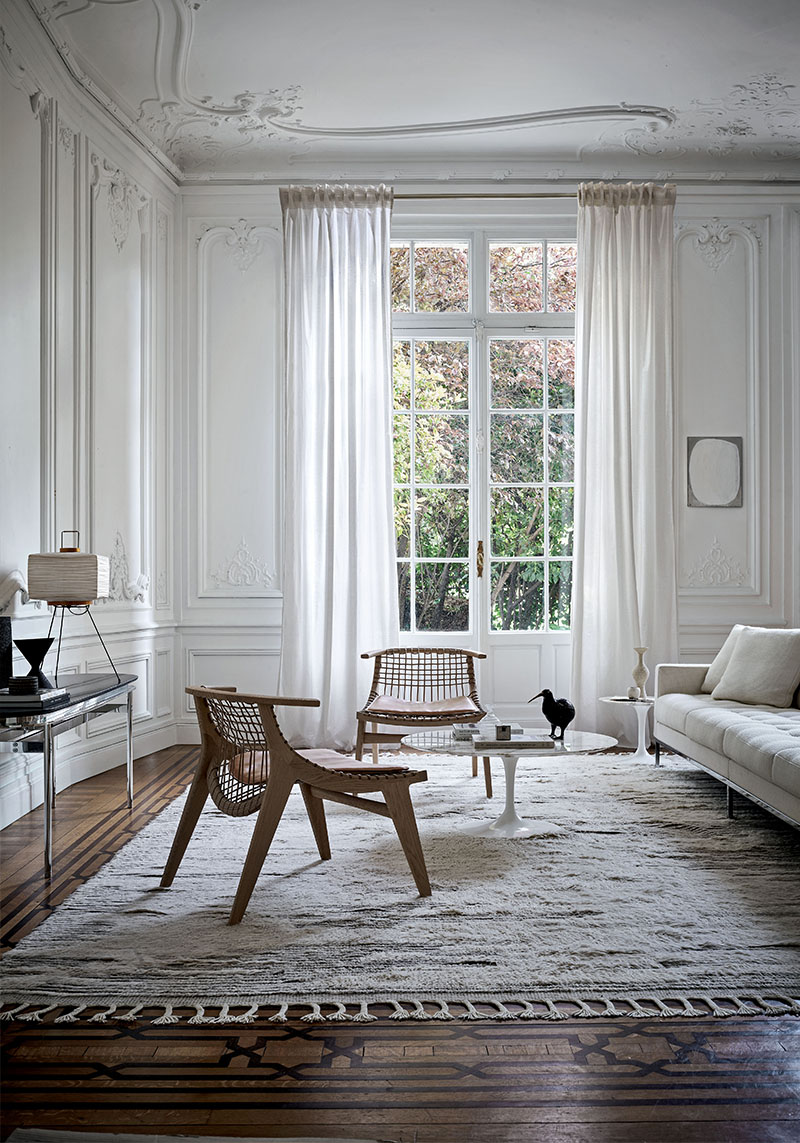
Klismos chairs designed by Antonio Citerrio for Knoll
For more than a decade, he held the position of professor of architectural design at the Mendrisio Academy of Architecture in Switzerland. He was honoured as Royal Designer for Industry in 2008 by the Royal Society for the Encouragement of Arts, Manufactures and Commerce. Beyond that, he holds the distinction as a two-time recipient of the Compasso d’Oro-ADI.
In 2022, Citterio designed the Klismos Collection of chairs and benches, a modern continuation of the Knoll design language of deceptively simple and invitational interior design. Drawing clear references to the Knoll legacy of visual styling cues, the Klismos pieces underline a strong focus on sustainability with natural materials such as wood and marble.
Piero Lissoni
Beginning his career as a furniture designer, following studies in architecture from the Politecnico di Milano, Piero Lissoni founded his own studio in 1986. Specialising in architecture, interior and graphic design, Lissoni has generated a wide-reaching portfolio of products that have found their way into private residences and hotels, as well as showrooms and even yachts.
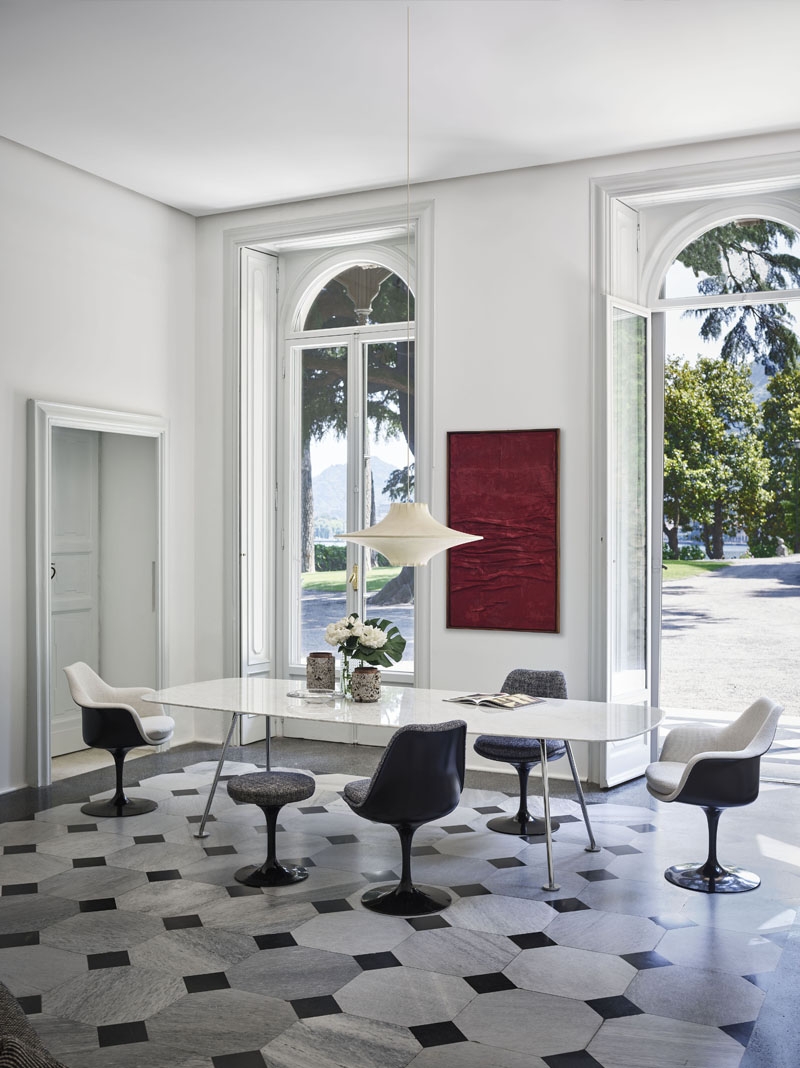
Lissoni’s sleek Grasshopper High Table, designed for Knoll
Knoll introduced Lissoni’s Divina Lounge Collection in 2004, originally designed for long-standing client Living Divina. Lissoni and his studio’s design manager, Marc Krusin, co-designed the Wa office system for Knoll International in 2006. With no concretely positioned points of connection, the deceptively simple design presented a unique 360-degree mechanism, which allowed any individual component to be applied to any edge of any workstation.
Among these incredible designers, there are many others who have brought their vision to life within the Knoll principles of innovation and practical beauty. Those who embody Florence Knoll’s “total design” principle include current Knoll collaborators, such as Barber Osgerby, Willo Perron, and Japanese-Austrian design partnership Antenna Design.
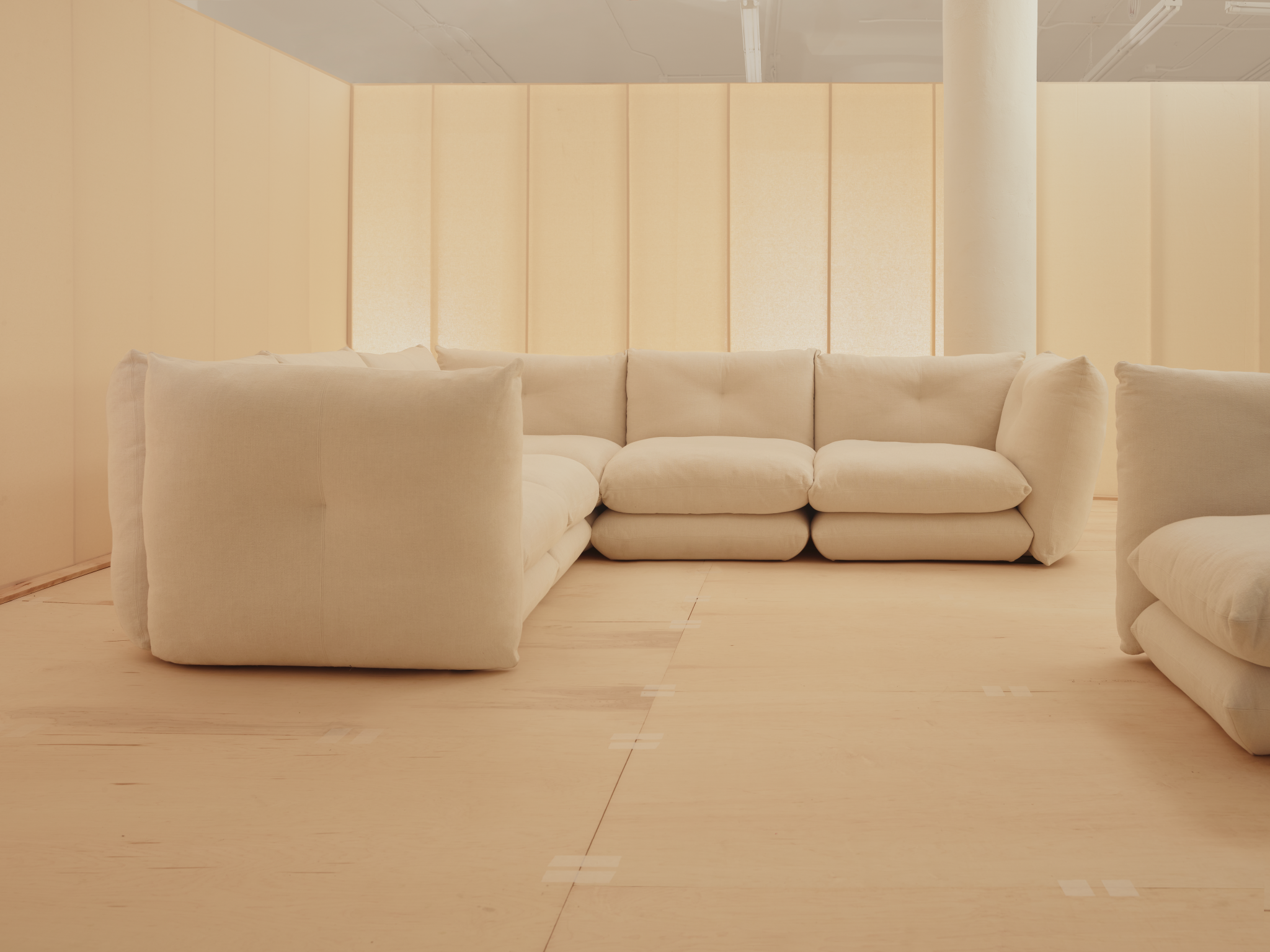
Willo Perron’s iconic Pillow Sofa
Looking ahead to an environmentally-conscious future
As well as ushering in cutting-edge design innovations that delight while serving practical applications, Knoll maintains a sharp focus on environmental sustainability. As an industry leader in the implementation of policies to protect the environment and conserve natural resources, Knoll underlines three key areas for change: climate action, third-party certification and sustainable materials.
Since 2004, the company has invested upward of USD $3 million in energy-efficient initiatives and infrastructure. Beyond that, every Knoll manufacturing hub worldwide is ISO 14001 certified, which requires the minimisation of emissions-based environmental damage. All materials and resources are procured from suppliers that mutually share Knoll’s commitment to quality and sustainability.
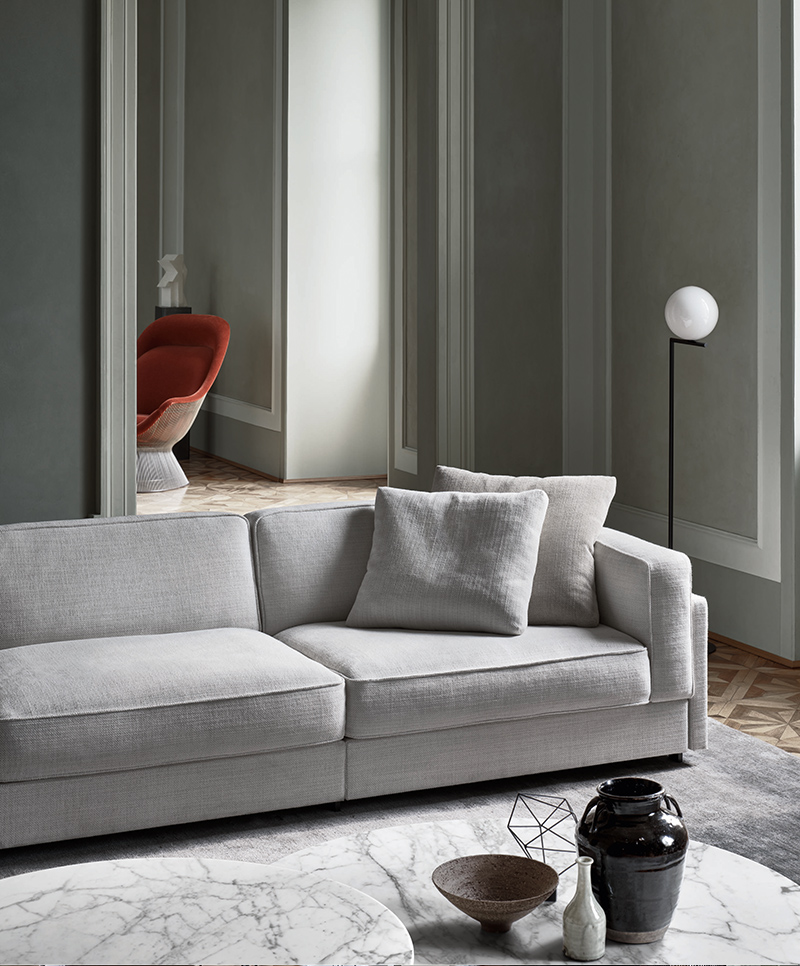
Lissoni’s elegant Gould Sofa, a lauded Knoll design
In design and form, as well as sustainability, all products within the Knoll creative ecosystem are timeless and built to last. Every item that enters the Knoll portfolio is responsible for a near-century-long legacy of design brilliance and unmistakable craftsmanship.
But among all else, Knoll’s story has not reached its conclusion. It remains a benchmark for excellence within the industry – and the pride of homemakers and office workers the world over – with new voices and movements in design and architecture continuing to be nurtured at Knoll.
Photography supplied by MillerKnoll.
Explore more of Knoll’s global design legacy through MillerKnoll dealers here.
You Might also Like


Related Stories

© Niche Media 2026