

Dendy Beach Pavilion and Brighton Life Saving Club by JCB
Dendy Beach Pavilion and Brighton Life Saving Club by JCB

Share
Far from a simple rebuild, the replacement of an outdated life-saving pavilion offered multiple challenges for JCB.
If there’s ever a word that gets overused, not just in the A+D space, but across the board, it must be ‘iconic’. But when you’re talking about the Brighton Beach bathing boxes in the bayside Melbourne suburb, there’s simply no other descriptor that leaps to mind.
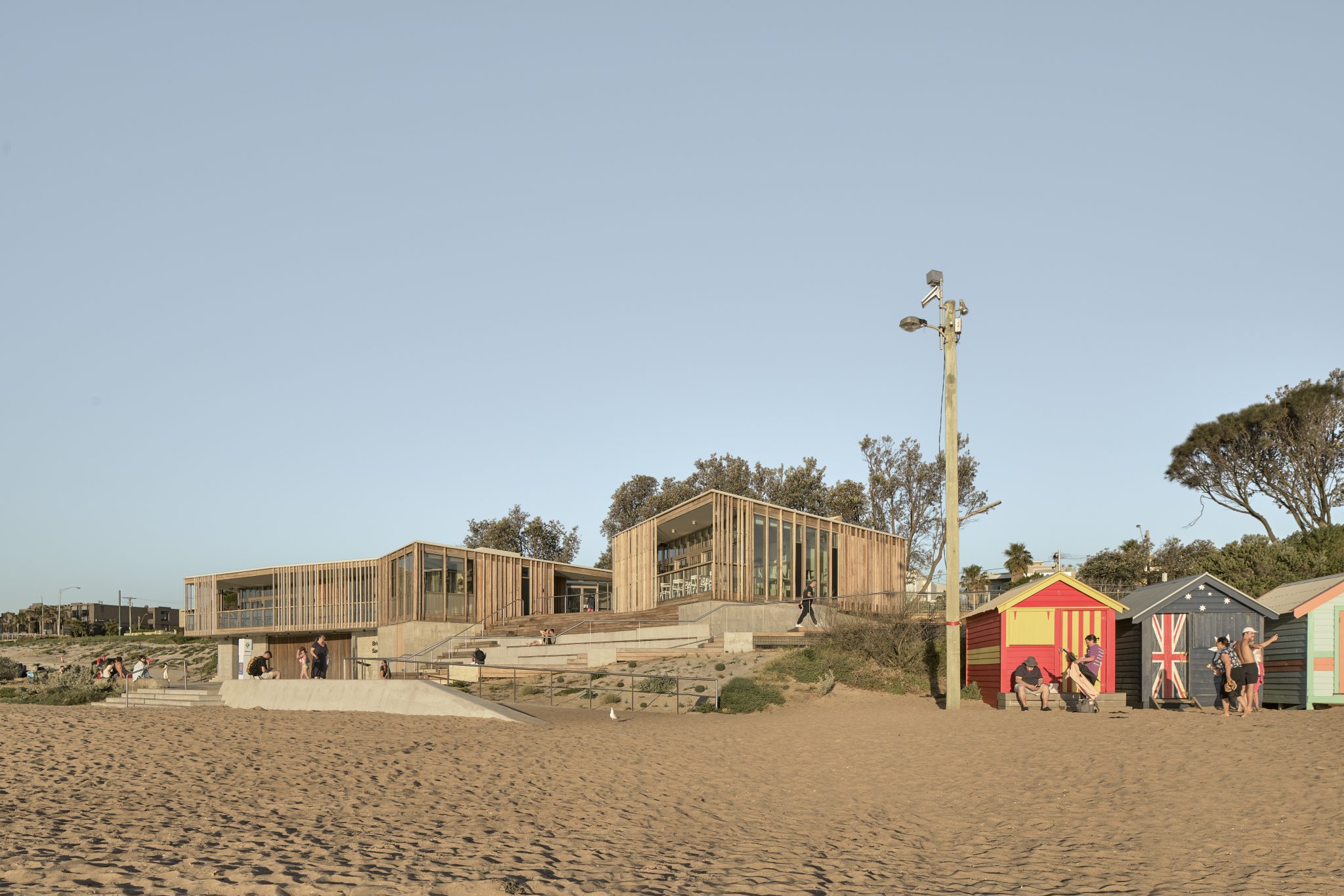
The brightly coloured real estate unicorns (rarely on the market and, when one does pop up, you’ll be paying an eye-watering price) aren’t just treasured among the local community; they’re also bona fide tourist attractions. So when their almost equally admired neighbour, the Dendy Beach Pavilion and Brighton Life Saving Club, reached the end of its practical life, a quick and simple like-for-like replacement wasn’t really on the cards.
Quick? As part of Bayside Council’s high-level foreshore master plan, the redevelopment of the pavilion was first mooted around 15 years ago. Jackson Clements Burrows (JCB) was commissioned in 2014, says director Graham Burrows.
The mammoth gestation since then involved extensive consultation with the community, and objections from a couple of neighbours leading to both VCAT and the Supreme Court before Council prevailed. This period did have a silver lining though, says Burrows. “A lot of good things happened through the process. The car park was consolidated and a lot more surface area of planting was reintroduced to the site.”
This was important because sensitivity to the environment, with its significant swathes of native vegetation “that tumbles down towards Dendy Beach”, was a major consideration, says Burrows.
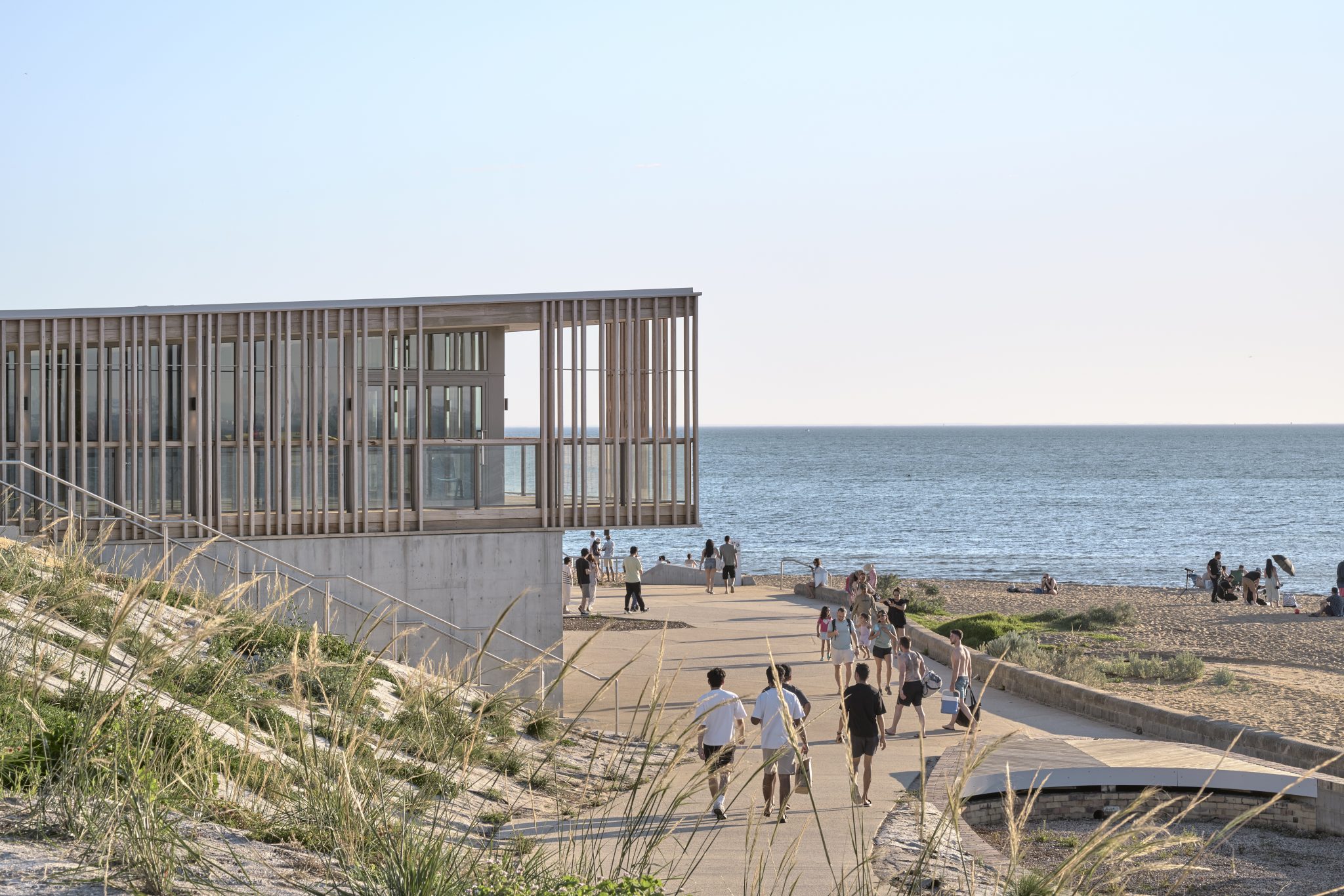
Importantly, the long planning process enabled a major piece of work regarding the stormwater drains, which had caused issues with dirty water flowing into the ocean. After JCB’s intervention, the water is now diverted into underground tanks, which can be filtered into a rain garden when full, before eventually flowing out to sea. “The idea is you’re never going to stop water coming out onto the beach when there’s a large stormwater event, but the system is designed to help filter and clean it so you’re getting cleaner water and a much smaller volume coming out onto the beach through key rain events,” explains Burrows. With a reduced carbon footprint in mind, the bricks from the demolished clubhouse were repurposed for the rain garden.
Another consideration for the design team was a pre-existing sea wall. Heritage listed and made from bluestone, some of which came from Pentridge Prison, the wall was built in the 1930s. “I think it was one of the infrastructure projects that came out of the Depression, when [the Government] was trying to keep people busy,” says Burrows. “We had to be very careful and conscious of it, but it already acts as a barrier or line of defence along the shore,” he adds.
Burying the lead
When it came to the overarching design, the key drivers were pragmatism regarding the way the public areas would be used, combined with a desire to integrate into the environment with a sympathetic aesthetic that wouldn’t clash with the bathing boxes or attempt to upstage them in any way.
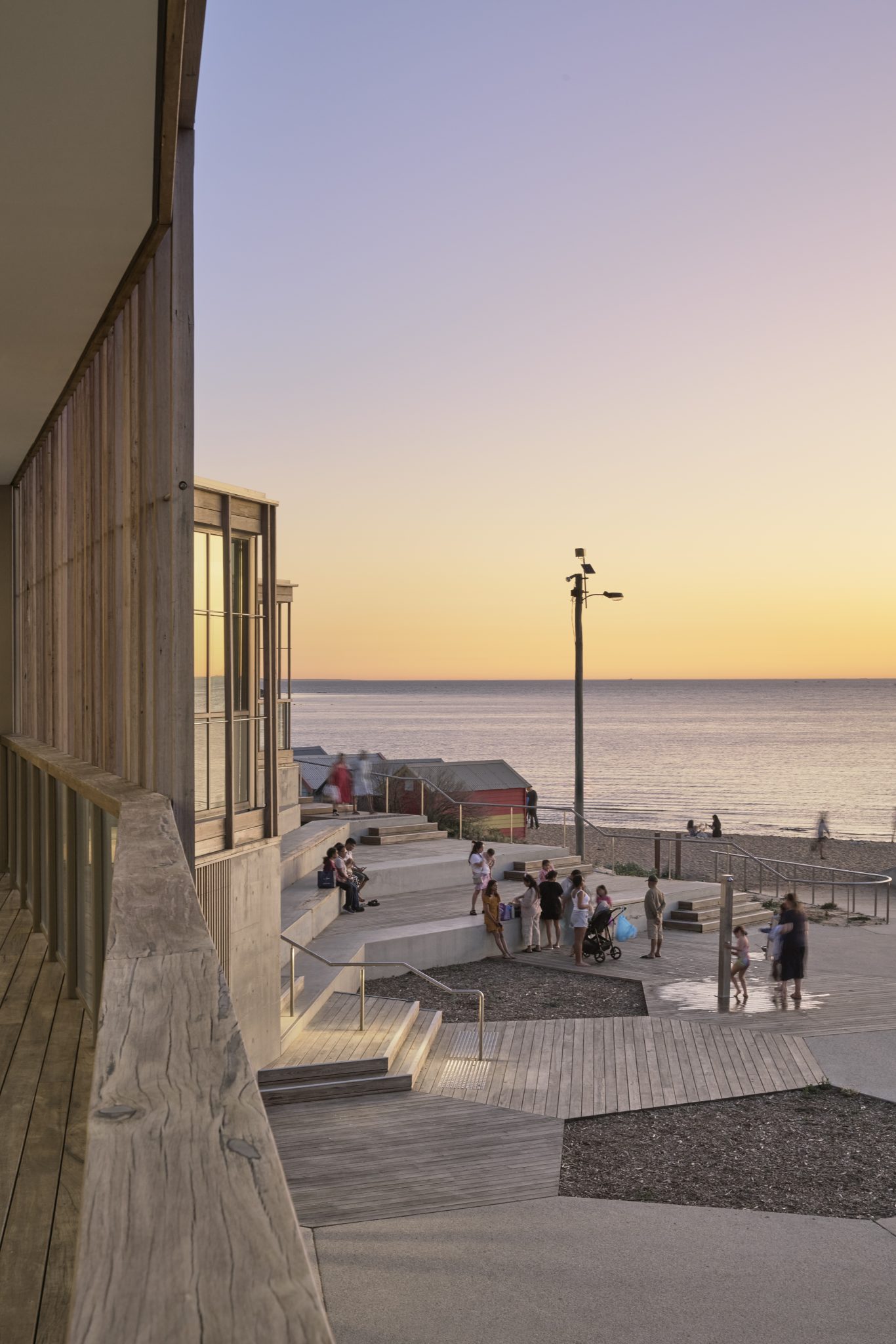
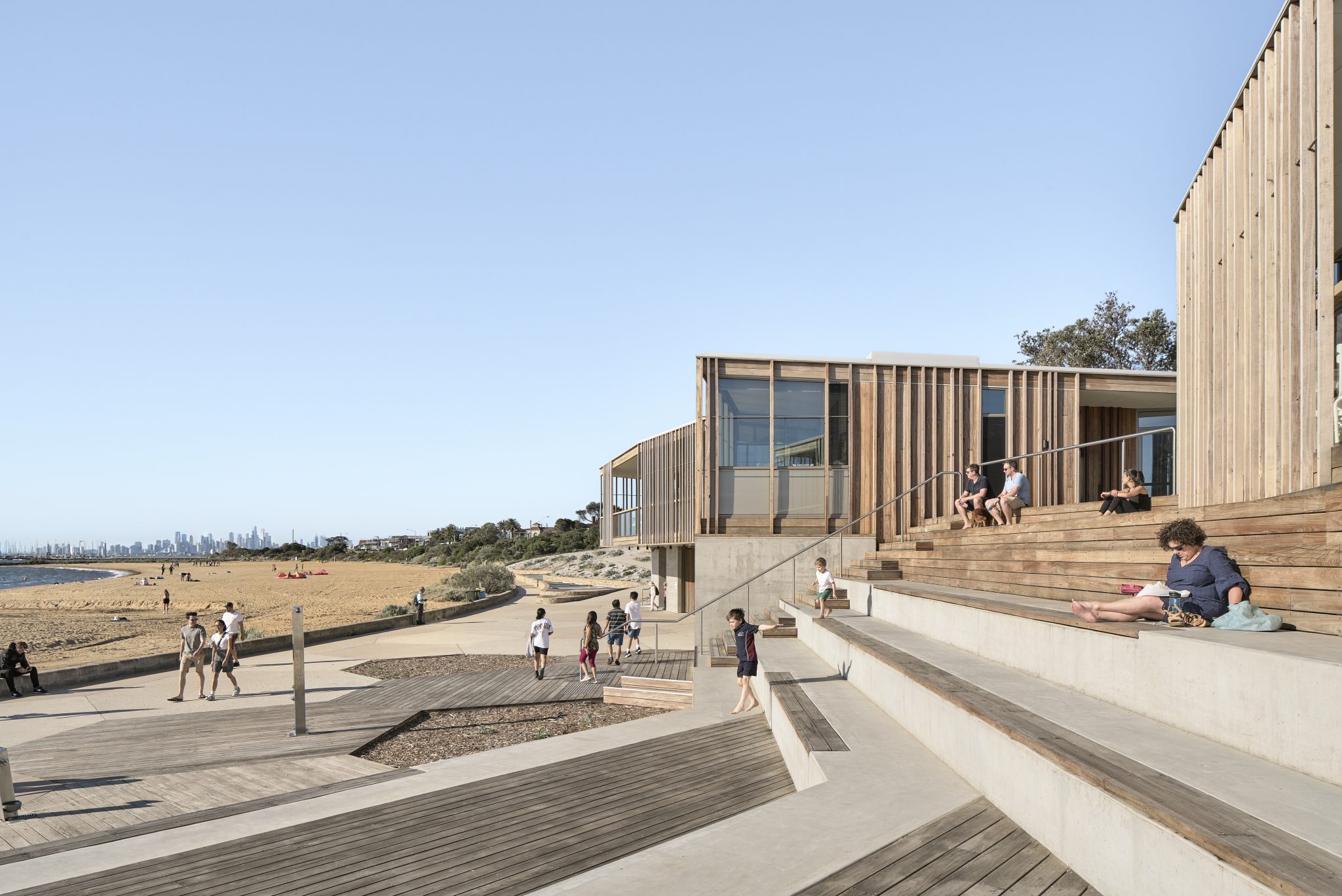
“There was a very natural fall down onto the foreshore, which we tried to use to almost bury the lower ground components. These were the lifesaving club storage, change rooms and showers and those operational components of the club – to almost make them feel like they were buried into the escarpment and part of it,” says Burrows.
“One of the nice consequences of this was that, by pushing the lower club storage facilities back into the hill, we opened up a really good foreground, which catered for the volume of visitors and the ability for the lifesaving club to bring the equipment there, load it into the store room, or bring emergency vehicles in if need be.”
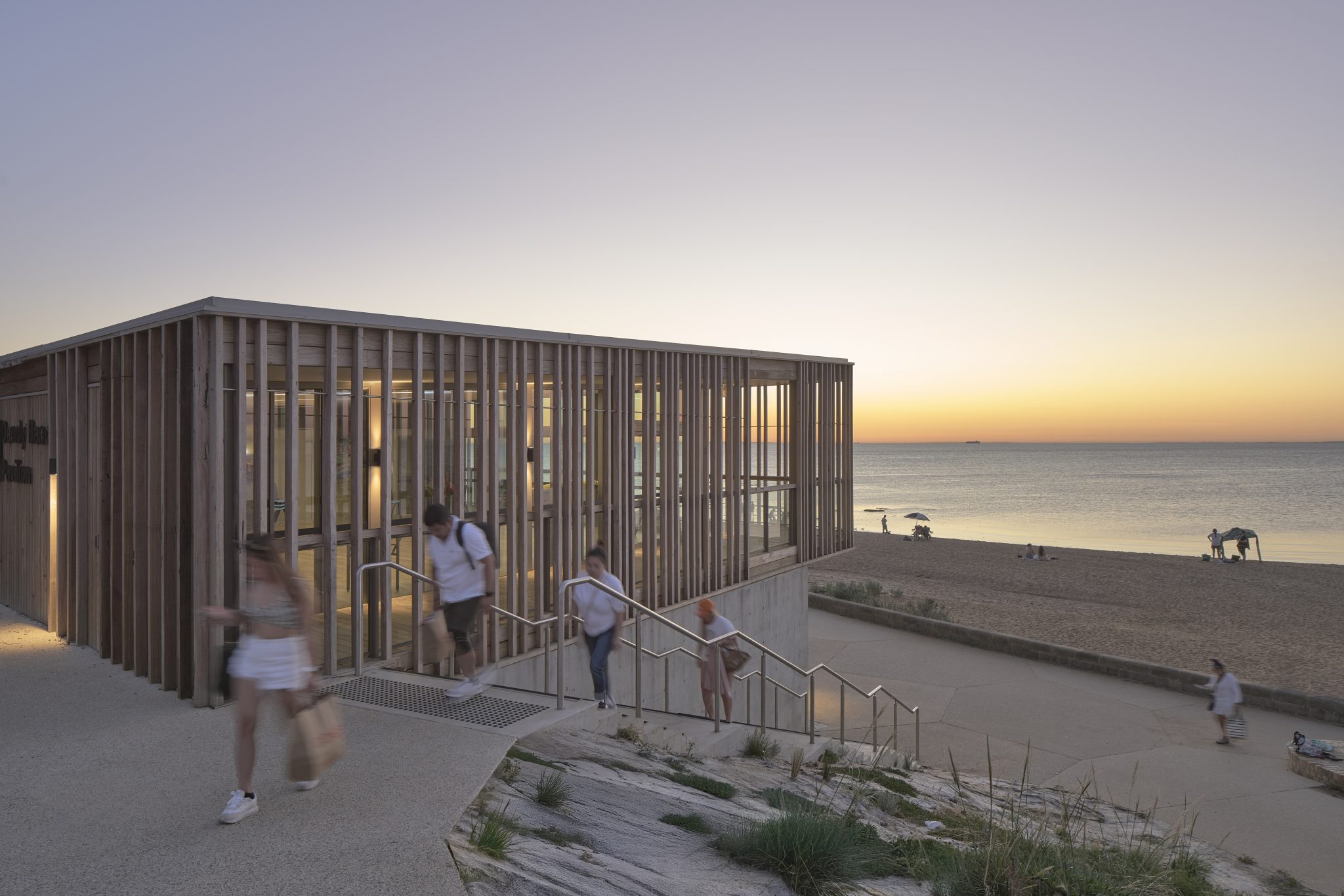
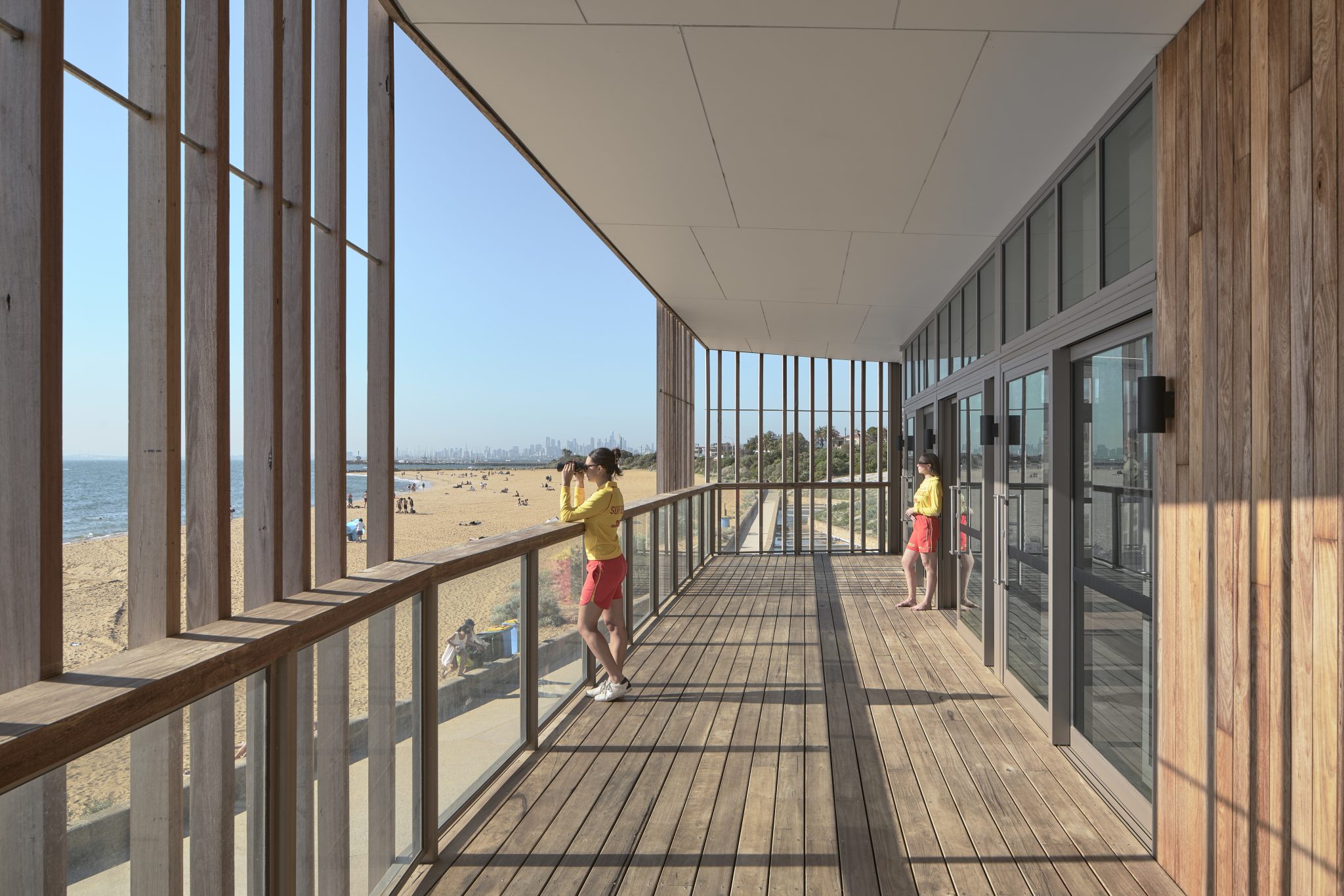
With that aim of merging into the environment, the two timber upper pavilions feature blackbutt timber battens to make the whole feel part of the natural vegetation along the foreshore. This subtle exterior also meant that there was no competition with its brightly coloured neighbours. “Our building was about being almost part of the landscape and letting the bathing boxes be what they are,” says Burrows.
Subtlety on the inside
The muted colour palette continues in the pavilion’s inner spaces. “It is such a remarkable environment, the thinking was that we didn’t have to work too hard in the interiors,” says Burrows. “The club is still a hardworking club and it has Nipper boards, sea kayaks and other equipment, and lots of different people in and out of it at different times.”
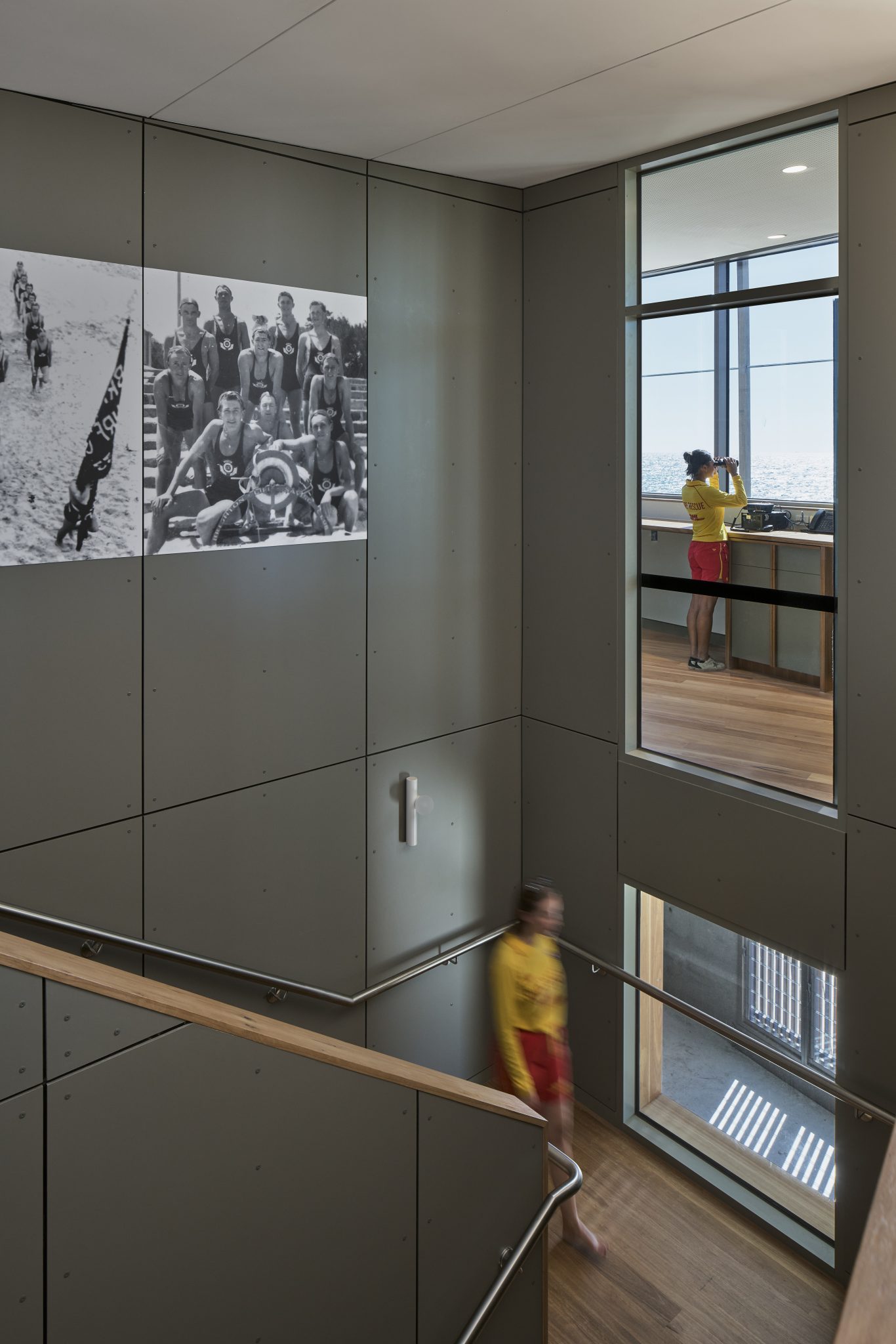
Cement sheet and plasterboard cladding were used so that the space could cope with knocks and furniture being moved around for different purposes. The main community space on the upper level may be utilised as a space for club registration, first aid training or social events like quiz nights.
“So the thinking with those spaces was to keep them durable and cost-effective, and keep the colour palette very simple – very soft sea green or a light grey. So simple, calm interior colours that really are about being, allowing you to be in those spaces and let your eye get drawn upwards.”
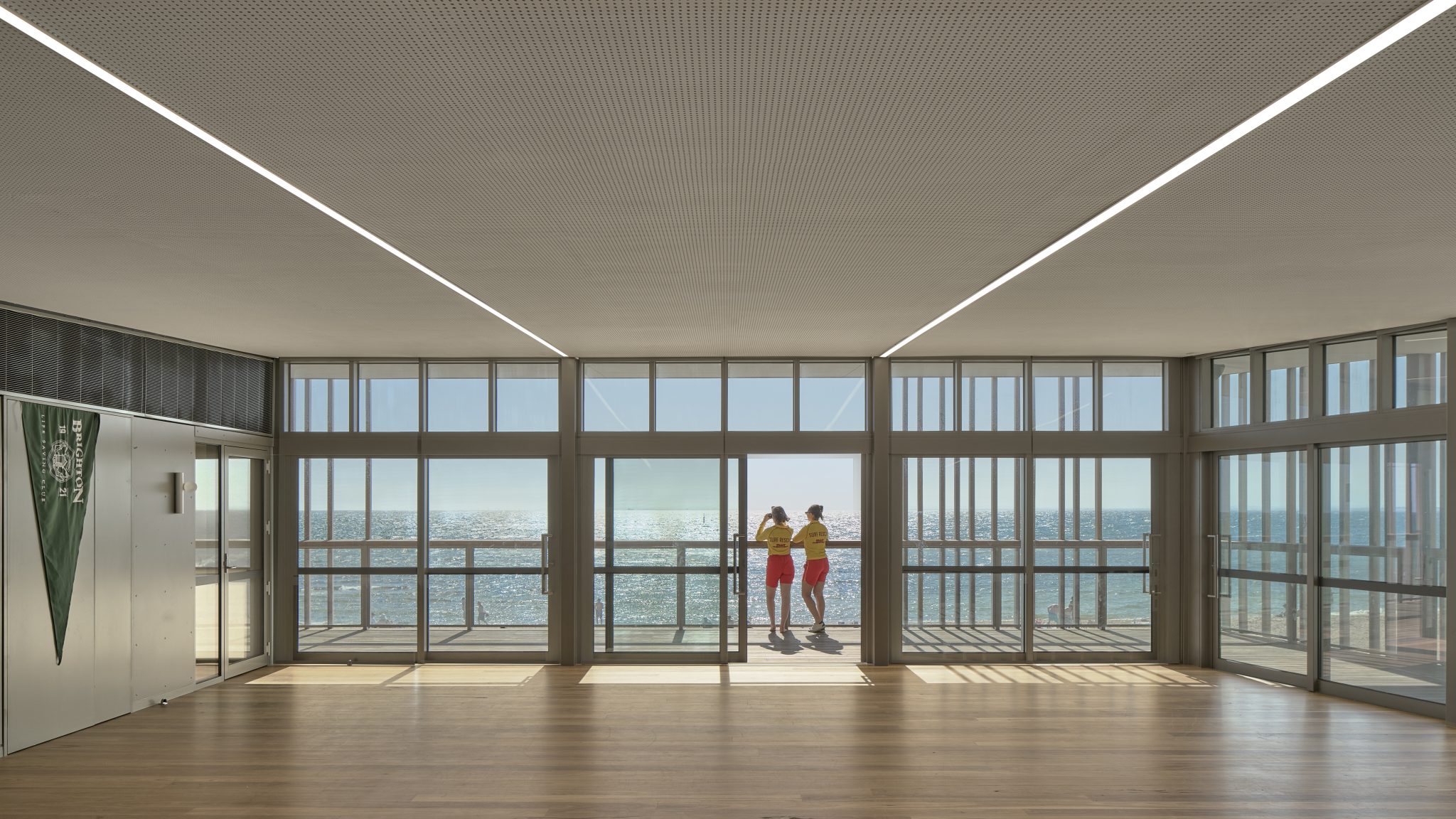
After all, upper-storey visitors and club members are able to enjoy the magnificent views of both the Melbourne CBD skyline and the bay looking west. “So it was a case of actually trying to do less rather than more, and just acknowledging the multifunctional qualities of the space, the requirements for durability, and the fact that we wanted to have a long, low-maintenance life cycle,” explains Burrows.
The store rooms use exposed concrete and, where possible, durable concrete floors. Not only is this in consideration of all the sand and high foot traffic, but also as a future-proofing measure against climate change-related rising sea levels.
“We were trying to keep the overall height down, but obviously raise the levels of the ground floor as much as we could. If you look at the lower level, it is those areas that, if there ever were a king tide, for example, it is basically boat storage and board storage. So it’s very durable hardware surfaces that are designed for wet equipment and wet things to be on them.”
Further challenges
With the project timeline reaching back over a decade, this of course meant working within the constraints of the pandemic. “We had construction happening during COVID, which unfortunately even included the original builder going under during that process because of the cost pressures that COVID put on everyone,” recalls Burrows. “So yes, it had its challenges. And I think it’s a credit to the team and a credit to the Council. Everyone really kept the focus and the vision, and the commitment to what we believe is a fantastic public space and piece of public infrastructure.”
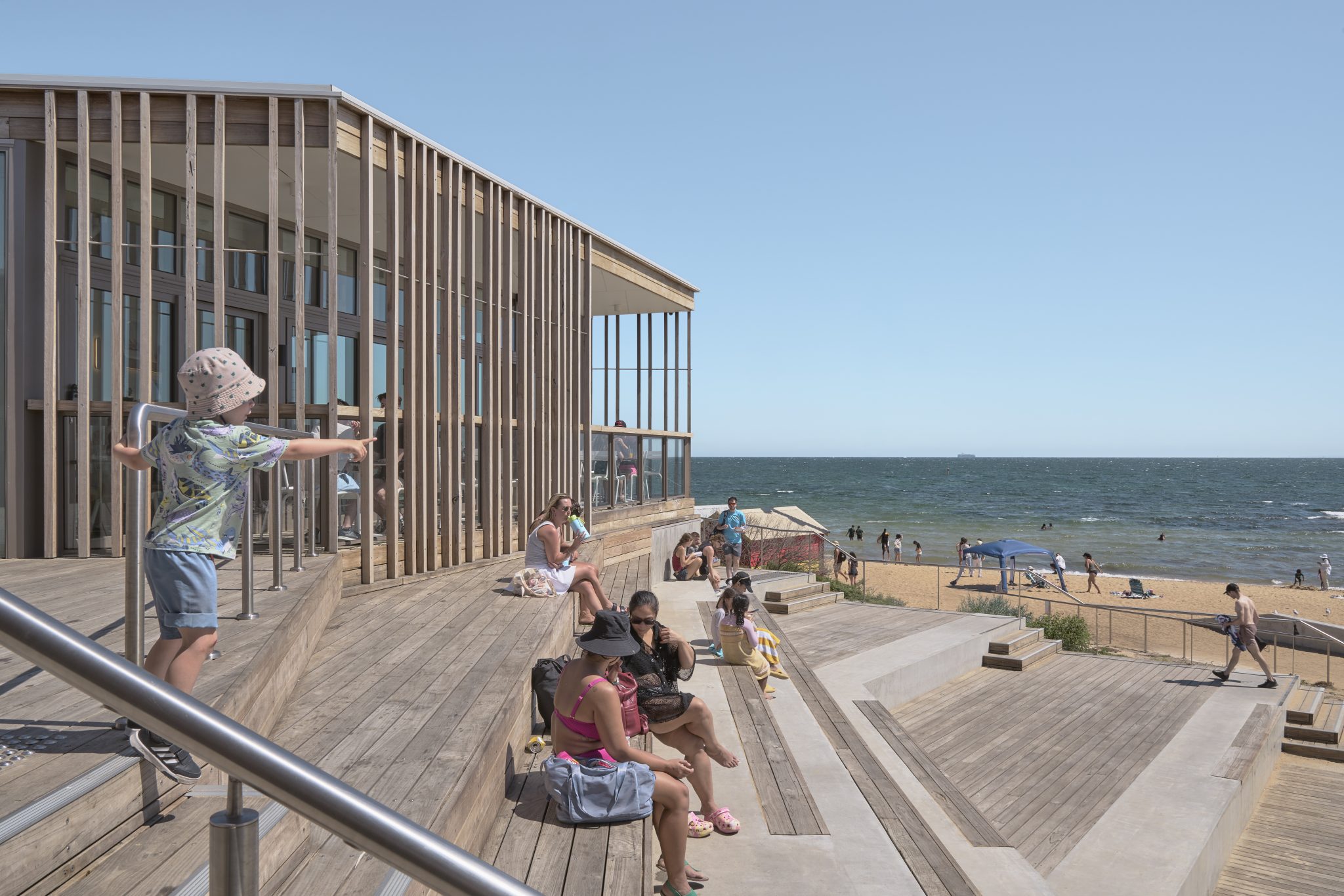

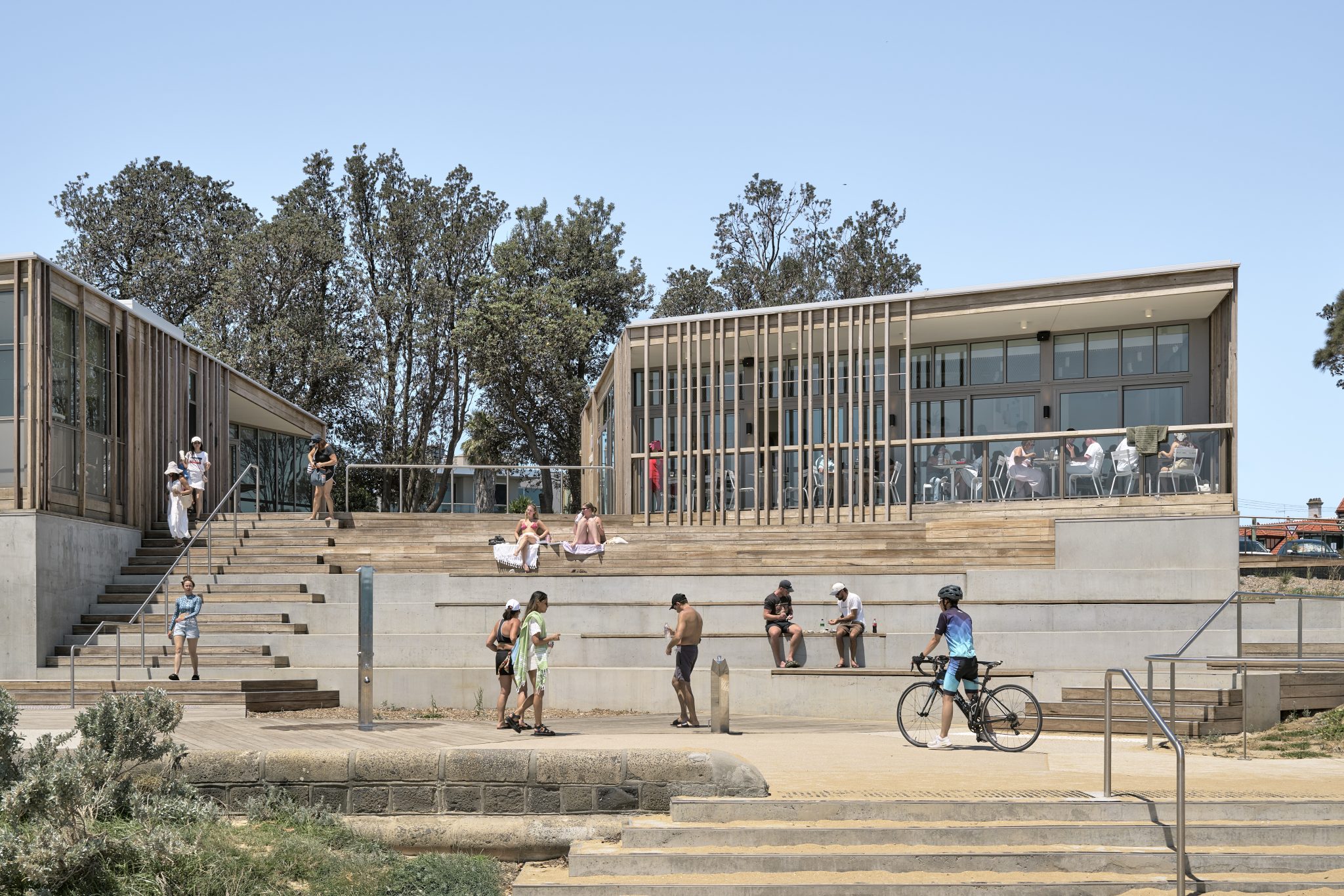
Now that the building is up and running, the obstacles along the way are outweighed by seeing how the public has responded to the building, says Burrows. He nominates the expansive civic space and community amphitheatre in front of the pavilion as his favourite aspect of the design.
“I think the way that those terraces are being used and embraced by the public, it has really given a site that was heavily visited with very little amenity, a fantastic level of public amenity. And people can go there, sit in those terraces, read a book, watch the Nippers programs or the sunset and maybe get a takeaway coffee from the café.”
Photography by Peter Clarke.
This article originally appeared in inside magazine issue 122. Grab a copy here.
You Might also Like
Related Stories

© Niche Media 2026