

Finding the softness in severance – Designing a data centre with a human touch
Finding the softness in severance – Designing a data centre with a human touch

Share
HDR took on the challenge of delivering a co-location facility that prioritises functionality, but not at the expense of creativity and a human-centric approach.
Data centres are playing an integral role in the transformation of our virtual world. Every sector from health to banking, or finance to education increasingly relies upon them for scalable, reliable and sustainable digital infrastructure to operate effectively. However, they are not solely virtual environments, but physical ones. And their proliferation offers significant opportunities for forward-thinking design studios to reimagine how they are designed and combat a perception that they are large and monolithic structures in the landscape.
Much has also been said, and written, about their use of energy and water, so how do those tasked with designing a new data centre address those perceptions? It’s an opportunity that Max Navius, associate principal at HDR, knows all about and welcomed. He says HDR approached the brief with a commitment to sustainability and a human focus as its two-pronged response.
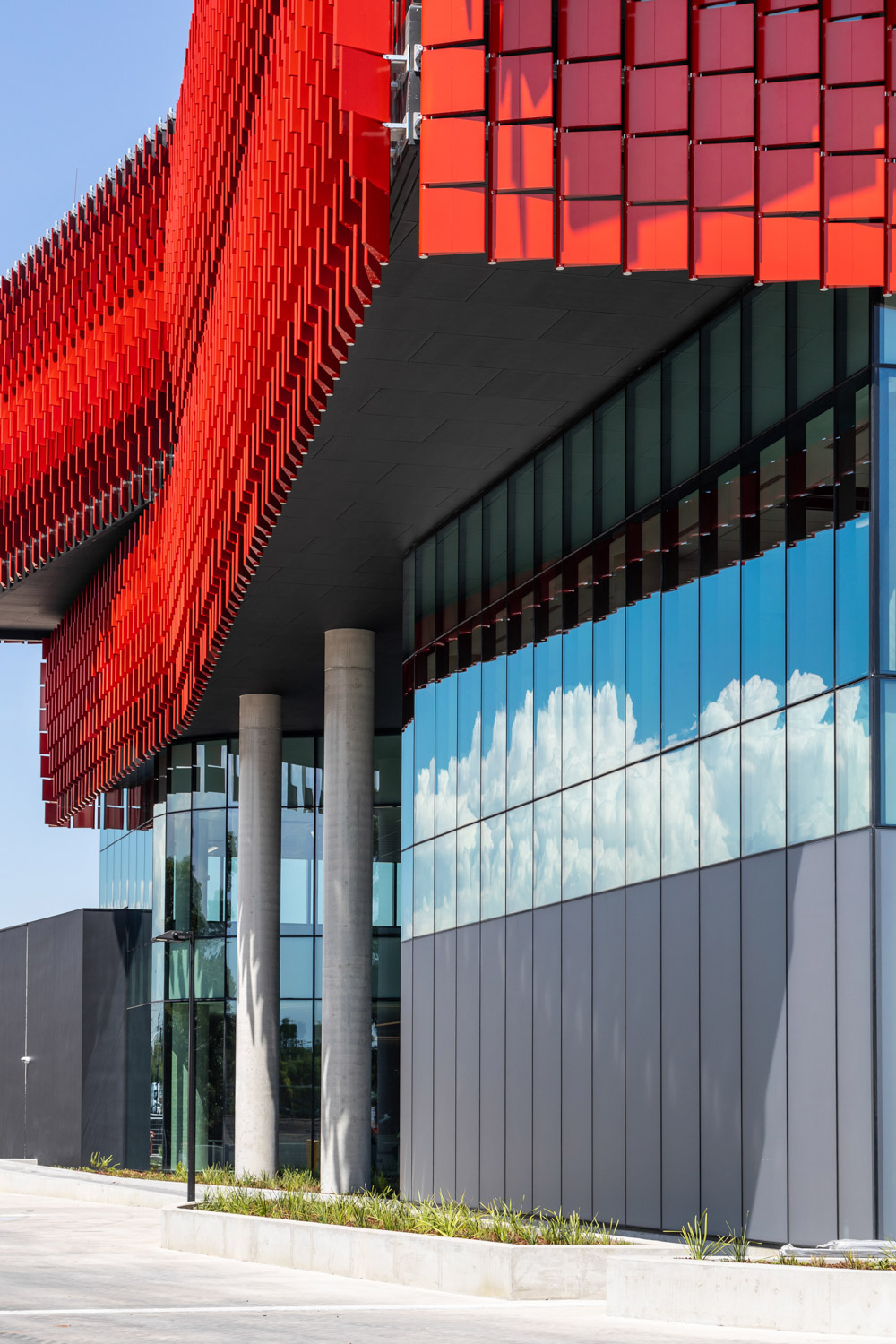
The practice has recently completed work on M2 Melbourne for NEXTDC, a co-location data centre located near the city’s Tullamarine Airport built to provide 120 megawatts of IT infrastructure to enterprise and government customers. The campus was designed using computational and generative design tools that allowed the team to rapidly evaluate and manipulate design parameters in real time and deliver a ‘next-generation co-location facility’.
The key to HDR’s approach, Navius says, was to identify the areas where there was room for creativity.
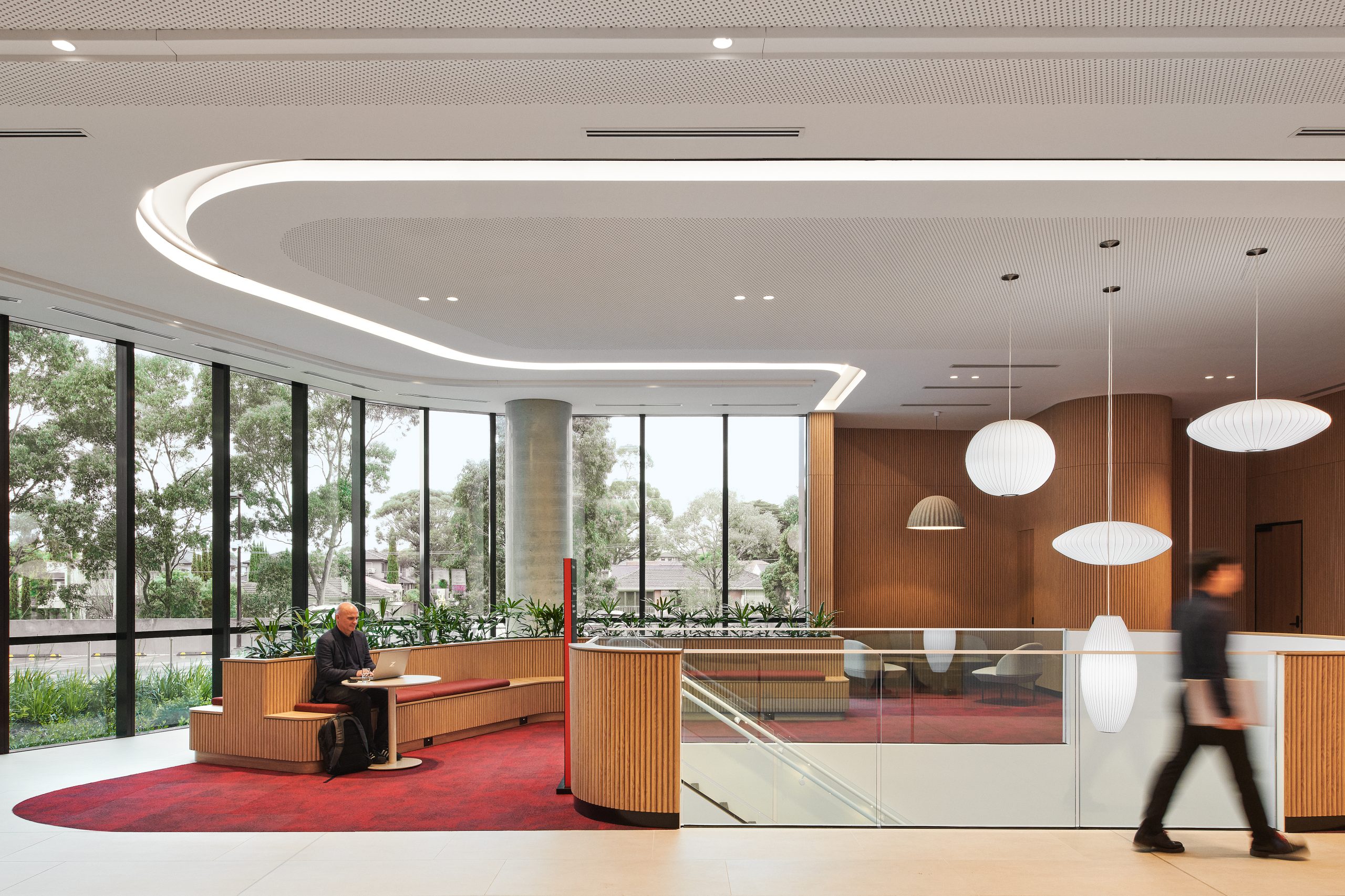
“When we’re designing data centres, functionality is always the top priority, especially in highly technical areas such as the data halls, where the infrastructure is actively operating,” he explains. “But on this specific project, the front-of-house areas, which are more customer-facing, offered greater flexibility to incorporate creative design elements.”
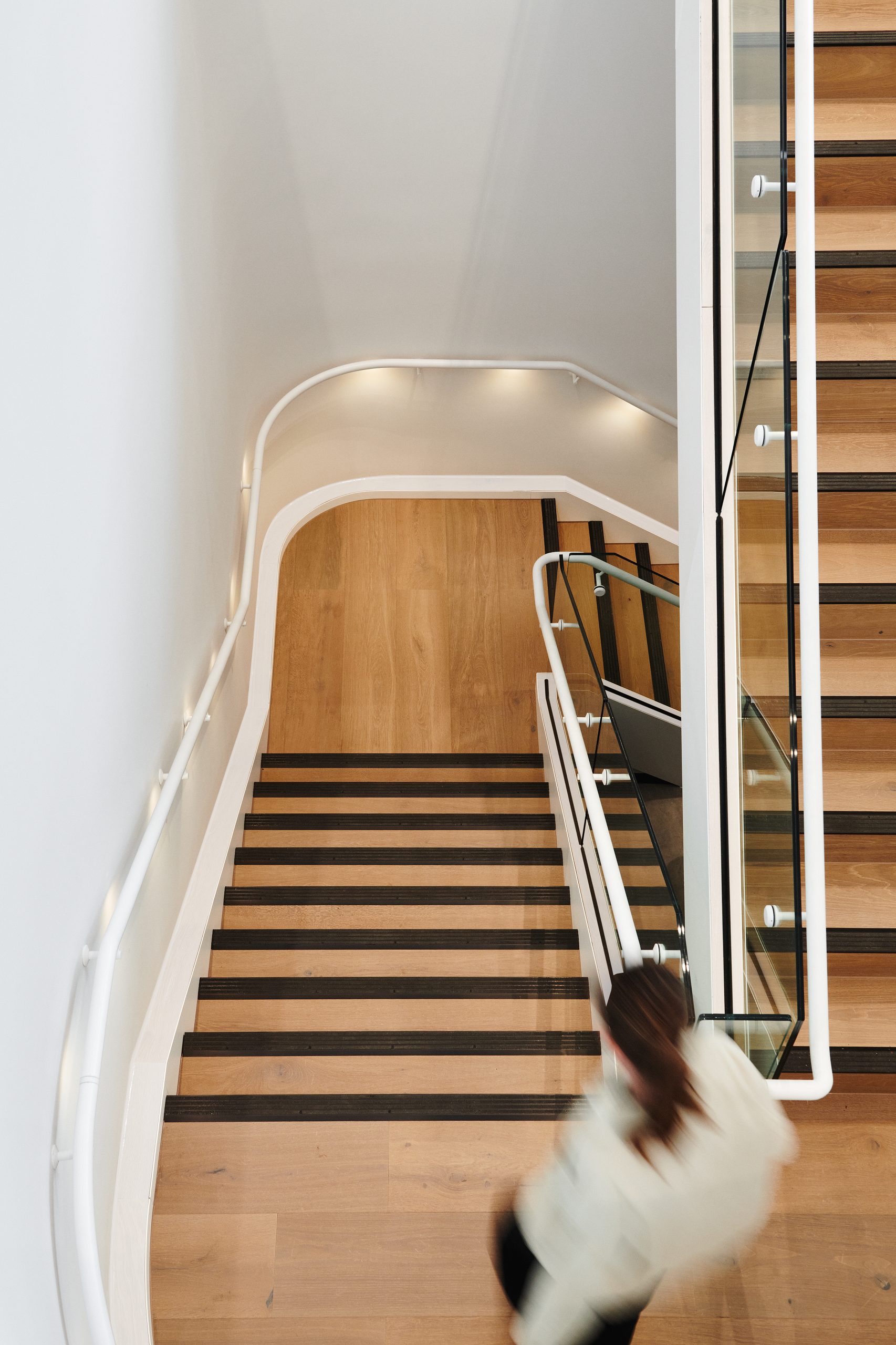
In particular, this meant giving particular attention to the six storeys adjoining the data centre and comprising NEXTDC’s workplace and mission critical tenancies. Here, the lower ground floor includes open-plan workspaces, training rooms, quiet rooms and flexible meeting spaces. While the ground floor offers the boardroom, reception, auditorium, lounges and collaboration zones, and levels one to four are home to commercial offices designed by HDR and linked by an intertenancy stair aimed at encouraging traffic flow and visual connection. The overall effect is intended to “enhance the user experience, while still respecting the functional requirements”.
Two-in-one design
It was almost like designing two projects in one, says Navius. Understandably, data hall design is very prescriptive, as there are so many technical requirements, but for the front-of-house areas, the client was happy to encourage a much more flexible design proposition from HDR.
“This approach allowed us to create environments that are both highly functional and inviting, striking a balance between operational efficiency and a more welcoming environment,” says Navius.
“People sometimes perceive data centres as soulless, highly complex, technical environments filled with data racks and services, which can feel quite impersonal,” he adds. “So our goal was to shift that perception by introducing a human-centric component. We intentionally designed the customer-facing spaces to feel very distinctive – with a strong emphasis on connection and collaboration.
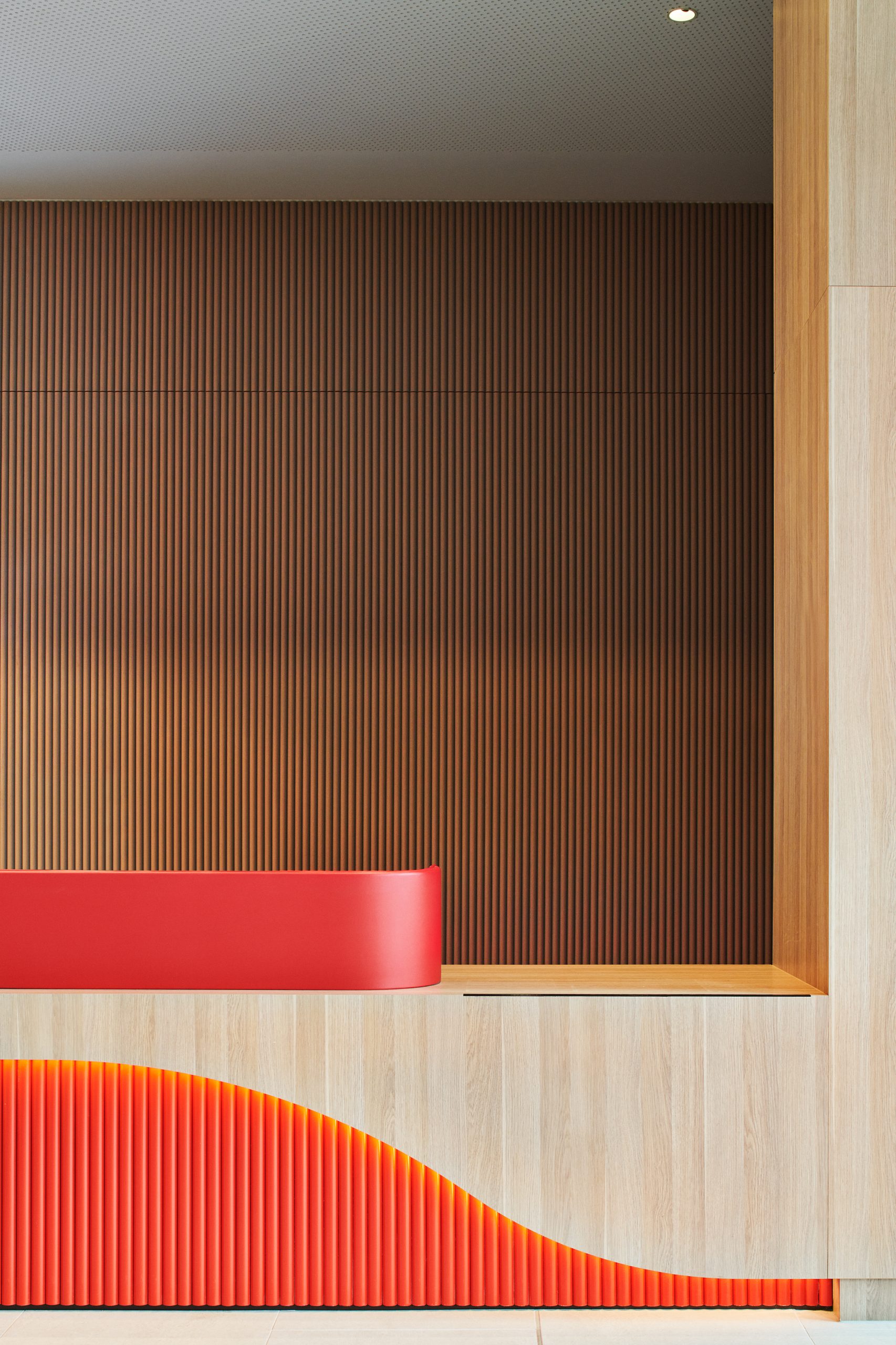
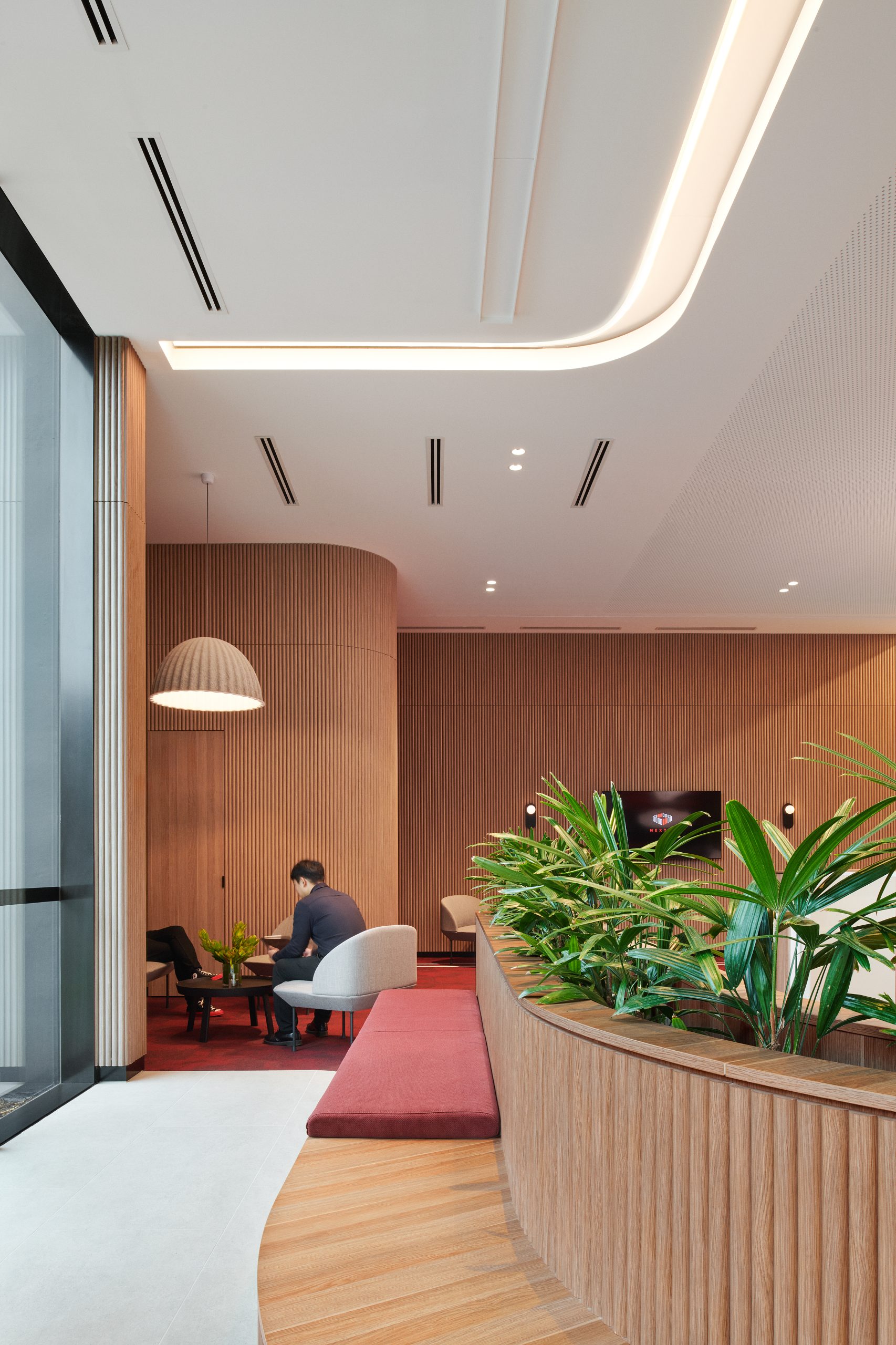
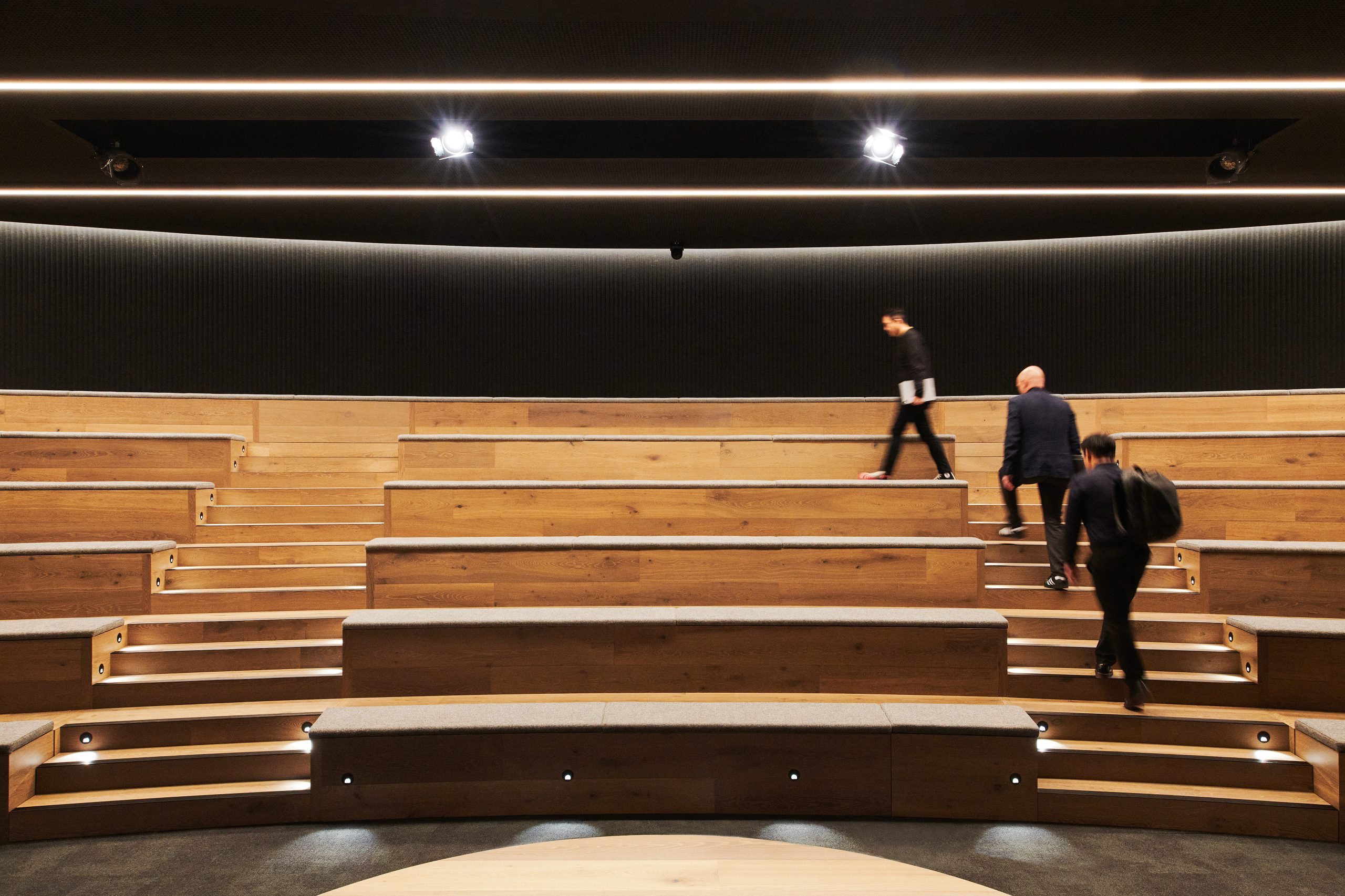
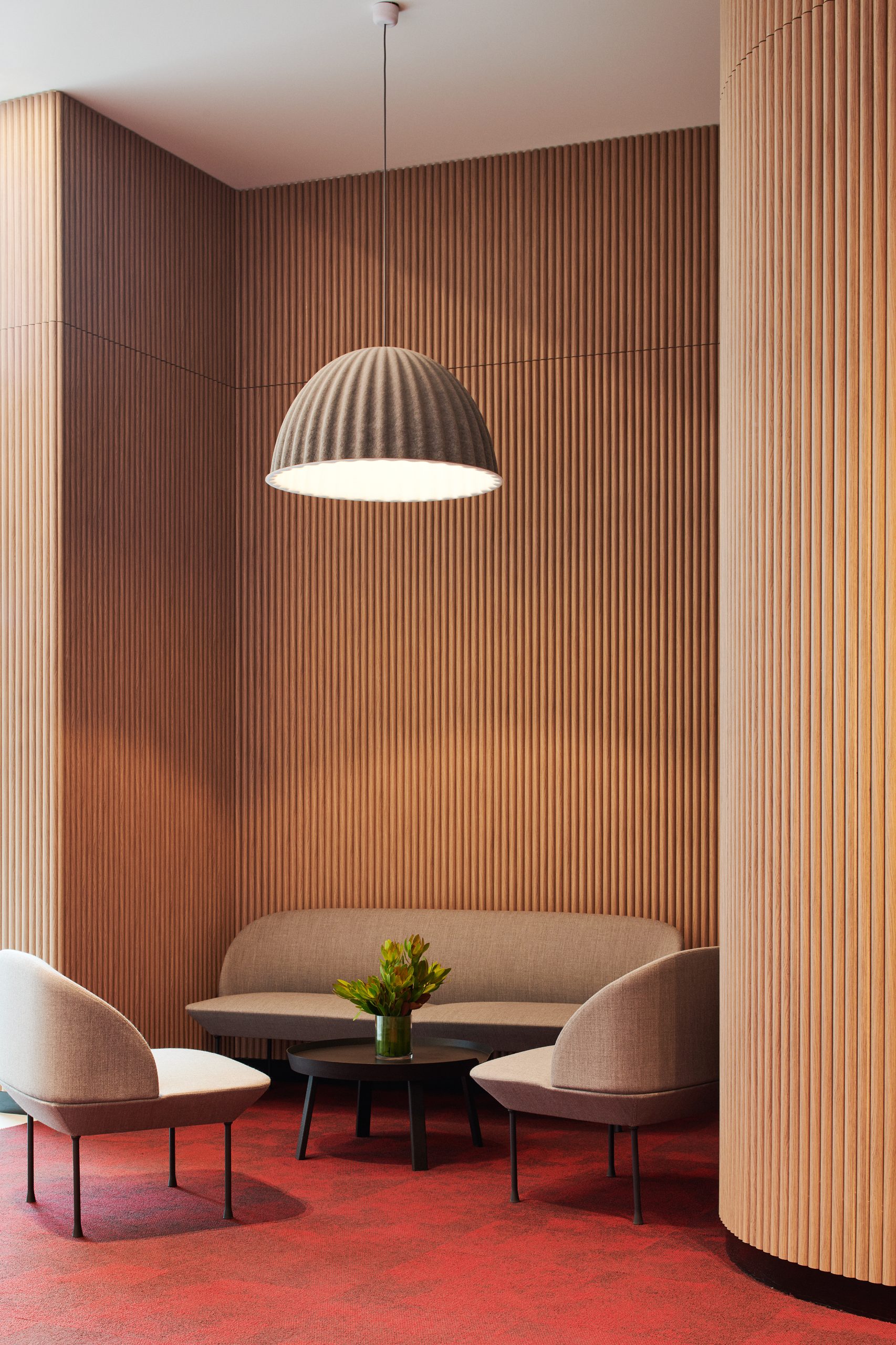
This translated into a design aesthetic that favoured timber laminate, tiles and vinyl, and fabric wall panels for the acoustic components, to create a balance between technology and the other interior spaces.
For Navius, it’s the material selection that really distinguishes the project and he nominates the timber laminate as his favourite element of the interior design. “I think that the timber really, really helped to humanise the space,” he says.
One of the concepts of the design was the very idea of the ‘cloud’, he explains. As the project description explains, “The recurring symbol of the cloud throughout the workplace evokes continuous, organic movement, while the guiding cable motif is a subtle technological nod to the invisible networks powering the facility.”
Seamlessly smoothing
The way this informed the design was to soften the edges.
“We introduced soft corners… to bring in some human elements, which is rather nice. And then we combined them with the timber, so the result is quite soft, rather than angular and strong and hard.”
Above all, though, the chief design element was an incorporation of NEXTDC’s brand identity. Fortunately, that meant liberal use of some of the warmest colours on the palette.
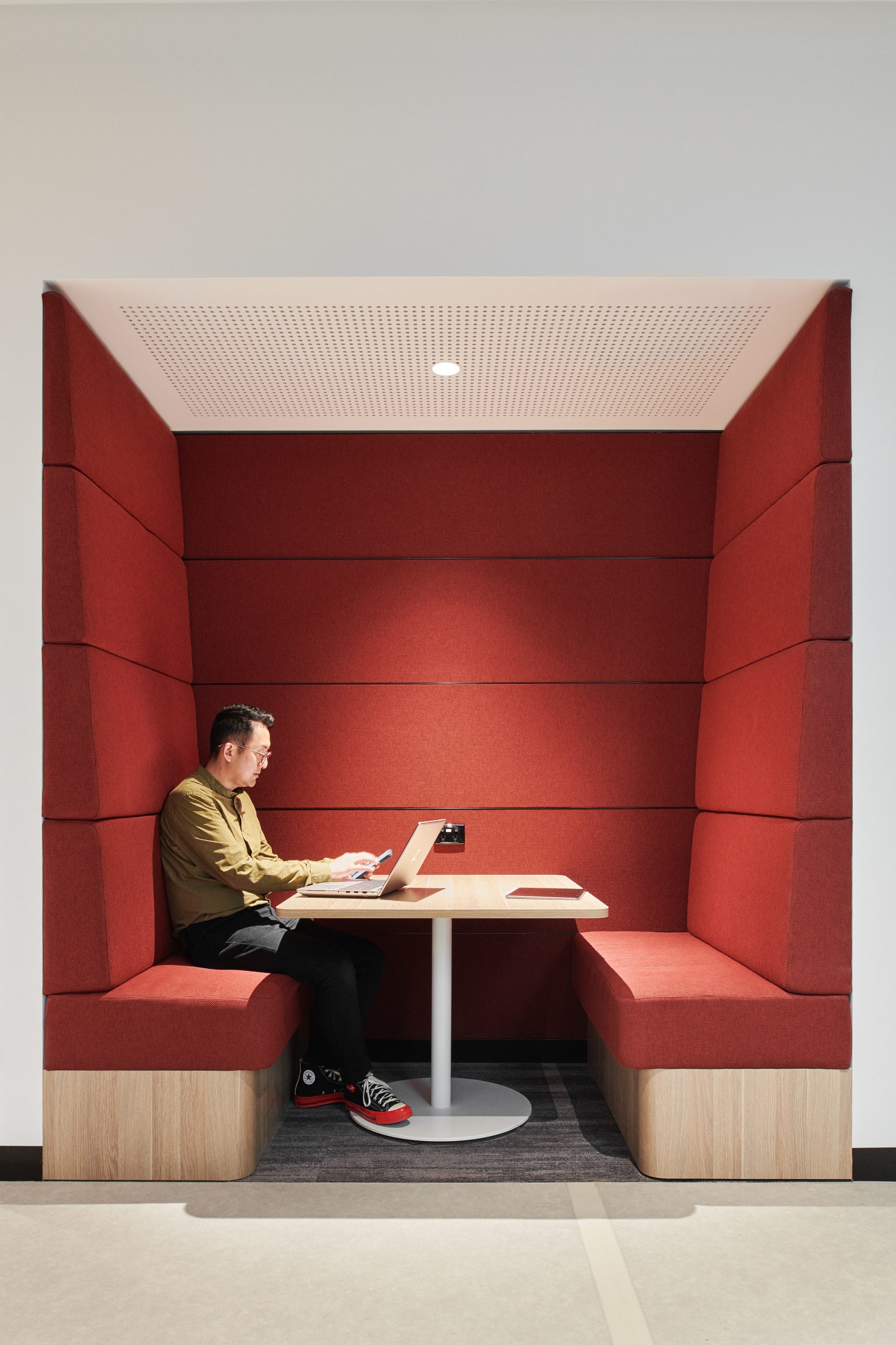
“NEXTDC has a really distinct branding identity,” says Navius. “It has primary colours that we had to use, and secondary colours too, so we used those and, in this instance, it meant red punctuated certain key areas throughout the spaces.
“The idea was to help define the space and create a focal point that enhances the wayfinding.”
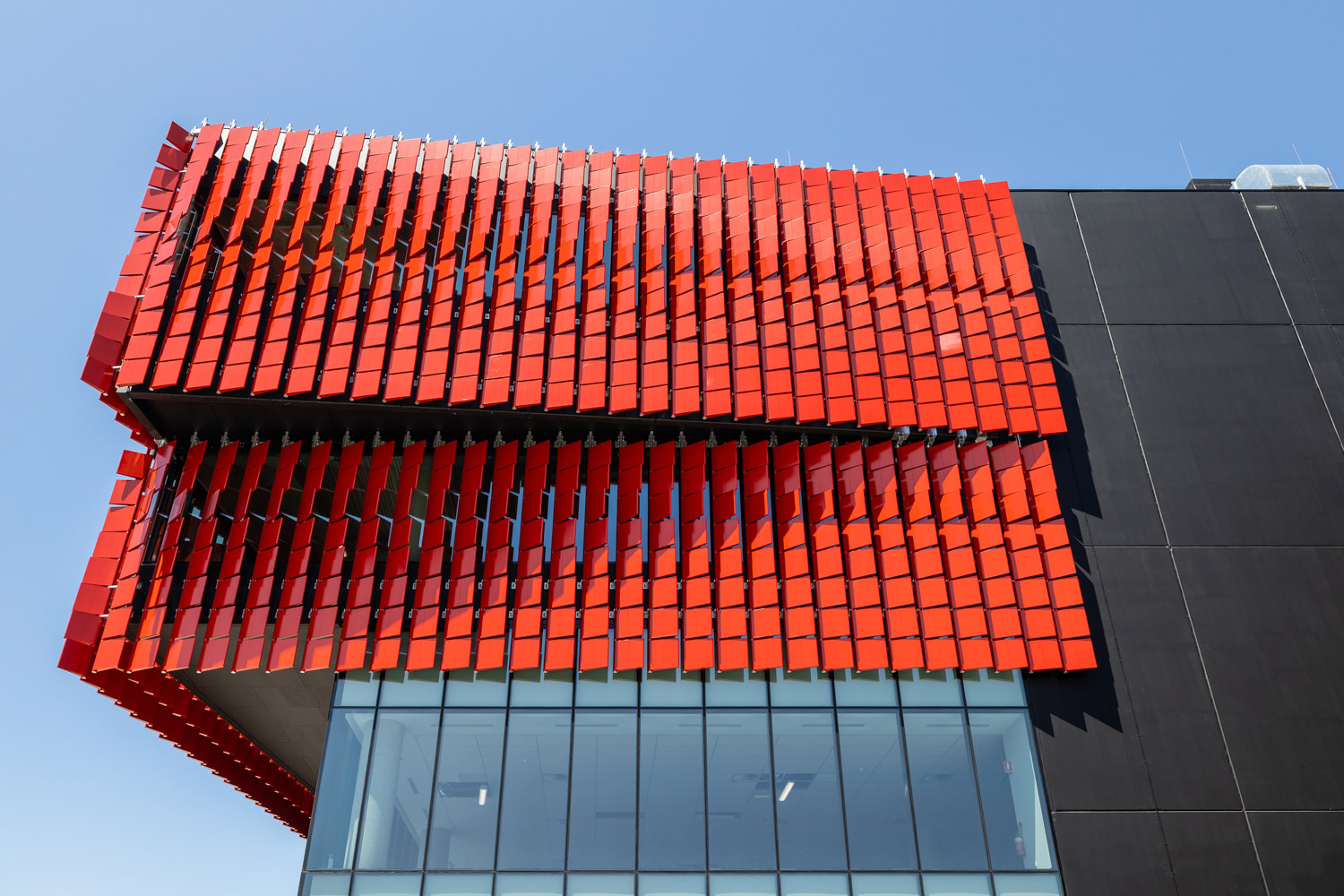
With orange and red highlights featuring throughout the interior, perhaps the most striking use of colour is on the exterior of the 16,000-square-metre building. The upper storeys have a striking red filigree façade of articulating blades (to optimise shade from the sun and offer a dappled effect to the overall design), while the brand’s orange highlights also feature prominently.
Successfully ‘unseveranced’
Since completion, Navius says the response from both the client and other users of the facility has been very positive. Indeed, HDR is already working on several other projects with NEXTDC, having gained valuable knowledge from this one. “A lot more of these data centres are popping up in Australia,” he concludes.

Interior photography by Nicole England. Exterior by Vista Media.
This article originally appeared in inside magazine issue 122. Grab a copy here.
You Might also Like

Related Stories

© Niche Media 2026