

Winning an IDEA trifecta – getting to know Studio Gram
Winning an IDEA trifecta – getting to know Studio Gram

Share
They say ‘write what you know’, but Studio Gram discovered this can also apply in interior design, with the team winning the Workplace Under 1000sqm category at the Interior Design Excellence Awards (IDEA) 2025 for designing their very own workspace.
While no one in the A+D industry could ever accuse IDEA 2025’s triple-award-winning dynamo, Studio Gram, of having an unfair advantage (the practice’s work more than speaks for itself), directors Dave Bickmore and Graham Charbonneau did have a couple of tricks up their collective sleeve when it came to filling in their applications. First, the Adelaide-based duo already had some runs on the board, having been awarded Highly Commended in the Hospitality category in 2024 for Fugazzi Basement. Second, Charbonneau was also on the jury that year (recusing himself in the Hospitality voting, naturally), giving him some insight into how the awards are judged and the criteria used.
This experience alone gave him a new level of appreciation for the rigour involved in the process, which he describes as ‘onerous’ compared to what he has experienced elsewhere. “I’ve judged in other awards programs too… some of the other ones are almost like photography competitions in some ways,” he says. “Understanding the depth of the process, being able to have your projects awarded, and also to be awarded Designer of the Year, there’s a huge, I think, weight to it in terms of understanding how the program works.”
While Studio Gram was shortlisted multiple times at IDEA 2025 (Latteria and Monarto Safari Resort both made the Hospitality shortlist, while Coopers Brand Home did even better, earning a Highly Commended in the same category) and took home three awards (Designer of the Year, Workplace Under 1000sqm and Institutional), it was for the first of the wins that Charbonneau’s jury experience actually influenced the way the team put their entry together.
Designer of the Year
“Once we were shortlisted for Designer of the Year, it changed our approach to the presentation slightly. That was influenced… [by the fact that] we had so many shortlisted projects,” he explains.
Designer of the Year nominees are invited to give a 10-minute presentation about their work and practice, but Studio Gram elected to use that time to narrow the focus.
“We looked at it and went, ‘Well, we can’t present six projects properly in 10 minutes. And I said to Dave, ‘To be honest, when I judged it last year, you already know the projects because you’re judging them’.”
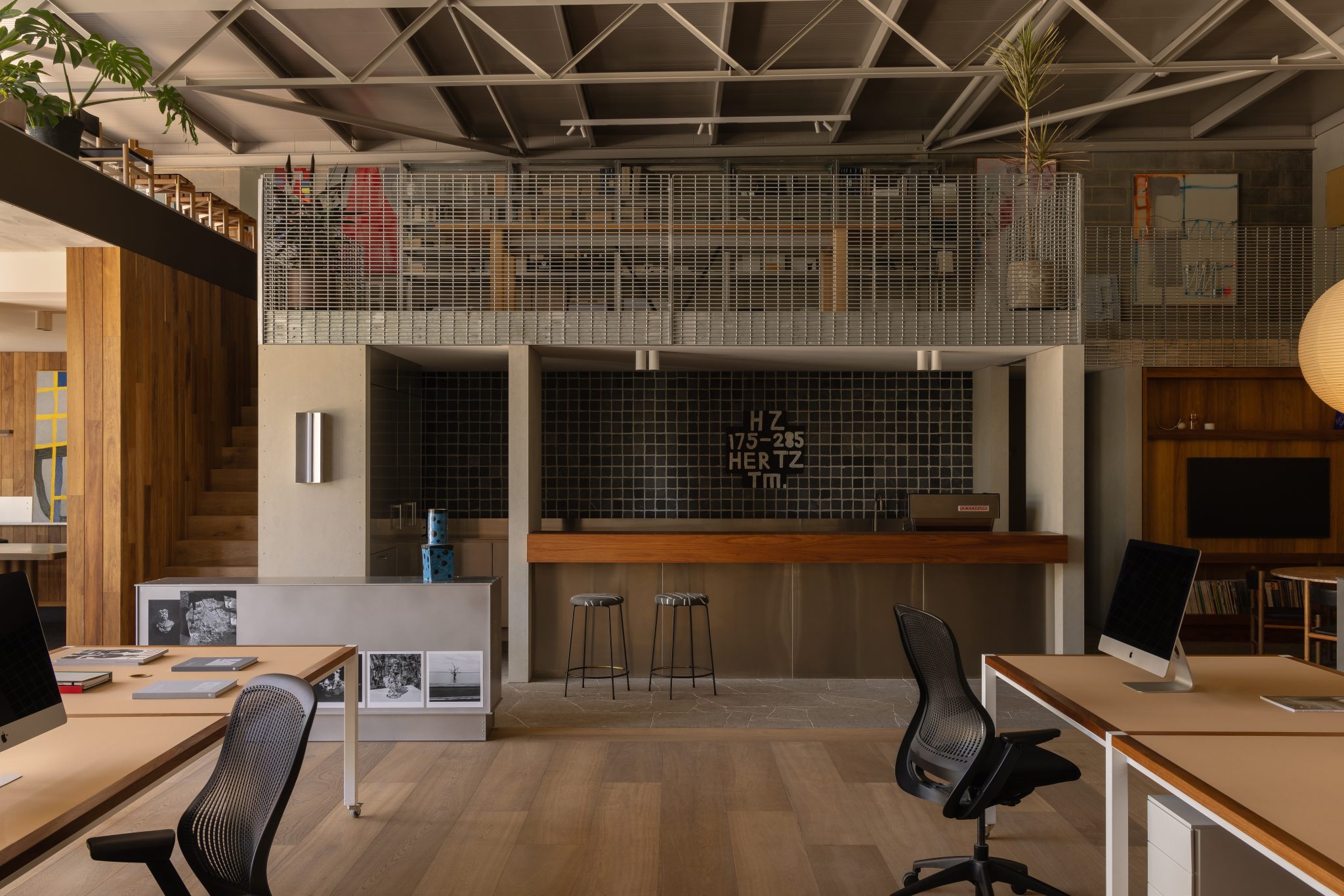
Instead, the pair decided to spend most of their allotted time talking about one specific project – their shortlisted entry for the Workplace Under 1000sqm category. And that workplace was, coincidentally, Studio Gram’s own.
Designing your own space
“We were fortunate in the way that our studio was one of the projects that we had [entered]. It gave us a good opportunity to go into more depth about our studio, but then to also use the time to describe how that project affected our practice in the way that we practise. Rather than it just being effectively a slideshow of images that [the jury] had already seen, it was an opportunity for us to really talk about who we are as designers and how the space that we operate out of affects that.”
In a previous ADR article, Bickmore and Charbonneau explained why, when they were looking for new digs, the old Adelaide auto repair shop was the perfect location. The former Bowden Motor Repairs offered enough space via its shop floor to house the team, while also providing the opportunity for visitors to mingle with the team, or host industry events.
The key directive of the design brief was for the space to be “a living, breathing extension of our practice – both a workshop and a sanctuary. Equal parts functional and expressive, it’s a place where ideas can percolate, evolve and be shared,” Charbonneau told ADR.
Bickmore adds now, “ One of the first requirements was that it reflected our hospitality work. It was an extension of the projects we were doing and had a very open and forward-facing aspect to it. We wanted a kitchen that really functioned, so that we could do proper meals out of here and host hospitality style events. And we wanted it to be a space that felt open to the street. I think architecture practices or interior design practices are inherently kind of quite closed off.
“And we also wanted it to be a place where people felt like they could come for other events. When we opened the doors to the broader industry and public, we wanted to function really well. We’ve had a series of events here now. We’ve had some sit-down events of around 80 to 90 people. We had a stand-up event of 120, and [we recently hosted] a long table dinner for 40 people as well.”
From hospitality to institutions
Workplace design hasn’t been a traditional focus for Studio Gram (“if you want just a bunch of workstations from one of the many that produce great workstations, there are people that are much better at providing that service than us,” says Charbonneau), but the practice has a predilection for approaching typologies from a different angle.
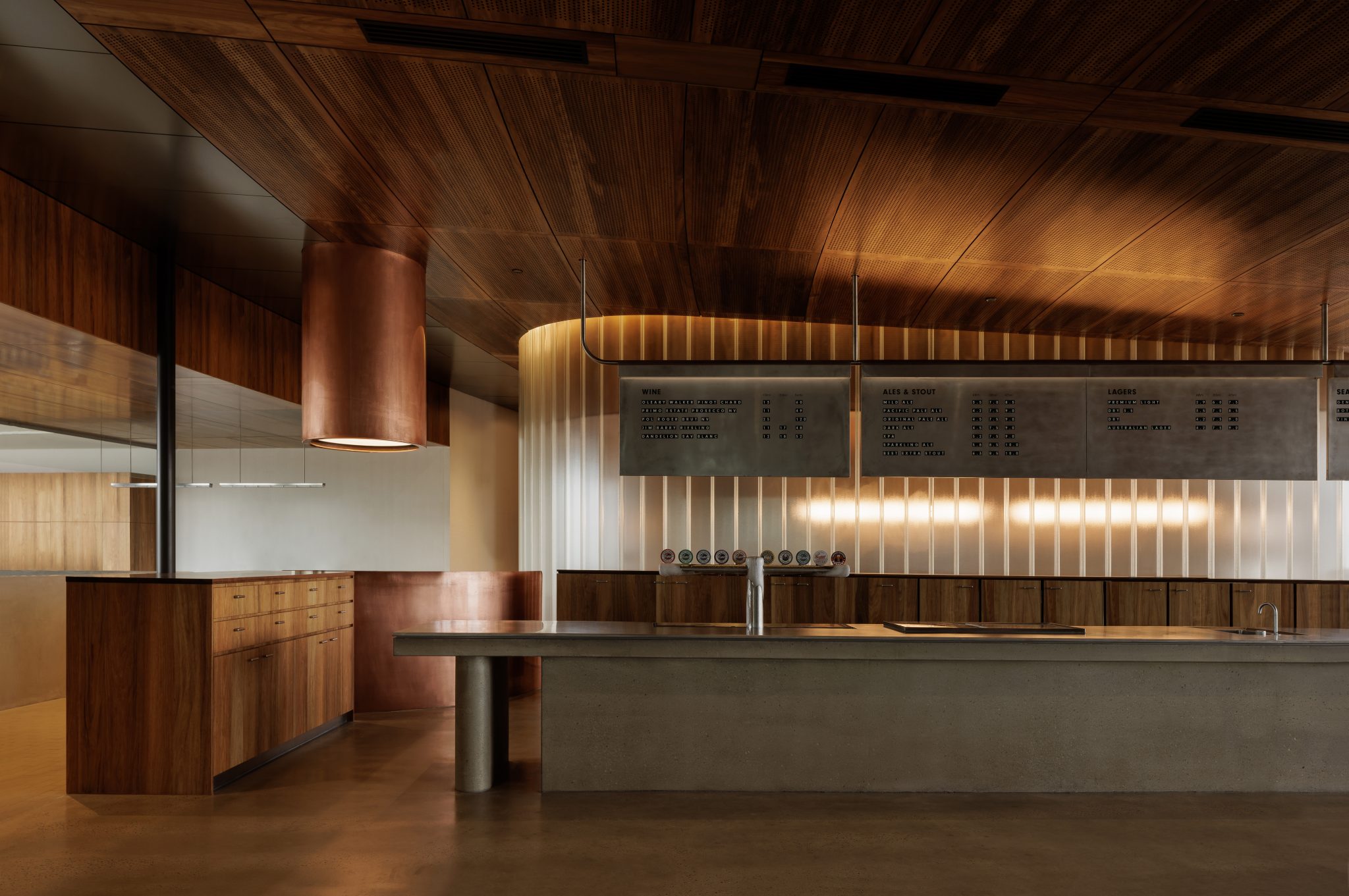
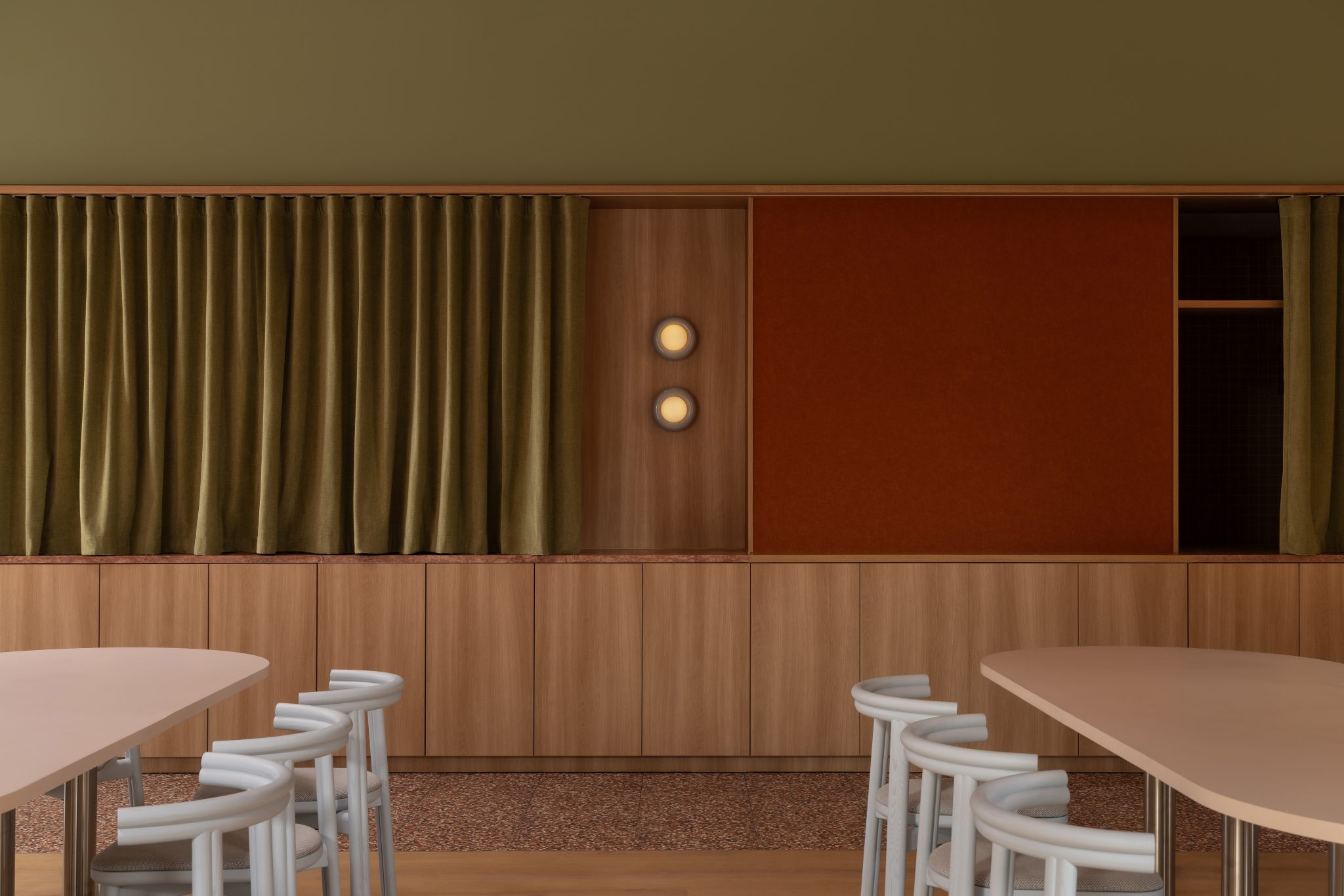
This explains the approach it took for Pembroke Middle School John Moody Centre, the educational facility project that earned it the Institutional IDEA for 2025.
“The brief set by the principal was that he wanted something that wasn’t pedagogical or an institutional kind of design,” says Bickmore. “What they had previously was very much a traditional tuck shop roller door. And what was served out of there was deep fried food and stuff that wasn’t very healthy. They wanted to change not just the look, but also the vibe, the quality and the health aspect of their food offering.”
The result is a space used by day students, but also school boarders who eat their dinner and breakfast there. Also included is a public-facing café, where parents and carers can get a coffee after school drop-off.
“It’s run by a social enterprise called Yellow Submarine,” continues Bickmore. “They have different types of people that they train up to work in the café serving the public. It’s a great project… I think there’s a huge opportunity to educate kids and students about design, but also how to eat better. And then there’s also the social enterprise and business side about how to run a small cafe.”
Looking at legacy
Chatting to Bickmore and Charbonneau, this warm inclusivity and desire for building relationships in the industry and the wider community isn’t the least bit surprising.
Mindful and considerate are two adjectives that immediately spring to mind. And that’s no accident. The pair have been working with a mentor about the big picture stuff and looking at what their goals are in the long-term and outside of the day-to-day. “There was this idea around legacy and really understanding or positioning our practice in the way of ‘what is the legacy when you leave, what do you want to be known for?’ And we came to this place where we wanted to be able to, I guess, leave the industry in a better place,” says Charbonneau.
They are looking to do this by launching a couple of initiatives. One is called Groundwork. Currently, the monthly project has an internal focus and comprises the team taking time to regularly pause and participate in activities like yoga, breath work or taking a walk together.
Then there is the student-driven program they’ve dubbed In Residence, where they invite a couple of final-year students – one in architecture and one in interior design – to share their space and use a desk. “They’re not doing work experience or internships or anything like that. We just allow them some space in our studio to do their work. It’s not mum and dad’s lounge room or their studio at uni,” continues Charbonneau. “And it also opens up our studio for them to use anything we’ve got – all of our resources, our printers – and they’re also welcome to join us in anything that they want to. If they want to sit in on client meetings to see what that process is like, or come to a site visit [they can]. They’ve also been participating in our Groundwork sessions. It’s an opportunity for us to give back as much as we can, but also to try to improve the community around architecture and interior design.”
The practice can also benefit from a program like In Residence, with the dialogue it opens injecting new ideas and approaches. “They’ve come in and pinned up their final year projects,” says Charbonneau of past participants. “We’ve run through sessions with them, helping them work on their presentation skills, so it’s a real opportunity for them to grow a little bit as well. It’s driven by them too. We told them that the only ask we had was that they actually used the space, because we can’t offer it to everyone. We went through an interview process and we said the only real requirement was that they actually had to commit to coming here at least once a week.”
The ripple effects of an IDEA win
Describing their triple triumph at IDEA as a “complete shock”, Bickmore says, “I know it’s a cliché, but we certainly didn’t think that we were a chance for the big one with the group of practices [also nominated]. We had hoped that out of six shortlisted projects we would get something, but certainly not Designer of the Year.”
He continues, “Being completely honest, it also comes at a really important or pivotal time in our practice. We had a tough year, so it’s nice to get some recognition when you’re often questioning how difficult it is to get projects off the ground, or even our own studio. From a very personal level, it’s actually really pleasing to get some reinforcement that we’re on the right path.”
While Studio Gram is celebrating its 12th birthday this month, the duo say they still have to contend with the Sydney/Melbourne hegemony, and seeing Adelaide and Brisbane-based practices doing so well at award programs like IDEA can really assist in raising a national profile.
“We often feel like the underdogs in South Australia,” explains Bickmore. “We don’t get the budgets that a lot of our counterparts in the eastern states get, specifically in projects like hospitality and residential. We often feel that it’s quite difficult to be able to afford materials and deliver projects of a similar standard on a national level. So it’s really good for all of us that work on these projects to see our work get recognised”.
The practice opened a new studio in Sydney last year, when long-time team member Tess Sporn moved to Surry Hills and established a branch there.
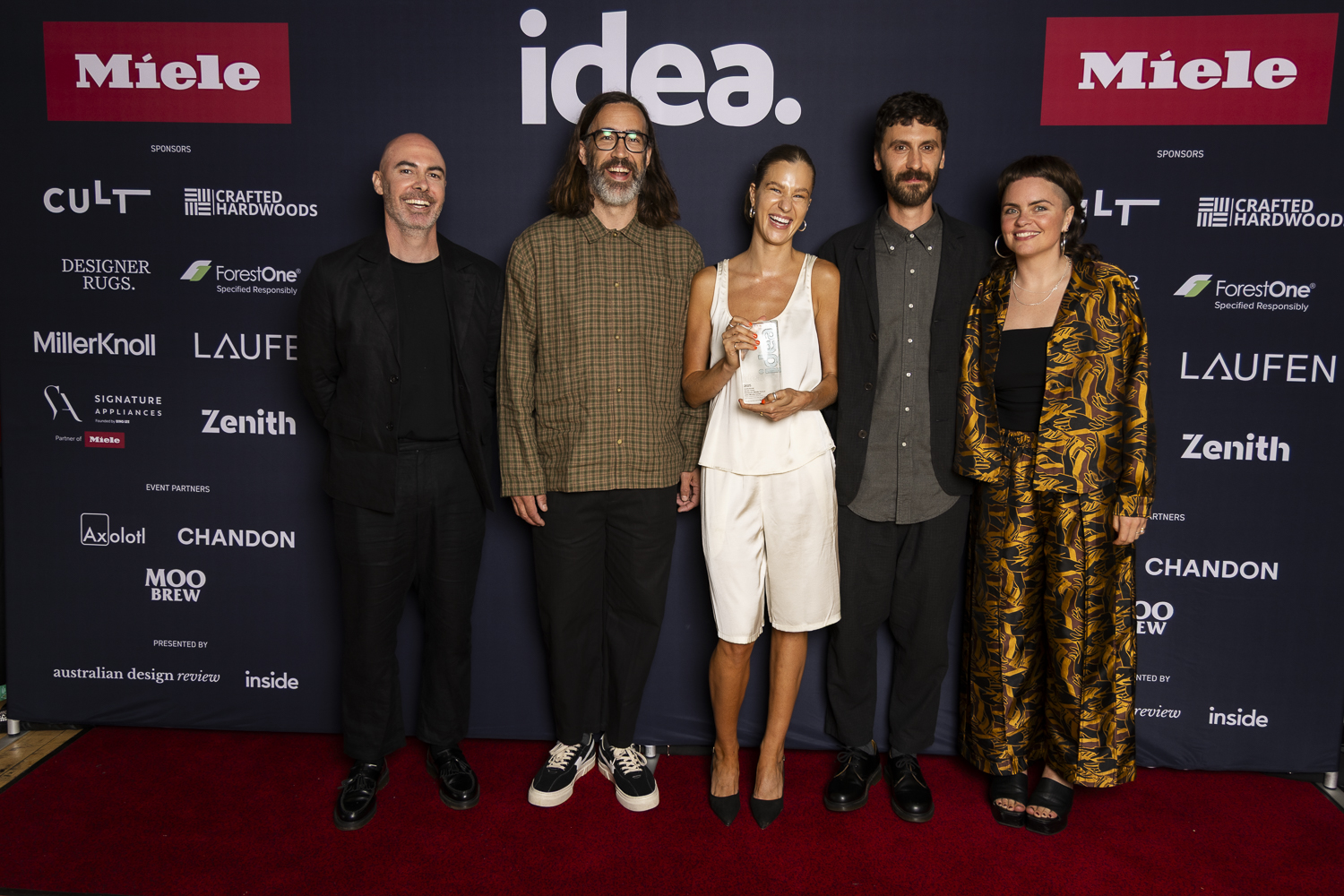
Charbonneau says, “We’ve always done work there, but now that we’ve got feet on the ground, we think it creates a massive opportunity for us to really celebrate the fact that we’ve won this award. It gives us a great opportunity to leverage that in the best way to grow our presence in Sydney a little bit.”
There’s also a wider impact, he says. “I think there’s a general sentiment in South Australia that it’s quite difficult to be recognised nationally when we are competing against eastern states and their budgets and projects. So some of the messages we’ve had from other South Australian practices are about how good they think it is for South Australian design – saying it is growing as well.”
You Might also Like


© Niche Media 2026