

Searle x Waldron’s IDEA-winning workplace project supports the heaviness and lightness of grief
Searle x Waldron’s IDEA-winning workplace project supports the heaviness and lightness of grief

Share

Searle x Waldron won the Workplace Over 1000sqm category award at the 2025 Interior Design Excellence Awards (IDEA) for Northern Memorial Park Depot, a building for workers who deal daily with grief and loss.
IDEA’s Workplace Over 1000sqm category, sponsored by MillerKnoll, has seen a line-up of deserving winners present myriad takes on office design in recent years. There was Carr’s characteristically restrained headquarters for Australian skincare brand Aesop in 2024, Studio Tate’s fun-loving vision for beauty retailer MECCA’s support centre in 2023, and Kerstin Thompson Architects’ sophisticated transformation of Queens & Collins with BVN, which captured to the site’s neo-Gothic heritage and ultimately topped the category in 2022.
Fast forward to the IDEA gala in November 2025, and Northern Memorial Park Depot was named the most recent winner. The industrial project strays from a traditional office, combining workshop spaces, vehicle storage, meeting rooms and more conventional spaces for office workers, a horticulture team, welders, stonemasons and grave diggers.
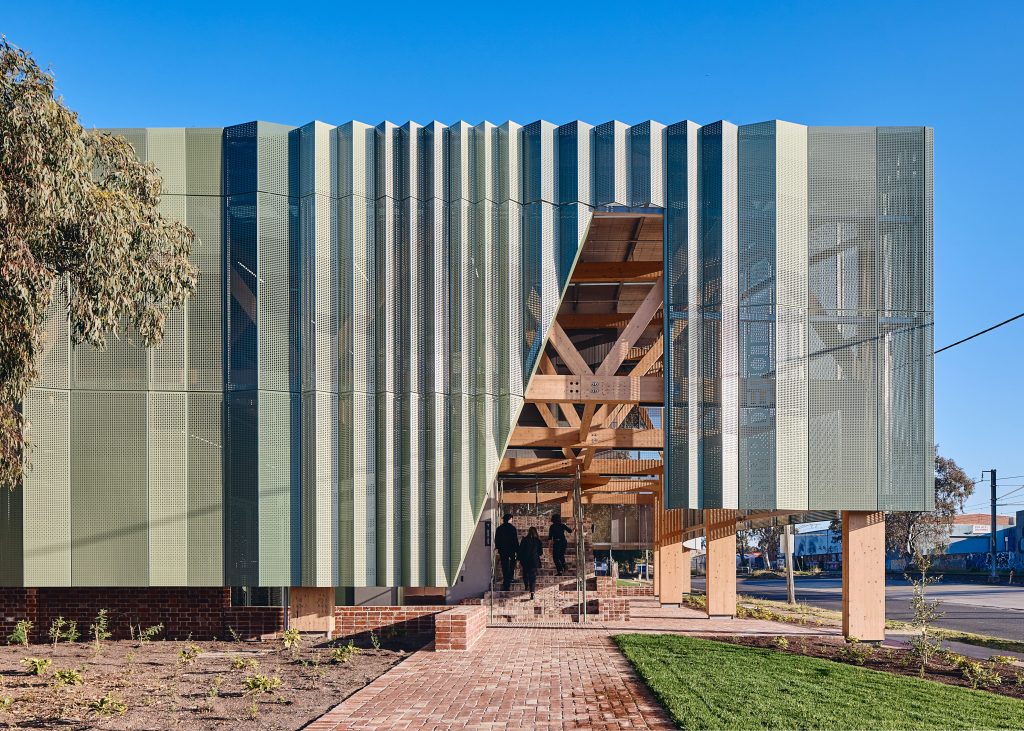
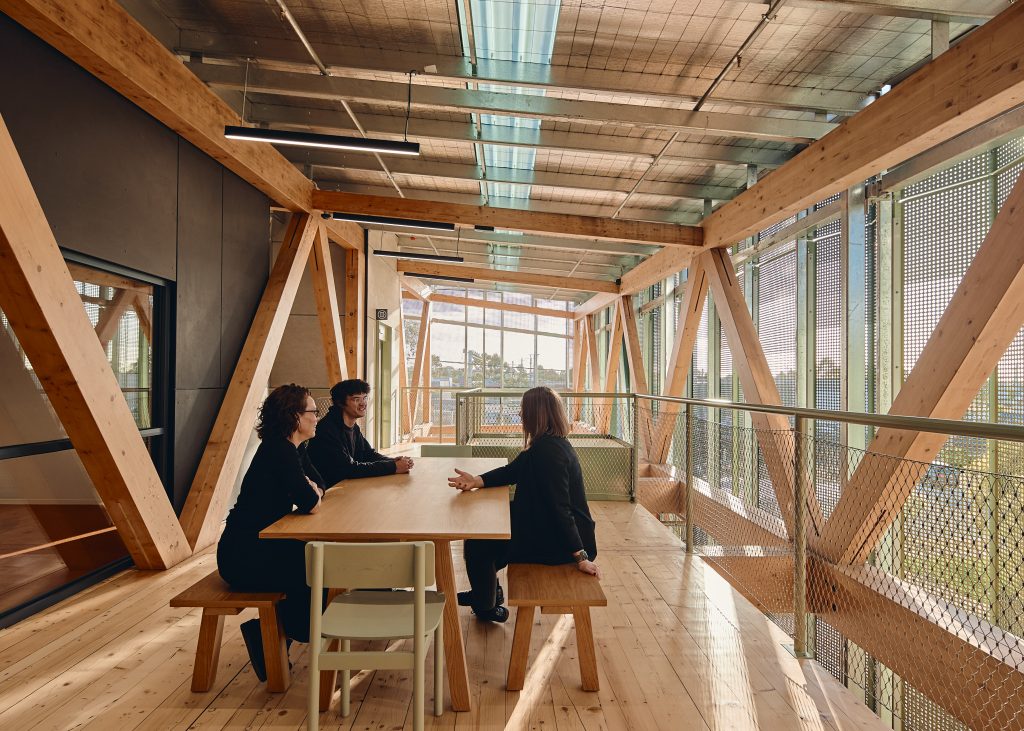
The depot innovates even the conventional industrial workplace typology in its intent to be both a sustainable and beautiful environment for diverse staff, united in their service to Greater Metropolitan Cemeteries Trust (GMCT) sites, including Northern Memorial Park in Glenroy, Melbourne.
“This project stood out for its ability to transform an emotionally demanding workplace into a warm, uplifting sanctuary,” IDEA 2025 jury member Andrew Glover commented. “Its crafted volumes, natural materials and serene atmosphere create a sense of dignity, connection and calm, setting a new benchmark for humane workplace design.”
Searle x Waldron
The architecture practice behind the project, Melbourne’s Searle x Waldron, was co-founded by Suzannah Waldron and her late partner Nick Searle in 2007. Waldron now leads a small team with an array of award-winning civic projects under their belt, including Maidstone Tennis Pavilion, Joyce Chapel Bridge and Annexe at the Art Gallery of Ballarat.
According to Waldron, her practice likes colour and playfulness in architecture, with interiors “connected to the overall architectural moves” they’re trying to make.
“We often look for how very simple briefs can maybe do more,” she tells Australian Design Review. “Not necessarily spending more money, but just using clever or interesting design strategies to get more out of the project’s budget and site.”
Waldron strongly believes that “even a small project can have a really big impact on its site or urban context”. Her practice has won numerous small project architecture awards, including one for Joyce Chapel Bridge in 2023. This was an earlier project for GMCT, located in the large burial grounds of Fawkner Memorial Park in Melbourne’s northern suburbs. “It was a rebuild of an old heritage bridge that had concrete cancer, but also had formed a very important connection between the cemetery and crematorium and chapel,” Waldron explains.
Searle x Waldron transformed a structure for transition into a place to pause and reflect in the landscape on the way to a funeral or cremation.
“I think that the client quite liked the way that we had thought about designing something that was functional, but with empathy,” Waldron says. “And so when the depot project came up, they invited a number of architects to bid for that project and we bid for it.”
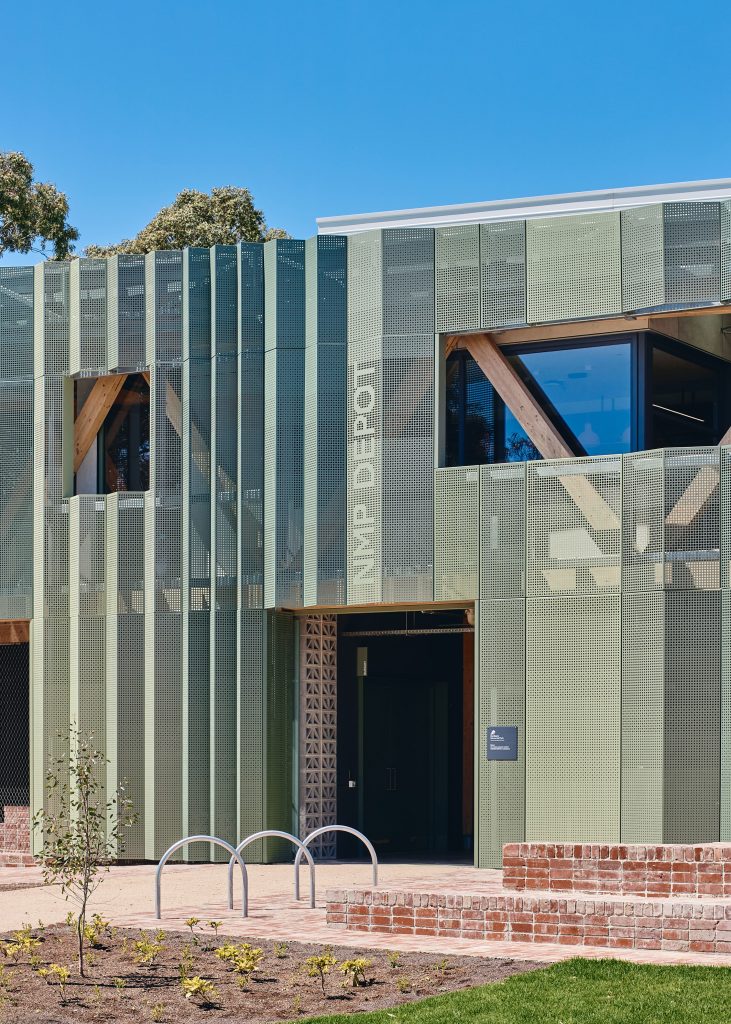
Designing Northern Memorial Park Depot
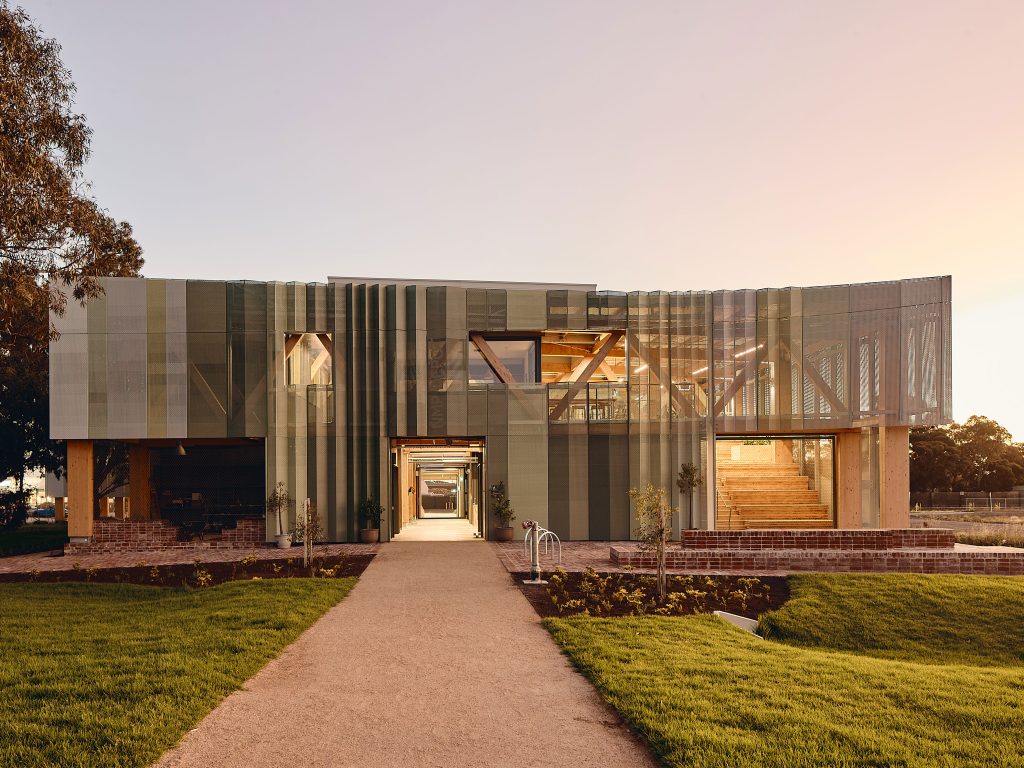
Searle x Waldron’s now multi award-winning design for Northern Memorial Park Depot addressed a key challenge for the client: bringing together previously siloed office and ‘on-the-field’ employees on a greenfield site.
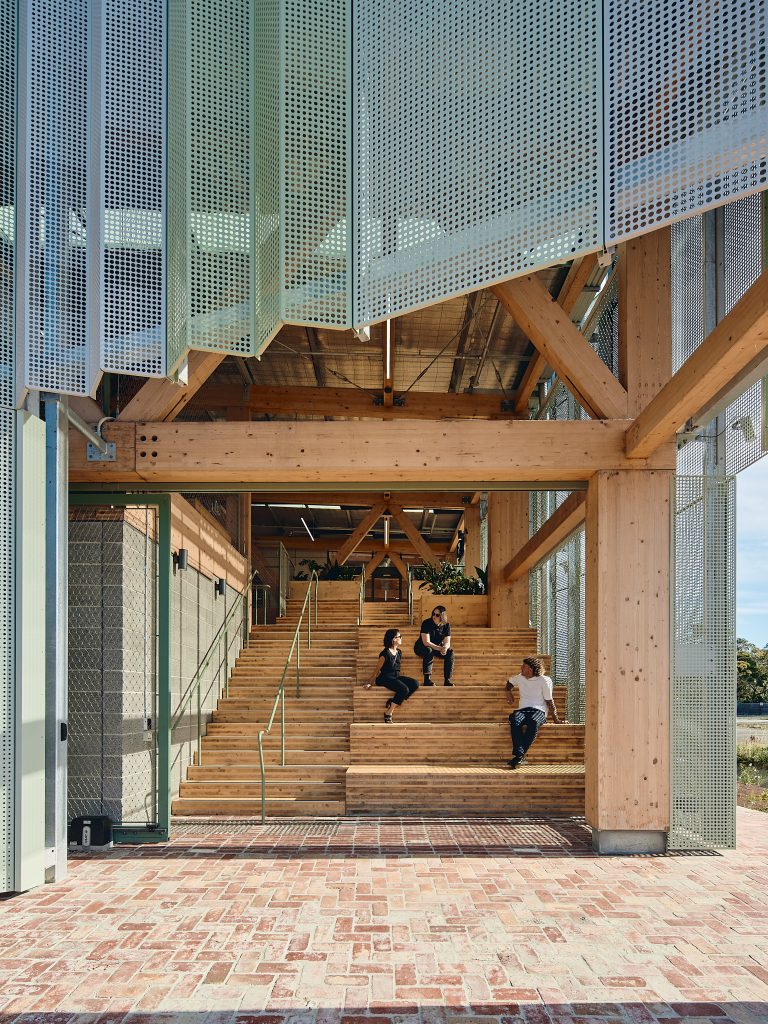
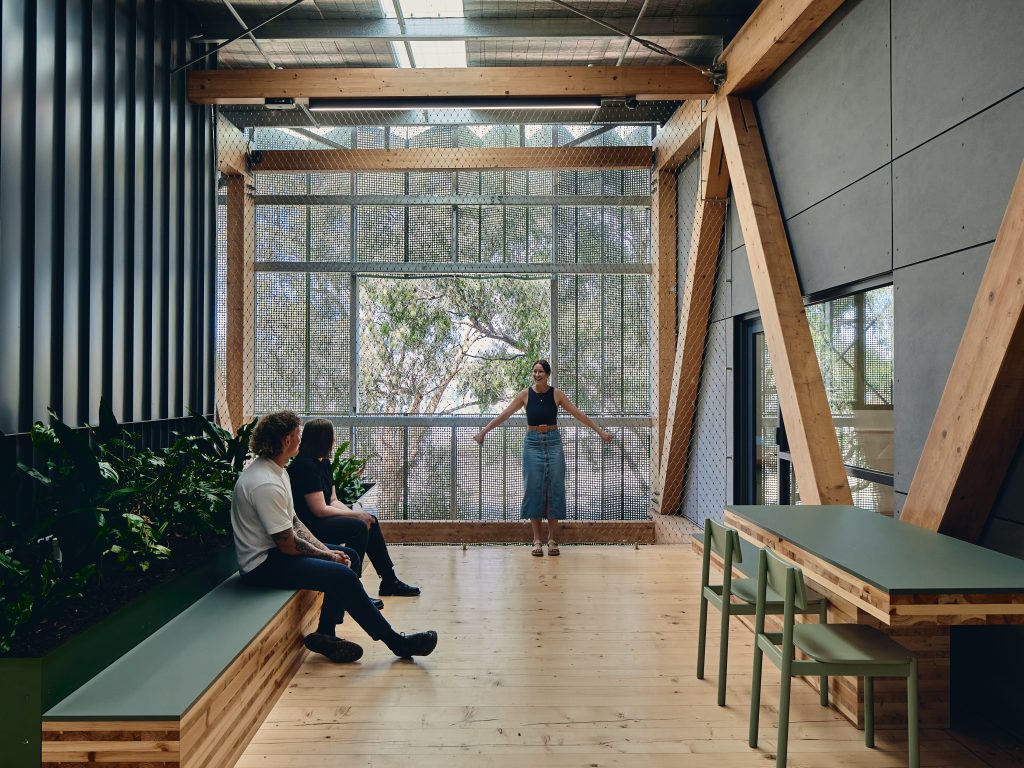
The depot places significant emphasis on enhancing human connections with multi-level, interconnected workshops that offer views into operational spaces. Waldron highlights a team kitchen and a ‘social stair’ – elements that sought to cultivate a feeling of community within the staff and with broader fleet groups, improving the quality of life for the operations team.
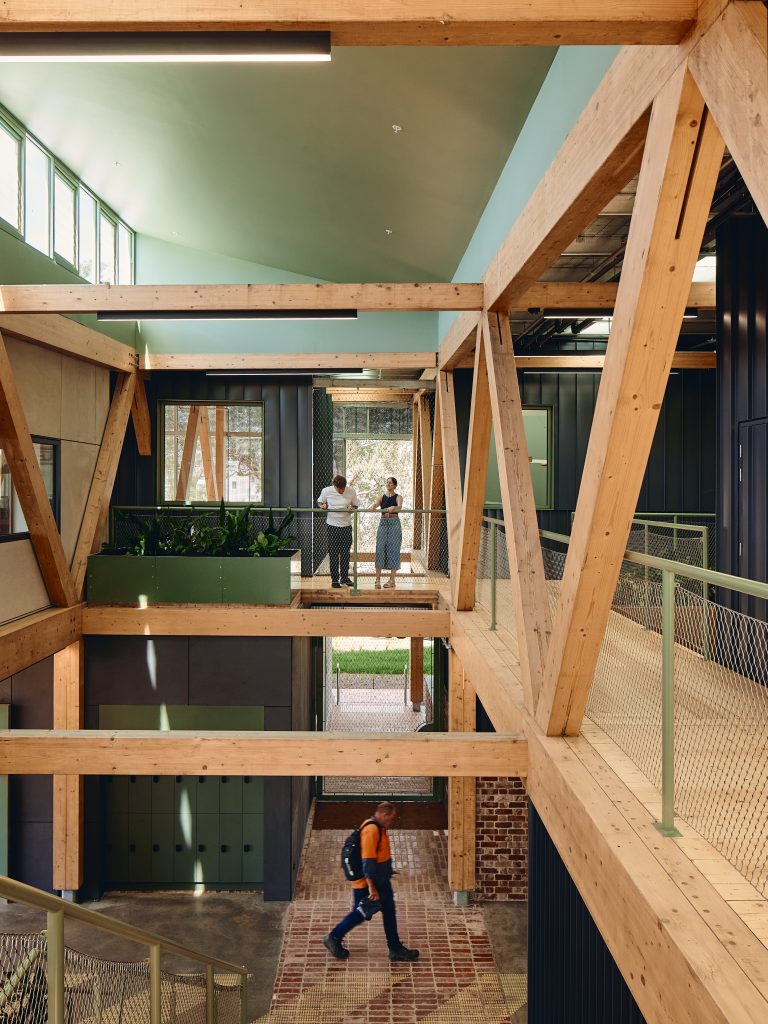
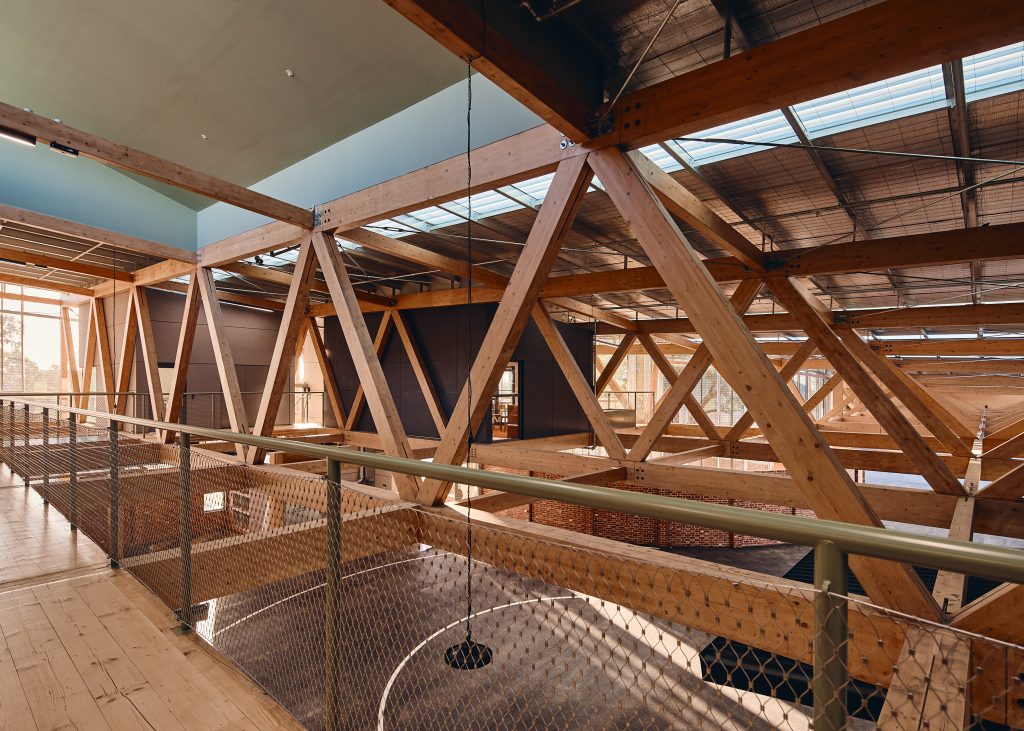
The practice chose timber as a key structural material to reflect principles of longevity and sustainability. The two-storey mass-timber operations hub features 20 uniquely shaped glulam timber (GLT) trusses that span up to 35 metres, enabling column-free garage spaces. Meanwhile, truss chords lift to six metres, intersecting with first-floor offices, lunchrooms and meeting spaces. “All of the office spaces on the upper level are kind of nested within that truss,” Waldron says.
Cross-laminated timber (CLT) walkways connect to collaboration zones and enhance visual connections between spaces and levels.
Double-height, light-filled workshops feature materials relevant to the client’s program. For example, timber benchtops feature in the timber workshop and metal checkerboard in the metal workshop, offering a sense of identity.
The project also integrates local recycled bricks. So local, in fact, they only had to be passed over a fence during construction. “We used over 100,000 recycled bricks and that brick recycler is actually 50 metres away; it has a fence that adjoins the site,” Waldron says.
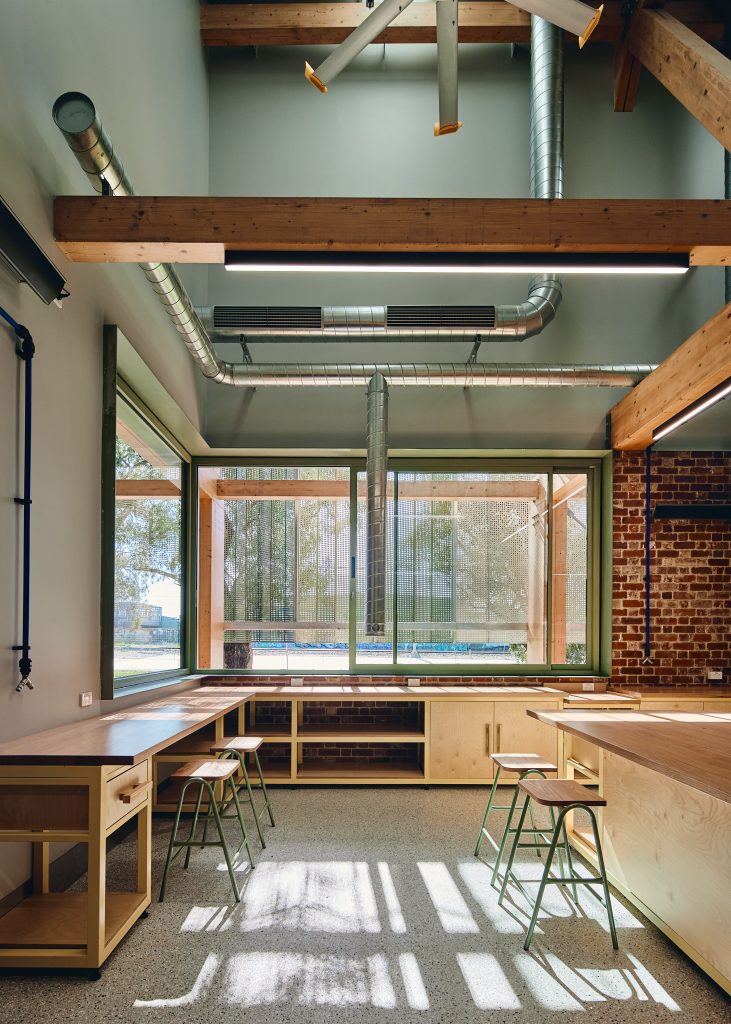
Some spaces inside the depot sit halfway between being indoors and outdoors. While the offices are individually sealed off and air-conditioned, other spaces are naturally ventilated, with views through the translucent façade screen.
Giving architectural form to the dual nature of grief
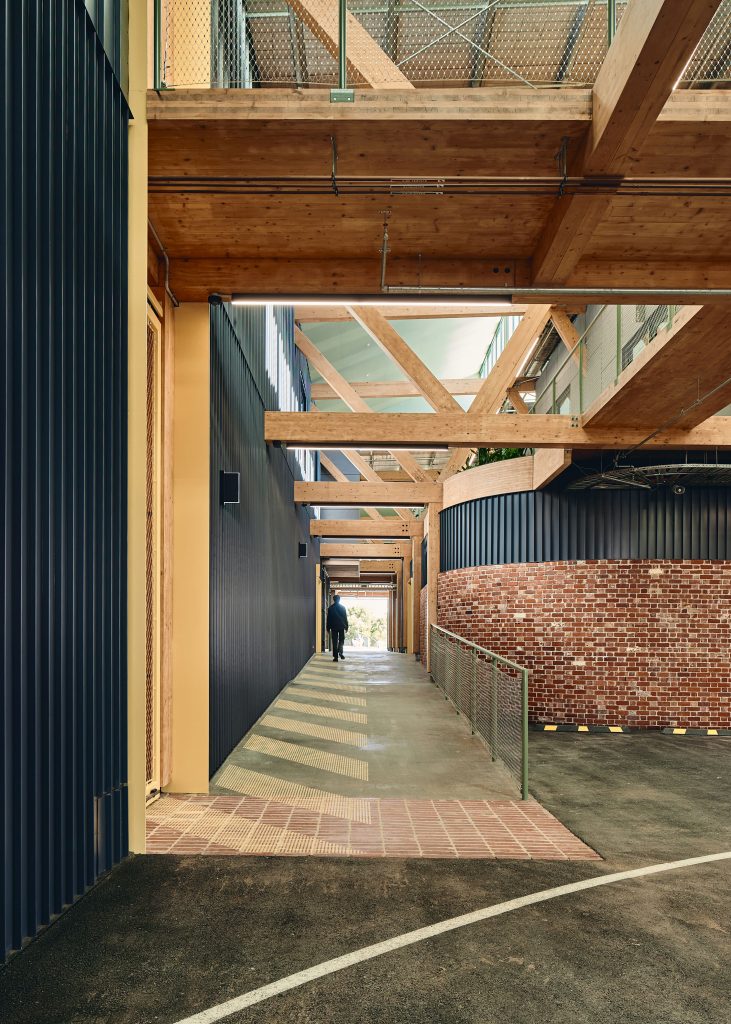
From the solid brick base to the breathing space between timber trusses and screen punctures, Waldron says the building and its materials are an attempt at reflecting her own understanding of grief.
“I feel as if I connected with this client a little bit because of my personal experience,” she says. “The way I think about grief is there’s kind of a heaviness and a lightness. Some of the people we met in this client group have an extremely dark sense of humour. They’re like the grave diggers in a Shakespearean play. They’re cracking jokes about death all the time. And so while there’s this really grounded heaviness and seriousness to what they’re dealing with every day, there’s also this lightness that you need in order to get through life. The building tries to reflect that too – [there’s this] very light and ephemeral kind of veil that reveals the operations of a cemetery too. It isn’t a really solid thing that says ‘this is something you shouldn’t know about’. It’s supposed to invite people to wonder what the building is about and what happens inside of it.”
Photography by Peter Bennetts.
You Might also Like
Related Stories

© Niche Media 2026